


 Powered by Comercia.io
The best tattoo needle for lettering depends on the line weight and readability of the actual word, not a universal 3RL or 5RL rule. Peak identifies round liners for script, outlines and fine detail, with fewer pins generally producing a finer line; the artist must also plan letter spacing, stencil accuracy and enough room for small details. This guide helps tattoo artists choose lettering and script tattoo needles, compare Old English outlines, check cartridge diameter and taper, and test a legible design before working on skin.
Shop Tattoo Needles Browse Bishop Da Vinci V2
QUICK ANSWER
What size tattoo needle should you use for lettering and script?
Compare round liners for the intended stroke. Peak cites 3RL for tiny details and 9RL, 14RL or 18RL as progressively bolder examples, but no grouping is best for every font. Test the full word at the intended scale and preserve space around small details.
Fine Script
Compare smaller round-liner groupings, then judge whether the entire word remains readable at its intended scale.
Bold Lettering
Compare larger liners or a hollow-liner outline option based on the actual stroke width and letter structure.
Stencil & Space
Confirm every character with the client, keep letter interiors and adjacent strokes distinguishable, and test before transfer.
ROUND LINERS FOR LETTERING
What tattoo needle is best for script, calligraphy and lettering?
Round liners are the primary grouping to compare for lettering. Peak describes RL needles as tightly arranged circular groups used for clean lines, script, outlines and details. Kwadron also identifies round liners as precise contour and lining tools. The artist's decision is which line weight fits the drawing, not whether one popular needle number can produce every alphabet.
For the general method of producing controlled outlines, see How to Tattoo Clean Lines. This guide concentrates on how those lines build readable lettering.
DESIGN ELEMENT TO NEEDLE
Which needle, black ink and approach fit small script, medium lettering and bold Old English?
Peak describes smaller RLs for fine detail and larger RLs for bolder strokes. The table is a design-based selection guide, not a required needle number for a font.
| Letter type or design part | Needle configuration to compare | Ink | Technique and readability check |
|---|---|---|---|
| Small fine-line script | Small RL; Peak cites 3RL for tiny detail | Black lining ink | Test the full word; preserve open detail |
| Medium connected script | RL chosen after stroke tests; 3RL and 5RL are candidates | Black lining ink | Compare joined strokes and letter spacing |
| Bold Old English contour | Larger RL or inferred hollow-liner option | Black contour ink | Separate heavy outlines from small details |
| Letter fill or shadow | Larger RL where the filled area warrants it | Black for selected fill | Keep interior shapes distinguishable |
Test the RL count and the letter height at the finished scale; the design decides both.
SMALL GROUPING DECISIONS
Is a 3RL or 5RL better for script tattoos and small lettering?
Neither grouping is the automatic winner. Peak says fewer pins generally produce a finer line and uses 3RL as an example for tiny detail. But it also warns that finer is not automatically better. For a proposed 3RL versus 5RL choice, compare how the full letter, its connecting strokes and its surrounding spaces appear at the size you actually plan to tattoo.
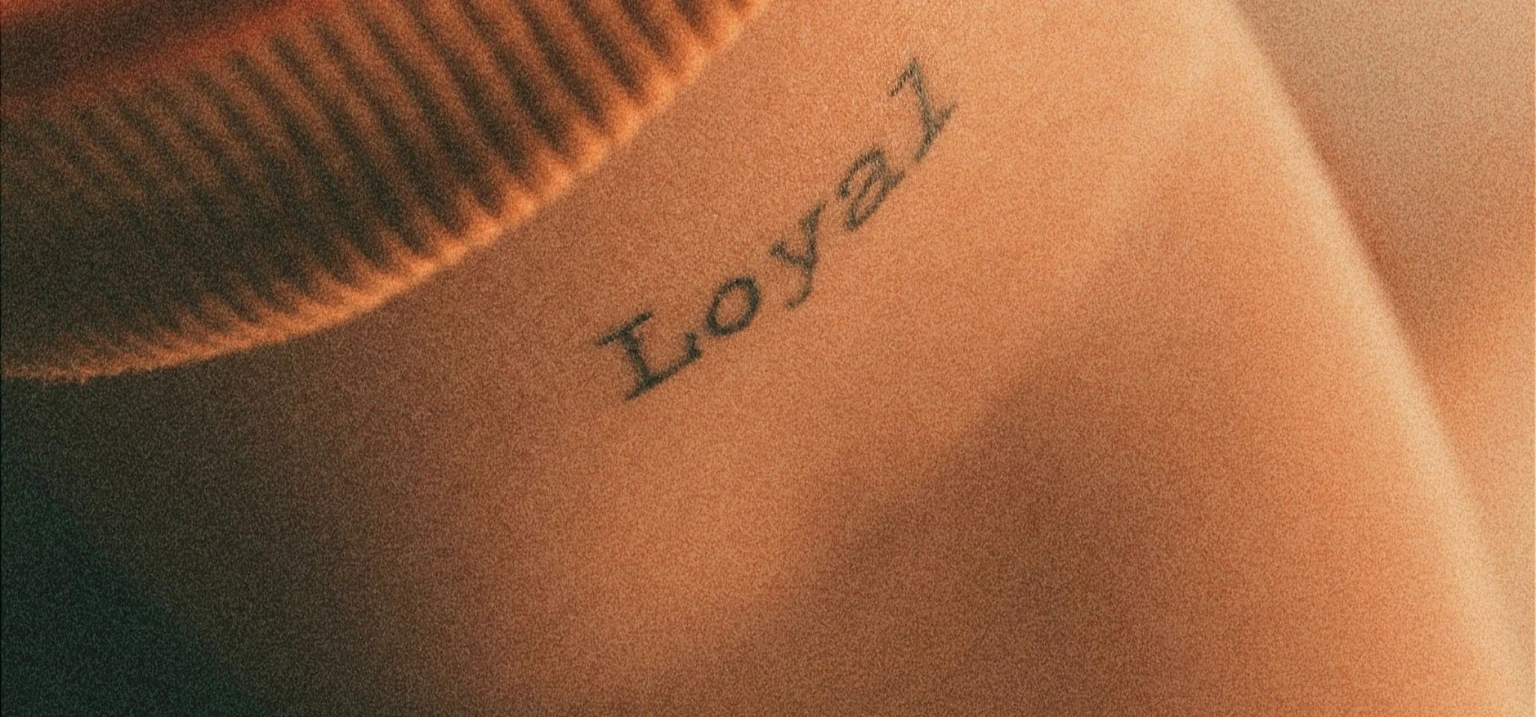
How Peak frames liner count
Peak gives 3RL as an example for small details and 9RL, 14RL and 18RL as progressively bolder examples. These illustrate the effect of grouping size; they are not a requirement to use one number for a particular font.
PIN COUNT, DIAMETER & TAPER
How do you read tattoo liner sizes, pin diameter, taper and grouping labels?
Peak says count, diameter, taper, grouping tightness, setup and technique all affect a line. Its diameter examples are #12 at 0.35 mm, #10 at 0.30 mm and #8 at 0.25 mm.
| Label element | What it describes | Why it matters for lettering selection |
|---|---|---|
| RL | Round-liner configuration | Relevant grouping for script, outline and detail |
| Pin count, such as 07 | Number of pins; Peak's example has seven | Affects the line-weight options an artist should compare |
| #12 diameter | 0.35 mm in Peak's example | Pin diameter is separate from the number of pins |
| #10 or #8 diameter | 0.30 mm or 0.25 mm in Peak's bugpin descriptions | Smaller-diameter options for fine detail work |
| Taper and grouping tightness | Other needle-construction characteristics | Check the manufacturer's exact product specification before purchase |
For additional label terminology, see Tattoo Needle Guide.
FINE DETAIL OPTIONS
Are bugpin liners useful for fine-line script and delicate tattoo lettering?
Peak identifies bugpin configurations as smaller-diameter pins, commonly #10 or #8, and discusses them for sharp, even script and lettering strokes. It also emphasizes the trade-off in execution: fine lines expose hand movement, making a visible wobble easier to notice. Bugpin is therefore a specific needle-construction option to evaluate, not an instruction that every fine script should use one.
BOLD OUTLINES & OLD ENGLISH
Can you use a hollow liner for bold Old English or blackletter tattoo outlines?
Yes, it is worth testing. Peak describes hollow liners as an option for bold outlines with less resistance than a densely packed liner, which makes them a candidate for the heavy outer strokes of Old English letters. Compare it against a larger round liner on practice skin before choosing.
LETTER SIZE & READABILITY
How small can tattoo lettering be before it becomes difficult to read?
Test the full phrase at the intended size. Peak advises leaving room for small details to remain readable as tattoos age; it gives no universal minimum letter height. If a test is crowded, adjust the scale or design.
Small-lettering design review
- Is the complete word recognizable without explaining the font?
- Can you distinguish adjacent letter strokes and repeated characters?
- Do small details have breathing room in the stencil?
- Can the planned grouping create the intended stroke at that scale in practice?
- Would a less crowded layout communicate the client's words more clearly?
KERNING, WORD SPACE & OPEN FORMS
How should you space letters and words so a script tattoo stays readable?
Approach spacing as part of the drawing, not something fixed by needle count. Peak specifically recommends room around small details to support readability over time. In the studio layout, review distances between separate letters, connected script strokes, words and decorative flourishes with the final design size in mind.
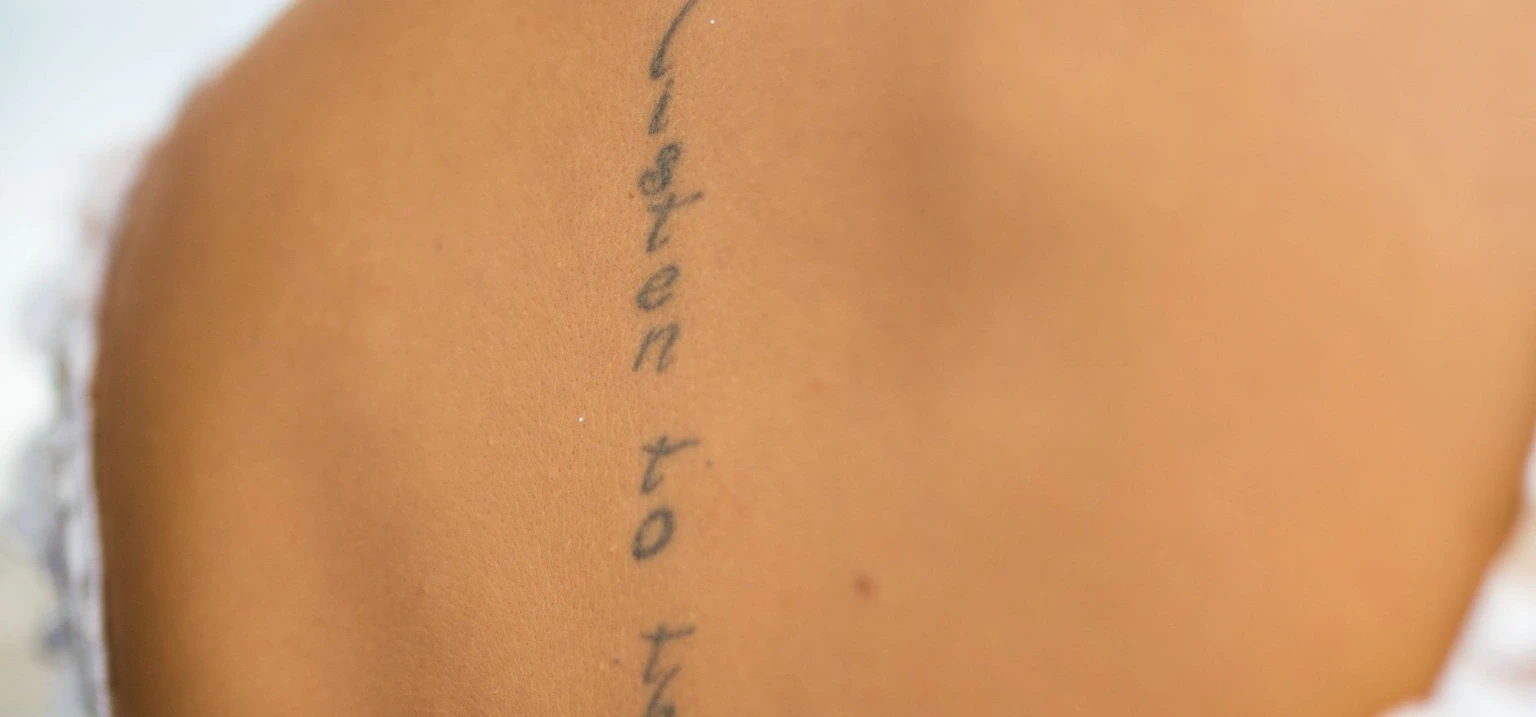
For cursive, check whether flourishes obscure neighboring letters. In bold text, review interior gaps and nearby dark strokes before approving the stencil.
SCRIPT, OLD ENGLISH & FINE LINE
Which font works best for tattoo lettering: cursive script, Old English or fine line?
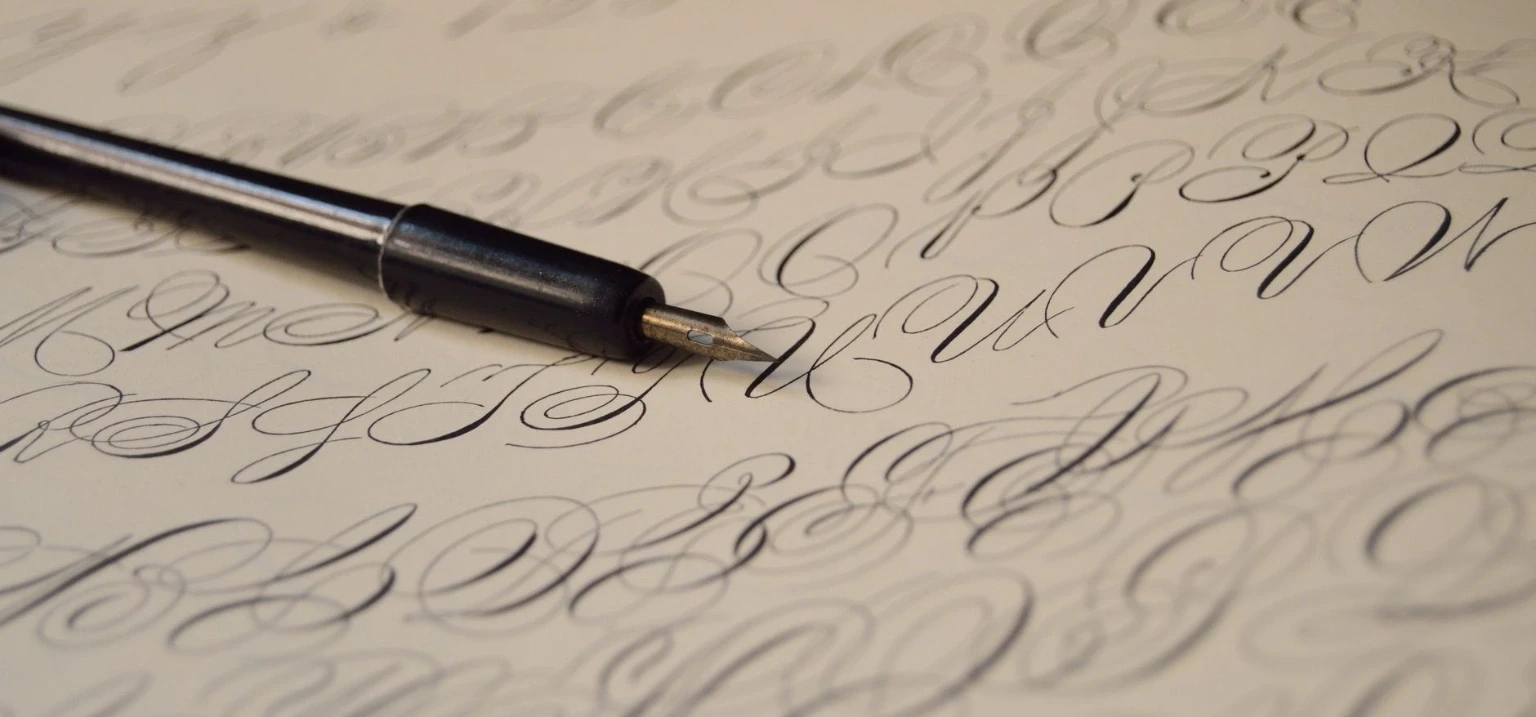
Choose the font for the meaning and visual structure of the design, then select needles for the resulting strokes. Script may require consistent connecting lines and legible letter spacing. Old English often has a mix of bold contours and smaller details. A fine-line text design brings small stroke choices into focus. These descriptions guide design planning, not a ranking of which font lasts longer.
STENCIL & SPELLING APPROVAL
How do you prepare a lettering tattoo stencil and verify spelling before tattooing?
As a studio workflow, approve the exact words, capitalization, punctuation and accents with the client before transfer. Then check spacing, scale and legibility on the transferred design.
Confirm the final wording
Ask the client to verify the exact words and punctuation.
Choose the visual layout
Choose font, spacing and intended stroke weight.
Review at the intended size
Check the complete phrase and smallest details.
Prepare the stencil supplies
Follow the stencil paper and application-product instructions.
Check the transferred word
Review transferred placement and every character with the client.
Approve before starting
Resolve wording or scale changes before tattooing.
See How to Make a Tattoo Stencil and Tattoo Stencils That Last for the separate stencil-creation and application process.
CONSISTENT LETTER STROKES
How do you avoid shaky lines when tattooing small script lettering?
FK Irons notes that a fine point gives little room for shaky movement, poor stretch or an inconsistent angle. Peak similarly warns that a thinner line makes wobble more apparent. When evaluating a fine script setup, practice the specific curved and straight strokes the lettering requires, rather than assuming the smallest needle will correct an unsteady mark.
For hand control, see How to Hold a Tattoo Machine and How to Tattoo Clean Lines.
VOLTAGE & STROKE
What voltage and stroke should you use for lettering and script tattoos?
FK Irons lists general 7V–8.5V for fine detail and 8V–10.5V for bold lining and larger groupings. It says there is no universal voltage or stroke for any one grouping; these are not lettering presets.
| FK Irons general task | Published baseline | How to use the information |
|---|---|---|
| Fine line and detail | 7V–8.5V | General context when evaluating fine script, not a prescribed number for a specific liner |
| Bold lining and larger groupings | 8V–10.5V | General context for broader lettering strokes and outlines |
| Any particular grouping | No universal voltage or stroke | Follow the machine instructions and assess the selected grouping through trained practice |
FK Irons discusses making voltage changes in 0.2V–0.5V steps as part of its general setup guidance; that is not a special lettering rule. For more context see Tattoo Machine Stroke, Needle Depth and Voltage and Fine Line Tattoo Needles and Settings.
BLACK INK & STENCIL MATERIALS
What black ink and stencil supplies should you choose for lettering tattoos?
Choose the black ink and stencil products to suit the planned lettering task. We carry Solid Ink Lining Black, plus Dynamic Stencil Magic Paper, Proton Stencil Primer Gel Black, Tattoo Stuff Stencil Stuff and Recovery Stencil Lock. These are separate products for lining ink, stencil preparation and transfer management; select and use each according to its label.
PRACTICE-SKIN TEST
How do you practice tattoo lettering sizes, needle choices and spacing before a client?
Test the actual phrase at the intended scale. Peak advises comparing groupings and leaving detail room; FK Irons highlights how fine points expose inconsistent movement.
Prepare the exact lettering layout
Use the actual phrase, font and proposed layout.
Set a readable practice size
Check small details and space between characters.
Compare liner groupings
Compare RL line weight across the entire word.
Check curved and straight elements
Practice joins, curves and straight strokes.
Review the layout, not only the cartridge
Revise scale and spacing if the design is crowded.
Record the chosen setup
Record grouping, machine and design version.
READABILITY OVER TIME
How should artists discuss lettering readability, fading and possible rework?
Peak recommends leaving small details sufficient space so they remain clear and readable as tattoos age. The American Academy of Dermatology says ultraviolet light can fade some tattoo inks. These points support a design conversation about clear letterforms and ongoing tattoo care, not a ranking of whether script, Old English or fine-line lettering always ages better.
For rework options, read How to Cover Up a Tattoo and Tattoo Blowout: Causes and Prevention. Refer skin concerns to a dermatologist.
COMMON LETTERING MISTAKES
What mistakes should tattoo artists avoid with small script, spacing and bold lettering?
Avoid choosing the needle number before checking the whole word. The manufacturer guidance centers on grouping differences, precision and allowing fine details room; studio workflow adds a careful text and stencil review.
Automatically choosing the smallest liner
Peak says fewer pins can make a finer line, but finer is not always better.
Declaring 3RL or 5RL the universal winner
Compare 3RL and 5RL with the actual phrase and intended stroke weight.
Choosing a fixed minimum letter height
Test text at scale and leave details room instead of imposing a fixed height.
Filling a bold word before checking its structure
Separate bold contours from interior details before choosing a grouping.
Skipping the client's spelling review
Confirm punctuation, accents and every character with the client before transfer.
Assuming a bugpin corrects an unsteady line
Peak and FK Irons note that fine points expose wobble; practice steady marks.
Using one voltage prescription for every grouping
FK Irons says no grouping has a universal voltage or stroke.
Ranking fonts by an assumed lifespan
Do not rank fonts by lifespan; discuss legibility and AAD guidance on UV fading.
SVT SHOP: LINERS, BLACK INK & STENCILS
Which tattoo needles, black ink and stencil products fit a lettering setup?
Select round-liner cartridges or bar needles, a possible hollow liner for bold contours, black ink and stencil supplies based on the planned lettering. Choose each exact variant for the machine and design.
 Script & Round-Liner Detail
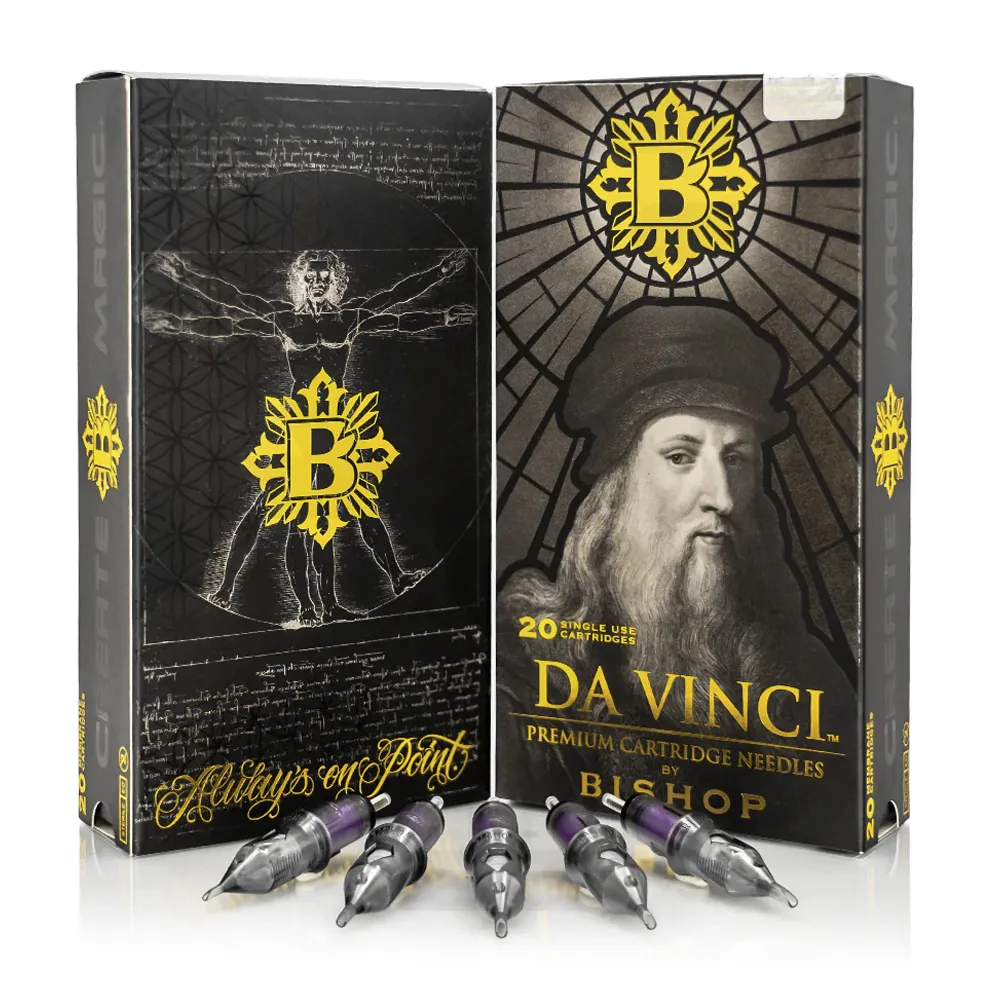
Bishop - Da Vinci V2 Liners
Round-liner cartridge option for script; select grouping by intended line weight.
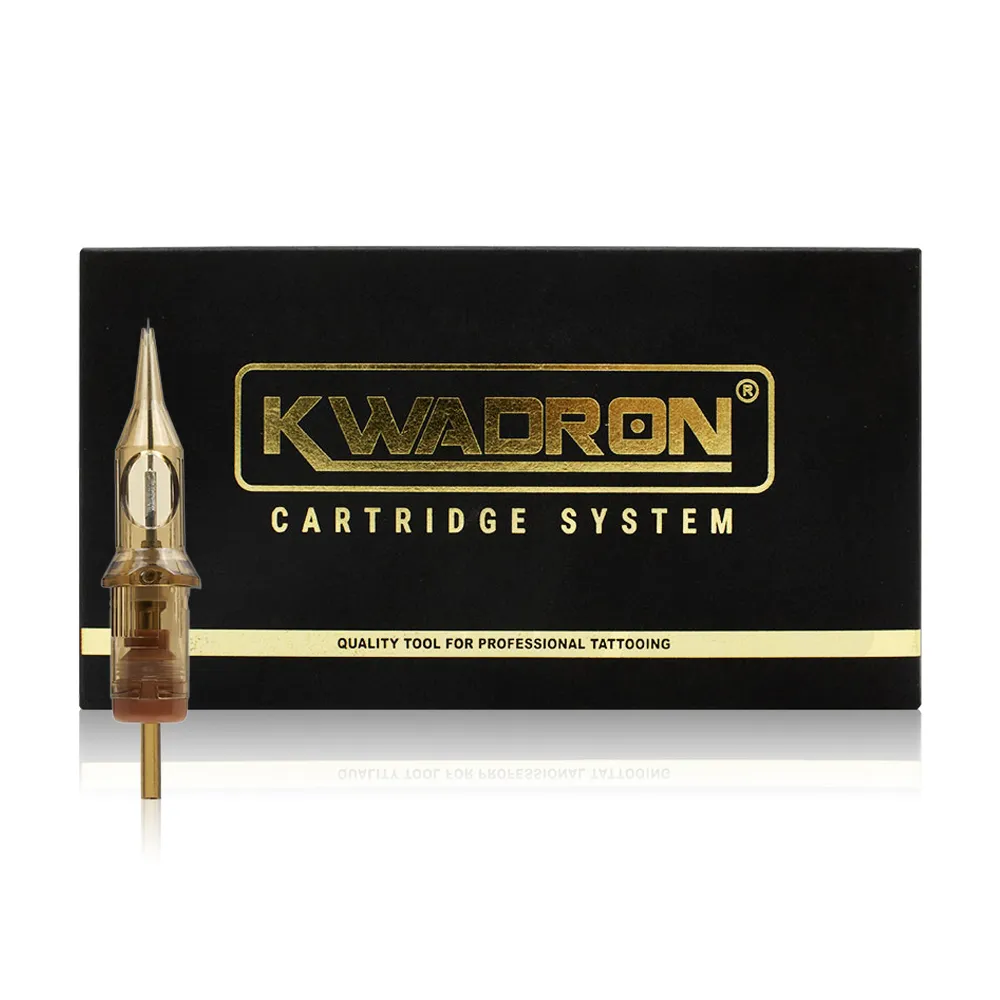 Contours & Lettering
Kwadron - Cartridges Liners
Kwadron lists RL for precise contours and lining.
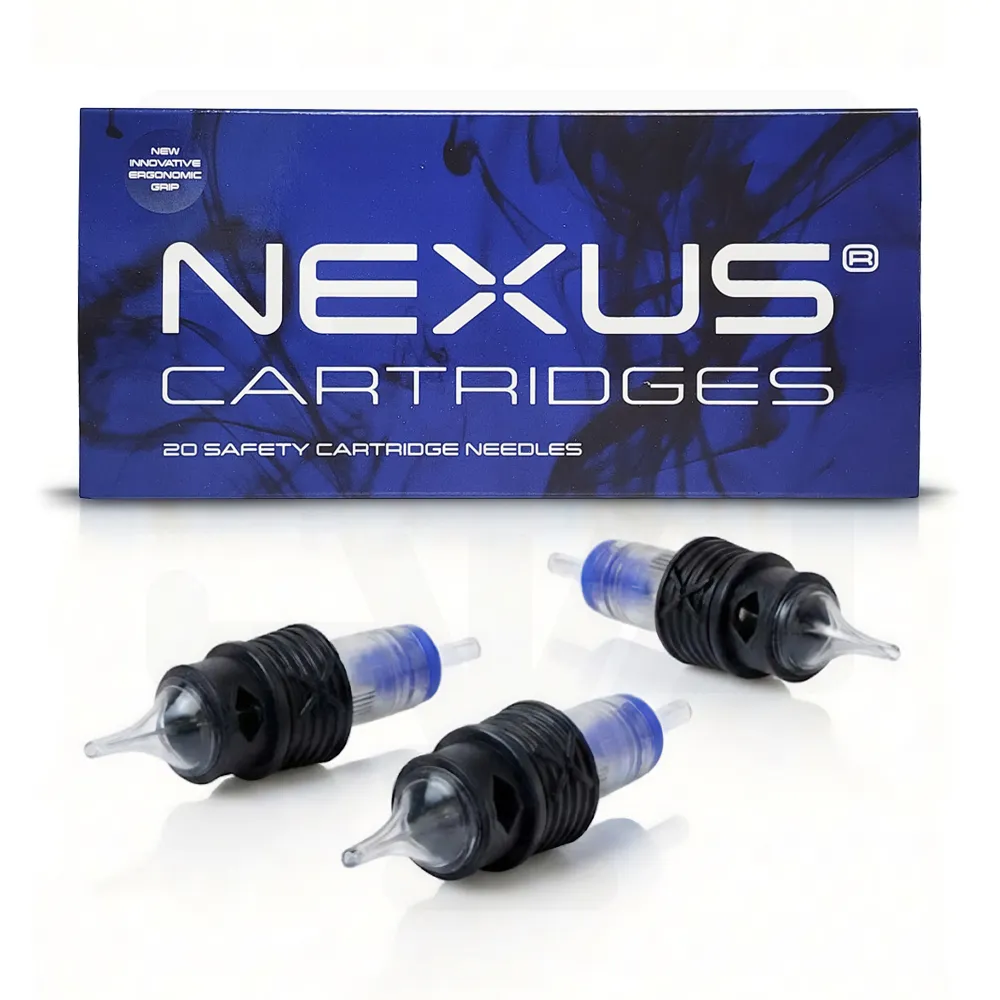 Alternative Liner Choice
Nexus Cartridges - Liners
Alternative liner cartridges for stroke-width comparisons.
 Traditional Bar Needle Option
Kwadron - Bar Needles Liners
Bar-needle option for a compatible traditional machine.
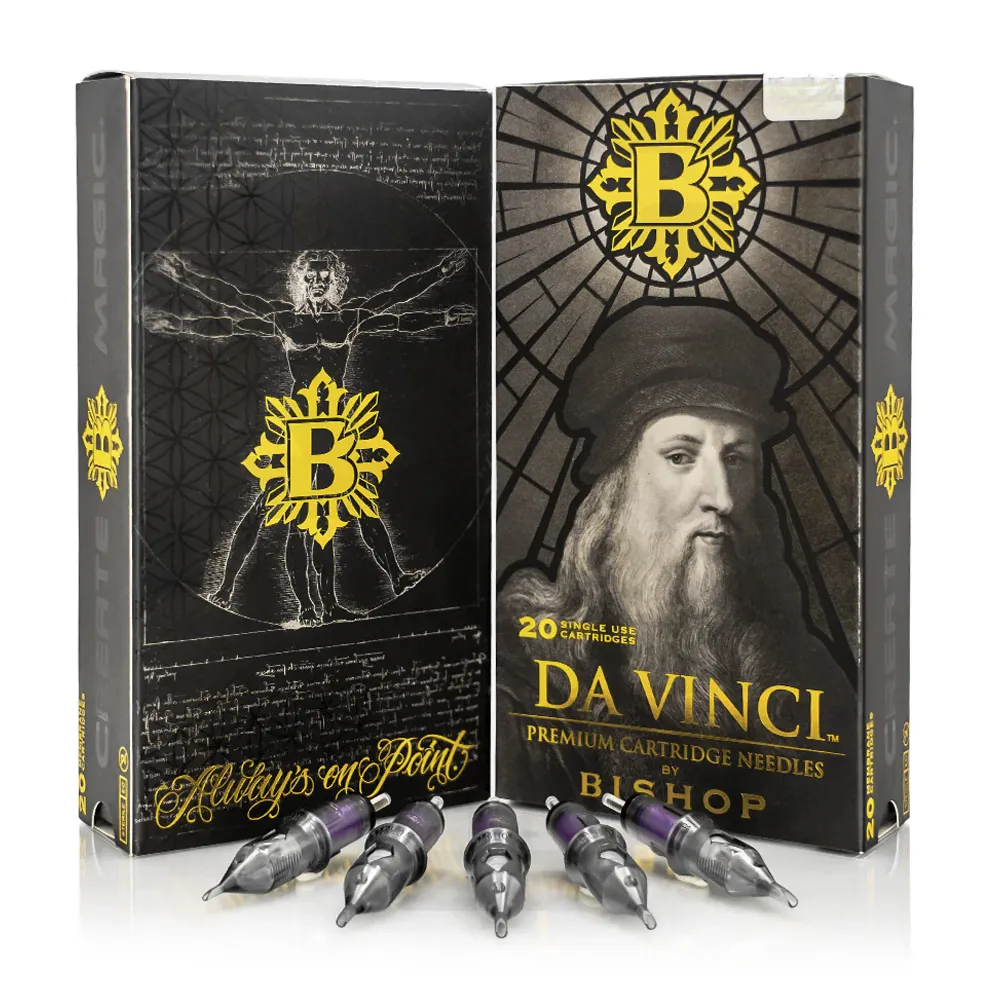 Bold Outline Option
Bishop - Da Vinci V2 Hollow Liners
Hollow liner to test for bold outlines; Old English use is an artist inference.
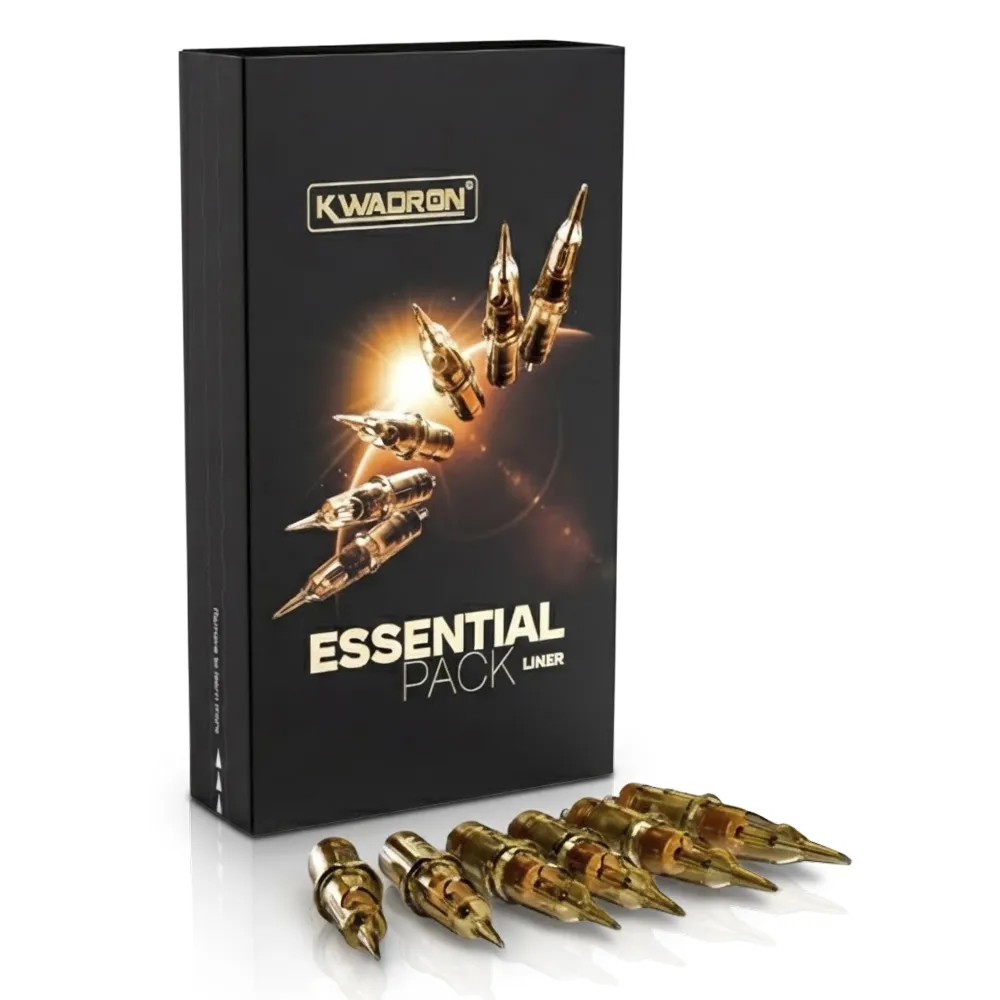 Liner Comparison Pack
Kwadron - Cartridges Essential Pack Liner
Liner assortment for testing lettering strokes.
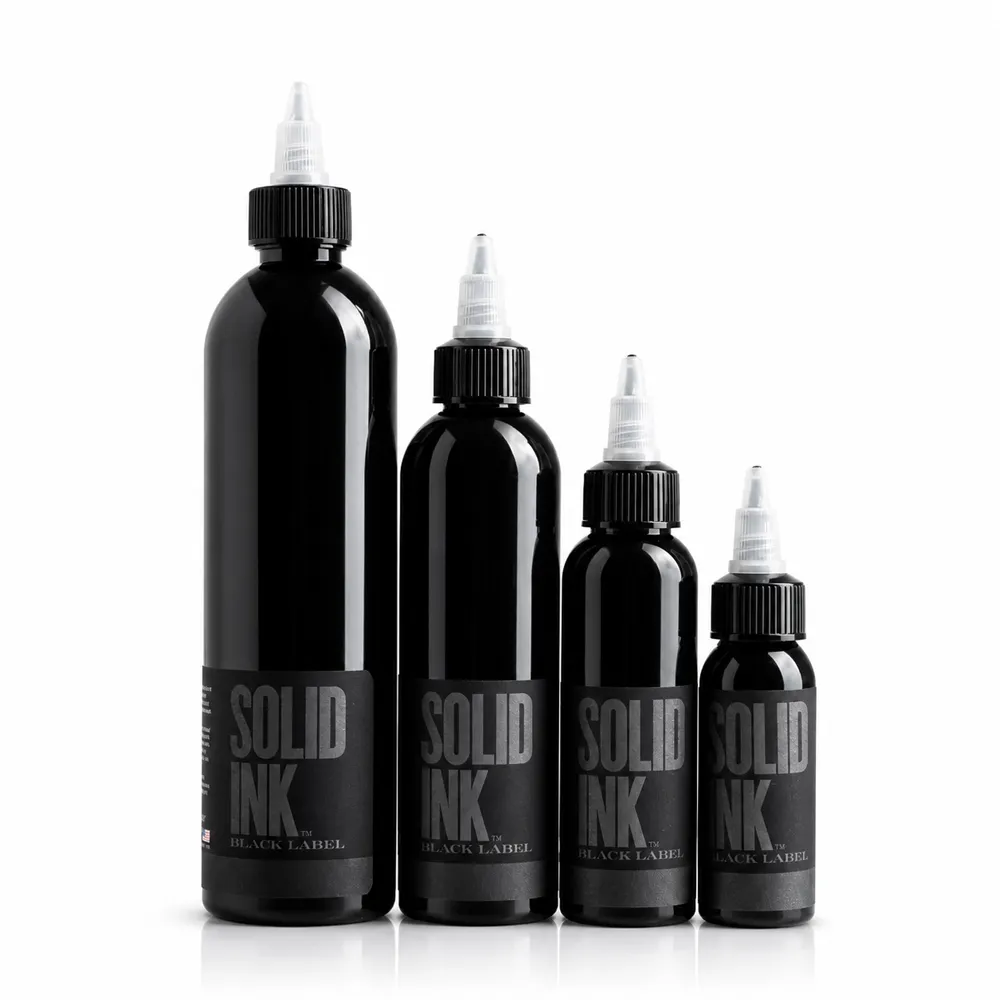 Black Lining Ink
Solid Ink - Lining Black
Black ink option for lines and bold text.
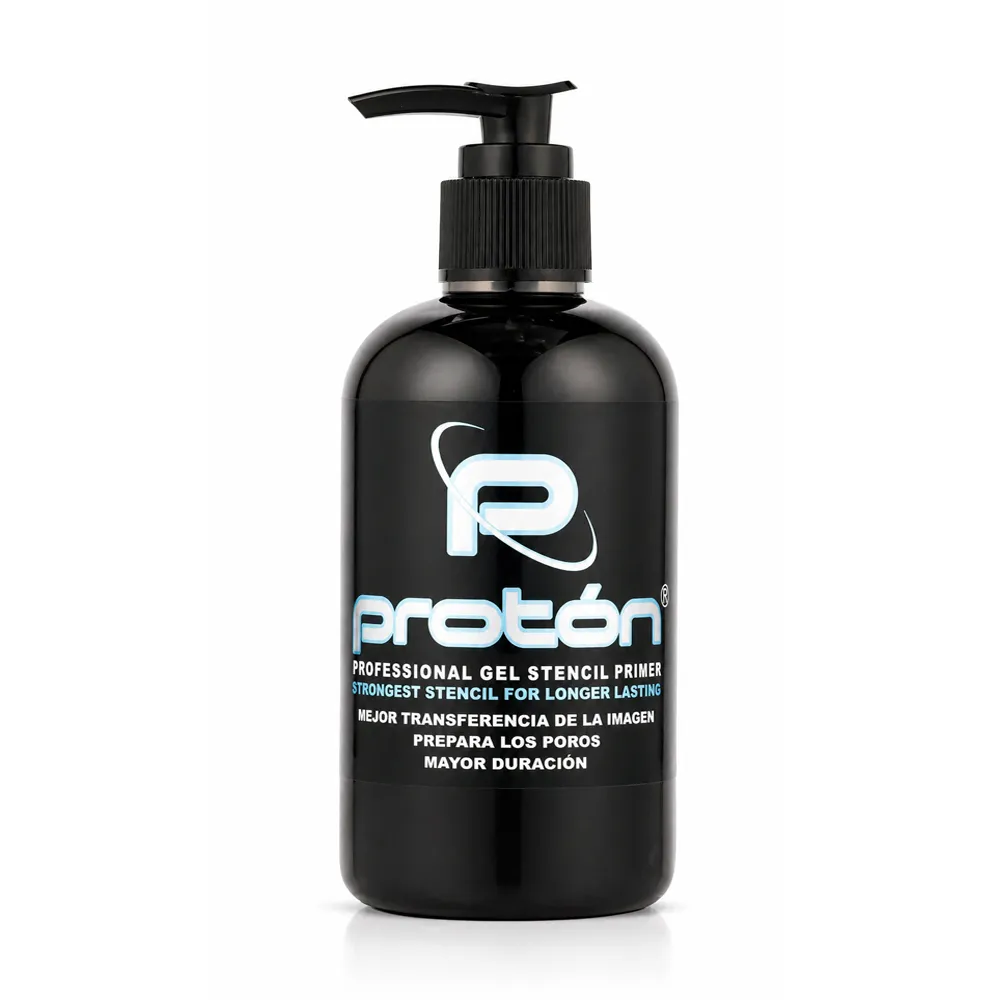 Lettering Stencil Preparation
Proton - Stencil Primer Gel Black
Primer for an approved lettering stencil, per label.
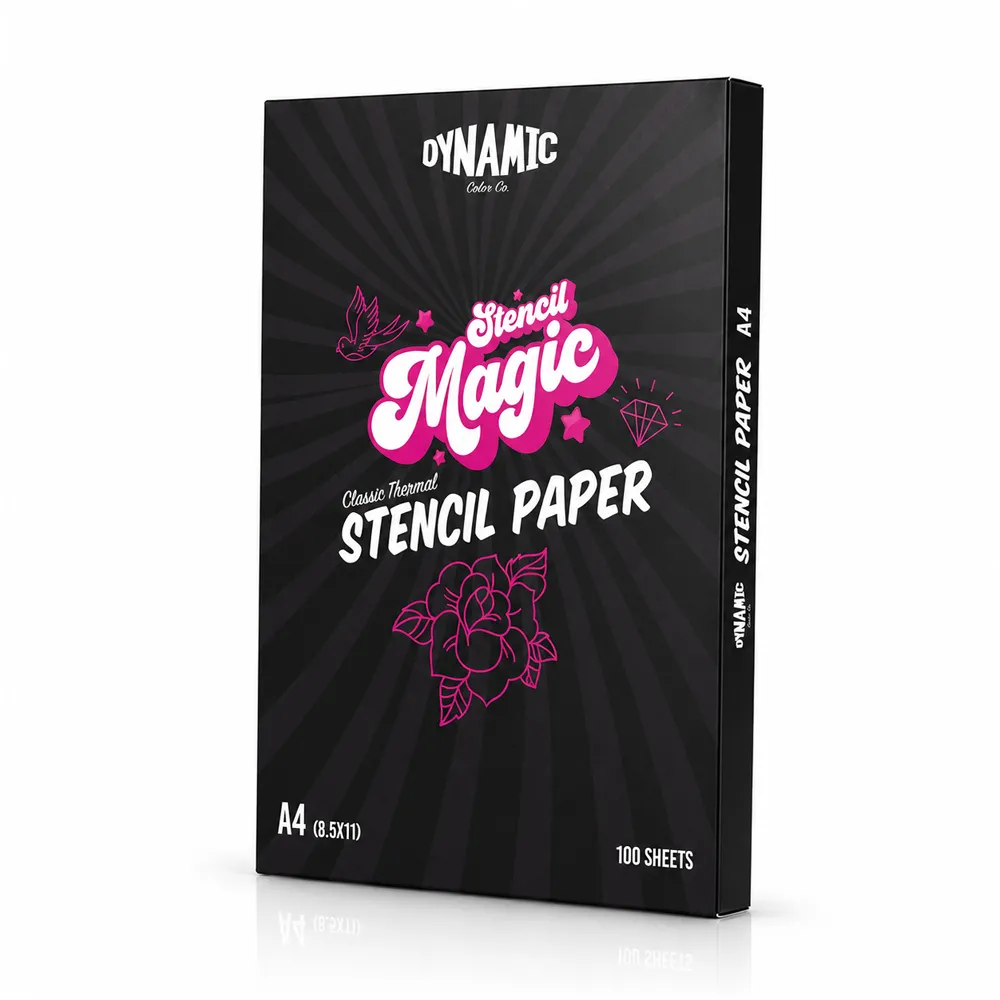 Lettering Transfer Paper
Dynamic - Stencil Magic Paper
Transfer paper for the approved wording and layout.
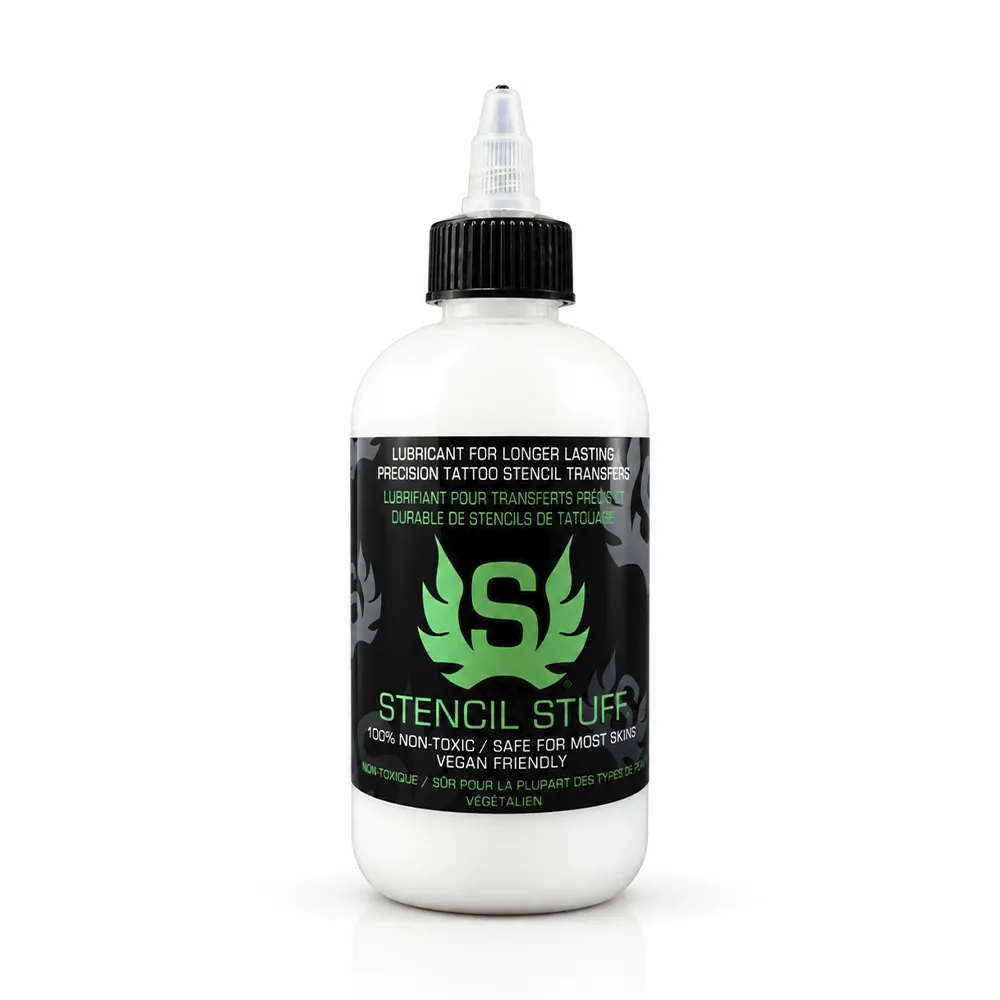 Stencil Application
Tattoo Stuff - Stencil Stuff
Stencil application product; follow the label.
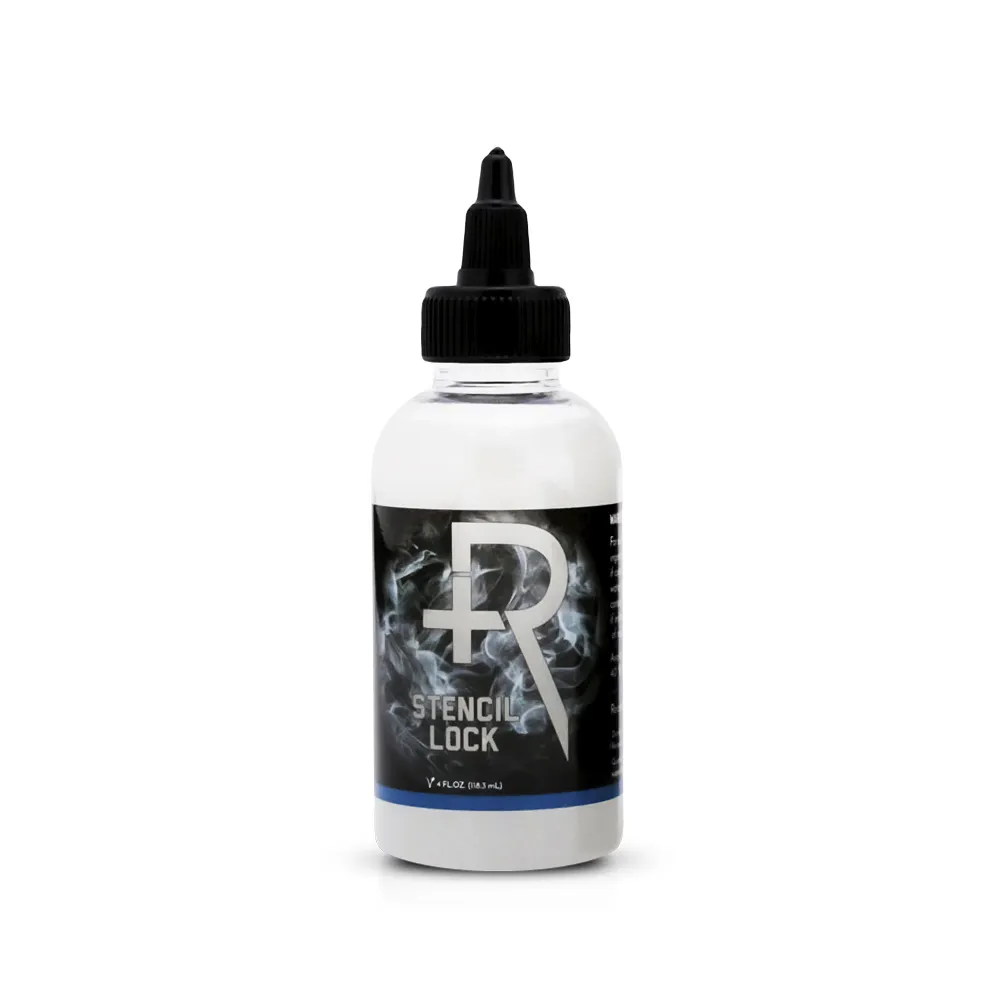 Stencil-Setting Product
Recovery - Stencil Lock 4 oz
Stencil-setting option for the lettering transfer.
Kwadron also describes Turbo RL needles, which need less frequent ink dipping, and Empty RL needles for a more old-school contour.
Shop Bishop Da Vinci V2 Browse Kwadron Cartridges Shop Stencil Supplies
LETTERING BUYING CHECKLIST
What should you check before buying lettering tattoo needles and approving a script design?
Buy for the word and its line weight: approve the design, test scale and spacing, then match the liner, ink and stencil products.
- Exact wording: Client approves spelling, punctuation, capitalization and any special characters as a shop workflow step.
- Font and scale: Compare the full word in script, fine line or Old English at the intended design size.
- Readability: Leave room for details and recognizable letters, following Peak's guidance.
- Grouping: Choose round liners by actual stroke weight; compare 3RL and 5RL rather than declaring a winner.
- Diameter and taper: Read pin count, pin diameter, taper and grouping tightness on the maker specification.
- Specialty option: Consider hollow liners for a bold outline as a design inference; recognize bugpin as a separate smaller-diameter option.
- Machine settings: Use FK Irons general task baselines only as context; follow the exact machine's directions.
- Black ink: Select a lining black product and follow its label.
- Transfer: Prepare a stencil, then confirm the transferred lettering with the client before work begins.
- Practice: Test full-word line weight, letter spacing and small detail on practice skin.
FAQ
Frequently asked questions about lettering and script tattoo needle sizes
Answers for artists choosing liner size, spelling approval, spacing and machine settings for readable script and display lettering.
What tattoo needle is best for lettering and script?
Peak names round liners for script, outlines and detail. Kwadron also describes RL as a precise lining configuration; compare the full phrase.
Should I use a 3RL or a 5RL for script tattooing?
Neither wins universally. Peak says fewer pins generally make a finer line, cites 3RL for tiny detail and warns that finer is not automatically better.
What is a bugpin needle, and is it good for fine lettering?
Peak describes #10 (0.30 mm) and #8 (0.25 mm) bugpins for delicate script; thinner strokes also reveal hand wobble.
How small can tattoo letters be before they blur?
Test the actual phrase and scale on practice skin. Peak advises leaving space for small details; use no fixed minimum height.
What voltage should I use for lettering tattoos?
FK Irons gives general 7V–8.5V for fine detail and 8V–10.5V for bold lining, with no universal voltage or stroke per grouping.
How do you space tattoo letters so they remain readable?
Review spacing within the full word, adjoining letters and decorative strokes. Peak recommends leaving room around small details.
Is Old English, cursive script or fine-line lettering better?
Choose for visual clarity at the intended size: script needs clean joins, Old English mixes bold contours with small details, and fine line puts every small stroke on display.
How do you make a stencil for a lettering tattoo?
Approve wording, scale and spacing; prepare and transfer the stencil, then check every letter. See SVT Shop stencil guides.
How do you avoid shaky lines when tattooing small text?
FK Irons says fine points reveal shaky movement, poor stretch and angle changes. Practice the actual lettering strokes.
Should the client check spelling before applying the tattoo stencil?
Yes. Make spelling, capitalization, accents and punctuation part of the client's approval before transfer.
Can a hollow liner be used for bold Old English outlines?
Peak describes hollow liners for bold outlines with less resistance. Old English is a possible design use to test, not a font rule.
How do I fix an old lettering tattoo that looks blurred?
Assess whether the letters can be reworked or need a cover-up design, and refer skin concerns to a dermatologist.
RESEARCH
Sources Consulted
Peak and Kwadron support the needle configuration and line-weight descriptions; FK Irons supports the fine-line handling and general settings discussion. The American Academy of Dermatology provides the statement about UV and tattoo ink fading.