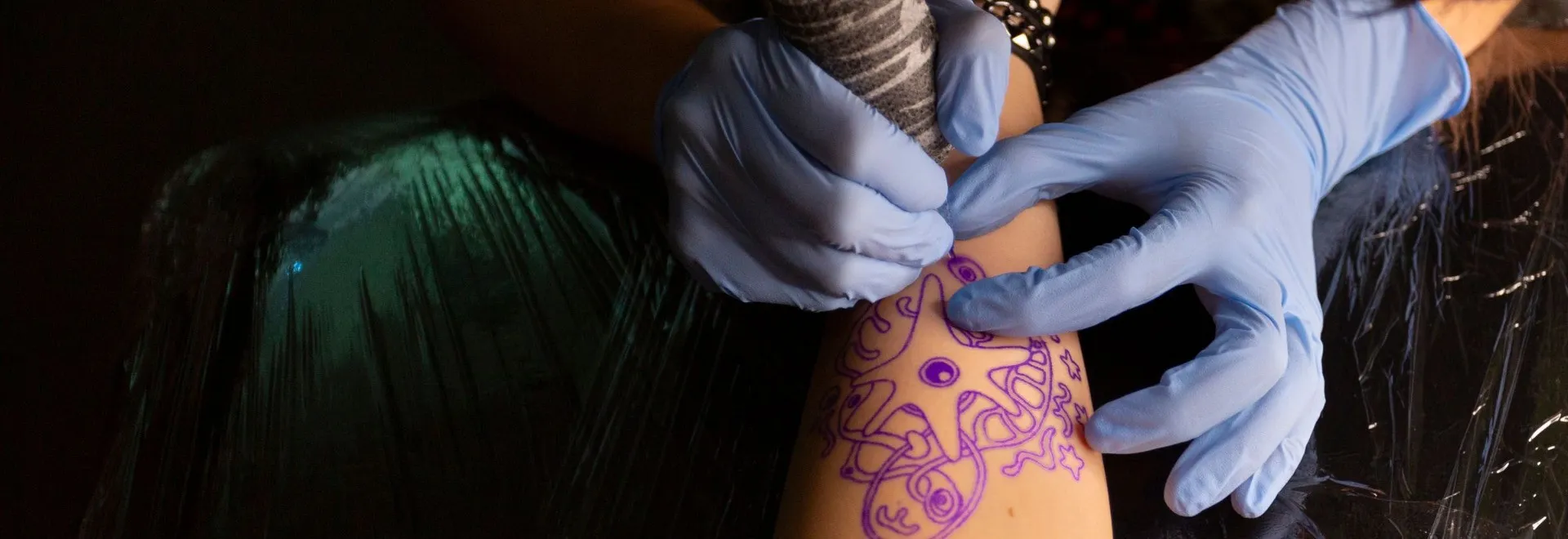
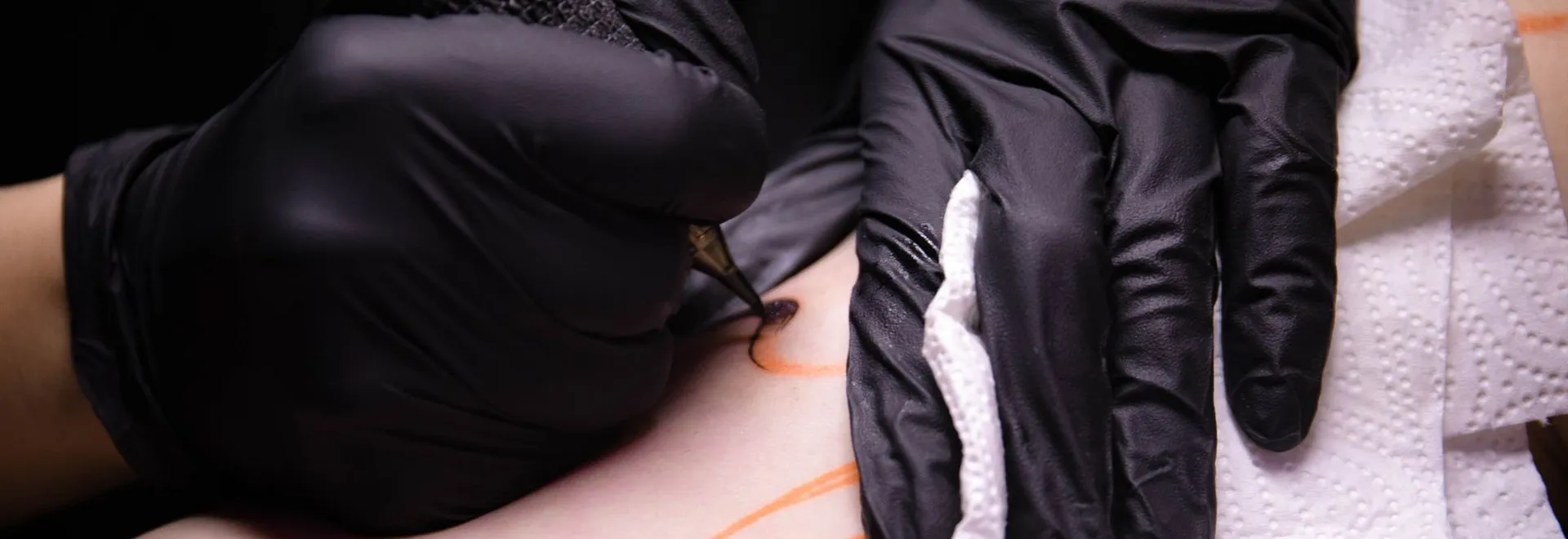
Powered by Comercia.io

In Texas, a tattoo consent and client record covers identity, age, procedure date, ink colors, body location, artist, signature and written-aftercare acknowledgement. Before each tattoo, artists must also explain verbal and written risks covering pain, permanence, infection and allergic reactions. Use DSHS rules and its sample record to check the current requirements; this guide is not legal advice.
View Texas DSHS Sample Record Review Texas Age and Consent Rules
QUICK ANSWER
What should a tattoo consent form include in Texas?
Record identity and age, procedure date, ink colors, placement, artist, client signature and aftercare acknowledgement. Texas §229.406 also requires verbal and written disclosure of four risks; §229.408 covers care instructions. Verify current DSHS rules.
BEFORE THE PROCEDURE
Check photo ID and disclose the four tattoo risks verbally and in writing.
ARTIST RECORD
Document actual colors, identifiers when available, body site, date and artist.
CARE AND SIGNATURE
Give oral and written care, obtain signed acknowledgement and retain the record.
CONSENT, RECORD AND CARE ARE CONNECTED
Is a tattoo consent form the same as a client record or aftercare acknowledgement?
Texas treats consent, the permanent record and aftercare acknowledgement as connected requirements. Section 229.406 requires the risk notice, procedure details and signature; section 229.408 requires care instructions and a signed acknowledgement.
Educational checklist, not a legal form
Use the current regulation and DSHS example to review your process. Ask DSHS or an attorney about legal wording.
FOUR TEXAS RISKS BEFORE EVERY TATTOO
Which tattoo risks must a Texas studio disclose verbally and in writing?
Texas §229.406(h) requires verbal and written notice before every tattoo of pain or discomfort, permanence, infection risk, and possible allergic reactions to pigments or other materials.

The four risks are a minimum. For medical questions, refer to a clinician and see our Tattoo Ink Allergy Guide. Piercing uses a different risk list; see Piercing Client Intake.
25 TAC CHAPTER 229 FIELD-BY-FIELD
What information must be recorded in a Texas tattoo client record?
Texas §229.406(j) lists the permanent record fields, with a separate signed aftercare acknowledgement under §229.408. The DSHS PDF reflects 2005 amendments; check the current text before applying it.

| Record or notice item | Texas rule and short requirement |
|---|---|
| Client contact | §229.406(j)(1): name, address and telephone number |
| Procedure date | §229.406(j)(2): date tattooing was performed |
| Age, birth date and ID | §229.406(a),(b),(j)(3): age, date of birth and type of valid ID |
| Risks explained | §229.406(h): verbal and written notice of four minimum risks |
| Tattoo colors | §229.406(j)(4): specific color or colors used |
| Color identifiers | §229.406(j)(4): manufacturer's catalogue or identification number when available |
| Body location | §229.406(j)(5): location on the body tattooed |
| Artist | §229.406(j)(6): name of the artist |
| Aftercare statement | §229.406(j)(7), §229.408(a): client received, read and understands written care instructions |
| Client signature | §229.406(j)(8): signature of client |
| Record access | §229.406(k): records accessible for authorized examination and copying |
Record the service actually performed. Check that the client, artist, colors, location, signature and care acknowledgement are complete.
AGE, DATE OF BIRTH AND PHOTO ID
How must a Texas tattoo studio verify a client's identity and age?
Section 229.406(a) requires valid government-issued ID with a photograph and printed date of birth. Under (b), the artist records age, birth date and ID type. The rule asks the studio to record the type of ID.
Texas has only a narrow under-18 cover-up exception. A parent signature alone does not authorize every minor tattoo. See Texas Tattoo Age and Consent and DSHS.
WRITTEN CARE AND SIGNED ACKNOWLEDGEMENT
Does a Texas tattoo consent form need a separate aftercare sheet?
Texas §229.408 requires oral and written care instructions and a signed acknowledgement in the permanent record. The client receives a copy and acknowledges reading and understanding it.
The rule covers sun and swimming precautions for at least two weeks, cleansing, ointment or cream, sterile dressings when needed, artist and studio contact details, medical referral for symptoms and reporting diagnosed reactions to DSHS.
Match the care sheet to the actual dressing and cleanser used. See Tattoo Aftercare Day by Day and Second Skin vs Ointment. Medical questions belong with a clinician.
DSHS SAMPLE TATTOO CLIENT RECORD
Where can a Texas studio find the official DMDG-121 tattoo client record example?
DSHS publishes Sample Tattoo Client Record DMDG-121, revised November 2008. It includes risk notice, contacts, signature, care acknowledgement, and artist fields for age, ID, location, colors and catalogue numbers.
DSHS publishes it as a sample record. The cited rule PDF was amended in 2005; confirm current requirements with the agency.
WHEN A SIGNATURE IS NOT ENOUGH
Can an artist tattoo someone who appears intoxicated or has a rash on the tattoo site?
Texas §229.406(f) prohibits tattooing anyone who appears under the influence of alcohol or drugs. Subsection (g) prohibits working on skin showing rashes, boils, infections, abrasions or other unhealthy conditions.
Do not diagnose a skin condition. Postpone the procedure and refer health questions to a clinician; see Infection Signs vs Normal Healing.
TEXAS, NYC, FLORIDA AND GEORGIA
How long must tattoo studios keep consent and client records in different states?
Texas, NYC and Florida require two years of record retention; Georgia requires three. Their starting points and location rules differ.

| Jurisdiction | Rule and required documentation | Minimum retention |
|---|---|---|
| Texas | 25 TAC §229.406(j): permanent client record, signature and care acknowledgement | 2 years after last entry |
| New York City | NYC Health Code §22-11: signed written consent with identity and procedure details; §22-12 written care | 2 years after tattoo date |
| Florida | Rules 64E-28.009 and .007: customer and artist records, procedure details, and applicable parental consent | 2 years |
| Georgia | Rule 511-3-8-.08: Health Authority-approved application, evaluation and informed consent | 3 years; at least 1 on premises |
Florida also specifies notarized parental consent for eligible minors 16–17, unlike Texas's narrow cover-up exception. Confirm current local rules; see State Tattoo License Guide.
COMMON STUDIO PAPERWORK ERRORS
What tattoo consent and recordkeeping mistakes should studios avoid?
A completed form is not the entire intake process. Check actual procedure data and current rules.
Using a signature instead of a risk explanation
Texas requires both verbal and written risk notice before each tattoo.
Recording only the planned design
Artist fields should identify actual colors and body location, with available catalog identifiers.
Leaving ID type or birth date blank
Section 229.406 makes these part of the permanent client record.
Confusing consent with aftercare delivery
Section 229.408 also requires oral and written care and a signed acknowledgement.
Treating DMDG-121 as mandatory legal wording
DSHS provides it as a sample, not as an obligatory form.
Assuming a parent's signature always permits a minor tattoo
Texas has a narrow cover-up exception; review the exact rule separately.
GLOVES AND AFTERCARE FILM IN THE STUDIO
Which gloves and tattoo aftercare films do we carry for the documented service?
We carry gloves and adhesive-film options from Adenna, KORVEX, Recovery and Saniderm. These support the service, not the consent paperwork or regulatory approval. Check labels and document the dressing actually used.
 ADENNA / EXAM GLOVES
Adenna - Night Angel Black Nitrile Exam Gloves
Exam-glove option for the procedure workstation; verify sizing and labeling.
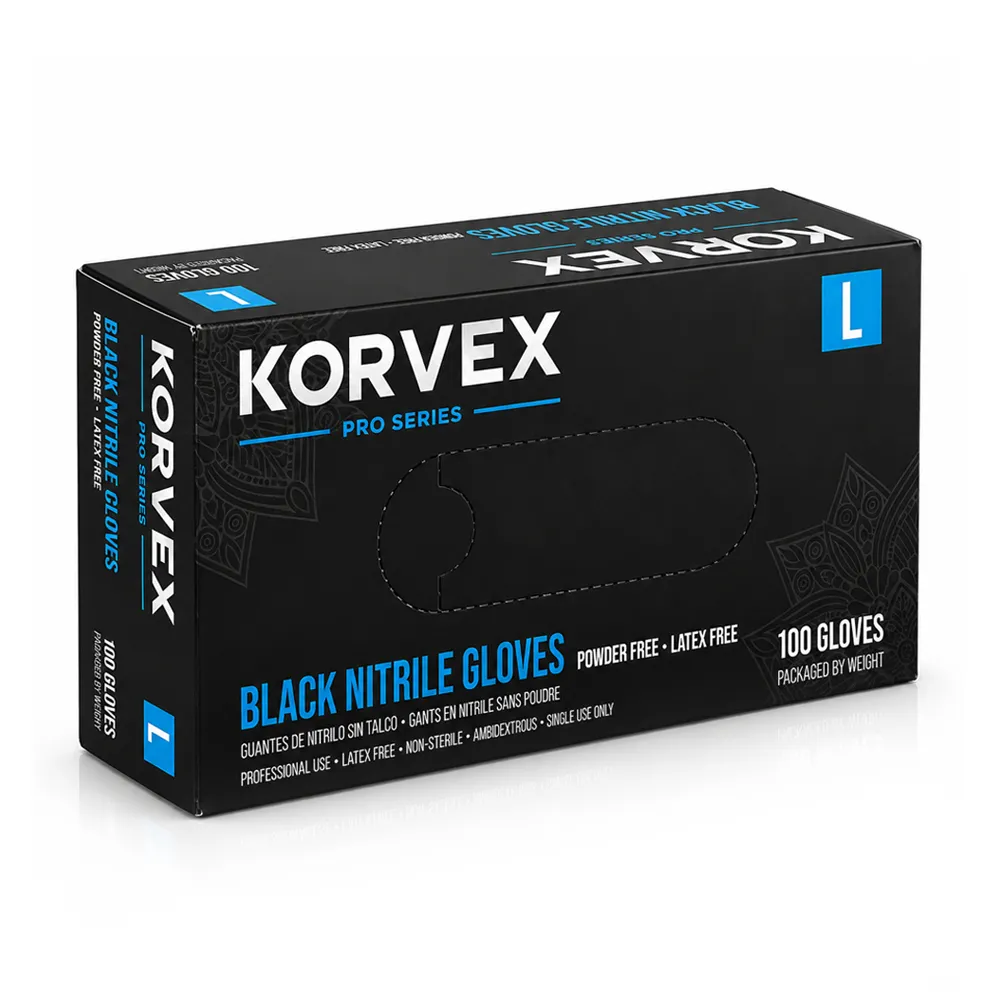 KORVEX / NITRILE GLOVES
KORVEX - Black Nitrile Gloves
Another black nitrile option; review the selected product's exam-use labeling and intended application.
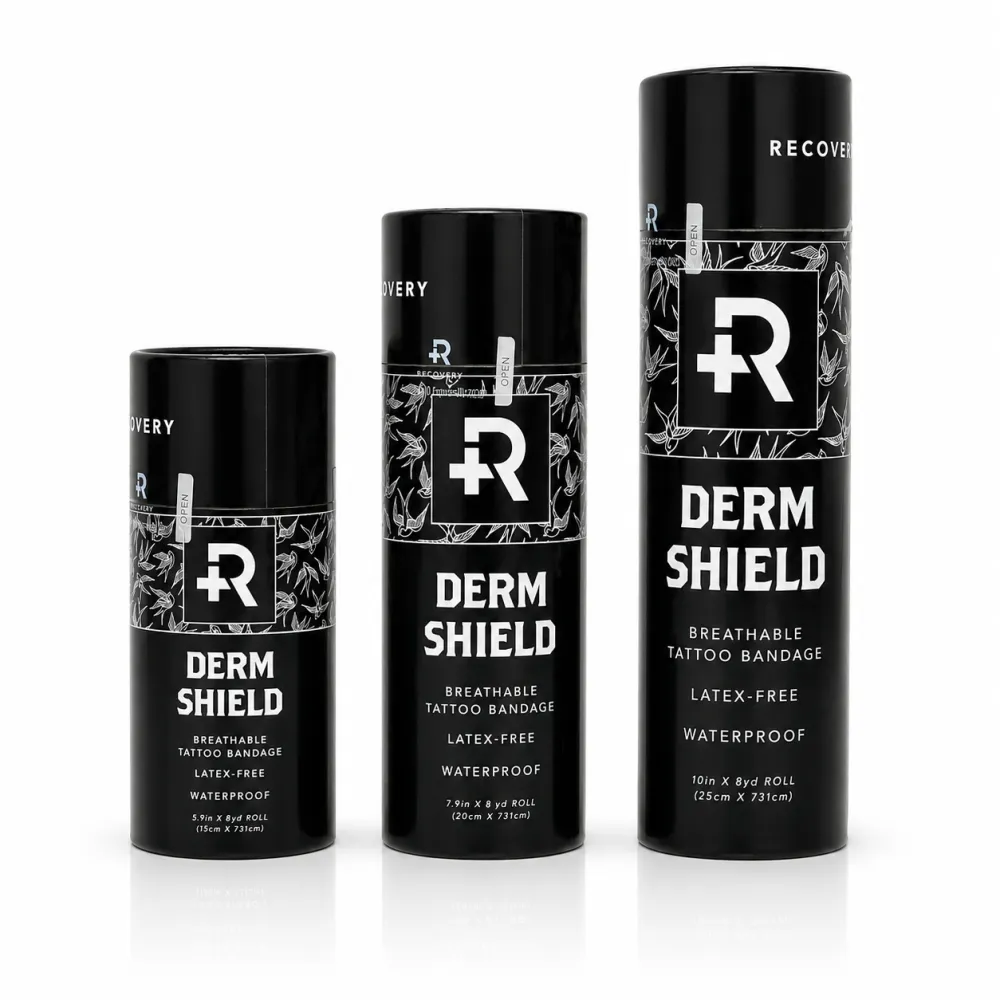 RECOVERY / AFTERCARE FILM
Recovery - Derm Shield Tattoo Adhesive Film
Adhesive film option for a studio's actual dressing plan; follow the label and corresponding aftercare directions.
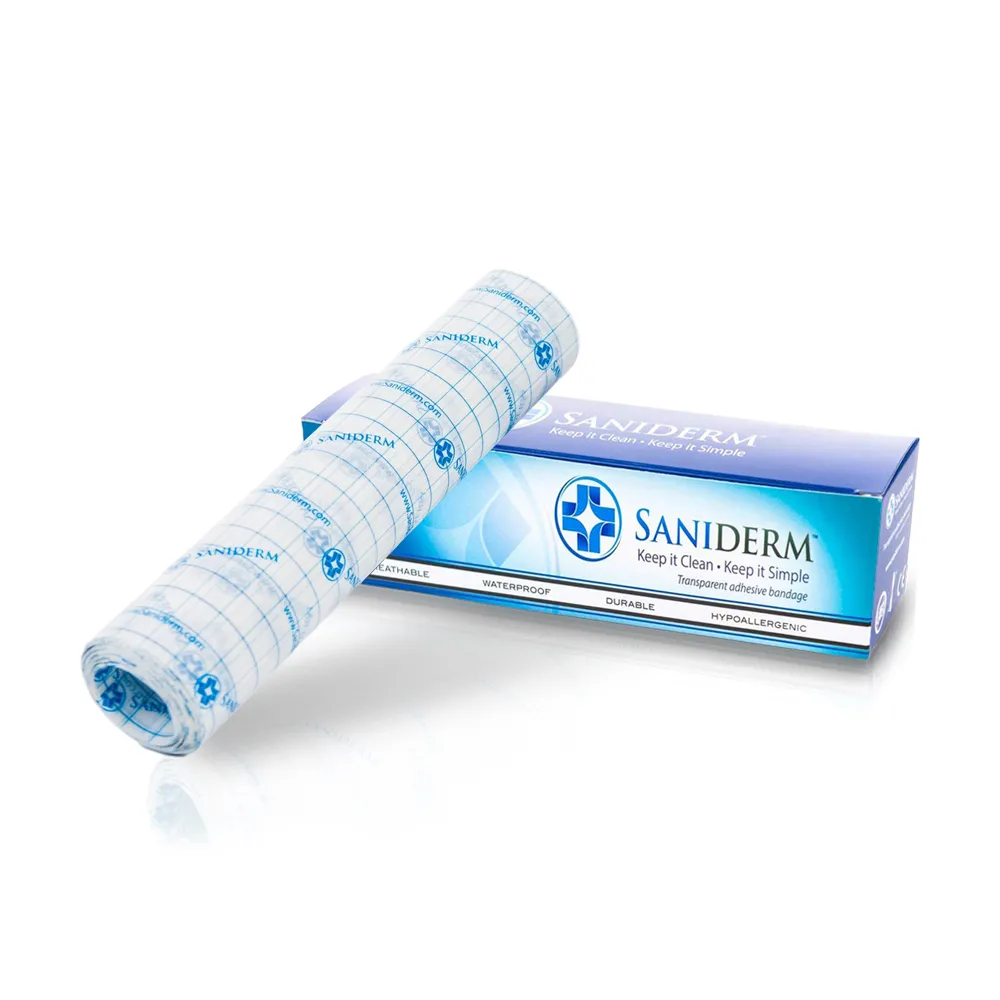 SANIDERM / AFTERCARE FILM
Saniderm Adhesive Film 10.2 in. x 2 yd Roll
Another adhesive-film format; the care sheet should describe whichever dressing was actually used.
Explore Adenna Gloves Explore Recovery Derm Shield Review Aftercare Options
COPYABLE TEXAS TATTOO RECORD CHECKLIST
What should studio owners check before filing each tattoo client record?
Use this checklist to review a completed file, not as a substitute for DSHS or attorney-approved language.
- Current rules: Confirm Texas §§229.406 and 229.408 with DSHS?
- Identity: Name, address, phone, age, DOB and qualifying photo-ID type?
- Risks: All four minimum risks explained verbally and in writing?
- Eligibility: No apparent intoxication or unhealthy tattoo site?
- Procedure: Actual date, body location and artist recorded?
- Pigments: Specific colors and available manufacturer identifiers recorded?
- Signature: Client signature obtained?
- Care: Oral and written aftercare provided, with a copy?
- Acknowledgement: Client signed that care was received, read and understood?
- Minor exception: If relevant, special Texas conditions verified?
- Retention: Record available for the required period and authorized inspection?
- Other jurisdictions: Any applicable local or state requirements reviewed?
FAQ
Frequently asked questions about tattoo consent forms, PDFs and client records
These answers summarize the cited state and city rules for tattoo studios; confirm the current requirements where your business operates.
What should a tattoo consent form include?
Texas requires risk disclosure, client and procedure details, signature, and care acknowledgement under §§229.406 and 229.408.
Is a tattoo consent form required in Texas?
Texas requires written and verbal risks, a signed record, and aftercare acknowledgement. DSHS provides a sample.
Where can I get a printable Texas tattoo consent form PDF?
DSHS publishes DMDG-121 as a sample, not mandatory wording. Confirm current requirements.
How long must a Texas studio keep tattoo consent records?
At least two years after the last entry, with records available for authorized inspection.
Can a Texas tattoo studio use an online form or electronic signature?
Ask DSHS or an attorney about acceptance of your particular electronic form and signature process.
Do I need a separate tattoo aftercare sheet?
Give oral and written instructions plus a copy, and obtain a signed acknowledgement in the permanent record.
Do tattoo artists need to write down ink colors and catalogue numbers?
Yes: specific colors and available manufacturer catalog or identification numbers are listed in §229.406(j).
Can a parent sign for a 16-year-old to get tattooed in Texas?
Only under Texas's narrow cover-up exception. Ordinary parental consent does not authorize all minor tattoos.
What if the client appears drunk or has a rash?
Texas prohibits tattooing someone appearing intoxicated or tattooing visibly unhealthy skin.
Does New York City require written tattoo consent?
Yes. NYC Health Code §22-11 requires signed written consent retained two years after tattooing.
Does Florida require parental consent forms for minors?
Florida specifies signed, notarized consent for eligible 16–17-year-olds, with two-year record retention.
How long are tattoo consent forms kept in Georgia?
At least three years in Georgia, with at least one year kept on the premises.
OFFICIAL STATE RULES AND DSHS EXAMPLES
Sources Consulted
DSHS provides the Texas record and care rules and sample. NYC, Florida and Georgia sources support the retention comparison. Confirm the current text with each authority.
- Texas DSHS: 25 TAC Chapter 229, Sections 229.406 and 229.408
- Texas DSHS: Sample Tattoo Client Record DMDG-121, Revision 11/2008
- Texas DSHS: Guidance Documents and Sample Forms
- Texas DSHS: Licensing Requirements and Tattoo Studio Records
- NYC Health Code Chapter 22, Sections 22-11 and 22-12
- Florida Administrative Code 64E-28.009, Tattooing Procedures
- Florida Administrative Code 64E-28.007, Tattoo Establishment Records
- Georgia Rules 511-3-8-.08, Client Files and Record Retention