Powered by Comercia.io
Texas piercing studios must document each client's identity, service, jewelry, piercer, written-care acknowledgment and signature. Under 25 TAC Chapter 229, Subchapter V, records are kept for at least two years after the last entry, and piercing risks are disclosed verbally and in writing. For minors, the rule asks for notarized consent and a parent present, while the DSHS web page describes two separate methods: confirm with Texas DSHS.
Review Texas DSHS Piercing Rules Read Texas Piercing Licensing Guide
QUICK ANSWER
What must a Texas body piercing client record and consent form include?
Record identity and contact details, service date, age and ID, jewelry, body location, piercer, written-care acknowledgment and signature. Explain risks verbally and in writing. For minors, confirm DSHS parental-consent requirements and retain supporting paperwork.
CLIENT DETAILS
Name, contact, age, birth date and identification type.
SERVICE DETAILS
Date, body location, artist, jewelry and maker ID when available.
ACKNOWLEDGMENT
Spoken and written risk disclosure; written-care statement and signature.
THREE DOCUMENTATION FUNCTIONS
What is the difference between a piercing intake form, consent form and permanent client record?
Intake gathers information; consent records authorization; the permanent client record documents the actual service under Texas rules. They may be organized across forms, but the required fields, risk disclosure, written-care acknowledgment and signature must still be completed.

The permanent record identifies the client, service, piercer and jewelry. A general waiver signature does not replace these entries. Read Texas Body Piercing Laws and Licensing for the broader studio rules.
Educational guidance, not legal advice
Confirm current DSHS requirements and your studio's forms with DSHS or a Texas attorney.
TEXAS RECORD REQUIREMENTS
What information does 25 TAC Chapter 229 require on each piercing client record?
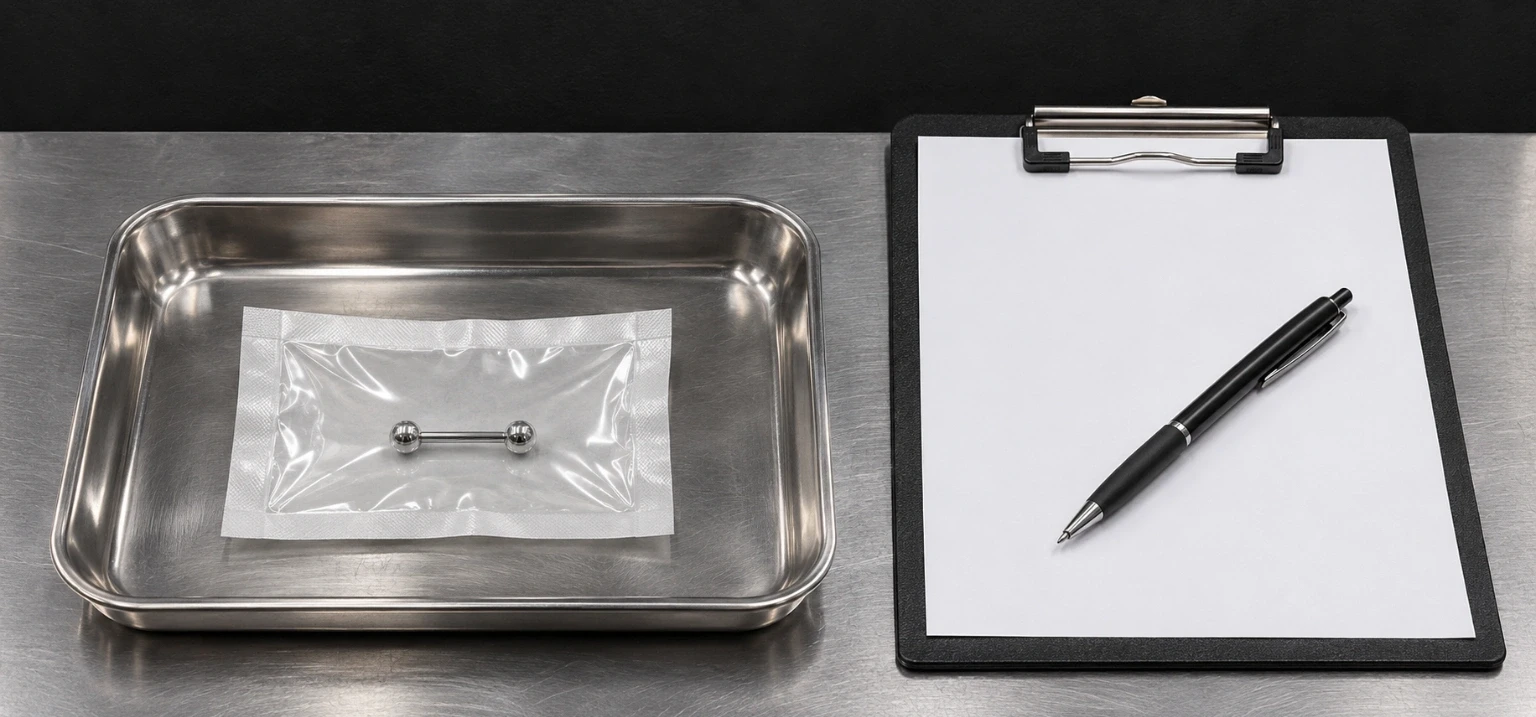
The rule requires identity and contact information, service and jewelry details, the artist's name, and an acknowledgment with signature. The following fields come from the client-record provisions of 25 TAC §229.406(j) in the DSHS rules.
| Record field | Why it belongs in the record | Source |
|---|---|---|
| Client's full name | Identifies the person receiving the service | 25 TAC §229.406 |
| Address and telephone | Preserves the client's contact information | 25 TAC §229.406 |
| Date of service | Records when the piercing took place | 25 TAC §229.406 |
| Age, date of birth, ID type | Documents the artist's age and identification verification | 25 TAC §229.406 |
| Type of jewelry | Identifies jewelry used for the piercing | 25 TAC §229.406 |
| Manufacturer catalog or ID number | Records the specific jewelry identifier when available | 25 TAC §229.406 |
| Body location | Records where the piercing was performed | 25 TAC §229.406 |
| Artist's name | Identifies the piercer responsible | 25 TAC §229.406 |
| Written-care acknowledgment | Records receipt, reading and understanding of applicable written instructions | 25 TAC §229.406 |
| Client signature | Completes the signed permanent client record | 25 TAC §229.406 |
The jewelry entry should be specific enough to capture the type and manufacturer catalog number when available. For new piercings, the DSHS web page lists approved materials: implant-grade stainless steel (at least 316L or 316LVM), solid 14k or 18k gold, niobium, titanium (at least 6AL4V) or platinum, free of nicks and scratches and sterilized before use. For distinctions between initial and changed jewelry, see Initial vs Healed Piercing Jewelry.
AGE AND IDENTIFICATION
What photo ID must a Texas piercer check for an adult client?
Texas generally requires clients to be 18 or older and to present government-issued identification with a photo and printed birth date, subject to the rules for minors. Examples include a driver's license, passport and military ID. Record the age, date of birth and ID type.
A verbal claim of age is not a substitute for identification. Minor applications call for additional parent or guardian documentation.
PARENTAL CONSENT / CONFIRM WITH DSHS
Can a 17-year-old get pierced in Texas with notarized consent or a parent present?
The DSHS rule (25 TAC §229.406(e)) asks for a written and notarized consent and the parent, managing conservator or guardian physically present. The notarized consent lists the names, addresses and phone numbers of the client and the adult, the body location and both signatures; the adult also signs an affidavit and shows evidence of the minor's identity and of their own status. DSHS's licensing web page, however, describes two separate methods:
Two methods described by DSHS
- Notarized paperwork: Minor and adult names, addresses, phone numbers, authorized body location and both signatures.
- Adult present: The adult signs statements about authority and relationship, presents identity evidence and stays for the service.
A studio that collects the notarized consent and also has the parent present with identification and proof of status meets both readings; still, confirm with DSHS or a Texas attorney before accepting a minor. The APP, as professional guidance rather than law, calls for a parent or guardian to be present to sign. Maintain the minor's client record and relevant approval paperwork. For tattoo-specific rules see Texas Tattoo Age and Consent Form.
Confirm minor paperwork before service
Resolve the agency's current interpretation and any stricter city rule instead of relying on a generic consent form.
VERBAL AND WRITTEN RISKS
Which piercing risks must Texas studios explain before a service?
Texas requires risks to be explained verbally and in writing to the client and, where applicable, the parent or guardian. Piercing disclosure is distinct from the written aftercare acknowledgment.
Minimum risk topics listed in the rule
- Discomfort or pain; scarring
- Bleeding and swelling
- Risk of infection
- Possible nerve damage
- Increased risk to adolescents at certain developmental stages
Do not substitute a signature for the required spoken explanation or use the tattoo-specific risk list in place of piercing information.
WRITTEN CARE ACKNOWLEDGMENT
Must Texas piercers provide written aftercare and obtain a signed statement?
Yes. Texas requires a permanent-record statement that the client received, read and understands applicable written care instructions, plus the client's signature. DSHS also describes verbal and written care instructions for piercings.
Keep that acknowledgment distinguishable from the separate risk disclosure. For educational healing content, see Piercing Aftercare, Saline and Healing Times.
APP PROFESSIONAL GUIDANCE
Should a piercing studio ask health-history questions during intake?
The APP discusses conditions that may affect healing, including diabetes, lupus and HIV/AIDS, and calls for evidence of medical consultation for certain serious heart conditions. This is professional guidance, not a list of Texas-mandated form questions.
The piercer should refer concerns to an appropriate doctor rather than diagnosing or supplying medical clearance. Review with the proper authority how the studio handles any health-history information.
SERVICE RESTRICTIONS
When must a Texas studio decline piercing because of intoxication or skin condition?
Texas prohibits piercing someone who appears under the influence of alcohol or drugs, or piercing skin with unhealthy conditions such as rashes, boils, infections or abrasions. A signed form does not override these restrictions.
Stop the service assessment and refer medical concerns to a healthcare professional rather than diagnosing them. Continue to verify age and identification; the rule also addresses false age statements by minors.
RETENTION AND INSPECTION
How long do Texas studios keep piercing client records, and who can inspect them?
Keep the records at the studio for at least two years after the date of the last entry. For temporary locations, the license holder maintains the records. Authorized agents and health authorities may inspect or copy them at reasonable times.

File the complete identity, service, jewelry, care and signature information so it remains available. Check for stricter local requirements.
Count from the last entry
The rule measures the two-year minimum from the last recorded entry, not simply the original appointment date.
DSHS EXAMPLE PAPERWORK
Does Texas DSHS provide sample piercing client records and minor-consent forms?
Yes. DSHS provides examples of body-piercing client records and minor affidavits. Download current samples through the DSHS tattoo and body piercing program's forms or guidance area, then compare them with the current rule.
A sample is not a legal opinion about a waiver. Ask a Texas attorney about waiver wording or enforceability.
ADMINISTRATIVE PAPERWORK REVIEW
How should a piercing studio organize intake, consent and record completion?
Separate eligibility, disclosure and the final service record. These are administrative checkpoints, not instructions for performing a piercing.
Verify identity and eligibility
Check ID, age and any required minor approval documents.
Review restrictions
Apply the rules about intoxication and unhealthy skin.
Provide risk disclosure
Explain piercing risks verbally and in writing.
Complete service details
Record date, body location, artist and jewelry details.
Record acknowledgment
Document written care received and understood; obtain signature.
File the record
Retain it for the required period and authorized inspection.
See Piercing Studio Setup Checklist for the broader studio workflow.
LOCAL RULES
Can Texas cities impose stricter piercing consent and studio requirements?
Yes. DSHS says some Texas cities have stricter ordinances or prohibit body piercing. Confirm the local rules at the studio address. Other states' forms require their own authorities' review.
Tattooing minors has different rules, addressed in Texas Tattoo Age and Consent Form.
COMMON RECORDKEEPING ERRORS
What piercing consent and client-record mistakes should Texas studios avoid?
Check the actual record fields, minor documentation and retention date. A generic waiver cannot stand in for them.
Missing contact fields
Record name, address and phone.
Unrecorded ID details
Enter age, birth date and ID type.
Generic jewelry description
Identify jewelry type and maker catalog/ID when available.
Relying only on a signature
Give verbal and written risk information and record aftercare receipt.
Guessing minor-consent rules
Confirm the current DSHS process.
Counting from appointment day
Retention runs from the last entry.
Overlooking service restrictions
Apparent intoxication and unhealthy skin remain exclusions.
Copying another state's template
Verify Texas and local requirements.
BEFORE FILING THE CLIENT RECORD
What belongs on a Texas piercing client-record checklist?
Verify who received the service, what was performed, which jewelry was used and what instructions were acknowledged.
- ID: Age, DOB and identification type recorded?
- Contact: Name, address and phone included?
- Service: Date and body location entered?
- Piercer: Artist name shown?
- Jewelry: Type and maker catalog/ID when available?
- Risks: Spoken and written disclosures provided?
- Care: Written instructions acknowledged?
- Signature: Client record signed?
- Minors: DSHS-confirmed approval paperwork retained?
- Filing: Two-year minimum after last entry and local rules checked?
RELATED STUDIO SUPPLIES
Which professional piercing studio supplies does SVT Shop carry?
We carry gloves, barrier film and sharps containers for studio workflows. Supplies do not replace consent, recordkeeping or DSHS requirements.
 EXAM GLOVES
Adenna - Night Angel Black Nitrile Exam Gloves
Disposable gloves for professional studio work.
 BARRIER FILM
Dynarex - Barrier Film Clear
Film for suitable contact surfaces.
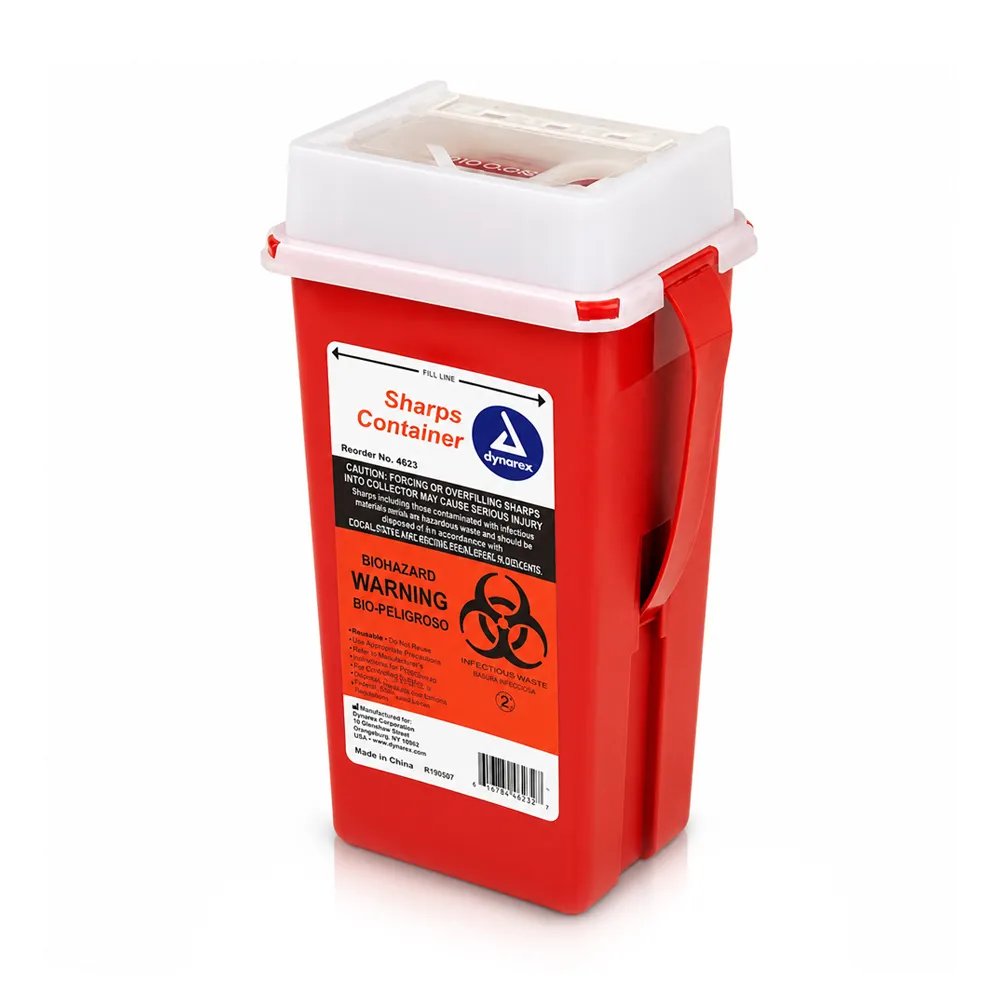 SHARPS CONTAINER
Dynarex - Sharps Container 2 Qt.
Container for the studio's sharps workflow.
Related: Cross-Contamination Checklist and Needlestick Injury.
FAQ
Frequently asked questions about piercing client records and consent forms in Texas
Answers for piercers reviewing age checks, minor consent, documentation and inspections.
What must be on a body piercing client record in Texas?
Contact, service date, age/DOB/ID type, jewelry and maker ID when available, body location, piercer, care acknowledgment and signature.
How long do I keep piercing records in Texas?
At least two years after the last entry. Authorized authorities may inspect or copy them.
Can I pierce a 17-year-old in Texas?
Only with parental consent. The rule text asks for notarized consent plus a parent present; confirm with DSHS, whose web page describes two methods.
Must a Texas minor's piercing consent be notarized?
The rule text requires notarized consent and the parent present. The DSHS web page describes notarized paperwork or adult presence as separate methods; confirm with DSHS.
Which ID should I check for a piercing in Texas?
For adults, valid government ID with photo and birth date; record age, DOB and ID type.
Are written piercing aftercare instructions required?
Yes. Record that they were received, read and understood; obtain the client's signature.
What piercing risks must I disclose?
Verbally and in writing: pain, scarring, bleeding, swelling, infection, nerve damage and adolescent developmental risk.
Can I pierce someone who has been drinking?
Not if the person appears under the influence of alcohol or drugs.
Can I pierce skin with a rash or infection?
Texas prohibits piercing skin showing unhealthy conditions such as rash, boil, infection or abrasion.
Is a signed piercing waiver enough?
Required record fields, ID checks, disclosures and care acknowledgment still apply. Ask an attorney about waiver wording.
Does DSHS offer sample body-piercing consent forms?
Yes. Access current examples through the DSHS forms or guidance area.
Who can inspect Texas piercing client records?
Authorized agents or health authorities may access and copy required records at reasonable times.
TEXAS RULES AND PROFESSIONAL SOURCES
Sources Consulted
Texas record rules come from the DSHS rules (25 TAC §229.401–413); the DSHS web page explains its consent methods. APP describes professional guidance separately from Texas law. Confirm current requirements with DSHS or a Texas attorney.