Powered by Comercia.io
Compare covered tattoo aftercare with adhesive film and open aftercare with a thin layer of balm, ointment or lotion. Learn how artists may combine both approaches, when to transition, how much moisturizer to use, and what the manufacturers say about petroleum-free and petrolatum-based formulas.
EXPLORE TATTOO AFTERCARE COMPARE THE ROUTINES
THE SHORT ANSWER
Quick Answer: Is Second Skin Better Than Tattoo Ointment?
Neither adhesive second skin nor open aftercare with ointment or lotion is universally better for every new tattoo: film provides a temporary physical covering, while open care involves routine cleansing and light moisturization. A common combined approach uses film for the manufacturer's recommended period, followed by a thin layer of a suitable balm or lotion after the final bandage is removed. Choose with your tattoo artist based on skin tolerance, fluid release, placement and the specific product instructions.
TWO ROUTINES, ONE NEW TATTOO
What Is Covered Healing vs. Open Tattoo Aftercare?
Once a tattoo is completed, the artist needs to explain how the client should care for the freshly tattooed skin. Two common approaches are a protective adhesive film worn for a defined period and an open-care routine built around gentle washing followed by a small amount of an appropriate moisturizing product. They are different procedures, not two names for the same product.
Covered aftercare uses a manufactured, breathable adhesive dressing such as Recovery Derm Shield or Saniderm. The film adheres to surrounding skin and acts as a physical covering while the seal stays intact. Its instructions address initial wear, when to replace a piece, how to remove it, and when skin irritation or fluid requires a change.
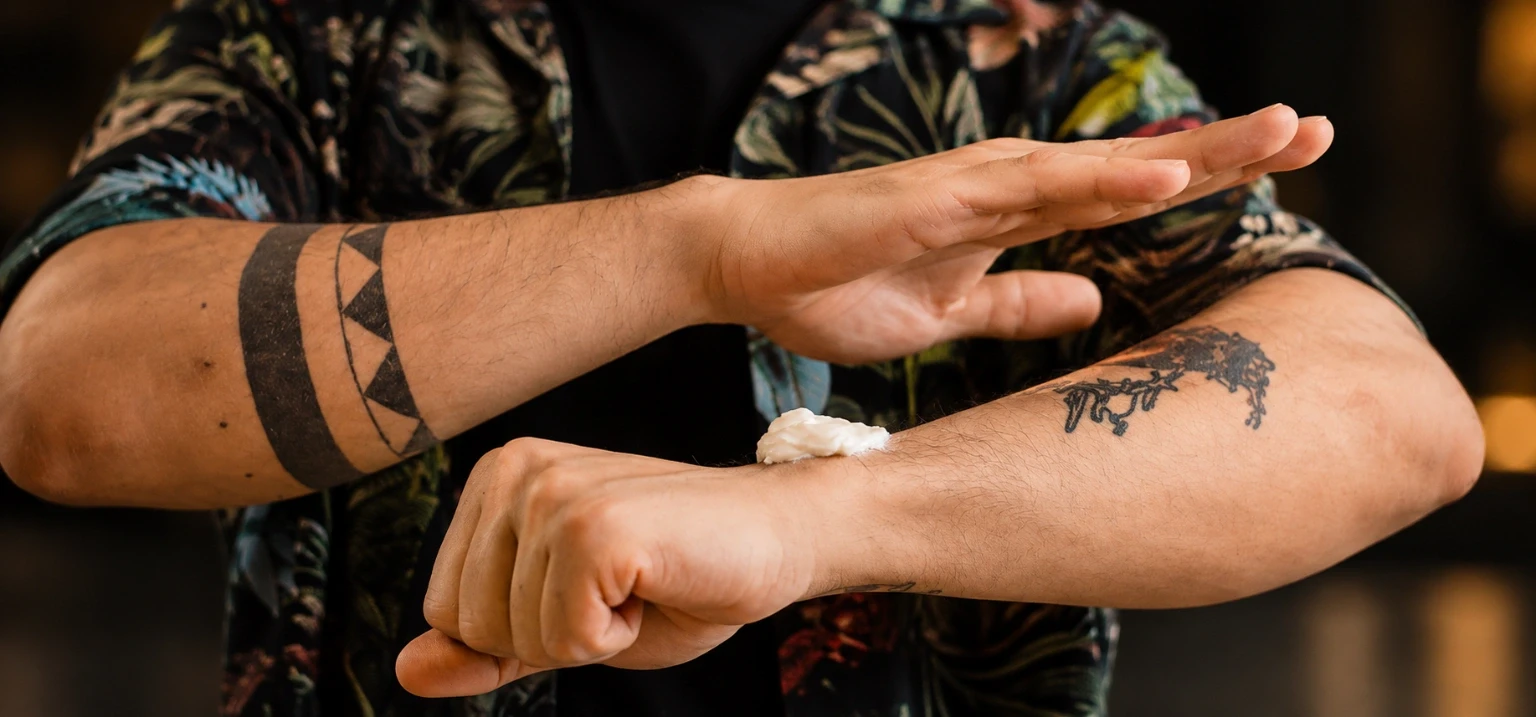
Open aftercare begins after the initial covering has been removed and no new film is being applied. The tattoo is gently cleansed, dried and moisturized with a thin layer of a product selected for that purpose. The protective effect comes from appropriate care and a skin-conditioning formula rather than from a sealed adhesive sheet.
These approaches can also be used sequentially. Many tattoo artists give clients a period of film coverage and then direct them to continue with balm or lotion after the last dressing comes off. Saniderm itself publishes a transition from film to daily cleansing and a thin layer of aftercare balm, demonstrating how the two approaches can fit into one manufacturer-described routine.
Neither the American Academy of Dermatology (AAD) nor the U.S. Food and Drug Administration (FDA) has declared one of these methods universally superior for all new tattoos. Manufacturers describe intended product benefits; the artist's instructions, the condition of the skin and individual tolerance determine which approach is practical.
Adhesive film
A physical barrier stays over the tattoo for the product's approved interval as long as the edges remain intact.
Gentle wash + thin layer
The exposed tattoo is cleansed and lightly moisturized at intervals appropriate to the selected product.
Film, then lotion or balm
The routine changes after final film removal, without treating a thick ointment layer as a replacement for the dressing.
SIDE-BY-SIDE ROUTINE COMPARISON
Second Skin vs. Ointment Aftercare: Pros, Limits and Daily Tasks
This table focuses on what a client actually does. The film method is governed by the bandage's seal and manufacturer wear schedule. Open care requires more regular contact for cleaning and applying a thin moisturizer. Combining them does not require using both products at the same moment.
| BUYING QUESTION | ADHESIVE SECOND SKIN | OPEN BALM OR LOTION CARE |
|---|---|---|
| Main mechanism | Preformed flexible film with an adhesive seal around the tattoo | Gentle cleansing followed by a thin, skin-conditioning layer |
| Typical products | Recovery Derm Shield; Saniderm | Hustle Butter De Luxe; After Inked; INKEEZE ointments and balm; Recovery Tattoo Salve |
| Daily routine | Observe seal and follow brand-specific dressing changes | Clean, dry and apply a modest amount as the product directs |
| Practical advantage | Physical coverage against ordinary contact and clothing friction while sealed | Simple reapplication and the ability to respond to changing skin dryness |
| Main limitation | Adhesive sensitivity, leaks, peeling edges and fluid buildup can end wear early | Excess product can leave skin overly coated; frequent touching requires clean hands |
| Showering | Manufacturers permit normal showers when the film stays securely sealed | Gentle washing and brief showers; do not soak a fresh tattoo |
| Removal or transition | Remove according to brand instructions; change to open care afterward | No sheet to peel; continue cleansing and light moisturization |
| Best decision factor | Whether a stable adhesive covering suits the location and skin | Whether the client can follow a consistent, non-excessive product routine |
Many routines use both: film first, then a thin balm or lotion after the final bandage. Choose with your tattoo artist.
With film, correct coverage and an intact perimeter determine whether the dressing is still performing as intended. With open care, clean skin, a thin application and sensible reapplication intervals determine how the product fits the routine. A thicker coat is not an upgrade from a thin one.
METHOD 01 / COVERED AFTERCARE
Recovery Derm Shield and Saniderm: How Covered Aftercare Works
Recovery Derm Shield and Saniderm are transparent adhesive films designed to cover the tattoo and an area of surrounding skin. Both manufacturers emphasize breathability, flexible movement and a water-resistant or waterproof covering when correctly applied.
The film helps separate the tattoo from incidental contact with clothing, dust and other external irritants. It also allows an artist or client to observe the covered area without removing the dressing merely to inspect it. The benefit depends on a good seal; if liquid escapes or water enters beneath the film, the condition has changed.
Recovery publishes its own Derm Shield instructions, and Saniderm publishes separate directions for its original tattoo bandage. Each addresses the first application, later pieces, fluid collection and removal. Do not use Saniderm's maximum-wear rule as a substitute for Recovery's instructions, or vice versa.
Saniderm's brand guidance recommends no more than seven consecutive days in total across its bandages. The first and subsequent applications follow its own schedule. Recovery uses different wording for its Derm Shield application limits. For complete brand-by-brand timing and the removal process, see SVT Shop's Recovery Derm Shield vs. Saniderm guide.
Adhesive-film aftercare is convenient when the skin tolerates the dressing and the tattoo's position allows an appropriate surrounding margin. It becomes less convenient when motion, fluid, sweating or adhesive sensitivity prevent the seal from remaining intact. Those circumstances call for reassessing the covering rather than automatically keeping it on until the scheduled day.
Once the last film comes off, the client should move to the selected open-care instructions. Keeping an old or leaking dressing in place is not preferable to an appropriately managed open routine.
METHOD 02 / OPEN AFTERCARE
Open Healing With a Thin Ointment, Balm or Lotion
Open tattoo aftercare refers to looking after the tattoo without a longer-wear adhesive film over it. The client follows the artist's cleaning instructions, lets the area dry and applies an appropriate product in a modest amount. The routine continues as the tattooed skin changes from the initial tender period to dryness and peeling.
Ointment, balm and lotion are not identical textures. Ointments and balms are often richer, while lotions generally spread more lightly. A product's actual formula matters more than the word on the container. Check whether it is intended for a new tattoo, whether it contains petrolatum and how the manufacturer instructs the client to use it.
The AAD advises people whose tattooed skin feels dry to use a water-based lotion or cream. It also cautions that petroleum-based products such as petroleum jelly can cause tattoo ink to fade. After Inked Moisturizer, covered below, lists water as its first ingredient.
Manufacturer guidance can be more specific. Recovery recommends a thin layer of its Tattoo Salve 3–4 times daily for 7–10 days. INKEEZE Pink and Purple ointments direct users to apply thin coats as needed during recovery. After Inked describes a small amount of its lotion two or three times daily or when the skin needs moisture.
The advantages of an open routine are simplicity and flexibility: the client can clean the exposed area, notice changes in the skin and use a small quantity of moisturizer when appropriate. Its limits include repeated handling, forgetting to clean before application, applying too much and using a product that does not match the artist's instructions.
Open care does not mean the tattoo requires constant application throughout the day. The objective is a light, even layer when directed, not a permanently wet or heavily coated appearance.
A PRACTICAL SEQUENCE
The Hybrid Routine: Second Skin First, Then Balm or Lotion
A combined routine does not require placing ointment underneath a film or stacking several aftercare layers. It means using one method during an initial period and transitioning to another after the final dressing is removed. Saniderm's own aftercare guide provides an example of this sequence.
The tattoo artist chooses whether an adhesive dressing suits the client's skin, tattoo placement and fluid release. The artist applies the film and explains the brand's instructions.
Follow the brand's scheduled changes and watch for leakage, lifting or skin irritation. Do not assume the total wear allowance must always be reached.
Saniderm recommends gentle washing at least twice daily after its last bandage, patting dry and allowing further air drying before moisturizing.
Use an artist-approved balm or lotion according to that product's instructions. Saniderm describes continuing its post-film cleansing and thin-balm routine for the next 1–2 weeks.
One advantage of this approach is that it separates the need for an initial physical covering from the need to manage later dryness. The products serve different roles at different stages. A client who develops adhesive irritation or experiences a failed seal may need the transition sooner, following the artist's advice.
When following Saniderm's own instructions, do not place a petroleum-based ointment such as Aquaphor under its bandage. Saniderm allows a thin layer of moisturizer under a new bandage for dry skin or low-humidity climates, while Recovery asks for clean skin with no residue before applying Derm Shield. Follow the instructions for your exact film.
If a different barrier format is being used, the sequence may change. In particular, the manufacturer of the partnered INKEEZE Tattoo Spray directs users not to combine its spray-on coating with balms or creams during the spray routine.
KEEP EACH BRAND'S DIRECTIONS SEPARATE
Tattoo Aftercare Timing: What the Manufacturers Recommend
A duration on one product should not be transferred to a different product. Film describes a dressing-wear schedule; a salve or lotion describes the frequency of reapplication. The most useful routine is the one the artist can explain clearly and the client can follow consistently.
| MANUFACTURER / PRODUCT | PUBLISHED ROUTINE | PRACTICAL INTERPRETATION |
|---|---|---|
| Saniderm adhesive film | Brand-specific dressing changes; no more than 7 consecutive days total | Do not exceed the total film limit or ignore a compromised seal |
| After final Saniderm | Wash at least twice daily; thin aftercare balm for the next 1–2 weeks | Switch to a separate open-care routine after final removal |
| Recovery Derm Shield | Follow Recovery's first and later dressing instructions | Use the separate SVT Shop film guide for full timing |
| Recovery Tattoo Salve | Thin layer 3–4 times daily for 7–10 days | Manufacturer's schedule for the salve, not for film |
| After Inked Lotion | Thin layer 2–3 times a day or as needed | Clean skin first; avoid unnecessary excess |
| INKEEZE Pink / Purple / Green | Thin coats as needed during the recovery period | Frequency follows the product label and artist's plan |
| INKEEZE Hi-Definition Balm | Thin layer for new-tattoo aftercare | Apply according to the manufacturer's directions |
Timing comes from each manufacturer's published directions. Full film-change details are in the linked film guide.
"As needed" still means thin coats, not a thick layer every hour. Saniderm specifically discusses over-moisturizing as a problem; Recovery's salve directions also caution against excessive application.
EVERYDAY CARE
Washing, Showering and Cleaning Between Applications
Cleaning is a separate part of aftercare, regardless of whether the artist prefers film or an open routine. A new tattoo should be handled with clean hands, gentle washing and a careful drying process. The specific schedule comes from the product instructions and the artist's aftercare plan.
With adhesive film: Recovery Derm Shield and Saniderm describe protective coverings that permit ordinary showering when their adhesive seal remains secure. Saniderm's detailed instructions address cleaning the tattoo between bandages. A leaking, detached or water-compromised dressing should not be kept in place solely because the planned removal date has not arrived.
With open aftercare: gently wash the tattoo, rinse and pat it dry before applying a small quantity of balm or lotion. Saniderm recommends washing at least twice daily following final film removal. After Inked recommends cleaning before applying its lotion, including an evening wash in its routine.
Brief showers are different from extended immersion. Avoid soaking a fresh tattoo in a bath, pool or hot tub during the initial aftercare period. The protective-film and open-care routines both require attention to water exposure, even though a properly sealed film offers a different physical barrier.
Drying matters as much as washing. Saniderm describes patting dry with a clean disposable paper towel and allowing approximately 5–10 additional minutes of air drying before applying its next dressing or a post-film balm. Rubbing the tattoo with a towel is not part of that guidance.
Do not scrub away peeling skin or repeatedly wash merely to remove every trace of dryness. If a product causes discomfort or the skin is reacting, reassess the routine with the artist instead of adding more layers in an attempt to correct the problem.
MORE IS NOT AUTOMATICALLY BETTER
How Much Tattoo Ointment Should You Apply, and How Often?
Most of the manufacturer guidance reviewed here emphasizes a thin layer. The exact amount depends on tattoo size and product texture; no universal spoonful, fingertip length or measured dose applies to every tattoo. The purpose is to lightly cover the intended area, not to leave a thick, shiny layer sitting on the surface.
Recovery Tattoo Salve specifically instructs users to clean and dry a new tattoo and then apply a thin layer 3–4 times a day for 7–10 days. After Inked recommends a small amount of lotion 2–3 times daily or as needed. INKEEZE Pink and Purple describe thin applications as needed during the recovery period. These are distinct product directions.
When a balm is very rich, spread a small amount evenly instead of repeatedly adding more before the previous layer has absorbed. For a lighter lotion, the skin may feel less coated, but the same principle of moderation applies. Product texture does not make excessive application useful.
Saniderm explicitly warns that a new tattoo can be over-moisturized. Its guide lists problems from excess product such as clogged pores, acne breakouts around the tattoo and inflammation.
Wash and dry according to the selected routine. Apply only enough approved product to form a light, even layer. Reapply at the manufacturer's interval or when the artist directs, rather than keeping the skin visibly saturated with ointment.
Another useful distinction is between a product used as a glide during the tattoo session and a product intentionally selected for later aftercare. Some manufacturers market the same formula for both uses, while others provide a dedicated lotion or salve. Always use the directions for the exact product, not a schedule borrowed from another formula.
READ THE INGREDIENTS
Petroleum-Based vs. Petroleum-Free Tattoo Aftercare
Petrolatum is the ingredient name commonly associated with petroleum jelly. The difference between a petroleum-based ointment and a petroleum-free balm is a formulation distinction, not simply a marketing style or the color of the jar.
The AAD advises that petroleum-based products, such as petroleum jelly, can cause tattoo ink to fade and recommends a water-based lotion or cream when tattooed skin feels dry. Saniderm separately advises against using petroleum-based products such as Aquaphor under its bandage.
A product's brand name should not be used to classify every formula in that brand's lineup. INKEEZE has both petroleum-free and petrolatum-based ointments. Recovery also has different formulas for its Tattoo Salve and its colored Tattoo Glides.
| PRODUCT | INGREDIENT CLASSIFICATION | MANUFACTURER-BASED CONTEXT |
|---|---|---|
| Hustle Butter De Luxe | Petroleum-free | Plant-butter-based balm marketed for tattoo sessions and aftercare |
| After Inked Moisturizer | Non-petroleum-based; water is first ingredient | Fragrance-free lotion marketed for new and older tattoos |
| INKEEZE Pink Ointment | Non-petroleum-based | Thin coats as needed; bubblegum-fragranced formula |
| INKEEZE Purple Ointment | Non-petroleum-based | Thin coats as needed; lavender-containing formula |
| INKEEZE Black Ointment | Non-petroleum-based | Manufacturer's black-colored ointment formula |
| INKEEZE Green Ointment | Petrolatum is the first ingredient | Manufacturer markets it for session use and aftercare; read the ingredient list |
| Recovery Pink / Cotton Candy Glide | Petrolatum is the first ingredient | Distinct from Recovery Tattoo Salve |
| Recovery Black Glide | Petrolatum is the first ingredient | Distinct from Recovery Tattoo Salve |
The classifications above reflect the manufacturers' actual product descriptions and ingredient lists. INKEEZE Green and Recovery Pink and Black Glides must not be labeled petroleum-free. Conversely, INKEEZE Pink, Purple and Black ointments are explicitly identified by their manufacturer as non-petroleum formulas.
The Recovery Tattoo Salve contained in the linked care kit is a different named formula from Recovery's Pink or Black Glide. The salve's published ingredient list includes olive fruit oil, synthetic beeswax and cocoa seed butter. Keep those formulas distinct when discussing aftercare.
A petroleum-free product can still contain fragrance, essential oils or other ingredients a client prefers to avoid. For example, Hustle Butter De Luxe includes fragrance, and INKEEZE Pink and Purple have scented formulas. A client wanting a fragrance-free lotion can compare After Inked's manufacturer-described formula and then consult the artist.
PETROLEUM-FREE OPTIONS AND DAILY MOISTURE
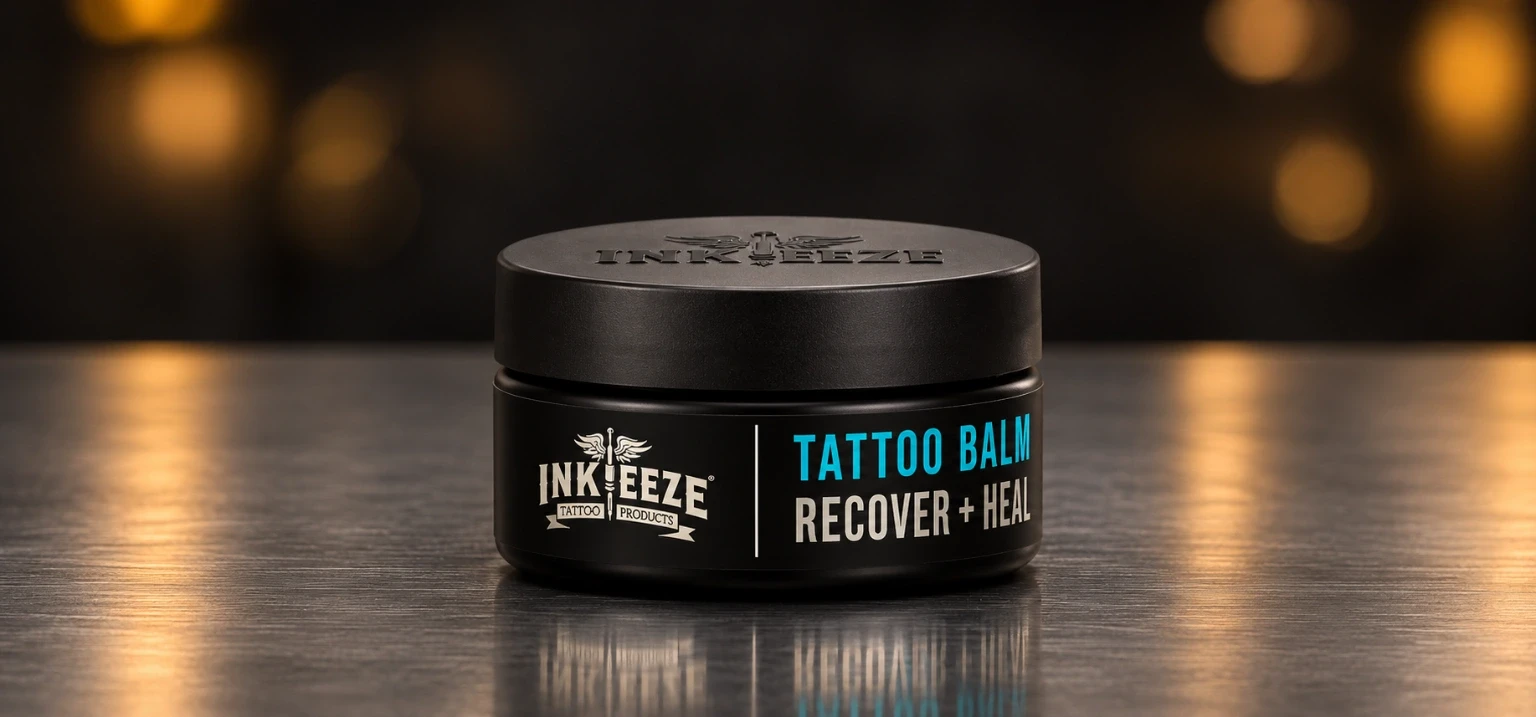
Hustle Butter, After Inked and INKEEZE Hi-Definition Balm
A professional aftercare assortment may contain both rich balms and lighter lotions because clients have different preferences for texture and application. The following products have distinct manufacturer descriptions and should be chosen according to those directions.
Hustle Butter De Luxe
Hustle Butter De Luxe is described by its manufacturer as a petroleum-free, vegan tattoo balm for use during tattooing and for aftercare. Its ingredient list begins with shea butter and includes sunflower seed oil, coconut-derived ingredients, aloe extract and mango seed butter.
Hustle Butter recommends applying a small amount with clean hands to moisturize tattooed skin. Its texture is richer than a typical water-based lotion, so a little product is the appropriate starting point. The formula also contains fragrance; petroleum-free should not be mistaken for fragrance-free.
This is a product to consider when the client and artist want a balm texture without petrolatum. Apply it to clean skin, and do not spread a heavy layer under an adhesive film.
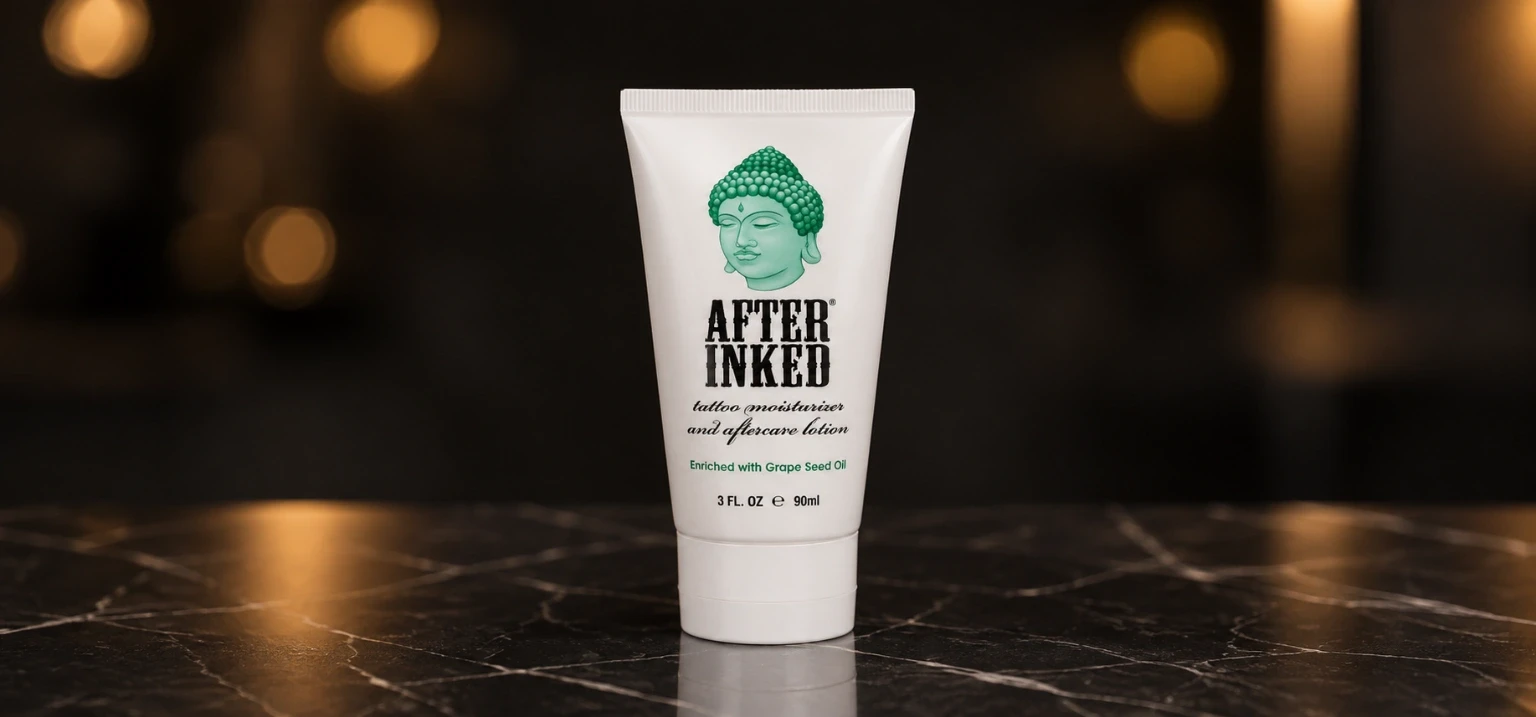
VIEW HUSTLE BUTTER DE LUXEAfter Inked Moisturizer and Aftercare Lotion
After Inked describes its moisturizer as fragrance-free, vegan and non-petroleum-based. Its published formula begins with water and includes grape seed oil, glycerin, shea butter and jojoba seed oil. The product is marketed for both new and existing tattoos.
The brand instructs users to apply a thin layer to clean skin and repeat 2–3 times a day or as needed. It also describes cleansing the tattoo before bedtime and applying a light layer afterward. This is a practical alternative for clients who prefer a lotion texture rather than a thicker balm.
The AAD's general recommendation for water-based products when tattooed skin feels dry fits this lotion option. The client should still use the exact label directions and stop if irritation develops.
VIEW AFTER INKED LOTIONINKEEZE Hi-Definition Tattoo Balm
The INKEEZE Hi-Definition Tattoo Balm is positioned by the manufacturer as a moisturizer for new tattoos and everyday care of existing tattooed skin. Its published directions say to apply a thin layer to a new tattoo and use it daily on older work.
The product description highlights botanical components, including shea butter, plant ceramides and vitamins, and describes a smooth balm texture with a natural coconut aroma.
The best fit is an artist-approved balm routine in which the client can apply a restrained amount and monitor dryness. Its product directions are separate from the INKEEZE colored ointment formulas and from adhesive-film instructions.
VIEW INKEEZE HI-DEFINITION BALMTHREE DISTINCT OINTMENT FORMULAS
INKEEZE Pink, Purple and Green Tattoo Ointments
The INKEEZE ointments linked at SVT Shop may look like a product family, but their ingredients are not interchangeable. The manufacturer markets them for use during tattooing and as aftercare, with thin applications during recovery. The key buying distinction here is the formula base.
 PINK / NON-PETROLEUM
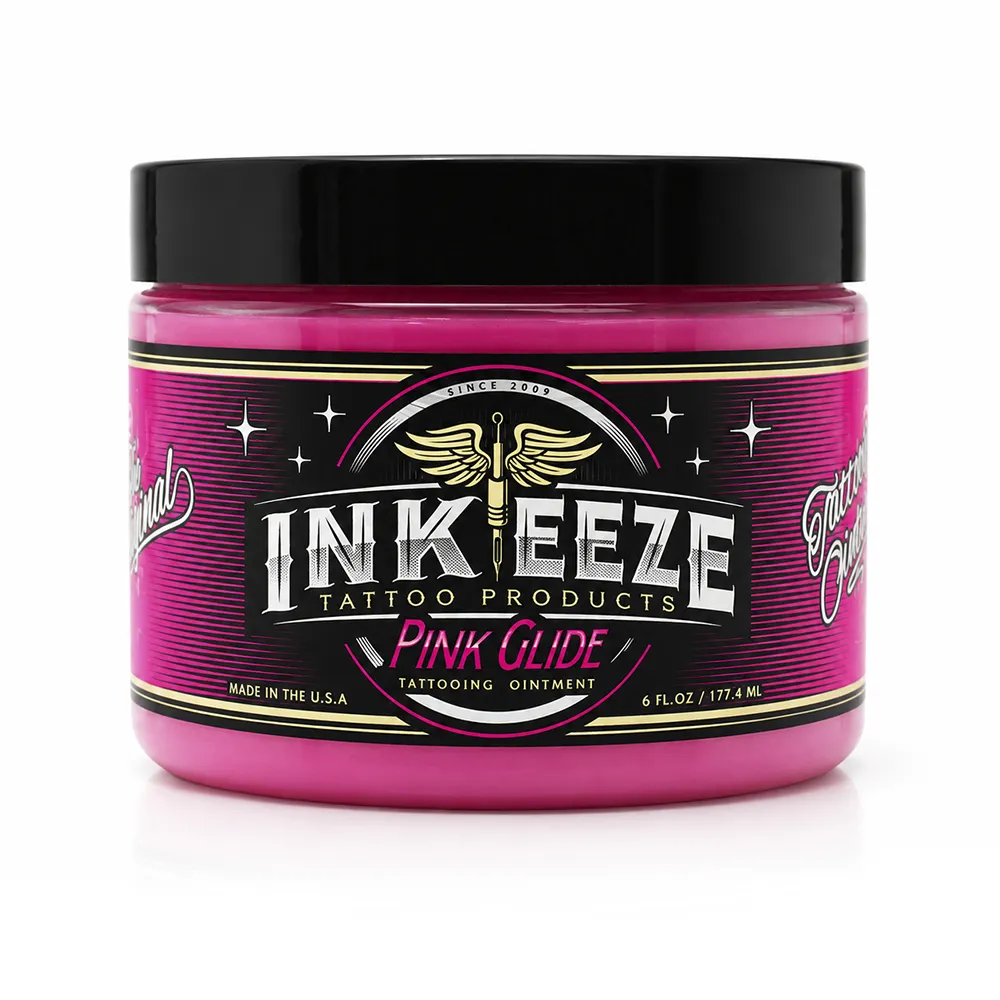
INKEEZE Pink Tattoo Ointment
The manufacturer describes Pink as a non-petroleum ointment with sunflower seed oil, synthetic beeswax and calendula extract. Its ingredient list includes fragrance, and the product has a bubblegum scent.
The label recommends thin coats as needed during aftercare. Choose based on the artist's instructions and the client's tolerance for a scented ointment.
VIEW INKEEZE PINK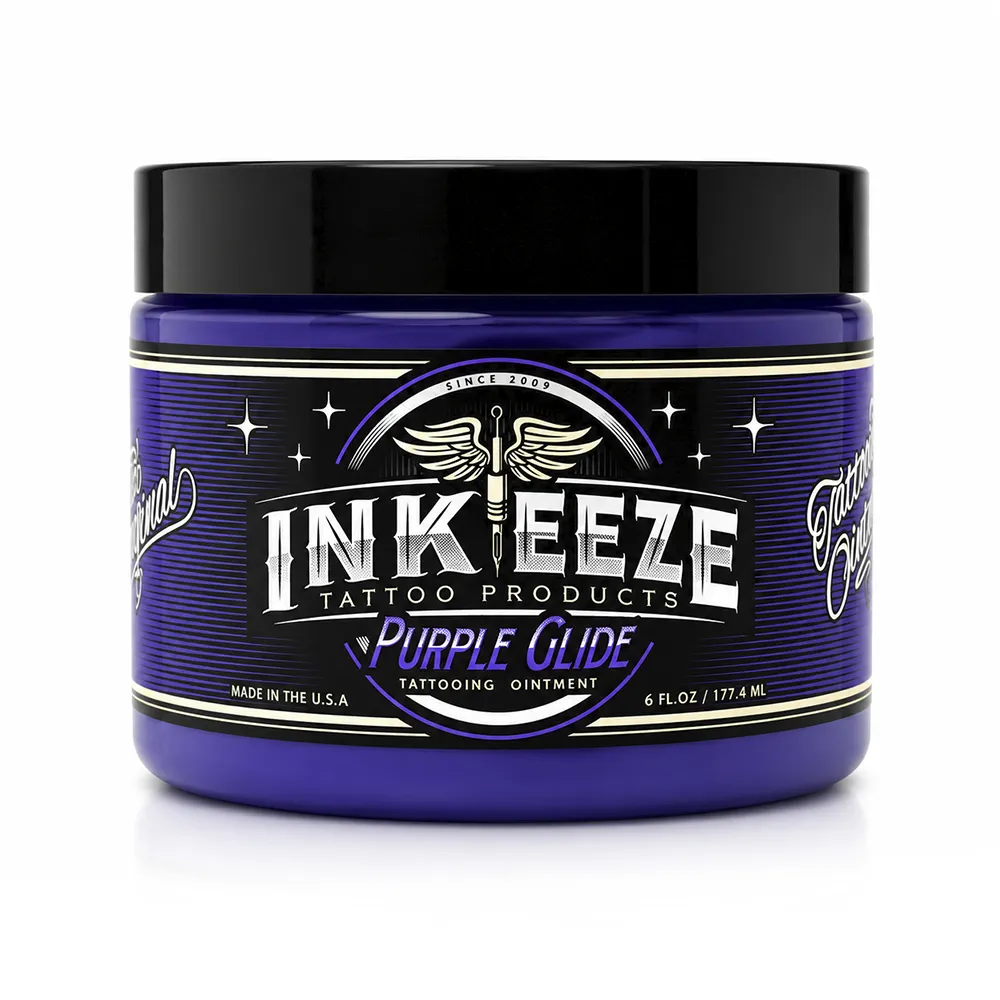 PURPLE / NON-PETROLEUM
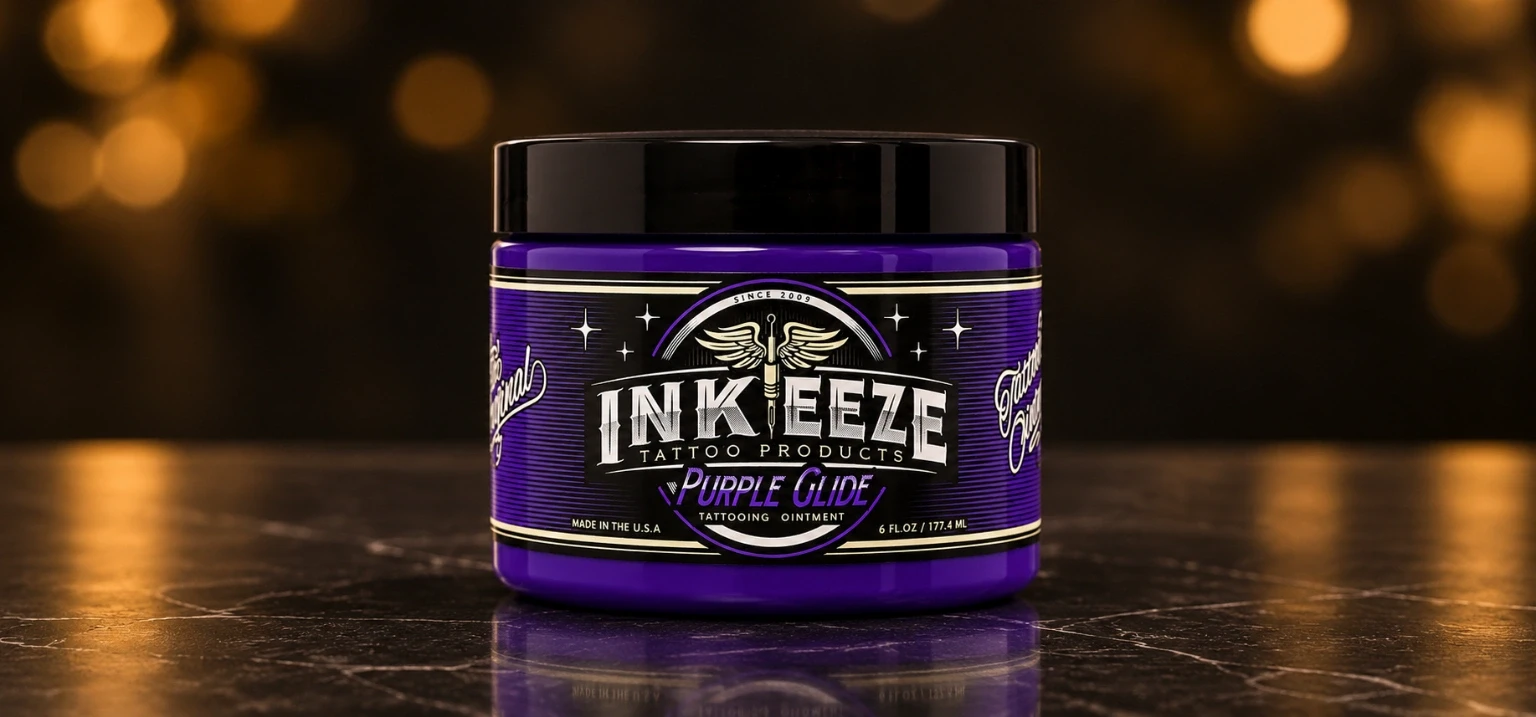
INKEEZE Purple Tattoo Ointment
Purple is also described as a non-petroleum formula. The manufacturer lists sunflower seed oil, synthetic beeswax, calendula extract, castor seed oil and lavender oil among its ingredients.
The brand advises thin coats as needed during recovery. Its lavender-containing formula deserves the usual ingredient review for clients sensitive to scented products.
VIEW INKEEZE PURPLE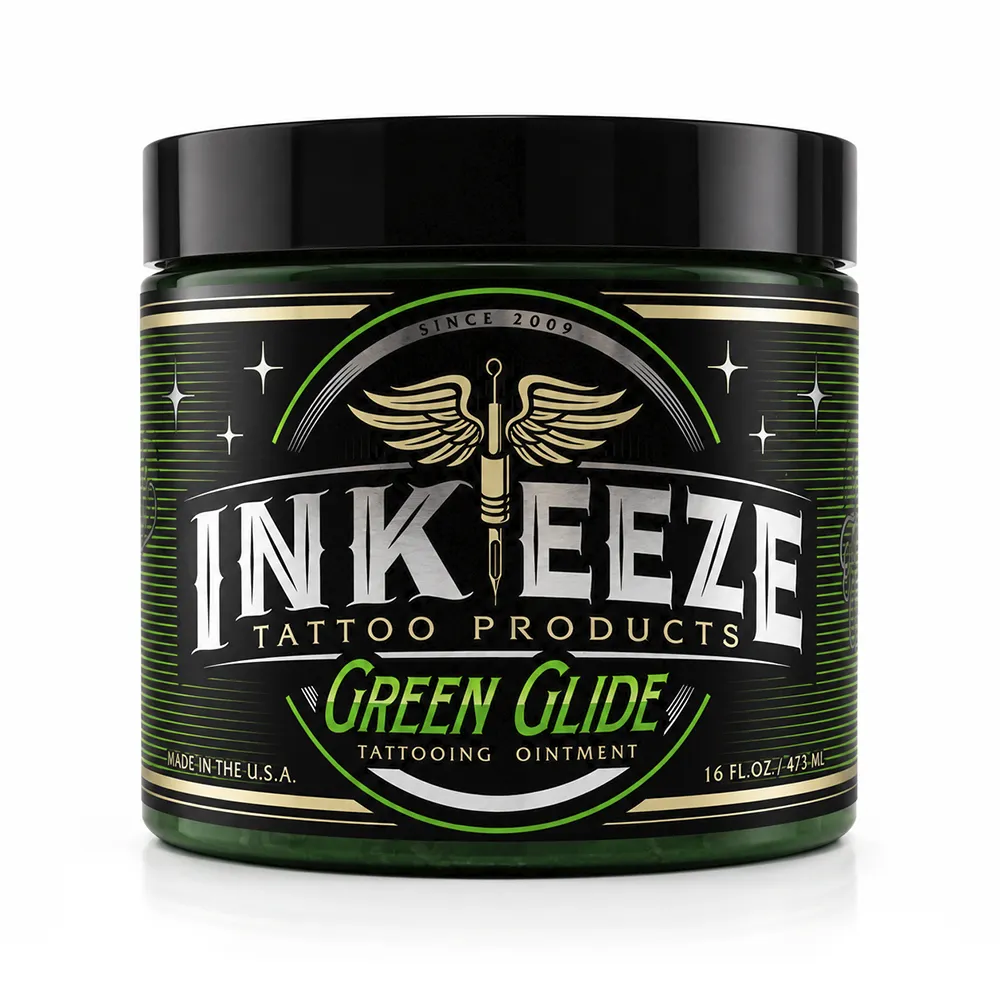 GREEN / PETROLATUM-BASED
INKEEZE Green Tattoo Ointment
INKEEZE Green lists petrolatum as its first ingredient. The manufacturer also lists botanical extracts and vitamins and provides directions for thin aftercare applications.
The manufacturer markets Green for use during tattooing and as aftercare. Because Saniderm advises against petroleum-based products under its bandage, use Green for open care, not under Saniderm.
VIEW INKEEZE GREENINKEEZE Black Tattoo Ointment is another non-petroleum formula from the manufacturer, also available at SVT Shop. The important point is to read the specific formulation: Pink, Purple and Black are identified as non-petroleum, while Green contains petrolatum.
These ointments can be used as glides during a tattoo session according to the manufacturer's directions, but this article concerns their aftercare role. Do not convert a product's in-session instructions into a recommendation to keep an adhesive bandage coated with it afterward.
A SEQUENTIAL PRODUCT SYSTEM
Recovery Professional Tattoo Care Kit: Film, Salve, Lotion and Soap
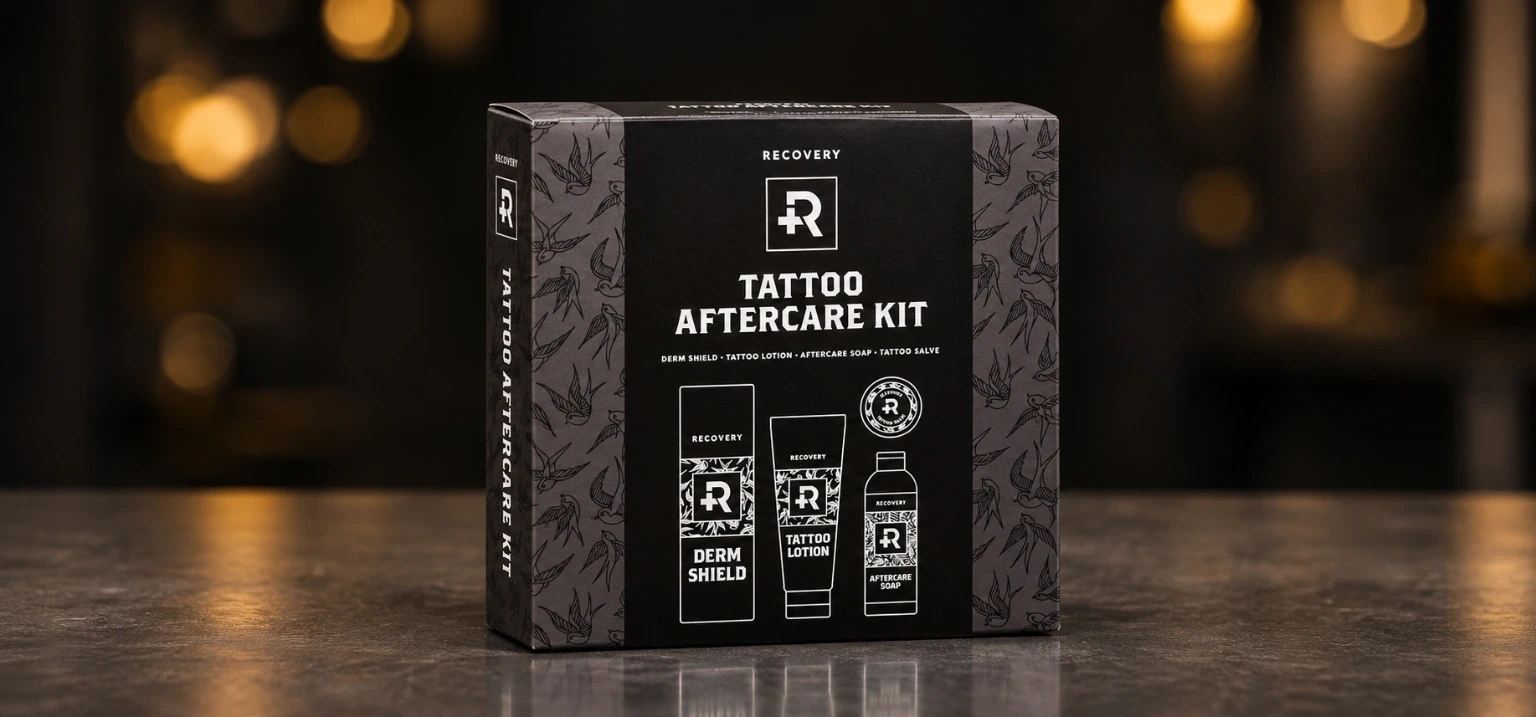
The Recovery Professional Tattoo Care Kit brings together different aftercare product categories in one package. The manufacturer lists Recovery Derm Shield film, Recovery Tattoo Salve, Recovery Tattoo Lotion and Recovery Aftercare Soap, along with an instruction sheet.
The kit is a straightforward example of why covered and open aftercare are not necessarily opposing approaches. Film serves as a temporary physical dressing; soap is used for cleansing; salve and lotion support later skin-conditioning routines. Each component has its own instructions, rather than all being used together under the film.
Recovery specifies that its Tattoo Salve should be applied to a clean, dry new tattoo in a thin layer 3–4 times daily for 7–10 days. The manufacturer's ingredient list includes olive fruit oil, synthetic beeswax, cocoa seed butter, lavender oil and other conditioning ingredients.
The kit also includes a Tattoo Lotion for use when a lighter moisturizing product suits the skin and the aftercare plan. Its manufacturer description highlights shea butter, jojoba seed oil, grape seed oil and bisabolol. Choose the salve or lotion according to the instructions for that component rather than assuming both should be layered at once.
Do not confuse Recovery Tattoo Salve with Recovery Pink or Black Tattoo Glide. The two colored glide formulas list petrolatum first; the Tattoo Salve has its own published formula and directions. Similar brand packaging does not mean identical ingredient bases.
For an artist organizing client aftercare supplies, the kit provides a way to explain a sequence: film where appropriate, then cleaning and thin moisturizer use according to the brand directions.
VIEW RECOVERY PROFESSIONAL TATTOO CARE KITKNOW WHEN TO CHANGE COURSE
When Adhesive Second Skin May Not Be the Right Choice
An adhesive dressing should be chosen only when the skin can tolerate the product and the film can function as a secure covering. The most useful question is whether it remains appropriate during wear, not whether the client can reach the longest advertised number of days.
Recovery advises discontinuing its Derm Shield when irritation or adhesive allergy appears. If a client knows they react to adhesive films, discuss an alternative with the tattoo artist before application.
Saniderm acknowledges that significant blood or plasma release can weaken the dressing or make an earlier change necessary. A leaking barrier is not functioning as intended.
If the perimeter no longer protects the tattoo, the artist should advise whether to change the film or move to an open aftercare plan.
Saniderm instructs users to remove its dressing if discomfort occurs and continue with suitable open care. Severe or worsening symptoms require medical assessment.
An open-care routine can be a practical alternative when adhesive film is not suitable. It still requires gentle cleansing, clean hands and an appropriate moisturizer rather than using a thick layer as an improvised protective wrap.
Not every skin change means the same thing. Mild early redness, tenderness and some fluid can be part of a new tattoo's initial response. The AAD advises seeking medical evaluation when redness spreads or darkens, pain worsens, fever or chills develop, or pus or open sores appear.
The AAD recommends seeing a doctor or board-certified dermatologist promptly for signs of infection such as spreading redness, worsening pain, fever, chills, pus or open sores. A tattoo reaction with trouble breathing, a racing heart, chest tightness, dizziness or lightheadedness requires immediate medical care.
DO NOT CONFUSE AFTERCARE SYSTEMS
Why INKEEZE Tattoo Spray Must Not Be Layered With Balm
Spray-on protective barriers are a separate format from the adhesive film discussed above. The manufacturer of the partnered INKEEZE Tattoo Spray / TATTOO SPRAY® directs users to apply its coating as a stand-alone barrier and not to combine it with balms, creams, oils or additional wraps during the spray routine.
The manufacturer describes washing off the spray coating and renewing it daily for up to five days. When the skin has sealed or begins peeling, it recommends transitioning to a light, fragrance-free lotion, rather than continuing to stack products beneath the coating.
This distinction is important when discussing a hybrid routine. Film followed by lotion is a sequential approach supported by Saniderm's published instructions. It does not mean every barrier format can be combined with balm during application.
For a detailed comparison of adhesive film, drying gel and spray-on coatings, read SVT Shop's Types of Tattoo Second Skin: Film vs. Gel vs. Spray.
AVOID THESE AFTERCARE ERRORS
Common Mistakes With Second Skin, Ointments and Lotions
- Assuming one method is best for every tattoo. Coverage, fluid, placement and individual tolerance differ.
- Applying a petroleum ointment under Saniderm. The manufacturer advises against petroleum-based products such as Aquaphor beneath its film.
- Continuing to wear a leaking dressing. A failed adhesive seal requires removal and reassessment.
- Leaving Saniderm on beyond its total limit. Its instructions state no more than seven consecutive days overall.
- Using Recovery's film schedule as Saniderm's schedule. Each manufacturer publishes its own instructions.
- Skipping cleaning after final film removal. Saniderm describes washing at least twice daily before applying a thin balm layer.
- Spreading a thick ointment layer. Product excess is not equivalent to better moisturization.
- Applying more product before the previous layer has absorbed. Follow the chosen manufacturer's frequency and use a modest amount.
- Calling all INKEEZE ointments petroleum-free. Green lists petrolatum first; Pink, Purple and Black are non-petroleum formulas.
- Calling Recovery Pink or Black Glide petroleum-free. Both list petrolatum as their first ingredient.
- Confusing Recovery Tattoo Salve with Recovery Tattoo Glide. They are separate formulas with different published ingredients.
- Assuming petroleum-free means fragrance-free. Several named balms and ointments contain scent or essential oils.
- Layering INKEEZE Tattoo Spray with balm or cream. Its manufacturer instructs users to keep the spray routine separate.
- Scrubbing peeling skin or soaking the tattoo. Use gentle washing and avoid prolonged submersion during initial care.
- Ignoring worsening symptoms. Seek medical care for the infection or severe reaction signs described by the AAD.
BEFORE CHOOSING A ROUTINE
New Tattoo Aftercare Buying Checklist
- My tattoo artist has approved my aftercare method.
- I know whether I am using film, open care or a sequential combination.
- I have the instructions for my exact adhesive film.
- I know when the final film should be removed.
- I understand when leakage or irritation means changing course.
- I will clean and dry the tattoo before applying open-care products.
- I will apply a thin layer rather than an excessive coat.
- I know the selected brand's reapplication frequency.
- I have checked whether my ointment contains petrolatum.
- I have reviewed fragrance and botanical ingredients where relevant.
- I will not combine incompatible barrier products.
- I know that the AAD recommends water-based lotion or cream for dry tattooed skin.
- I will avoid soaking a new tattoo and follow showering guidance.
- I can recognize symptoms that warrant medical attention.
Choose products that fit one clear routine. Film, balm, ointment and lotion each have a role; use them in sequence according to each label rather than all at once.
SHOP THE LINKED AFTERCARE OPTIONS
Second Skin, Tattoo Balms and Lotions at SVT Shop
SVT Shop helps artists, apprentices and studios choose professional tattoo supplies. Based in El Paso, Texas, SVT Shop offers Next Day Delivery in El Paso.
Build an aftercare selection around the method: film for a temporary protective dressing, a suitable balm or lotion for open care, or a sequential combination based on the artist's plan. Review the exact product instructions and ingredient list before choosing.
 ADHESIVE FILM / RECOVERY
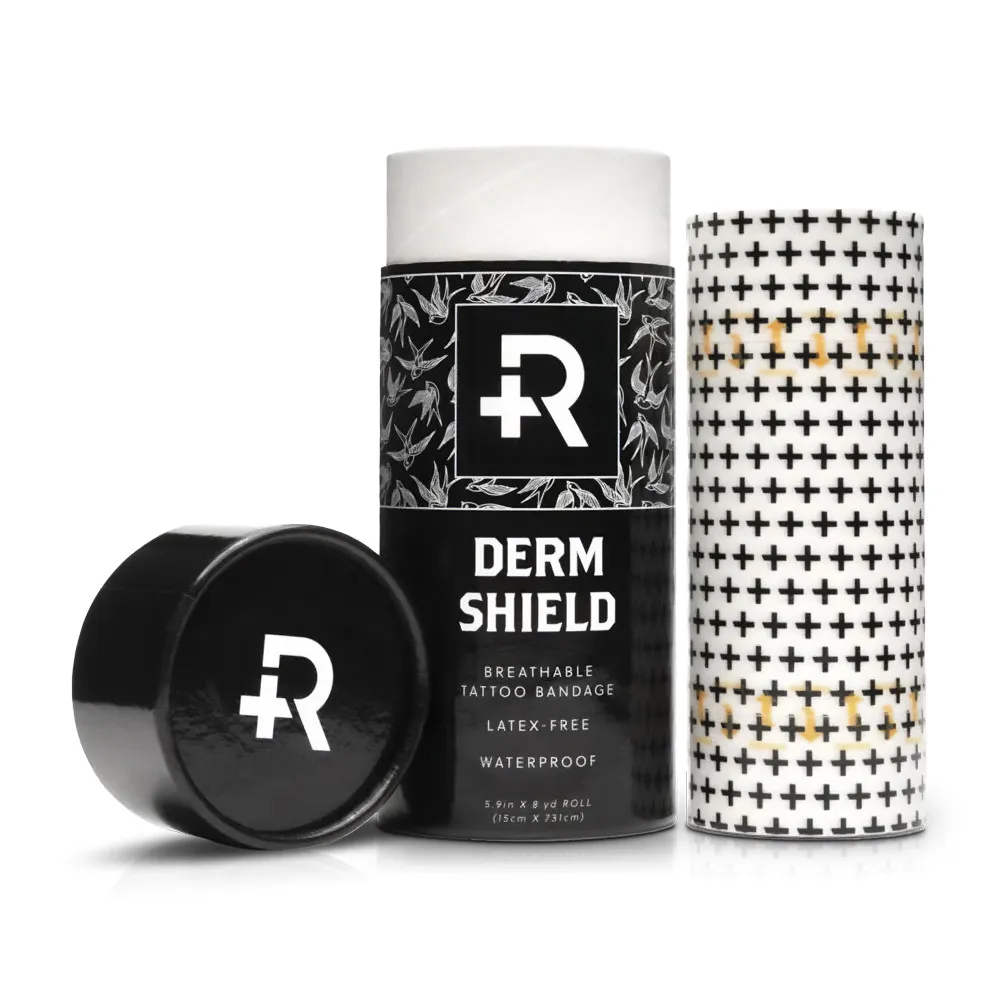
Recovery Derm Shield
Flexible transparent tattoo film for a covered aftercare routine.
VIEW DERM SHIELD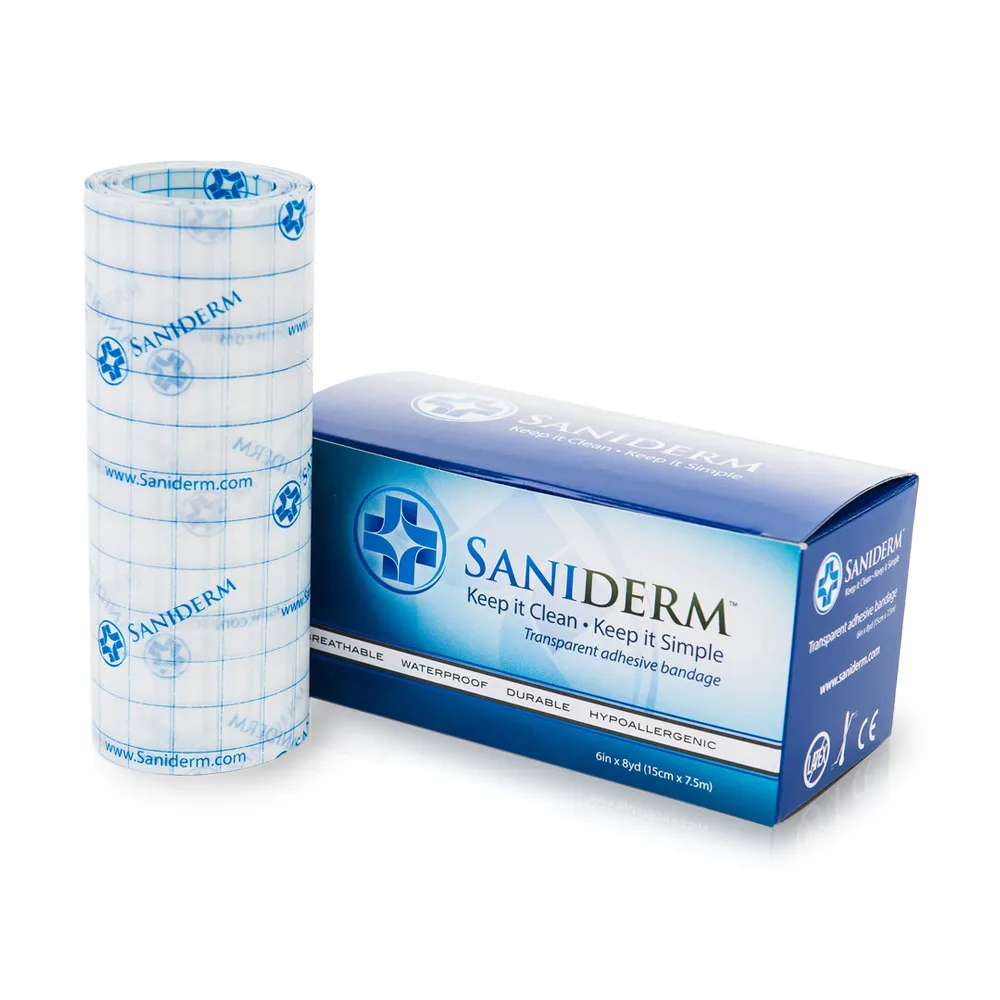 ADHESIVE FILM / SANIDERM
Saniderm 6 in x 8 yd
Cut-to-length film with its own first- and later-bandage protocol.
VIEW SANIDERM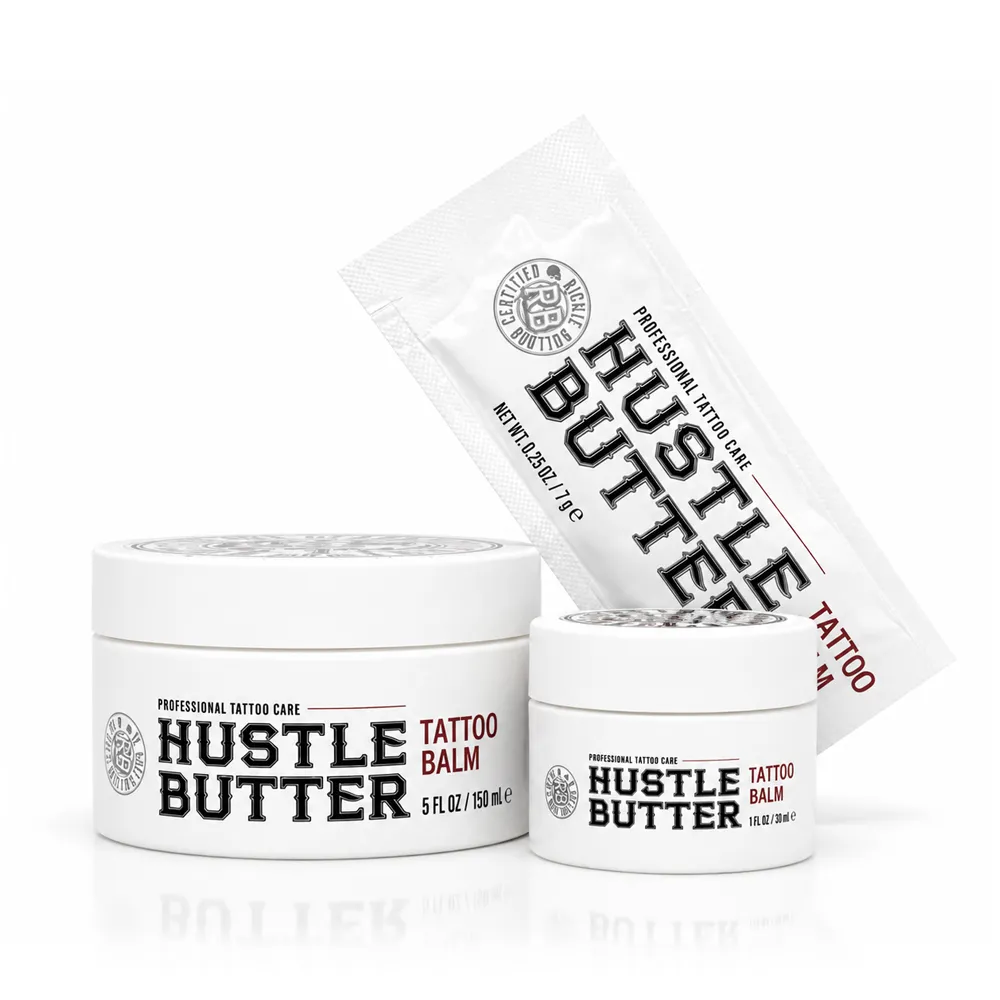 BALM / PETROLEUM-FREE
Hustle Butter De Luxe
Rich tattoo balm described by its manufacturer as petroleum-free.
VIEW HUSTLE BUTTER
OINTMENT / NON-PETROLEUM
INKEEZE Purple
Lavender-containing formula for thin aftercare applications.
VIEW PURPLE
OINTMENT / NON-PETROLEUM
INKEEZE Pink
Bubblegum-fragranced formula with non-petroleum ingredients.
VIEW PINK
OINTMENT / PETROLATUM-BASED
INKEEZE Green
Session glide and aftercare ointment; petrolatum-based formula.
VIEW GREEN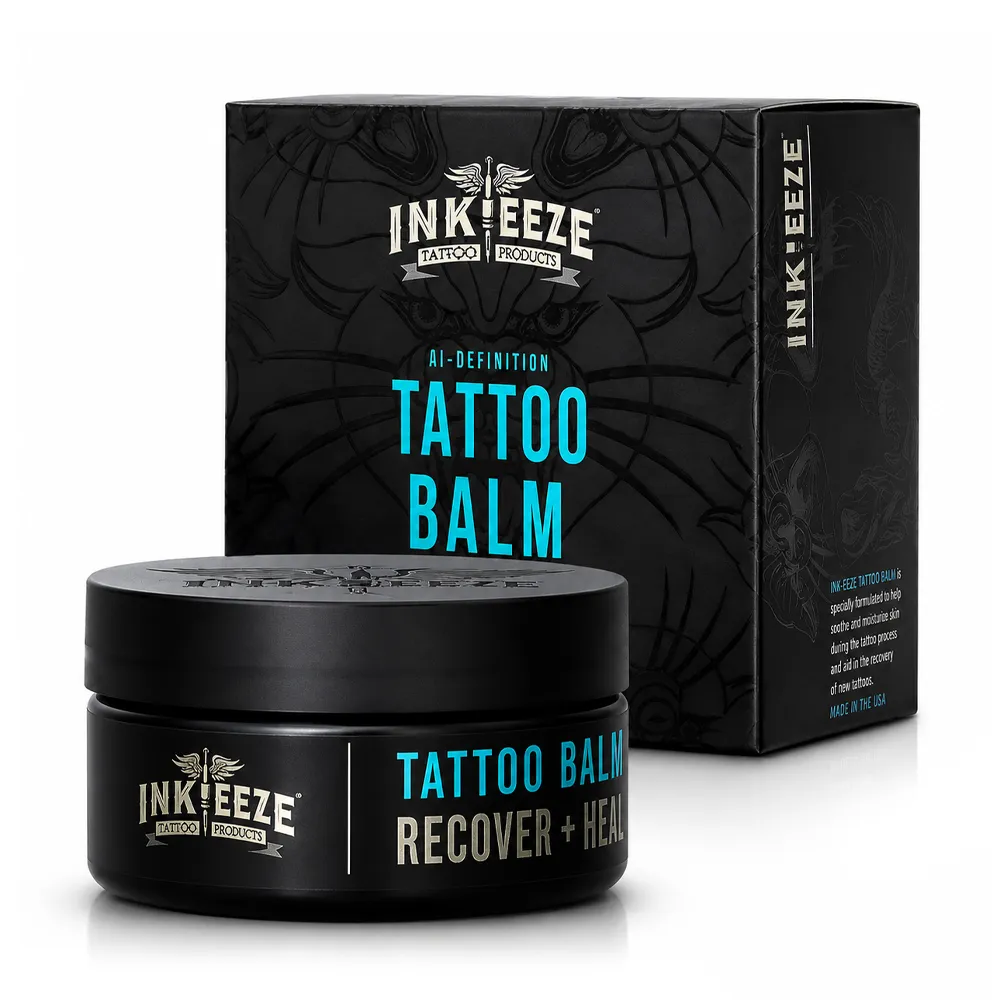 THIN-LAYER TATTOO BALM
INKEEZE Hi-Definition
Thin-layer balm for new tattoos and daily care of healed ink.
VIEW HI-DEFINITION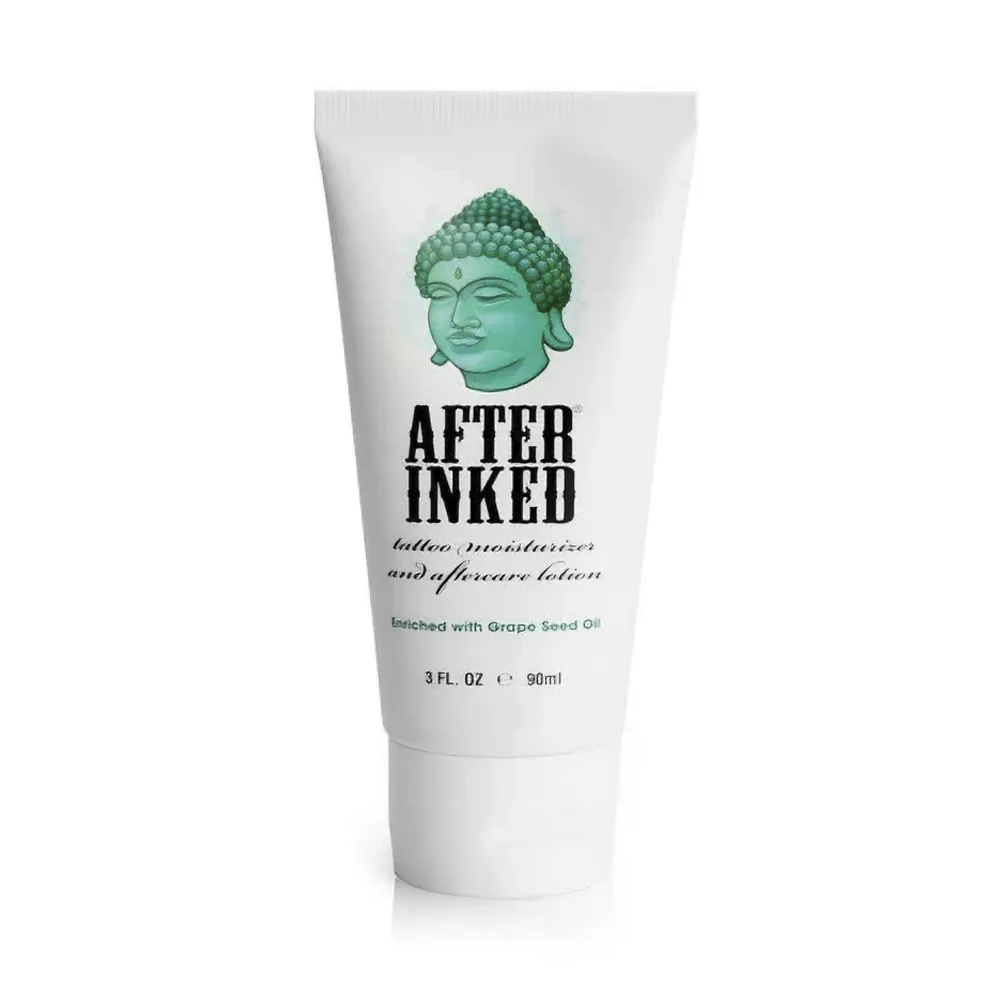 LOTION / NON-PETROLEUM
After Inked Moisturizer
Water-based, fragrance-free lotion for light moisturizing.
VIEW AFTER INKED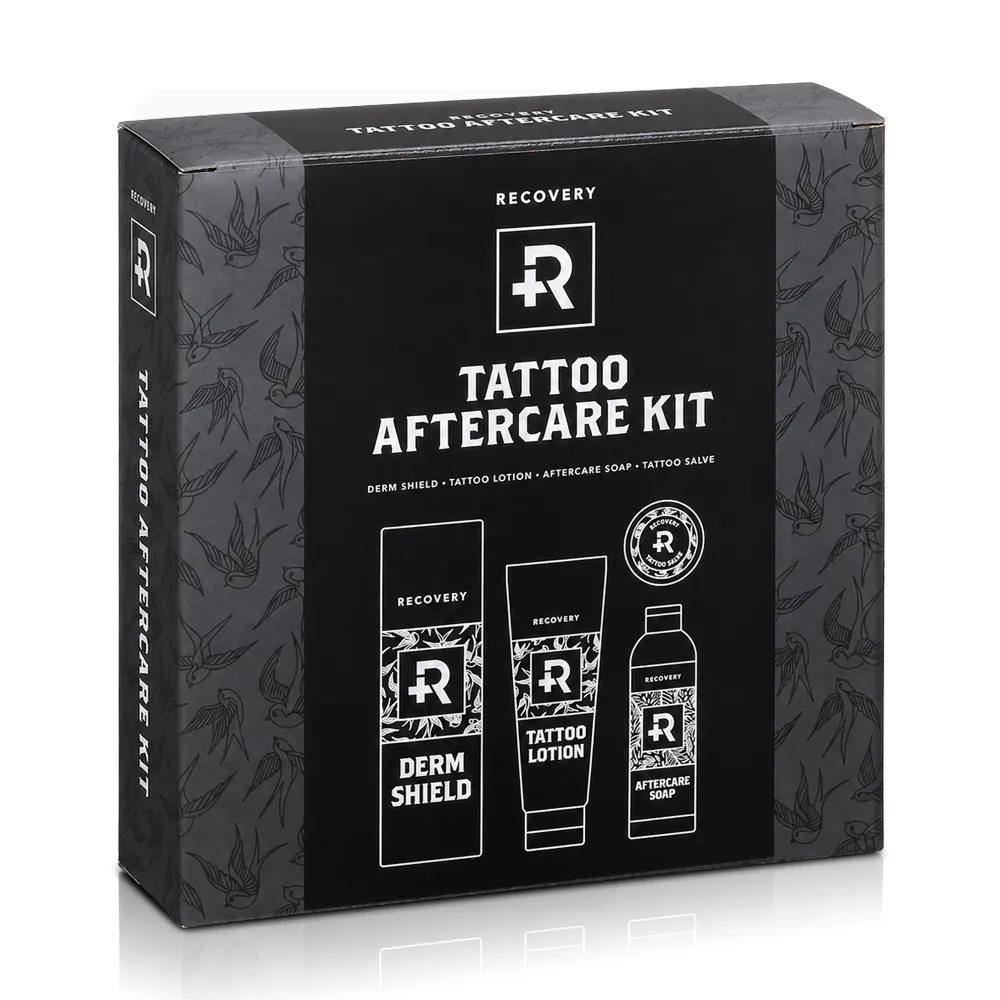 COMBINED AFTERCARE SELECTION
Recovery Professional Care Kit
Derm Shield film, Tattoo Salve, Tattoo Lotion and Aftercare Soap.
VIEW RECOVERY KITBrowse Glides & Aftercare Ointments or Bandages & Protective Films. For specialized instructions, see the adhesive-film guide and the film vs. gel vs. spray guide.
REAL AFTERCARE QUESTIONS
Frequently Asked Questions
Is second skin better than tattoo ointment?
There is no universal winner established by the AAD or FDA. Adhesive film and open moisturizing care have different functions and routines. Select the approach with your artist according to skin tolerance, tattoo placement, fluid release and the manufacturer's instructions.
Can I use second skin first and lotion later?
Yes. That is a practical sequential routine, and Saniderm publishes directions for switching to gentle washing and thin-balm care after final bandage removal. Use the film according to its own instructions, then follow the selected lotion or balm label.
Should I put Aquaphor under Saniderm?
Saniderm advises against petroleum-based ointments such as Aquaphor beneath its dressing. Follow its product-specific directions for any optional very thin aftercare layer and consult your artist rather than applying a thick ointment under the film.
What should I do after removing my final Saniderm bandage?
Saniderm recommends washing the tattoo gently at least twice daily, drying it carefully and applying a thin layer of aftercare balm. Its guide describes continuing this routine for the next one to two weeks while the tattoo remains sensitive to touch.
How often do I apply Recovery Tattoo Salve?
Recovery instructs users to clean and dry a new tattoo, then apply a thin layer of Tattoo Salve three to four times daily for seven to ten days. Do not confuse that product with Recovery's colored Tattoo Glide formulas.
How much tattoo ointment should I put on?
Use a thin, even layer, not a heavy visible coat. The precise amount depends on the tattoo and the chosen formula. Saniderm warns that over-moisturizing can cause problems, so follow the manufacturer's frequency and avoid repeated excess.
Can you moisturize a new tattoo too much?
Yes. Saniderm's aftercare guide specifically warns against thick, excessive applications and lists problems such as clogged pores, acne breakouts and inflammation. A small amount spread evenly is the recommended approach.
Does the AAD recommend petroleum jelly for tattooed skin?
The AAD advises using a water-based lotion or cream when tattooed skin feels dry and cautions that petroleum-based products such as petroleum jelly can cause tattoo ink to fade. For a water-based option, After Inked Moisturizer lists water as its first ingredient.
Is Hustle Butter De Luxe petroleum-free?
Yes. Hustle Butter identifies its De Luxe balm as petroleum-free and markets it for tattoo sessions and aftercare. The formula contains plant butters and oils as well as fragrance, so petroleum-free should not be mistaken for fragrance-free.
Are INKEEZE Pink and Purple petroleum-free?
Yes. INKEEZE describes both Pink and Purple tattoo ointments as non-petroleum formulas and recommends thin coats as needed during aftercare. Pink contains fragrance and Purple contains lavender oil; review ingredients if sensitivity is a concern.
Does INKEEZE Green contain petrolatum?
Yes. Petrolatum is the first ingredient on INKEEZE Green's published ingredient list. Saniderm advises against petroleum-based products under its bandage. INKEEZE Pink, Purple and Black are the non-petroleum options.
Is After Inked lotion petroleum-free?
After Inked describes its lotion as non-petroleum-based and fragrance-free, with water as the first ingredient. Its directions call for a thin application two or three times daily or as needed after cleansing.
Are Recovery Pink and Black Glides petroleum-free?
No. The manufacturer lists petrolatum first in both Recovery Pink/Cotton Candy Glide and Recovery Black Glide. Those glides are separate products from the Recovery Tattoo Salve included in the care kit.
Can I combine INKEEZE Tattoo Spray with ointment?
Not during the manufacturer's spray-on barrier routine. TATTOO SPRAY directs users not to combine the coating with balm or cream. Once the skin has sealed or starts peeling, the manufacturer recommends switching to a light, fragrance-free lotion.
Can I shower during tattoo aftercare?
Normal showers are compatible with correctly sealed adhesive film according to Recovery and Saniderm. Open care includes gentle washing and brief showering. Avoid soaking a fresh tattoo and follow the instructions for the exact product in use.
When should I remove second skin early?
Skin irritation or adhesive sensitivity, leaking fluid, a failed seal, water entering beneath the dressing or significant discomfort are reasons to stop and reassess according to the manufacturer and artist. Do not keep a compromised bandage on solely to reach its maximum wear time.
When should I see a doctor about a new tattoo?
The AAD advises prompt medical assessment for spreading or darkening redness, worsening pain, fever, chills, pus or open sores. If a reaction in the tattoo comes with trouble breathing, a racing heart, chest tightness, dizziness or lightheadedness, seek immediate medical care.
MANUFACTURER AND DERMATOLOGY REFERENCES
Sources Consulted
Application schedules, ingredient classifications and product roles were checked against the named manufacturers. The AAD provides neutral advice on moisturizing tattooed skin and recognizing concerning reactions.
- Saniderm — Guide to New Tattoo CareCovered aftercare, washing after final removal, thin balm for 1–2 weeks and warnings about over-moisturizing.
- Saniderm — How Long to Keep Saniderm OnBrand-specific film limits, optional compatible thin aftercare and avoidance of petroleum-based Aquaphor.
- Recovery Aftercare — Derm Shield InstructionsFilm use, removal and adhesive-irritation cautions.
- Recovery Aftercare — Tattoo Salve DirectionsThin-layer application 3–4 times daily for 7–10 days.
- Recovery Aftercare — Professional Tattoo Care KitDerm Shield, Tattoo Salve, Tattoo Lotion and Aftercare Soap included as separate components.
- Hustle Butter — De Luxe Tattoo BalmPetroleum-free formula, ingredients and how to use it as aftercare.
- After Inked — Tattoo Aftercare LotionWater-based non-petroleum formula and moisturizing frequency.
- INKEEZE — Pink Tattoo OintmentNon-petroleum ingredient list and thin-coat aftercare directions.
- INKEEZE — Purple Tattoo OintmentNon-petroleum ingredient list and thin-coat aftercare directions.
- INKEEZE — Black Tattoo OintmentManufacturer's non-petroleum formulation description.
- INKEEZE — Green Tattoo OintmentIngredient list identifying petrolatum first.
- INKEEZE — Hi-Definition Tattoo BalmThin-layer use for new tattoos and daily care of existing tattooed skin.
- Recovery Aftercare — Pink / Cotton Candy Tattoo GlideManufacturer ingredient list identifying petrolatum first.
- Recovery Aftercare — Black Tattoo GlideManufacturer ingredient list identifying petrolatum first.
- TATTOO SPRAY — Official How to UseNo stacking with creams or balms; transition to light fragrance-free lotion when the skin seals or peels.
- American Academy of Dermatology — Caring for Tattooed SkinWater-based lotion or cream for dryness and caution about petroleum-based products.
- American Academy of Dermatology — Tattoo Skin ReactionsSigns of infection, allergic reactions and when to seek medical care.
Editorial note: Last updated November 12, 2026. This guide compares manufacturer-described tattoo aftercare routines and general dermatology guidance. Follow current package directions and the advice of your tattoo artist. Consult a doctor or board-certified dermatologist for concerning skin changes.