Powered by Comercia.io
A practical new tattoo healing timeline covering the first wash, days 1–7, itching and peeling, the cloudy or milky stage, showering, clothing, exercise, and the transition to daily lotion and sun protection for healed tattoos.
SHOP TATTOO AFTERCARE SEE THE HEALING TIMELINE
THE SHORT ANSWER
Quick Answer: How Do You Care for a Tattoo From Day One Until It Heals?
Follow your artist's instructions for removing the initial covering, then gently wash, dry and moisturize the tattoo with a thin layer of an approved product while avoiding scratching, soaking, rubbing and unnecessary sun exposure. Hustle Butter describes typical surface healing at around 2–4 weeks, although deeper healing may continue for 3–6 months. Once the tattoo is fully healed, transition to daily skin care and a broad-spectrum, water-resistant sunscreen with SPF 30 or higher.
THE BIG-PICTURE REFERENCE
Tattoo Aftercare Timeline: What to Expect at Each Stage
Tattoo healing is a process, not a single day when every layer of skin suddenly returns to normal. The American Academy of Dermatology (AAD) describes redness, swelling, soreness and clear fluid as possible early responses, followed by itching, flaking and scabbing during healing. The day ranges below come from the tattoo-aftercare manufacturers cited in this guide and should be adjusted to your artist's instructions.
| STAGE | WHAT YOU MAY NOTICE | WHAT TO DO |
|---|---|---|
| First hours | Tenderness, redness, swelling and some clear fluid | Keep the studio's covering in place until your artist's instructed removal or change time |
| First wash | Residual fluid or excess ink as the covering comes off | Wash hands, remove covering gently, cleanse with lukewarm water and an appropriate gentle cleanser, then pat dry |
| Days 1–3 | Surface tenderness, possible fluid release and early tightness | Follow the selected film or open-care routine; use only a thin moisturizer layer when directed |
| Days 4–7 | Dryness, itching, flaking and possible scabs | Continue gentle cleansing, moisturize lightly and avoid scratching or picking |
| Days 7–14 | Continued peeling, an uneven or cloudy appearance, decreasing tenderness | Let flakes separate naturally; avoid rubbing, soaking, tight clothing and direct sun |
| Weeks 2–4 | Surface looks more settled; fewer flakes or scabs | Continue the artist's care plan; assess surface recovery before returning to normal products and activities |
| Months afterward | Skin may look normal while deeper recovery continues | Use normal skin care after full healing; continue observing any unusual changes |
| Fully healed tattoo | No more peeling, scabbing or sensitivity | Moisturize as needed and use broad-spectrum, water-resistant sunscreen outdoors |
Day ranges summarize Hustle Butter and Saniderm guidance. Always follow your tattoo artist's instructions.
Hustle Butter describes surface healing in approximately 2–4 weeks and deeper skin recovery in approximately 3–6 months. A tattoo that no longer peels can still be settling beneath the visible surface. Do not assume that a smoother appearance means every layer has completed recovery.
RIGHT AFTER THE STUDIO
The First Few Hours: Leave With a Clear Aftercare Plan
A fresh tattoo has just undergone repeated needle penetration, so the skin may be tender and swollen. The AAD identifies some redness, soreness and clear fluid release as possible early responses. These findings should gradually improve rather than become increasingly severe.
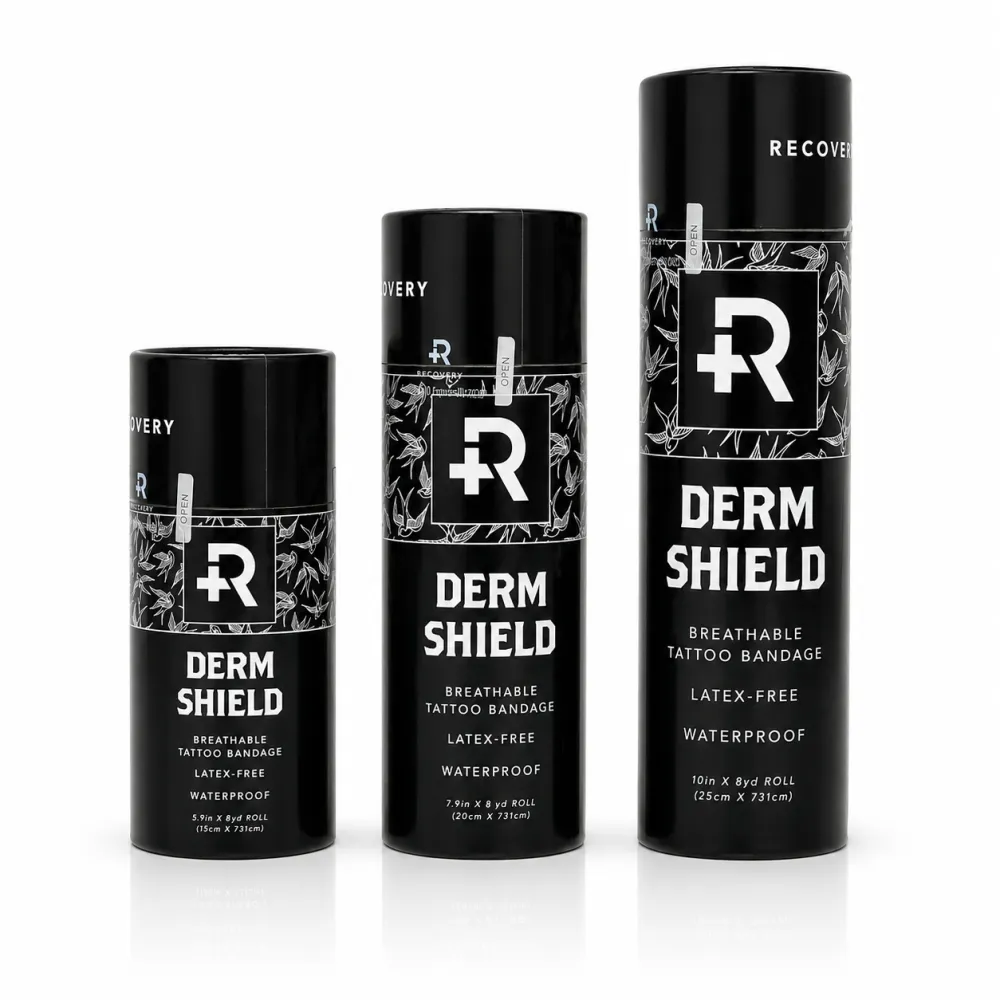
The artist may finish by applying an initial wrap or an adhesive dressing such as Recovery Derm Shield. Before leaving the studio, confirm exactly which covering was used, when it should come off, whether another dressing is planned, and what the artist wants you to use after the first wash.
Hustle Butter's aftercare guide describes removal timing as ranging from a few hours to a full day, based on the artist's timeline. That is general manufacturer guidance; adhesive films have their own specific wear schedules and should not automatically be removed at the same time as an ordinary initial wrap.
Keep your hands away from the covered tattoo unless you are carrying out the instructed aftercare. Choose loose, clean clothing that does not press hard against the area. If you are going home to sleep, prepare clean sheets and avoid positioning the tattoo under direct pressure.
A small amount of fluid during this stage is not, by itself, a reason to panic. However, a bandage that leaks, loses its seal or causes significant irritation needs the appropriate response according to the dressing manufacturer's instructions.
THE FIRST CARE ROUTINE
Removing the Wrap or Film and Washing Your Tattoo
The first wash should happen at the time instructed by your artist and the manufacturer of the covering. It is not necessary to rush removal because the tattoo looks dark or has collected some fluid under an intact film. Adhesive films also require attention to the integrity of their seal and the specific first-piece interval.
- Wash your hands first. Prepare a clean place and the appropriate cleanser before touching the tattoo or removing its covering.
- Remove the covering gently. Hustle Butter notes that warm water helps loosen the adhesive. For Derm Shield or Saniderm, use the brand's prescribed slow peel-back technique.
- Clean without scrubbing. Use lukewarm water and the gentle cleanser approved by your artist. Carefully remove surface residue with clean hands.
- Pat dry. Hustle Butter recommends a clean disposable paper towel rather than rubbing the area with a reused bath towel.
- Follow the next step of your plan. Apply a fresh film only if instructed, or begin a light balm or lotion routine once open care is appropriate.
The first wash is not the time for a washcloth, scrub, exfoliating tool or vigorous rubbing. A new tattoo may be sensitive, and later peeling skin should be allowed to separate on its own.
For film-specific removal and replacement directions, read Tattoo Second Skin Film: Recovery Derm Shield vs. Saniderm. For a comparison with other barrier formats, see Types of Tattoo Second Skin: Film vs. Gel vs. Spray.
EARLY AFTERCARE
Days 1–3: Gentle Washing, Light Moisture and Rest
Hustle Butter describes days 1–3 as an early care stage in which redness, swelling, soreness and some fluid may still be present. The important pattern is gradual improvement. Pain that persists or worsens, increasing redness or signs of illness should not be treated as an ordinary part of the timeline.
If your artist is using adhesive film, continue with the film manufacturer's approved schedule rather than applying extra products under a sealed dressing. If you are following open care, gently wash the tattoo, pat it dry and use a thin moisturizer layer as directed.
Saniderm recommends that after the last bandage is removed, the tattoo be gently washed at least twice daily and moisturized with a thin layer of aftercare balm. Recovery Tattoo Salve has a separate manufacturer routine of a thin layer 3–4 times a day for 7–10 days. Use whichever schedule belongs to the actual product and stage selected by your artist.
Avoid applying a heavy coat every time the tattoo feels tight. Saniderm cautions that a new tattoo can be over-moisturized. The manufacturer recommends spreading a small quantity evenly and removing visible excess rather than leaving the surface saturated.
Keep clothing loose, use clean bedding and limit unnecessary friction. Hustle Butter also advises avoiding intense sweating during the first days. Its exercise guide suggests resting from workouts for roughly the first 48 hours, or longer if the artist recommends.
THE VISIBLE TRANSITION
Days 4–7: Peeling, Itching and Possible Scabbing
Saniderm's peeling guide reports that new tattoos typically begin peeling around day 4 or 5, although some start earlier and others later. Once peeling begins, the manufacturer says it commonly subsides within one or two weeks.
The AAD confirms that itching, flaking and some scabbing can occur as tattooed skin heals. During this period the tattoo may look temporarily uneven, with dry patches beside areas that have already shed. The appropriate response is gentle care, not trying to make the entire surface look uniform immediately.
Do not scratch, pick or exfoliate the tattoo. Hustle Butter specifically cautions against these actions during the peeling stage. Avoid pulling attached flakes or scabs away during washing or drying, even when they appear ready to fall off.
Continue the approved gentle cleansing and light moisturizing routine. Use clean hands and only a thin layer of product. Extra lotion cannot make the entire peeling stage disappear on demand, and a thick coating may create unnecessary buildup.
Clothing and daily movement matter here. Waistbands, tight sleeves, compression garments and equipment that rub the tattoo can disturb the surface. Choose looser options when possible and speak with your artist if your job or activities require repeated contact with the healing area.
AFTER THE MAIN FLAKING
The Cloudy or Milky Tattoo Stage: Why It Looks Dull
After much of the visible flaking has ended, a tattoo may look dull, hazy, cloudy or milky instead of displaying the crisp appearance it had immediately after the session. Hustle Butter's guide notes that during days 7–14 flaking continues and the tattoo might look a little dull or faded, and its healing-stages page describes a dull, faded or slightly milky look as the outer layer of dry skin peels away.
Artists sometimes call this appearance the milky stage or refer to the developing surface as a thin layer of new skin. These are descriptive terms, not a diagnosis. They help explain why a tattoo can look less defined for a period without every pale-looking area automatically meaning missing pigment.
Hustle Butter's healing-stages page says this phase can last an additional two weeks or so. The exact appearance and timing vary by tattoo and individual.
Maintain the approved moisturizing routine without trying to rub or peel away the cloudy surface. Avoid abrasive exfoliation and give the skin time to settle. If a particular area becomes increasingly painful, hot, swollen or develops unusual discharge, the medical warning signs take priority over any assumption that it is simply the milky stage.
A photograph taken during this stage may not represent the tattoo's final settled appearance. Discuss questions about healed results and possible future touch-ups with the artist after the surface has recovered, rather than making decisions while it is still actively peeling.
CHOOSE THE CORRECT DAILY PRODUCTS
Washing and Moisturizing: How Often and How Much?
The core open-care routine is straightforward: clean hands, a gentle wash, careful drying and a restrained amount of moisturizer. The brand's product instructions determine the frequency. More applications or a thicker coating are not automatically better.
| MANUFACTURER | RECOMMENDATION | WHEN IT APPLIES |
|---|---|---|
| Saniderm | Wash at least twice daily; thin balm layer for the following 1–2 weeks | After the final Saniderm bandage is removed |
| Recovery Tattoo Salve | Thin layer 3–4 times daily for 7–10 days | New tattoos using the Recovery salve routine |
| After Inked | Thin lotion layer 2–3 times daily or as needed | Clean, dry tattooed skin during approved aftercare |
| INKEEZE Hi-Definition Tattoo Lotion | Apply a thin layer; use daily on existing tattoos | New tattoo aftercare or later routine as directed |
| Hustle Butter De Luxe | Use a small amount with clean hands | Manufacturer's fresh-tattoo balm and ongoing skin care |
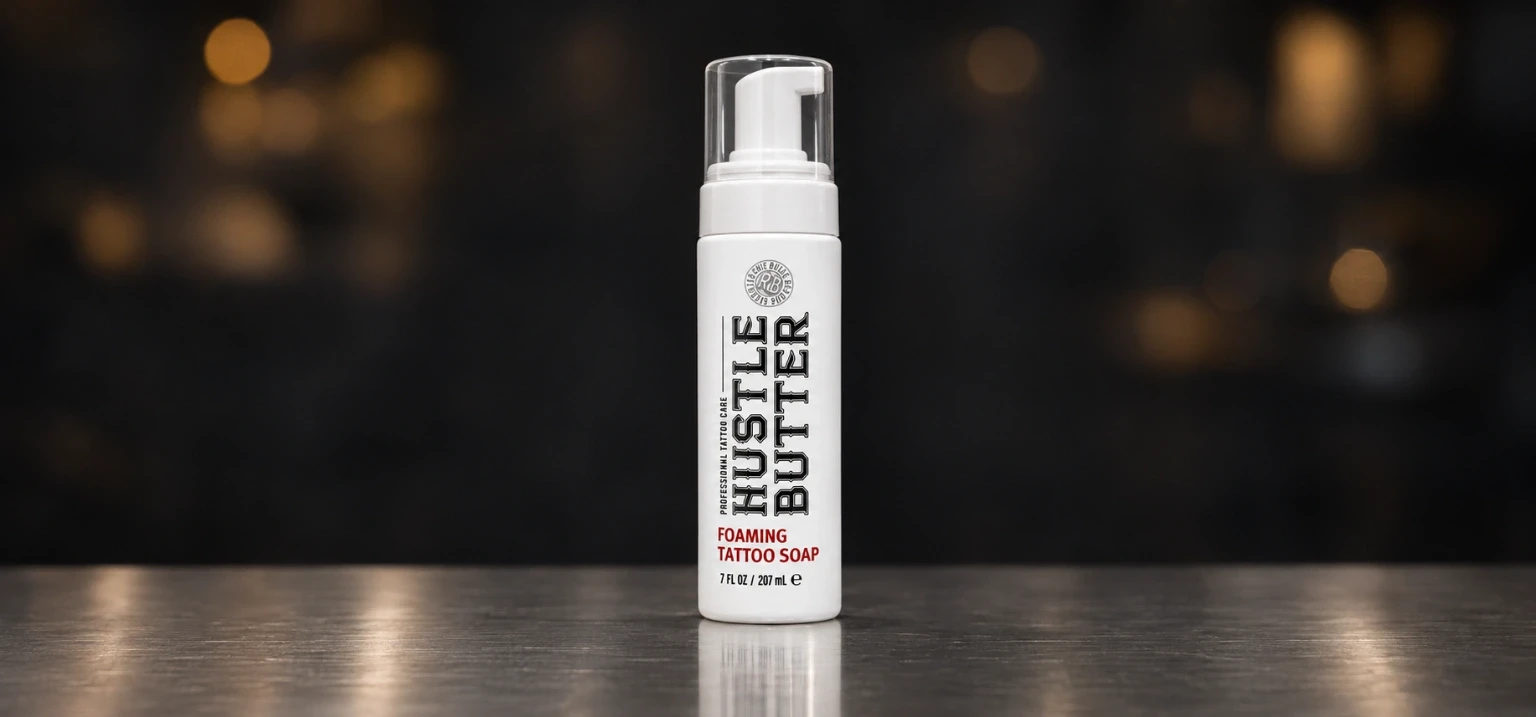
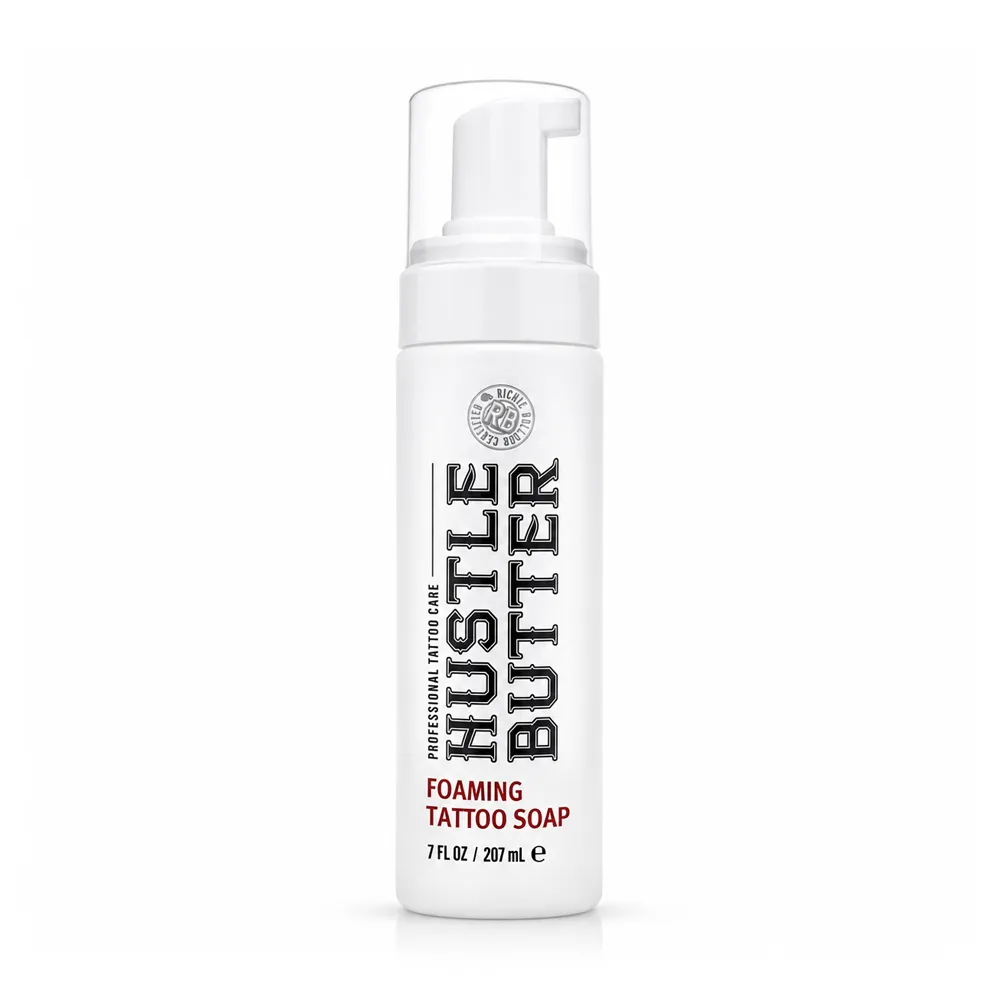
Hustle Butter Foaming Tattoo Soap is marketed by the manufacturer for cleansing during a tattoo session and as part of new-tattoo aftercare. It is a relevant home-cleansing option when approved by the artist. Use gentle hand washing, rinse thoroughly and pat dry with a clean disposable paper towel.
After Inked Moisturizer and Aftercare Lotion is described by its manufacturer as a fragrance-free, non-petroleum-based lotion. Its instructions call for a small, thin application after cleansing, repeated two or three times daily or when necessary.
INKEEZE Hi-Definition Tattoo Lotion uses a water-based formula and lists thin application to a new tattoo as its aftercare direction. The brand also recommends daily use for existing tattoos. Select the lotion according to the artist's plan rather than copying Recovery's specific salve frequency.
Saniderm warns that excess moisturizing product can lead to clogged pores and acne breakouts around the new tattoo. Start with a small amount, spread it evenly and avoid leaving the tattoo heavily coated. Recovery likewise instructs users not to apply Tattoo Salve excessively.
REAL-WORLD AFTERCARE
Showers, Pools, the Gym, Sleeping and Clothing
Daily habits can create friction, moisture and unwanted contact with a new tattoo. The goal is not to stop ordinary life completely, but to adjust activities until the skin is ready and follow the artist's individual instructions.
Keep showers short and lukewarm
Hustle Butter recommends brief, lukewarm showers and gentle drying. Saniderm allows normal showers with its properly sealed bandage but warns that very warm water may weaken adhesion. If water gets underneath a dressing, follow its removal instructions.
Wait until the tattoo has healed
Hustle Butter advises avoiding tubs, pools, the ocean and hot tubs during healing. Saniderm advises no submersion for approximately 2–4 weeks following the session. Those are manufacturer timelines; let the condition of the skin and artist's guidance control the return.
Reduce sweat, friction and contact
Hustle Butter suggests avoiding workouts for roughly the first 48 hours, with light activity after a few days and a gradual return to more demanding training. Its guide recommends delaying intense lifting and contact sports and avoiding tight compression over the tattoo.
Start with clean bedding
Hustle Butter recommends clean sheets, swapping them if ink or fluid transfers, and avoiding direct pressure on the tattooed area. Avoid sleeping positions that repeatedly rub or compress the healing skin.
Choose loose, breathable fabrics
Hustle Butter recommends avoiding clothing that presses, sticks or rubs. This is especially relevant for waistbands, sleeves, straps and gym wear over an actively healing design.
Use the skin's condition as a checkpoint
Hustle Butter describes a gradual return to training during weeks 2–4, while advising clients to follow their artist. A large tattoo in a high-motion area may need a different plan from a small design away from friction.
These activities are not automatically safe on the first day a tattoo looks less red. A bandage does not make prolonged immersion or heavy exercise equivalent to ordinary showering. Before returning to swimming, direct contact sports or high-friction workouts, confirm that healing has progressed appropriately.
SUN CARE DEPENDS ON THE STAGE
Sun Exposure While Healing: Cover It, Don't Apply Sunscreen Yet
Fresh-tattoo sun protection is different from the routine for a fully healed tattoo. Hustle Butter advises keeping a new tattoo out of direct sunlight and using loose protective clothing when going outside. The purpose is to cover sensitive, healing skin without adding a sunscreen product before the tattoo is ready.

Hustle Butter's sunscreen guidance recommends waiting until the tattoo is fully healed, generally at least four weeks or according to the artist's instructions, before applying sunscreen to the tattooed area.
When spending time outdoors during early healing, use shade and appropriate loose coverage, and avoid direct sun on the tattoo. Choose clothes that protect without sticking to or rubbing the area.
Once the tattoo has fully healed, the care strategy changes. The AAD recommends broad-spectrum, water-resistant SPF 30 or higher for sun-exposed tattooed skin, applied before going outdoors and reapplied regularly. That advice is for healed tattooed skin, not for a fresh or peeling tattoo.
The two Hustle Butter products linked for long-term care—Daily Rejuvenating Lotion and Mineral Sunscreen Lotion SPF 50—are expressly intended for fully healed tattoos only. Keep them separate from the fresh-tattoo part of the routine.
SURFACE RECOVERY VS. DEEPER HEALING
How Do You Know When Your Tattoo Is Fully Healed?
In a settled tattoo, the main visible flakes and scabs have separated naturally, the surface is no longer actively peeling and ordinary contact is not associated with the tenderness of a fresh tattoo. Saniderm continues its aftercare routine until the tattoo is no longer peeling, dry or cracked, and Hustle Butter waits to swim until it is no longer peeling, scabbing or sensitive.
Hustle Butter describes the visible surface as typically healing within approximately 2–4 weeks, with deeper recovery potentially continuing for 3–6 months. That does not mean everyone should begin swimming, intensive exercise or applying products labeled for healed tattoos at the earliest point in the range.
Tattoo size, placement, how much skin was worked, everyday friction and individual response may all influence the process. A design may appear settled visually before the client is comfortable returning to every activity. Check with the artist when uncertain about the transition.
The absence of visible scabs is not the only factor. If the area remains red, swollen, unusually warm, increasingly painful or develops discharge, it needs appropriate assessment rather than being declared healed based on the calendar.
Hustle Butter recommends consulting a healthcare professional if redness and swelling persist after approximately two weeks. The AAD's infection-warning guidance should be followed sooner if the redness is spreading, pain worsens or other concerning symptoms appear.
AFTER THE FRESH-TATTOO STAGE
Healed Tattoo Care: Daily Moisturizer and Broad-Spectrum Sunscreen
Once the tattoo is fully healed, the focus shifts from managing a fresh wound to maintaining normal skin comfort and sun protection. The AAD recommends a water-based lotion or cream when tattooed skin feels dry and cautions that petroleum-based products, such as petroleum jelly, can cause tattoo ink to fade.
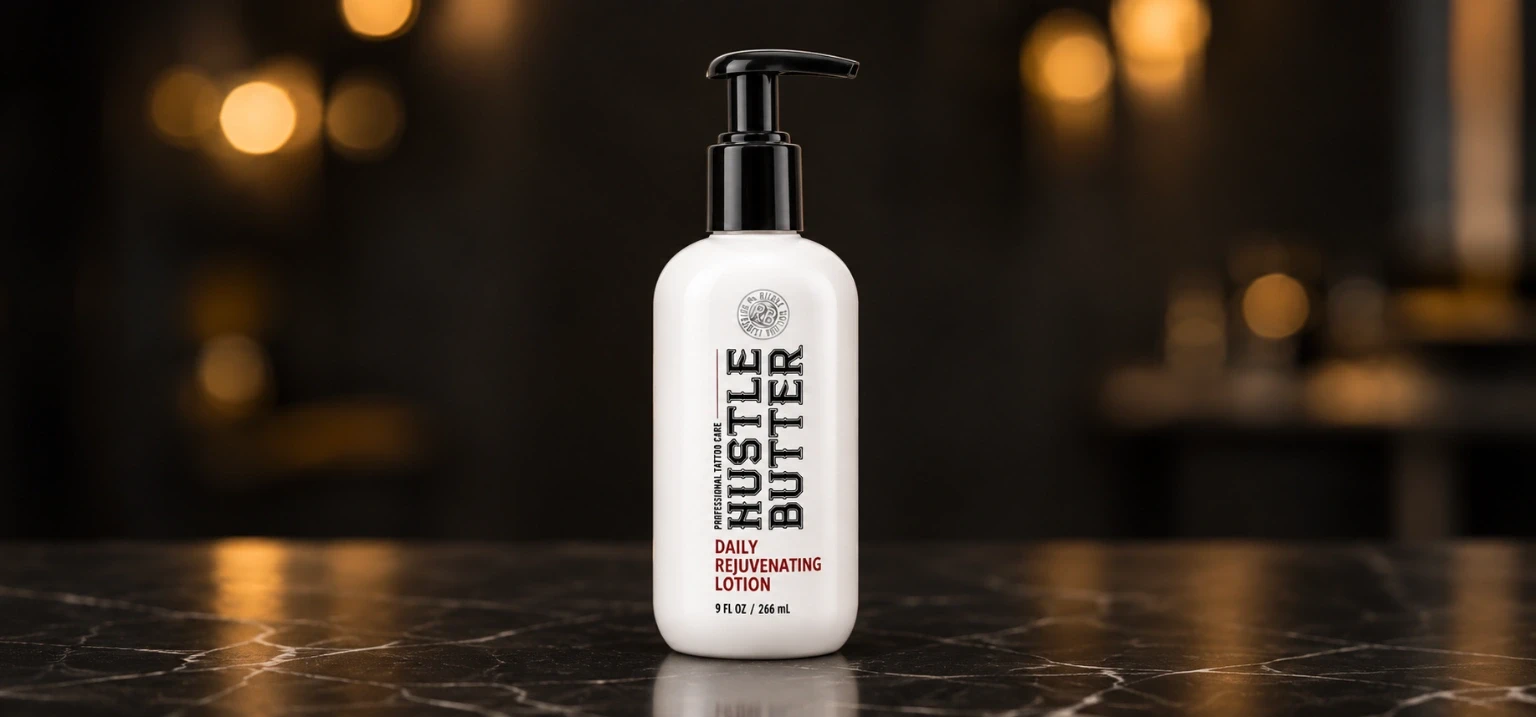
Hustle Butter Daily Rejuvenating Lotion is designed specifically for healed tattooed skin. The manufacturer says to apply a thin layer to clean skin once the tattoo is fully healed, rub it in and use it daily. It is not a fresh-tattoo aftercare lotion, so introduce it only after the healing stage is complete.
The AAD recommends a broad-spectrum, water-resistant sunscreen with SPF 30 or higher for exposed tattooed skin. Apply it 15 minutes before going outside and reapply at least every two hours. The AAD also advises avoiding tanning beds and sunlamps.
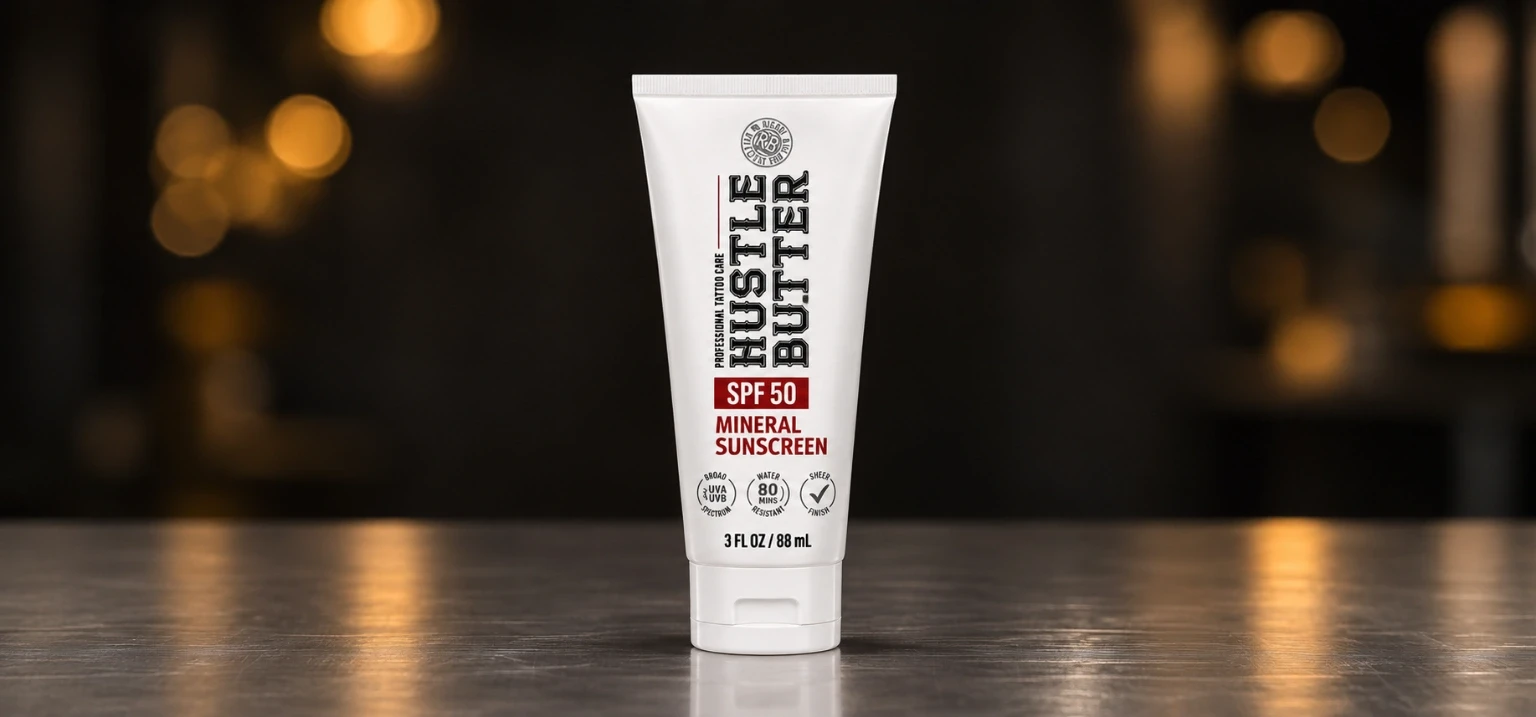
Hustle Butter Mineral Sunscreen Lotion SPF 50 uses zinc oxide as its active sunscreen ingredient. The manufacturer describes it as broad-spectrum and water-resistant for up to 80 minutes. Its directions say to apply generously 15 minutes before sun exposure and reapply every two hours or after swimming, sweating or towel drying.
The FDA makes an important distinction: no sunscreen is waterproof. A product labeled water-resistant must state whether it is rated for 40 or 80 minutes of swimming or sweating. Water-resistant or not, sunscreen needs reapplying at least every two hours, and more often when swimming or sweating.
Use a suitable lotion on healed skin when it feels dry, and make sun protection part of daily outdoor care. Choose broad-spectrum SPF 30 or higher, apply 15 minutes before exposure and reapply at least every two hours, including after water exposure or towel drying as directed.
MATCH THE PRODUCT TO THE STAGE
Professional Products for Fresh Tattoos vs. Fully Healed Tattoos
The most useful aftercare collection separates products according to when they are intended to be used. Recovery, Hustle Butter, After Inked and INKEEZE offer different formats for cleansing, covered care, thin moisturizing applications and long-term tattooed-skin maintenance.
Fresh-tattoo and early aftercare options
A flexible transparent adhesive dressing. Use only according to Recovery's specific film instructions and your artist's plan.
VIEW DERM SHIELDA foaming cleanser the manufacturer markets for the tattoo session and the new-tattoo aftercare routine.
VIEW FOAMING SOAPA manufacturer-described petroleum-free tattoo balm for fresh and existing tattooed skin. Use a small amount.
VIEW DE LUXE BALMFragrance-free, non-petroleum lotion. Its manufacturer describes thin applications 2–3 times daily or as needed.
VIEW AFTER INKEDA water-based moisturizer with manufacturer directions for thin new-tattoo applications and daily existing-tattoo care.
VIEW HI-DEFINITION LOTIONIncludes Derm Shield film, Tattoo Salve, Tattoo Lotion and Aftercare Soap for distinct steps in a care plan.
VIEW RECOVERY CARE KITLong-term care: only after the tattoo is fully healed
Manufacturer-designated daily body lotion for fully healed tattooed skin. Apply a thin layer to clean skin as part of long-term care.
VIEW DAILY LOTIONBroad-spectrum mineral SPF 50 with zinc oxide and an 80-minute water-resistance rating. Use on fully healed skin.
VIEW MINERAL SUNSCREENThe dividing line is especially important for the last two products. Hustle Butter expressly reserves Daily Rejuvenating Lotion and Mineral Sunscreen Lotion for fully healed tattoos. Do not move them into the first-week routine simply because they are designed for tattooed skin.
KNOW WHEN TO SEEK MEDICAL ADVICE
Normal Healing Changes vs. Warning Signs
The AAD explains that some redness, swelling, soreness, clear fluid, itching, flaking and scabs can occur as part of tattoo healing. The more concerning pattern is symptoms becoming worse rather than improving or new symptoms suggesting infection or an allergic reaction.
CHANGES THE AAD DESCRIBES AS POSSIBLE DURING HEALING
- Early redness and swelling that gradually improve
- Soreness and some clear fluid immediately afterward
- Itching and flaking as the surface changes
- Scabs that separate naturally
SIGNS REQUIRING PROMPT MEDICAL ASSESSMENT
- Redness that spreads or becomes darker
- Pain that persists or worsens
- Fever, chills or shaking
- Pus or open sores
- Itchy, painful red bumps or a new concerning rash
The AAD recommends seeing a doctor or board-certified dermatologist right away if signs of infection occur. If a reaction in the tattoo comes with trouble breathing, a racing heart, chest tightness, dizziness or lightheadedness, seek immediate medical care.
An ink allergy can appear immediately, or weeks, years or even decades after tattooing, according to the AAD. A new raised, itchy, painful or otherwise unusual reaction in an old tattoo should therefore not automatically be dismissed because the tattoo was completed long ago.
The FDA advises contacting a healthcare professional when an infection or other tattoo reaction develops. Consumers, tattoo artists and clinicians may also report suspected tattoo-related problems to the FDA, including relevant ink information and the reaction experienced.
One additional long-term precaution: the FDA advises informing the radiologist or MRI technologist about tattoos before magnetic resonance imaging. The FDA notes rare reports of swelling or burning in tattooed areas during MRI, apparently without lasting effects.
Spreading redness, worsening pain, pus, fever, chills, open sores or a concerning allergic response require healthcare assessment. Changing balm, soap or adhesive film is not a substitute for medical advice.
AVOID THE COMMON SETBACKS
Common Tattoo Aftercare Mistakes
- Using an identical timetable for everyone. Manufacturer stages are estimates; follow your artist.
- Removing adhesive film forcefully. Follow the brand's slow removal procedure and use warm water to loosen the adhesive.
- Reusing a removed dressing. Use a fresh piece only if your artist's plan calls for continued film.
- Scrubbing the first wash. Clean gently with your hands and pat dry.
- Applying a thick layer of balm. Saniderm and Recovery both caution against excessive product use.
- Scratching, picking or exfoliating peeling skin. Let flakes and scabs separate naturally.
- Mistaking the milky stage for a final healed result. Assess the tattoo after the surface has settled.
- Soaking the tattoo too soon. Follow the manufacturer and artist's pool, bath and hot-tub guidance.
- Returning directly to hard gym sessions. Manage friction, sweating and contact according to the tattoo location.
- Sleeping on dirty bedding or with direct pressure. Use clean sheets and a suitable sleeping position.
- Applying sunscreen to a fresh tattoo. Hustle Butter advises waiting until full healing, generally at least four weeks.
- Using healed-only lotion during week one. Daily Rejuvenating Lotion is intended for fully healed tattoos.
- Calling water-resistant sunscreen waterproof. FDA guidance explicitly distinguishes the two.
- Ignoring a worsening rash or signs of infection. Seek medical attention rather than relying on a new aftercare product.
YOUR DAILY REFERENCE
Tattoo Aftercare Checklist: Fresh to Fully Healed
- I know the exact removal time for my initial covering.
- I have the correct manufacturer's instructions for any adhesive film.
- I wash my hands before touching the tattoo.
- I cleanse gently and pat dry with a clean paper towel.
- I apply only a thin layer of the approved balm or lotion.
- I follow the specific brand's moisturizing frequency.
- I leave peeling skin and scabs alone.
- I keep showers brief and avoid soaking until healed.
- I manage gym friction, clothing and sleeping conditions.
- I keep the fresh tattoo out of direct sun and covered with loose clothing.
- I wait until full healing before introducing healed-only products or sunscreen.
- I use broad-spectrum, water-resistant SPF 30 or higher outdoors on healed skin.
- I know when symptoms require a healthcare professional.
Keep the aftercare routine simple and consistent: the right product at the right stage, while paying attention to how the skin responds.
BUILD A STAGE-APPROPRIATE CARE ROUTINE
Shop Professional Tattoo Aftercare at SVT Shop
SVT Shop helps artists, apprentices and studios choose tattoo supplies that fit their workflow and client-care instructions. Based in El Paso, Texas, SVT Shop offers Next Day Delivery in El Paso.
For the initial stage, compare an artist-approved covering, a gentle cleanser and a suitable fresh-tattoo balm or lotion. For fully healed tattoos, introduce daily moisturizer and broad-spectrum sun protection according to their labels.
 Gentle cleansing
Hustle Butter Foaming Tattoo Soap 7 oz
Foaming tattoo soap for the gentle washes your artist recommends.
 Artist-applied covering
Recovery Derm Shield Tattoo Adhesive Film
Adhesive film an artist can apply after the session; follow the artist's and the manufacturer's removal timing.
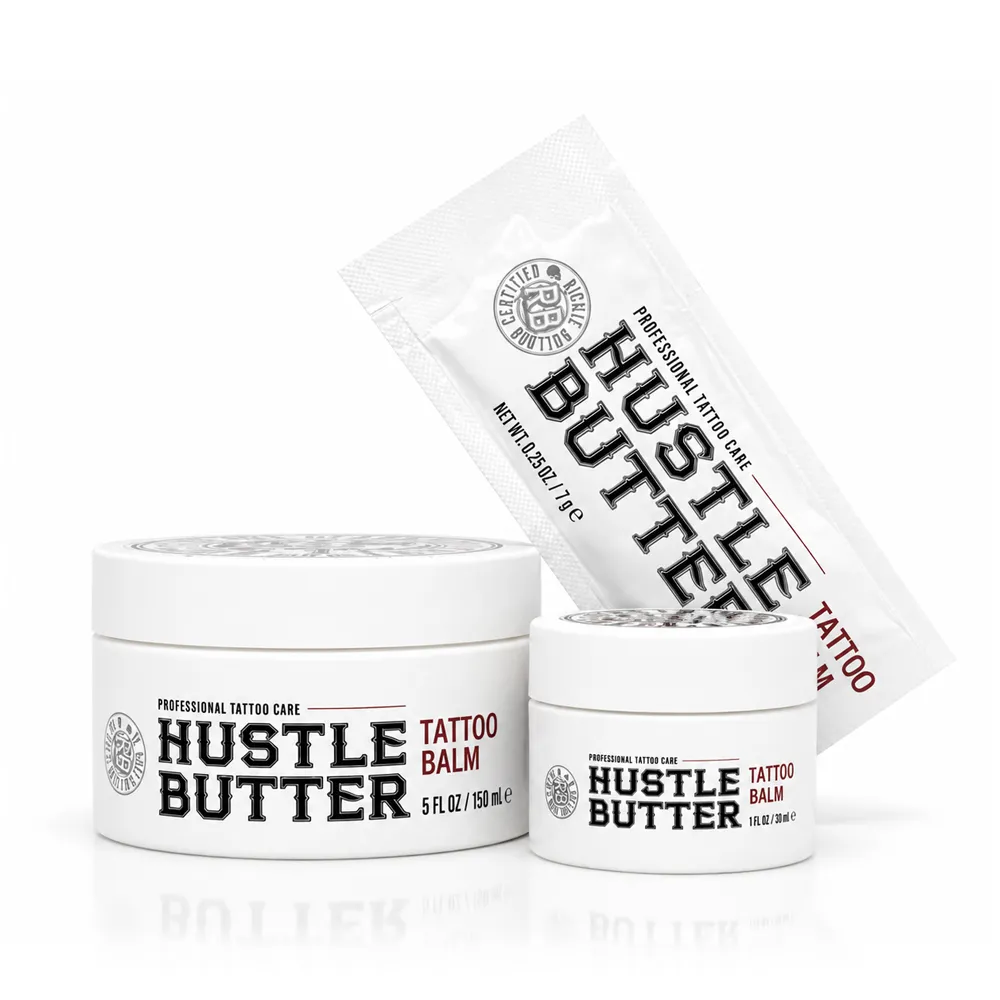 Fresh tattoo care
Hustle Butter De Luxe
Tattoo balm to apply in thin layers as the artist's aftercare sheet directs.
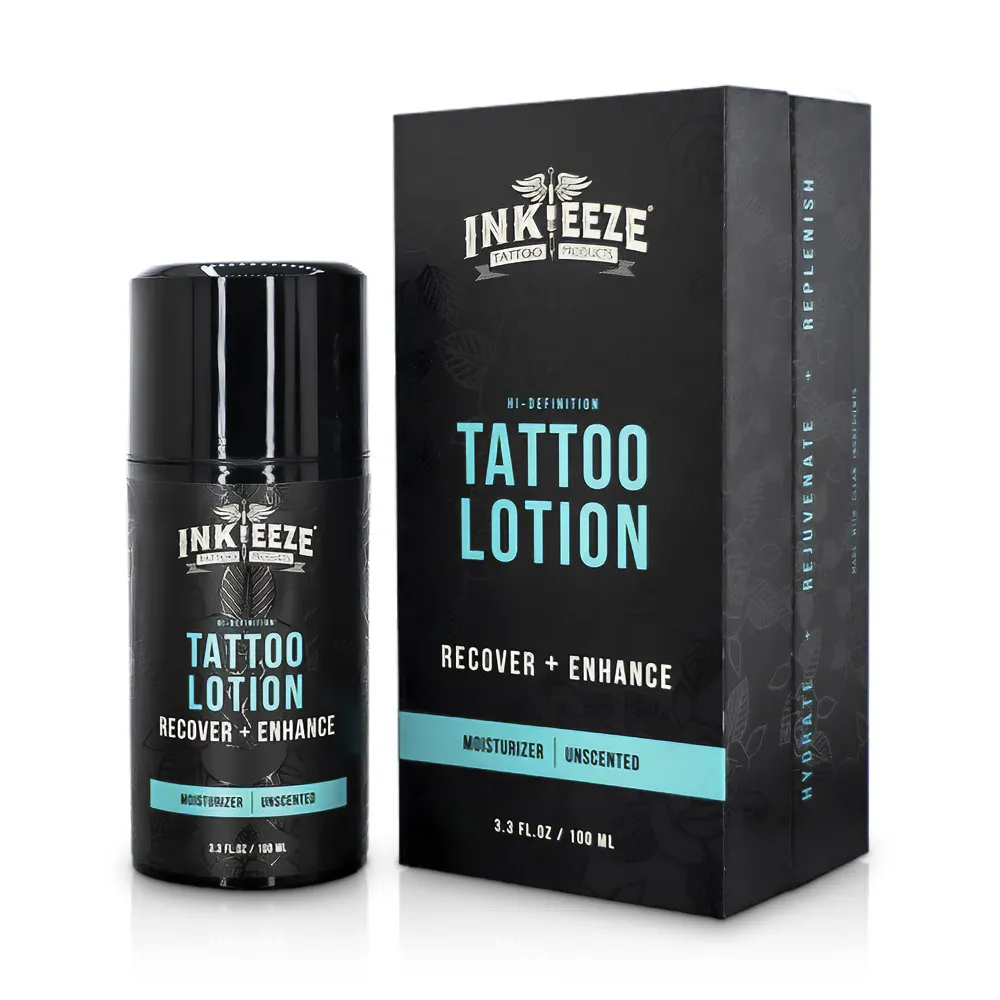 Light moisture
INKEEZE Hi-Definition Tattoo Lotion 3.3 oz
Tattoo lotion option for the moisturizing stage your artist approves.
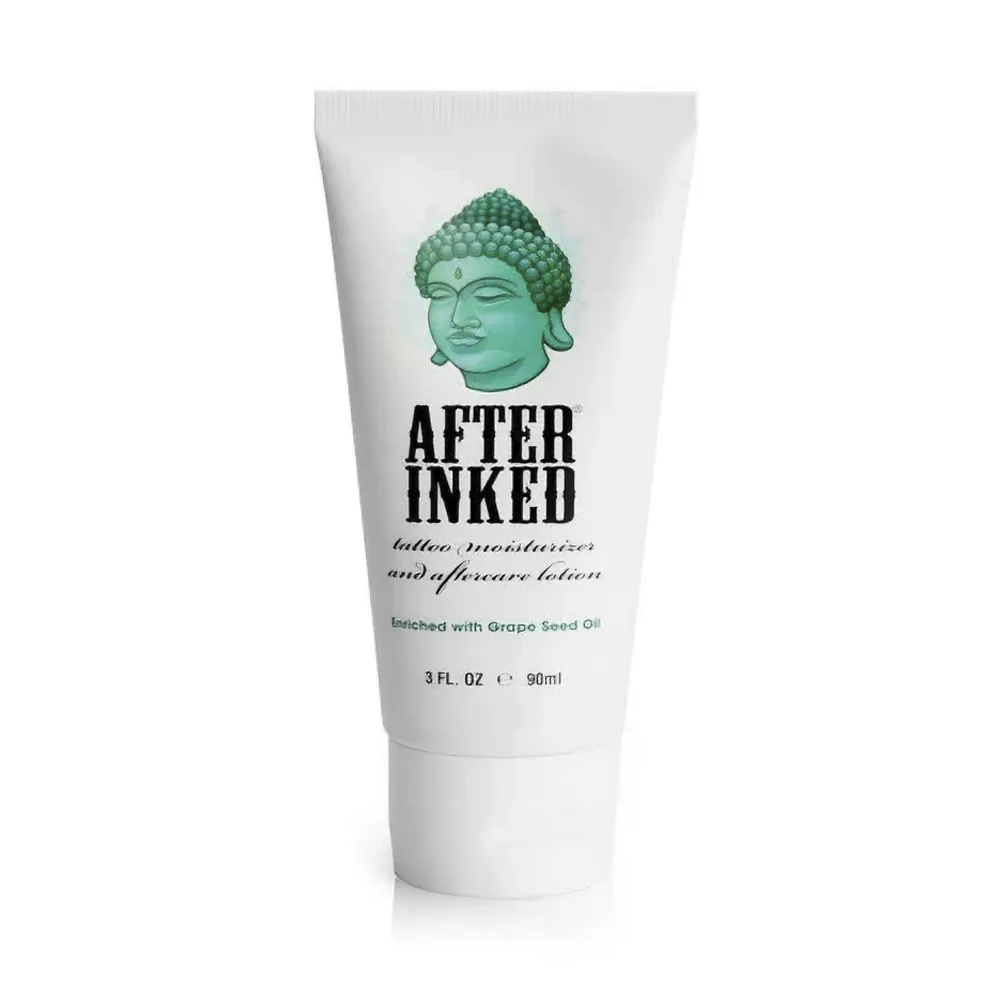 Light moisture
After Inked Aftercare Lotion 3 oz
Aftercare lotion in a 3 oz tube for thin, light applications.
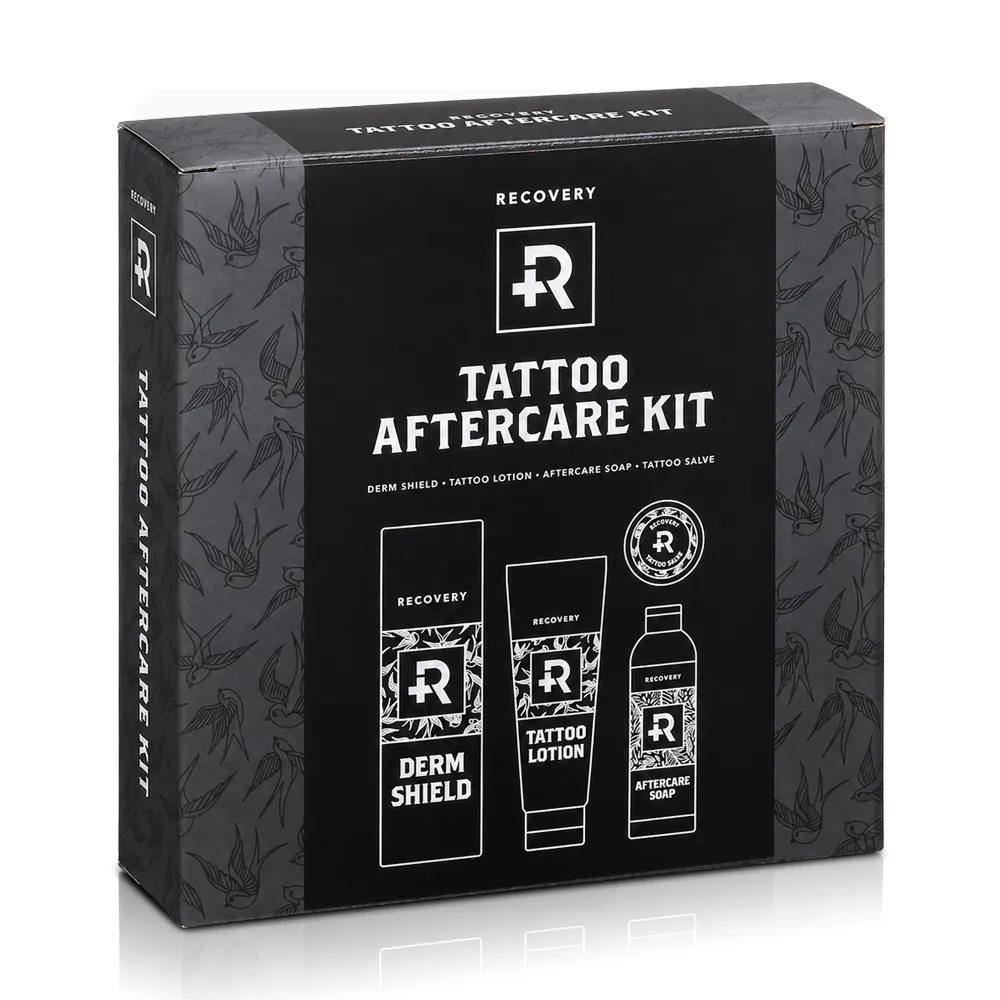 Take-home care kit
Recovery Professional Tattoo Care Kit
Aftercare kit studios can hand to clients together with written instructions.
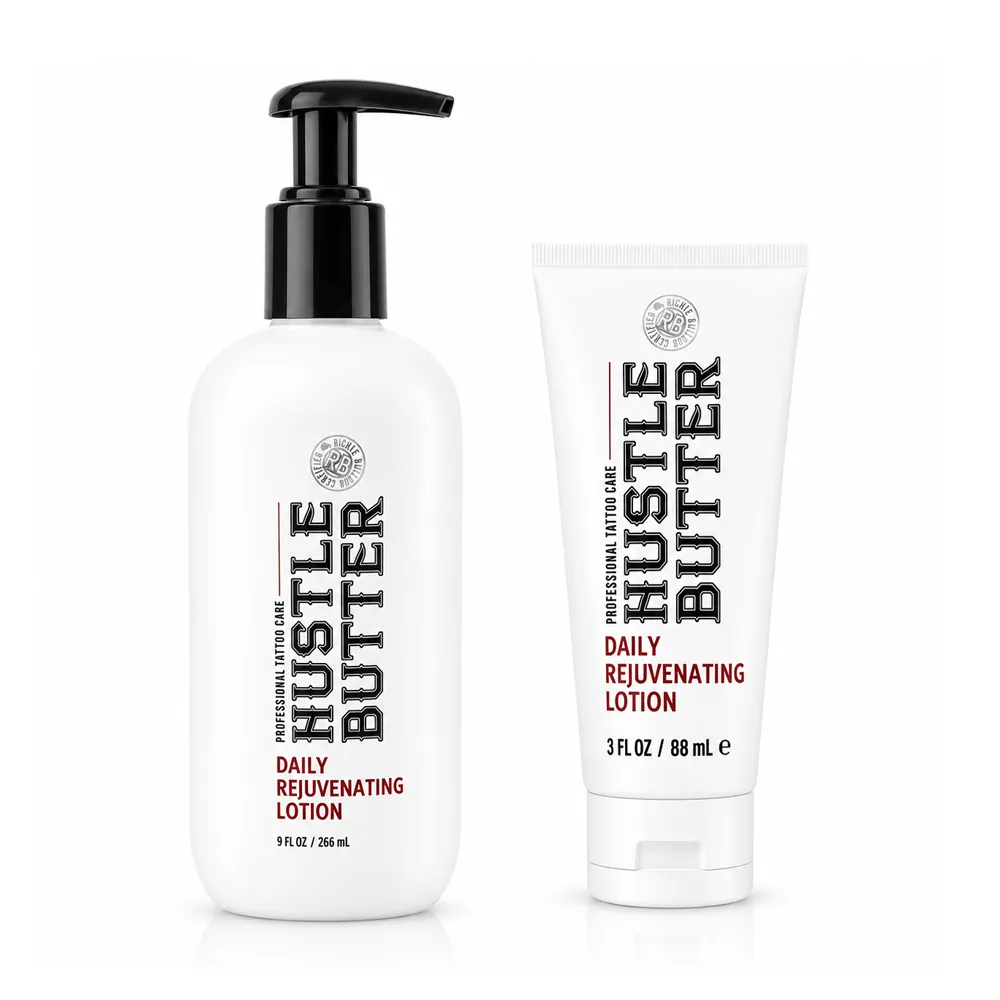 Healed tattoos only
Hustle Butter Daily Rejuvenating Lotion
Daily moisturizer for tattoos that are fully healed.
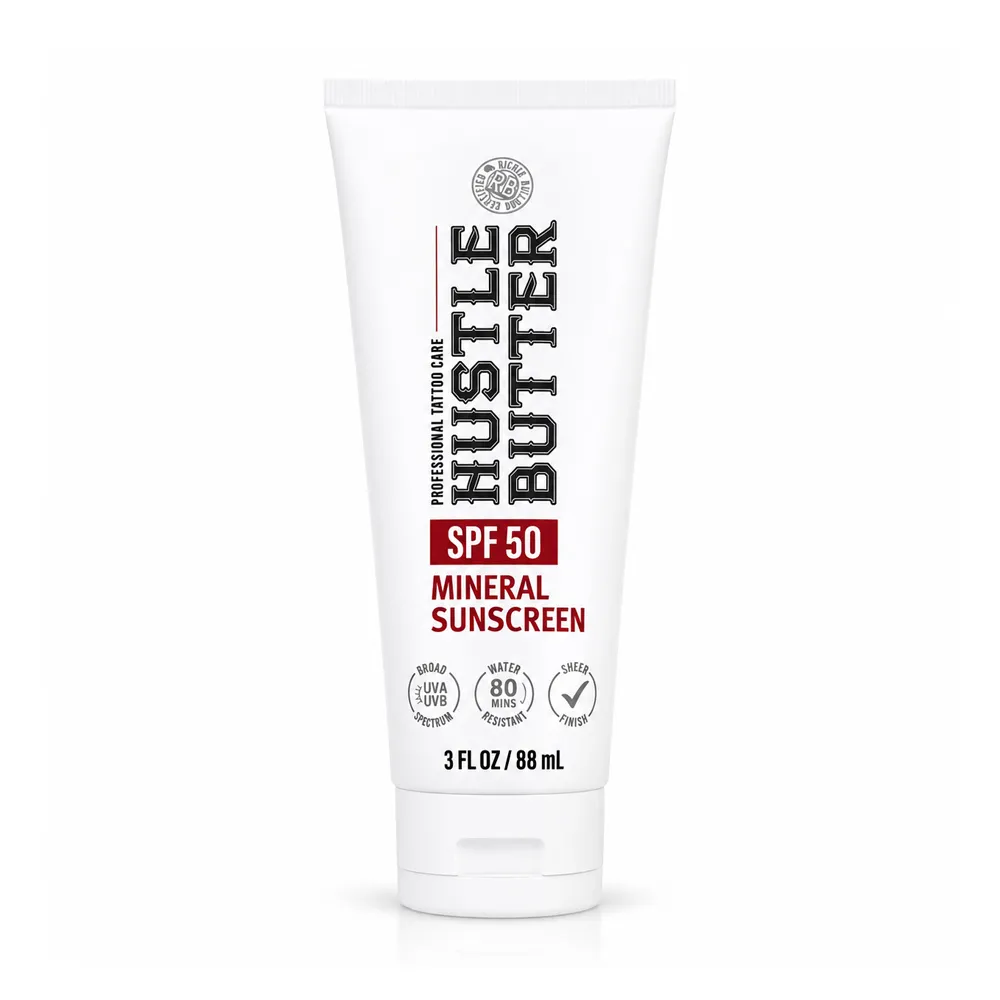 Healed tattoos only
Hustle Butter Mineral Sunscreen Lotion
Mineral sunscreen for healed tattoos; keep a fresh tattoo covered instead.
BROWSE GLIDES & AFTERCARE BROWSE CLEANERS
For more specific decisions, read Recovery Derm Shield vs. Saniderm, Second Skin: Film vs. Gel vs. Spray and Second Skin vs. Ointment Aftercare.
COMMON CLIENT QUESTIONS
Frequently Asked Questions
What should I do immediately after leaving the tattoo studio?
Keep the covering in place until the time specified by your artist and the dressing manufacturer. Prepare clean hands, a gentle cleanser and the approved aftercare products for the first wash. Some early redness, tenderness and clear fluid may occur, as the AAD describes.
How soon should I remove my tattoo wrap?
Follow the artist's instructions for your exact covering. Hustle Butter describes an ordinary wrap-removal window of a few hours to a full day, while adhesive films such as Recovery Derm Shield have separate product-specific schedules. Consult the linked adhesive-film guide for the detailed protocol.
How should I wash my tattoo for the first time?
Wash your hands, remove the covering gently at the instructed time, cleanse using lukewarm water and an artist-approved gentle cleanser, rinse and pat dry with a clean paper towel. Do not scrub or peel away attached skin.
How often should I wash and moisturize during days 1–7?
The schedule depends on the care method. After final Saniderm removal, the manufacturer recommends washing at least twice daily and using a thin balm layer. Recovery Tattoo Salve directions specify thin applications 3–4 times daily for 7–10 days. Follow your artist and the actual product label.
When does tattoo peeling usually start?
Saniderm reports an average start around day 4 or 5, with variation between tattoos and individuals. Peeling commonly subsides over one or two weeks. The AAD also identifies flaking, itching and some scabbing as possible parts of the healing process.
Why does my tattoo look cloudy or milky?
A dull or cloudy appearance can occur as the visible surface changes after peeling. Hustle Butter describes a temporarily dull, faded or slightly milky look while the outer layer of dry skin peels away. Do not exfoliate the area or judge the finished artwork while the surface remains unsettled.
Can I scratch an itchy healing tattoo?
Do not scratch, rub or pick at the skin. Hustle Butter's guide says no scratching, rubbing or exfoliating; continue the approved gentle washing and light moisturizing routine. Intense itching accompanied by worsening redness, painful bumps or other concerning signs needs medical assessment.
Can I shower with a new tattoo?
Hustle Butter recommends brief, lukewarm showers. Saniderm permits normal showering when its bandage remains correctly sealed. Avoid prolonged soaking and follow the artist's cleansing and drying directions.
When can I swim or use a hot tub again?
Hustle Butter advises avoiding pools, baths, oceans and hot tubs until healing is complete. Saniderm recommends avoiding submersion during roughly the first 2–4 weeks. These are manufacturer timelines, so check that your skin has recovered and follow your artist's instructions.
When can I go back to the gym?
Hustle Butter recommends rest from workouts for approximately the first 48 hours, then light movement and a gradual return as the tattoo settles. High-friction training, heavy lifting and contact sports may need more time depending on the tattoo's placement and the artist's guidance.
How long does a tattoo take to heal completely?
Hustle Butter describes typical visible surface recovery at approximately 2–4 weeks, while deeper recovery may continue for 3–6 months. These are manufacturer estimates. Confirm with your artist before moving to products intended only for fully healed tattoos.
Can I put sunscreen on a fresh tattoo?
Hustle Butter advises waiting until the tattoo is fully healed, generally at least four weeks or as directed by the artist. During healing, cover it with loose protective clothing and avoid direct sun. Its SPF 50 mineral lotion is intended only for fully healed tattoos.
What sunscreen should I use after my tattoo heals?
The AAD recommends broad-spectrum, water-resistant SPF 30 or higher, applied 15 minutes before going outdoors and at least every two hours afterward. Hustle Butter's healed-only Mineral Sunscreen Lotion is broad-spectrum SPF 50 with zinc oxide and an 80-minute water-resistance rating.
Can I use Hustle Butter Daily Rejuvenating Lotion on day one?
No. Hustle Butter designates Daily Rejuvenating Lotion for fully healed tattooed skin. For a new tattoo, choose a product intended for the fresh aftercare stage and follow your artist's instructions.
What signs of infection should I watch for?
The AAD lists spreading or darkening redness, pain that persists or worsens, fever, chills, pus, open sores and itchy painful red bumps among warning signs. See a doctor or board-certified dermatologist right away. Do not attempt to solve a possible infection simply by changing aftercare products.
Can an old tattoo develop an ink allergy years later?
Yes. The AAD states that ink allergies can appear immediately, weeks later, years later or even decades afterward. A concerning new reaction in an existing tattoo deserves appropriate medical evaluation.
Should I tell the MRI technician that I have tattoos?
Yes. The FDA advises informing the radiologist or MRI technologist about tattoos before an MRI. The FDA notes rare reports of swelling or burning in tattooed areas during MRI.
MANUFACTURER AND OFFICIAL SOURCES
Sources Consulted
Healing-stage estimates and product instructions were checked against Hustle Butter, Saniderm, Recovery Aftercare, After Inked and INKEEZE. Normal skin responses, long-term sun guidance and warning signs were checked against the AAD and FDA.
- American Academy of Dermatology — Tattoo Skin ReactionsNormal early responses, infection signs and allergic reactions that may develop long after tattooing.
- American Academy of Dermatology — Caring for Tattooed SkinWater-based moisturizing, broad-spectrum SPF 30+, reapplication and avoidance of tanning beds.
- U.S. FDA — Think Before You Ink: Tattoo SafetyMedical follow-up for reactions and tattoo-ink problem reporting.
- U.S. FDA — Tattoos & Permanent Makeup: Fact SheetRare MRI reactions and informing the radiologist or technologist about tattoos.
- U.S. FDA — Sunscreen and Sun ProtectionWhy no sunscreen is waterproof and how 40- or 80-minute water-resistance labeling works.
- Hustle Butter — Tattoo Aftercare GuideFirst wrap and wash, days 1–14, sleeping, clothing, showers and surface versus deeper healing estimates.
- Hustle Butter — Working Out With a New TattooRest, sweat, friction and gradual return to exercise.
- Hustle Butter — Sunscreen for TattoosCovering fresh tattoos, postponing sunscreen and the manufacturer's four-week recommendation.
- Saniderm — Guide to New Tattoo CareWashing after final film removal, thin moisturizer, over-moisturizing and avoidance of submersion.
- Saniderm — Tattoo Peeling: Timing and CareTypical peeling onset around day four or five and variation in duration.
- Recovery Aftercare — Derm Shield InstructionsBrand-specific covering, removal and change guidance.
- Recovery Aftercare — Tattoo Salve DirectionsThin salve application 3–4 times daily for 7–10 days.
- Recovery Aftercare — Professional Tattoo Care KitFilm, salve, lotion and soap as separate aftercare components.
- Hustle Butter — Foaming Tattoo SoapManufacturer use for tattoo cleansing during the session and aftercare.
- Hustle Butter — De Luxe Tattoo BalmSmall-amount use during the healing period.
- After Inked — Tattoo Aftercare LotionThin applications 2–3 times daily or as needed.
- INKEEZE — Hi-Definition Tattoo LotionThin new-tattoo application and daily use on existing tattoos.
- Hustle Butter — Daily Rejuvenating LotionDaily moisturizing directions for fully healed tattooed skin only.
- Hustle Butter — Mineral Sunscreen Lotion SPF 50Zinc oxide, broad-spectrum SPF 50, 80-minute water resistance and healed-only use.
Editorial note: Last updated November 12, 2026. Brand timelines vary by product, tattoo and individual; follow the directions for your actual aftercare products and your artist's instructions. Seek medical care promptly for suspected infection or a significant allergic reaction.