Powered by Comercia.io
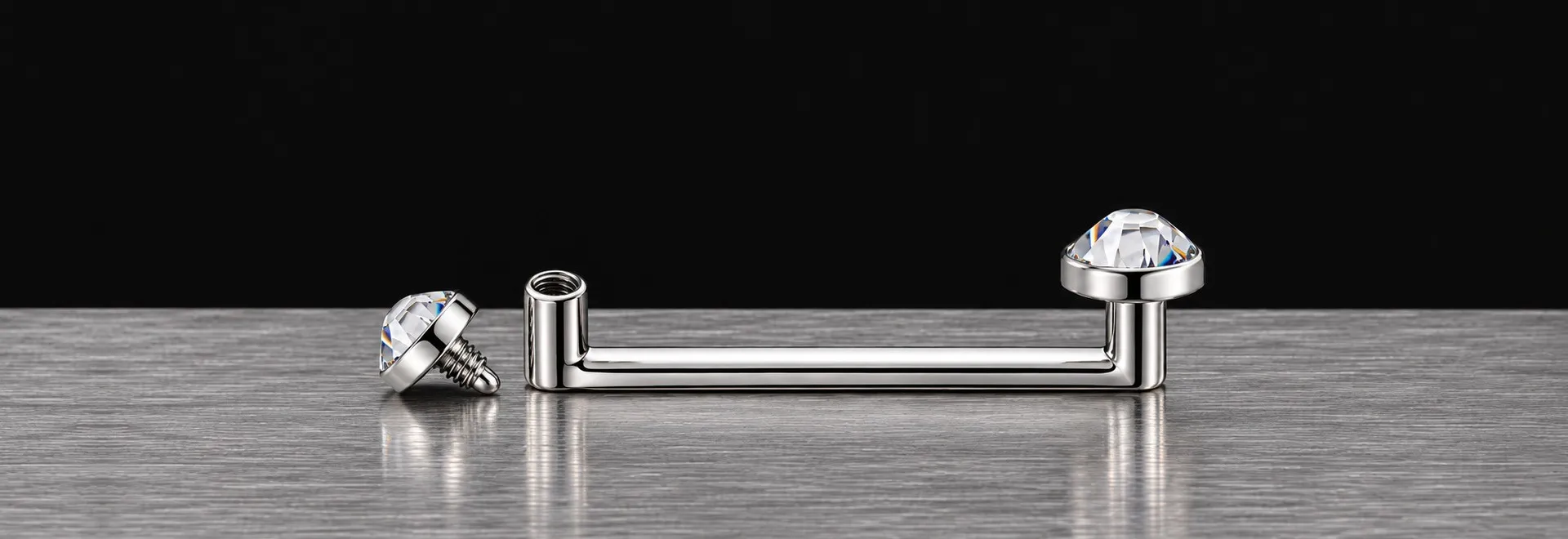
Dermal anchor vs surface bar: choose a single-point surface anchor when the intended design calls for one visible ornament, or a surface barbell when it calls for two visible ends joined beneath the skin. For a professional piercer, the decision depends on the jewelry structure, placement and movement, healing expectations, future top changes, and the client's understanding of migration and rejection.
Explore Dermal Anchor Bases Explore Surface Barbells
QUICK ANSWER
Dermal anchor vs surface bar: which should a professional piercer choose?
Choose a dermal anchor for one visible ornament with an under-skin base; choose a surface bar for two ends linked beneath the skin. The APP ties anchor longevity to movement and describes anchors as long-term temporary, so assess placement rather than promising which style lasts longer.
SINGLE VISIBLE POINT
Surface anchor: one opening, one decorative top, base beneath the skin.
TWO VISIBLE POINTS
Surface barbell: two openings connected by a shaft with angled ends.
PROFESSIONAL VERDICT
Placement comes first: assess movement, serviceability, jewelry fit, and the client's expectations.
JEWELRY DESIGN
What is the difference between a dermal anchor and a surface bar piercing?
The difference is one point versus two. The APP says a surface anchor has one opening serving as both entrance and exit, with a base under the skin and a threaded ornament above it. A surface barbell connects two ends through a shaft beneath the skin.
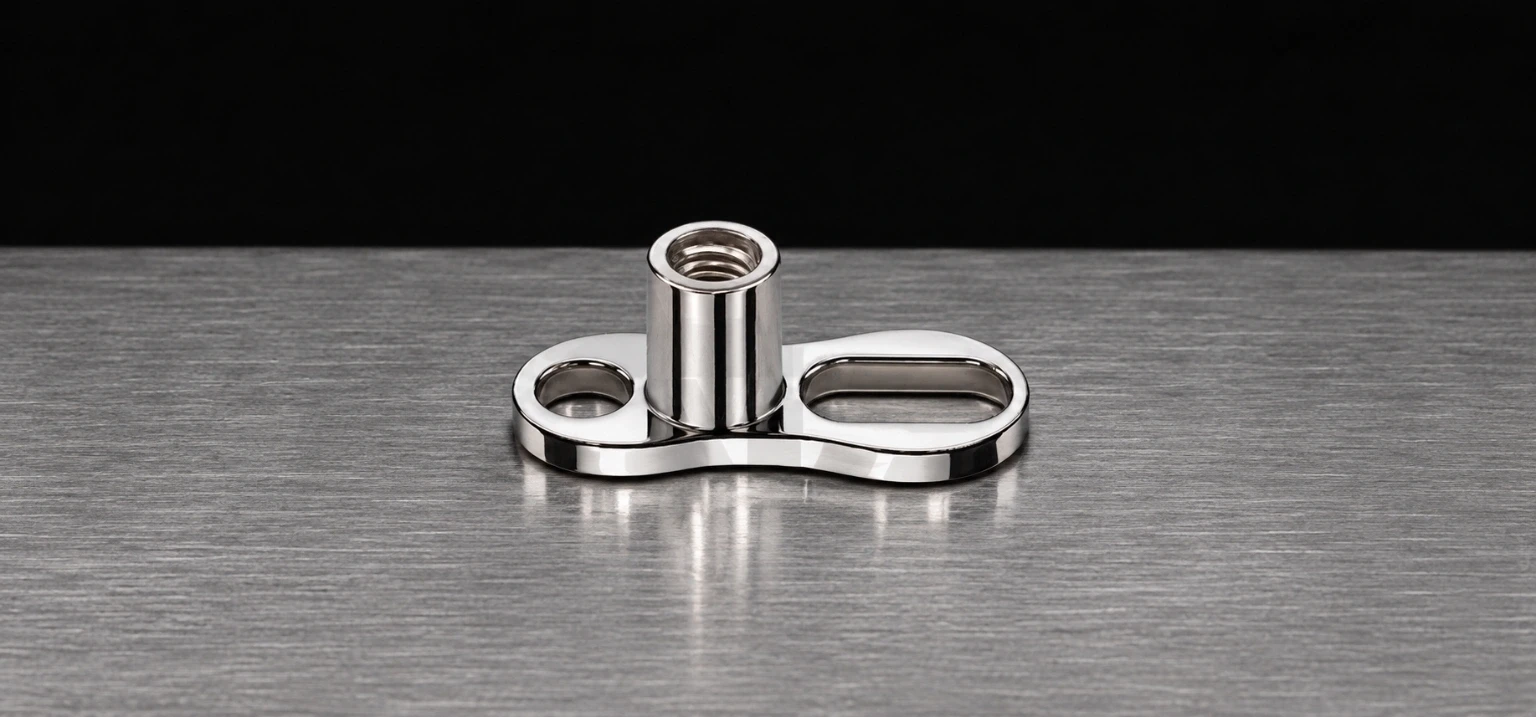
The APP describes a surface bar as a shaft with ends angled, generally at 90 degrees. It cites nape and chest among the areas for a two-point design. Its surface anchor has an under-skin base, a threaded post, and a visible gem or disc.
Do not confuse a surface anchor with an implant procedure
The APP specifically separates surface anchors from subdermal and transdermal implants. Use the APP's body-piercing terminology in the consultation, consent discussion, and jewelry order.
SIDE-BY-SIDE VERDICT
Dermal anchor vs surface bar: how do placement, rejection, and jewelry changes compare?
Compare the complete jewelry, not just the visible tops. The APP describes construction, healing, and surface-anchor longevity without a rejection-rate ranking between the styles.
| Decision factor | Dermal anchor / surface anchor | Surface bar / surface barbell |
|---|---|---|
| How the jewelry is made | Under-skin base with small threaded post; one decorative top appears above the skin. | Bar shaft beneath the skin with ends angled upward, usually about 90 degrees; two visible ends. |
| Openings and placement | One opening serves as entrance and exit. Evaluate the chosen point and its movement. | Two openings on the same surface; APP examples include flat regions such as nape and chest. |
| APP on rejection and migration | APP calls it long-term temporary and says rejection is likely eventually, generally between six months and a couple of years; lower-movement areas may last longer. | APP describes the two-point design and lists a separate healing average. Use individual placement assessment, not a claimed lower rejection rate. |
| Top and jewelry changes | APP says the threaded top may be changed; removal of the base means losing the piercing. | Two-end barbell assembly; select matching ends and have the piercer assess jewelry changes. |
| Average healing in APP manual | 3–4 months or longer. | 6–9 months or longer for surface piercings. |
| When it fits the job | Choose when the design needs one visible ornament and the piercer accepts the anchor's service and lifespan considerations. | Choose when the design needs two visible ends on a suitable surface and a correctly configured bar. |
TERMS THAT GET MIXED UP
Is a microdermal the same as a dermal anchor, and what is a skin diver?
In APP terminology, microdermal, dermal anchor, surface anchor, and single-point piercing refer to the same general single-opening concept. They are not names for a two-ended surface barbell.
The name skin diver varies across studios. Ask the piercer exactly which jewelry design is intended; do not choose an under-skin base or removal plan from a nickname.
Use these terms in a studio consultation
- Surface anchor: APP's professional term for the single-point arrangement.
- Microdermal: A name the APP includes among surface-anchor synonyms.
- Surface barbell: A two-ended shaft designed for a two-point surface piercing.
- Skin diver: A studio-dependent label that calls for a clarifying question.
PLACEMENT LOGIC
Where can a dermal anchor or surface bar be placed, and how does movement affect the choice?
Start with the intended number of visible points, then evaluate whether the location and daily movement suit that construction. The APP says lower-movement areas are more likely to support a longer surface-anchor lifespan. It gives the nape of the neck and chest as examples of the two-point areas for which surface bars are intended.
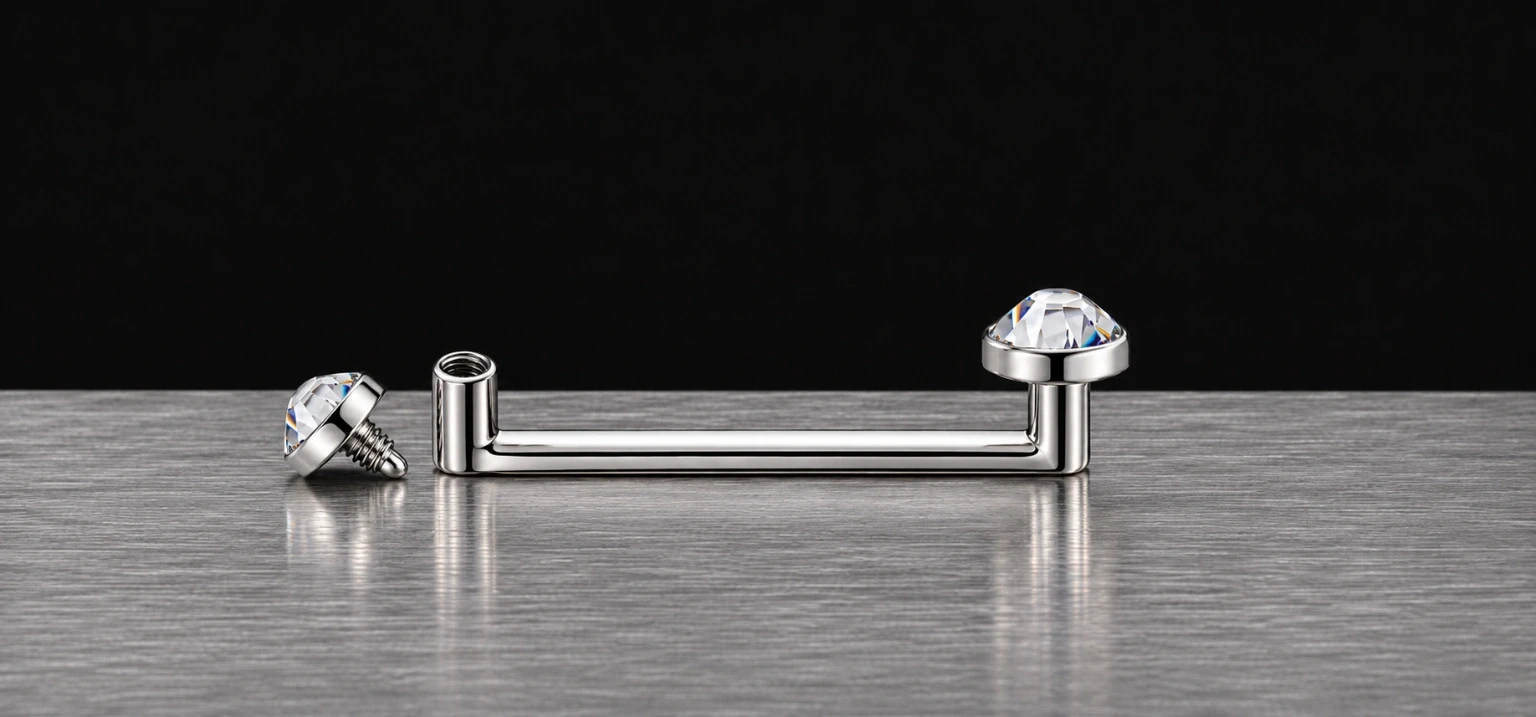
The APP does not rank body areas by rejection probability. For one visible point, evaluate the proposed anchor location. For two ends, evaluate the bar arrangement. New Jersey health guidance identifies snagging and migration as topics for the client consultation. The qualified piercer assesses the actual site.
MIGRATION AND REJECTION
Which rejects less: a dermal anchor or a surface piercing?
The APP calls surface anchors long-term temporary. Its piercing FAQ says the body will generally be likely to reject a surface anchor sometime between six months and a couple of years, with a longer lifespan more likely in an area with less movement. This is an expectation to discuss, not a countdown for an individual client.
The APP gives no head-to-head rejection ranking. It says properly performed surface anchors placed by skilled practitioners are no riskier than ordinary piercings; that is not a comparison with surface bars. Discuss movement, jewelry design, and possible future removal.
Rejection is not the same conversation as a bump or a medical problem
Use Piercing Rejection vs Migration for terminology and Piercing Bump, Irritation, Keloid, or Hypertrophic Scar for related concerns. Refer piercing assessment to a qualified piercer and medical concerns to a doctor.
HEALING AND MAINTENANCE
How long do dermal anchors and surface bars take to heal?
The APP procedure manual gives average healing times of 3–4 months or longer for a surface anchor and 6–9 months or longer for a surface piercing. Those are general categories in the APP manual, not body-area schedules or a date when every jewelry change becomes appropriate.
Healing and lifespan are separate. The APP says material can build up under an anchor top, recommends saline soaks at least weekly even after healing, and advises avoiding makeup on surface anchors even after healing.
For general aftercare, see Piercing Aftercare, Saline, and Healing Times; apply the APP anchor-specific advice to anchors.
MATERIALS FOR INITIAL JEWELRY
What metal and sterile jewelry should a piercer select for a dermal anchor or surface bar?
The APP's initial-jewelry guidance identifies Ti6Al4V ELI titanium compliant with ASTM F136 and suitable steel meeting ASTM F138. For the sterilized titanium jewelry linked in this guide, SVT Shop's product descriptions identify ASTM F136 on the individual pieces. Evaluate that claim on the exact product, not on a generic G23 name.
SVT Shop describes the linked sterile titanium pieces as suitable for consideration for new piercings. The client's trusted piercer decides whether a particular item, fit, and configuration are appropriate for that placement.
SVT Shop describes its jeweled-disc-and-ball surface barbell as non-sterilized and for fully healed surface piercings only. Keep it separate from initial-jewelry inventory.
Material standard is specific to the item
Read Implant-Grade Titanium and Sterilized Piercing Jewelry for material terminology, and Metal Allergy and Piercing Jewelry when reviewing a client's metal concerns. Refer medical allergy questions to a clinician.
THREADS AND SERVICE
Can you change a dermal anchor top, and will any 1.2 mm threaded top fit?
The APP says an anchor's threaded top may be changed, but removing the base ends the piercing. The trusted piercer evaluates any change rather than treating the base as a replaceable top.
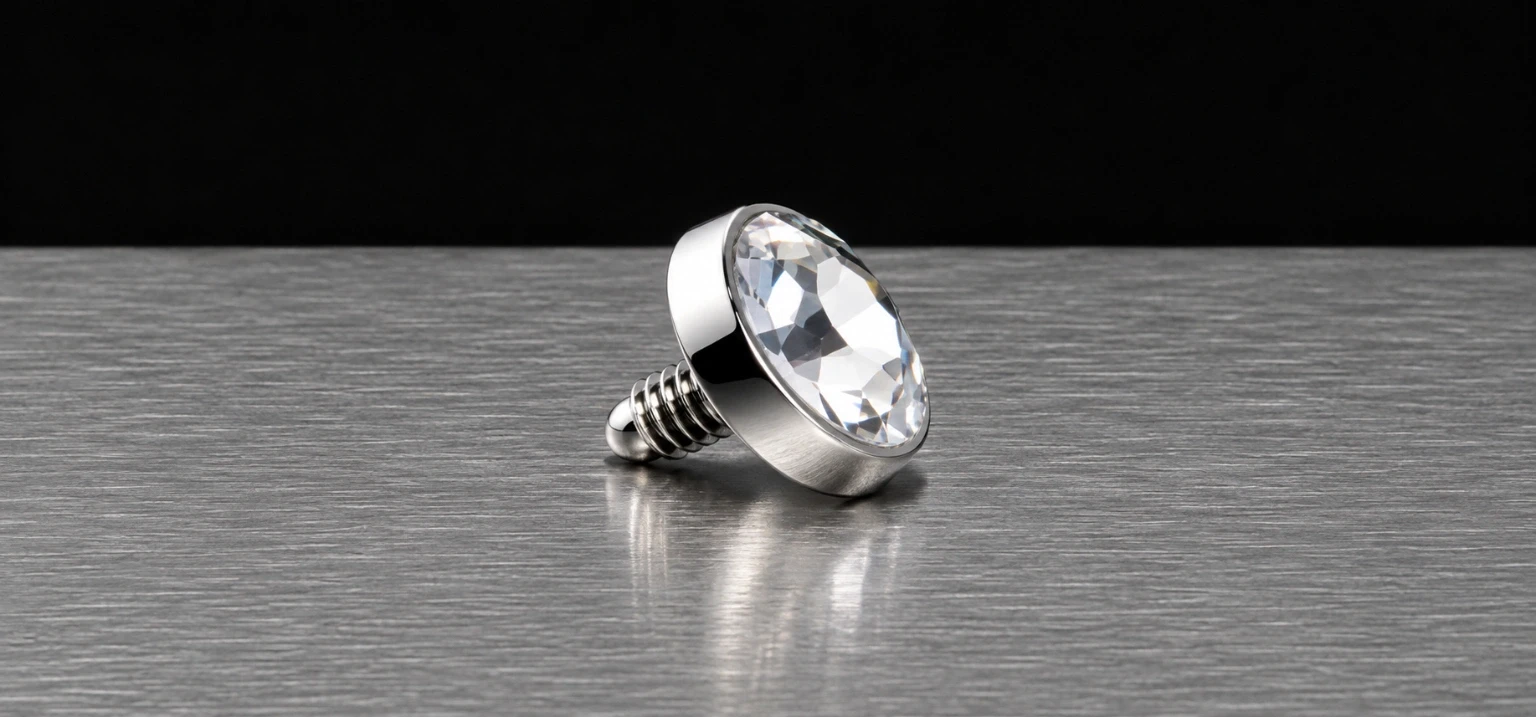
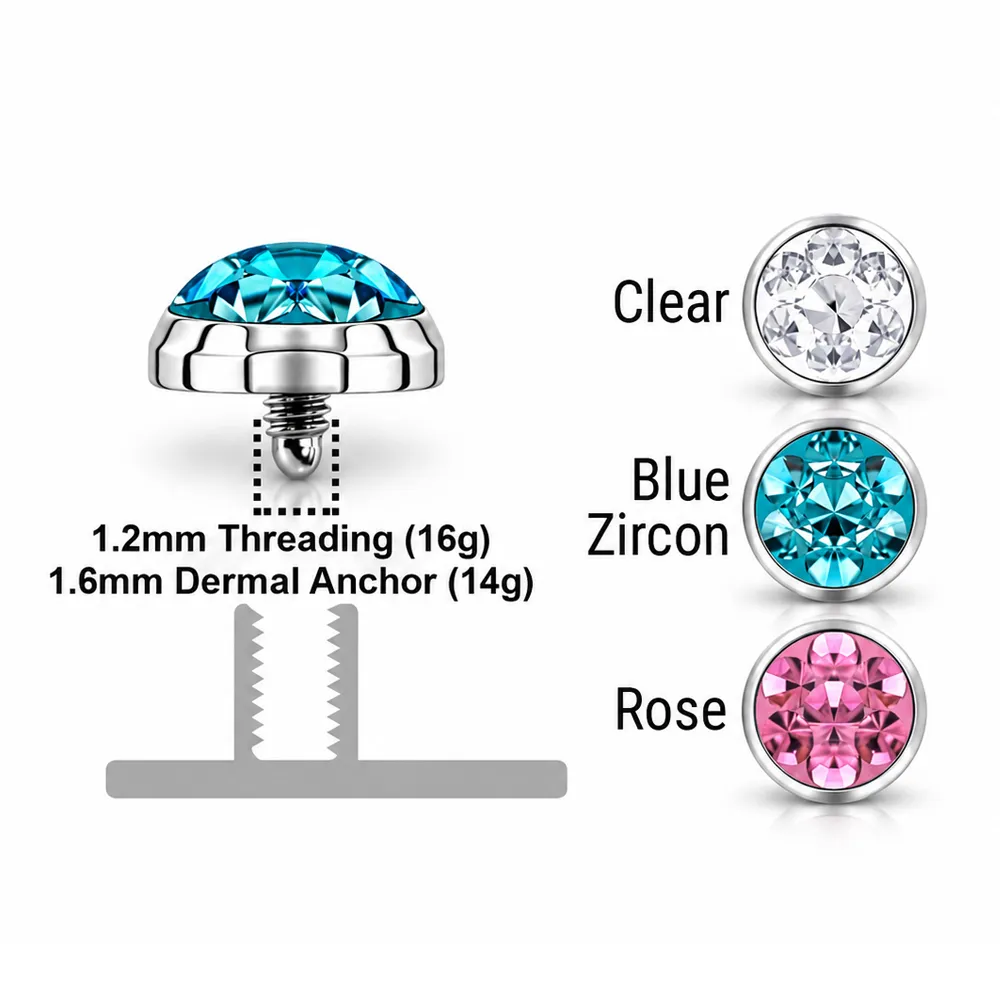
SVT Shop's listed bases and tops use 1.2 mm thread specifications. Its crystal-top description limits fit to a 1.6 mm base with a 1.2 mm thread from the same manufacturer. Thread size alone does not establish cross-brand compatibility.
Match the actual components
- Base: Verify post dimensions and the product's stated internal thread.
- Top: Choose the disc, crystal, dome, or ball style and verify its intended matching base.
- Maker: Keep the original product description with the studio's reorder notes.
- Service: Have the client's trusted piercer evaluate whether a top change is appropriate.
To compare connection types without confusing them, see Threadless vs Internally Threaded Jewelry.
PROFESSIONAL TRAINING
What tools does a piercer use for a dermal anchor, and what training applies?
The APP describes standard body-piercing tools for surface anchors and anchor-specific hemostats. Hollow piercing needles and dermal punches are professional tool categories; equipment descriptions do not replace hands-on training.
New Jersey's 2023 policy requires dermal punches and scalpels to be single-use and tissue-penetrating hemostats to be sterile. Those rules apply in New Jersey; check the rules that govern your studio.
For Texas studios, consult Texas Body Piercing Laws and License and contact DSHS at 512-834-6600 and the local health authority. See Sterilizing Piercing Jewelry and Tools and Piercing Needle Sizes and Gauges for related equipment topics.
Placement and removal are hands-on skills
Tool selection, tissue assessment, placement, and removal are learned in hands-on professional training and follow the rules of your jurisdiction.
DECISION PROCESS
How should a piercer choose between a single-point anchor and a surface bar?
Use a consultation and purchasing sequence, not an insertion sequence. Decide what the design requires, assess placement, explain APP expectations, then choose documented jewelry that the studio can properly service.
Clarify the visible design
Is the request for one isolated gem or for two visible ends connected as one surface piercing?
Assess the proposed location
Discuss movement and snagging; the APP associates lower movement with longer anchor lifespan.
Explain the different expectations
Distinguish APP healing averages from its long-term-temporary description of surface anchors.
Verify the complete jewelry
Check sterile status, stated material, post geometry, and matching tops or surface-bar ends.
Plan follow-up and future service
Explain anchor maintenance, potential top changes, rejection concerns, and the consequences of removing the base.
REMOVAL AND HEALTHCARE
Can a dermal anchor be removed or changed for an MRI or medical procedure?
The APP says trained piercers can remove surface anchors with standard piercing tools. Removing the base generally ends the piercing; re-insertion is uncommon. Changing a top is different from removal.
The APP says anchors can behave like medical implants during X-ray, MRI, and CT imaging. Tell the client to inform their doctor and imaging team; they direct any medical procedure or jewelry decision.
Service question to ask before selling
Does the client understand the difference between a removable top and removal of the under-skin base? That expectation affects both the first jewelry choice and later appointments.
COMMON STUDIO ERRORS
What mistakes should piercers avoid when comparing surface bars and dermal anchors?
Most ordering mistakes start by treating visible ornaments, thread names, and initial-jewelry status as if they describe the entire piercing.
Ordering by the visible gem alone
A one-point anchor and a two-ended bar have different underlying jewelry. Confirm the actual construction.
Promising which style rejects less
The APP gives anchor lifespan guidance, not a percentage-based contest between designs.
Treating healing as permanence
APP healing averages do not turn a long-term-temporary anchor into permanent jewelry.
Assuming every 1.2 mm top matches
SVT Shop's crystal-top listing warns that other makers' components may not fit.
Using healed-only jewelry for a new placement
The non-sterilized jeweled surface barbell listed below is designated for fully healed piercings.
Offering a self-service removal method
The APP distinguishes changing a top from removing a base. Refer the procedure to a qualified piercer.
SVT SHOP SELECTION
Which dermal bases, tops, surface barbells, and professional tools can a studio compare?
Shop anchor bases, tops, and surface bars separately. SVT Shop lists ASTM F136 on the sterile titanium products below. The trusted piercer chooses initial jewelry; the non-sterilized surface bar is for healed piercings only.
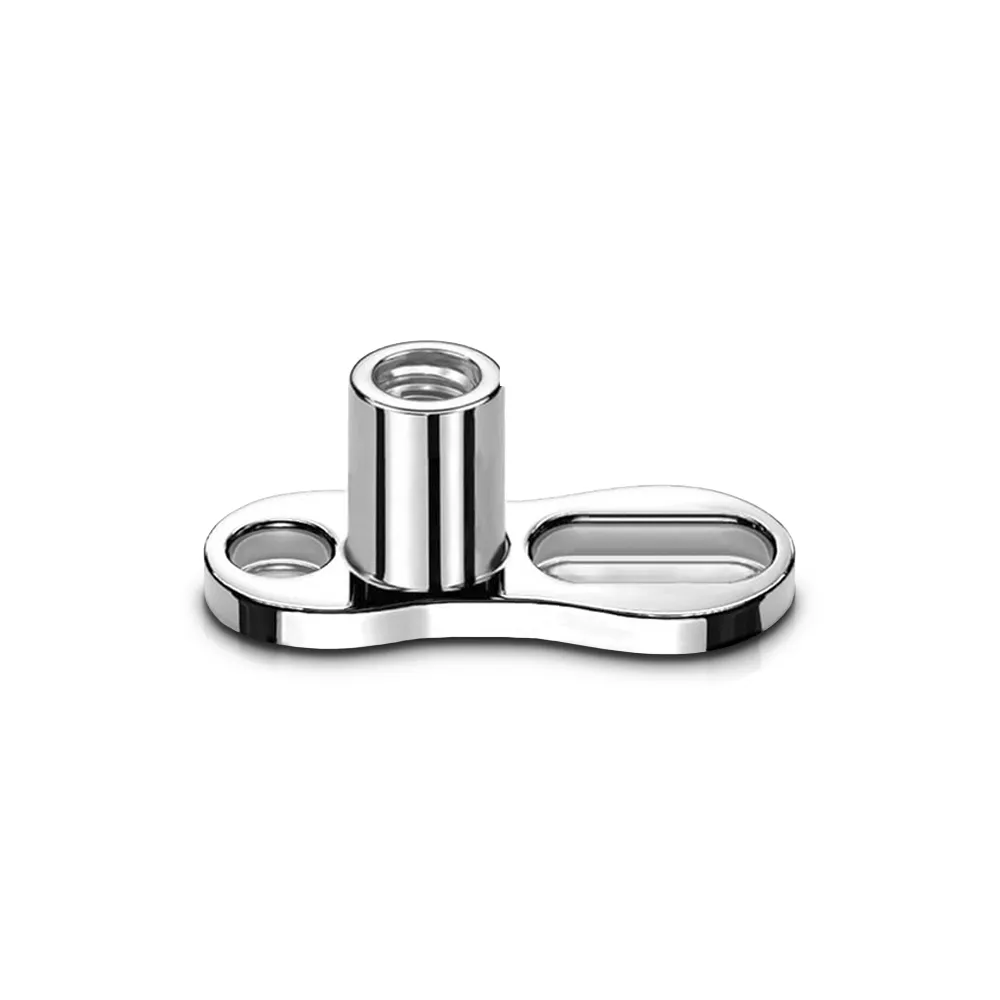 DERMAL BASE / STERILIZED
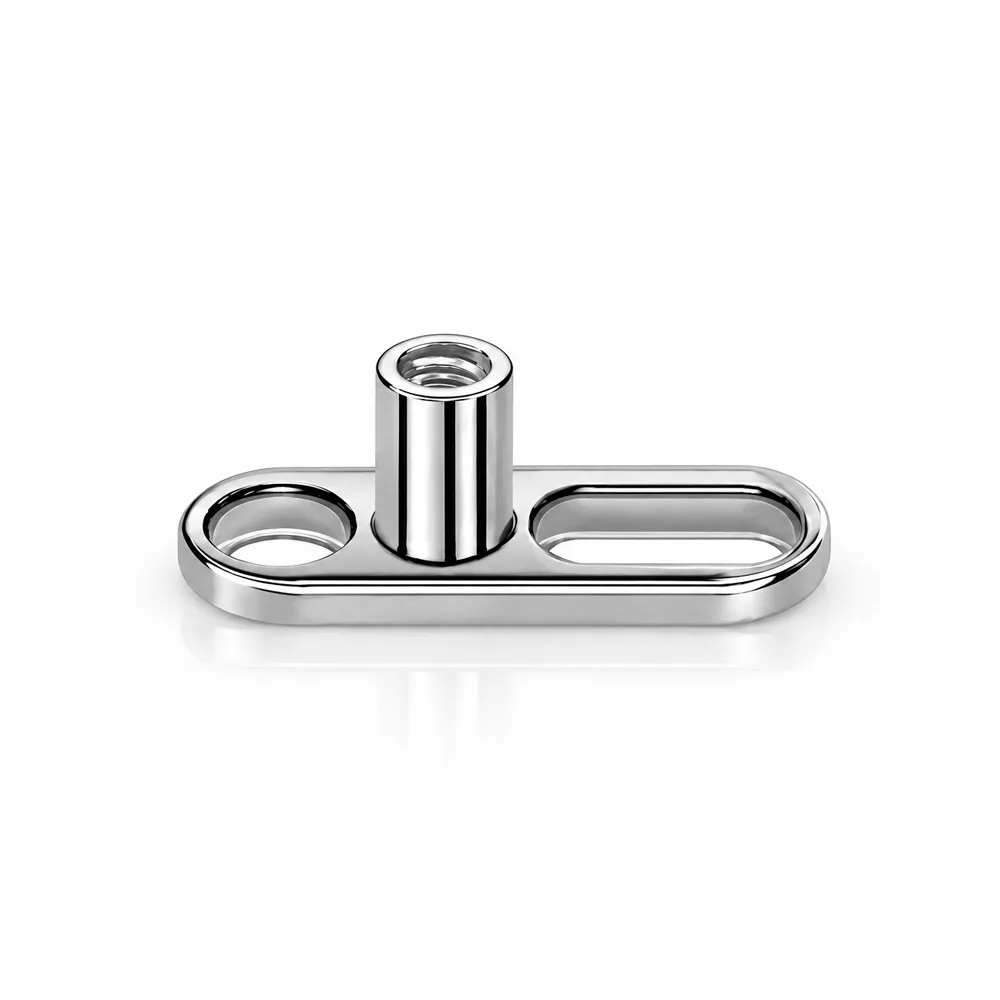
Sterilized Titanium - Dermal Base Plate (6 mm)
SVT Shop lists one round and one elongated opening, an internal 1.2 mm thread, and ASTM F136 titanium.
 DERMAL BASE / STERILIZED
Sterilized Titanium - Dual Hole Threaded Dermal Anchor
A second base design with dual openings and an internally threaded post, described by SVT Shop as ASTM F136.
 DERMAL TOP / CRYSTAL
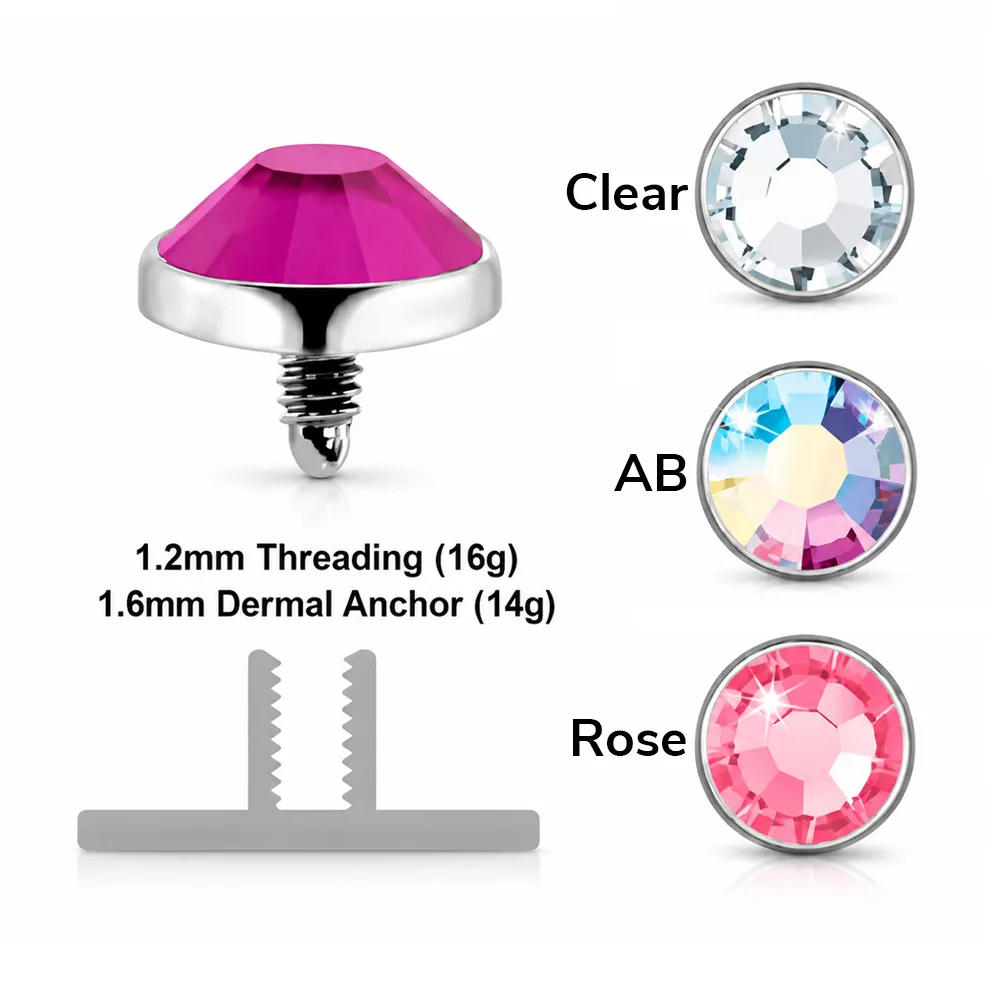
Sterilized Titanium - Crystal Dermal Top 1.2 mm
Flat 5 mm crystal disc. SVT Shop requires the matching manufacturer's 1.6 mm base and 1.2 mm thread.
 DERMAL TOP / BALL
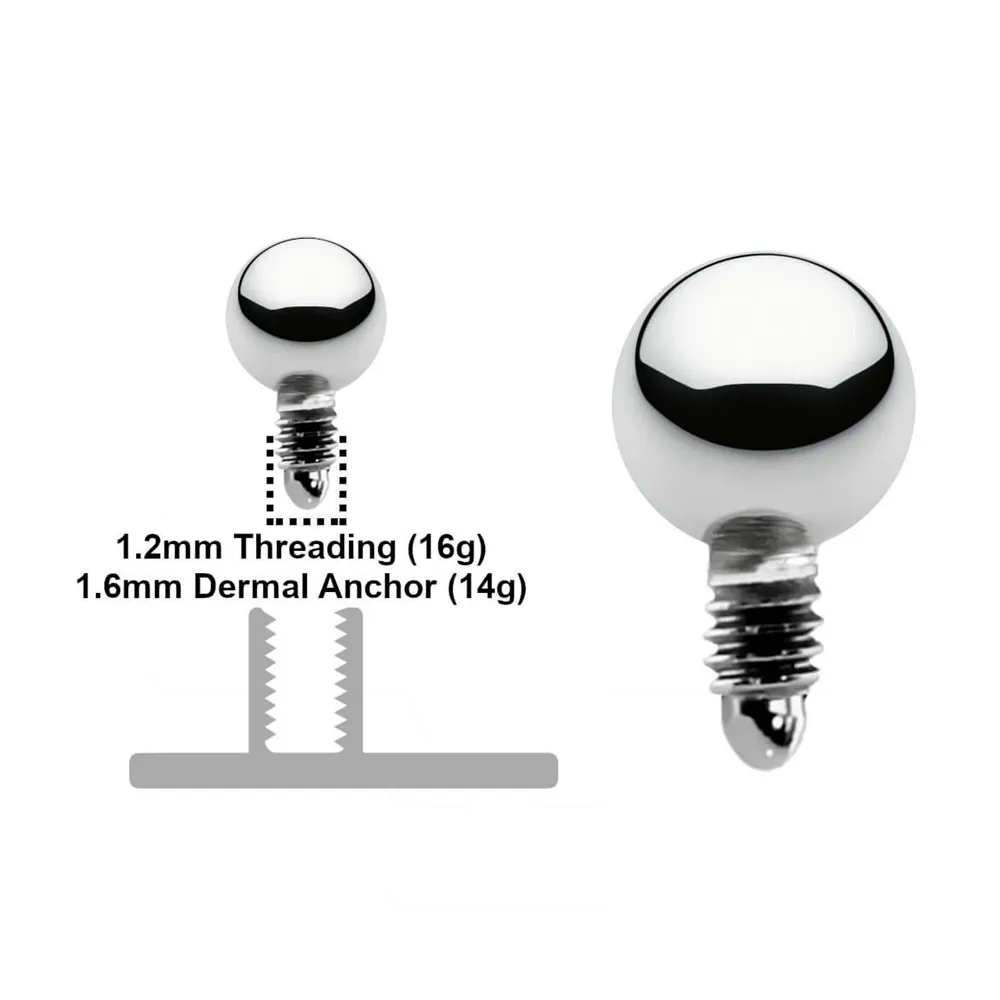
Sterilized Titanium - High Polish Ball Shaped Dermal Top
Polished ball option described with 1.2 mm threading and ASTM F136 material; confirm base compatibility.
 DERMAL TOP / FLAT DISC
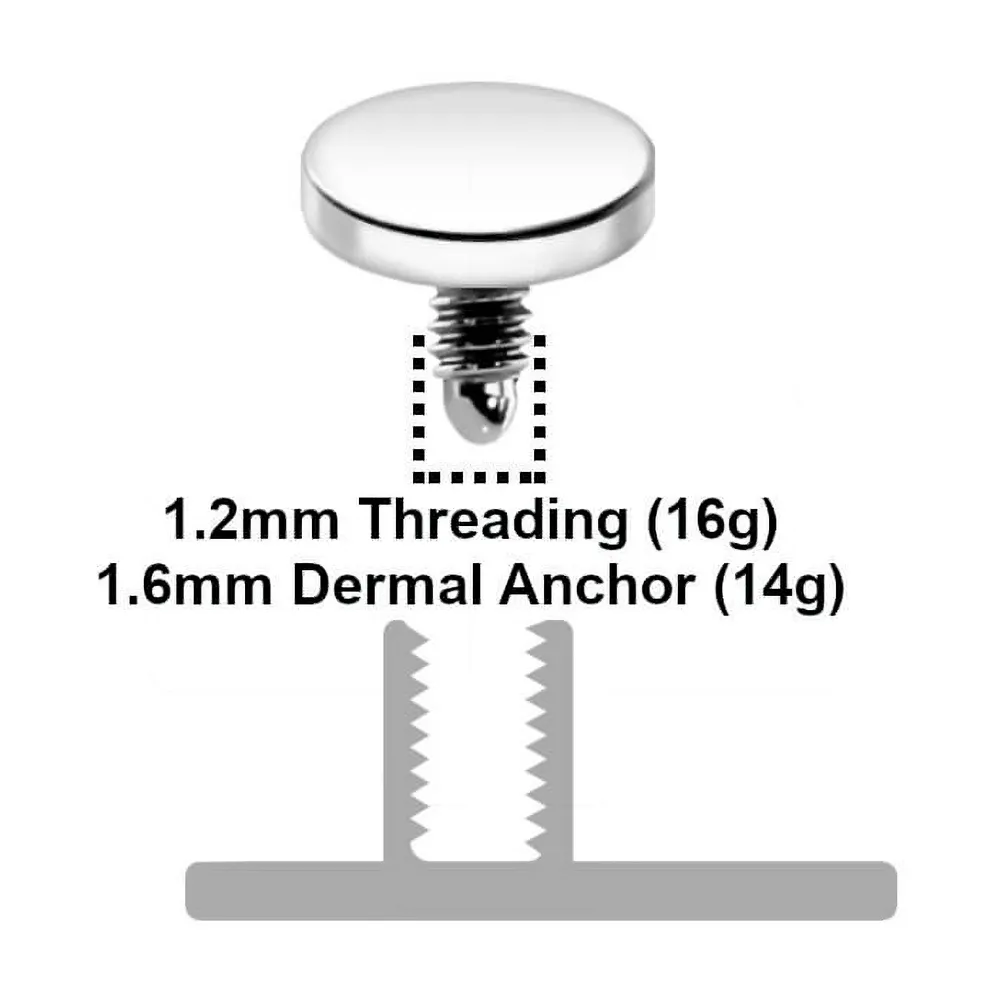
Sterilized Titanium - High Polish Flat Disk Dermal Top 1.2 mm
Low-profile polished disc choice for a compatible dermal base; check the exact thread match.
 DERMAL TOP / DOME
Sterilized Titanium - Crystal Dome Dermal Top
Crystal-dome appearance with the 1.2 mm thread listed by SVT Shop; match to the original base.
 SURFACE BAR / STERILIZED
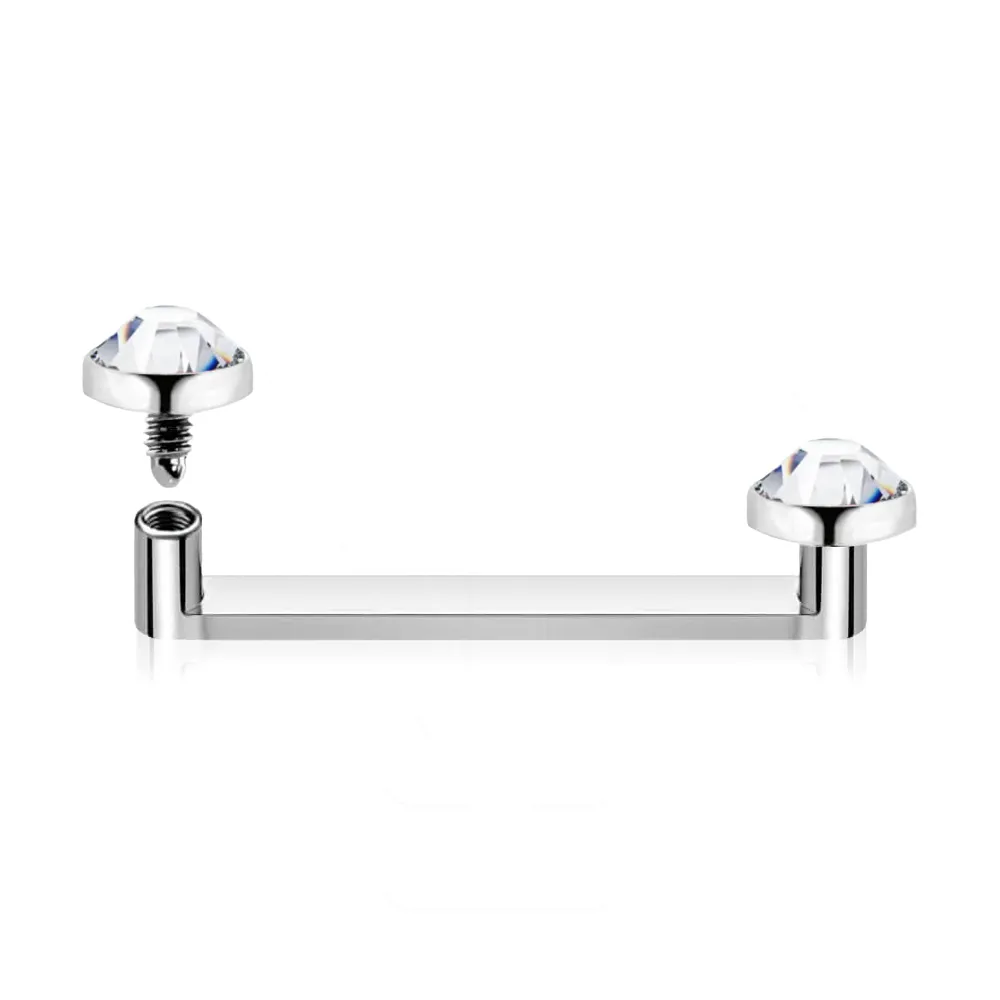
Sterilized Titanium - High Polish Surface Barbell Post With Dermal Tops Set
Two-ended surface-bar option with 90-degree posts and matching tops, listed as ASTM F136 titanium.
 SURFACE BAR POST / STERILIZED
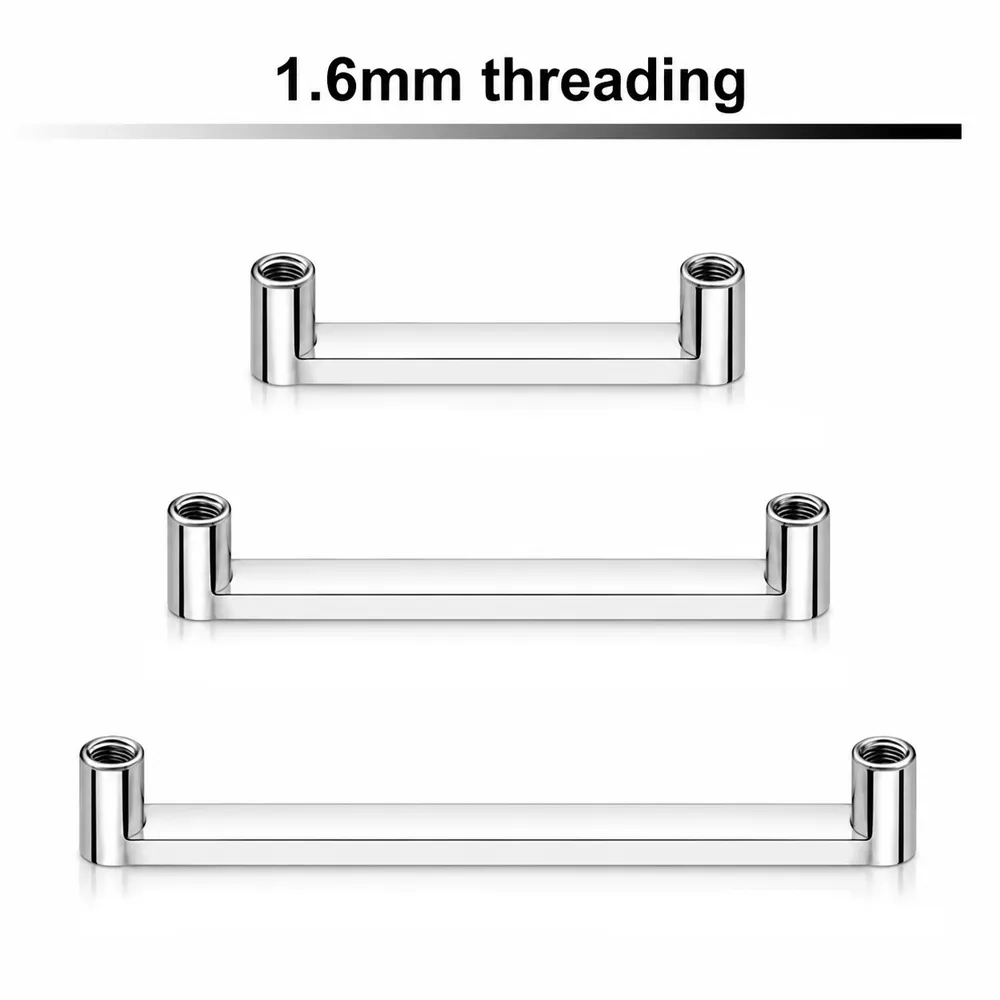
Sterilized Titanium - High Polish Surface Barbell Post Internally Threaded
Internally threaded 90-degree post design; SVT Shop describes it as sterilized and suitable for new piercings, subject to the piercer's choice.
 SURFACE BAR / FULLY HEALED ONLY
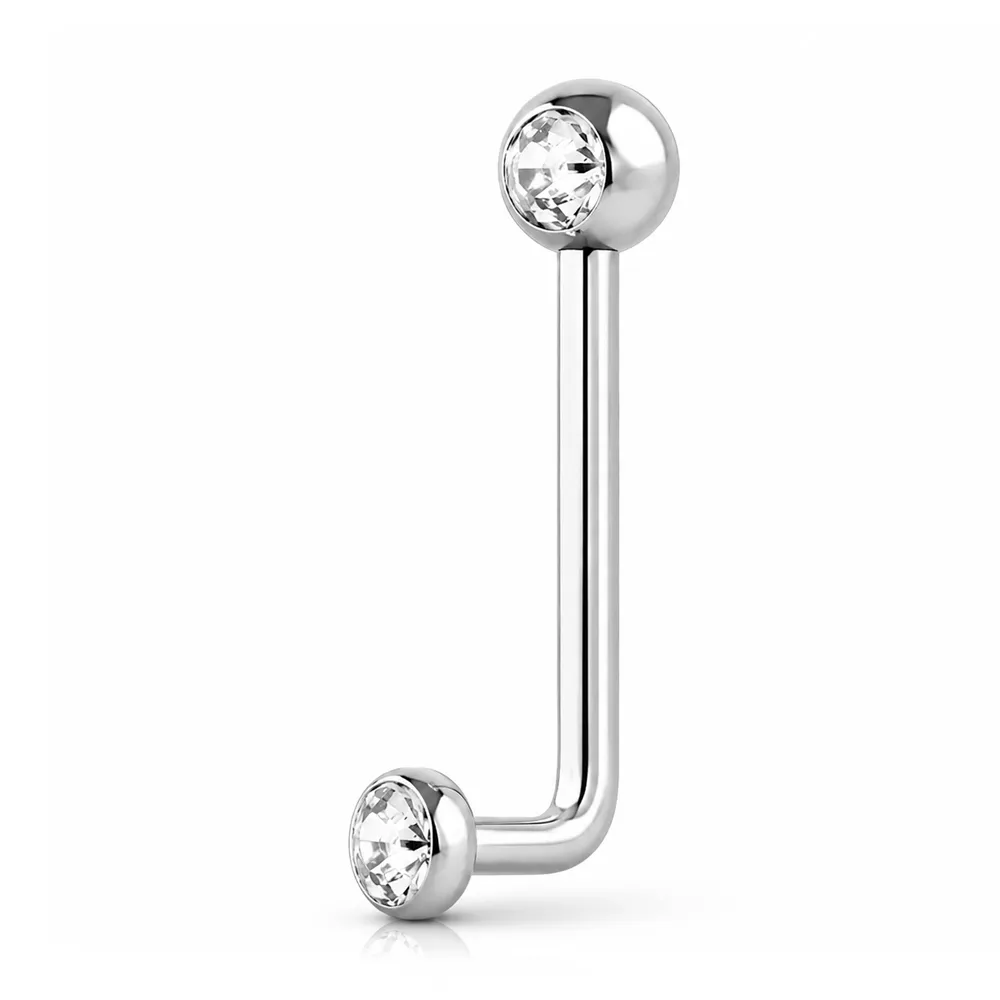
Internally Threaded Titanium Surface Barbell With Jeweled Disc And Jeweled Titanium Ball
Non-sterilized decorative assembly. SVT Shop specifies use only in fully healed surface piercings.
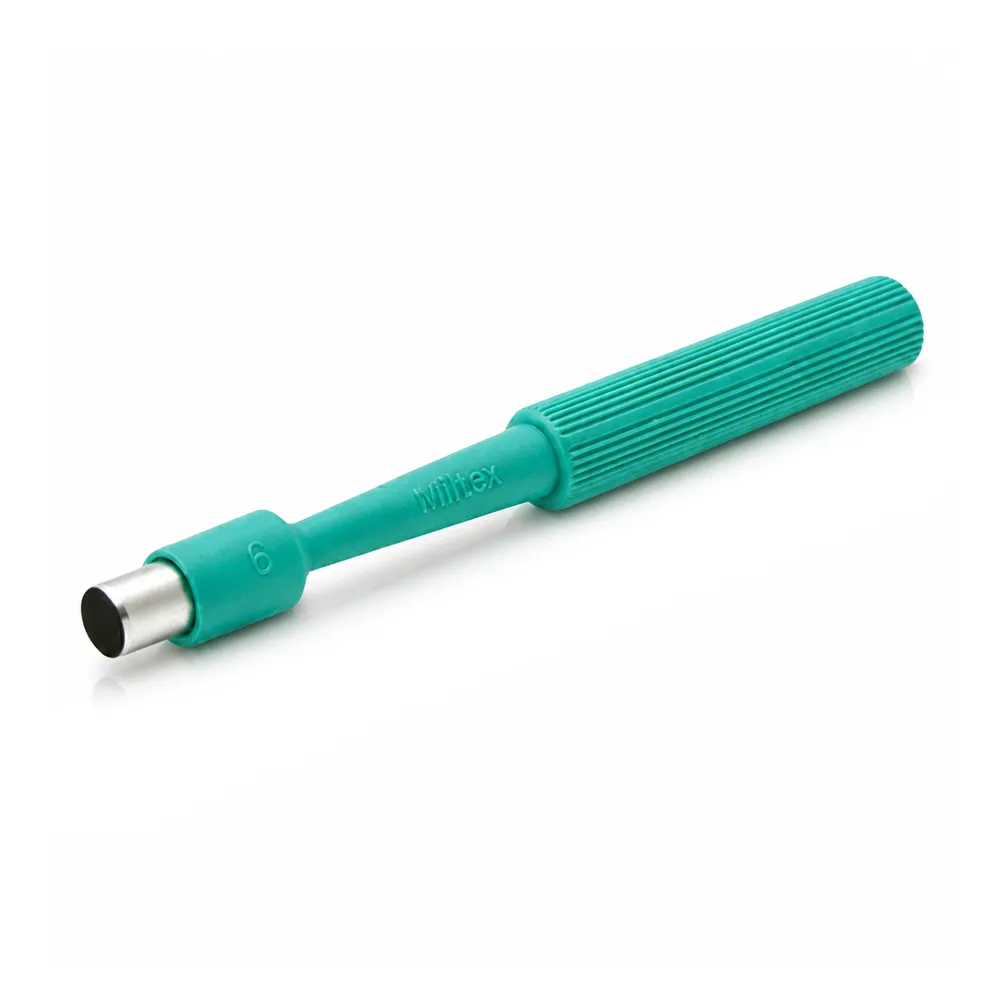 PROFESSIONAL TOOL / SINGLE USE
Miltex Biopsy Disposable Dermal Punch
SVT Shop describes a sterile single-use professional punch for dermal-anchor work; trained piercers follow their applicable rules.
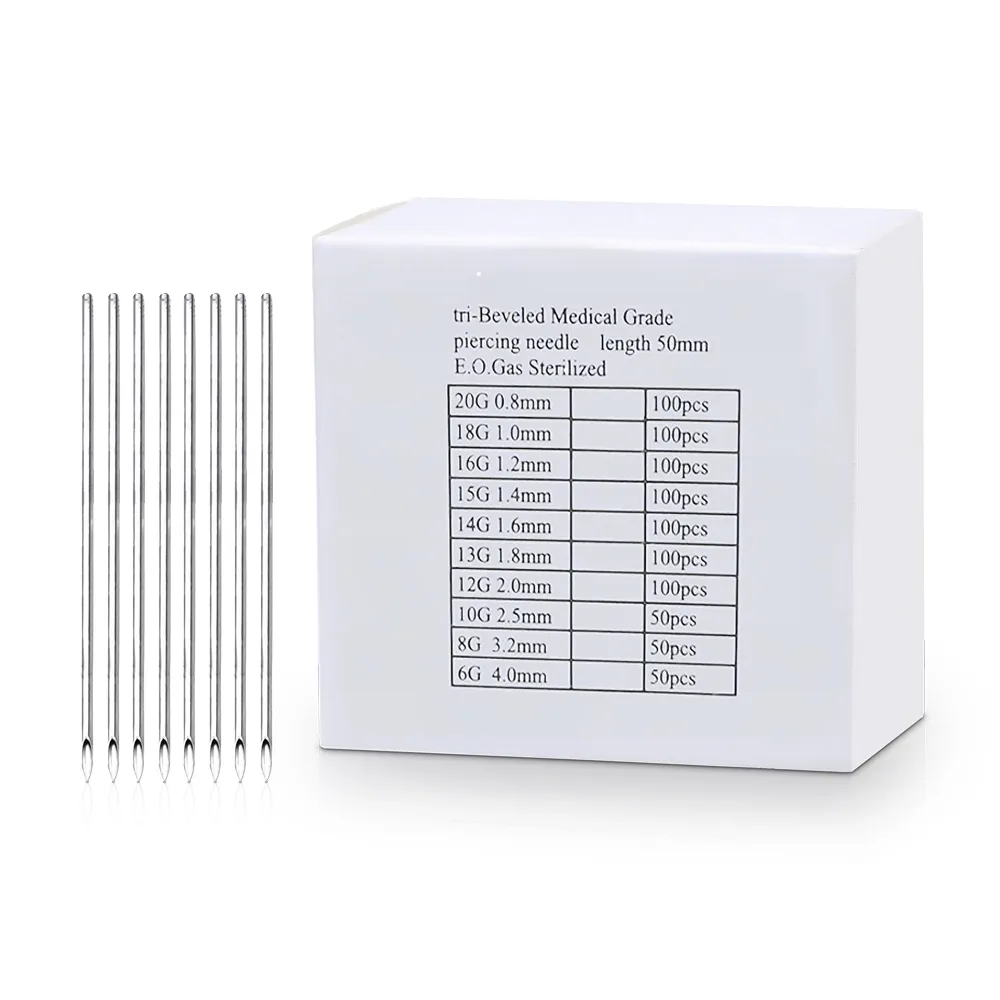 PROFESSIONAL PIERCING NEEDLES
Tri-Beveled Medical Grade Piercing Needles
Hollow piercing-needle category for professional use; choose tools through training and local requirements.
Explore Dermal Tops Explore Surface Bars View Professional Tools
BEFORE YOU ORDER
What should a piercer check before buying dermal anchors or surface bars?
Build the shopping list around the specific placement, initial-jewelry status, and the studio's ability to manage future service.
- Design: One visible point with anchor base, or two ends connected by a bar?
- Placement: Has a qualified piercer evaluated movement and likely contact?
- Material: Does the exact piece document ASTM F136 or another APP-listed standard?
- Sterile status: Is the selection intended for a new piercing or a fully healed one?
- Thread fit: Are the 1.2 mm components from a compatible manufacturer and base?
- Client conversation: Have healing, APP lifespan guidance, maintenance, and removal been covered?
- Rules and training: Have the state and local requirements been confirmed with the proper authority?
FAQ
Frequently asked questions about dermal anchors and surface piercings
Use these concise answers during product comparisons and studio consultations; the qualified piercer makes the final placement and jewelry decision.
What is the difference between a dermal anchor and a surface bar?
The APP describes a surface anchor as a one-opening piercing with an under-skin base and threaded ornament. A surface barbell connects two visible ends with a shaft beneath the skin.
Is a microdermal the same as a dermal anchor?
Yes. The APP groups microdermal, dermal anchor, surface anchor, and single-point piercing as names for the same basic design.
What is a skin diver piercing?
The name varies among studios. Ask the piercer what jewelry construction is intended instead of ordering a part from the term alone.
Which lasts longer, a dermal anchor or a surface piercing?
The APP calls anchors long-term temporary and says lower movement may support longer life. It does not establish an across-the-board longevity winner against surface bars.
Do dermal anchors reject?
Yes. The APP says rejection is generally likely sometime between six months and a couple of years. A piercer should evaluate concerns about migration or rejection.
How long do dermal piercings take to heal?
The APP procedure manual lists surface anchors at an average 3–4 months or longer; surface piercings average 6–9 months or longer. Healing is not the same as longevity.
Can you change the top of a dermal anchor yourself?
The APP says the threaded top may be changed, but removing the base loses the piercing. Have a qualified piercer assess any planned change and part compatibility.
What metal should dermal anchors be made of?
The APP lists implant-suitable ASTM F136 titanium and ASTM F138 steel among initial jewelry materials. SVT Shop identifies ASTM F136 on its listed sterilized titanium pieces; the trusted piercer chooses the exact jewelry.
Where can dermal anchors and surface bars be placed?
The APP says lower-movement areas may improve anchor longevity and lists nape and chest as examples for two-point surface bars. Placement is evaluated individually by the piercer.
What tools does a piercer use for a dermal anchor?
The APP refers to standard body-piercing tools and describes anchor hemostats. Professional equipment includes piercing needles and dermal punches; training and local rules govern their use.
Can I get an MRI with a dermal anchor?
Tell the doctor and imaging staff about the anchor. The APP notes that surface anchors can behave like other implants during X-rays, MRI, and CT imaging; healthcare staff direct the procedure.
RESEARCH
Sources Consulted
The APP supports jewelry, healing, aftercare, removal, and imaging claims. New Jersey's policy supports its own requirements. Product details are attributed to SVT Shop.
- Association of Professional Piercers: Piercing FAQ
- Association of Professional Piercers: Procedure Manual (2013)
- Association of Professional Piercers: Jewelry for Initial Piercings
- Association of Professional Piercers: Preparing for Medical and Dental Procedures
- New Jersey Department of Health: Microdermal Anchors Policy (2023)