


 Powered by Comercia.io
What is the best piercing jewelry for a client with a nickel allergy? Professional piercers should check the actual metal standard, jewelry fit and sterilized condition, and refer suspected allergic contact dermatitis to a dermatologist. This guide compares nickel allergy symptoms, implant-grade titanium, surgical steel, niobium, gold, hypoallergenic labels and nickel-sensitive ear or nose piercings using APP and AAD recommendations.
Explore Sterilized Titanium Labrets Read Titanium Jewelry Guide
QUICK ANSWER
What piercing jewelry should a piercer choose for nickel-sensitive clients?
Prioritize documented, appropriately specified jewelry and professional fit. APP describes implant-certified titanium as ideal for nickel-sensitivity concerns and also recognizes niobium, certain documented steels and qualifying nickel- and cadmium-free gold for initial piercings. AAD says nickel can cause allergic contact dermatitis. The piercer chooses jewelry based on material records, anatomy and size; a clinician assesses an actual allergy or infection.
MATERIAL
APP-backed metal specification, not a vague hypoallergenic label.
FIT
Correct gauge, style, length, finish and site-specific anatomy.
MEDICAL
Persistent or blistering rash needs a dermatologist; infection symptoms need a doctor.
UNDERSTANDING THE REACTION
Why can piercing jewelry cause a nickel allergy?
Nickel allergy can cause allergic contact dermatitis, a rash or irritation triggered by contact with an allergen. AAD identifies earrings and earring backs as frequent exposures; APP calls nickel the most common metal allergy and a common component of low-quality jewelry.
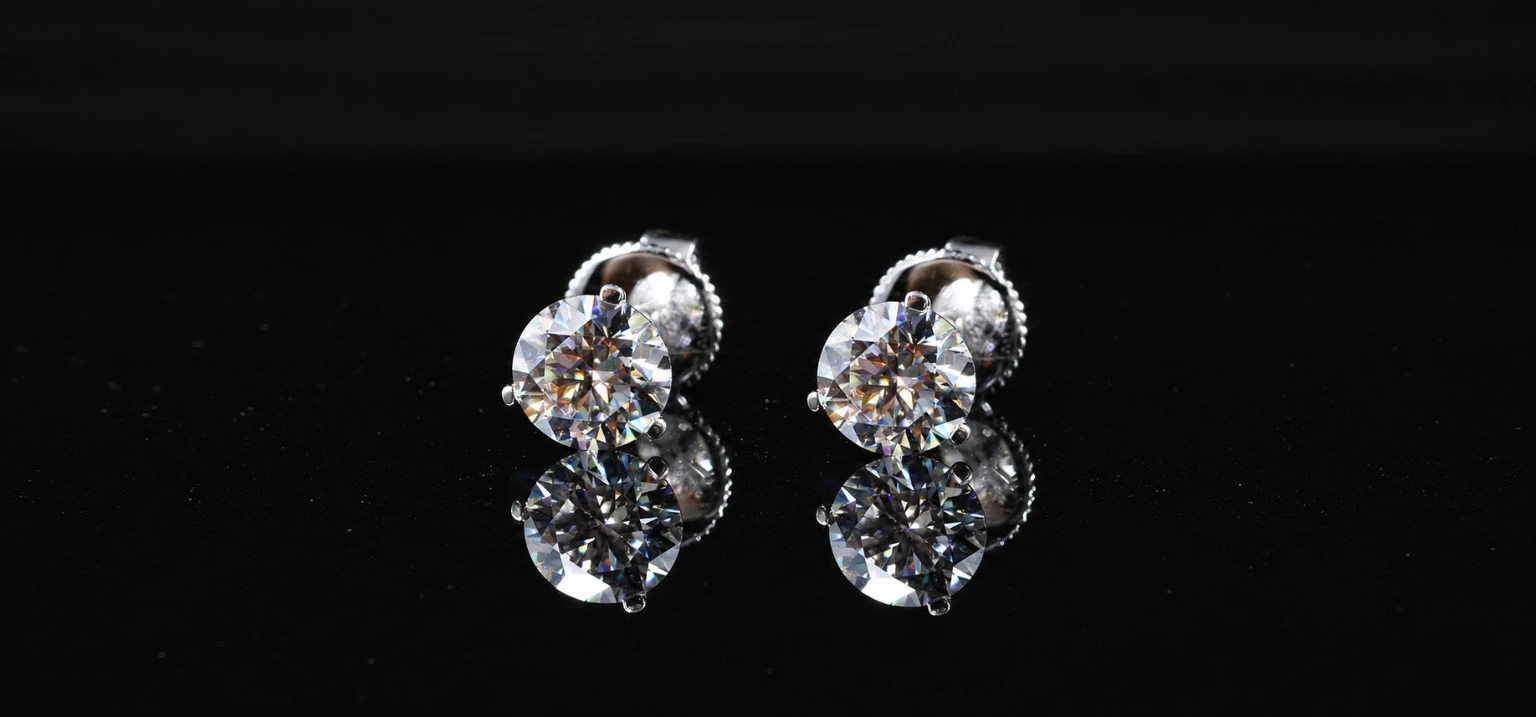
A piercer should ask about past reactions and any clinician-confirmed allergy before choosing material. APP says metal sensitivity can complicate healing, but redness alone cannot diagnose nickel allergy. The piercer assesses jewelry and fit; a dermatologist or allergist determines the medical cause.
ITCHING AND REDNESS
What are the signs of a nickel or metal allergy around a piercing?
Itching, rash or irritation where metal touches skin can suggest contact dermatitis. AAD describes nickel sensitivity as a skin reaction after exposure, particularly with earrings and backs. A piercer cannot distinguish allergy from other piercing complications from a photo.
Ask what jewelry the client wore, whether the reaction recurs and whether a doctor diagnosed a metal allergy. The ADA also recognizes metal hypersensitivity at oral-piercing sites.
Medical referral
AAD advises a dermatologist when allergy is suspected, especially for blistering, recurring or possibly infected rash. Record the jewelry information for the clinician instead of treating the symptoms as a sales problem.
DIFFERENT PROBLEMS
Is an irritated piercing allergic to metal or infected?
Allergy, irritation and infection require different assessments. APP says material sensitivity can interfere with healing, while AAD urges medical assessment of suspected contact allergy. A qualified piercer can assess fit, but should not diagnose infection from swelling or redness.
| Concern | Source-backed context | Next step |
|---|---|---|
| Itchy contact rash | AAD: possible contact dermatitis. | Ask about exposure; dermatologist if suspected. |
| Too-tight or unsuitable fit | APP: size and style affect healing. | Piercer reviews the jewelry. |
| Persistent bump | Not automatically nickel allergy. | Review placement and tissue. |
| Blistering or recurring rash | AAD: see a dermatologist. | Refer for medical evaluation. |
| Suspected infection | Not a material-selection diagnosis. | Doctor; do not advise self-removal. |
For normal healing, see piercing aftercare; for bumps, see irritation bumps and scars.
Do not remove infected jewelry on an assumption
When infection is suspected, refer the client for medical direction before recommending any removal or change.
INITIAL JEWELRY CHOICE
What is the best metal for a new piercing when a client reports nickel sensitivity?
APP identifies specified implant titanium as particularly suitable when nickel sensitivity is a concern. It also lists certain steels, niobium and qualifying gold as initial-piercing materials. Review each metal's documentation and the client's anatomy.
| Material | APP or AAD reference | Professional context | Buying check |
|---|---|---|---|
| Implant titanium | ASTM F136 / F1295 / ISO 5832-3; commercially pure ASTM F67. | APP: ideal for nickel concerns. | Verify grade and fit. |
| Specified steel | APP includes ASTM F138. | Generic name is insufficient. | Ask for alloy documents. |
| Niobium | APP reports long professional use. | Alternative to evaluate. | Confirm material. |
| 14k+ gold | APP requires nickel- and cadmium-free, appropriate alloy. | Precious-metal choice if qualified. | Verify whole item. |
| General jewelry options | AAD also names higher-karat gold, sterling silver and platinum. | General advice differs from initial-piercing criteria. | Use APP for new piercings. |
APP also requires an appropriate size, style and smooth finish. Material selection must fit the actual location and the client's history.
WHAT THE APP RECOMMENDS
Is titanium safe for a client with a nickel allergy, and what titanium grade should a piercer check?
APP calls titanium ideal for people with nickel-sensitivity concerns and names implant-certified Ti6Al4V ELI meeting ASTM F136, along with ASTM F1295 or ISO 5832-3, or commercially pure titanium meeting ASTM F67. These are specifications for a professional material-selection discussion, not blanket proof that any item sold as titanium has the same composition.
Review the material documentation offered by the jewelry supplier. APP explains that mill certificates may identify a metal grade and an ASTM or ISO designation, helping piercers evaluate whether a manufacturer uses suitable raw materials. Also inspect surface finish: APP recommends a smooth, mirror-like finish without nicks or scratches for metal body jewelry.
Sterilized titanium in the SVT Shop listings
The listed pieces are suitable for new piercings because they come sterilized, but the client's trusted piercer decides. Sterilized packaging is a practical preparation detail; it does not, on its own, verify an ASTM implant grade or diagnose the client's sensitivity.
For full explanations of initial-piercing standards and sterile presentation, refer to implant-grade titanium and sterilized piercing jewelry. Ask for documentation of the exact item rather than treating the words titanium or G23 as a mill certificate.
GRADE OVER LABEL
Is surgical steel nickel-free, and can a piercer use it for a nickel-sensitive client?
Surgical steel is a broad label, not a precise alloy specification. APP accepts certain documented biocompatible steel grades, including ASTM F138, for initial piercings. The words surgical steel alone do not establish whether an individual piece suits a client reporting nickel sensitivity.
AAD includes surgical-grade stainless steel in its broader general-jewelry advice. That is distinct from APP's criteria for metal inside a fresh piercing. Request the actual grade and take the client's medical history seriously; neither promise that all steel is nickel-free nor assume every steel item triggers allergy.
OTHER APP-LISTED METALS
Are niobium or 14k gold suitable for new piercings with metal-allergy concerns?
APP reports a long history of successful professional use for niobium and accepts gold of at least 14 karats when it is nickel- and cadmium-free and appropriately alloyed for biocompatibility. A gold-colored surface alone does not verify these conditions.
AAD also lists certain higher-karat yellow gold and platinum in its general jewelry guidance, which should not replace APP's initial-piercing criteria. Ask for documentation of the entire item. SVT Shop's product selection here contains sterilized titanium pieces, rather than niobium or solid gold.
READ THE CLAIM CAREFULLY
Does hypoallergenic or nickel-free piercing jewelry mean it meets an implant standard?
Hypoallergenic and nickel-free describe a contact-sensitivity concern; neither is an ASTM or ISO implant-material specification. AAD recommends considering these labels for general nickel avoidance, while APP uses defined grades and finish requirements for initial piercing jewelry.
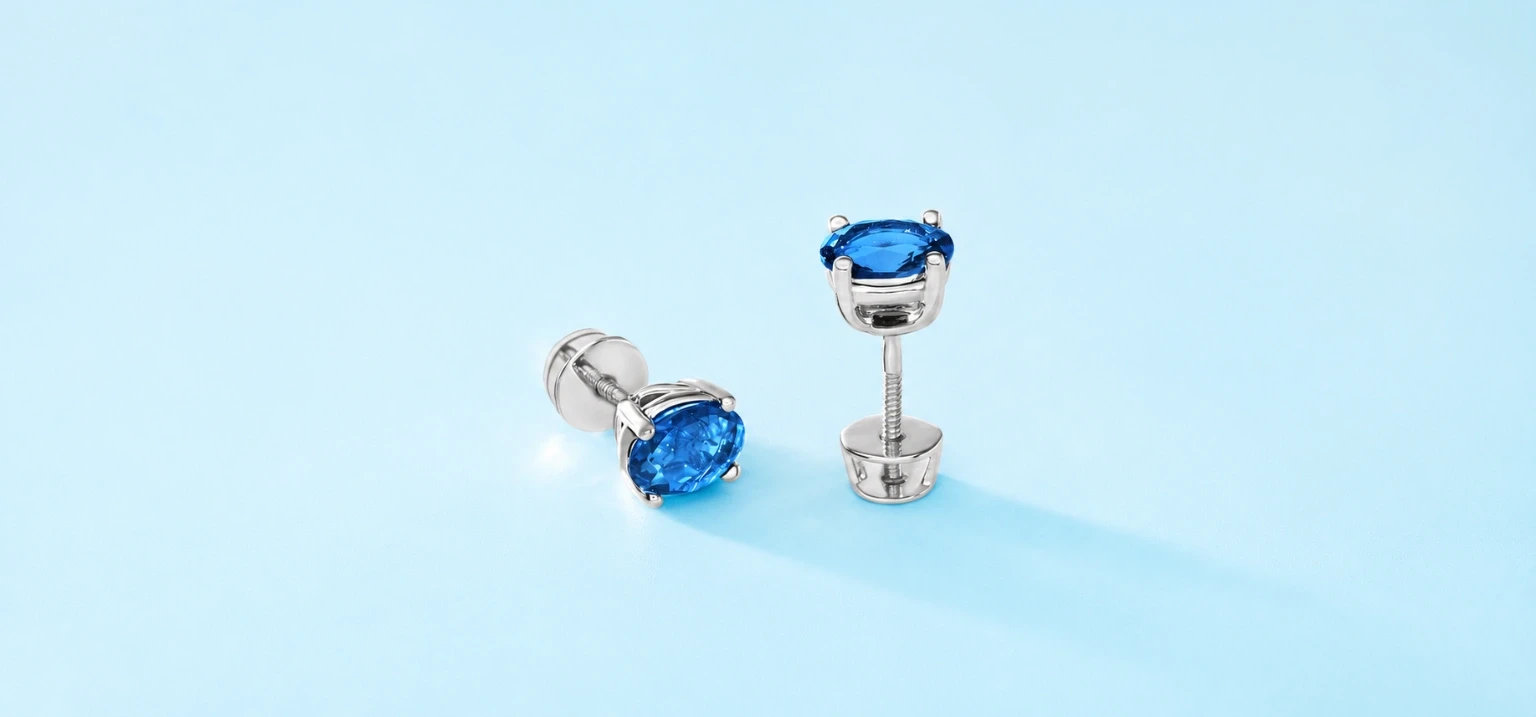
Ask the supplier for the actual metal, documented grade and intended use. Also check fit and smoothness: a favorable label cannot substitute for the correct size, style or material documentation.
A STUDIO PURCHASING PROCESS
How can a piercer verify materials before using jewelry on a nickel-sensitive client?
Match the exact item to actual material evidence. APP describes mill certificates with ASTM or ISO designations as useful documents, alongside the requirement for suitable size, style and finish.
Ask about the client's history
Record any reported metal reactions and whether a clinician has diagnosed an allergy.
Identify the site and style
Choose a shape, gauge and size for the actual anatomy.
Request material documentation
Check the exact alloy or titanium designation, not just a marketing label.
Inspect the surface
APP recommends smooth, mirror-polished metal without nicks or scratches.
Confirm the prepared item
Verify sterile condition and correct handling separately from the metal grade.
Decide with the qualified piercer
Make fit decisions professionally; refer unresolved allergy symptoms to a dermatologist.
Record the selection
Keep the item, material evidence and dimensions with the consultation information.
For styles and sizes, see threadless versus internally threaded and body jewelry sizing.
MATCH THE ANATOMY
What jewelry should piercers consider for sensitive ears, noses, eyebrows and other placements?
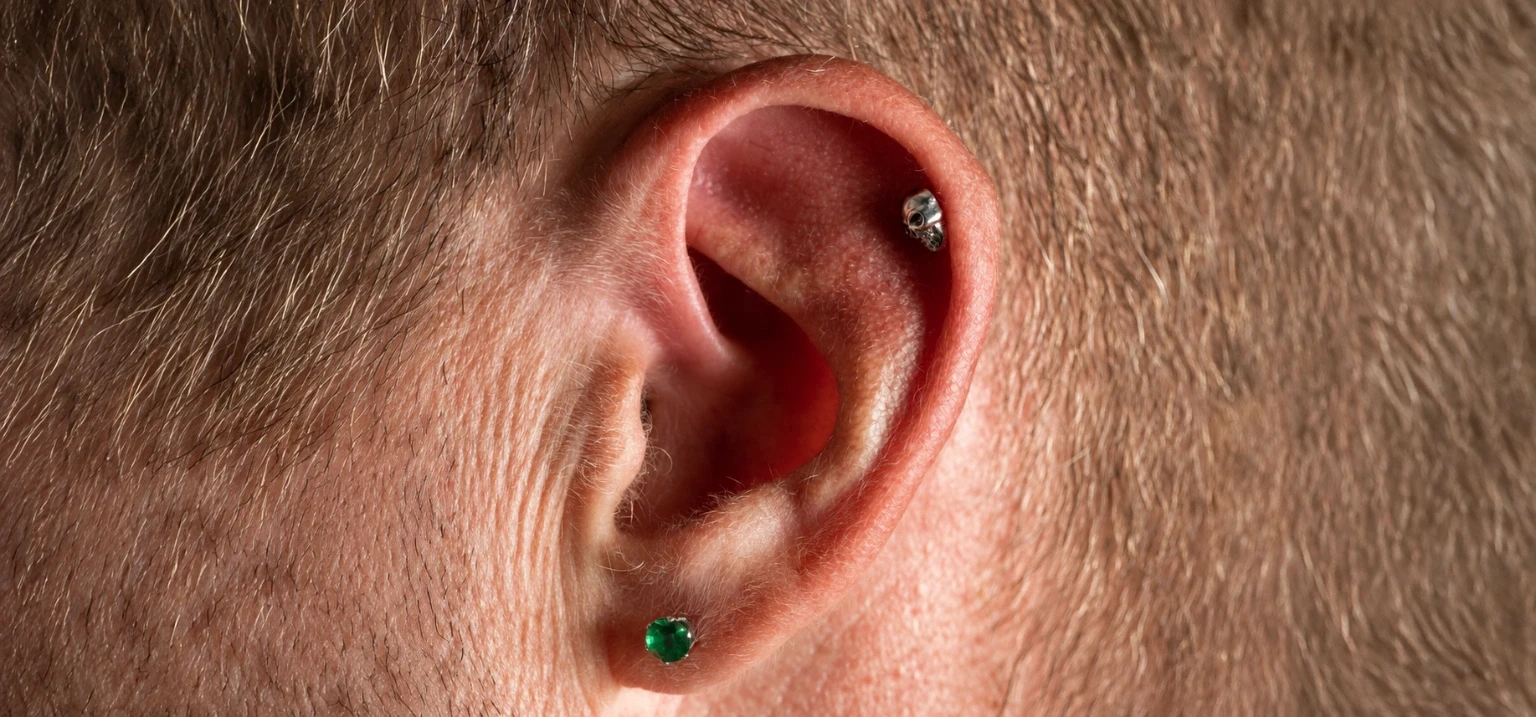
Material and jewelry geometry are separate decisions. APP says a new piercing needs appropriate length, gauge and style. AAD identifies earrings and backs as common nickel exposure sources; this matters when comparing a stud and its closure.
| Site | Source context | Piercer's next check |
|---|---|---|
| Ear/lobe | AAD: earrings and backs may expose skin to nickel. | Check the whole stud and back. |
| Nostril | APP names nostril screws as site-specific jewelry. | Check size and finish. |
| Eyebrow | APP requires site-appropriate style. | Evaluate the curved bar fit. |
| Labret/lip | APP recognizes labret-style jewelry. | Check length and closure. |
| Nipple | APP: gauge and length matter. | Professional barbell sizing. |
| Surface anchor | Distinct body jewelry construction. | Confirm exact component. |
| Oral | ADA notes possible metal hypersensitivity. | Refer dental or medical concerns. |
A sensitivity report does not automatically dictate a ring, stud or barbell. Choose each for actual anatomy and supported metal information.
WHEN THE STUDIO REFERS
Should a client get tested for nickel allergy before changing piercing jewelry?
APP suggests that dermatologist or allergist testing may be worthwhile for suspected metal sensitivity. AAD recommends medical assessment for allergy concerns, especially blistering, recurrent or possibly infected rash. Jewelry substitution does not establish a diagnosis.
Give the clinician clear information about materials the client has worn. A doctor or dermatologist evaluates skin symptoms, while a qualified piercer reviews jewelry fit and documented material options. APP notes other metal allergies occur but are less common than nickel sensitivity.
Doctor, not a jewelry change
Seek medical advice for suspected infection, blistering or recurring rash. ADA likewise recommends prompt medical or dental care for serious oral-piercing symptoms.
AVOID THE LABEL TRAP
What mistakes should a piercing studio avoid when choosing jewelry for clients with metal sensitivities?
The biggest purchasing error is substituting a vague label for material evidence. APP's initial jewelry criteria, AAD's contact-allergy guidance and the client's clinical information each answer different questions. Keep them separate when advising sensitive clients.
Treating every red piercing as nickel allergy
AAD describes allergic contact dermatitis, but a piercer cannot confirm its cause from irritation alone; refer for medical assessment.
Calling all surgical steel nickel-free
APP names specific biocompatible grades. A generic steel label does not answer a client's nickel-sensitivity question.
Treating G23 as a certificate
A grade nickname in a listing is different from documentation showing that the actual material satisfies an APP-listed ASTM or ISO criterion.
Assuming titanium is reaction-proof
APP calls titanium ideal for nickel concerns, not a material that nobody can ever react to.
Buying by decorative finish first
A gold color or shiny coating does not demonstrate the underlying alloy or a nickel-free claim.
Ignoring fit while changing metal
APP says gauge, size and style matter for new piercings. A material change should be chosen by a qualified piercer.
Using general accessory advice for fresh piercings
AAD's broad jewelry recommendations and APP's initial-piercing materials serve different situations.
Replacing jewelry as a diagnosis
A dermatologist or allergist evaluates suspected allergy; medical concerns should be addressed before assuming the cause.
A documented material, good finish, appropriate dimensions and professional insertion matter together. They do not eliminate the need for medical care when the client has persistent or worsening symptoms.
PROFESSIONAL JEWELRY SELECTION
Which sterilized titanium jewelry options should piercers compare at SVT Shop?
SVT Shop lists sterilized titanium ear studs, labrets, curved bars, nose screws, rings and an anchor base for professional evaluation. As the APP emphasizes, an initial piercing needs suitable material, design, finish and fit. Each item is suitable for new piercings because it comes sterilized, but the client's trusted piercer decides. Request documentation before identifying any individual listing as ASTM F136-certified or nickel-free.
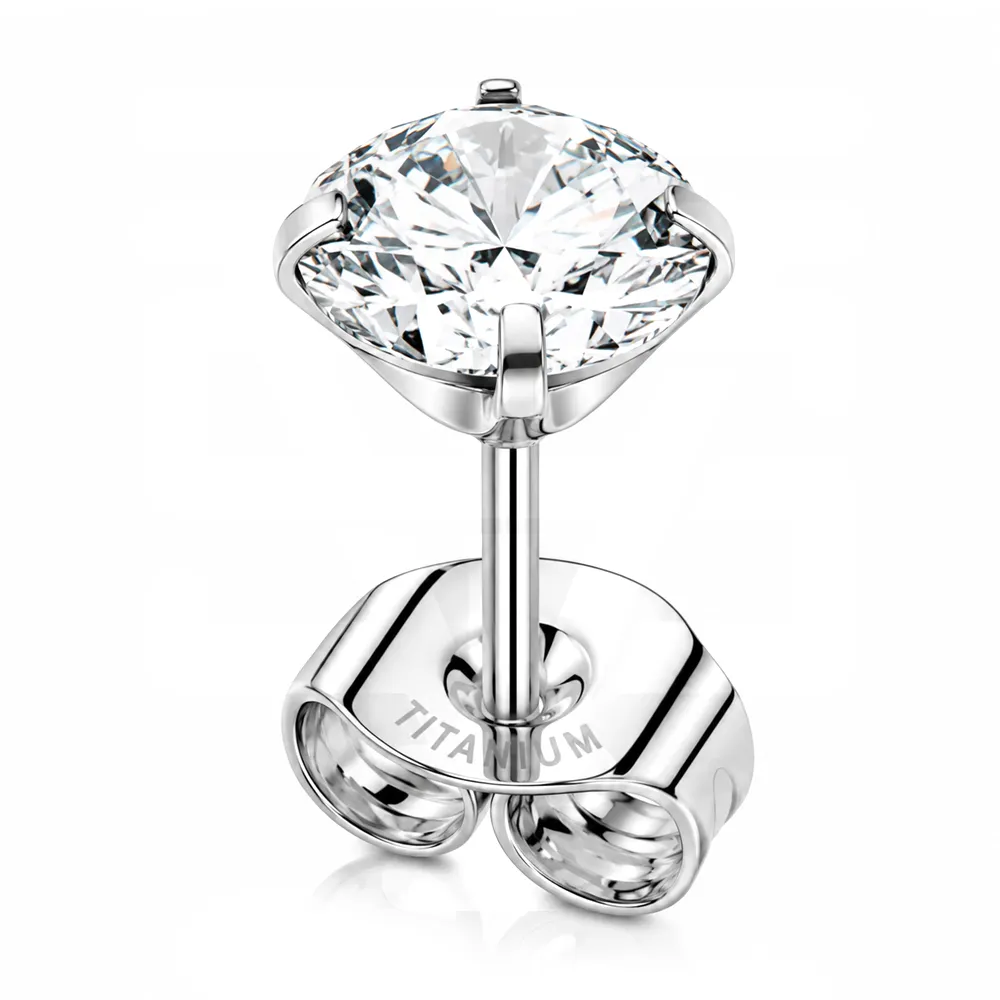 Earlobe stud and back construction
Sterilized Titanium CZ Ear Studs with Butterfly Backs
Sterilized titanium ear-stud format for a piercer to evaluate material documentation and the full stud-and-back fit. Not a diagnosis or a guarantee against reactions.
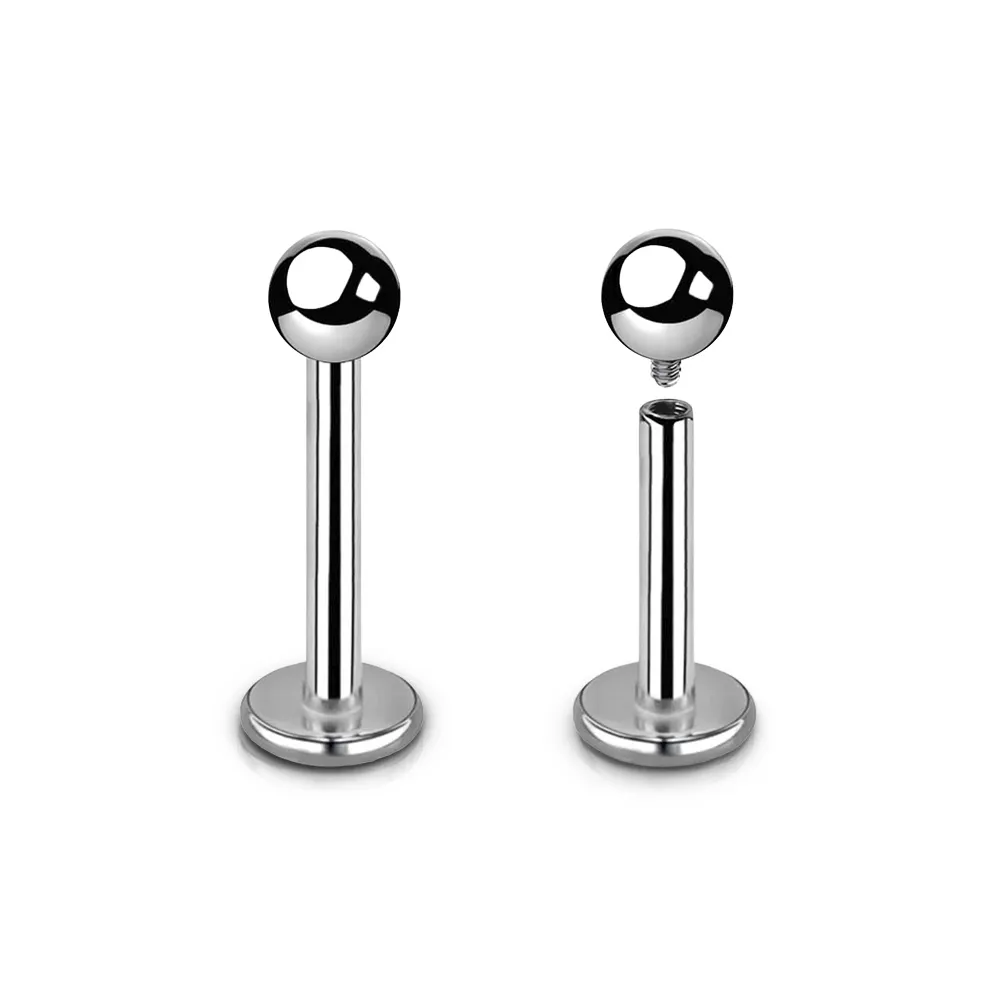 Internally threaded labret option
Sterilized Titanium Internally Threaded Labret 1.2 mm
An initial-jewelry style the piercer can compare for material evidence, proper length and polished finish at a suitable site.
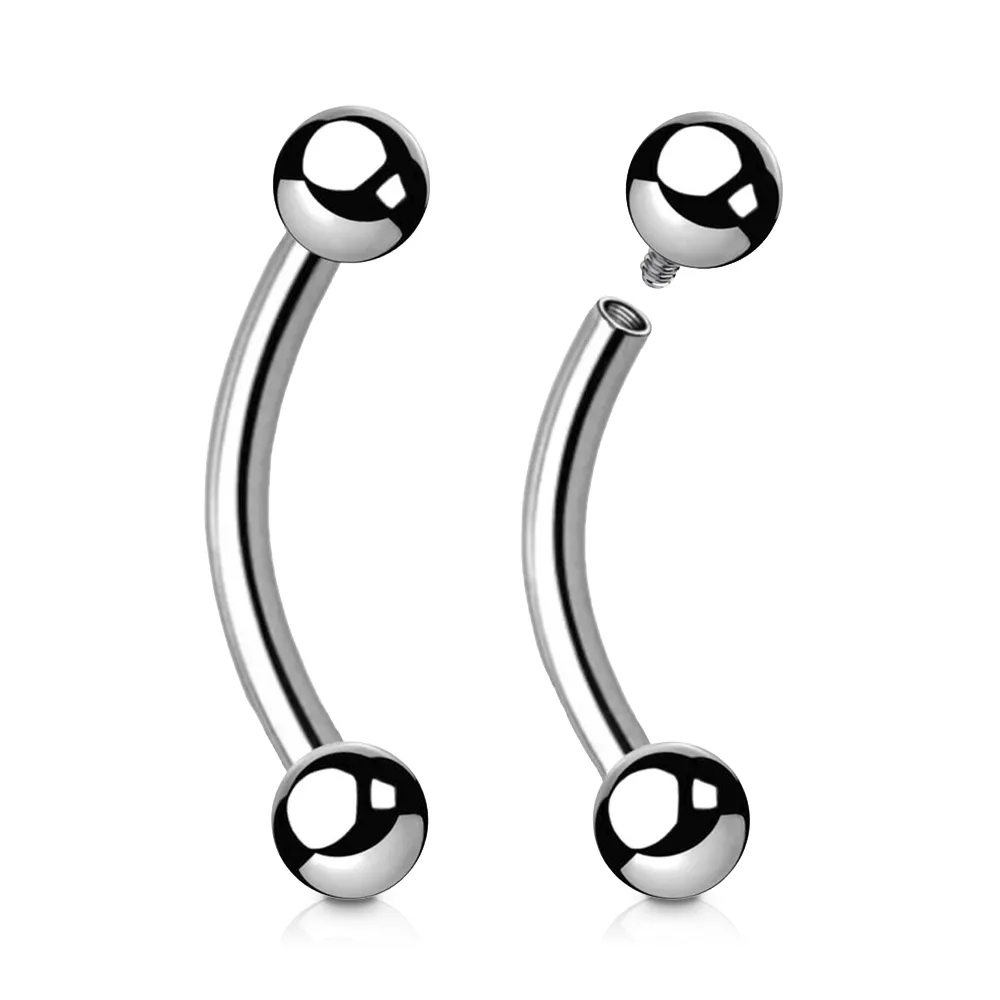 Curved jewelry for eyebrow assessments
Sterilized Titanium Eyebrow Banana
Sterilized curved-bar format to assess for an eyebrow placement. The piercer checks anatomy, size and documentation.
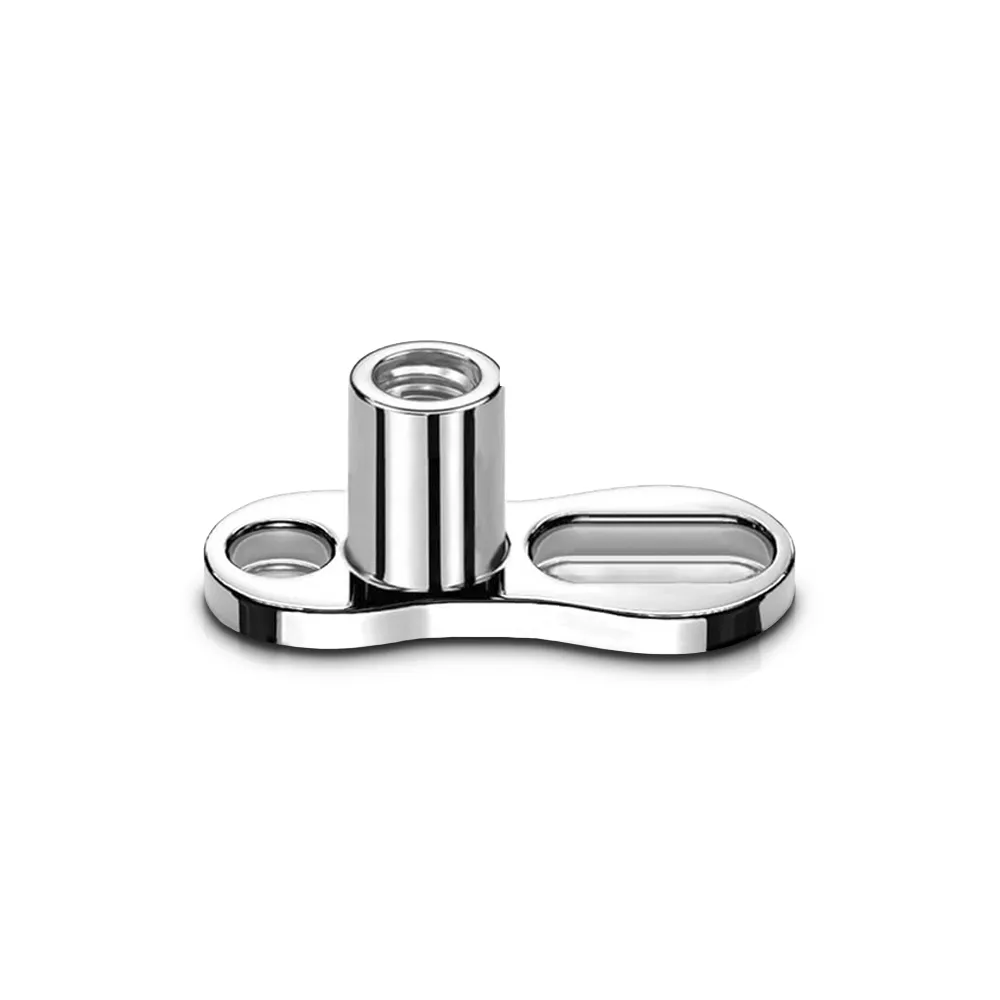 Professional surface-anchor component
Sterilized Titanium Dermal Anchor Base Plate
Sterilized base-plate listing for professional use and material verification; not interchangeable with ordinary piercing jewelry.
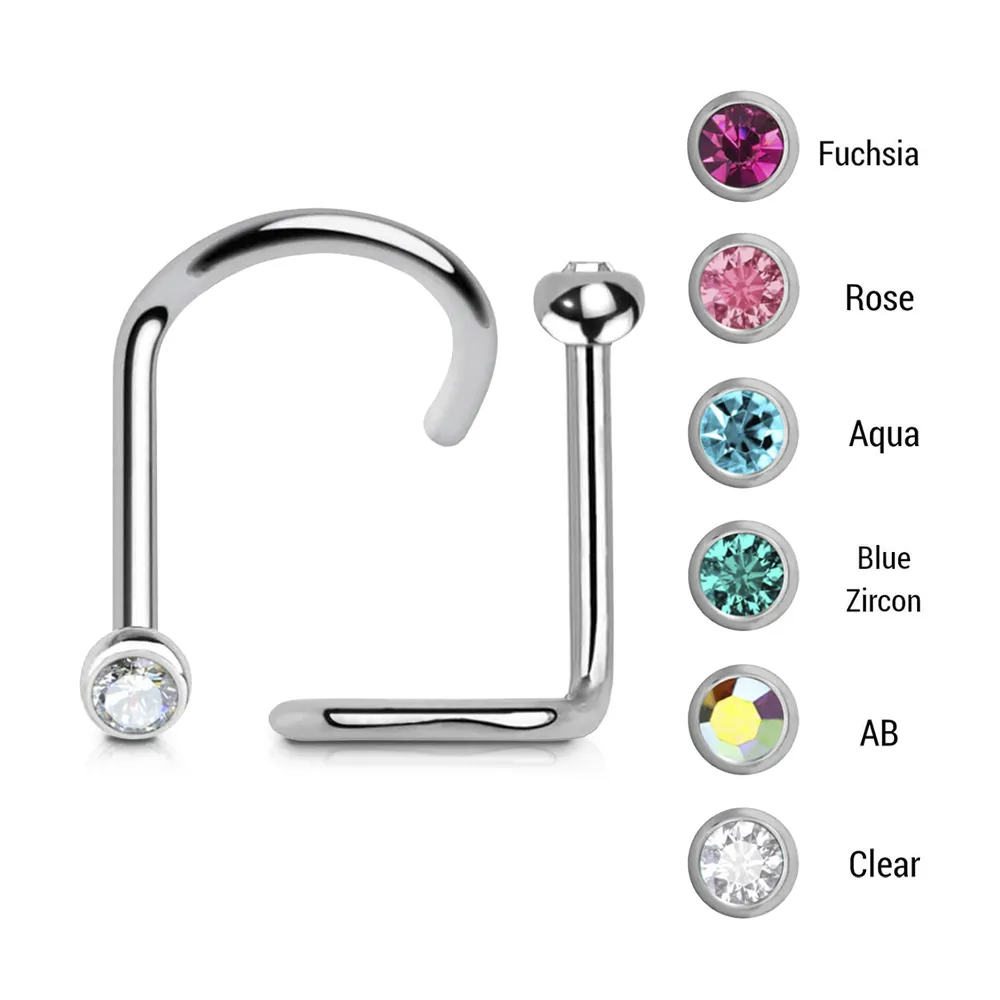 Specialty nose jewelry format
Sterilized Titanium CZ Nose Screw 2 mm
Nose-screw shape for a site-specific fit review; verify the complete metal information and intended piercing use.
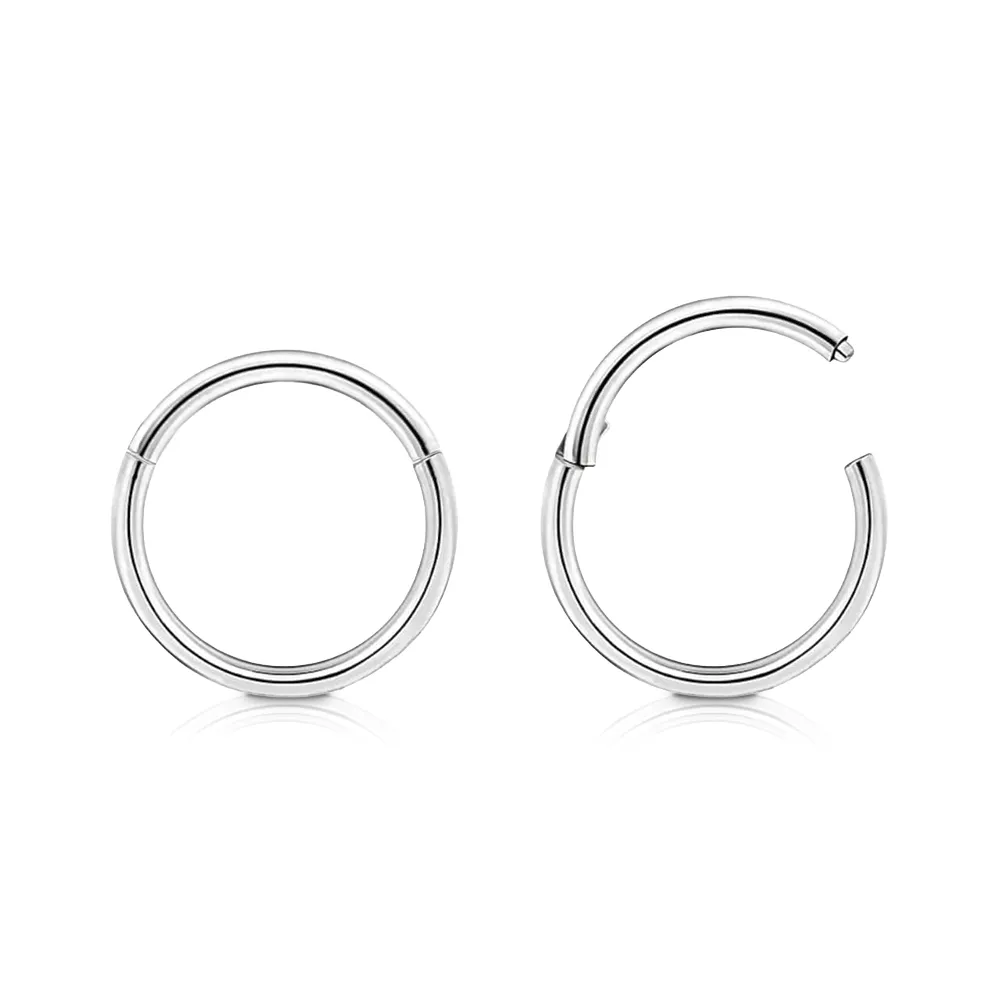 Hinged ring option
Sterilized Titanium Hinged Segment Ring 1.2 mm
Sterilized ring format for sites where the piercer considers a ring appropriate; compare size, closure and surface finish.
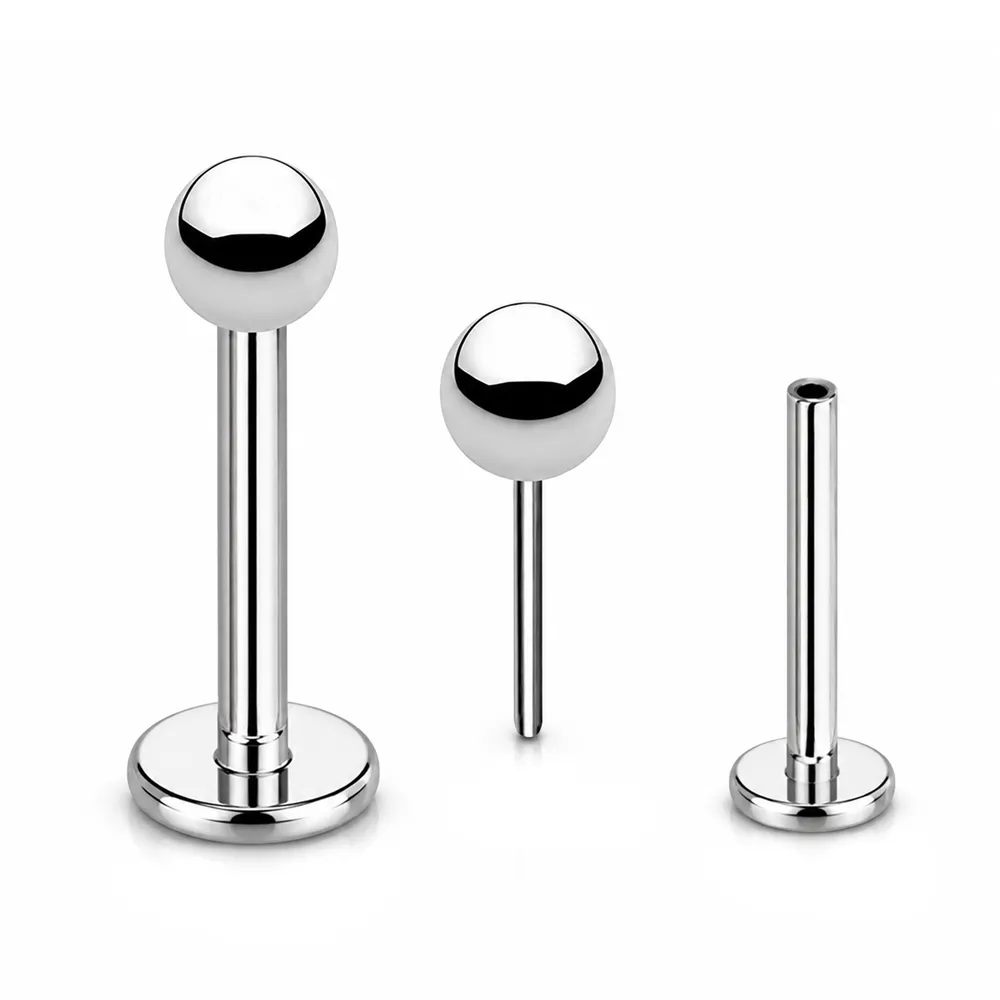 Threadless jewelry comparison
Sterilized Titanium Push-In Labret 1.2 mm (16G)
Sterilized threadless labret for a piercer-approved site and gauge, with material specifications checked separately.
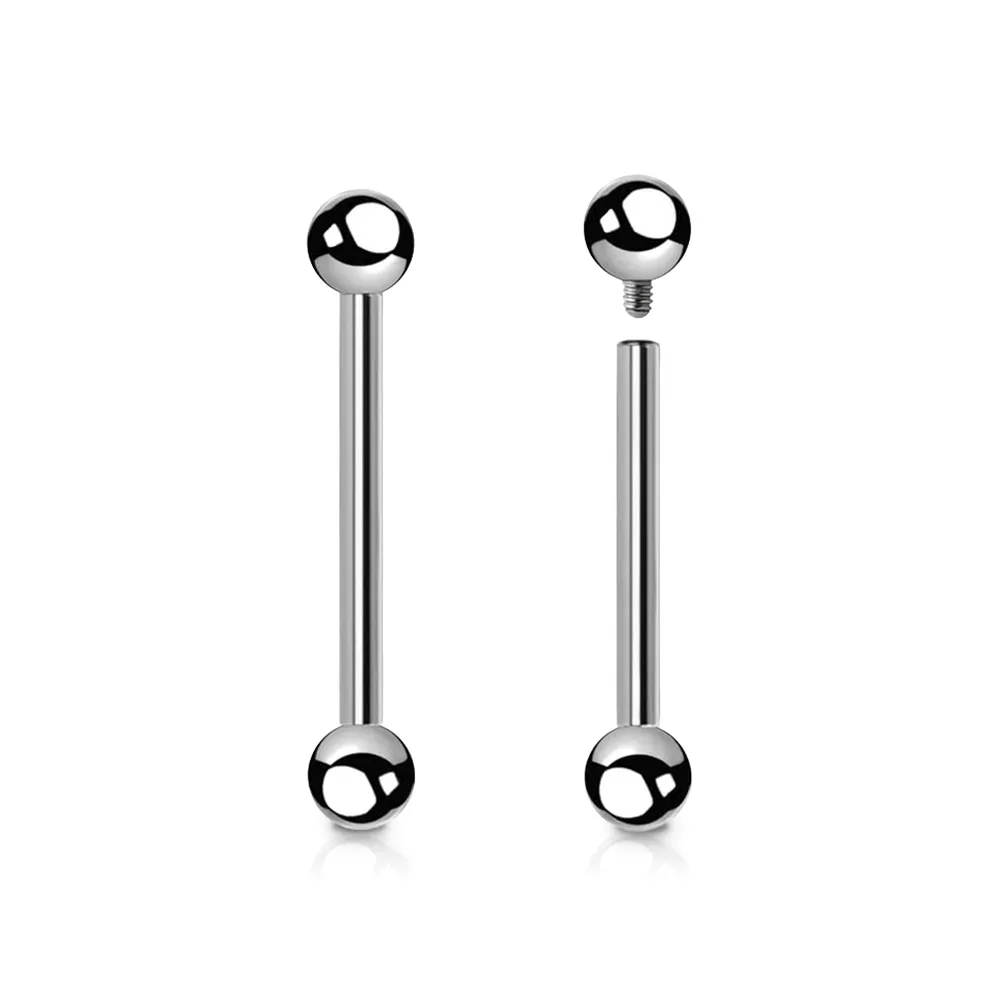 Straight barbell sizing review
Sterilized Titanium Nipple Straight Barbell
Sterilized straight-barbell format for qualified nipple-piercing fit and documented material review.
Use the SVT Shop titanium and sterilized jewelry guide for the selection standards, and the size guide for anatomy and measurements. SVT Shop serves piercers in El Paso, Texas, with Next Day Delivery available in El Paso.
BEFORE THE PROCEDURE
What should piercers verify before selecting jewelry for a nickel-sensitive client?
Match client history, material evidence and piercing fit before making a recommendation. This studio checklist follows APP's initial-jewelry criteria and AAD's guidance on suspected nickel contact dermatitis.
- History: Ask about reported metal reactions and any dermatologist diagnosis.
- Symptoms: Refer active or recurring rash and possible infection for medical assessment.
- Material: Identify the actual metal and seek a documented ASTM or ISO grade when relevant.
- Labels: Do not use hypoallergenic, nickel-free or G23 as substitutes for full documentation.
- Finish: Check smooth polish and absence of rough edges, as APP advises.
- Size and style: Confirm diameter, length, gauge and anatomy with the piercer.
- Preparation: Verify sterile presentation and studio handling for the selected item.
- Records: Keep material and product information with the consultation notes.
When the client's sensitivity is unclear, the piercer can explain available choices and refer to a dermatologist or allergist. Do not present any listed jewelry as a clinical treatment.
FAQ
12 questions about nickel allergy and piercing jewelry materials
These answers reflect APP material criteria, AAD skin-allergy guidance and ADA oral-piercing information. The piercer decides jewelry fit; a doctor diagnoses allergy or infection.
How do I know if I am allergic to my piercing jewelry?
An itchy contact rash can be consistent with allergy, according to AAD, but irritation and other problems can look similar. A dermatologist determines whether the client has an allergy.
What are nickel allergy symptoms in a piercing?
AAD describes contact dermatitis as skin rash or irritation after exposure. A recurring, blistering or possibly infected rash should be assessed by a dermatologist.
Is titanium safe for nickel allergy piercings?
APP calls appropriately specified titanium ideal for people concerned about nickel sensitivity. Check implant material documentation, jewelry fit and the client's medical history.
Is surgical steel nickel-free?
The label alone does not establish composition. APP names particular biocompatible grades, including ASTM F138; ask for the exact specification and consult a dermatologist about confirmed sensitivities.
What is the best metal for a new piercing?
APP lists appropriately specified implant titanium, selected steels, niobium and qualifying gold. The piercer must also evaluate size, construction and anatomy.
Is 14k gold OK for a new piercing?
APP includes 14k or higher gold when it is nickel- and cadmium-free and alloyed for biocompatibility. Verify the complete item rather than its appearance.
Is niobium hypoallergenic for piercing jewelry?
APP reports longstanding positive professional use of niobium. A client with suspected allergy still needs a qualified material review and medical input when necessary.
Is hypoallergenic jewelry really nickel-free?
The terms are not interchangeable with documented APP initial-jewelry standards. Ask for specific metal information rather than relying on the label.
Can I be allergic to metals other than nickel?
Yes. APP says other metal allergies are less common than nickel allergy. A dermatologist or allergist can evaluate suspected sensitivities.
Should I get allergy testing before a piercing?
APP says allergy testing by a dermatologist or allergist may be worth considering when sensitivity is a concern. The decision about testing is medical.
Is my piercing infected or reacting to its metal?
A piercer cannot diagnose either from appearance alone. Review jewelry fit, and refer suspected infection, recurring rash or blistering to a doctor.
Can nickel allergy affect a nose or oral piercing?
The metal-contact question can apply at multiple sites. ADA notes that oral piercings can cause metal hypersensitivity; medical or dental symptoms require professional care.
RESEARCH
Sources Consulted
APP provides guidance specific to initial piercing materials, finish and metal sensitivity. AAD explains contact dermatitis and general jewelry exposure; ADA supports the oral-piercing distinction.
- Association of Professional Piercers: Jewelry for Initial Piercings and ASTM/ISO Material Standards
- Association of Professional Piercers: Piercing FAQ on Nickel Sensitivity and Allergy Testing
- American Academy of Dermatology: Nickel Allergy, Contact Dermatitis and Jewelry
- American Dental Association: Oral Piercings and Metal Hypersensitivity