


 Powered by Comercia.io
How do piercers sterilize jewelry and tools? Clean reusable items first, then use the correct steam-autoclave cycle, indicators, packaging, drying, storage, and records. Texas 25 TAC §229.407 establishes legal requirements; APP recommendations and sterilizer manuals guide professional practice.
Shop Sterilization Pouches Shop Sterilized Jewelry
QUICK ANSWER
How do you sterilize piercing jewelry and tools in a professional studio?
Clean reusable instruments and jewelry, rinse and dry, then autoclave with the appropriate manufacturer cycle. Wrap and label items for later use, or follow a permitted immediate-use cycle. Check indicators and record processing. Texas requires approved-lab spore tests every calendar month; CDC dental guidance recommends weekly testing.
Before the Autoclave
Remove residue using the allowed manual or ultrasonic process, then rinse, dry, and prepare the correct load.
Inside the Autoclave
Use the sterilizer manufacturer's validated cycle for wrapped or immediate-use instruments; check monitoring indicators.
After the Cycle
Complete drying when applicable, protect sterile items, label and log the load, and track laboratory spore-test results.
KNOW THE PROCESS
What is the difference between cleaning, disinfection, and sterilization for piercing jewelry?
Cleaning removes residue before processing; CDC says it must precede sterilization. Disinfection treats certain tools and surfaces. Sterilization is required for reusable items contacting blood and for jewelry being prepared for a fresh piercing.
Texas §229.409 distinguishes blood-contact reusable instruments, tools contacting mucous membranes, and tools contacting intact skin. It requires sterilization or disposal of covered blood-contact items; germicidal treatment is described for certain other tools.
| Stage | What it does | How a piercer uses it |
|---|---|---|
| Cleaning | Removes visible and residual contamination before further processing | Pre-clean reusable tools with the method allowed by Texas and the manufacturer |
| Disinfection | Applies the specified germicidal treatment where the rule and item's contact permit it | Follow the applicable procedure for selected nonpenetrating tools and surfaces |
| Sterilization | Processes required jewelry or tools through an appropriate sterilization method | Use an approved sterilizer and monitored cycle, or documented manufacturer-presterilized items |
| Single-use disposal | Removes a used disposable item from the workflow | Discard piercing needles immediately in a sharps container |
APP's 2013 Procedure Manual identifies autoclaving as the appropriate preparation for fresh-piercing jewelry, not liquid soaks. Texas separately permits dry-heat sterilization. Keep state law distinct from APP practice.
WHAT TO REPROCESS
Which piercing tools and jewelry must be sterilized, and which are single-use?
Sort supplies before processing. Texas §229.409 names bars, tubes, forceps, receiving tubes, and tapers as items to sterilize or discard when they may contact blood. Piercing needles are single-use sharps.
| Studio item | Processing route | Buyer or operator check |
|---|---|---|
| Reusable forceps, receiving tubes, bars, tapers | Clean and sterilize after use if covered by Texas §229.409 | Verify reusable designation and sterilizer compatibility |
| New jewelry prepared in studio | Clean and autoclave using a suitable jewelry cycle under APP guidance | Check material, assembled parts, and intended placement |
| Manufacturer-presterilized jewelry or tools | Follow documented manufacturer sterilization and storage instructions | Keep the documentation required by Texas §229.407(h) |
| Single-use piercing needles | Discard after one procedure; no reprocessing | Check sterile individual packaging and sharps access |
| Disposable forceps and similar supplies | Dispose after the designated single use | Do not move them into a reusable instrument queue |
For jewelry selection, see Implant-Grade Titanium and Sterilized Piercing Jewelry and Threadless vs Internally Threaded Jewelry. The piercer decides which pieces fit the procedure. For used needles, see How to Dispose of Tattoo Needles; if someone is stuck by a used needle, follow Needlestick Injury in a Tattoo or Piercing Studio: What to Do.
REPROCESSING PROCEDURE
How do you clean and autoclave reusable piercing jewelry and tools step by step?
Texas requires cleaning before sterilization: use an enzyme-detergent manual method or manufacturer-directed ultrasonic cleaning, then rinse and dry. APP's 2013 manual describes a documented, separated cleaning-and-sterilization process.
Separate used implements from clean jewelry
Keep used implements separate from clean jewelry and sterile stock.
Remove blood, tissue, and gross residue
Remove residue before loading cleaning equipment.
Perform the appropriate cleaning method
Use enzyme-detergent manual cleaning or the specified ultrasonic process.
Rinse, dry, and check parts
Rinse and dry; account for detachable jewelry parts.
Prepare the package or point-of-use load
Package for storage or prepare an immediate-use load per the manual.
Run the correct autoclave cycle
Use the correct cycle for the sterilizer, load, and wrap.
Complete monitoring and drying
Check indicators and complete drying for wrapped items.
Log the processing and protect the result
Log required details and store packaged items dust-tight.
ULTRASONIC VS AUTOCLAVE
Can you sterilize body jewelry in an ultrasonic cleaner?
No. Ultrasonic equipment removes soil; it does not sterilize. Texas allows manufacturer-directed ultrasonic cleaning followed by rinsing and drying before sterilization.
APP's 2013 manual recommends logging cleaning cycles and keeping a unit specifically for clean jewelry. Current APP membership criteria require an ultrasonic or instrument washer when reprocessing dirty tools; Texas also permits manual enzyme cleaning.
CHOOSING A STERILIZER
What kind of autoclave should a professional piercing studio use?
Texas §229.407 requires FDA-approved sterilization equipment of adequate size, with its manual available for inspection. APP membership criteria call for medical-grade units meeting FDA standards, preferably with drying; top-loading units and pressure cookers are rejected by APP.
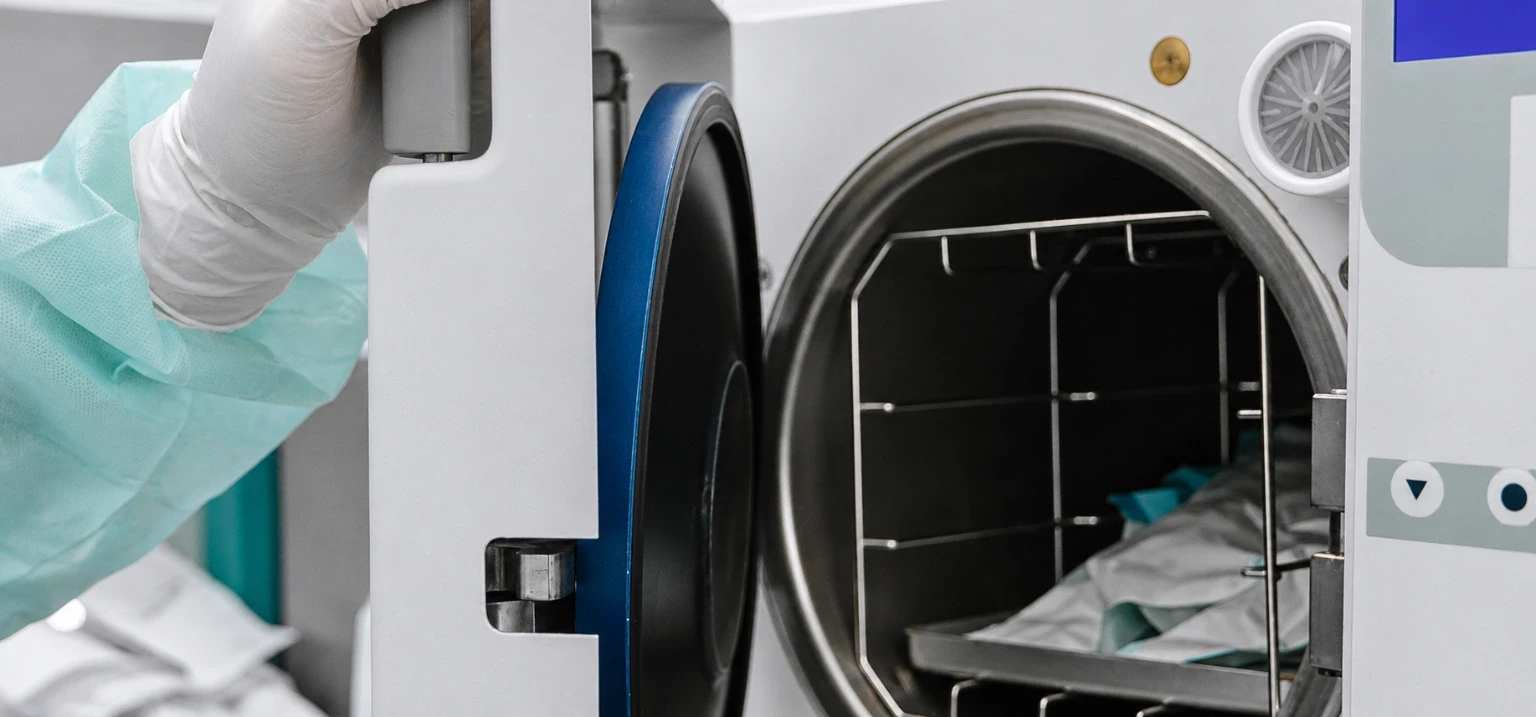
APP's 2025 statement supports point-of-use steam sterilization and wrapped cycles for storage. For used-implement reprocessing, APP membership requires a separate enclosed room; Texas allows a separate room or area with restricted client access.
Do not choose a unit by size alone
Check the model, FDA status, load capacity, cycle options, and manufacturer instructions. If you are unsure whether a unit meets the Texas rule, ask DSHS at 512-834-6600.
For the tattoo-side view of autoclave types, pouches and spore tests, see Autoclave for a Tattoo Shop.
TEMPERATURES & CYCLES
What temperature and cycle time should you use to autoclave piercing jewelry and tools?
Texas §229.407(i) permits steam at 121°C (250°F), at least 15 psi for at least 30 minutes after conditions are reached, or the operator manual's cycle. SciCan's Statim 7000 manual lists a different North American exposure of 134°C for 3.5 minutes. Follow the complete cycle specified for your model.
| Source / method | Stated parameter | What a piercer should do |
|---|---|---|
| Texas §229.407(i): steam autoclave | 121°C (250°F), at least 15 psi, at least 30 minutes after reaching conditions; or per manual | Use the correct manufacturer-approved program for the actual load |
| SciCan Statim 7000 manual: North American wrapped/unwrapped cycles | 134°C exposure for 3.5 minutes | Follow that model's full cycle, cassette, packaging, and drying instructions |
| Texas §229.407(i): dry heat | 160°C (320°F) for at least one hour after reaching temperature; or per manual | Recognize the state rule while noting APP does not accept dry heat for piercing best practice |
Texas also lists dry heat, while APP rejects it for piercing best practice. Ask DSHS at 512-834-6600 about equipment acceptance; do not transfer settings between sterilizers.
WHEN THE LOAD WILL BE USED
What is the difference between point-of-use and wrapped autoclave sterilization?
Point-of-use sterilization prepares jewelry and instruments for immediate piercing; wrapped cycles create packages for storage. APP's 2025 stance endorses point-of-use steam sterilization. Texas §229.407(d) permits unpackaged immediate-use sterilization when the unit manual allows it.
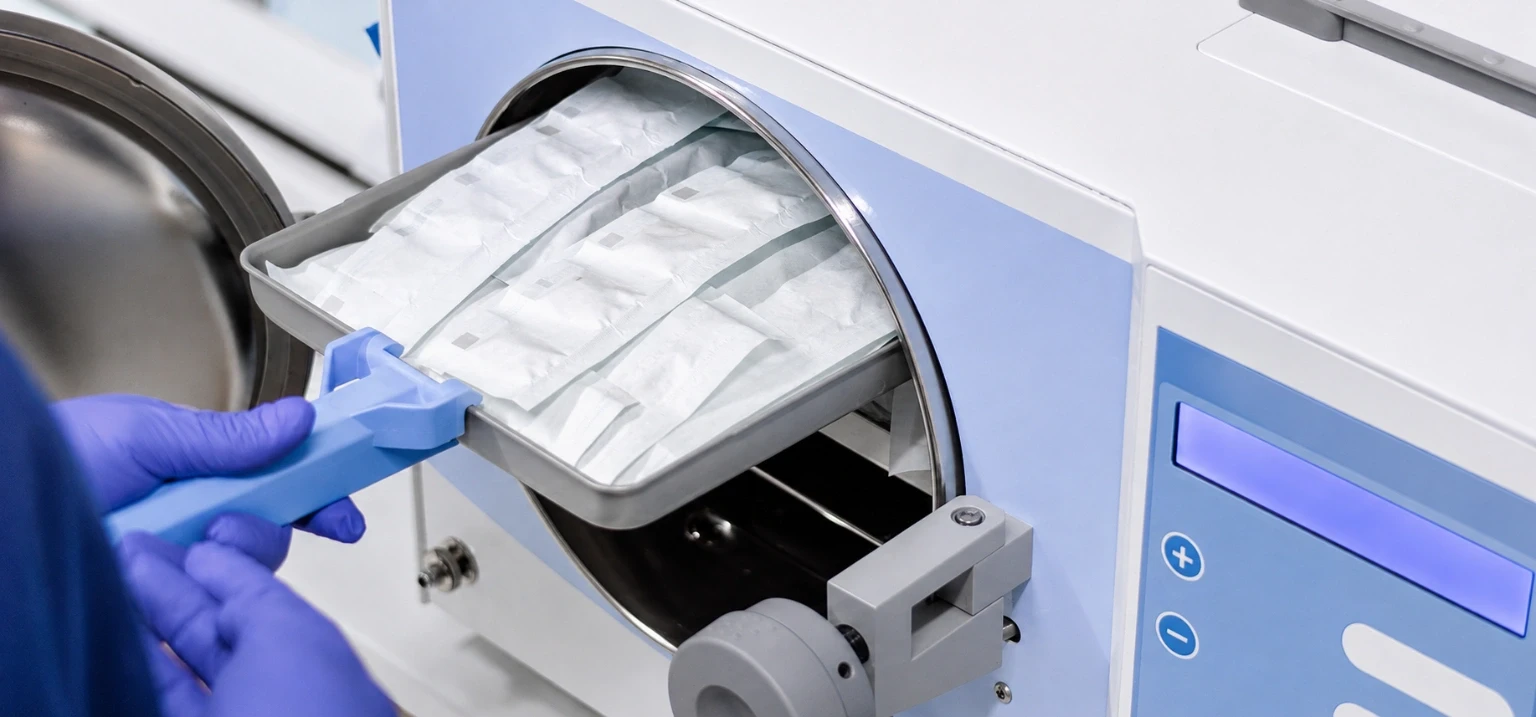
SciCan's Statim 7000 manual says unwrapped instruments exposed to room conditions cannot remain sterile. For storage, wrap them and finish the cycle's air-drying phase.
POUCHES & SHELF LIFE
How do you package and label sterilized piercing jewelry, and how long does it stay sterile?
Texas §229.407(d) and (e) require packaging individually or as a single-procedure set, date and operator initials on each pack, chemical/heat-sensitive indicators, and clean dust-tight storage. CDC advises packaging that permits sterilant penetration and avoids wet storage.
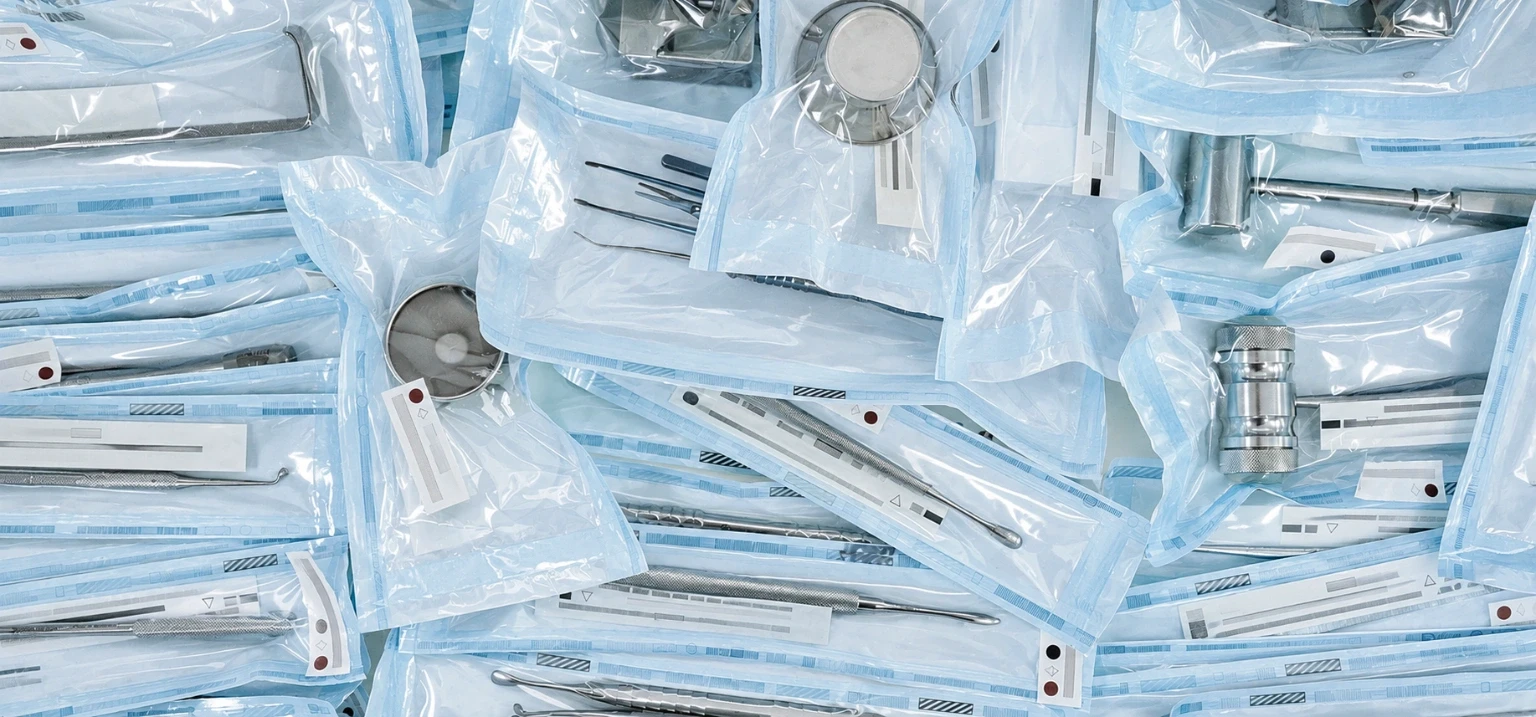
Under Texas §229.407(h), follow the storage period in the unit manual or pouch instructions. If the manual is unavailable or no period is stated, the Texas fallback is 60 days after sterilization.
Check each wrapped package
- Pack material is compatible with the specified cycle and correctly loaded.
- Contents are one item or a set intended for a single procedure.
- Sterilization date and the operator's initials appear on the package.
- The required chemical/heat-sensitive indicator is present and checked.
- The wrapped cycle and drying phase are completed as directed.
- Finished supplies remain in clean, dust-tight storage and follow the documented shelf life.
CDC dental guidance recommends an internal indicator. Do not use a pack if the required change fails; a chemical indicator does not replace a spore test.
BIOLOGICAL MONITORING
How often should a piercing autoclave be spore tested in Texas?
Texas requires each sterilizer to have an approved-lab spore test every calendar month, with results ready for inspection. APP membership also requires monthly third-party testing; CDC dental guidance and the cited SciCan and Tuttnauer manuals recommend weekly testing.
| Authority or source | Frequency | How to apply it |
|---|---|---|
| Texas 25 TAC §229.407(f) | Each calendar month, by approved laboratory | State requirement for an operating sterilization unit |
| APP membership requirements | At least monthly, by third party | Membership criterion, not an additional Texas statute |
| CDC dental infection-control guidance | At least weekly, with matching control | Stricter healthcare guidance that piercers can use in policy planning |
| SciCan Statim / Tuttnauer manuals | Weekly biological monitoring recommended | Follow the directions for the actual sterilizer model |
Chemical indicators monitor cycle conditions; spore tests monitor biological effectiveness. For approved laboratories in Texas, call DSHS at 512-834-6600.
FAILED SPORE TEST
What should a piercing studio do after a positive or failed autoclave spore test?
CDC dental guidance says to remove the sterilizer from service, review procedures, and immediately repeat the spore test using the same cycle. Follow the equipment and CDC guidance before returning it to service.
Remove the unit from service
Stop routine use and notify the responsible staff member.
Review the process
Review cleaning, packaging, loading, and cycle records.
Repeat the biological test
Retest promptly with the same cycle and matching control.
Handle affected items and return-to-service decisions
Follow CDC, manufacturer, and DSHS guidance before resuming use.
STERILIZED JEWELRY PURCHASES
Can presterilized titanium jewelry be used for a new piercing without autoclaving it again?
Texas §229.407(h) requires manufacturer documentation describing the sterilization method and instructions for storing and maintaining the sterility of presterilized items. Keep that information available for inspection.
APP's 2013 manual cautioned against assuming factory jewelry was sterile and recommended cleaning and autoclaving new pieces. APP's 2025 statement separately explains why studios need point-of-use capability for showcase jewelry.
SVT Shop lists sterilized titanium labrets: suitable for new piercings because they come sterilized, but the client's trusted piercer decides. See Body Jewelry Size Guide and Implant-Grade Titanium and Sterilized Piercing Jewelry.
STERILIZATION LOGS
What sterilization records, package labels, and lab results does a Texas piercing studio keep?
Texas §229.407(g) requires sterilization date, quantity and type of instruments, and operator name or initials, retained at the studio for at least two years from the last entry. Every package needs a date and initials; monthly spore-test results must be accessible.
APP's 2013 manual recommends a written program for indicators, integrators, spore testing, and cleaning logs. Keep test results and manufacturer manuals with processing records.
COMMON MISTAKES
What sterilization mistakes should professional piercers avoid?
Avoid treating one completed machine cycle as the whole workflow. Cleaning, packaging, sterilization, monitoring, and storage each need their own checks.
Putting dirty jewelry straight into the autoclave
Texas requires removal of residue, rinsing, and drying first.
Calling an ultrasonic a sterilizer
An ultrasonic cleans; the autoclave sterilizes.
Using a pressure cooker or home soak
APP rejects household substitutes and disinfectant soaks.
Mixing wrapped and unwrapped workflows
Unwrapped immediate-use loads cannot become stored sterile stock.
Stacking pouches or skipping drying
Tuttnauer forbids stacked pouches; SciCan requires drying.
Using a pouch color change in place of a spore test
Texas requires monthly laboratory spore tests.
Assuming all sterile jewelry comes with equivalent paperwork
Texas requires manufacturer sterilization and storage documentation.
Reprocessing a used piercing needle
Texas requires single-use piercing needles to go in sharps containers.
SUPPLIES FOR PIERCING STUDIOS
Which pouches, sterile tools, jewelry, and sharps supplies can piercers shop at SVT Shop?
Separate supplies by purpose: wrapped-cycle pouches, packaged sterile jewelry and tools, disposable needles and forceps, and sharps containers. SVT Shop supplies these items, not sterilizers, ultrasonic cleaners, or spore-testing services.
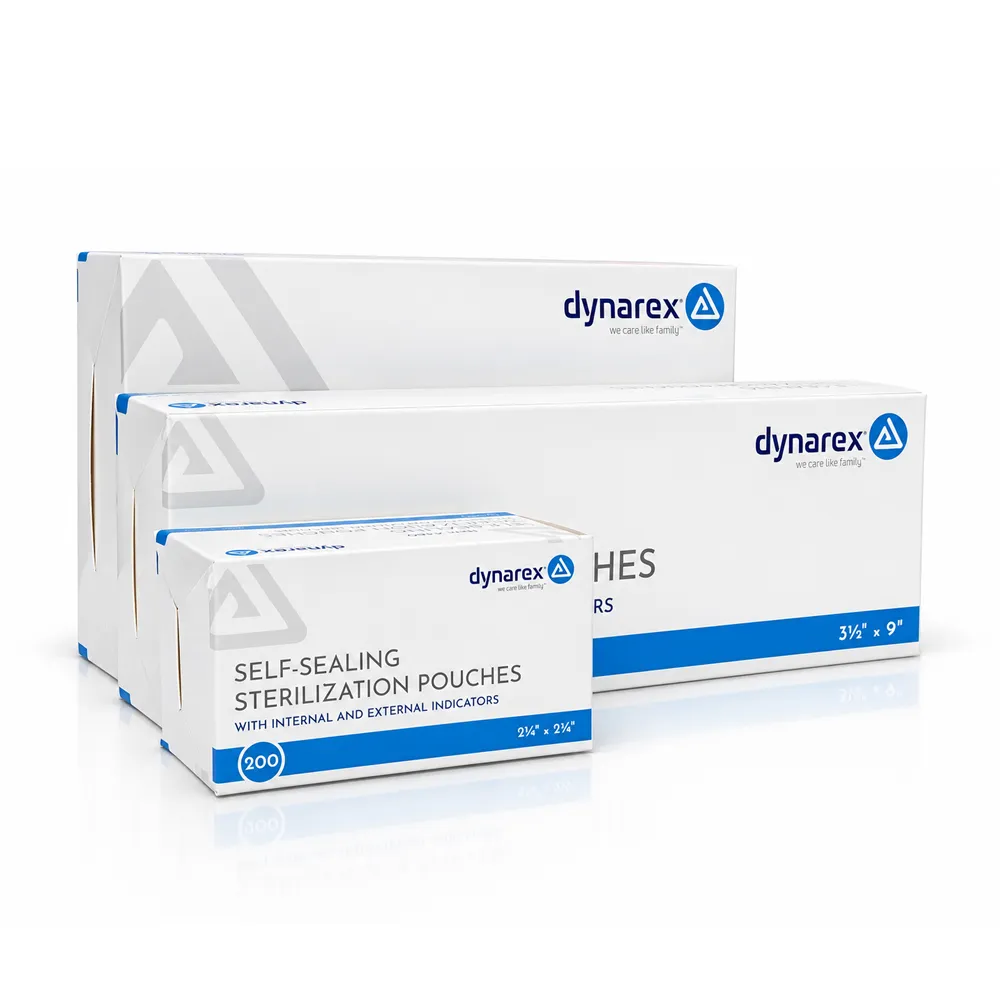 Wrapped Autoclave Loads
Dynarex Sterilization Pouches 200 ct
Self-sealing pouches with indicators for wrapped loads; date and initial them.
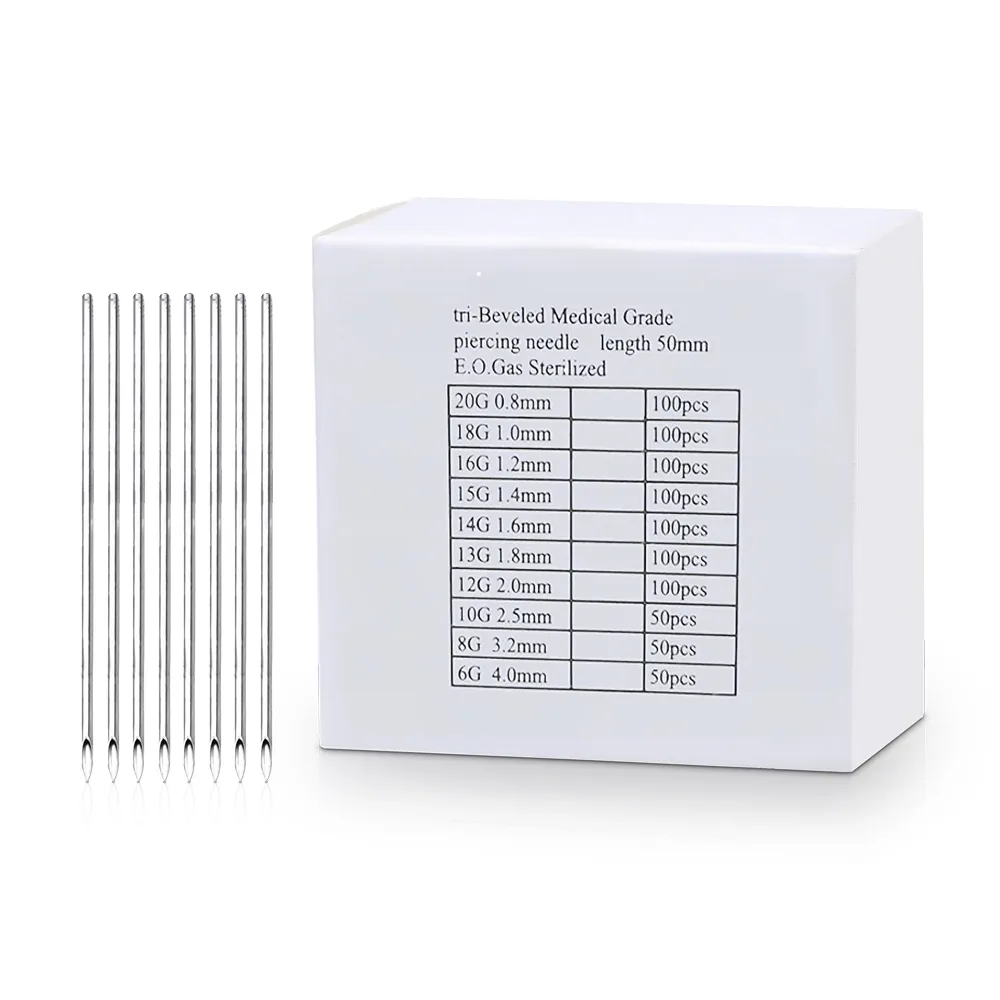 Sterile Single-Use Needle
Tri-Beveled Piercing Needles
Listed as EO-sterilized, single-use needles; discard after use.
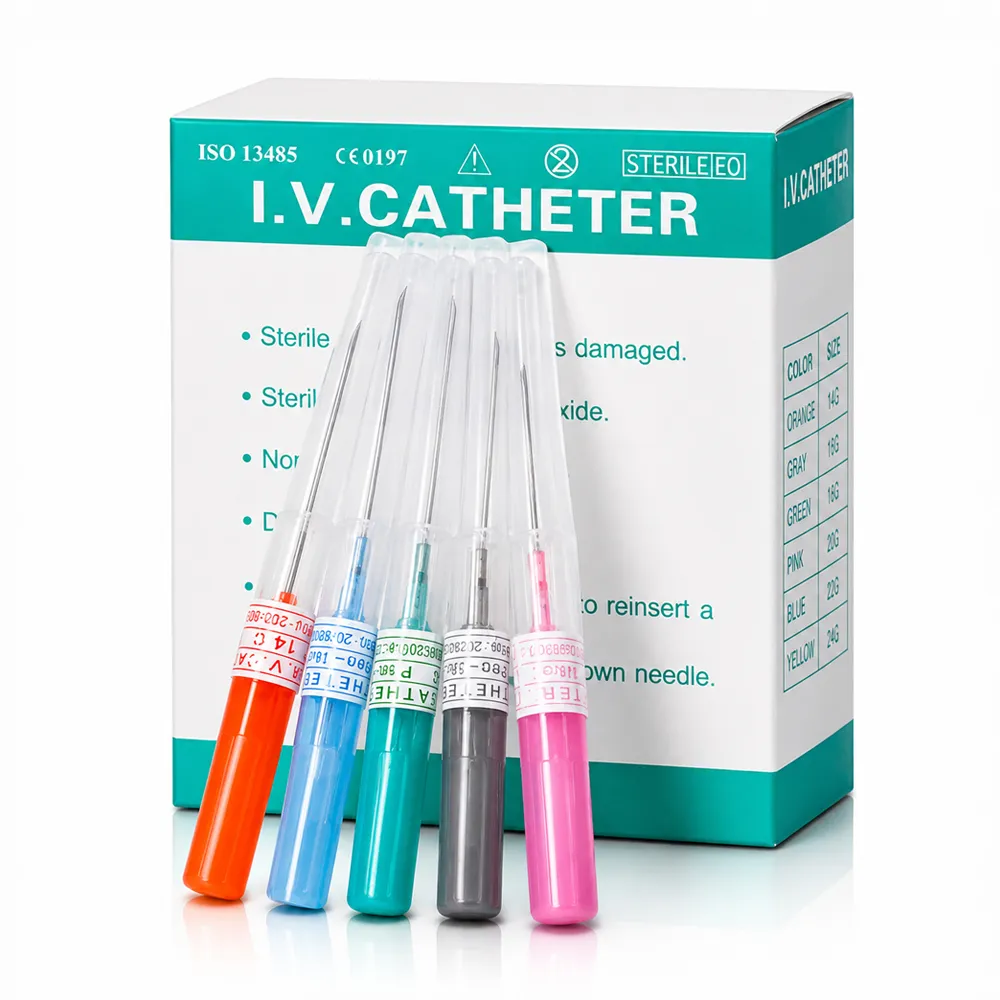 Single-Use Catheter Needles
I. V. Catheter Piercing Needles 50Pcs
Sterile catheter needles for one procedure; check the package.
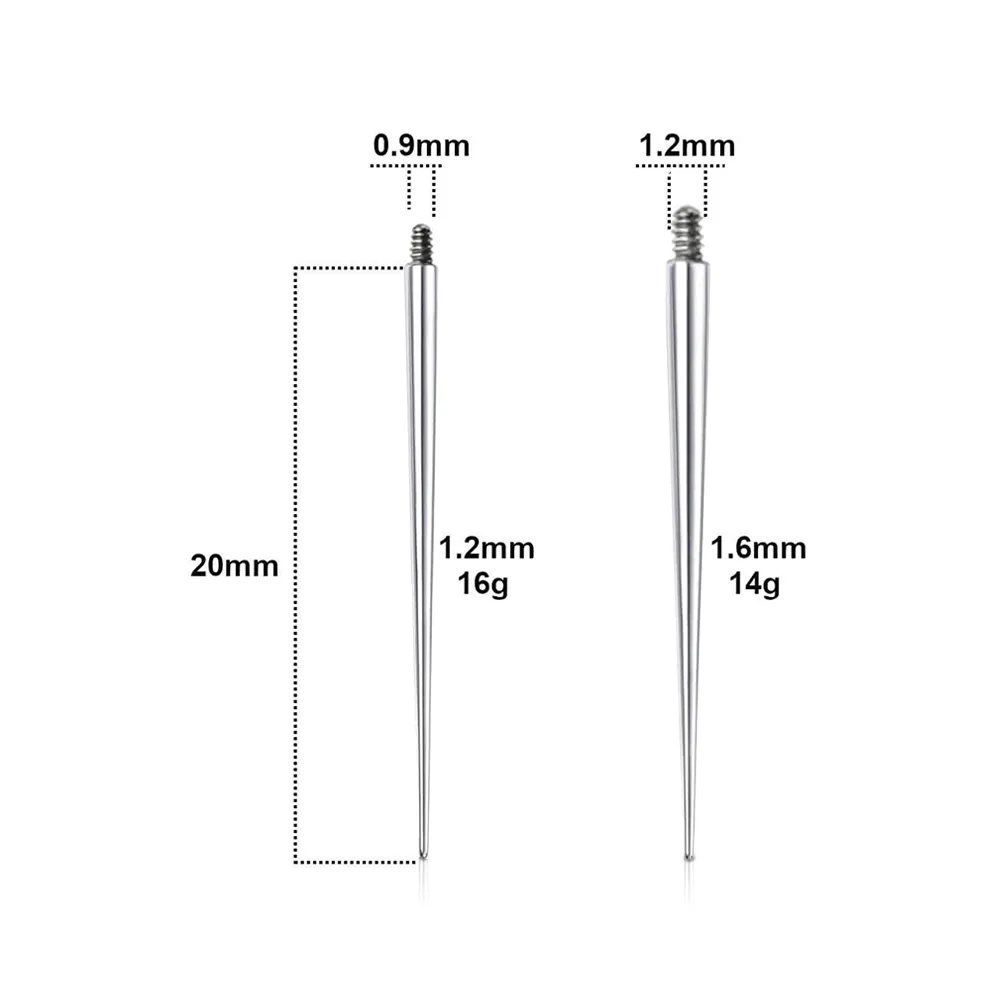 Sterilized Jewelry Insertion Tool
Sterilized Insertion Pin for Internally Threaded Body Jewelry
Sterilized pin for internally threaded jewelry handling.
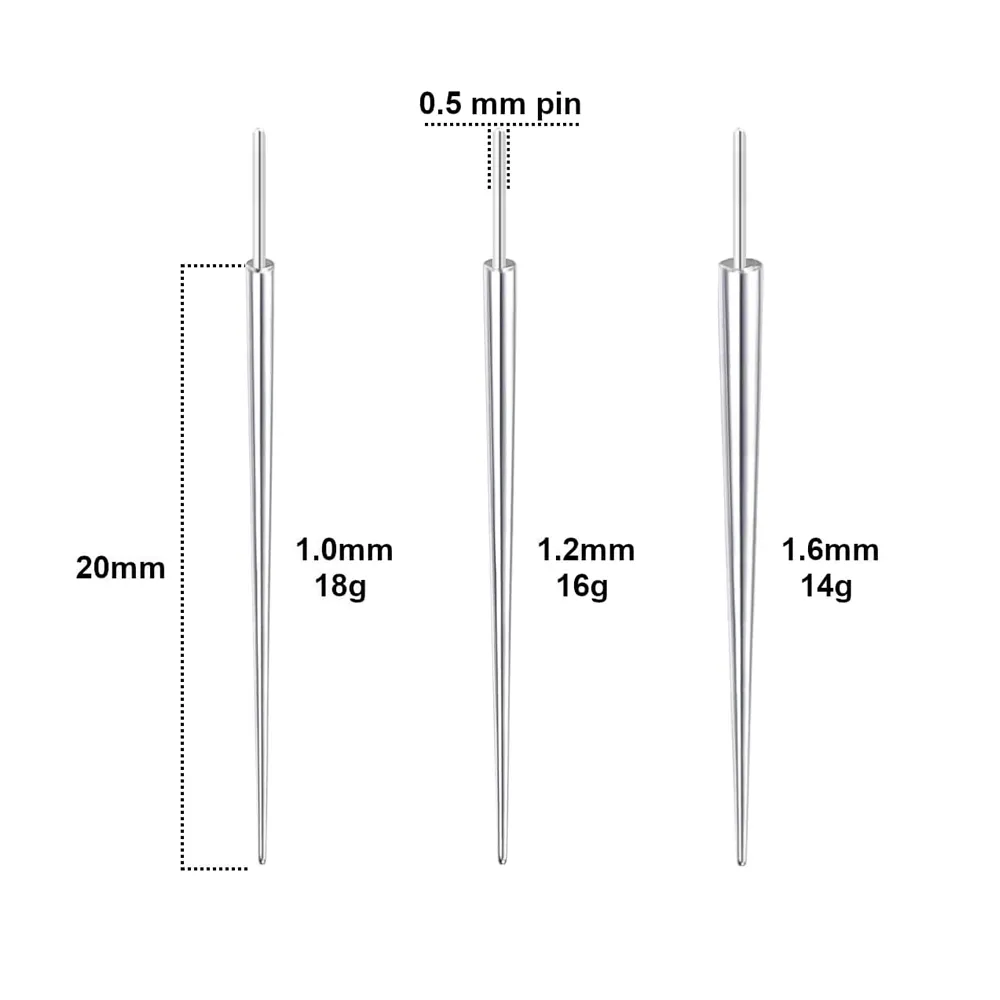 Threadless Insertion Tool
Sterilized Insertion Pin for Threadless Body Jewelry
Sterilized pin for the appropriate threadless jewelry system.
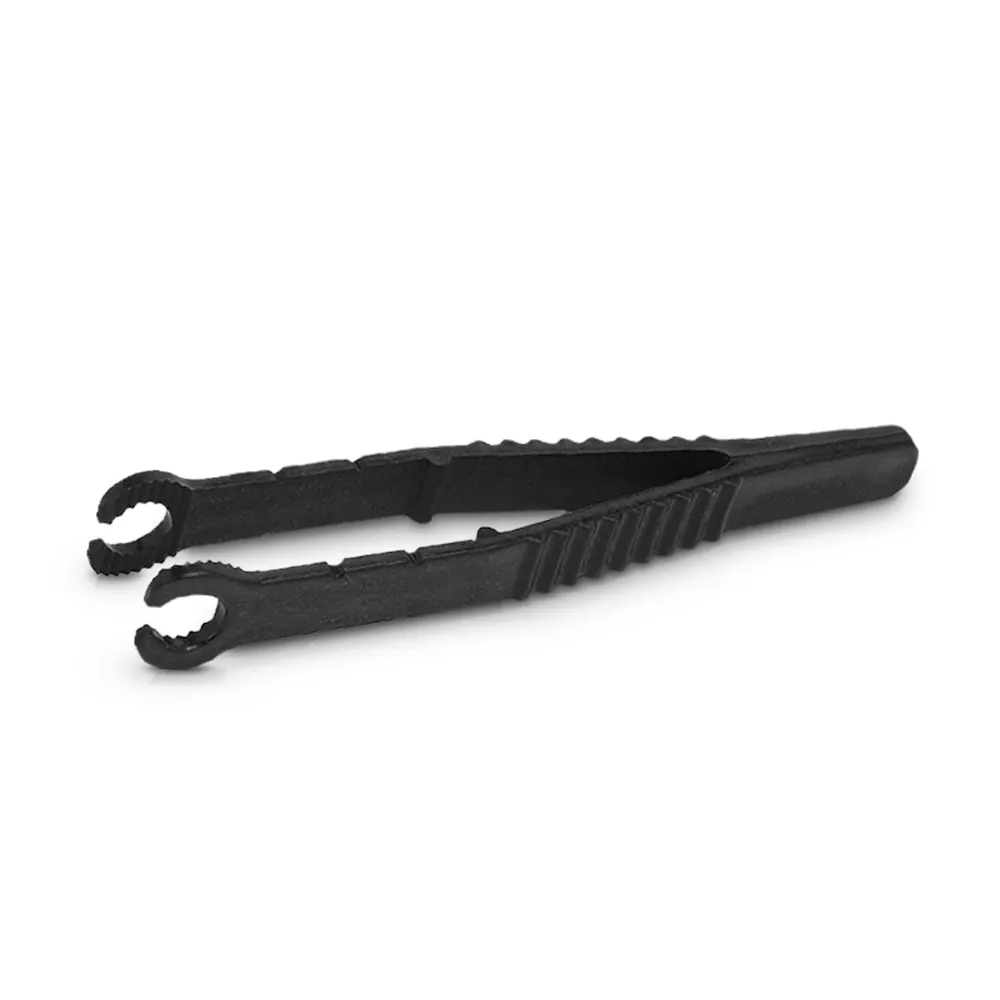 Sterilized Handling Instrument
Saferly Sterilized Round Tweezers
Sterilized handling tweezers; follow package instructions.
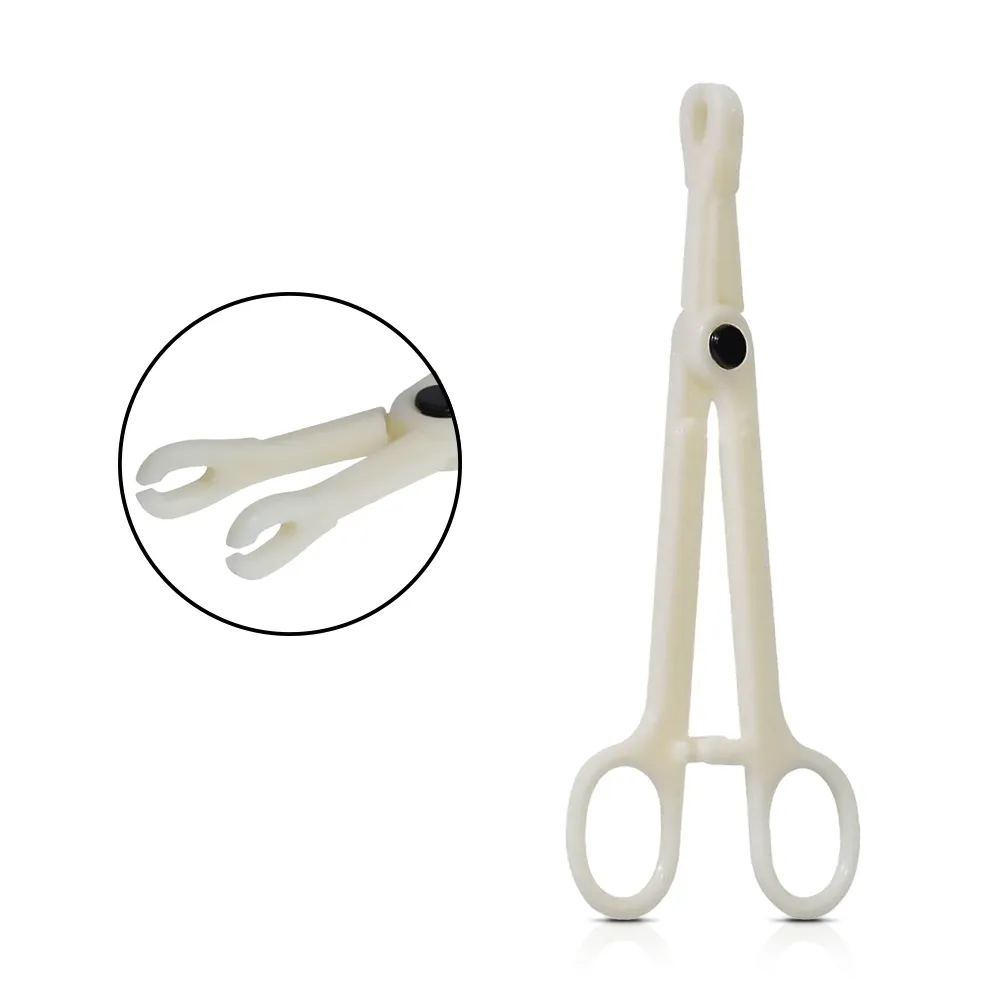 Disposable Companion Tool
Disposable Piercing Forcep Round
Disposable forceps; do not reprocess after use.
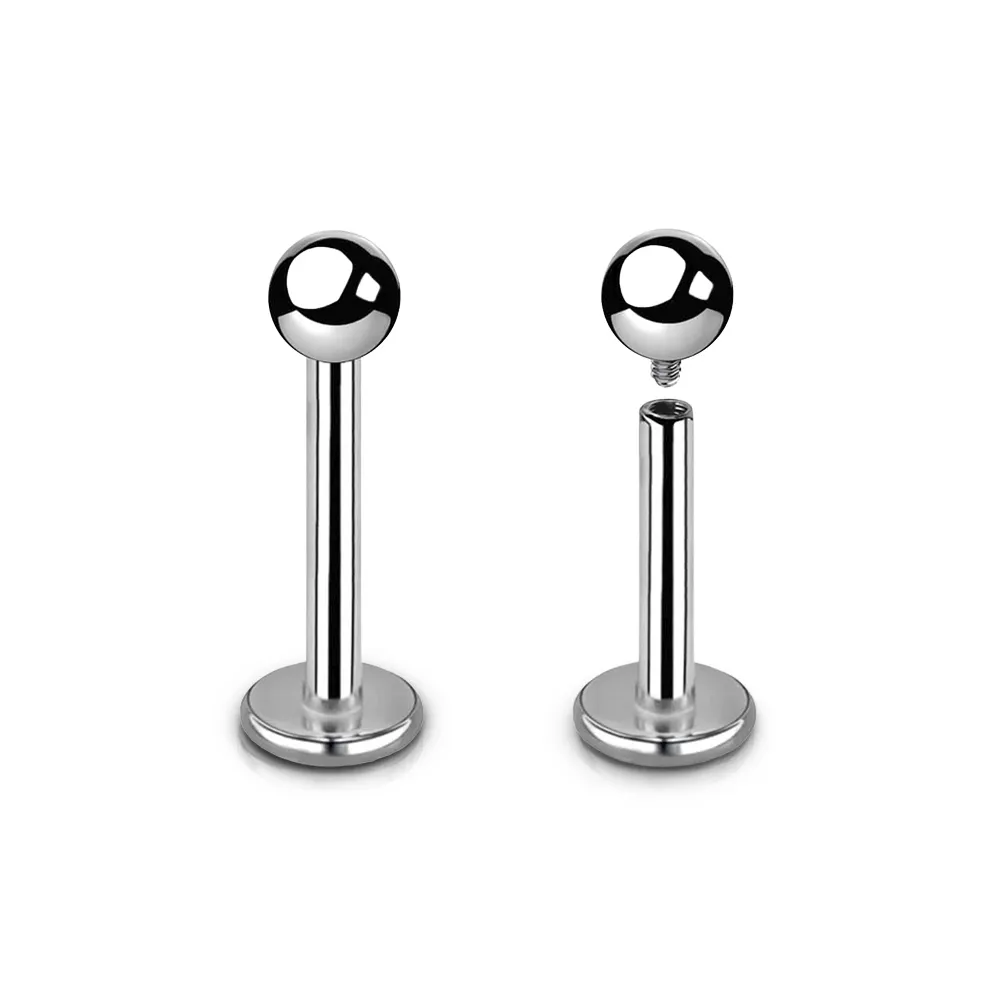 Sterilized Titanium Jewelry
Sterilized Titanium Internally Threaded Labret 1.2mm
Suitable for new piercings because it comes sterilized, but the client's trusted piercer decides.
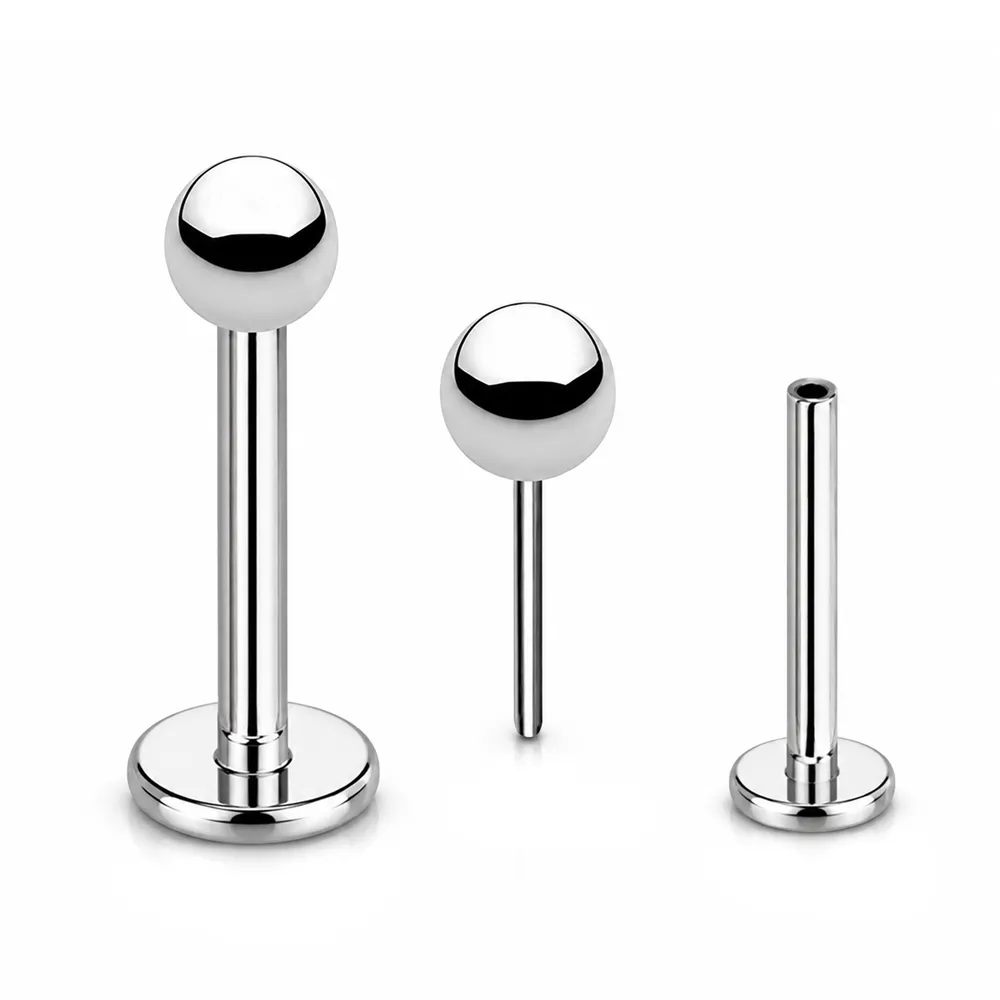 Sterilized Threadless Jewelry
Sterilized Titanium Push In Labret 1.2mm (16G)
Suitable for new piercings because it comes sterilized, but the client's trusted piercer decides.
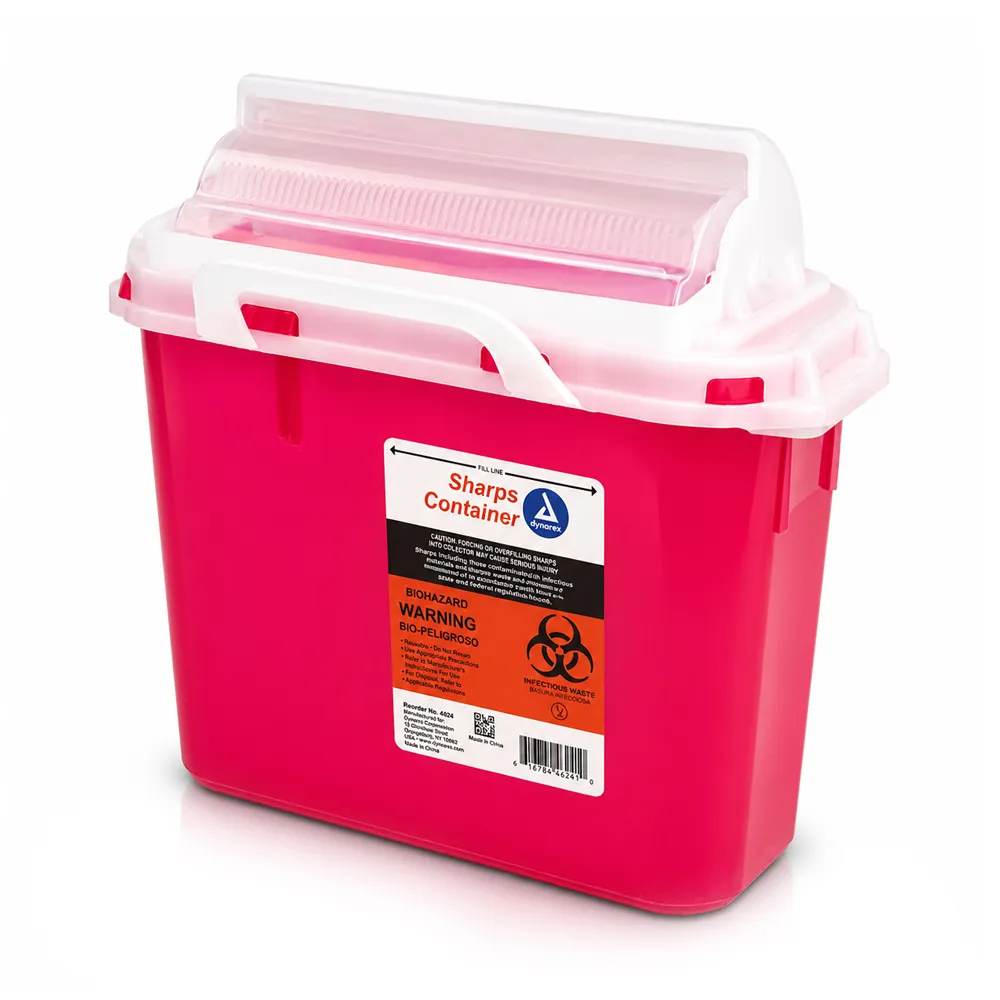 Needle Disposal
Dynarex Sharps Container 5.4 Qt.
Container for prompt disposal of used piercing needles.
Shop Sterilization Pouches Shop Sterilized Jewelry Shop Piercing Needles Shop Sharps Containers
For product fitting and cleaning-related station practice, see Threadless vs Internally Threaded Jewelry and Tattoo Cross-Contamination Checklist.
STUDIO PURCHASING CHECKLIST
What should a piercing studio check before buying an autoclave and sterilization supplies?
Choose equipment around the tools you reprocess and whether jewelry is sterilized for immediate use or stored. Keep Texas rules, APP membership standards, and your sterilizer manual distinct.
- Separate supply routes: Reusables, new jewelry, factory-sterilized items, and disposable sharps.
- Check equipment: FDA status under Texas rules, chamber size, approved cycles, and manual.
- Choose cycles: Immediate-use versus wrapped with drying for later storage.
- Separate areas: Dirty reprocessing versus clean jewelry and packages.
- Choose cleaning: Texas-permitted enzyme or ultrasonic method.
- Use compatible pouches: Proper material, date, initials, and indicators.
- Schedule tests: Texas monthly approved-lab testing and manufacturer guidance.
- Keep documents: Logs, test results, manuals, and factory sterilization records.
- Store correctly: Dust-tight, dry, following the documented sterile period.
- Collect sharps: Place used needles in an appropriate container.
For approved labs and equipment questions, call Texas DSHS at 512-834-6600. SVT Shop offers pouches, sterile jewelry, and disposable instruments, with Next Day Delivery available in El Paso.
FAQ
Frequently asked questions about sterilizing piercing jewelry and equipment
Questions piercers ask about cleaning, steam sterilization, wrapped stock, monitoring, and disposal.
How do professional piercers sterilize body jewelry?
Clean reusable jewelry, rinse, dry, then use an appropriate steam-autoclave cycle. Wrap and label items for storage or use a permitted immediate-use cycle.
Can you sterilize piercing jewelry at home with boiling water or alcohol?
No. Boiling or liquid soaks do not provide APP-accepted sterilization for fresh-piercing jewelry. Ask a professional piercer.
Do you need to clean piercing jewelry before autoclaving it?
Yes. Texas requires cleaning first with enzyme-detergent hand cleaning or ultrasonic, followed by rinsing and drying.
Can you put piercing jewelry in an ultrasonic cleaner?
Yes, for cleaning under the unit instructions. Ultrasonic equipment does not sterilize; APP's 2013 manual recommends a clean-jewelry-only unit.
What autoclave should a piercing studio use?
Texas requires FDA-approved sterilization equipment and an available manual. APP calls for medical-grade units and rejects top-loading autoclaves and pressure cookers.
How long does sterilized jewelry stay sterile in a pouch in Texas?
Use the period in the manual or pouch label. If it is unavailable or unstated, Texas applies a 60-day fallback.
How often should a Texas piercing studio spore test its autoclave?
Texas: monthly by an approved lab. APP membership: monthly third party. CDC dental guidance and the cited machine manuals: weekly.
Is presterilized piercing jewelry sterile straight out of its package?
Check the package and manufacturer documentation; Texas requires sterilization-method and storage instructions. The trusted piercer chooses the jewelry.
Is dry heat sterilization allowed for piercing tools?
Texas lists 160°C for at least one hour after reaching temperature, or per the manual; APP rejects dry heat for piercing best practice.
Can a used piercing needle be sterilized and reused?
No. Texas requires single-use piercing needles and disposal in a sharps container.
What do I put in a piercing autoclave sterilization log?
Record date, quantity and type of items, and operator name/initials. Label each pack and keep laboratory test results.
What does a failed or positive autoclave spore test mean?
CDC advises removing the unit from service, reviewing procedures, and repeating the test promptly using the same cycle.
RESEARCH
Sources Consulted
Texas Chapter 229 gives the state requirements; APP, CDC, and manufacturer manuals address professional practice and model-specific cycles.
- Texas DSHS: Tattoo and Body Piercing Rules, 25 TAC Chapter 229
- Cornell LII: 25 TAC §229.407, Sterilization
- Association of Professional Piercers: 2025 Stance on Point-of-Use Steam Sterilization
- Association of Professional Piercers: Membership Requirements
- Association of Professional Piercers: Procedure Manual, 2013 Edition
- Association of Professional Piercers: Picking Your Piercer
- CDC: Cleaning Before Disinfection and Sterilization
- CDC: Best Practices for Sterilization Monitoring in Dental Settings
- CDC: Sterilizing Practices
- SciCan: Statim 7000 Operator's Manual
- Tuttnauer: Elara11 Operator's Manual