Powered by Comercia.io
Rotary vs pen tattoo machine is primarily a comparison of body design, not two different motor technologies: a tattoo pen is a rotary machine, while a frame-style rotary puts the motor and grip in a different arrangement. For lining, shading, color packing, fine line, and portraits, compare the direct-drive or cam mechanism, available stroke options, give, balance, needle compatibility, and power connection instead of assuming one shape performs every job better.
Shop Tattoo Machines Explore FK One Adjust
QUICK ANSWER
Rotary or pen tattoo machine: which should you buy?
Choose a pen-style rotary for an integrated grip-shaped body and a compatible cartridge workflow. Choose a frame rotary for separate grip-and-tube handling or verified needle-bar versatility. Then compare stroke, give, and power by model.
PEN FORMAT
A rotary motor in a pen-shaped housing. Compare grip, balance, and cartridges.
FRAME FORMAT
A rotary motor in a visible frame arrangement. Check grip, tube, and needle compatibility.
DRIVE DECISION
Direct drive, cam, and stroke adjustment describe how motion is delivered, not a universal winner.
CLEAR UP THE NAMES
What is the difference between a rotary and a pen tattoo machine?
Rotary describes a motor-powered way to drive the needle; pen describes the machine's cylindrical form. Comparing a pen with a frame-style rotary makes sense as a buying question. Treating pen and rotary as rival motor types does not.
For artists moving from a coil, the mechanism comparison belongs in Pen Machines vs Coil Machines. This guide focuses on differences within the rotary family so you can compare models you might actually order for your station.
The key purchasing distinction
Ask first whether you prefer the pen or separate frame-and-grip format. Then check the actual drive, stroke, needle system, and power connection. These are different buying decisions.
SIDE-BY-SIDE COMPARISON
Traditional frame rotary vs pen: what changes for a working tattoo artist?
Body shape affects handling, grips, and needles. The actual model determines compatibility and adjustments.
| Decision factor | Frame-style rotary | Pen-style rotary | Studio verdict |
|---|---|---|---|
| Motor and body | Motor sits on a frame; grip and tube are separate components. | Motor and drive sit in a pen-shaped housing with an integrated grip arrangement. | Choose the layout you can handle consistently throughout the job. |
| Needle system | Verify traditional needle bars and cartridge support by model. Bishop explicitly lists both for Microangelo. | Check the maker's specified cartridge compatibility and grip arrangement. | Buy for the needle system already used in your studio. |
| Stroke options | May use changeable components. FK Irons lists stroke wheels for Spektra Xion; Bishop lists exchangeable Microangelo cams. | May have fixed stroke or on-machine adjustment. FK One Adjust and Kwadron Enduro2 illustrate the adjustable approach. | Do not assume all pens adjust or all frames need swapping. |
| Power arrangement | Check the specific connection and compatible power supply. | Options include RCA, wireless battery, or modular connections, depending on model. | Prioritize the connection your workstation can support. |
| Weight and grip | Separate grip and tube influence the complete in-hand configuration. | Grip diameter, body length, and battery weight influence the complete in-hand configuration. | Compare the assembled machine, not just a promotional photograph. |
HOW ROTARY MOTION WORKS
How does a rotary tattoo machine turn motor rotation into needle movement?
A motor spins; the needle must move up and down. FK Irons explains that a cam converts the motor's spinning motion into the needle's reciprocating travel. The connection between those parts is what terms such as direct drive and adjustable cam try to describe.
FK Irons defines direct drive as the needle bar connecting straight to the motor cam. It also describes direct-drive rotaries as applying torque directly for continuous, even force. The words direct drive therefore describe a connection, while cam describes a part of the motion-conversion mechanism.
DRIVE SYSTEMS COMPARED
Direct drive vs cam-driven rotary vs swashplate: what changes in hit, give, and adjustment?
Drive labels are not a soft-to-hard ranking. FK Irons defines direct drive by the motor-to-needle-bar link, a cam by motion conversion, and give by resistance response. Compare each model's actual adjustments.
| Drive description | What the manufacturer supports about motion or hit | Give and adjustment | When to consider it |
|---|---|---|---|
| Direct drive | FK Irons says motor torque reaches the needle bar directly, producing continuous, even force; the bar connects to the motor cam. | FK describes many rotaries as naturally stiff. Check whether the exact model adds another form of give or stroke adjustment. | When you want the maker's documented direct-drive response and the machine fits your needle system and technique. |
| Cam / eccentric | FK explains the cam converts rotary motion into up-and-down travel. Bishop documents magnetic cam changes on Microangelo. | Fixed and interchangeable cams exist. FK One Adjust uses a fixed cam plus paddle and slider; cam hardware alone does not prove softer give. | When you want a documented stroke arrangement for different workflows, including the specific Bishop shading and packing cam options. |
| Swashplate / swash drive | A less common rotary drive term; assess the individual manufacturer's explanation of needle movement. | Use that maker's manual to evaluate feel, give, and service or adjustment options. | Consider a specific documented model for your task rather than choosing it from the drive label alone. |
What about belt drive? Treat belt-drive claims the same way: consult the specific maker's published drive and adjustment information before comparing the hit with a direct-drive or cam system. Neither the name swashplate nor belt drive supplies a universal stroke or give specification.
STROKE OPTIONS
What stroke length should a rotary or pen machine offer for lining, shading, and packing?
Choose the stroke range or fixed option that matches the kinds of marks you regularly make. Manufacturers publish model-specific stroke specifications; they do not establish a single universal stroke that every artist must use for lining, shading, or color packing.
| Machine or manufacturer's example | Published stroke option | How the choice is made |
|---|---|---|
| FK Irons One Adjust | 2.0–5.0 mm in 0.5 mm increments. | FK describes a fixed-stroke cam with paddle-and-slider adjustment, without powering down. |
| FK Irons One Stealth 4.0 mm | 4.0 mm model. | Fixed-stroke option in the FK One family; check the exact version. |
| FK Irons Flux Max | Manufacturer lists 3.2, 4.0, and 4.5 mm family options. | Choose the actual model; SVT Shop's linked Stealth machine is the 4.0 mm version. |
| Peak Solice Pro 2 | 2.4–4.2 mm. | Adjustable stroke offered on the manufacturer-described model. |
| Kwadron Equaliser Pentagram | 2.0–4.2 mm. | Kwadron's published adjustable-stroke range. |
| Kwadron Equaliser Enduro2 | 2.5–5.0 mm. | Kwadron specifies dial adjustment. |
| Bishop Microangelo frame rotary | 3.5 mm and 4.2 mm. | Bishop documents interchangeable magnetic cams. |
| FK Irons Spektra Xion frame rotary | 3.2 mm and 3.7 mm stroke wheels. | FK describes interchangeable stroke wheels. |
Bishop associates its 3.5 mm cam with black-and-grey shading and its 4.2 mm cam especially with solid color packing. These are Bishop's model-specific recommendations.
The detailed relationship among stroke, needle depth, and voltage is covered in Tattoo Machine Stroke, Needle Depth, and Voltage. Use that guide rather than selecting stroke only from a broad style label.
HIT AND RESISTANCE
What is give on a rotary tattoo machine, and is a pen softer than a coil?
FK Irons defines give as how a machine responds when its needle meets resistance. Its explanation distinguishes the mechanical give of a coil's springs and air gap from the generally stiff response of many rotary direct-drive systems. Pen shape alone is not a measure of give.
FK also describes eGive, which controls the motor electronically. In its explanation, raising eGive makes the motor slow momentarily when resistance is encountered. FK's Flux Max has built-in eGive levels 0–3. This is a specific electronically controlled behavior, not proof that every cam system has a softer hit.
For the larger coil-versus-rotary mechanism decision, see Pen Machines vs Coil Machines.
HAND FEEL
Does a pen tattoo machine weigh less or offer better balance than a frame rotary?
Compare each machine as it will actually be held, including the grip and battery if used. The body shape does not prove a weight advantage. Manufacturer figures are useful for shortlisting; the assembled configuration is the relevant comparison for the artist's grip and reach.
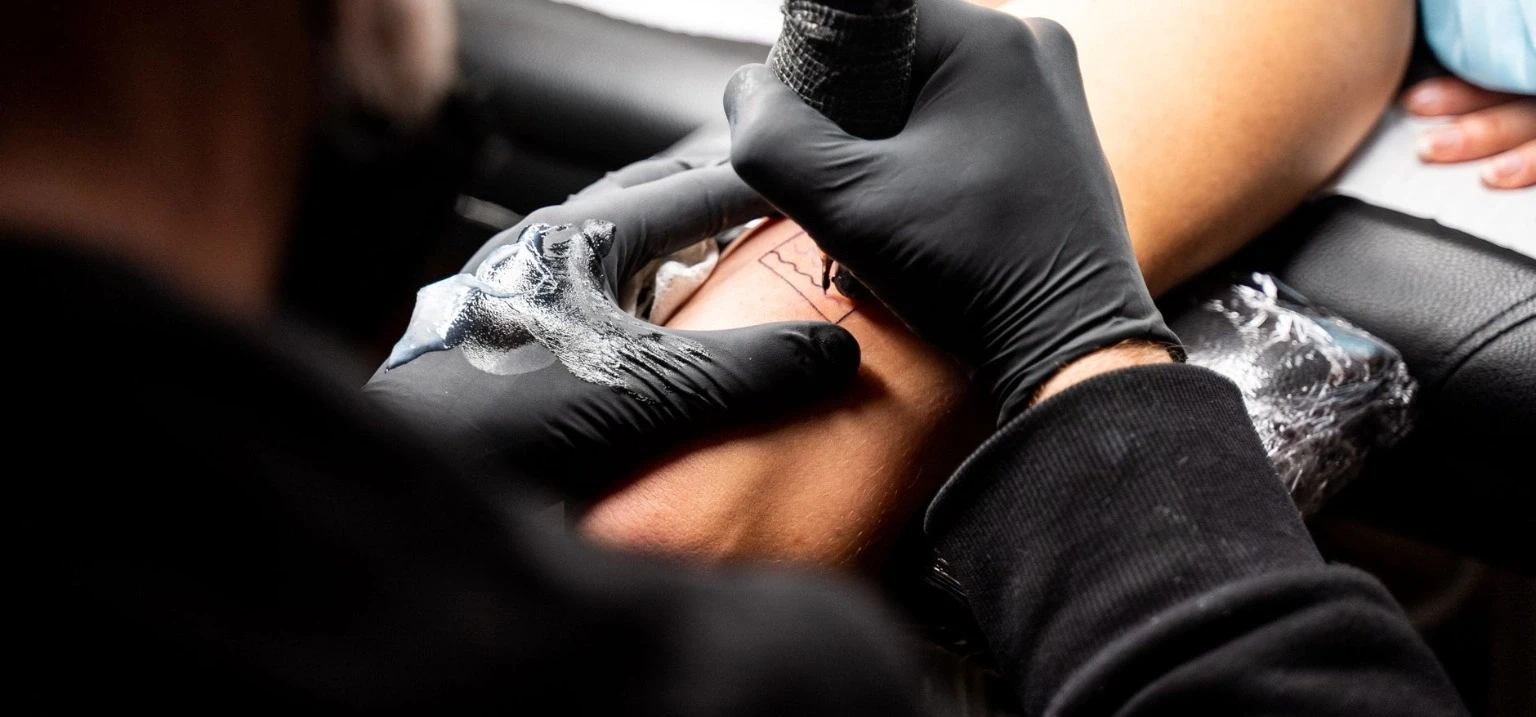
FK Irons lists its One Adjust at 244 g with an 18500A battery and 268 g with an 18650A battery, with a body measuring 152 mm by 38 mm. Peak lists the Solice Pro 2 at 0.5 lb with battery, with a 1.5 in grip and 5 in length. Kwadron lists the Equaliser Pentagram at 230 g with battery and the Enduro2 at 225 g. These figures are each maker's descriptions, not a standardized side-by-side grip test.
POWER AND READOUTS
RCA or wireless tattoo pen: what changes, and why do some machines show Hertz instead of volts?
Wired or wireless describes power delivery, not a different type of rotary motor. Peak says the Solice Pro 2 supports RCA or wireless connection. Kwadron includes an RCA adapter with Enduro2. Bishop's Power Wand Advanced RCA Packer provides a wired product choice, while its XLUMEN Packer is offered as a wireless set.
Volts and Hertz describe different information. FK Irons explains that equal voltage settings do not guarantee equal motor frequency across different machines: its example shows different Hertz readings at the same voltage. A display showing Hertz can help an artist compare the machine's running rate, rather than treating a familiar voltage as an identical speed across brands.
Keep the detailed power comparison separate
For batteries and wireless models, use Wireless Tattoo Pen Machines Compared and Wireless Tattoo Machine Battery Care. For RCA, supplies, and connections, see Tattoo Power Supply Guide.
VERDICT BY TATTOO JOB
Is a rotary frame or pen better for lining, shading, color packing, fine line, or portraits?
Neither machine shape wins every technique. Match the job with the stroke options, response, grip, and cartridge or needle system documented for the exact model. Bishop's cam recommendations are useful specific examples, while FK Irons, Peak, and Kwadron offer different choices for changing or retaining a stroke.
| Tattoo job | What to prioritize | Manufacturer-backed reference | Working verdict |
|---|---|---|---|
| Lining | Repeatable motion, compatible liner grouping, secure grip and a stroke choice the artist can control. | FK One Adjust and Kwadron Enduro2 offer adjustable strokes; FK One Stealth offers a fixed 4.0 mm version. | Choose the machine that gives consistent lines in your hands; pen or frame can qualify. |
| Black-and-grey shading | Controlled transitions and a stroke configuration suited to the intended marks. | Bishop specifically calls its 3.5 mm cam suitable for black-and-grey shading. | A documented shading configuration is more useful than a generic pen label. |
| Solid color packing | Repeatable coverage with the right needles and a machine configuration chosen for packing. | Bishop designs its 4.2 mm cam especially for solid color packing. | Start with a maker-supported packing option, then assess fit and technique. |
| Fine-line work | Comfortable grip, appropriate cartridge choice, and precise control. | FK, Peak, and Kwadron document adjustable options; a separate needle guide addresses cartridge selection. | Pick the combination you can control, not the machine advertised as the softest. |
| Portraits | Balance for detailed sessions and a shading setup that suits gradual tonal work. | Bishop's black-and-grey cam guidance and the makers' published weight and grip figures provide comparison points. | Compare assembled ergonomics and the actual shading configuration; no shape has a universal portrait advantage. |
For grouping and membranes, see How to Choose Tattoo Cartridges. Match the needles to the design independently of body shape.
STUDIO COMPARISON
How should an apprentice or working artist compare rotary machines before buying?
Compare models by the same real tattoo job, not by appearance or the largest number on a specification sheet.
Name your main work
Decide whether your studio needs a dedicated liner or packer, a shading machine, or one adjustable unit for mixed appointments.
Pick the body and needle system
Compare pen grip against separate frame-and-grip handling. Check actual cartridge or traditional needle compatibility.
Verify the stroke mechanism
Distinguish fixed stroke, swappable cam or wheel, and on-machine adjustment; note the maker's exact options.
Compare hit control and power
Check documented physical or electronic give, RCA availability, wireless options, and whether the controls display Hertz or volts.
Assess the complete working setup
Compare grip, balance, compatible cartridges, and the assembled machine before choosing the model to keep in your station.
Use How to Set Up a Tattoo Pen Machine after selecting a pen, and Tattoo Machine Troubleshooting when an existing setup is performing inconsistently.
COMMON BUYING ERRORS
What mistakes make artists choose the wrong rotary or pen machine?
The most expensive mistake is comparing category names rather than the actual manufacturer's mechanism and compatible setup.
Calling every pen a different motor type
A pen is a rotary format. Compare it with a frame-style rotary, not with the category rotary itself.
Assuming direct drive excludes a cam
FK defines direct drive through its motor-cam connection; Bishop documents a direct-drive machine with swappable cams.
Equating cam drive with soft give
FK ties give to resistance response and separately defines electronic eGive. A cam does not automatically supply it.
Buying stroke numbers without a job
A broad adjustment range matters only when the artist can use and control its available choices.
Comparing volts as identical speed
FK explains that machines can show different Hertz readings at the same voltage.
Ignoring the complete grip and power setup
Compare the assembled device and verify RCA or battery configuration before ordering.
SVT SHOP MACHINE OPTIONS
Which FK Irons, Peak, Kwadron, Bishop, and PRIME pen machines can you compare?
Compare these SVT Shop options by their documented stroke, give, and power arrangements.
 ADJUSTABLE STROKE / WIRELESS
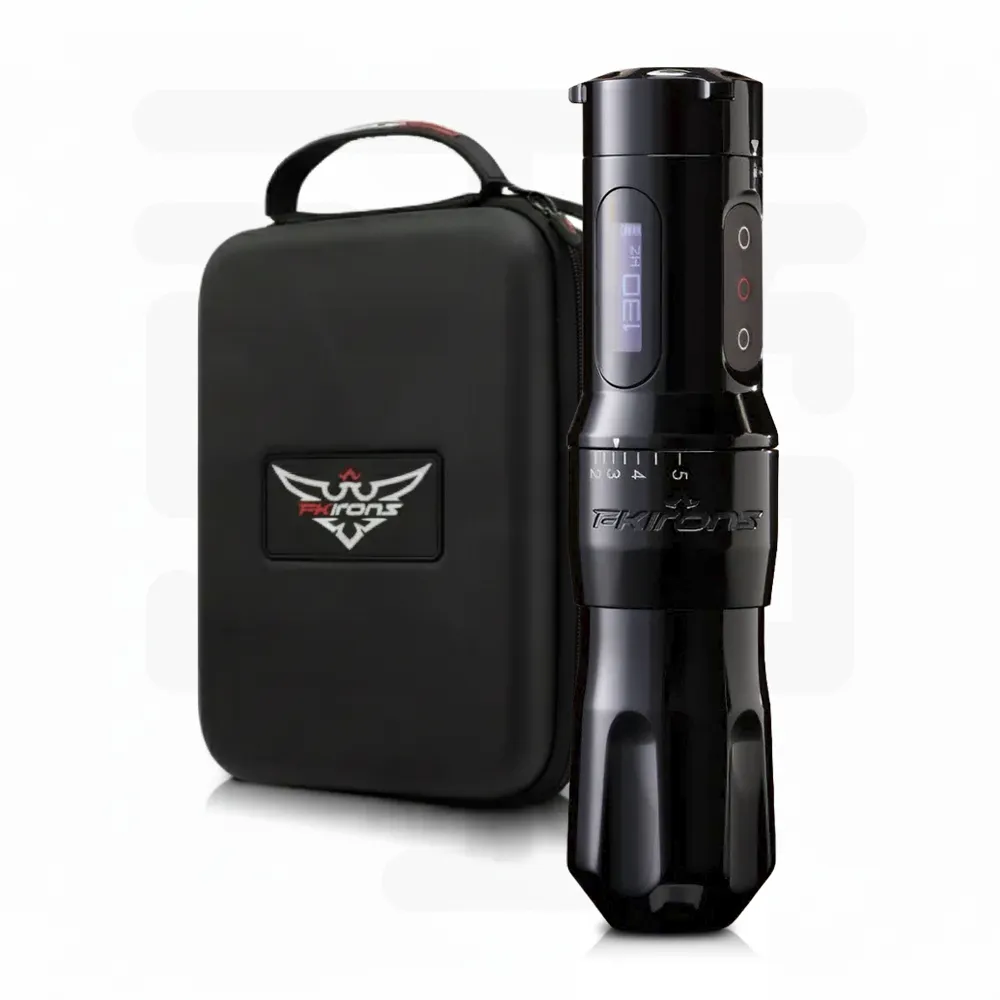
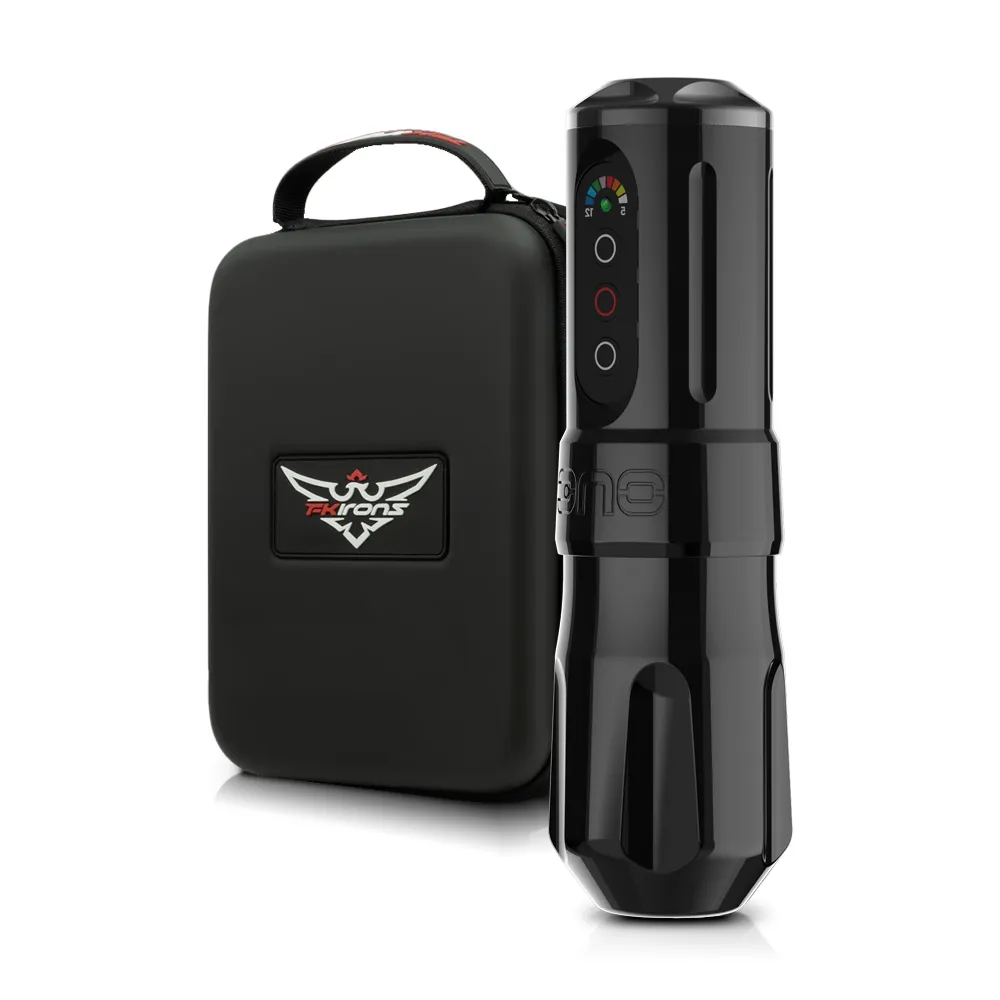
FK Irons - One Adjust
FK's paddle-and-slider design adjusts from 2.0 to 5.0 mm in 0.5 mm steps; useful for artists comparing several workflows.
 FIXED STROKE / PEN
FK Irons - One Stealth 4.0mm
Fixed 4.0 mm FK One pen variant for an artist who prefers a selected stroke rather than changing ranges.
 ELECTRONIC GIVE / WIRELESS
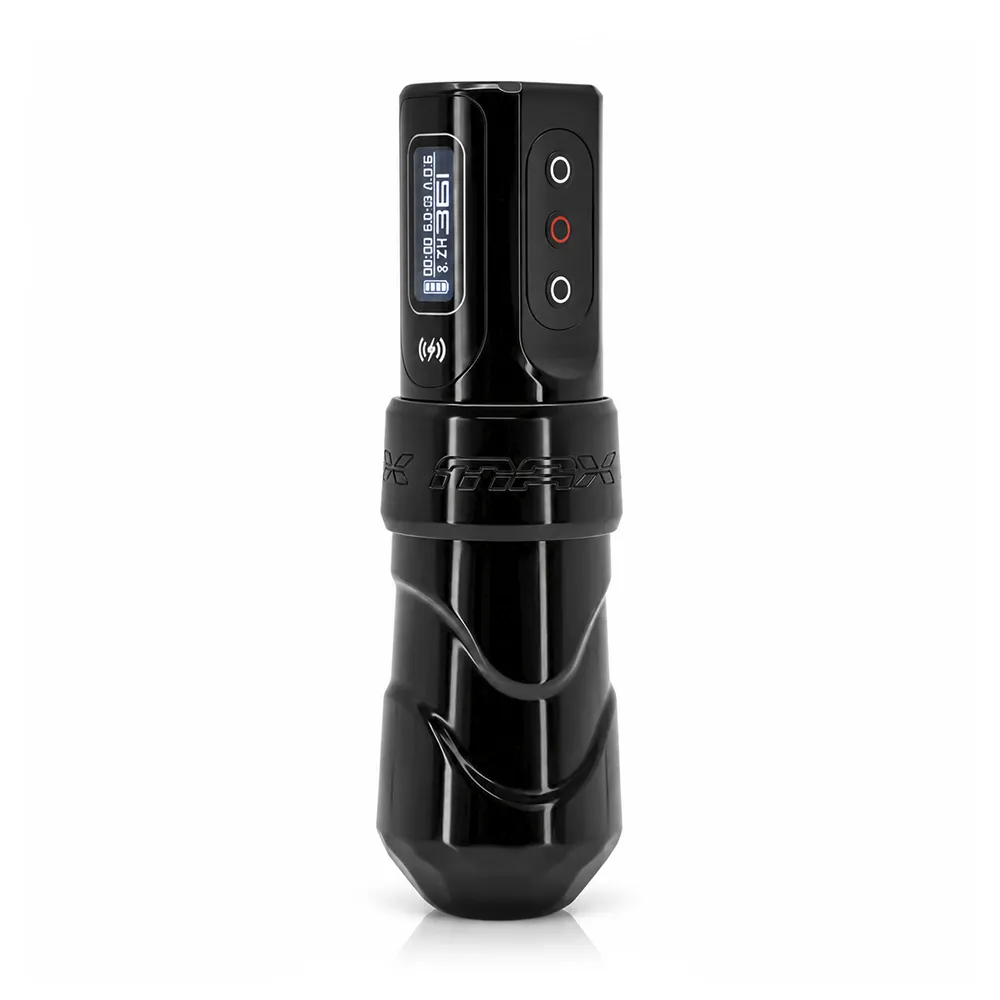
FK Irons - Flux Max - Stealth 4.0 mm
FK's Flux Max family includes eGive control; this SVT Shop listing names the 4.0 mm version.
 ADJUSTABLE / RCA OR WIRELESS
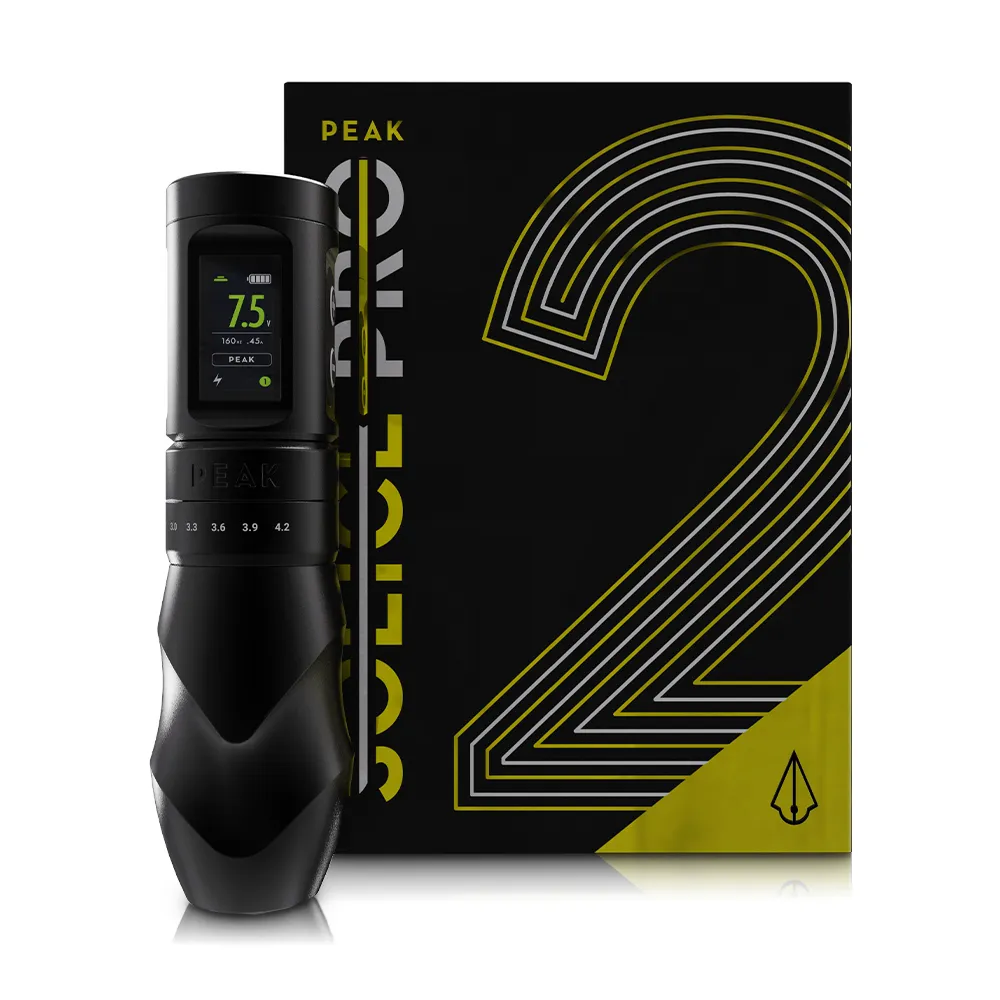
Peak - Solice Pro 2 - Matte Black
Peak lists a 2.4–4.2 mm stroke range and RCA or wireless connection for this model.
 ADJUSTABLE / WIRELESS
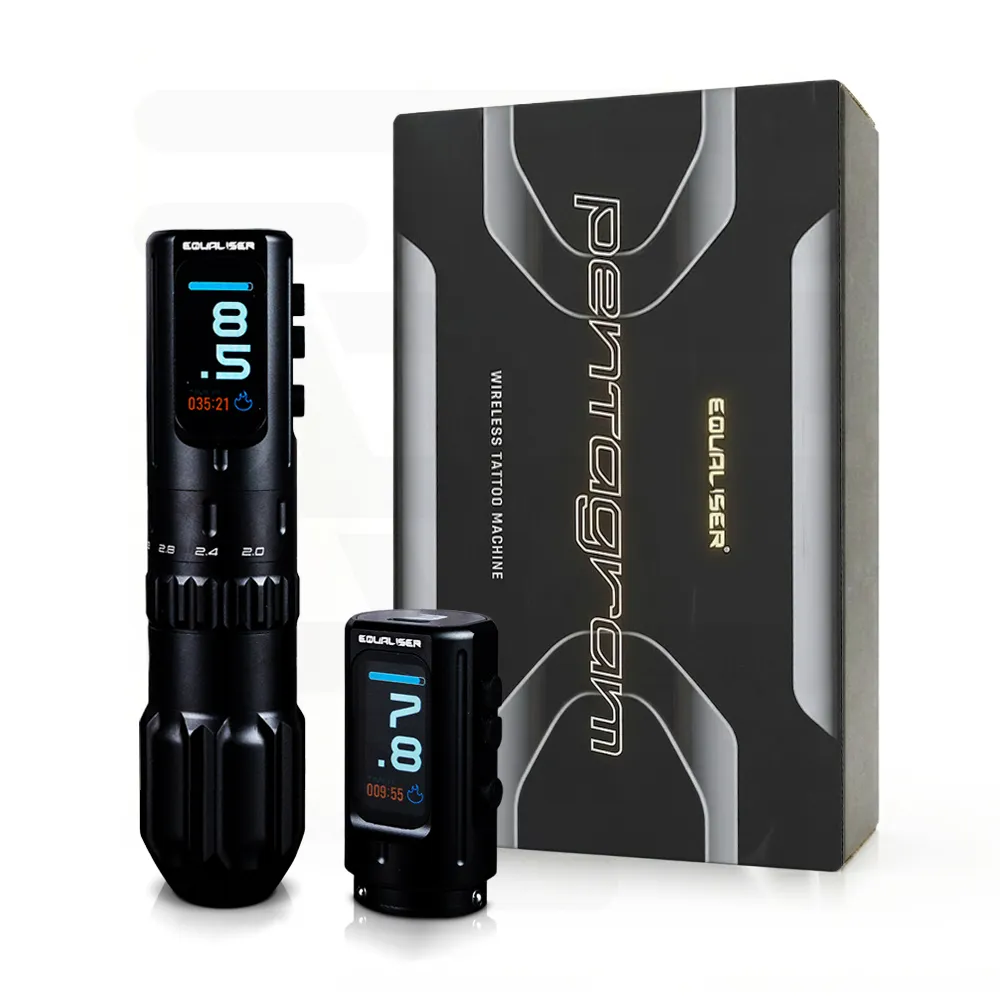
Kwadron - Equaliser Pentagram
Kwadron publishes a 2.0–4.2 mm adjustable stroke on its wireless pen.
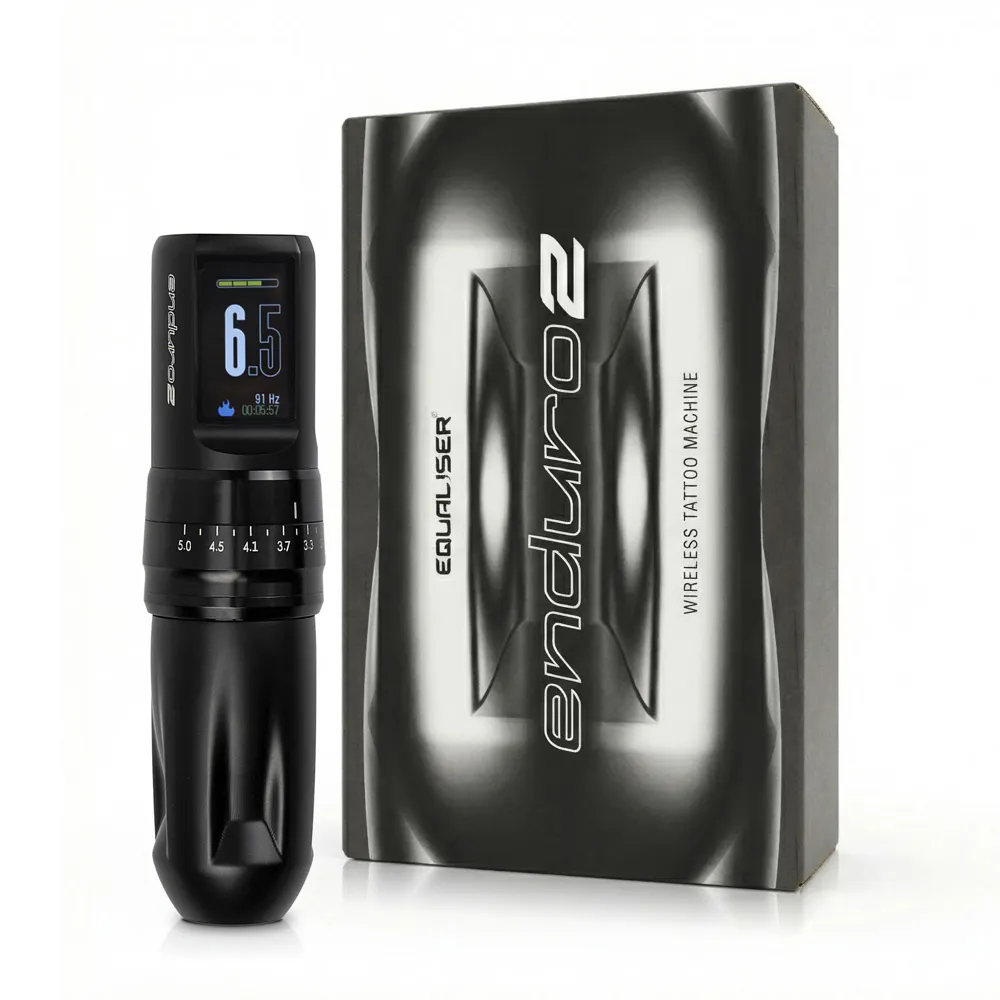 DIAL ADJUSTMENT / MODULAR POWER
Kwadron - Equaliser Enduro2
Kwadron describes 2.5–5.0 mm dial adjustment and a wireless setup with an RCA adapter.
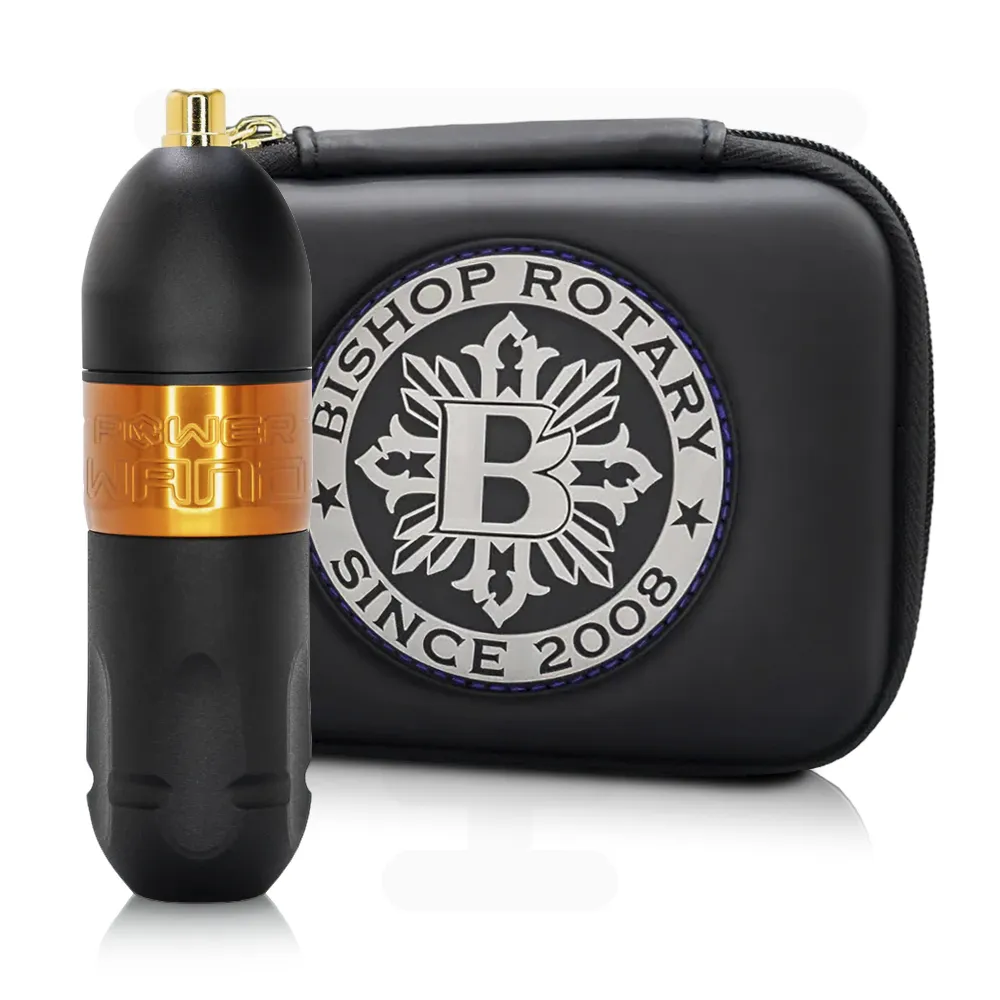 WIRED RCA / PACKER
Bishop - Power Wand Advanced RCA Machine - Packer
RCA pen-format Packer option for artists organizing a wired workstation.
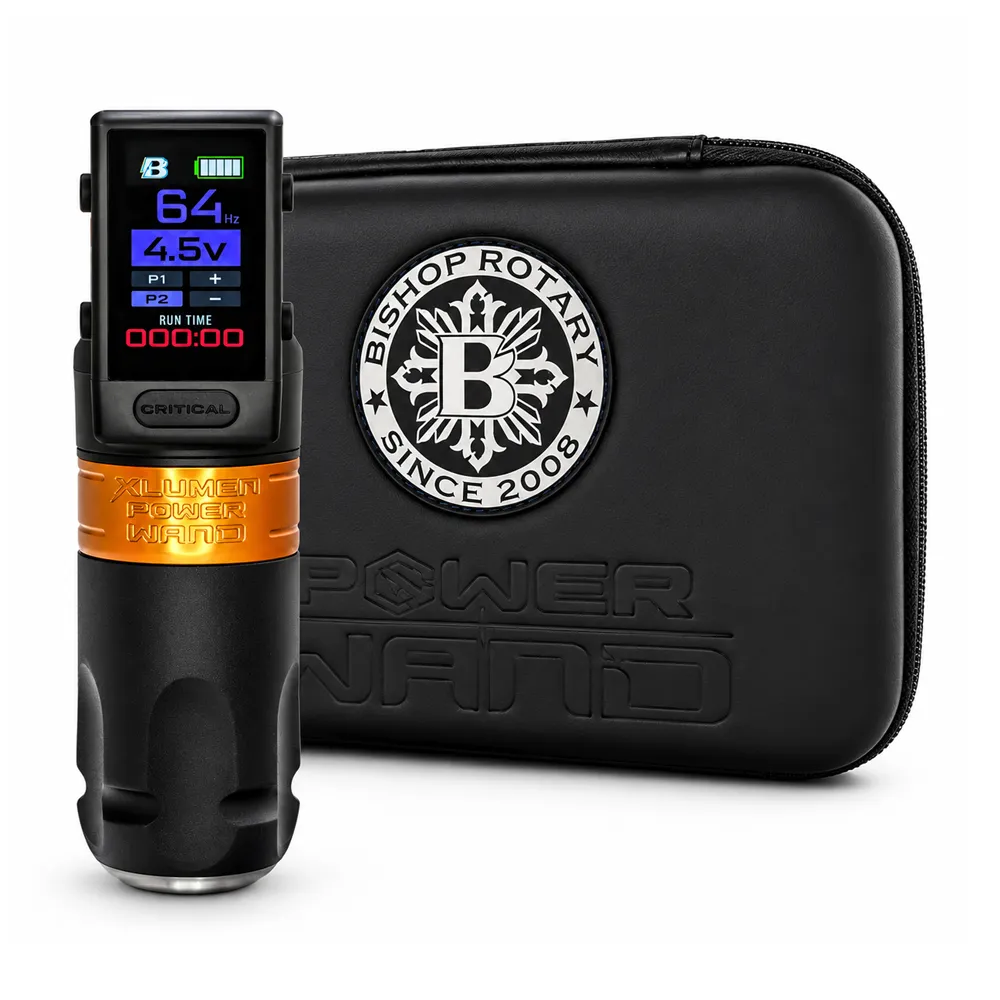 WIRELESS SET / PACKER
Bishop - Power Wand XLUMEN - Packer
Wireless Packer set for comparing Bishop's cable-free workstation format.
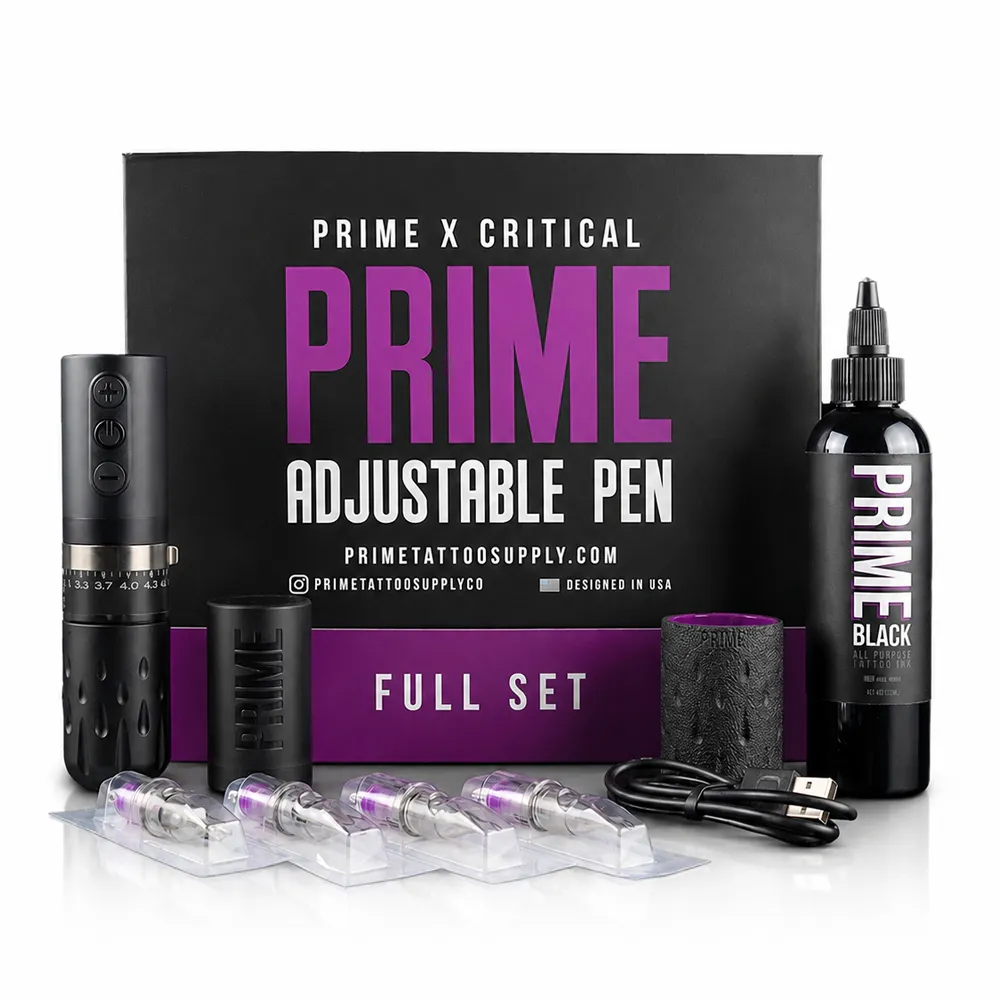 ADJUSTABLE PEN SET
PRIME X Critical - Adjustable Pen Full Set
Adjustable-pen product option for a studio comparing complete sets; inspect the exact model's controls and configuration.
BEFORE YOU ORDER
What should you check on a rotary or pen tattoo machine before buying?
Use the complete model as your comparison unit. The right machine is the one whose documented design fits your cartridges, power setup, and main tattoo jobs.
- Machine format: Pen-shaped body or frame with separate grip and tube?
- Needle compatibility: Which cartridges or traditional needle bars does this model support?
- Drive and give: What does the maker say about direct drive, cam changes, or eGive?
- Stroke selection: Fixed, interchangeable, or adjustable, and by what mechanism?
- Ergonomics: What are the grip dimensions and complete operating weight?
- Power: RCA, wireless, or a documented modular option?
- Work fit: Does the selection match your lining, shading, packing, fine-line, or portrait routine?
FAQ
Frequently asked questions about rotary, pen, direct-drive, and cam tattoo machines
Use each maker's definitions when comparing model descriptions.
What is the difference between a rotary and a pen tattoo machine?
Rotary names the motor-driven mechanism; pen names the body shape. The useful comparison is pen-style rotary versus frame-style rotary.
Is a pen tattoo machine a rotary machine?
Yes. A tattoo pen is a rotary machine in a pen-shaped housing, although stroke and power systems differ by model.
What does direct drive mean on a tattoo machine?
FK Irons defines it as a needle bar connected straight to the motor cam so the motor's torque acts directly on the needle bar.
What is the difference between direct drive and cam-driven rotary machines?
They describe different aspects. FK calls the cam a motion-conversion part; Bishop documents a direct-drive machine with interchangeable cams.
What is a swashplate or swash-drive tattoo machine?
It is a less common rotary drive term. Check the particular maker's manual for the motion, stroke adjustment, and give of that model.
What stroke length should a rotary or pen have for lining, shading, and packing?
Match the maker's stroke options to the job. Bishop describes its 3.5 mm cam for black-and-grey shading and its 4.2 mm cam especially for solid color packing.
What does adjustable stroke mean and how does it work?
It means changing stroke on a model designed for it. FK One Adjust uses a paddle and slider; Kwadron Enduro2 uses a dial.
What is give on a rotary, and is a coil softer?
FK defines give as response to needle resistance. Coils have spring-related give; some rotaries use electronic control such as FK's eGive.
Are wireless tattoo pen machines as powerful as wired RCA machines?
Power and response depend on the specific model, not cable presence alone. Peak offers the Solice Pro 2 in RCA or wireless configurations for comparison.
Why do some tattoo machines show Hertz instead of volts?
FK says the same voltage can produce different Hertz readings on different machines. Hertz provides a way to examine actual operating frequency.
Can a traditional rotary use cartridges and needle bars?
Some can. Bishop specifically says its direct-drive Microangelo works with traditional needles and cartridges; verify compatibility for any other frame model.
RESEARCH
Sources Consulted
Manufacturer education supports the mechanism explanations; manufacturer product information supports the attributed model specifications and adjustment methods.
- FK Irons: Coil vs Rotary Tattoo Machines
- FK Irons: Tattoo Machine Glossary
- FK Irons: What Is Give in a Tattoo Machine?
- FK Irons: Hertz vs Voltage
- Kwadron: Equaliser Pentagram
- Kwadron: Equaliser Enduro2
- FK Irons: FK One Adjust
- FK Irons: Flux Max Wireless Tattoo Machine
- FK Irons: Spektra Xion
- Peak: Solice Pro 2
- Bishop Tattoo Supply: Microangelo Rotary
- Bishop Tattoo Supply: Cam and Bearing