Powered by Comercia.io
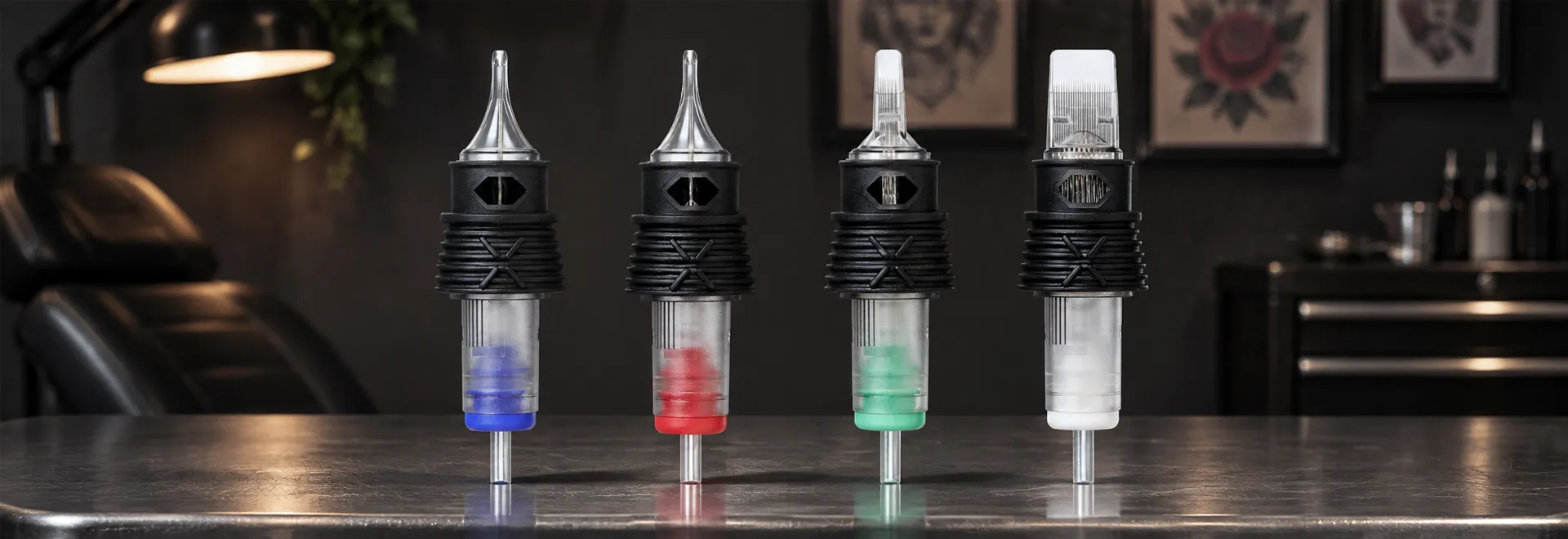
Understand round liners (RL), round shaders (RS), magnums (M1/MG), and curved mags (CM/SEM) before choosing your needle count, diameter, and brand.
Shop Tattoo NeedlesCompare 3 Brands
QUICK ANSWER
WHICH TATTOO CARTRIDGE SHOULD YOU BUY?
Choose round liners for outlines and lettering, round shaders for small-area fills and shading, straight magnums for broad saturation, and curved mags for softer gradients and transitions. Start with a needle count that fits the detail or area, then select diameter—commonly #08/0.25 mm, #10/0.30 mm, or #12/0.35 mm—to fine-tune the feel and intended application. Between Kwadron, Bishop Da Vinci V2, and Nexus, compare the exact grouping, taper, machine fit, membrane response, and consistency rather than assuming one brand is best for every technique.
01 / READ THE LABEL
WHAT THE CARTRIDGE CODE ACTUALLY MEANS
A tattoo cartridge combines needles in a specific arrangement inside a replaceable housing. The relevant specifications are needle diameter (gauge), count, configuration, and taper. Each changes the way a grouping interacts with the skin and delivers pigment.
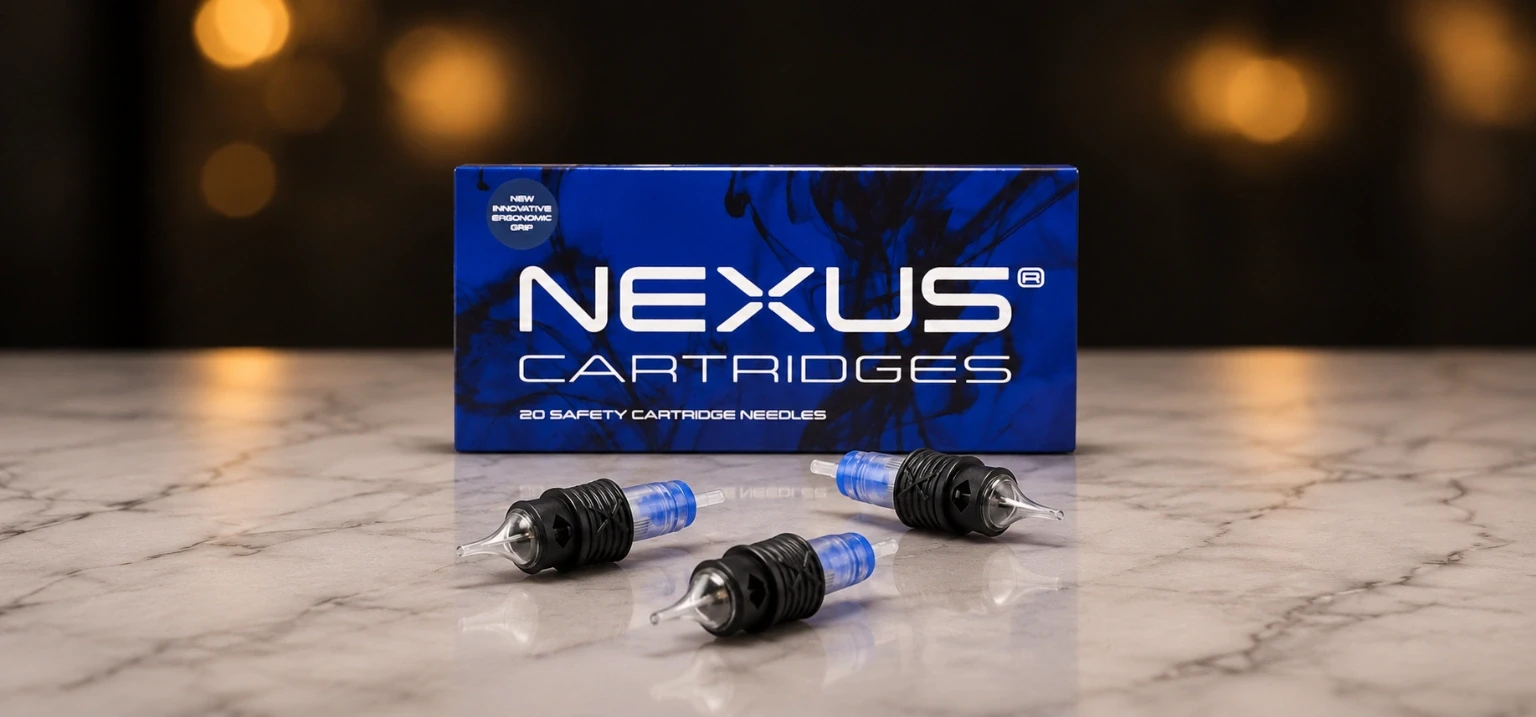
12 = #12 gauge, generally 0.35 mm per needle; 07 = seven individual pins; RL = round liner. Kwadron may write a similar code as 35/7RLLT, where 35 means 0.35 mm and LT means long taper.
Codes vary by brand, and a 7RL from two manufacturers will not necessarily produce an identical line. Group tightness, taper, tip geometry, membrane resistance, machine settings, artist technique, and the actual needle arrangement all influence the result. Read the full variant label, not just the number.
02 / CHOOSE THE SHAPE
LINERS, ROUND SHADERS, MAGNUMS & CURVED MAGS
ROUND LINERS
Needles grouped tightly toward a compact point. Designed for focused line work: outlines, script, geometry, line accents, and selected dotwork applications.
Choose when: you need a controlled, defined mark rather than a broad filled area. Smaller groupings can support fine detail; larger groupings help create bolder lines.
Trade-off: small liners can be less forgiving of inconsistent depth, stretch, or speed.
Kwadron Essential Pack LinerROUND SHADERS
Round groupings arranged less tightly than liners, spreading pigment over a slightly broader circular footprint.
Choose when: shading or filling compact areas, working around tight curves, building texture, or transitioning between an outline and a larger shaded field.
Trade-off: RS groupings are less efficient than mags for broad, uninterrupted areas.
Shop Kwadron Round ShadersSTRAIGHT MAGNUMS
Two staggered rows form a wider working edge. An excellent option for filling and packing relatively open spaces with black, color, or broad shading. Bishop Da Vinci V2 uses M1; Kwadron and Nexus use MG.
Choose when: the design calls for efficient saturation across larger shapes and straight-edged working passes.
Trade-off: the outer corners demand careful angling and control near contours.
Shop Kwadron MagnumsCURVED MAGNUMS
A staggered magnum grouping whose needle tips form a gentle arc. Also called soft-edge magnums, round mags, or curved mags. Bishop Da Vinci V2 and Nexus use CM; Kwadron uses SEM.
Choose when: building black-and-gray gradients, portrait shading, softer edge transitions, or blending around organic contours.
Trade-off: a curved mag is not automatically more efficient at making a crisp, square-edged fill.
Shop Kwadron Curved Mags03 / PICK THE COVERAGE
HOW MANY NEEDLES SHOULD BE IN THE GROUPING?
The count is the number of individual needles—not a fixed measurement of the tattooed line. A 3RL, 5RL, and 9RL differ in grouping size, but actual marks depend on how the needles are bundled and how they are used.
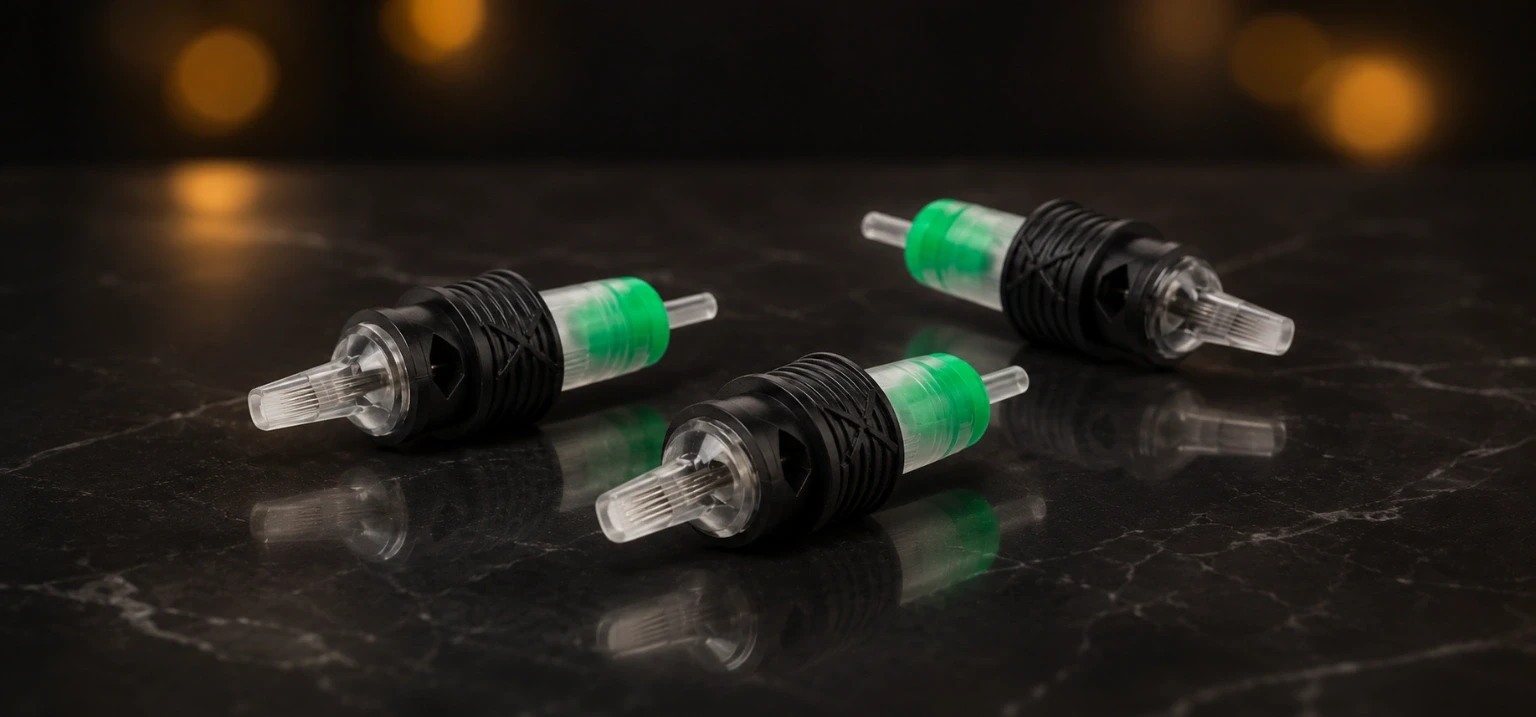
- 1–3 RL: narrow detail, very fine strokes, delicate script, and precision-oriented techniques; require practiced control.
- 5–7 RL: versatile lettering, contour work, and medium lines; often easier to incorporate into an everyday lining kit.
- 9 RL and larger: bolder contours where a wider line is intended. Check whether a tight, standard, or specialty grouping is specified.
- 3–9 RS: practical examples for smaller fills, spot shading, and detail transitions; availability and intended application vary.
- 7–11 mags: useful starting widths for smaller-to-medium shading and packing areas.
- 13–17+ mags: more coverage in appropriately sized areas, but potentially awkward in tight corners. Extra-wide specialty mags suit very large fields.
The decision rule: use a grouping large enough to cover the space efficiently but small enough to remain inside the intended boundaries. More pins do not automatically mean deeper work, faster healing, or more effective saturation.
04 / FINE-TUNE THE FEEL
NEEDLE DIAMETER, GAUGE & TAPER EXPLAINED
| Common gauge | Diameter per pin | Typical buying consideration |
|---|---|---|
| #08 / 25 | 0.25 mm | Fine detail and controlled soft shading; individual pins are thinner. |
| #10 / 30 | 0.30 mm | Versatile middle ground for lining, shading, and blending. |
| #12 / 35 | 0.35 mm | Common choice for more assertive lining and color packing. |
| #14 / 40 | 0.40 mm | Thicker individual pins; specialty applications and brand-dependent availability. |
Important: #12 means 0.35 mm per needle; it does not mean there are 12 needles. A 1009CMLT, for example, typically indicates #10/0.30 mm, nine needles, curved magnum configuration, and long taper.
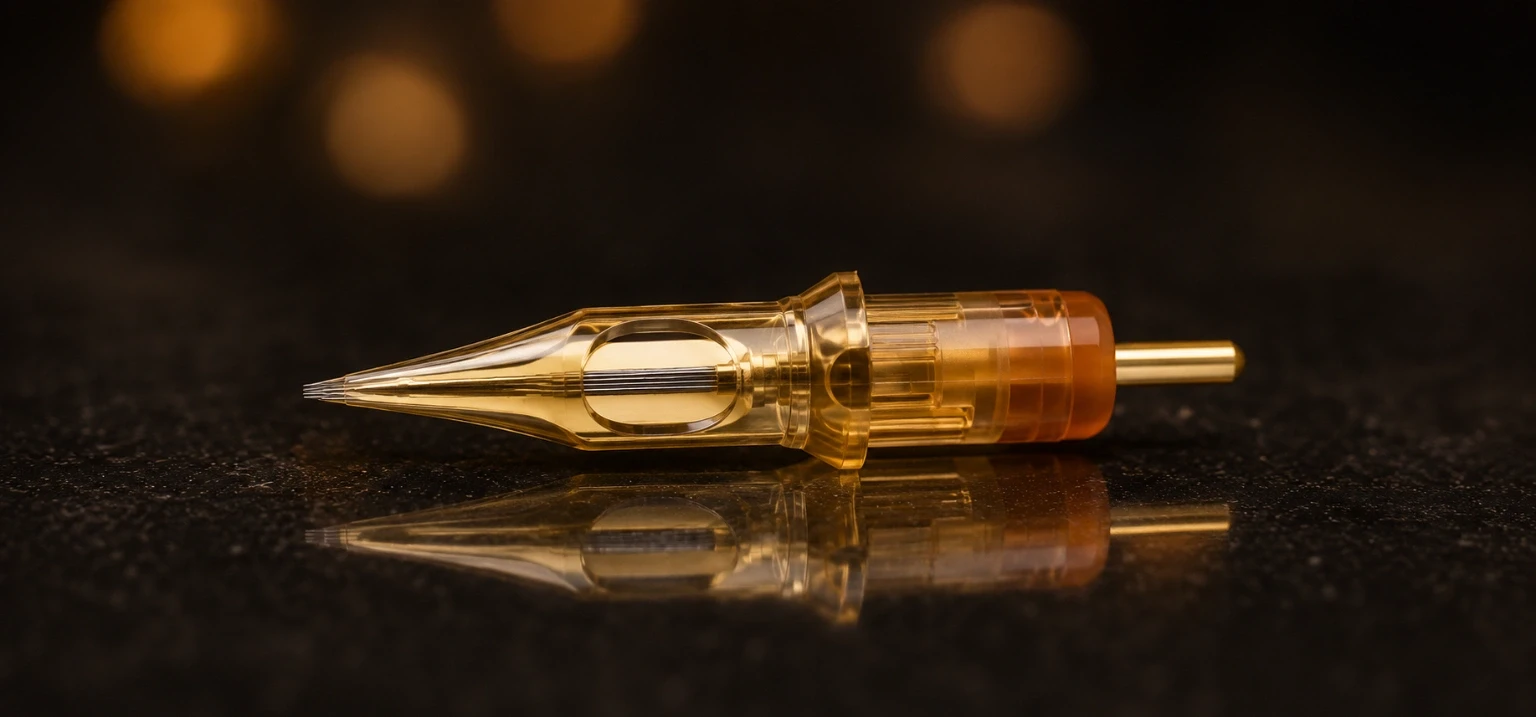
Taper is separate from gauge. Taper describes the length and shape of the needle's sharpened point. Shorter and longer tapers can change pigment release, visual softness, and how a grouping feels, but marketing terms such as LT, MT, and extra-long taper do not always use identical measurements across brands. Check the actual product specification.
Gauge = diameter of each pin. Count = number of pins. Taper = geometry of the sharpened point. They are independent buying decisions.
05 / SIDE-BY-SIDE
TATTOO CARTRIDGE COMPARISON CHART
| Grouping | Primary job | Best-fit area | Main advantage | Watch for |
|---|---|---|---|---|
| RL | Outlines, lettering | Lines & details | Focused point of contact | Technique sensitivity |
| RS | Spot fills, compact shading | Small curved areas | Round, controllable footprint | Slow for large fields |
| M1 / MG | Color/black packing | Broad open areas | Wide, efficient coverage | Harder outer edges |
| CM / SEM | Gradients, soft shading | Organic transitions | Softer outer contact | Less square coverage |
These are starting points, not rigid technique rules. Skilled artists can produce different effects using changes in motion, angle, needle exposure, hand speed, pigment, and machine settings.
06 / BRAND COMPARISON
KWADRON VS BISHOP DA VINCI V2 VS NEXUS
All three brands offer the four configurations covered in this guide. Their most useful differences are the manufacturer-documented engineering choices and available variant families. No manufacturer specification proves one brand is universally sharper, less traumatic, or better for every artist.
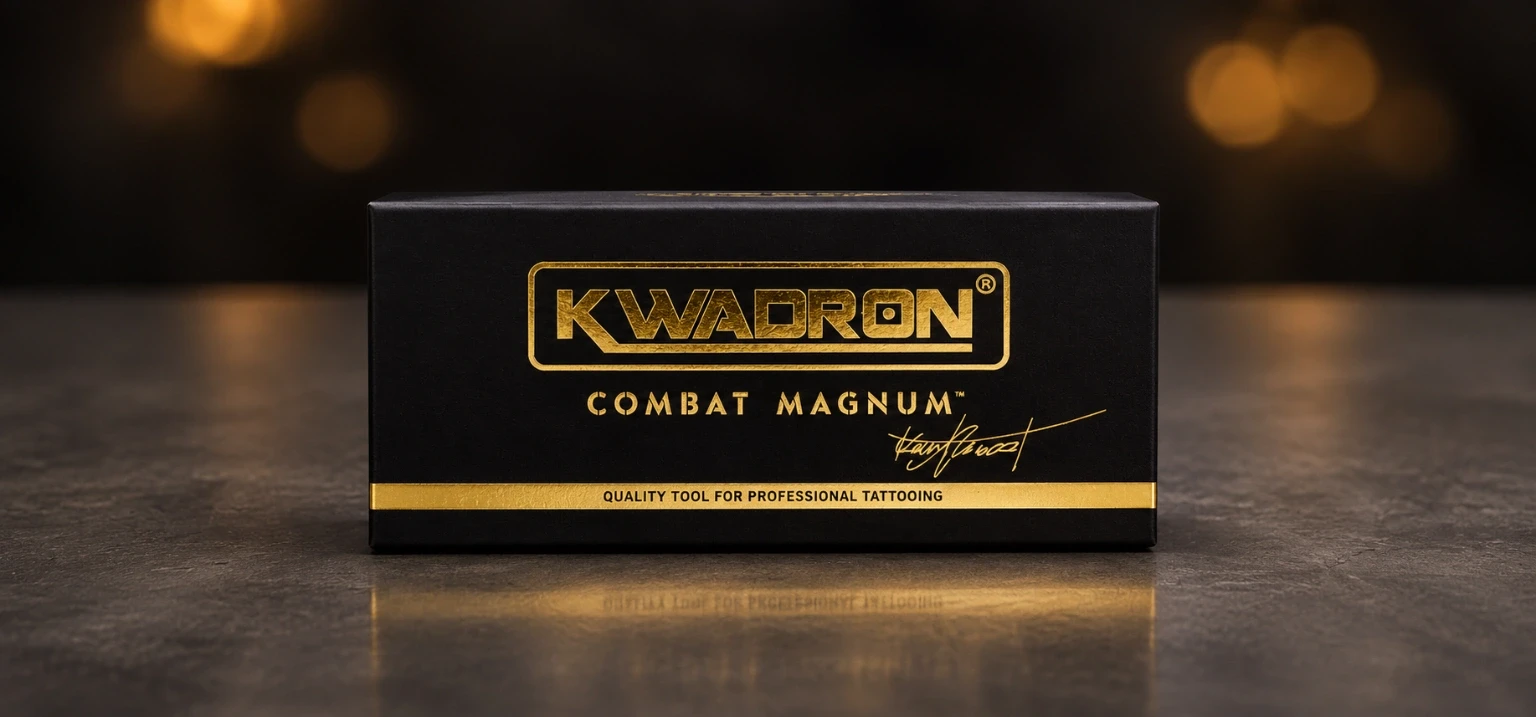
KWADRON: WIDE CONFIGURATION CHOICE & SPECIALTY MAGNUMS
Kwadron emphasizes needle stabilization, housing geometry, and a broad lineup of gauge and grouping variants. Its standard RS, MG, and SEM lines let artists stay within one system while switching from focused shading to broad fills and soft transitions. The Combat Magnum cartridges available at SVT Shop are soft-edge configurations (SEM/CSEM) with 39, 49, 73, and 85 needles: 30/39SEMLT, 30/49SEMLT, 35/73CSEMLT, and 30/85CSEMLT. These extra-wide groupings are developed for large black or color fields.
Best reason to shortlist: you want familiar standard configurations and a specialized large-area mag option. Check first: the exact code, cartridge length/feel, and how your machine handles the grouping.
Essential Pack LinerRound ShadersMagnumsCurved MagsCombat MagnumAll Kwadron Cartridges
BISHOP DA VINCI V2: DOCUMENTED MEMBRANE & INK-FLOW DESIGN
Bishop specifies a medium-tension membrane and side vent hole intended to support ink flow. It also identifies 304 stainless steel, individually sealed EO-sterilized cartridges, and a wide range of diameter choices, with availability varying by configuration. Bishop states that Da Vinci V2 cartridges are designed for twist-in-style cartridge machines and grips; individual fit should still be checked.
Best reason to shortlist: you want to test a documented membrane response and ink-flow design across RL, RS, straight mag (M1), and curved mag (CM) options. Check first: the exact taper, gauge and packaging lot, especially if replacing a familiar version.
NEXUS: CONSISTENCY FOCUS & SPECIALIZED VARIANTS
Nexus describes artist-led development, ISO 9001-certified manufacturing, stabilizers, and triple safety membranes. Its wider manufacturer lineup highlights options such as extra-long taper, hollow liners, and textured curved magnums. SVT Shop's Nexus Liners listing includes extra-long taper RLXL variants, such as 0803RLXL; other specialty configurations should be checked against their specific listings.
Best reason to shortlist: you want to explore a consistency-focused cartridge family and potentially different taper/grouping approaches. Check first: which variants are actually selectable on the specific product page and whether your machine/grip accepts the cartridge.
Nexus LinersNexus Round ShadersNexus MagnumsNexus Curved MagsAll Nexus Cartridges
| Question | Kwadron | Bishop Da Vinci V2 | Nexus |
|---|---|---|---|
| Manufacturer emphasis | Needle stabilization & range | Medium membrane & side vent | Manufacturing consistency & triple membrane |
| Specialty interest | Combat large-format soft-edge mags (SEM/CSEM) | Multiple gauge and taper choices | RLXL liners at SVT Shop; hollow / textured options in wider catalog |
| Best comparison test | Grouping feel & tip control | Membrane response & ink delivery | Variant choice & repeatability |
| Important caveat | Specific model may differ | Lot and gauge matter | Not every specialty variant is listed |
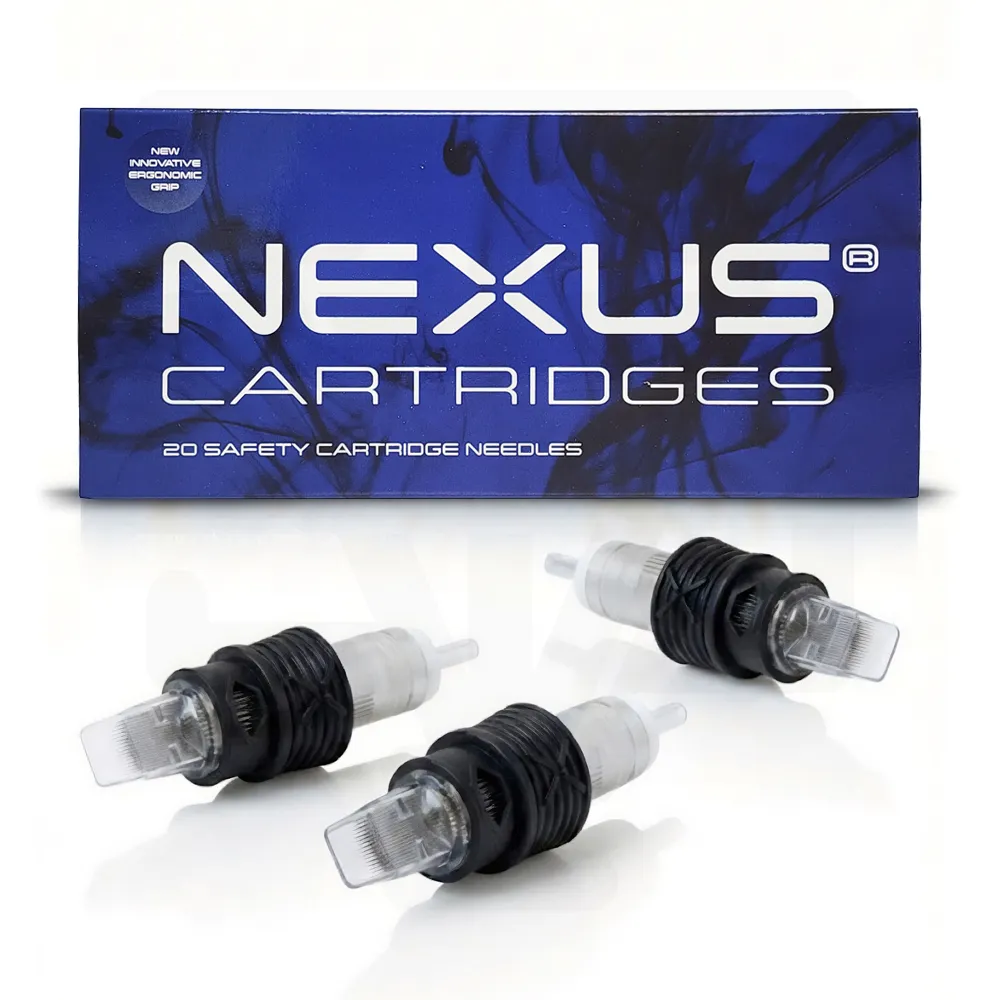
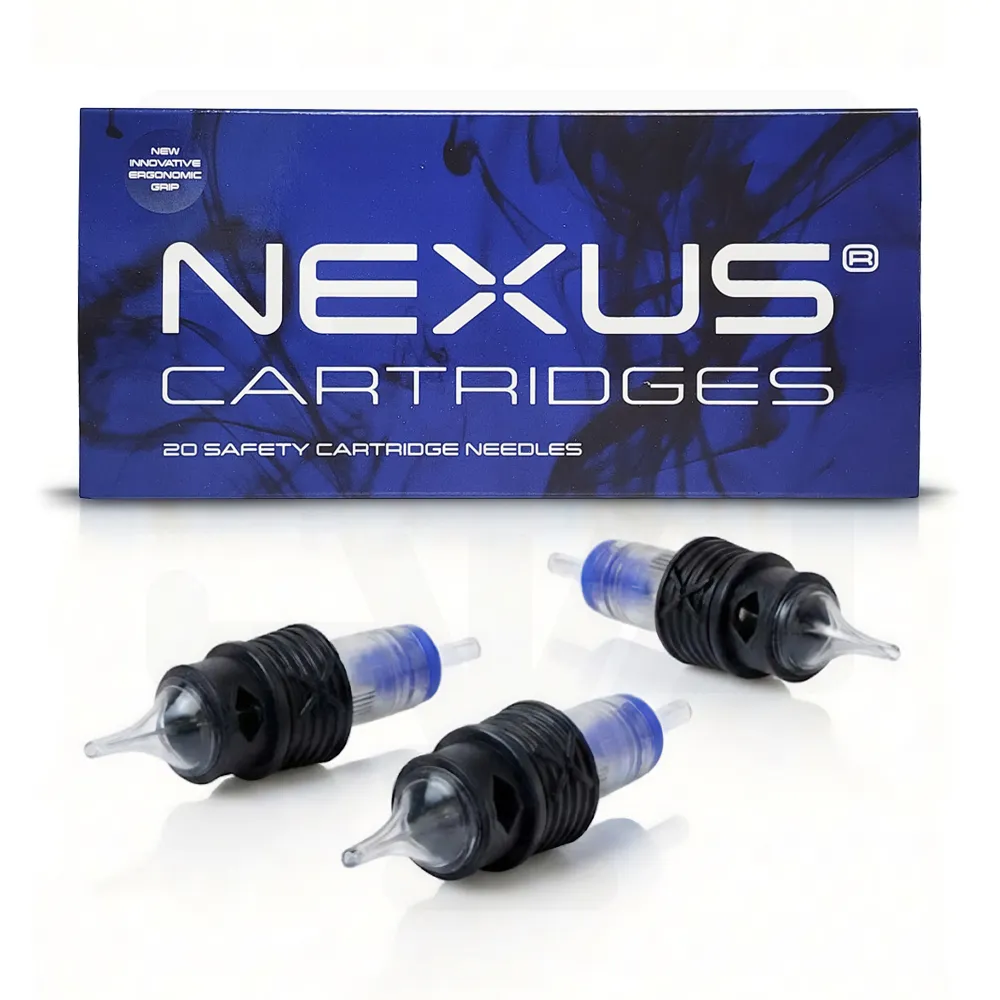 Nexus
Nexus Liners
Round liner groupings for outlines and line work.
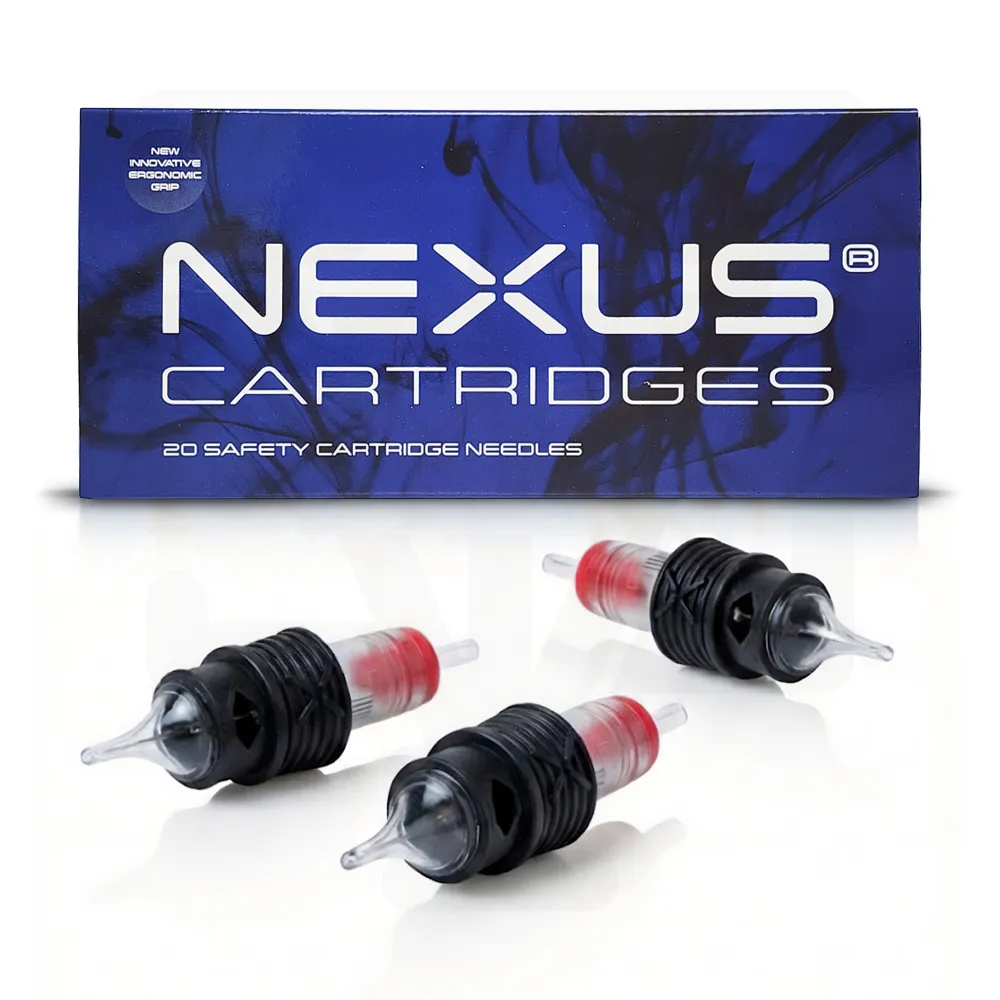 Nexus
Nexus Round Shaders
Round shader groupings for small shading areas and fills.
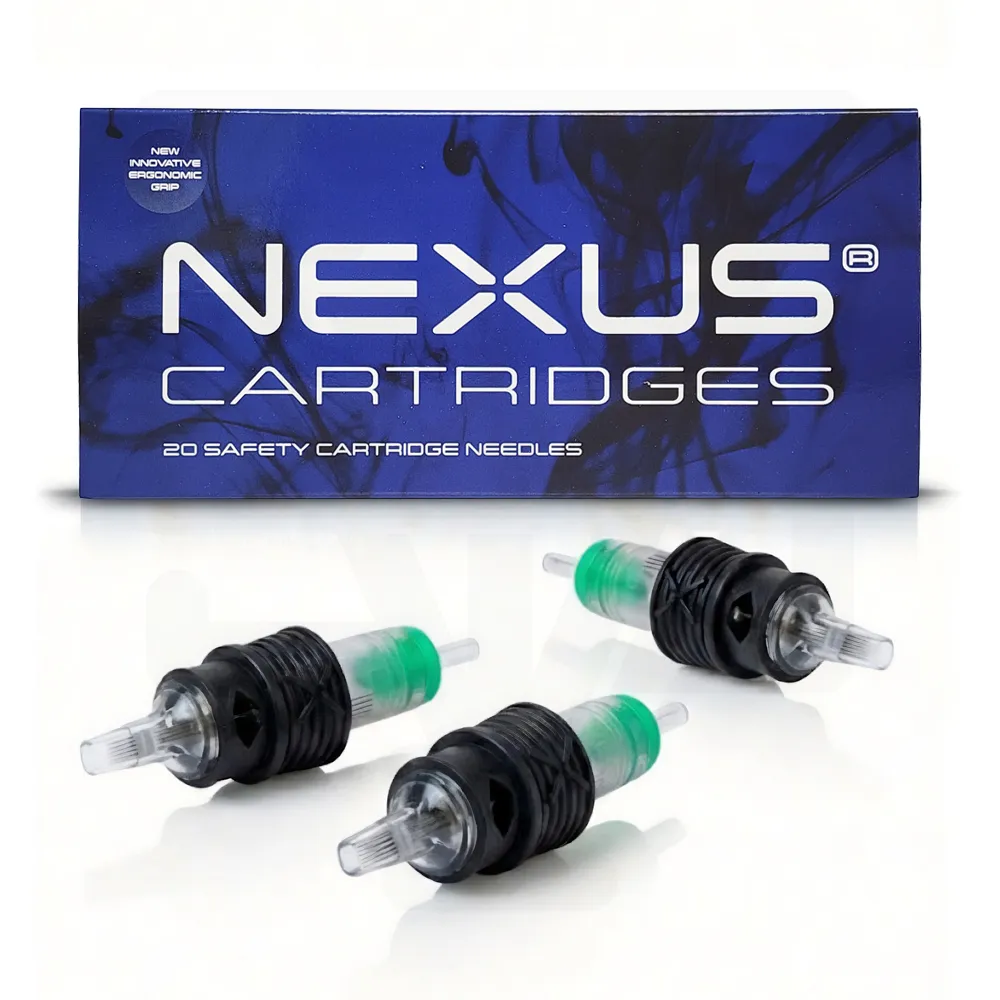 Nexus
Nexus Magnums
Flat magnum groupings for wider shading and color packing.
 Nexus
Nexus Curved Mags
Curved magnum groupings for soft transitions and smooth blends.
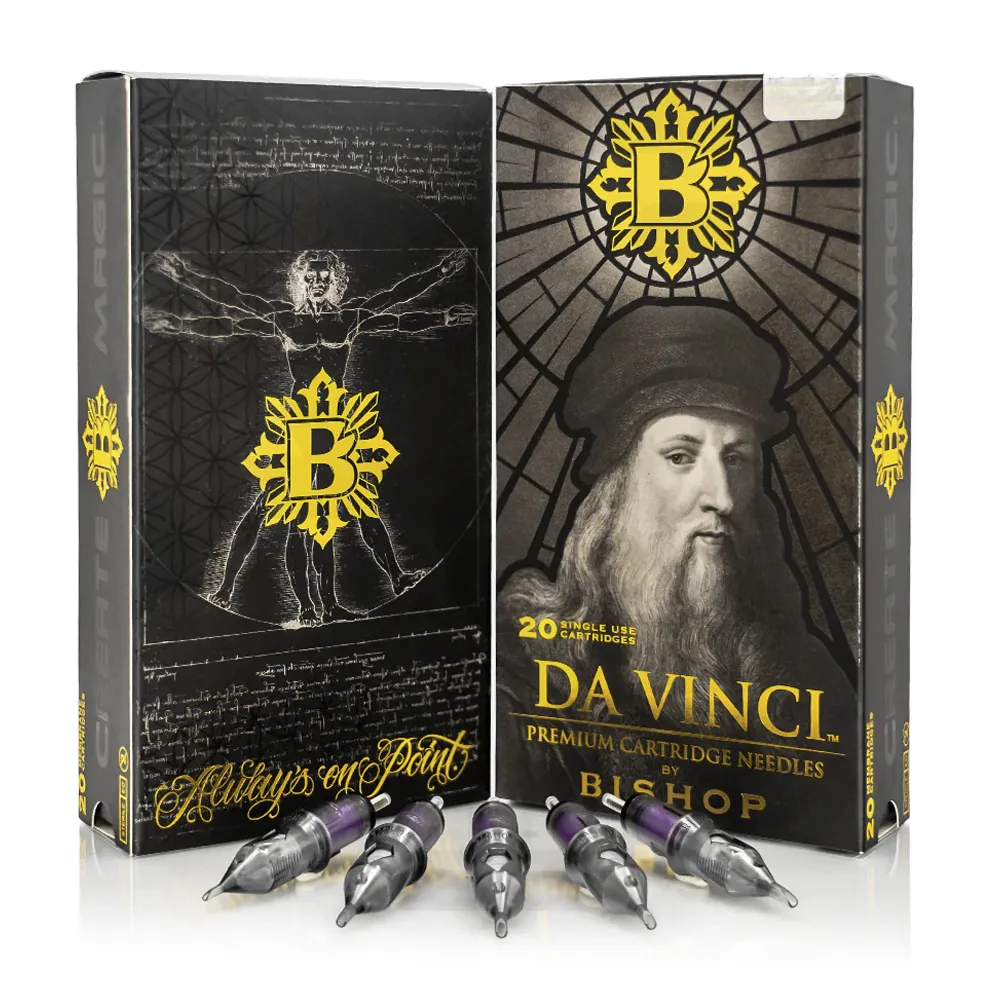 Bishop Da Vinci V2
Da Vinci V2 Liners
Round liner groupings for outlines and line work.
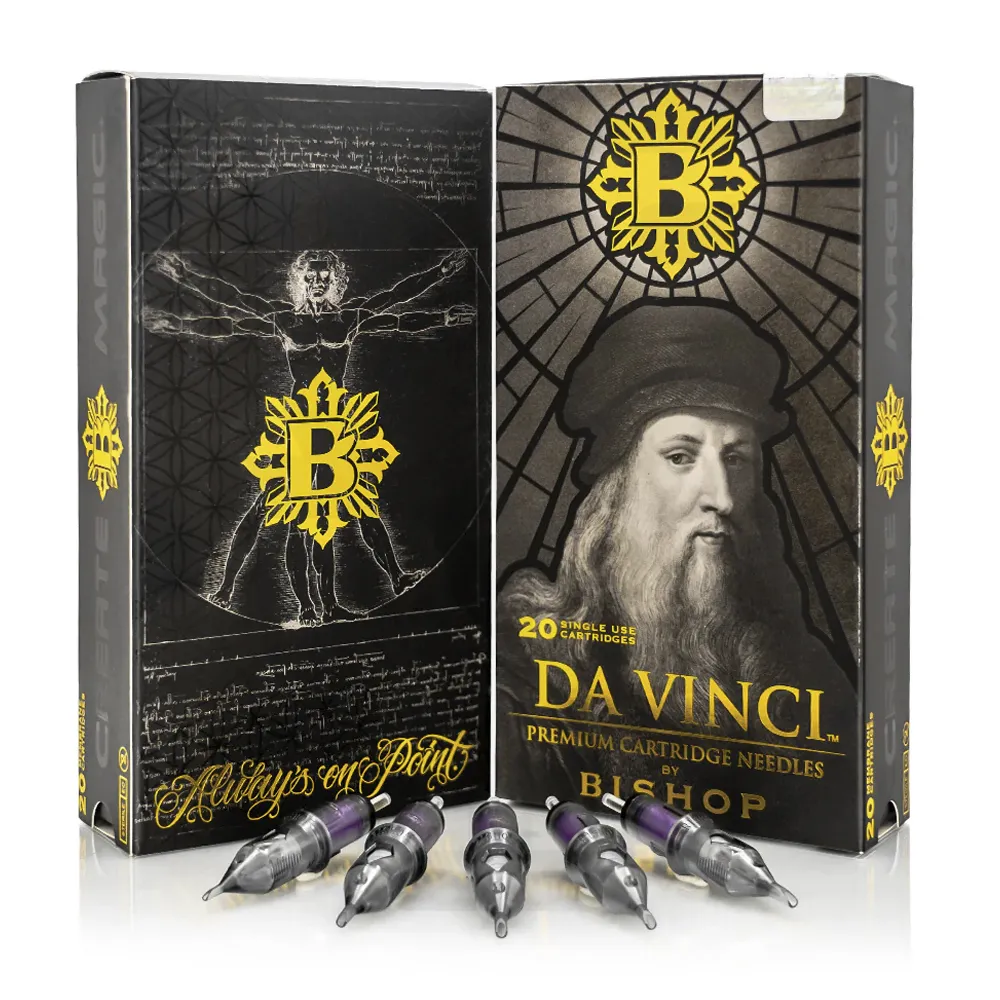 Bishop Da Vinci V2
Da Vinci V2 Round Shaders
Round shader groupings for small shading areas and fills.
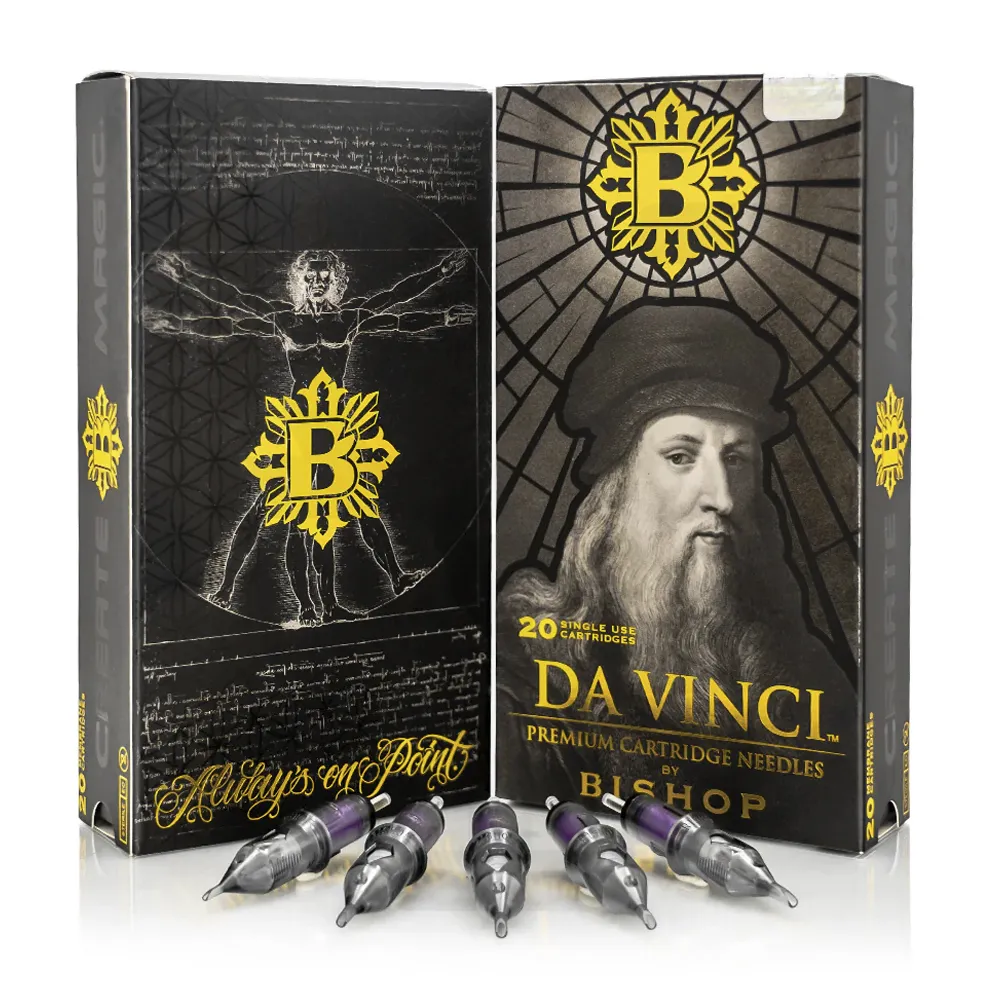 Bishop Da Vinci V2
Da Vinci V2 Magnums
Flat magnum groupings for wider shading and color packing.
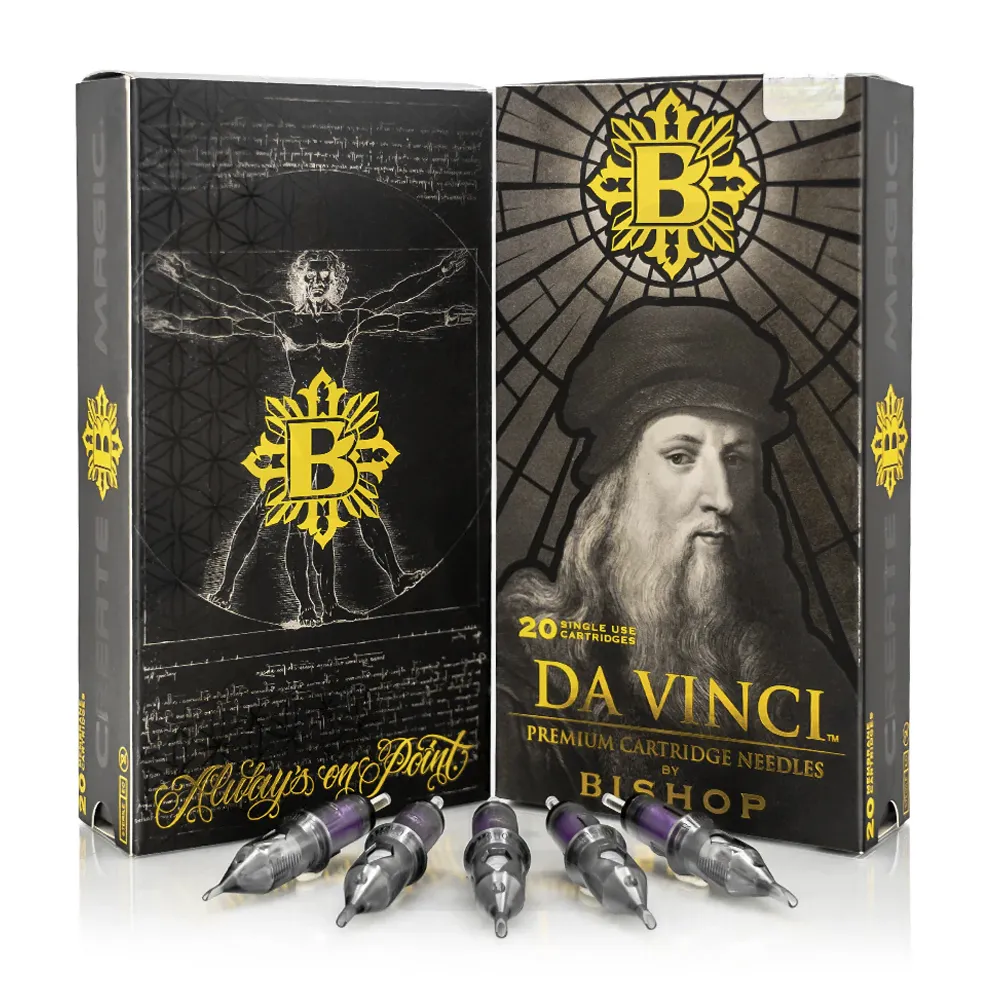 Bishop Da Vinci V2
Da Vinci V2 Curved Mags
Curved magnum groupings for soft transitions and smooth blends.
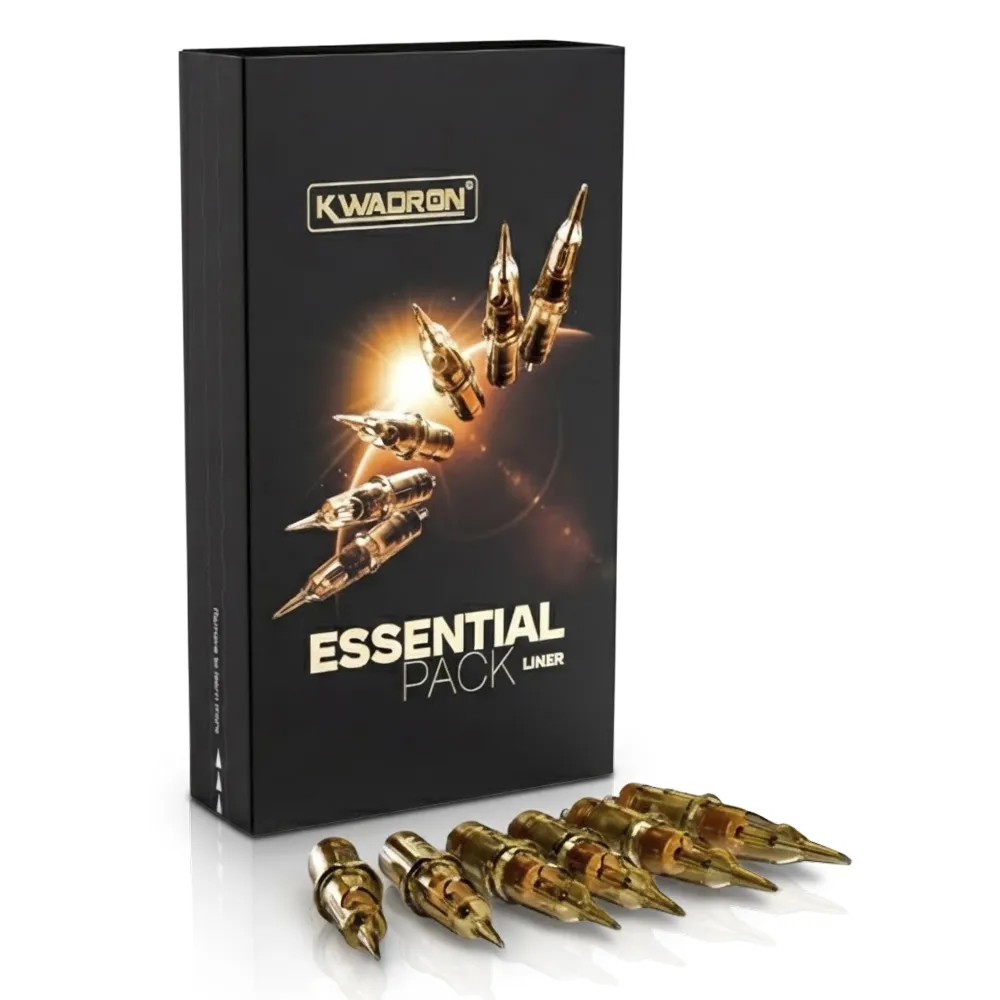 Kwadron
 Essential Pack Liner
Kwadron liner cartridges for outlines and line work.
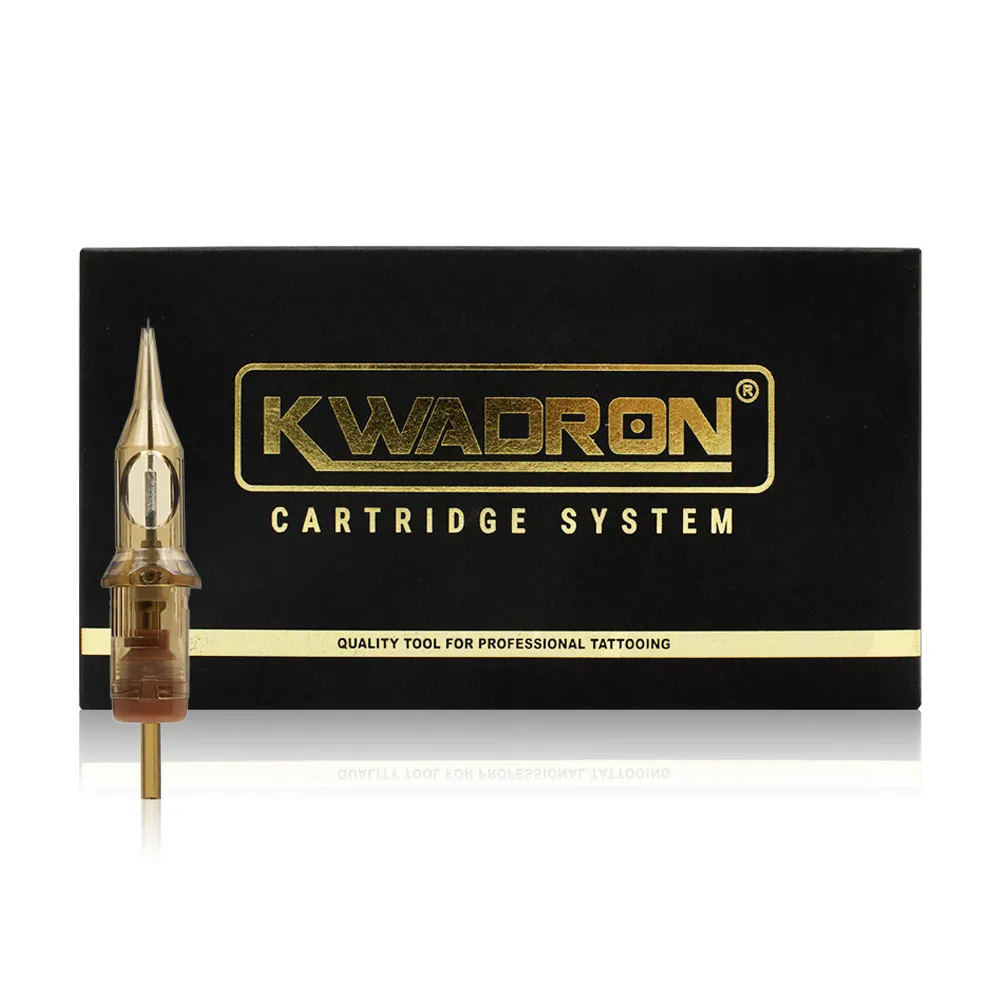 Kwadron
 Round Shaders
Round shader groupings for small shading areas and fills.
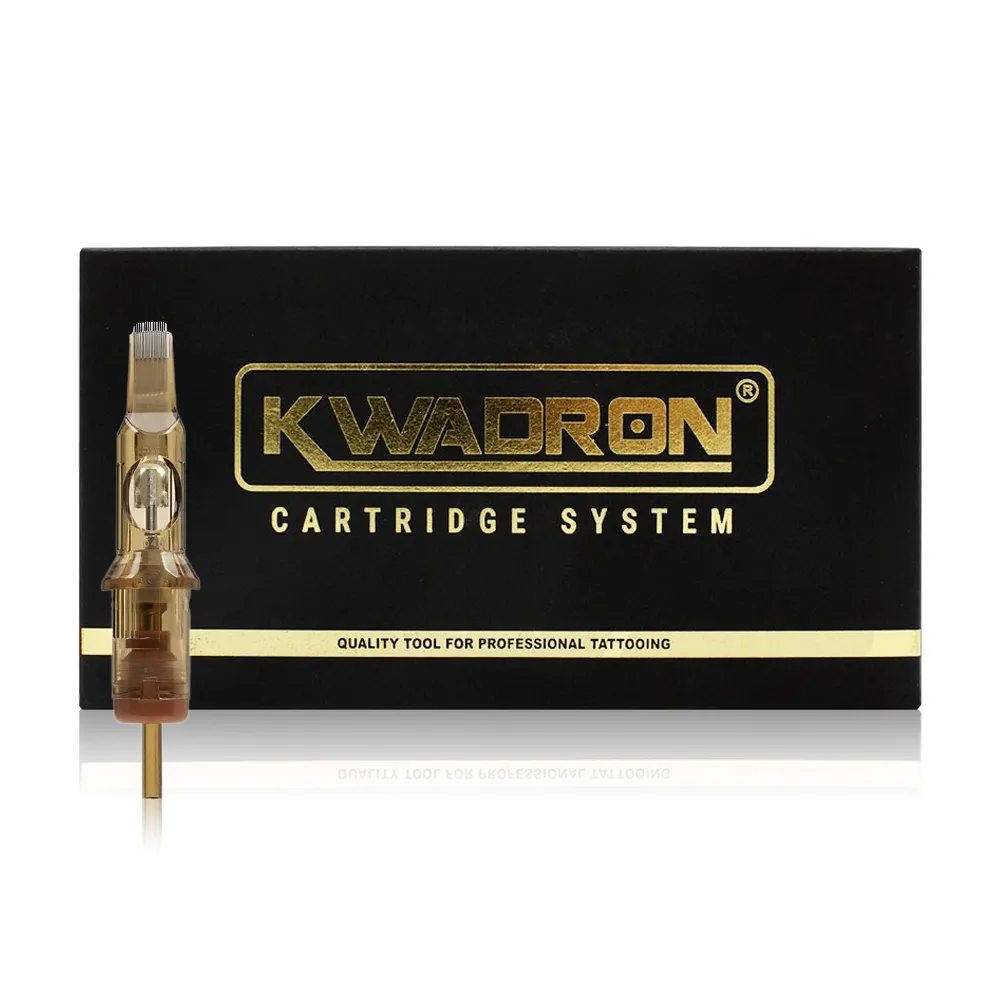 Kwadron
 Magnums
Flat magnum groupings for wider shading and color packing.
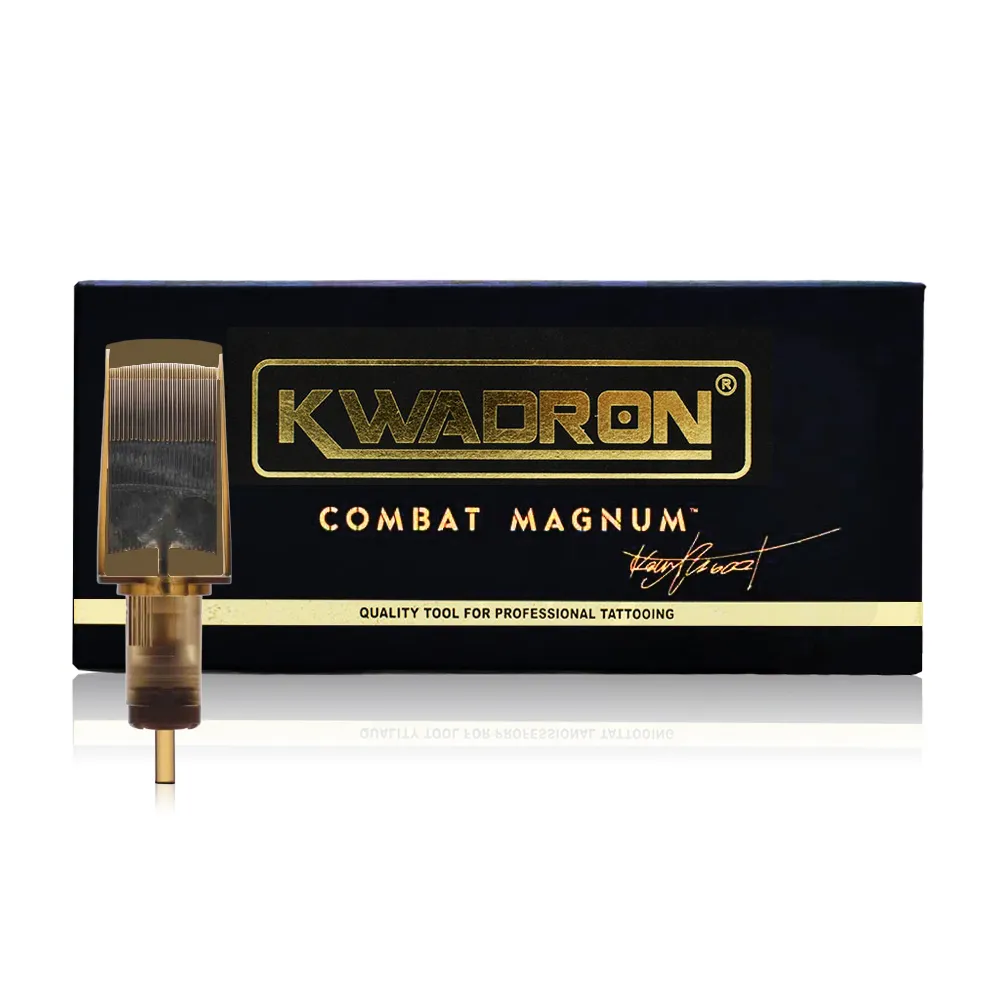 Kwadron
 Combat Magnum
Soft-edge magnums (SEM/CSEM) with 39 to 85 needles for large black or color fields.
07 / WORKFLOW
BUILD A CARTRIDGE SETUP AROUND THE TATTOO
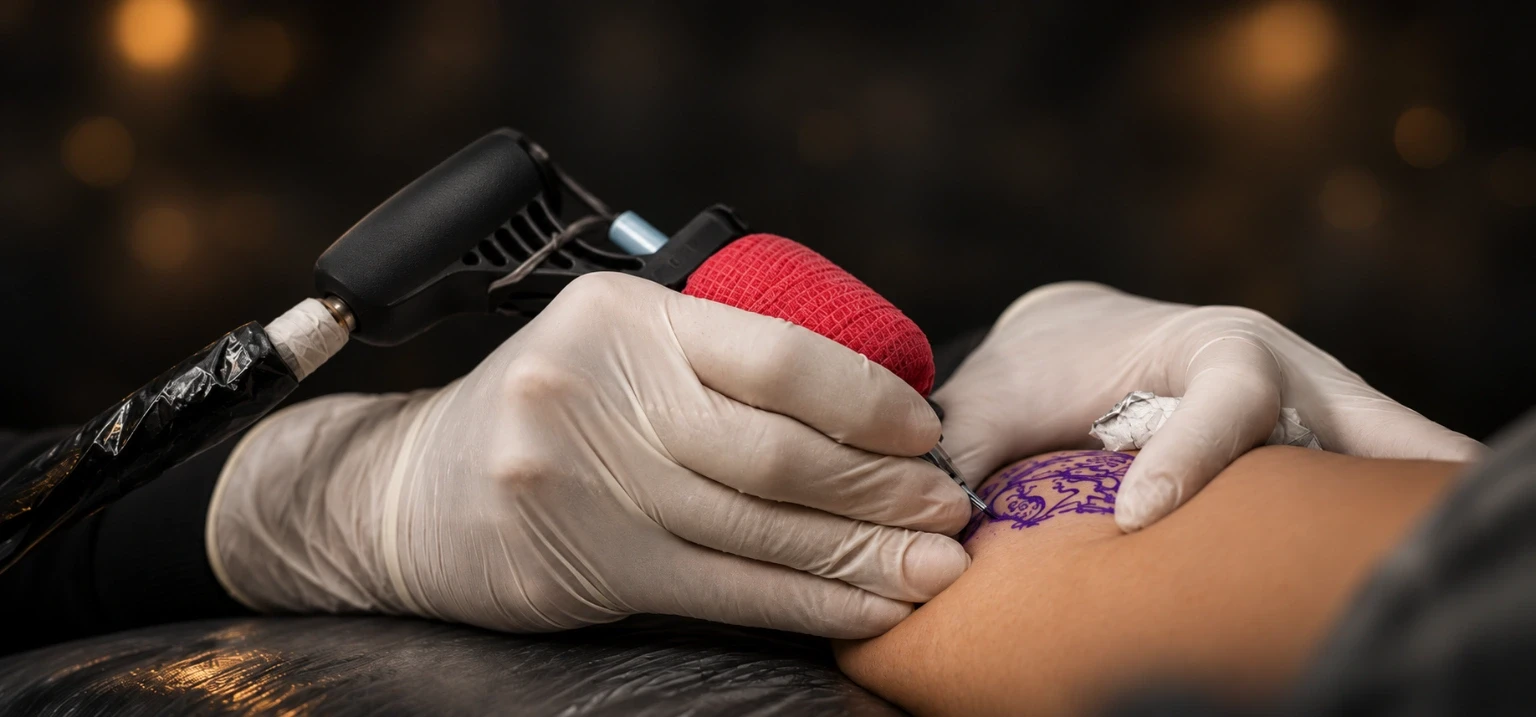
Begin by comparing 3RL and 5RL in the intended gauge, then verify whether the grouping is tight or standard. Don't assume the smallest gauge delivers the cleanest result automatically.
Compare 7RL, 9RL, or a larger liner as design scale requires. For larger filled areas, add a straight mag rather than forcing a liner to do all the packing.
Build around curved mags in at least two practical widths, then add a small RS for confined shadows and an RL for critical lines or details.
Select a straight mag sized to the fill; carry a smaller mag or RS for corners. For truly large fields, investigate Kwadron Combat Magnum without assuming extra width fits every design.
09 / BUY SMARTER
COMMON CARTRIDGE BUYING MISTAKES
- Buying by needle count alone. A 9RL and 9CM contain the same number of needles but make very different contact patterns.
- Mixing up gauge and count. The 12 in 1207RL identifies pin thickness, not a 12-needle grouping.
- Assuming every long taper is identical. Manufacturer conventions and actual geometries can differ.
- Using a broad mag in a tiny area. Size for the design, not just maximum coverage.
- Assuming every cartridge fits every pen. Verify cartridge/grip compatibility and manufacturer instructions.
- Changing brand, gauge, and shape simultaneously. That makes it difficult to identify why the feel changed.
- Ignoring the exact listing variant. A brand's catalog may include specialty formats not offered on the selected product page.
For routine studio practice, inspect individual sterile packaging and expiry/lot markings; follow machine and cartridge manufacturer instructions, appropriate barrier protocols, and single-use disposal requirements. A membrane is one part of infection control, not a substitute for correct hygiene.
10 / BEFORE CHECKOUT
TATTOO CARTRIDGE BUYING CHECKLIST
☐ I know whether I need RL, RS, M1/MG, or CM/SEM.
☐ My needle count fits the line width or area size.
☐ I checked gauge in millimeters, not just the number.
☐ I checked taper and any specialty grouping notation.
☐ I confirmed my machine/grip supports the cartridge system.
☐ I reviewed the exact brand/variant and package details.
☐ I have a smaller alternative for corners or detail work.
READY TO CHOOSE?
FIND THE RIGHT CARTRIDGE FOR YOUR NEXT SESSION
Explore Kwadron, Bishop Da Vinci V2, and Nexus configurations at SVT Shop. Based in El Paso, TX, with next-day delivery available in El Paso.
11 / BUYER QUESTIONS
FREQUENTLY ASKED QUESTIONS
Is a round liner the same as a round shader?
No. Both have round groupings, but RL needles are generally bundled more tightly for defined line work, while RS groupings spread contact for compact shading and filling.
What is the difference between magnum and curved magnum cartridges?
Both commonly use two staggered rows. Straight mags (M1 for Bishop, MG for Kwadron and Nexus) present a comparatively flat edge for broad packing; curved mags (CM for Bishop and Nexus, SEM for Kwadron) arc toward the edges for softer shading transitions.
Does 1207RL mean 12 needles or 7 needles?
Seven needles. The 12 is the conventional gauge code, generally 0.35 mm diameter per pin; 07 is the count; RL identifies a round liner.
Is #10 or #12 better for tattooing?
Neither is universally better. #10 is 0.30 mm and #12 is 0.35 mm. Choose based on grouping, intended result, skin response, and your established technique.
Which cartridge should I use for black-and-gray realism?
Curved mags (CM/SEM) are a frequent starting point for broad gradient work; RS groupings can complement them in compact shadows, with liners for selected details. Width and taper depend on the design.
Can I use round shaders for color packing?
Yes, particularly in smaller areas or tight shapes. Straight mags are generally more efficient for larger, open areas of solid color.
Are Kwadron cartridges better than Bishop Da Vinci V2?
There is no universal winner. Kwadron offers extensive groupings and Combat specialty mags, while Bishop documents a medium-tension membrane and side vent. Test comparable variants in your setup.
What makes Nexus cartridges different?
Nexus promotes consistent manufacturing, integrated stabilizers, and triple membranes, plus specialty versions in its wider catalog. SVT Shop carries extra-long taper RLXL liners, including 0803RLXL. Check the specific listing for other available options.
What is Kwadron Combat Magnum for?
It is a specialized wide soft-edge magnum family (SEM/CSEM) intended for very large fills and shading areas. SVT Shop offers 39-, 49-, 73-, and 85-needle configurations: 30/39SEMLT, 30/49SEMLT, 35/73CSEMLT, and 30/85CSEMLT. Ensure your design suits the selected width.
Do all cartridges work with all tattoo pen machines?
No universal compatibility should be assumed. Check the machine and grip specifications, cartridge fit, and manufacturer instructions before buying.
12 / RESEARCH REFERENCES
SOURCES CONSULTED
Manufacturer claims are attributed to their makers.