Powered by Comercia.io
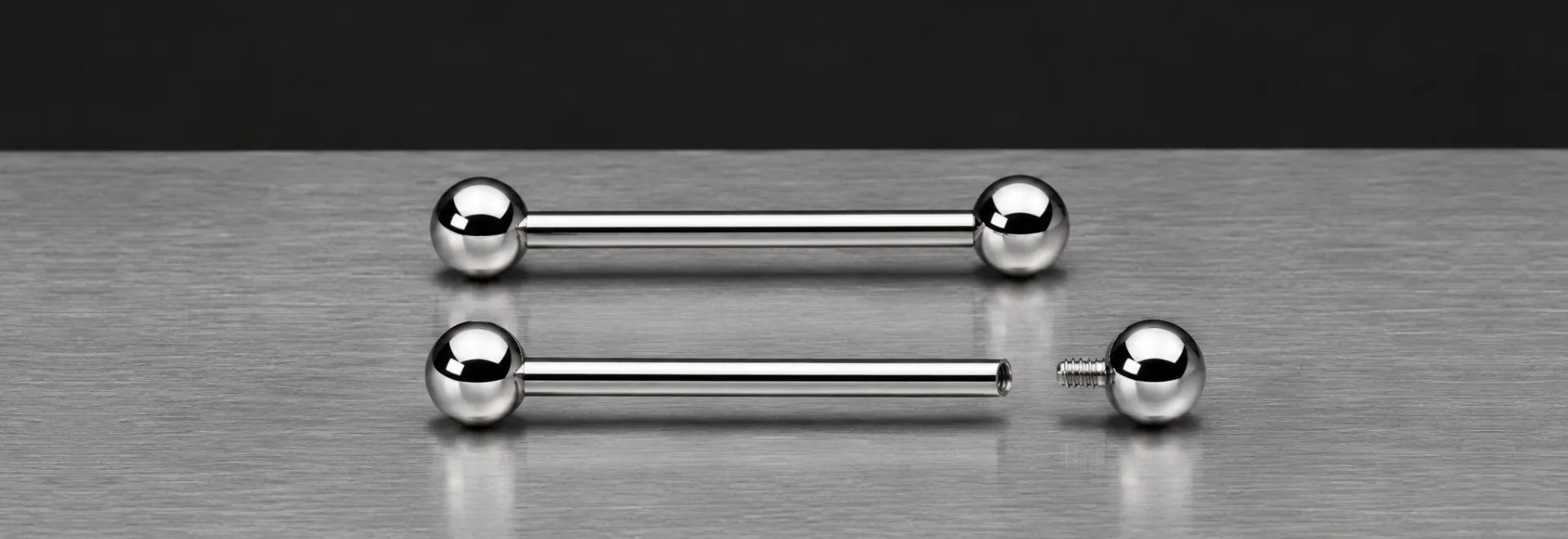
There is no universal nipple piercing gauge or barbell length: a qualified piercer chooses both according to the anatomy, placement and expected swelling. Initial jewelry needs extra room, and a piercer may later replace it with a shorter bar once swelling subsides. This guide explains nipple piercing jewelry sizes, 14G titanium straight barbells, 4 mm ball ends and healed-only styles so working piercers can order the right configuration instead of relying on a standard-size claim.
Explore Sterilized Nipple Barbells Explore Gold PVD Barbells
QUICK ANSWER
What gauge and length should a piercer choose for a nipple piercing?
The APP does not publish a universal nipple size. A qualified piercer selects gauge and length for anatomy, leaves room for initial swelling, and later assesses downsizing. Our 14G titanium sizes are catalog options, not default prescriptions.
GAUGE
14G (1.6 mm) is our stocked gauge; the piercer chooses tissue-appropriate thickness.
BAR LENGTH
Measured between the balls, excluding their diameters. Initial and later lengths can differ.
BALL SIZE
Our sterilized titanium straight bars use 4 mm ball ends.
ANATOMY BEFORE A SIZE CHART
What is the standard gauge and length for a nipple piercing?
There is no universal starter gauge or bar length. The APP says jewelry must fit the person's anatomy and placement. The piercer assesses the tissue rather than choosing a single standard size.
Our sterile titanium nipple bars are 14G (1.6 mm), in several lengths. Those are catalog specifications; the piercer determines which gauge and post length suit the individual placement.
For a general breakdown of gauges, bar lengths and end measurements without repeating the full chart here, see Body Jewelry Size Guide.
A useful answer to a request for a standard size
Ask for the intended placement, whether the jewelry is for an initial piercing or an existing healed one, and whether a qualified piercer has assessed the tissue. A catalog number alone cannot answer those questions.
THREE NUMBERS, THREE MEASUREMENTS
How do you measure a nipple barbell and read 14G, 12 mm and 4 mm balls?
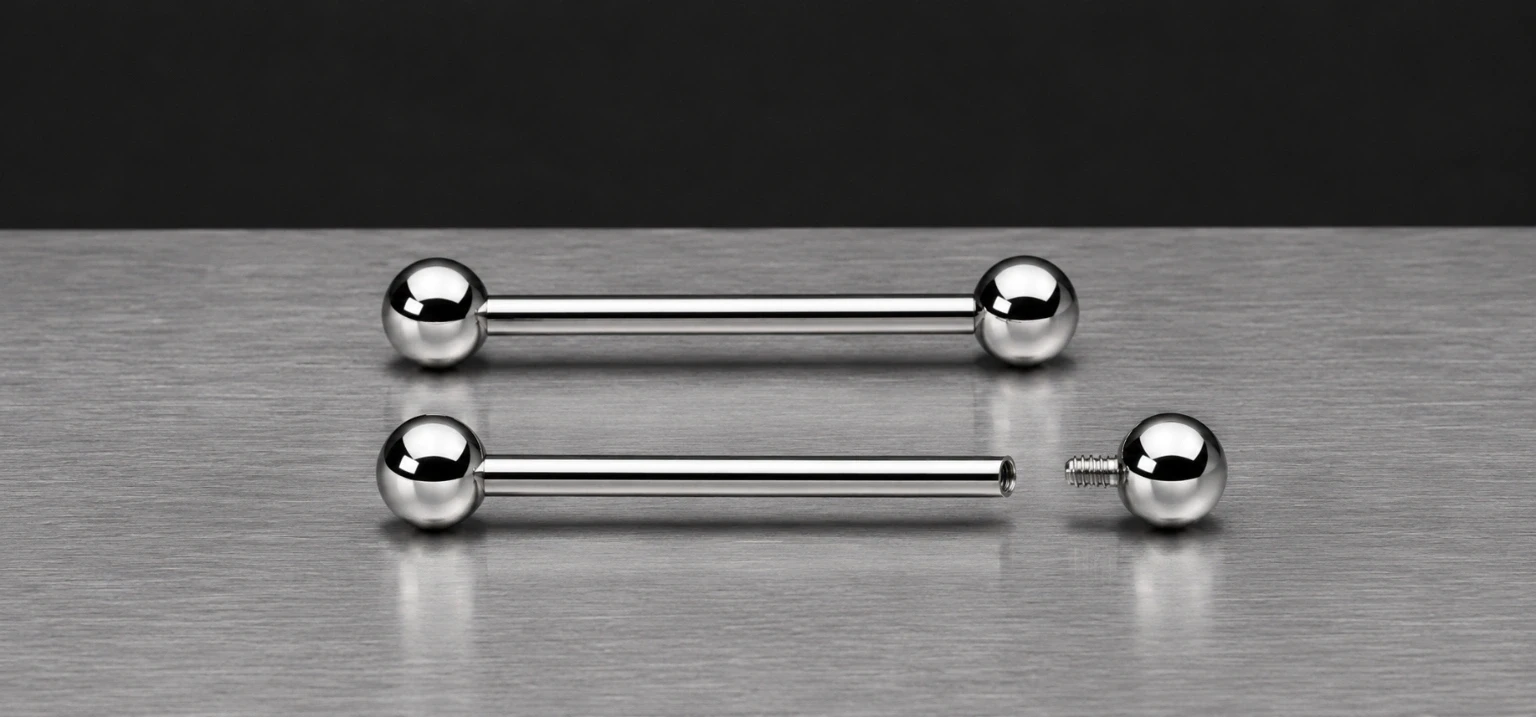
Gauge is shaft thickness; bar length is the straight portion between the balls; ball size is each end's diameter. Record all three separately.
| Specification | What it measures | Example we carry | Decision for the piercer |
|---|---|---|---|
| Gauge | Thickness of the bar itself | 14G (1.6 mm) | Choose a gauge appropriate to the tissue; it is not interchangeable with length |
| Post length | Straight distance between the ball seats, excluding both balls | 10, 12, 14 or 16 mm, depending on finish | Assess current anatomy, placement and initial swelling or later downsizing |
| Ball size | Diameter of each ball end | 4 mm | Check the end profile and its fit without counting it as bar length |
| Closure | How the ball attaches to the shaft | Internally threaded | Match the ends to the actual bar and its intended use |
For example, 14G / 12 mm / 4 mm balls is a stocked combination, not a prescribed initial fit. Have a qualified piercer assess existing jewelry before removing it to measure; the straight post length excludes the balls.
INITIAL JEWELRY
Why does a new nipple piercing need a longer barbell?
The APP says initial jewelry needs extra room for swelling. That makes the starting length different from a possible later replacement.
Extra room does not mean choosing the longest stocked bar. The piercer determines an appropriate fit for the anatomy and swelling while avoiding a bar that is too tight.
PROFESSIONAL DOWNSIZING
Do nipple piercings need downsizing, and when should a piercer do it?
A shorter post may be appropriate once initial swelling subsides. The APP says, "Many piercings require a downsize before the piercing is healed." Qualified piercers handle changes during healing; there is no fixed downsizing week.
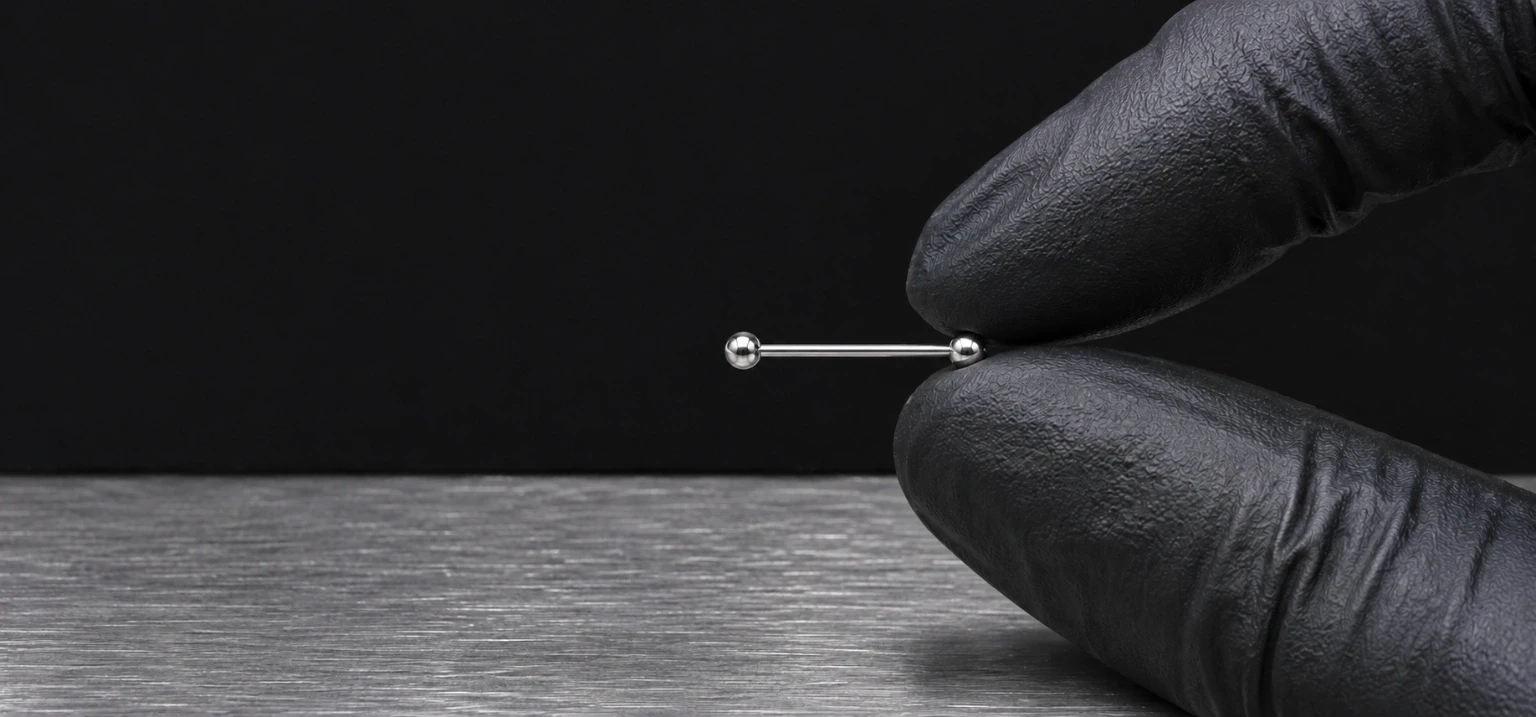
The piercer reassesses tissue, current swelling and the initial extra room before choosing another length. Do not select a smaller size merely because it appears in the catalog.
Do not prescribe downsizing by a fixed week
Swelling and fit guide the qualified piercer's decision. Downsizing can occur before healing is complete, but it is not an automatic change to the shortest bar in stock.
For the general decision process, read Downsizing Piercing Jewelry.
MATERIAL AND STERILE STATUS
What material should a professional piercer choose for initial nipple jewelry?
The APP lists ASTM F136 implant titanium and other specified materials for initial jewelry, and calls for a smooth finish and appropriate fit. The words surgical steel alone do not identify an implant-material grade.
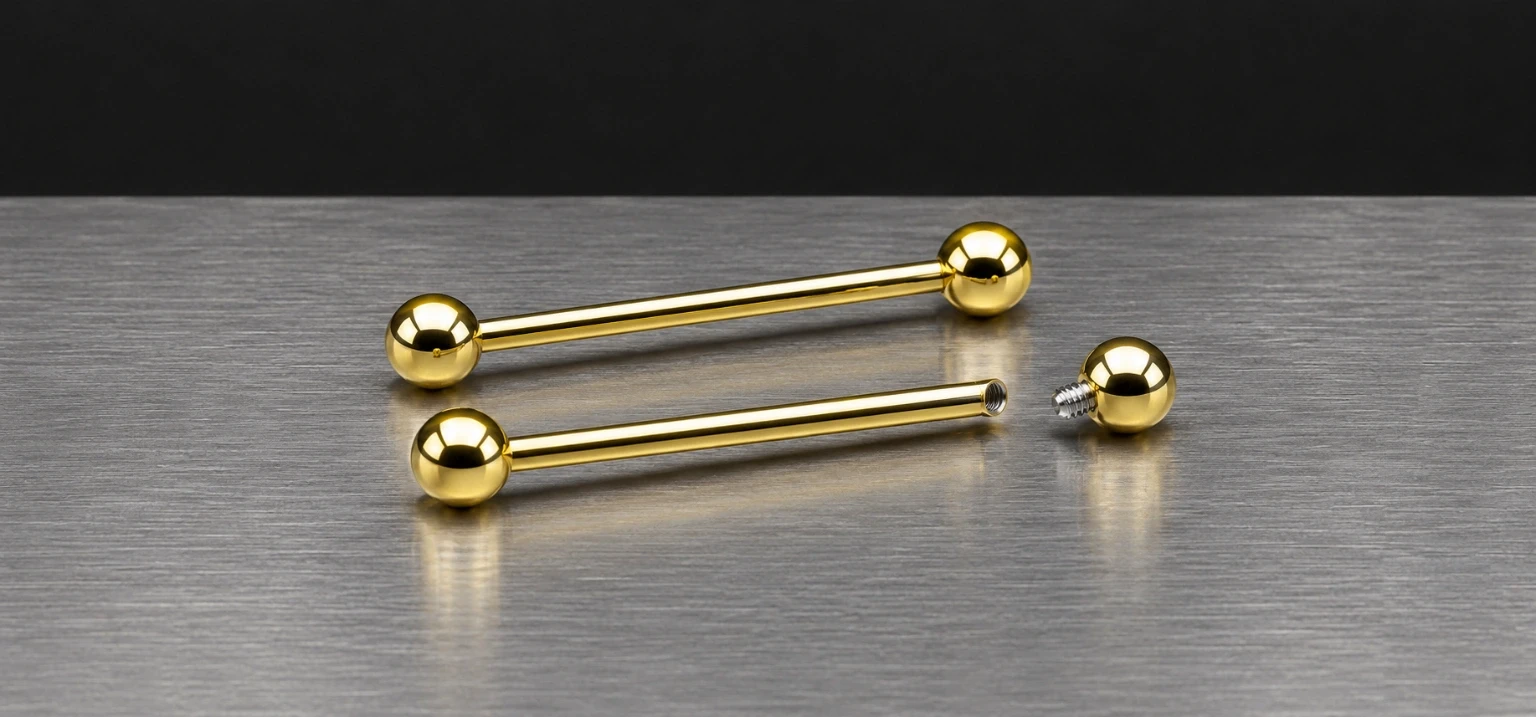
Our high-polish barbell is described by SVT Shop as sterilized implant-grade titanium; the gold PVD variant also comes sterilized. Both can be considered for new piercings because they arrive sterilized, but the client's trusted piercer decides.
Choose by the actual product information
Check the individual jewelry description and packaging for material and sterile status. Avoid transferring a material claim from one product to another based only on a similar appearance or a shared color.
For more detail, see Implant-Grade Titanium and Sterilized Piercing Jewelry and Metal Allergy and Piercing Jewelry.
CONNECTIONS AND ENDS
Should a nipple barbell be internally threaded or threadless?
The APP includes internal threading among initial-jewelry standards and accepts threadless or press-fit jewelry as an alternative. Connection type is separate from gauge and bar length.
Both of our sterilized titanium straight-barbell lines are internally threaded. Match replacement ends to the actual post, and check finish and fit rather than assuming similar-looking balls are interchangeable.
See Threadless vs Internally Threaded Jewelry for the broader comparison.
INITIAL VS HEALED STYLES
Should a piercer choose a straight barbell, ring, clicker or shield?
Our initial-jewelry choices are sterilized titanium straight barbells. The jeweled steel clicker and shield are nonsterile and for healed changes only. The piercer determines the suitable style and fit; this is not a claim that bars heal better than rings.
A decorative style should be considered only once the qualified piercer agrees the piercing is ready for a change. Appearance alone is not a fit assessment.
| Jewelry style at SVT Shop | Stage to consider | Product details | Decision before ordering |
|---|---|---|---|
| High Polish Titanium Straight Barbell | Potential initial jewelry or professional size change | Sterilized, internally threaded, 14G, 4 mm balls; 10, 12, 14, 16 mm | Piercer chooses anatomy-based length and stage |
| Gold PVD Titanium Straight Barbell | Potential initial jewelry or professional size change | Sterilized, internally threaded, 14G, 4 mm balls; 12, 14, 16 mm | Piercer assesses fit, material and finish |
| Surgical Steel Jeweled Clicker | Healed piercing | Nonsterile decorative style | Confirm healing and style fit with the piercer |
| Surgical Steel Jeweled Shield S210 | Healed piercing | Nonsterile decorative accessory | Confirm compatible jewelry and the healed placement |
TISSUE AND FIT
How can nipple anatomy and jewelry thickness affect long-term fit?
The APP cautions that jewelry too thin for the tissue may contribute to migration or rejection. Appropriate gauge comes from the anatomy, not the smallest appearance; overly tight jewelry is another fit concern.
The APP also notes that nipple piercing may cause permanent enlargement of tissue, particularly in small or underdeveloped anatomy. The piercer should reassess fit if the tissue changes rather than relying only on an earlier reorder code.
Do not treat a thinner bar as an automatic upgrade
The APP's concern about excessively thin jewelry applies to gauge selection. Keep the focus on appropriate tissue support and professional assessment, not simply on the most delicate appearance.
For related terminology, see Piercing Rejection vs Migration.
PREGNANCY AND LACTATION
What should a piercer discuss about nipple jewelry, pregnancy and breastfeeding?
The APP advises waiting three months after breast milk production stops before performing a nipple piercing. This is guidance for scheduling a new piercing, not a healing or downsizing timetable.
NIH LactMed recommends removing nipple jewelry before nursing and preferably throughout breastfeeding. Tell clients to speak with their doctor and piercer before breastfeeding with jewelry in place: medical professionals address nursing concerns, while piercers explain the effect of jewelry removal or change.
PROFESSIONAL SELECTION WORKFLOW
How should a piercer select, document and reorder nipple jewelry sizes?
Document the individual fit instead of relying on a standard-size label. Separate initial choices, professional downsizes and healed decorative orders.
Identify the stage of the piercing
Identify initial placement, a professional downsize or a healed jewelry change.
Assess anatomy before choosing a number
Have the piercer choose gauge and length for the particular anatomy.
Verify the exact product details
Check post length, 4 mm balls, internal threading, material and sterile status.
Record the full configuration
Record product, gauge, length and end diameter separately.
Plan a professional fit review
A qualified piercer reviews swelling and decides whether a shorter bar fits.
Separate healed-style inventory
Keep nonsterile decorative steel apart from initial-jewelry inventory.
AVOID THESE SIZING ERRORS
What mistakes should piercing studios avoid when selecting nipple barbells?
The most common shopping problems begin with a generic size assumption or confusion between early and healed jewelry. Review anatomy, measurements and sterile status as separate decisions.
Calling 14G the required gauge
14G is our product size. The APP requires tissue-appropriate gauge.
Calling one length the standard
10–16 mm are catalog options, not default initial or healed lengths.
Ordering by overall ball-to-ball length
Length excludes the balls; record their 4 mm diameter separately.
Choosing the shortest bar for fresh swelling
Initial swelling requires room, chosen by the qualified piercer.
Skipping the downsize assessment
Check fit again when swelling subsides.
Changing jewelry during healing without a piercer
APP directs changes during healing to qualified piercers.
Using a nonsterile jeweled shield as initial jewelry
Our nonsterile clicker and shield are for healed piercings.
Assuming a finer bar always fits better
APP cautions against gauge too thin for the tissue.
NIPPLE JEWELRY WE CARRY
Which sterilized titanium barbells and healed-piercing styles can you buy at SVT Shop?
We carry sterilized titanium straight barbells and nonsterile steel decorative styles. Sterilized titanium can be considered for a new piercing because it comes sterilized, but the trusted piercer decides. Our clicker and shield are for healed piercings only.
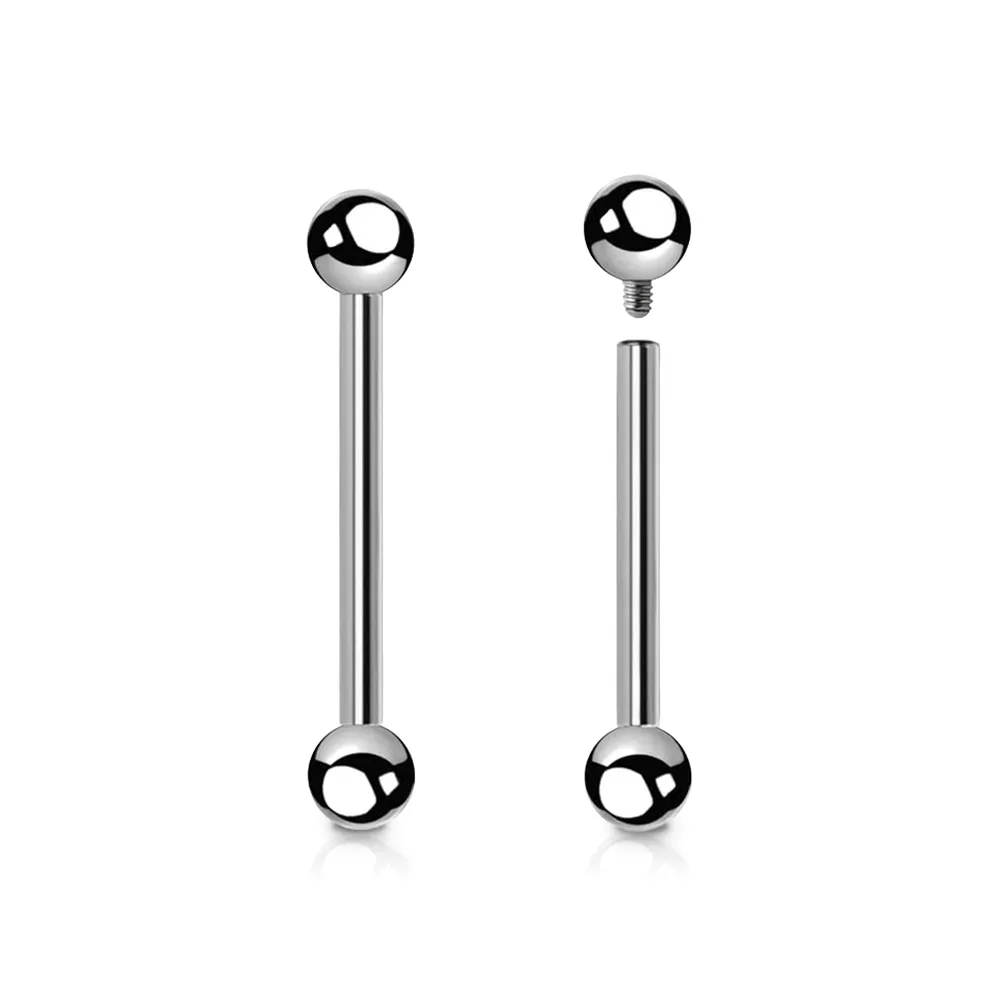 STERILIZED TITANIUM / INITIAL FIT OPTION
Sterilized Titanium - Nipple Straight Barbell
High-polish, internally threaded 14G (1.6 mm) straight barbell with 4 mm balls. Listed bar lengths: 10, 12, 14 and 16 mm. The piercer selects the fit.
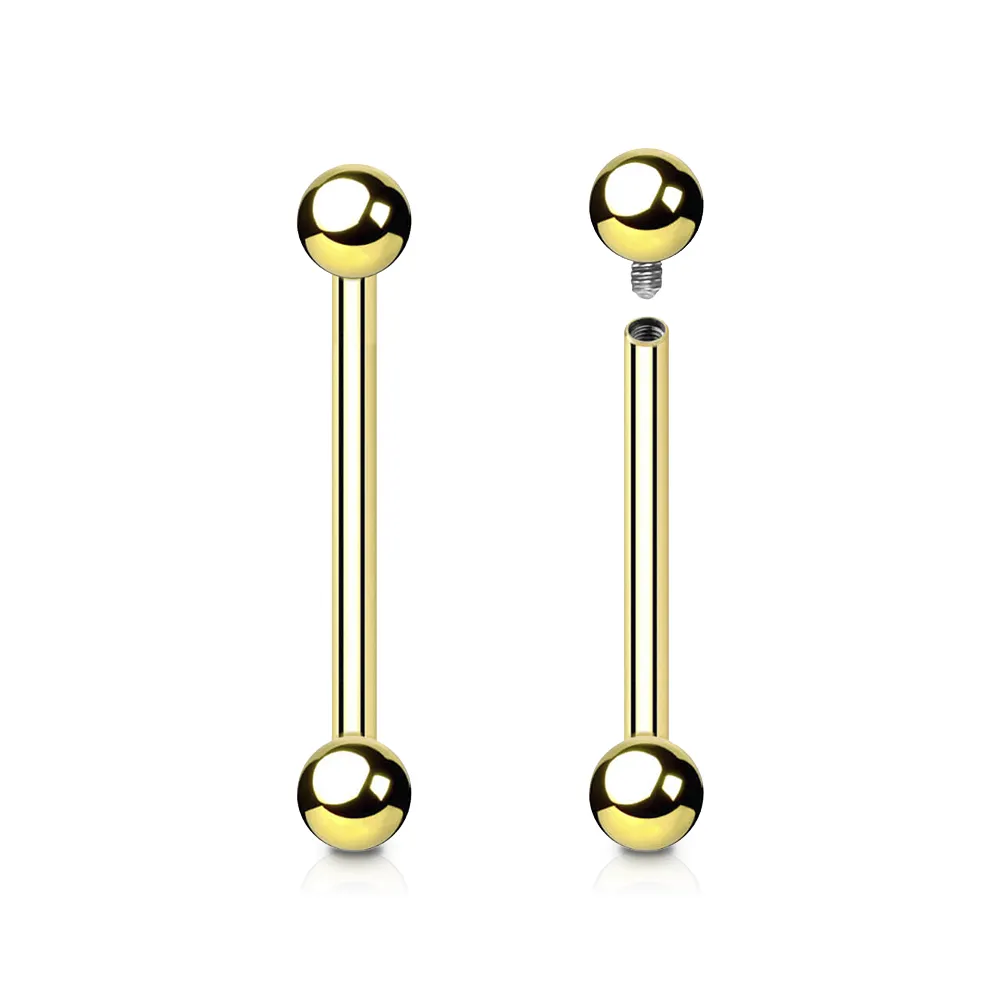 STERILIZED TITANIUM / GOLD PVD FINISH
Sterilized Titanium - Gold PVD Nipple Straight Barbell
Internally threaded 14G (1.6 mm) titanium straight barbell with gold PVD finish and 4 mm balls. Listed bar lengths: 12, 14 and 16 mm.
 NONSTERILE STEEL / HEALED ONLY
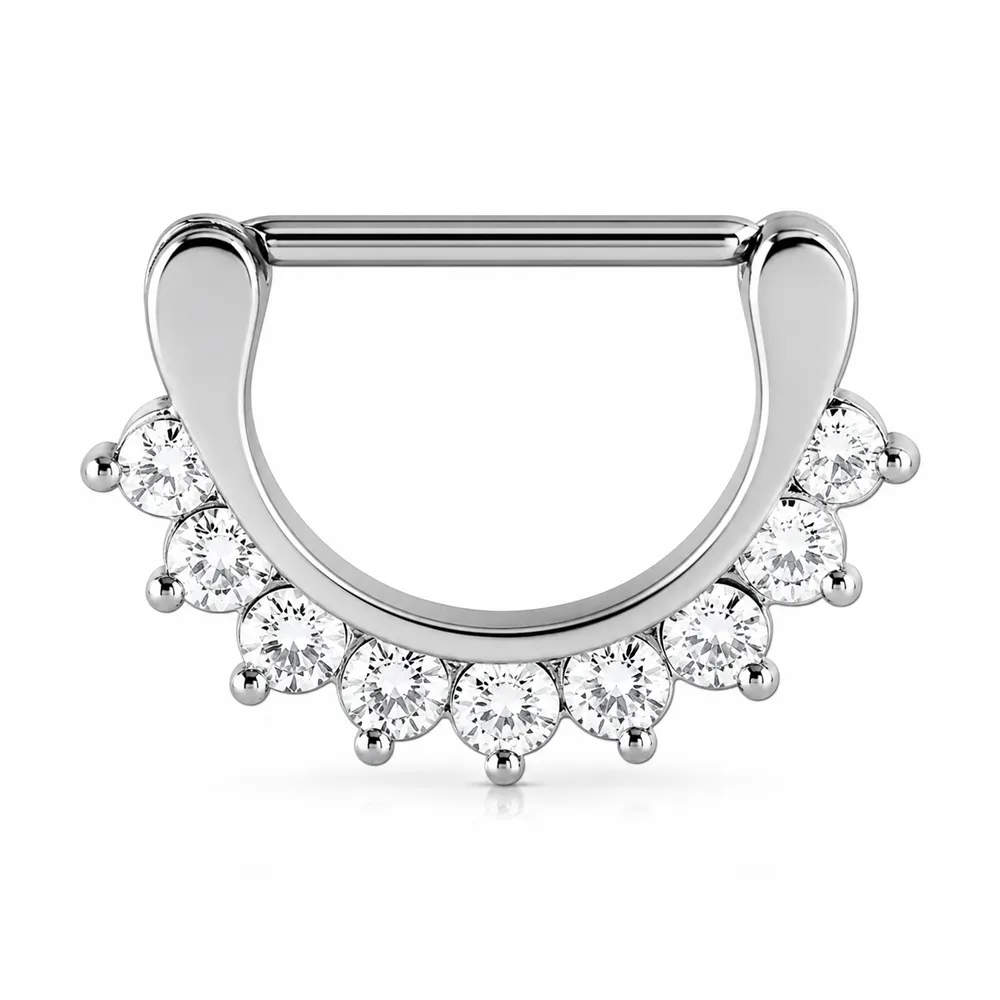
Surgical Steel Prong Set Jeweled Nipple Clicker
Decorative clicker option for a healed piercing when a qualified piercer confirms that the style and fit are appropriate. Not initial jewelry.
 NONSTERILE STEEL / HEALED ONLY
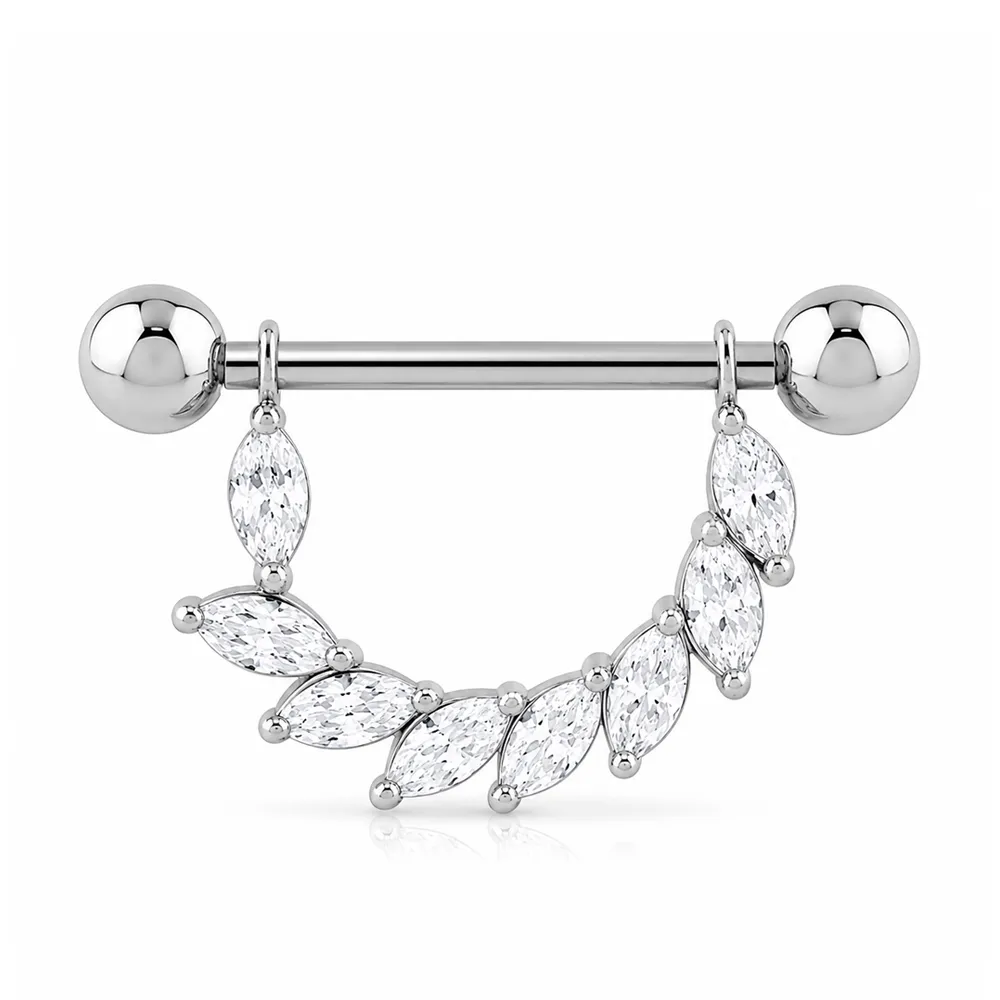
Surgical Steel Jeweled Nipple Shield S210
Jeweled shield accessory for healed-piercing styling. The piercer checks compatibility with the existing jewelry and placement.
STUDIO BUYING CHECKLIST
What should a piercer verify before ordering a nipple barbell or decorative change?
Confirm anatomy-based dimensions, connection and sterile status for the intended stage before ordering. The piercer makes the final selection.
- Stage: Initial placement, downsize or healed decorative change?
- Gauge: Chosen for this anatomy rather than a size-chart default?
- Length: Correct straight post length, excluding the ends?
- Ball diameter: 4 mm ball diameter recorded separately?
- Connection: Internally threaded, compatible ends or another piercer-approved system?
- Material and sterile status: Sterilized initial option or nonsterile healed-only piece?
- Follow-up: Qualified piercer assigned to assess any change?
- Special circumstances: Breastfeeding and medical questions directed appropriately?
For the general body-jewelry measurement system, use Body Jewelry Size Guide, and for changes during healing use Downsizing Piercing Jewelry.
FAQ
Frequently asked questions about nipple piercing gauge, bar length and materials
These answers address the measurements and product-stage decisions piercers and studio buyers encounter.
What gauge is a nipple piercing?
The APP requires an anatomy-appropriate gauge. Our sterile titanium straight bars are 14G (1.6 mm); the piercer chooses.
What length nipple barbell do I need?
The piercer selects by anatomy and stage. We carry high-polish 10, 12, 14 and 16 mm and gold PVD 12, 14 and 16 mm.
Why is my nipple bar so long at first?
The APP explains that initial jewelry needs room for swelling.
Do nipple piercings need to be downsized?
A qualified piercer checks the fit after swelling. The APP says downsizing may come before complete healing.
Can I change my nipple jewelry myself?
APP recommends a qualified piercer for changes during healing. Healed changes also require fit assessment.
Barbell or ring for a new nipple piercing?
Let the piercer select style and fit. Our sterile initial option is a straight titanium bar, without claiming it heals better than a ring.
What material is best for nipple piercings?
The APP lists ASTM F136 titanium among initial-jewelry materials; a piercer decides whether our sterilized titanium fits.
What size are nipple barbell balls?
Our straight titanium barbells have 4 mm balls. That diameter is separate from gauge and length.
How do I measure my nipple barbell?
Gauge is thickness; post length excludes balls; ball size is end diameter. Have a piercer check before removal.
Can I wear surgical-steel jewelry in a new nipple piercing?
Our nonsterile surgical-steel clicker and shield are for healed piercings, not new ones.
Should nipple jewelry come out when breastfeeding?
LactMed recommends removing jewelry before nursing. Speak with a doctor and qualified piercer before breastfeeding with jewelry in place.
When can I swap to a nipple shield or clicker?
When a qualified piercer determines the piercing is healed enough and the style fits. Our steel clicker and shield are healed-only.
PROFESSIONAL RESEARCH
Sources Consulted
APP guidance supports anatomy-based sizing, downsizing, threading and nipple tissue considerations. NIH LactMed supports the breastfeeding recommendation; SVT Shop supplies the product measurements and sterile-status descriptions.
- Association of Professional Piercers: Jewelry for Initial Piercings
- Association of Professional Piercers: Piercing FAQ, Tissue Changes and Pregnancy
- Association of Professional Piercers: Aftercare and Downsizing
- Association of Professional Piercers: Jewelry for Healed Piercings
- Association of Professional Piercers: Troubleshooting Jewelry Removal
- NIH Drugs and Lactation Database (LactMed): Nipple Piercing