Powered by Comercia.io
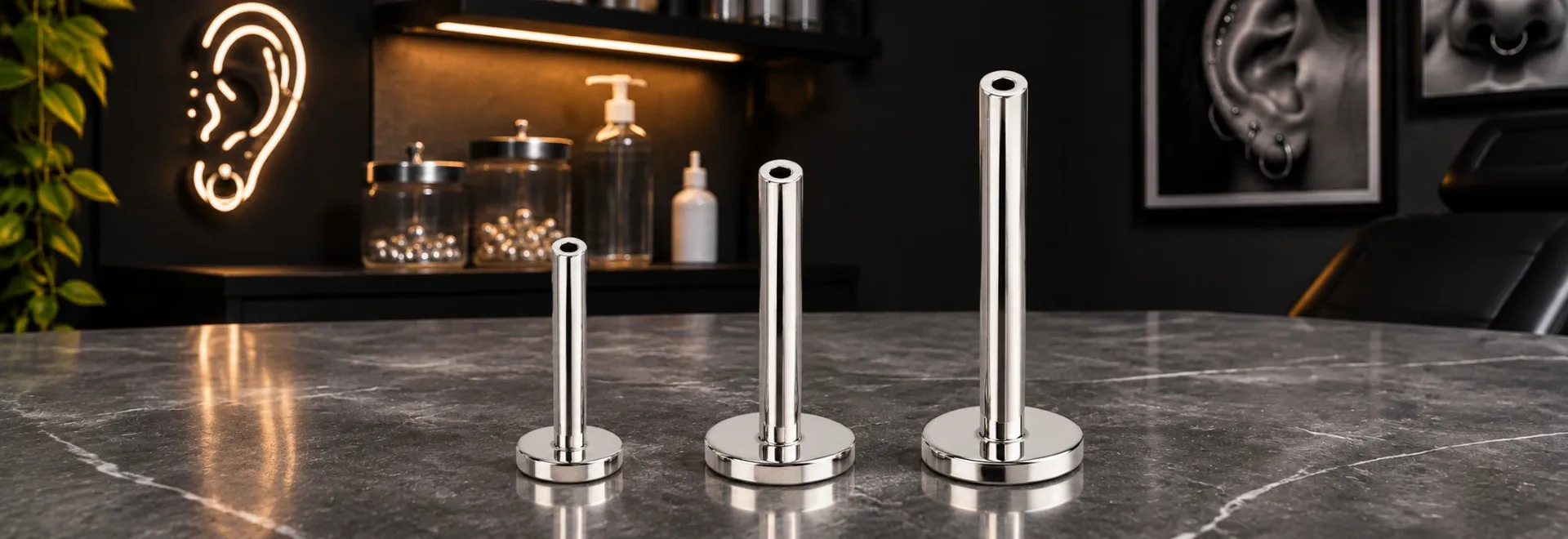
When should you downsize piercing jewelry, and can a shorter post help an irritation bump? According to the Association of Professional Piercers (APP), piercing downsizing means replacing the longer initial post with a shorter one after the first swelling has subsided. This guide explains helix, cartilage, nostril, lobe and oral piercing downsizing, how a qualified piercer chooses the fit, and why changing jewelry too early or at home can create problems.
Shop Sterilized Piercing Jewelry Explore Labret Jewelry
QUICK ANSWER
When should you downsize a piercing, and who should change the jewelry?
Arrange a fit check when the initial swelling has gone down enough that the original post now has excess length. APP explains that this extra length can catch, move and restart irritation. Have a qualified piercer decide whether a shorter post is suitable and perform the change while healing continues. Do not shorten jewelry simply because a particular number of days has passed or because a bump appeared.
WHEN
After initial swelling subsides and your piercer sees that the extra post length is no longer needed.
WHY
To reduce excess movement, snagging and irritation while maintaining a safe fit around the tissue.
HOW
Book a professional jewelry change using a suitable sterile post or barbell; continue your normal healing aftercare.
START WITH THE DEFINITION
What does downsizing a piercing actually mean?
Downsizing a new piercing means switching from the original longer post to a shorter post after the first swelling has subsided. That is the definition used by the Association of Professional Piercers (APP). It is a planned fit adjustment during healing, not a sign that the piercing is fully healed and ready for decorative changes.
Downsizing is not a change of gauge
In ordinary healing aftercare, the term usually means changing post length. In piercing stretching, APP also uses downsize to mean returning to a previous, smaller gauge after overstretching. Those are different situations and different decisions.
WHY THE FIRST POST IS LONGER
Why is the jewelry in a new piercing so long?
APP says most initial piercings need extra length to make room for early swelling. The initial fit can look roomy because the piercer anticipates the tissue changing during the first part of healing. That spare space helps avoid the jewelry becoming embedded as swelling develops.
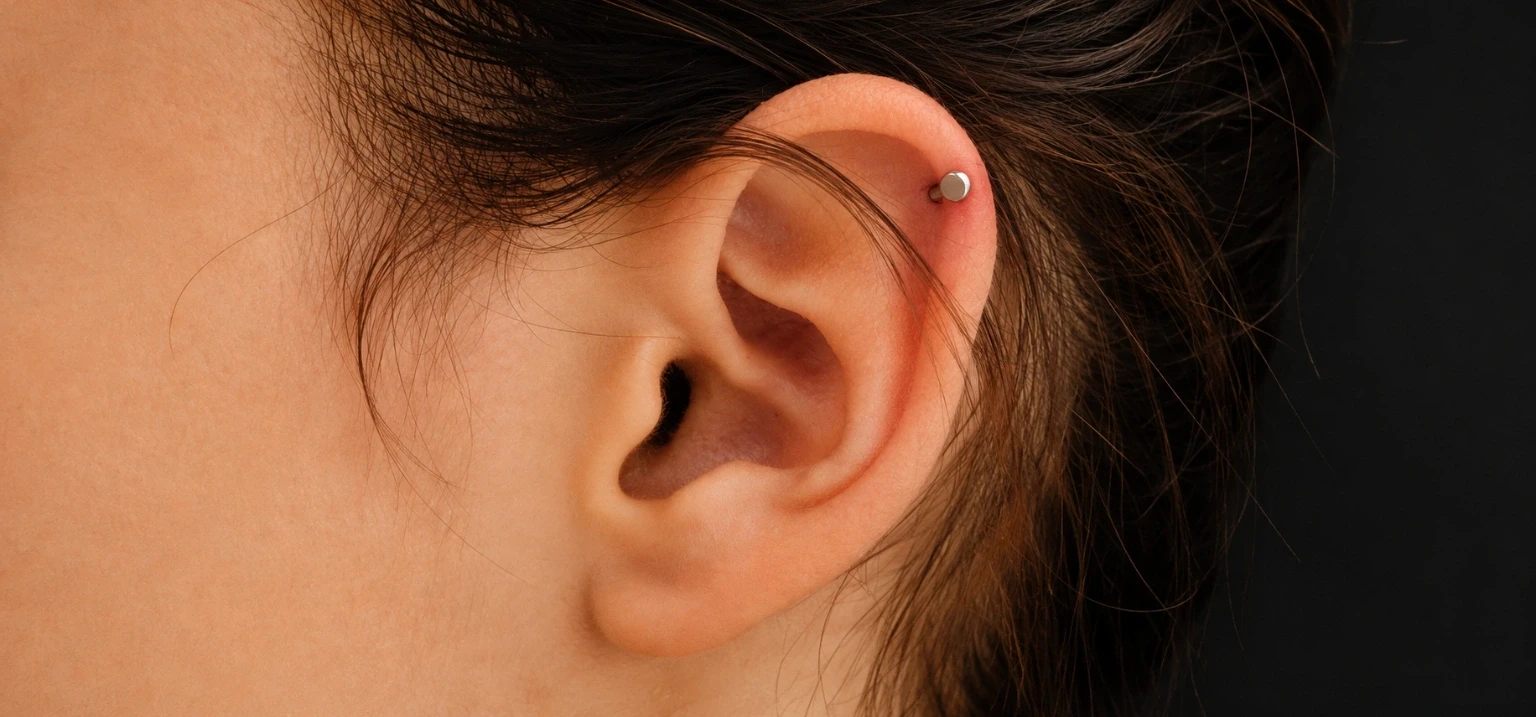
Early healing: leave swelling room
An initial post that is too short may compress tissue as it swells. APP associates undersized jewelry with swelling, embedding and other complications.
Later healing: reassess exposed length
Once swelling settles, excessive length can move and catch. APP recommends returning to the piercer for a more suitable shorter post.
NO UNIVERSAL CALENDAR
When should you downsize a helix, nose, lobe or other piercing?
Downsize after the initial swelling has gone down, as assessed by your piercer. APP does not prescribe one calendar deadline for every non-oral piercing. Healing tissue, placement, fit and the amount of swelling all matter more than a date copied from someone else's appointment.
Questions for your downsize check
- Has my initial swelling decreased enough for a shorter post?
- Is the exposed length moving or catching during ordinary activity?
- Would a shorter post still leave a safe fit if swelling changes?
- Does this placement need a follow-up change during healing?
- What is your studio's downsize and follow-up policy?
ONE LENGTH DOES NOT FIT EVERY STAGE
Too long vs too short vs properly fitted: what is the difference?
APP identifies risks on both sides of jewelry sizing. Too much length may cause catching and trauma; too little may compress the piercing and contribute to embedding. The goal of downsizing is to improve fit, not merely to remove as much length as possible.
| Fit | What may happen | What to ask your piercer |
|---|---|---|
| Too long after swelling | Snagging, excessive movement, irritation and renewed swelling, according to APP. | Would a shorter post reduce unnecessary movement? |
| Too short or too tight | Pressure, swelling, embedding or other fit complications, according to APP. | Is there enough room for the tissue in its current condition? |
| Appropriately fitted | Suitable length and style for anatomy and placement without avoidable pressure or excess travel. | Does the size support continued healing and daily activities? |
| Wrong style or material | APP notes that jewelry style, finish and material can create irritation even when length looks reasonable. | Should the design or material also be reviewed during the visit? |
Read SVT Shop's body jewelry size guide for post length and gauge terminology.
PLACEMENT-SPECIFIC FIT
Do helix, conch, lobe, nostril and oral piercings all need downsizing?
APP says many piercings need downsizing before healing is complete, but does not assign the same requirement to every placement. A piercer examines the location and jewelry instead of treating a list of piercing names as an automatic instruction to replace every post.
| Piercing people ask about | Relevant APP guidance | What to discuss at the studio |
|---|---|---|
| Helix / cartilage | APP warns that excess length, particularly combined with sleeping pressure, can shift the angle and contribute to migration. | Check how the post sits and whether it moves or catches. |
| Conch / rook | APP's general fit principles apply; style and anatomy determine whether a change is appropriate. | Ask whether a shorter or differently fitted piece suits this specific placement. |
| Earlobe | APP says many, not all, piercings need downsizing. | Have the initial fit checked instead of assuming every lobe needs a shorter post. |
| Nostril / nose | APP says size and style should match the anatomy and placement. | Review post movement and whether the selected nostril jewelry still fits well. |
| Eyebrow / nipple / other body placement | The same APP principles of space, movement, size and style apply. | Let the piercer decide whether changing length is beneficial. |
| Tongue / lip / oral | APP specifically emphasizes replacing long initial jewelry after swelling to protect teeth and gums. | Return for a professional shorter barbell or post fitting. |
Compare nostril styles in our nose jewelry guide.
THE PROFESSIONAL CHANGE
How does a piercer downsize jewelry in a healing piercing?
A qualified piercer evaluates the piercing and installs suitably sized jewelry. APP says the channel is generally not healed enough for you to change jewelry safely at the time a downsize is needed. The appointment should focus on the current swelling, jewelry fit, material and the condition of the tissue.
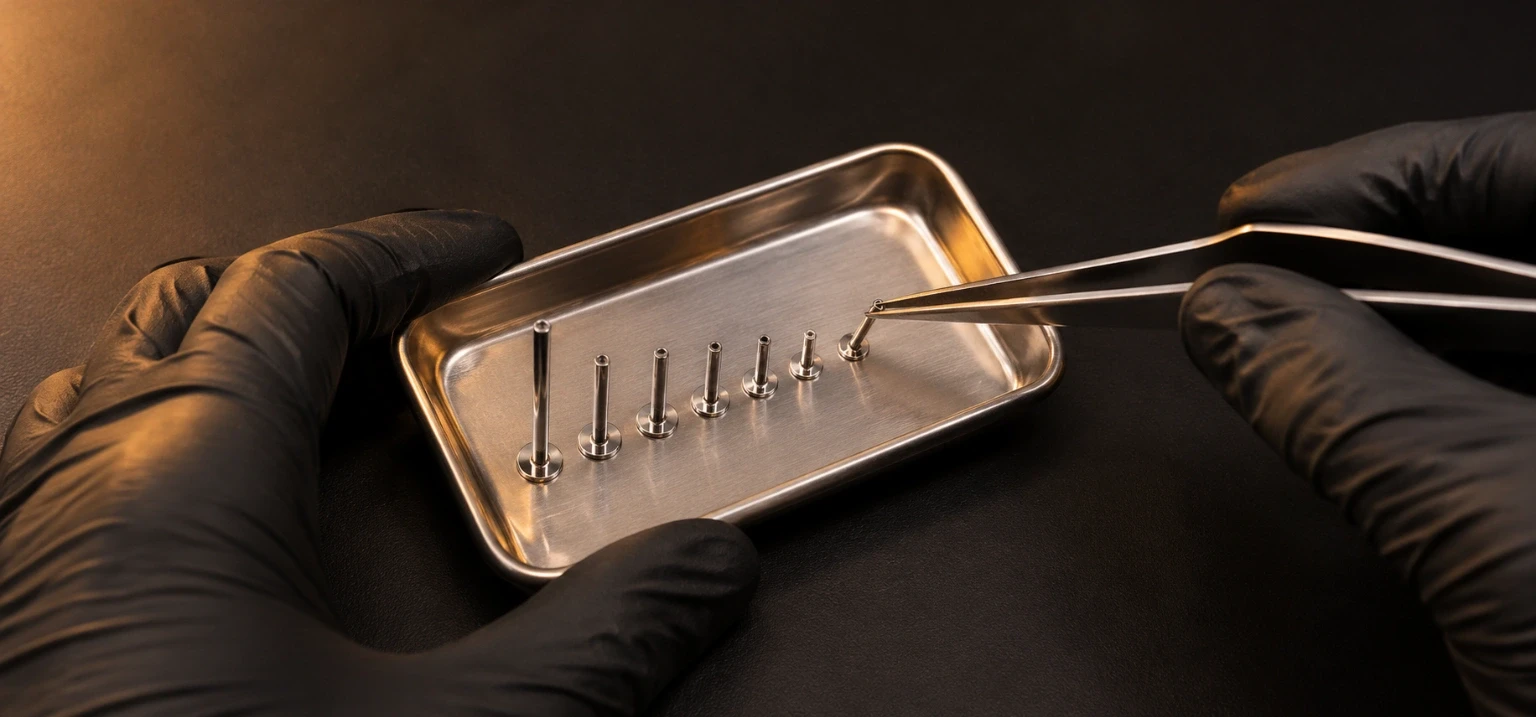
Request a fit assessment
Explain the placement, whether swelling has changed and if the post is snagging, moving or causing irritation. Ask for your piercer's downsize policy.
Have the piercer assess swelling and movement
The piercer checks the amount of clearance still needed and whether the original jewelry is now excessively long or still necessary.
Select suitable sterile jewelry
Discuss length, gauge, material, smooth finish and closure. APP lists appropriate dimensions and quality as requirements for new and healing piercings.
Let the professional perform the exchange
APP recommends a qualified piercer for jewelry changes during healing. Insertion tools belong in professional hands, not a do-it-yourself downsize attempt.
Review the new fit and aftercare
Ask how the shorter post should sit, what follow-up the studio recommends and how to continue normal piercing aftercare.
WHAT A SIZE REALLY MEANS
Does downsizing change the post length, jewelry gauge or decorative end?
For a healing piercing, the APP definition of downsizing focuses on shortening the post. Gauge is the thickness of the jewelry, and the style and decorative top are additional choices. A smaller gauge and a shorter post are not the same change.
Wearable length
The dimension most directly involved in a routine downsize. The goal is to remove unnecessary extra room after swelling, without creating pressure.
Gauge or thickness
A separate measurement. APP says the gauge must suit the tissue and piercing, so keep that question in your professional fitting discussion.
End and overall style
A flat back, barbell end or decorative top affects the finished fit. APP asks artists to select jewelry appropriate to the body and piercing placement.
MATERIAL AND FINISH MATTER
What type of jewelry should a piercer use when downsizing?
APP says new and healing piercings need jewelry selected for fit, appropriate material and a smooth finish. Its initial-jewelry guide discusses implant-certified titanium and other suitable materials and recommends internally threaded or threadless construction. These design choices are important even if the problem that prompted the visit was excess post length.
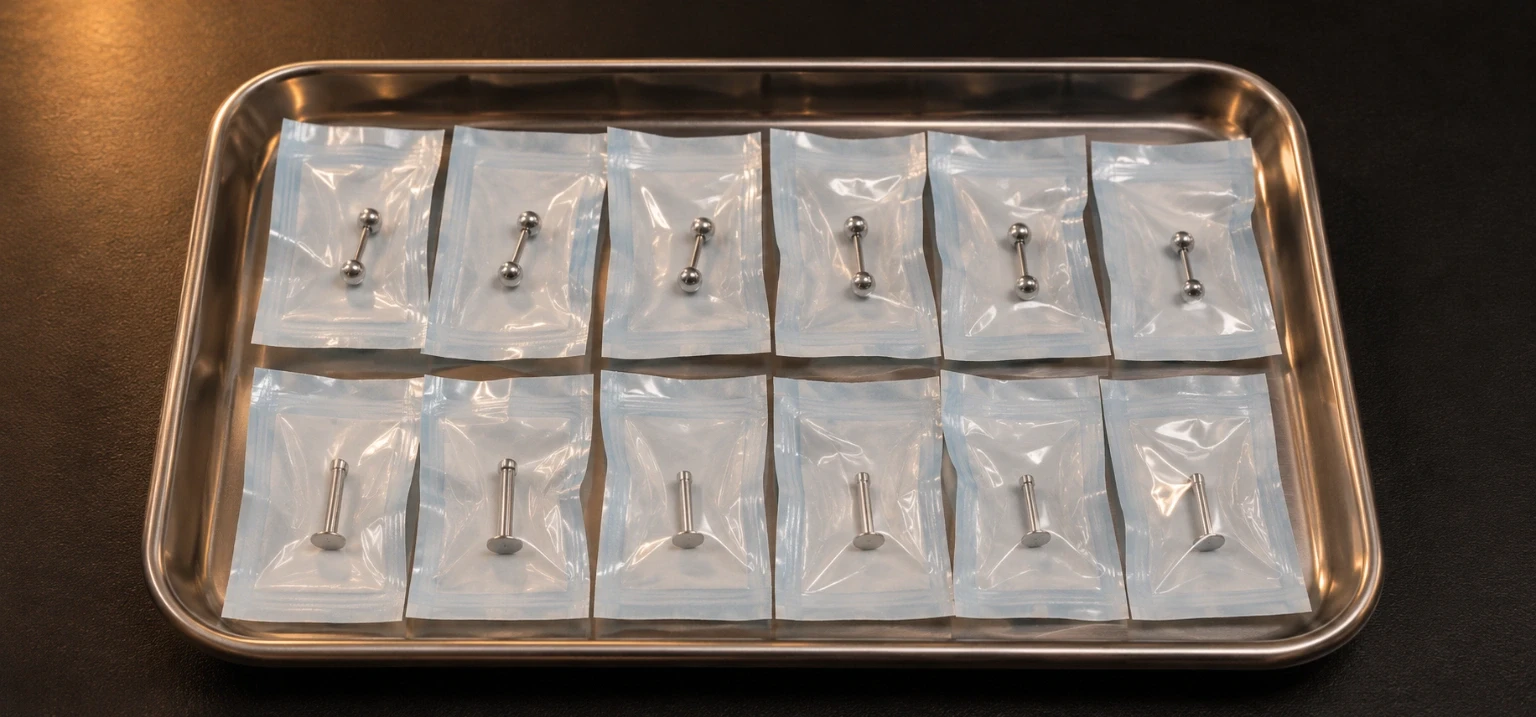
Sterilized jewelry still needs the correct fit
SVT Shop's listed titanium pieces come sterilized, making them suitable candidates for new piercings. Your trusted piercer decides whether the actual material grade, length, gauge, closure and design meet the requirements of your healing piercing. The word sterilized alone is not a substitute for that assessment.
Read our sterilized titanium jewelry guide before selecting a piece.
HOW THE ENDS CONNECT
Is threadless or internally threaded jewelry better for a piercing downsize?
Both threadless and internally threaded styles have smooth portions designed to pass through piercing tissue without exposed external screw threads. APP accepts both designs for initial piercings. A professional chooses the style that fits the anatomy, jewelry system and stage of healing.
| Design | How it works | What matters during downsizing |
|---|---|---|
| Threadless / push-in | NeoMetal describes a separate end retained in the post by tension, without screw threads. | A piercer can select a suitable post length and compatible end while checking security and fit. |
| Internally threaded | The threads are on the removable end, leaving the post smooth through the tissue, as APP describes. | The piercer verifies matching components and installs the appropriate length and closure. |
| Externally threaded | Screw threads are exposed on the post that travels through tissue. | APP favors internally threaded or threadless designs for fresh piercings to avoid scraping tissue. |
NeoMetal says its own threadless ends fit its 18, 16, 14 and 12 gauge posts; do not assume different brands are interchangeable.
IRRITATION AND MOVEMENT
Can downsizing help a piercing bump or ongoing irritation?
It may help when the bump is related to movement from jewelry that is now too long. APP explains that piercing lumps and irritation can come from mechanical stress and that changing jewelry size, style or material often resolves a problem. Downsizing is an adjustment to fit, not a diagnosis of the bump or a treatment for every possible skin condition.
Bring these observations to your piercer
- Does the post visibly extend beyond the tissue now that swelling has changed?
- Does the jewelry catch, move or become pressed while you sleep?
- Is the problem associated with the jewelry size, its style or a possible material sensitivity?
- Could shortening the post create tightness because the tissue is still swollen?
WHY THE FOLLOW-UP MATTERS
What happens if you wait too long to downsize a helix piercing?
APP specifically warns that excessive post length can contribute to migration or a change in the angle of a helix piercing, particularly when someone sleeps on it. In its piercing FAQ, APP explains that this kind of structural damage may be irreversible. That is a reason to arrange the fit review when the original swelling recedes rather than waiting indefinitely.
A shorter post cannot undo every problem
If the jewelry has shifted, the piercing seems to be changing angle or the tissue looks compromised, arrange an assessment with your piercer. APP's helix example concerns actual structural changes, not simply the appearance of extra metal.
PROTECT TEETH AND GUMS
Why is downsizing especially important for tongue and lip piercings?
APP emphasizes oral jewelry downsizing because a long barbell or post can contact teeth, gums and other oral structures. Its oral aftercare guide says that once the initial swelling subsides, replacing the longer jewelry with an appropriately shorter piece is vital to reduce that damage.
Tongue jewelry
APP discusses changing the original longer barbell once swelling goes down to reduce unnecessary contact with oral structures.
Lip and cheek jewelry
APP advises a fitted post and attention to how the backing sits in the mouth, so it does not interfere unnecessarily with teeth or gums.
AFTER THE JEWELRY CHANGE
What aftercare should you follow after your piercing is downsized?
Continue the aftercare appropriate to a healing piercing. APP says jewelry changes during healing should be performed by a qualified piercer and that a piercing can appear healed on the outside while the interior remains fragile. A shorter post is not a signal to stop caring for the area or begin changing decorative ends repeatedly.
Follow the piercer's fit and care instructions
Ask how the new post should sit and what changes should prompt a further check.
Keep cleaning simple
APP recommends packaged sterile saline wound wash for healing body piercings and discourages harsh products and over-cleaning.
Leave the jewelry alone
APP says rotating or twisting jewelry is unnecessary during healing and can cause irritation. Avoid snagging and repeated handling.
Ask for another fit check if necessary
If swelling changes, the shorter piece feels tight or movement remains excessive, return to the piercer for an assessment.
Review our saline and piercing aftercare guide while healing continues.
AVOID THE WRONG FIX
What common piercing downsizing mistakes should you avoid?
APP's guidance points to timing, fit and who performs the change as the central concerns. A short piece is helpful only if it suits the tissue at that stage of healing.
Using a fixed calendar date
APP bases downsizing on swelling subsiding. Schedule the review based on fit rather than copying a timeline from another piercing.
Changing a healing piercing at home
APP says the channel is not healed enough for a safe self-change when a downsize is needed. Have a qualified piercer perform it.
Buying the shortest post
APP warns that undersized jewelry can increase pressure, swelling and embedding. Shorter is not automatically better.
Ignoring excessive length
APP connects snagging and movement with renewed swelling and warns that a helix angle can change with ongoing pressure.
Confusing gauge with post length
A standard downsize shortens the wearable length; changing thickness is a separate sizing question for the piercer.
Assuming a bump has one cause
APP says mechanical irritation, aftercare and material sensitivity can overlap. A shorter post may help fit-related irritation, not every bump.
SVT SHOP JEWELRY OPTIONS
Which sterilized titanium posts and barbells can you compare for a downsize?
SVT Shop lists sterilized titanium posts, labrets, barbells and an insertion tool. These are options to discuss with a qualified piercer, not a universal shorter-jewelry recommendation. The piercer must determine the appropriate material grade, length, gauge, end and placement before selecting or installing a piece.
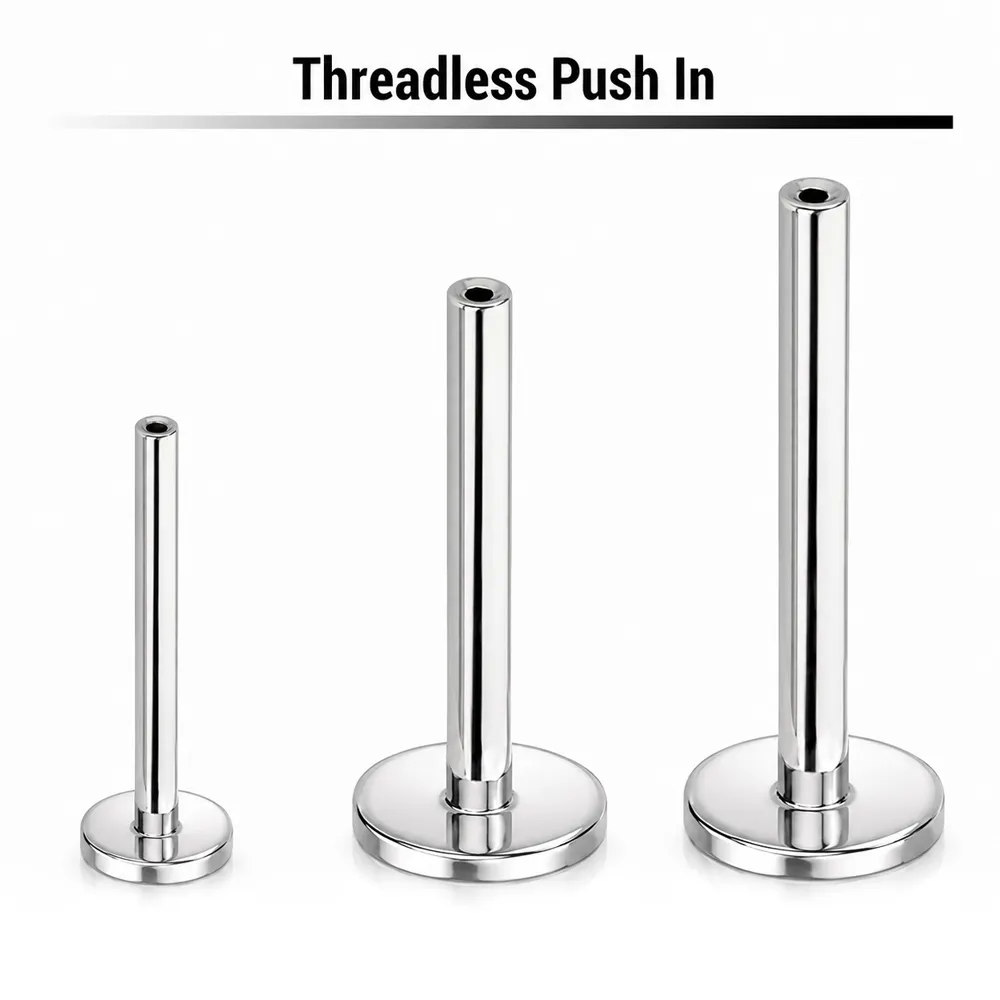 Replacement threadless post
Sterilized Titanium High Polish Threadless Push In Labret Post
A separate post without a decorative top. Ask your piercer to select length and a compatible end.
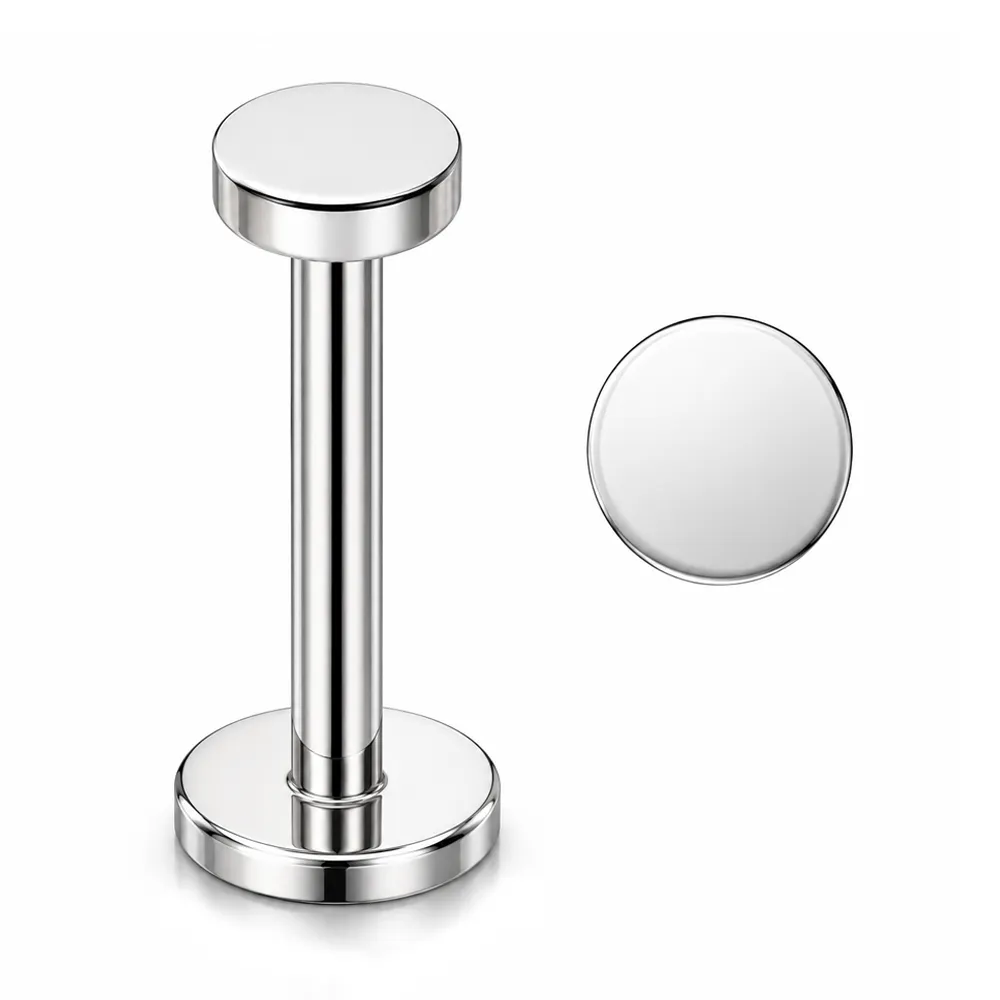 Flat-back threadless option
Sterilized Titanium High Polish 3mm Disk Labret Threadless
An assembled flat-back style to evaluate for a suitable placement and fit.
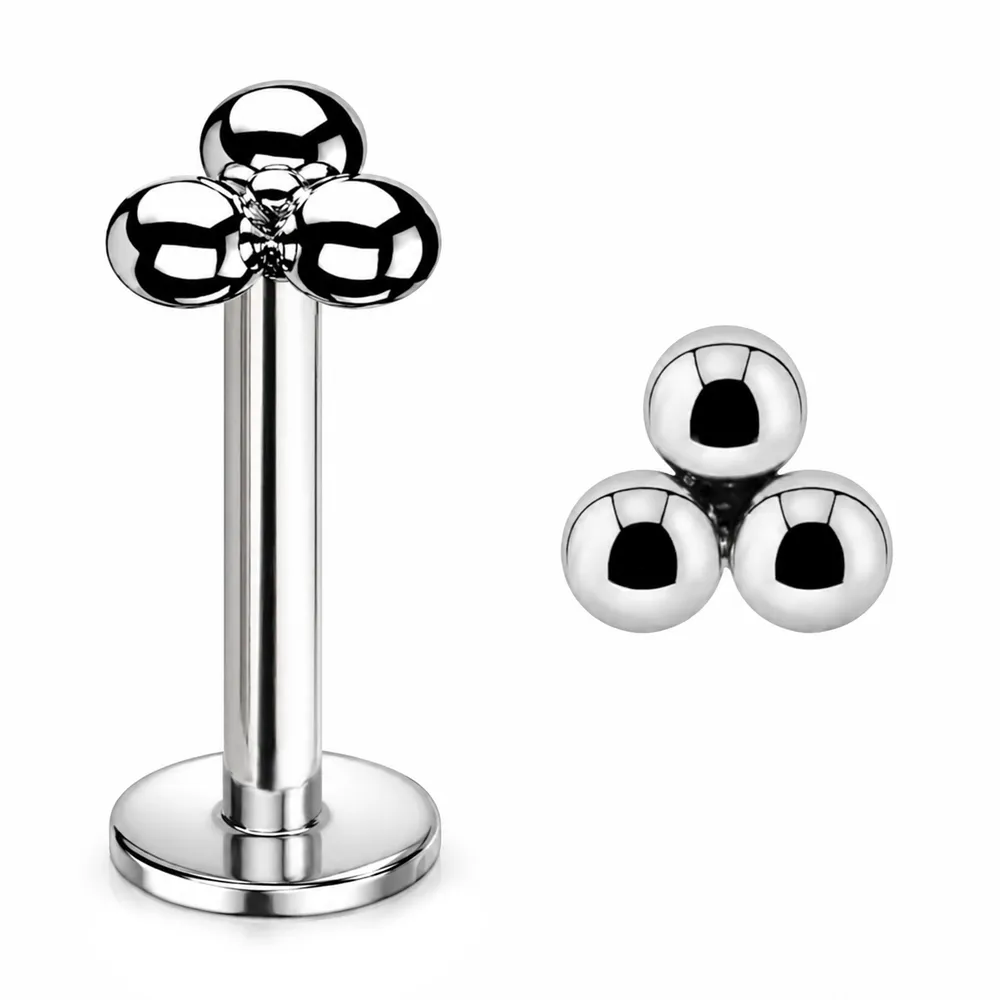 Decorative threadless option
Sterilized Titanium High Polish Trinity Labret Threadless
A trinity-top labret to compare after the piercer confirms jewelry dimensions and closure.
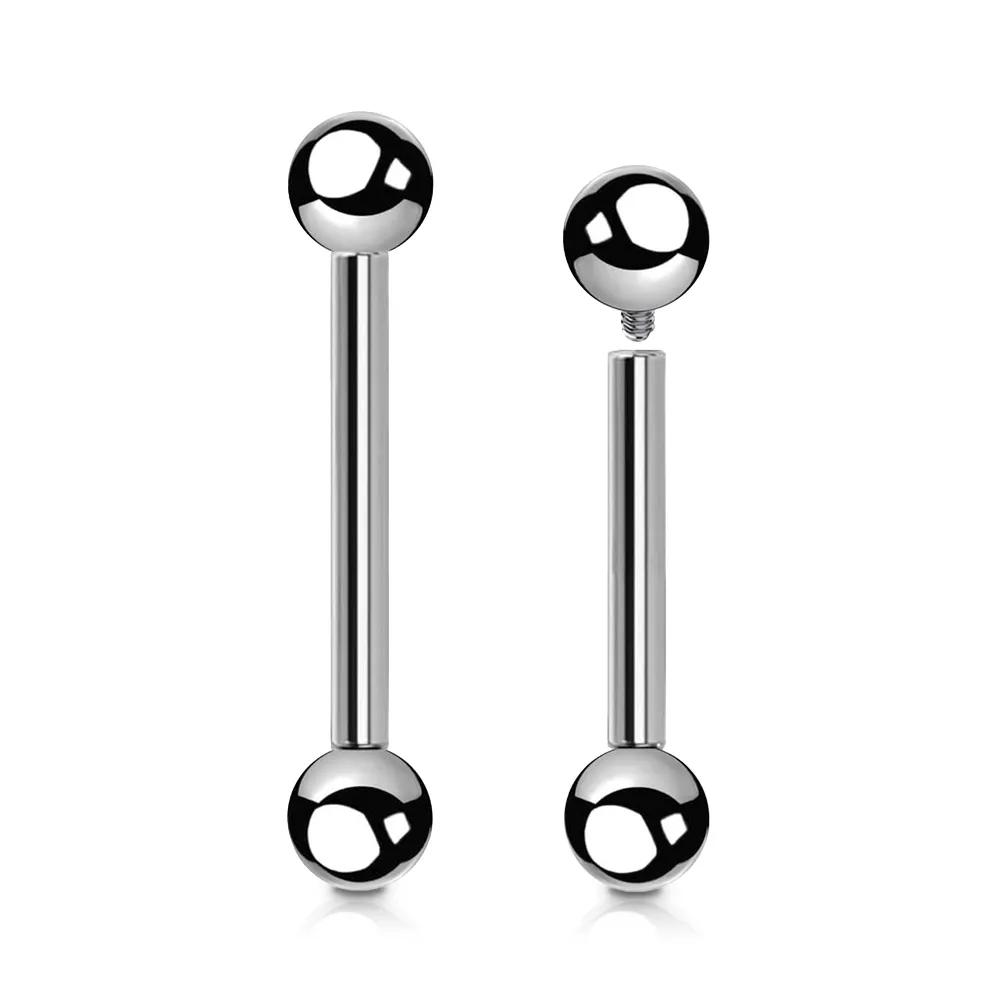 Internally threaded barbell
Sterilized Titanium Straight Barbell
High-polish straight barbell with 3 mm balls; the piercer chooses suitable anatomy and length.
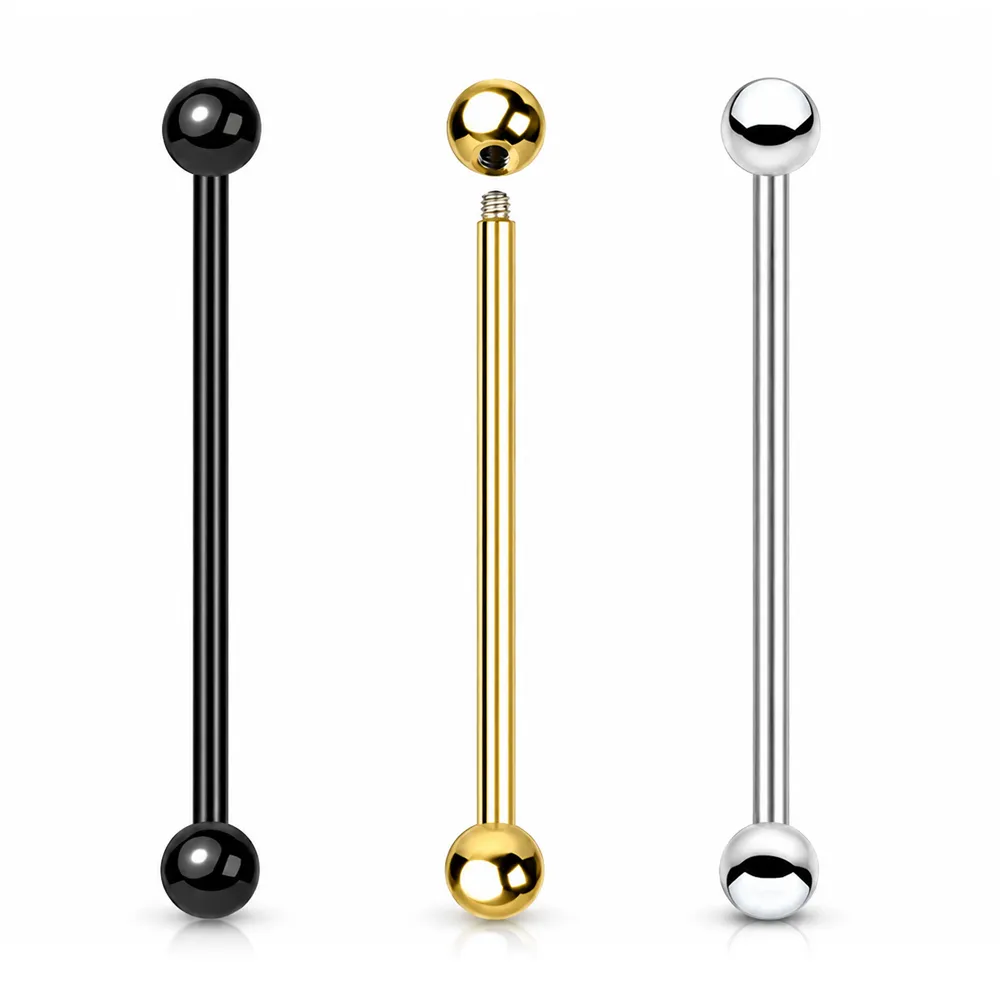 For professional industrial fit review
Sterilized Titanium Industrial Barbells
A barbell family for piercer assessment of industrial jewelry fit and dimensions.
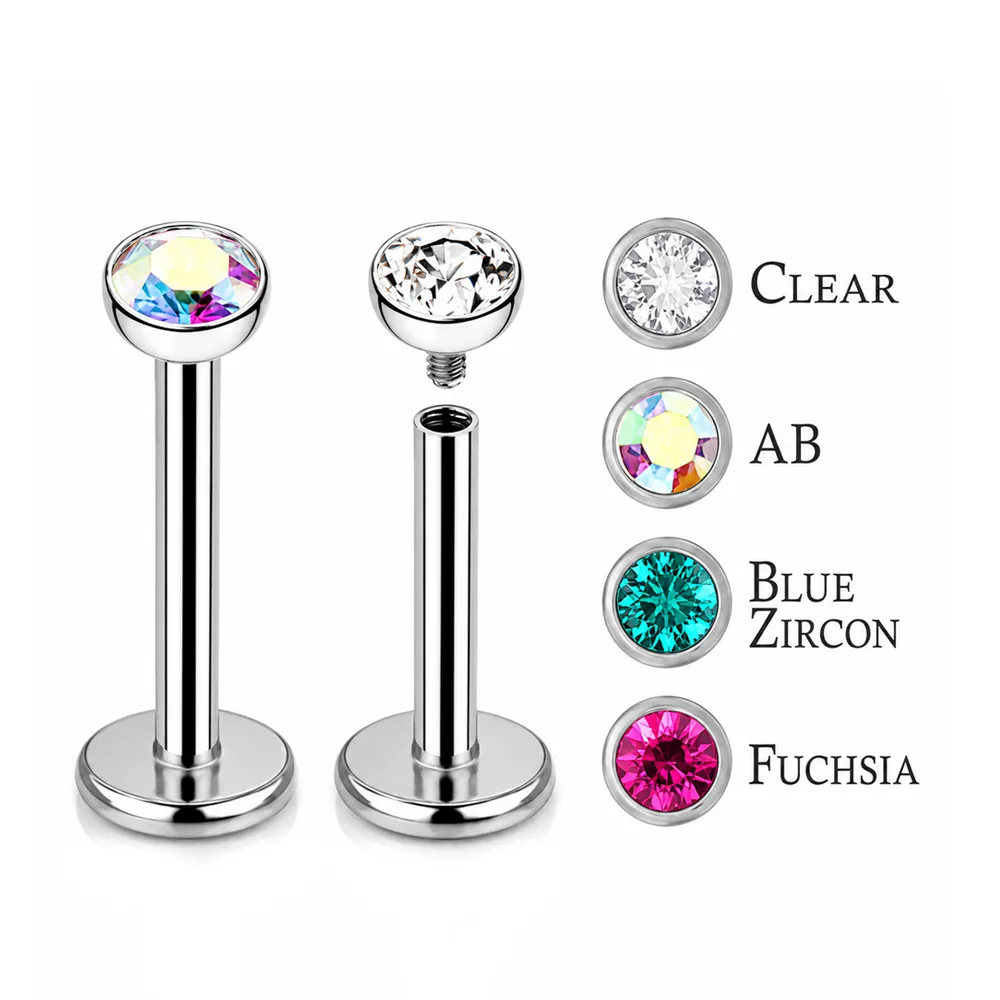 Internally threaded labret
Sterilized Titanium CZ Ball Top Internally Threaded Labret
An internally threaded labret with a CZ ball top to compare for a professionally selected fit.
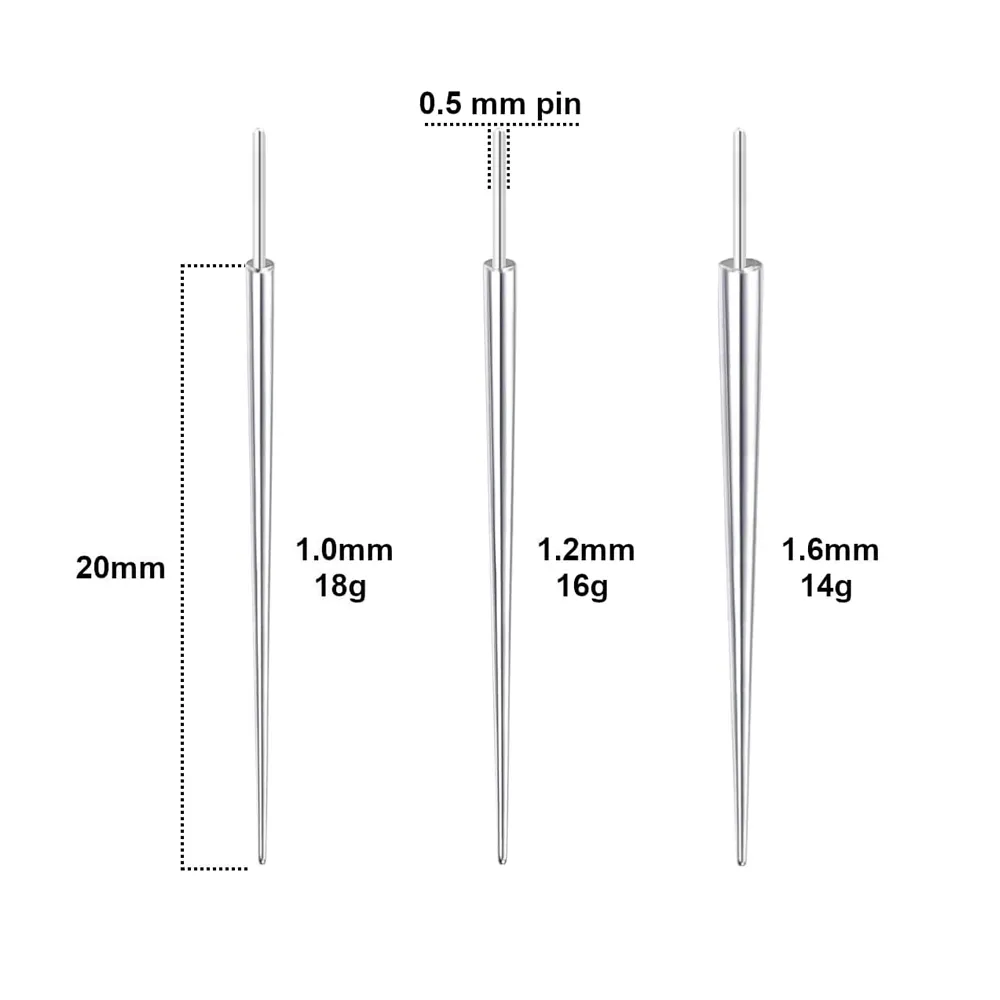 For the professional change
Sterilized Insertion Pin for Threadless Body Jewelry
An insertion accessory for trained piercers; not a home downsizing tool.
Let the piercer choose the replacement
Sterilized titanium jewelry is a candidate for new and healing piercings because it comes sterilized; your trusted piercer determines whether the actual piece meets APP requirements and fits the anatomy.
BEFORE BOOKING OR BUYING
What should you check before choosing shorter piercing jewelry?
A downsize should solve a specific fit problem, not create a tighter one. Bring the current jewelry and your questions to the piercer and confirm which dimensions actually need to change.
- Swelling: Has the first swelling decreased enough to reassess length?
- Movement: Does the original jewelry now catch or move excessively?
- Clearance: Would the new piece avoid pressing into the tissue?
- Measurements: Are length, gauge, style and end compatibility correct?
- Quality: Has the piercer confirmed suitable material, smooth finish and sterilization?
- Aftercare: Do you know the studio's follow-up and cleaning instructions?
FAQ
12 questions about piercing downsizing, timing and jewelry fit
The APP guidance below explains why post length changes during healing and when a professional fit check is the right next step.
What does downsizing a piercing mean?
APP defines it as replacing the initial longer post with a shorter one once early swelling subsides. This is a change in wearable length, not automatically in gauge or jewelry style.
When should I downsize my piercing?
When swelling has gone down enough that your initial jewelry has excessive length. APP ties the decision to fit, so ask the piercer who performed your piercing for an assessment.
When should I downsize a helix or cartilage piercing?
Ask your piercer when the initial swelling decreases. APP warns that prolonged excess length and sleeping pressure can contribute to a helix angle change or migration.
Can I downsize my piercing at home?
APP says healing piercings need professional jewelry changes. Have a qualified piercer select and install the shorter post.
Why is my first piercing jewelry so long?
APP explains that initial extra room accommodates swelling and helps prevent the jewelry from embedding in tissue. That extra room may later make the post move or snag.
What happens if I miss the piercing downsize?
APP links excess length to irritation and warns that a helix can change angle. Arrange a fit check with your piercer.
Do earlobe piercings need downsizing?
Some do, but APP says many piercings need a downsize, not every one. Have the piercer check your lobe's swelling, current post length and fit before changing it.
Will downsizing help an irritation bump?
It may help when excessive jewelry length is causing mechanical stress. APP also describes aftercare, material and style as possible contributors, so ask a piercer to assess the cause.
Does piercing downsizing cost money?
Ask the studio about jewelry costs and its downsize policy. Have a piercer decide the correct fit.
Do tongue and lip piercings need downsizing?
APP specifically advises replacing long initial oral jewelry after swelling decreases to reduce possible contact damage to teeth and gums. Have a qualified piercer handle the change.
Does downsizing change the gauge, and is it the same as downsizing a stretch?
Routine downsizing shortens a post. After overstretching, APP uses downsize for returning to a previous smaller gauge.
What should I do after a professional downsize?
Continue APP aftercare, avoid twisting the jewelry and follow your piercer's fit advice.
RESEARCH
Sources Consulted
APP guidance supports timing, fit, aftercare and piercing complications. NeoMetal explains the manufacturer-specific threadless jewelry system.
- Association of Professional Piercers (APP): Piercing FAQ and Downsizing
- APP: Suggested Aftercare for Body Piercings
- APP: Jewelry for Initial Piercings and Fitting Standards
- APP: Oral Piercing Aftercare
- APP: Oral Piercing Risks and Safety Measures
- APP: Troubleshooting Irritation and Jewelry Issues
- APP: Jewelry for Healed Piercings
- APP: Stretching Your Piercing
- NeoMetal: Guide to Threadless Jewelry