


 Powered by Comercia.io
Labret means a flat disc, straight post and one removable front; barbell means a straight or curved bar with ends on both sides; stud is an earring-style label, often with a butterfly back. These are catalog constructions, not piercing-placement rules. We carry sterilized titanium labrets, barbells, posts and ear studs; the qualified piercer chooses shape, gauge and length according to anatomy.
Explore Titanium Labrets Compare Straight Barbells
QUICK ANSWER
What is the difference between a labret, a barbell and a stud?
Labret = flat-back post; barbell = two-ended bar; stud = broad earring term. Our CZ ear studs have butterfly backs, while our titanium labrets have a fixed flat disc and screw-in or push-in front. The piercer assesses the correct style and dimensions.
LABRET / FLAT BACK
Flat disc, post and removable front; screw-in or push-in.
BARBELL / BAR
Straight or curved two-ended shaft; circular sizes use inner diameter.
STUD / EARRING
Earring style; our CZ ear studs have butterfly backs.
PROFESSIONAL JEWELRY VOCABULARY
What do labret, barbell and stud mean in a body jewelry catalog?
These names describe construction in professional catalogs. A labret is our flat-disc post style; barbell names a bar with two end positions; stud describes an earring-like piece. The name alone does not tell a piercer the gauge, backing or closure. A labret stud can have a flat back, while a butterfly stud has a separate clasp.
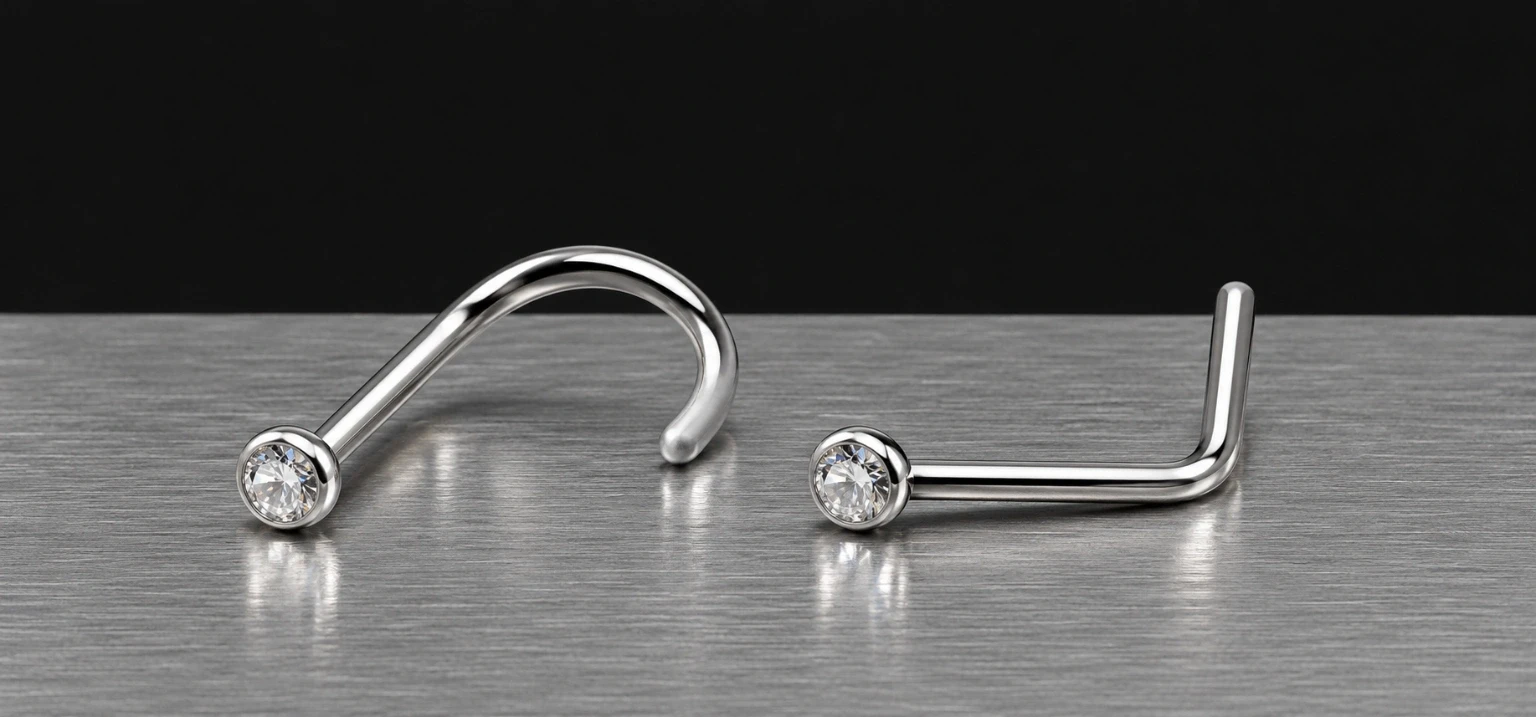
Labret names a post style
Labret post describes construction, not a required lip placement. The piercer selects the jewelry for the anatomy.
FLAT BACK / ONE DECORATIVE END
What is a labret stud or flat-back labret, and how is it built?
A complete labret has a flat disc, straight post and one removable front. We carry internally threaded versions with a screw-in front and threadless push-in versions with a press-fit front. The disc diameter, front size, gauge and wearable post length are separate buying measurements.
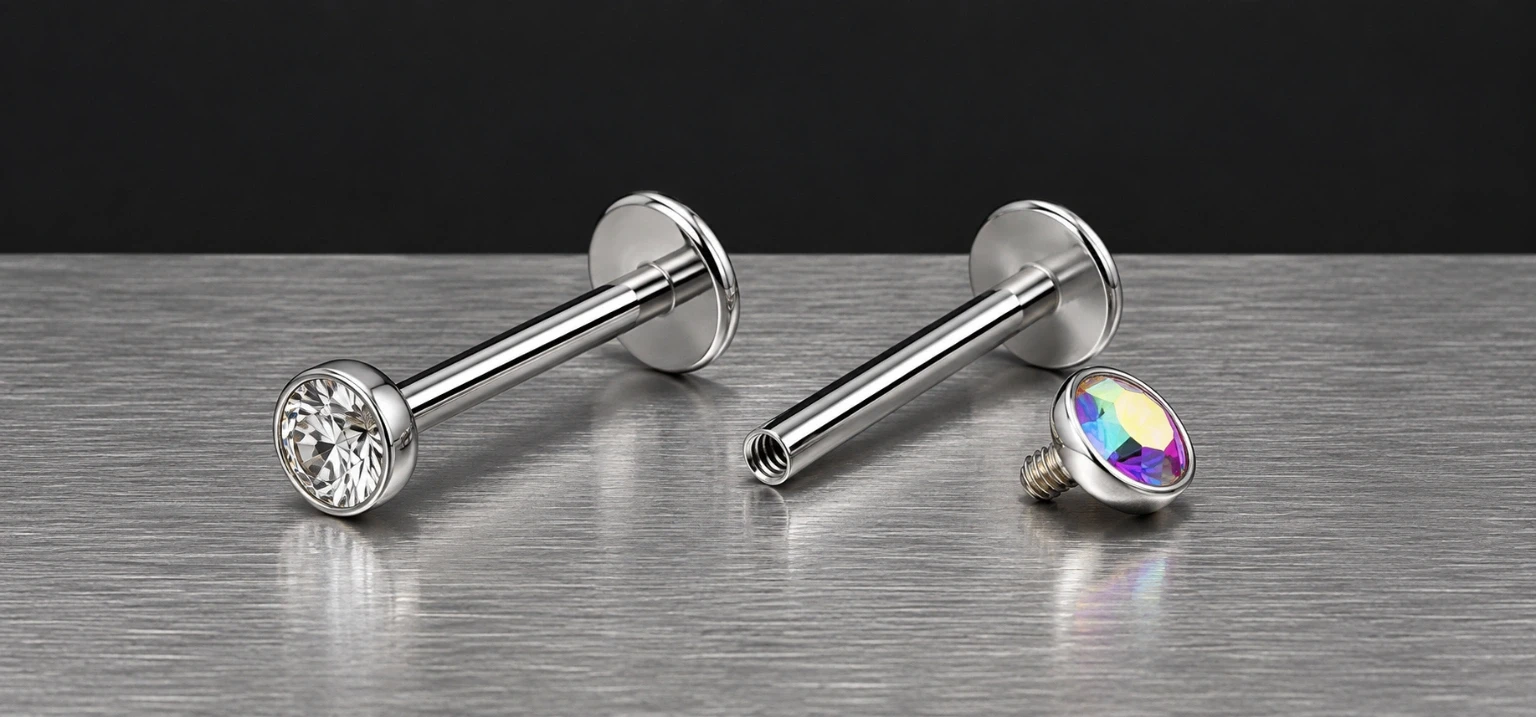
TWO-END BAR DESIGNS
How is a straight barbell different from a curved or circular barbell?
Barbells have an end on either side of a shaft. Our straight titanium version uses 3 mm balls; our circular open-ended, horseshoe-style version also has 3 mm balls but is selected by inner diameter. Curved bars bend along the shaft; long industrial bars are a separate straight-bar format.
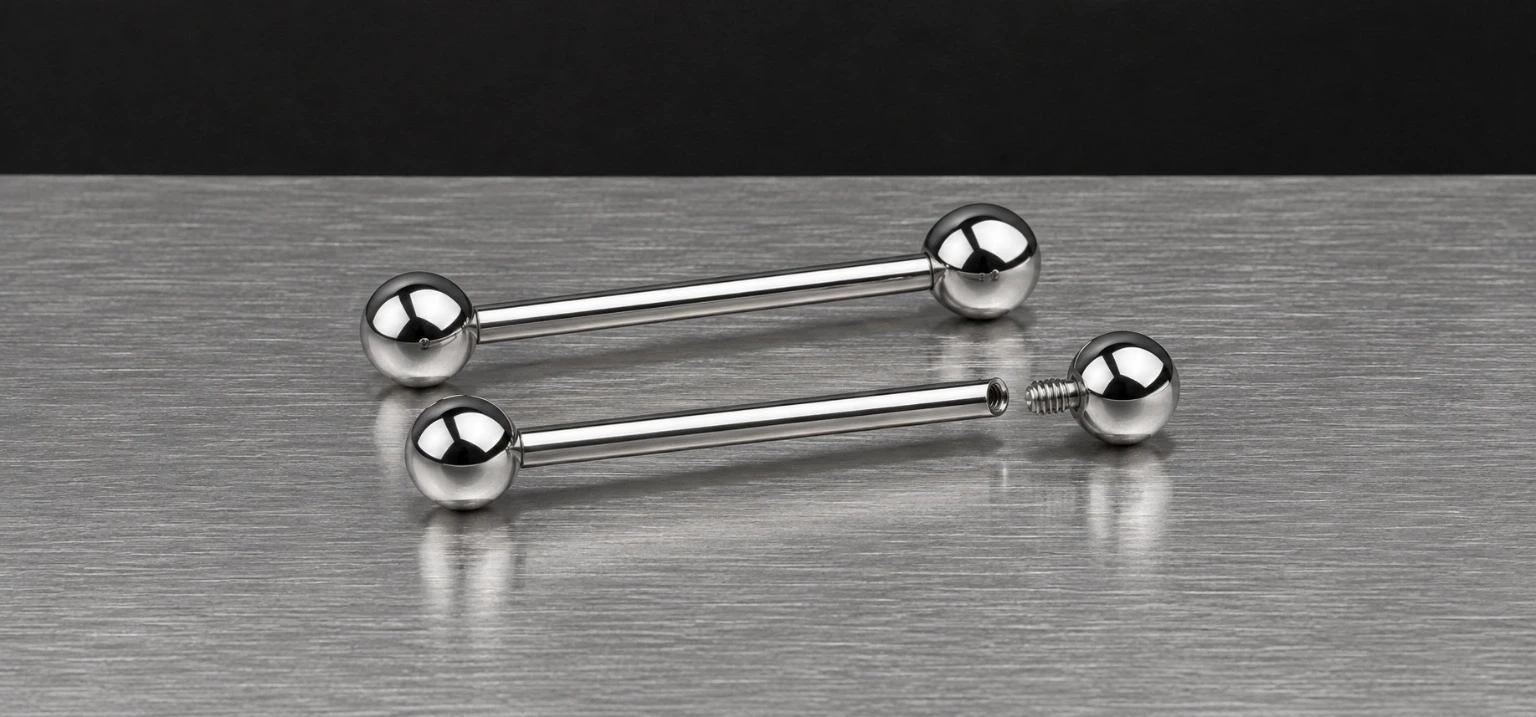
For long straight-bar sizing, see Industrial Bar Sizes. For comparisons involving closed rings and clickers, see Captive Bead Ring vs Segment Ring vs Clicker.
WHY THE WORD STUD CAUSES CONFUSION
Is an earring stud the same thing as a labret stud or a flat back?
Stud is an earring-style term, not a guaranteed backing type. Our titanium CZ ear studs have removable butterfly backs. Our labret studs instead have a fixed flat disc and a removable front. Confirm the exact product, connection and gauge when an order simply says stud.
The same caution applies to nose-jewelry names such as nostril screws, bones and L-bends. Those are separate construction styles discussed in Nose Jewelry Types: Nose Screw, Stud and Ring.
SIDE-BY-SIDE CONSTRUCTION TABLE
How do labrets, barbells and studs compare by parts, removable ends and measurements?
Compare the part that sits at the back, the shaft shape and the parts that detach. These attributes make a better purchase order than the broad name alone.
| Jewelry style | How it is built | What comes off | How it is measured | SVT Shop example |
|---|---|---|---|---|
| Flat-back labret | Flat disc plus straight post and front | One decorative front | Gauge, wearable length, disc and top size | Internally Threaded Labret 1.2 mm |
| Push-in labret | Flat-back post plus press-fit front | Threadless decorative front | Gauge, post length, disc and top size | Push In Labret 20G or 16G |
| Straight barbell | Straight bar with ends at both ends | End pieces according to construction | Gauge, wearable bar length and ball size | Internally Threaded Straight Barbell |
| Circular barbell | Open circular shaft with two ends | End pieces according to construction | Gauge, inside diameter and end size | Internally Threaded Circular Barbell |
| Industrial barbell | Long straight shaft and two ends | End pieces according to construction | Gauge, wearable length and ends | Sterilized Titanium Industrial Barbells |
| Butterfly-back stud | Earring post, decorative face and butterfly | Butterfly backing | Post and backing specifications for the exact item | Titanium CZ Ear Studs Butterfly Back |
| Post-only labret | Flat disc and post without a front | No decorative top supplied | Gauge, post length, disc size and connection | Internally Threaded or Push In Labret Post |
GAUGE, LENGTH, DIAMETER AND ENDS
How do you measure a labret post versus a straight or circular barbell?
Gauge measures thickness; usable length measures the shaft between ends; circular styles use inner diameter. For labrets, distinguish post length from flat-disc diameter and front diameter. For barbells, distinguish usable length from ball size. A 3 mm ball is not a 3 mm post.
Identify the style first
Flat-back labret, straight bar, circular bar, butterfly stud or post-only component?
Record shaft gauge
Use the item's stated 16G / 1.2 mm or 20G / 0.8 mm measurement, as appropriate.
Record length or inner diameter
Do not replace a straight-length measurement with a circular inner diameter.
Record disc and ends separately
Check flat-disc diameter, ball size and which ends are included in the selected SKU.
Confirm construction and fit
Have the piercer select the final size for the anatomy and the intended jewelry stage.
For the general measurement framework, use Body Jewelry Size Guide.
INTERNAL THREAD / EXTERNAL THREAD / PRESS-FIT
What is the difference between internally threaded, externally threaded and threadless jewelry?
Internally threaded means the screw enters the post; externally threaded means the screw is on the post; threadless uses a press-fit pin. These closures can appear on different jewelry styles; the words labret or barbell do not specify the closure.
The Association of Professional Piercers (APP) says “Internally threaded jewelry is part of the APP standard for initial piercing jewelry” and accepts threadless as an alternative. APP warns external post threads form a rough surface that may pass through tissue.
Our complete internally threaded pieces and post-only threadless components require their respective matching ends; verify the connection when ordering.
| Connection | How the end attaches | APP initial-jewelry position | What to verify |
|---|---|---|---|
| Internally threaded | A threaded part of the decorative end screws into the post | Part of its initial-jewelry standard | Matching internal thread and complete engagement |
| Externally threaded | A threaded post screws into the decorative end | Exposed threads can pass through tissue | Construction and suitability before initial use |
| Threadless / press-fit | A pin on the decorative end fits the post without screw threads | Acceptable alternative | Correct press-fit post and matching end |
The APP also advises that threaded ends be checked for tightness with clean hands. For a deeper closure comparison, read Threadless vs Internally Threaded Jewelry.
REAL SVT SHOP JEWELRY DIMENSIONS
What labret and barbell gauges, lengths and diameters do we carry?
We carry 16G (1.2 mm) labrets and barbells, plus 20G (0.8 mm) and 16G push-in labrets. These are catalog options; the piercer chooses the size.
Exact measurements to compare
- Internally threaded labret, 16G: 6, 7, 8, 9, 10 and 12 mm post lengths, with a 3 mm ball.
- Push In Labret, 20G: 6–10 mm post options, with 2.5 mm or 4 mm flat-disc choices.
- Push In Labret, 16G: A separate 1.2 mm threadless catalog family.
- Internally threaded straight barbell, 16G: 6–12 mm listed length range with 3 mm ball ends.
- Internally threaded circular barbell, 16G: 8, 10 and 12 mm inner-diameter variants with 3 mm ball ends.
- Labret posts only: Threadless or internally threaded, with the 16G internal-thread post listing a 2.5 mm base plate.
For location-specific decisions, the piercer can refer to Helix, Tragus, Conch and Daith Jewelry Sizes, Tongue Jewelry Sizes and Nipple Jewelry Sizes.
MATERIAL, POLISH AND INITIAL JEWELRY
Are sterilized titanium labrets and barbells suitable for new piercings?
Our sterilized titanium jewelry may suit new piercings because it comes sterilized; the trusted piercer decides. Sterility alone does not determine gauge, length, shape or closure.
APP includes ASTM F136 implant titanium and ASTM F67 commercially pure titanium in its initial-material guidance. It calls for anatomy-appropriate gauge, length, style and a smooth mirror finish. Sterility, material and closure must be evaluated together.
Do not automatically substitute a butterfly-backed stud for a flat-back labret in a new piercing. See Initial vs Healed Piercing Jewelry and Sterilized Titanium Jewelry for stage and material criteria.
ANATOMY DETERMINES THE STYLE
Can a piercer use a barbell where a labret is worn, or replace a stud with a flat back?
The qualified piercer chooses by anatomy, placement and fit. A flat disc, two-ended bar and butterfly-back stud use different constructions. Even a familiar jewelry name cannot establish that two pieces are interchangeable.
When changing jewelry during healing, consult the qualified piercer before assuming a different backing or shaft shape will work. See Downsizing Piercing Jewelry for the separate question of adjusting post length.
COMPLETE JEWELRY VS COMPONENTS
What is a labret post, and can you mix decorative tops between jewelry systems?
A post-only labret includes the flat disc and shaft, without a decorative front. Our sterilized options include threadless push-in posts and 16G internally threaded posts with a 2.5 mm base plate. Order a compatible top separately.
Match a threadless end to its press-fit system or an internally threaded end to its corresponding post. Shared gauge alone does not establish top compatibility between products.
Post, disc and front are three distinct terms
The post is the shaft; the disc is the flat backing; the front is the removable ornament. Writing post only in the order prevents an incomplete component from being mistaken for a finished piece.
COMMON CATALOG MIX-UPS
What are the most common mistakes when ordering labrets, barbells or studs?
Confirm backing, shaft shape, gauge, length and connection before ordering.
Ordering a butterfly-back stud instead of a flat-back labret
Both may be called studs, but the backings differ.
Calling every bar a straight barbell
Curved and circular bars have different geometry.
Confusing gauge with length
16G / 1.2 mm is thickness, not shaft length.
Reading an 8 mm circular barbell as an 8 mm straight post
Circular diameter is not straight-bar length.
Using a 2.5 mm backing size as the post length
Disc diameter is separate from post length.
Buying a post-only product as complete jewelry
Post-only items need compatible decorative ends.
Assuming internal-thread tops fit threadless posts
Internal and push-in connections are different.
Choosing a style solely by piercing name
The piercer chooses by anatomy.
SVT SHOP LABRETS, BARS AND STUDS
Which sterilized titanium labrets, barbells and stud styles can you buy at SVT Shop?
We carry complete labrets, post-only pieces, straight and circular bars, industrial bars and butterfly-back studs. Our sterilized titanium line may suit new piercings; the qualified piercer decides.
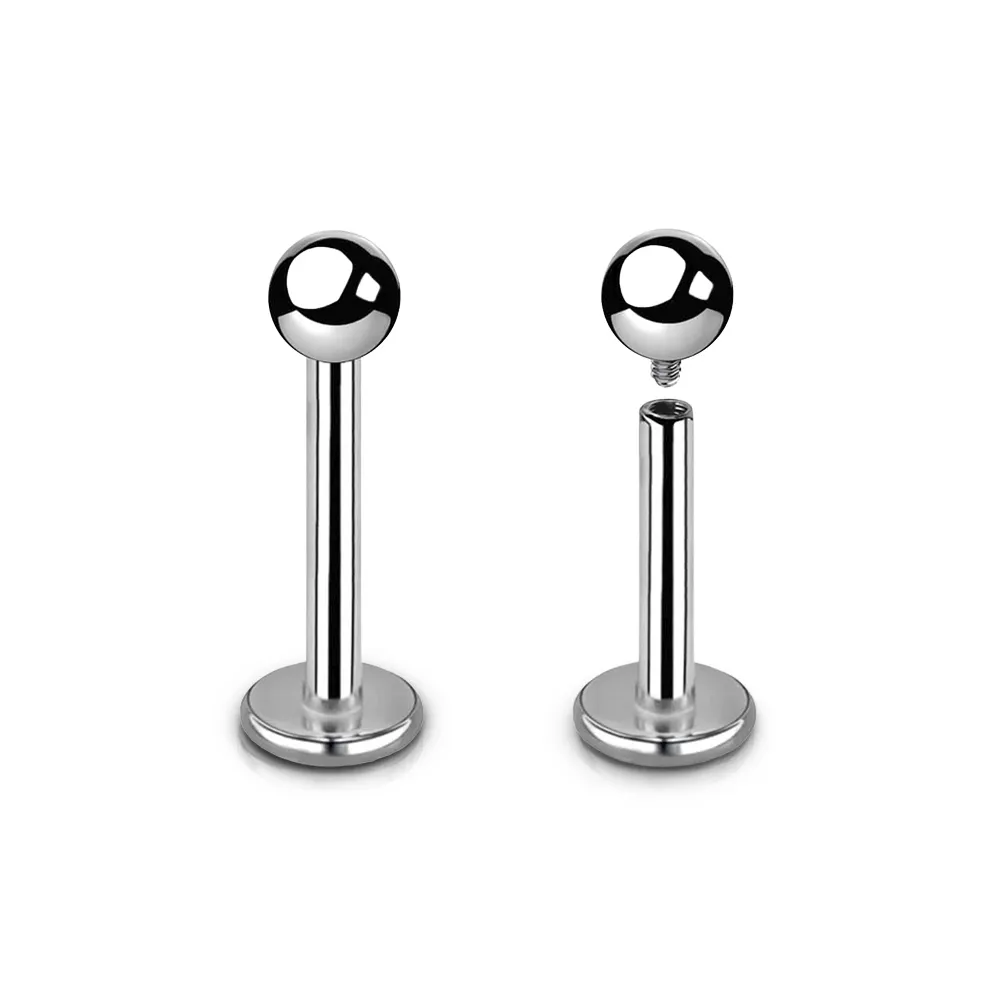 COMPLETE FLAT-BACK / INTERNAL THREAD
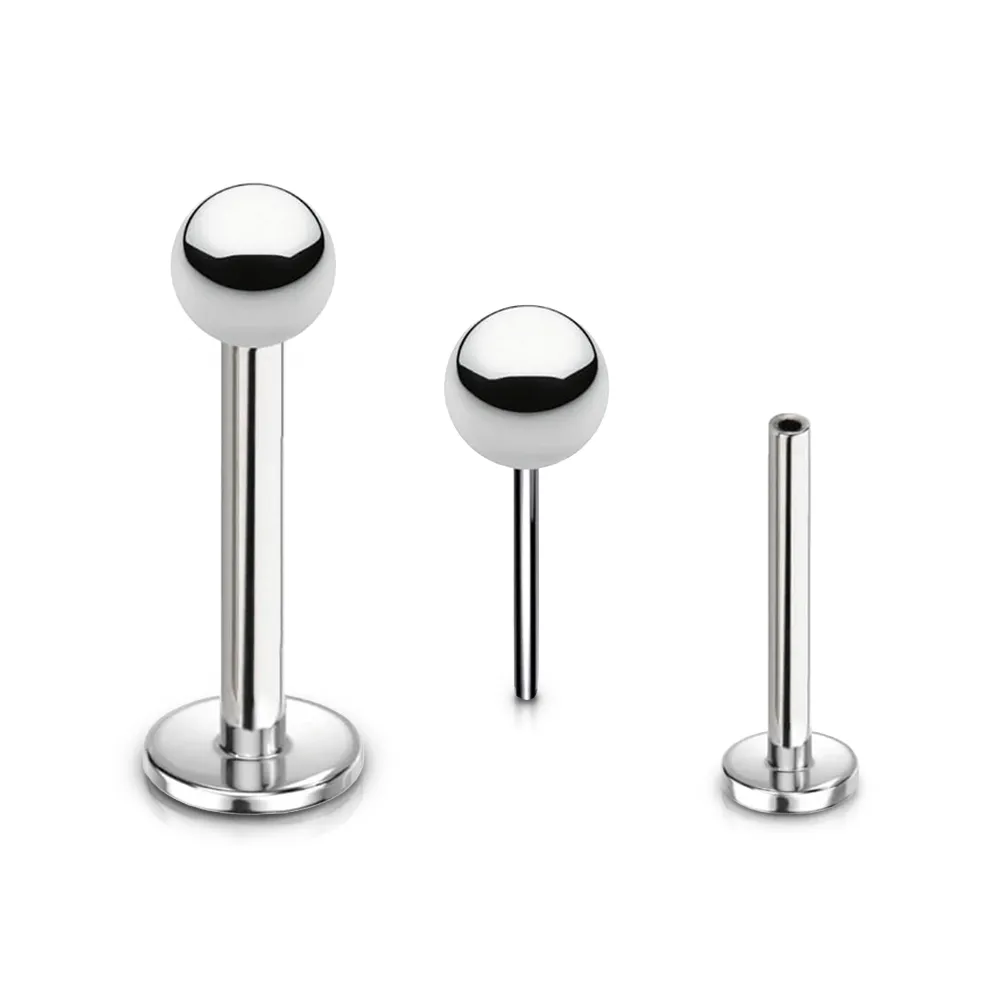
Sterilized Titanium - Internally Threaded Labret 1.2mm
16G flat-back labret, 3 mm ball, 6–12 mm listed lengths. Fixed disc and removable screw-in front.
 COMPLETE FLAT-BACK / 20G PRESS-FIT
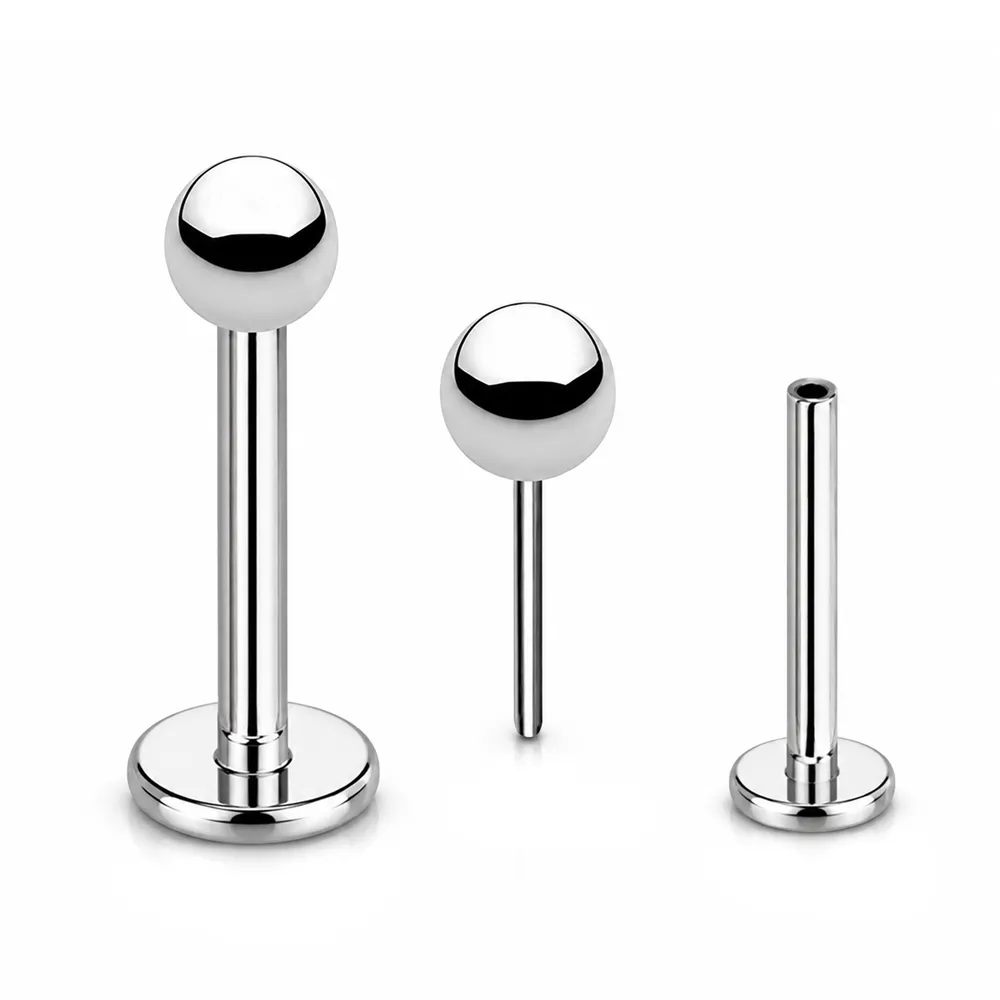
Sterilized Titanium - Push In Labret 0.8mm (20G)
20G threadless labret; 6–10 mm post lengths and 2.5 or 4 mm backing discs.
 COMPLETE FLAT-BACK / 16G PRESS-FIT
Sterilized Titanium - Push In Labret 1.2mm (16G)
Sterilized 16G flat-back labret with press-fit front rather than screw threads.
 FLAT-BACK COMPONENT / THREADLESS
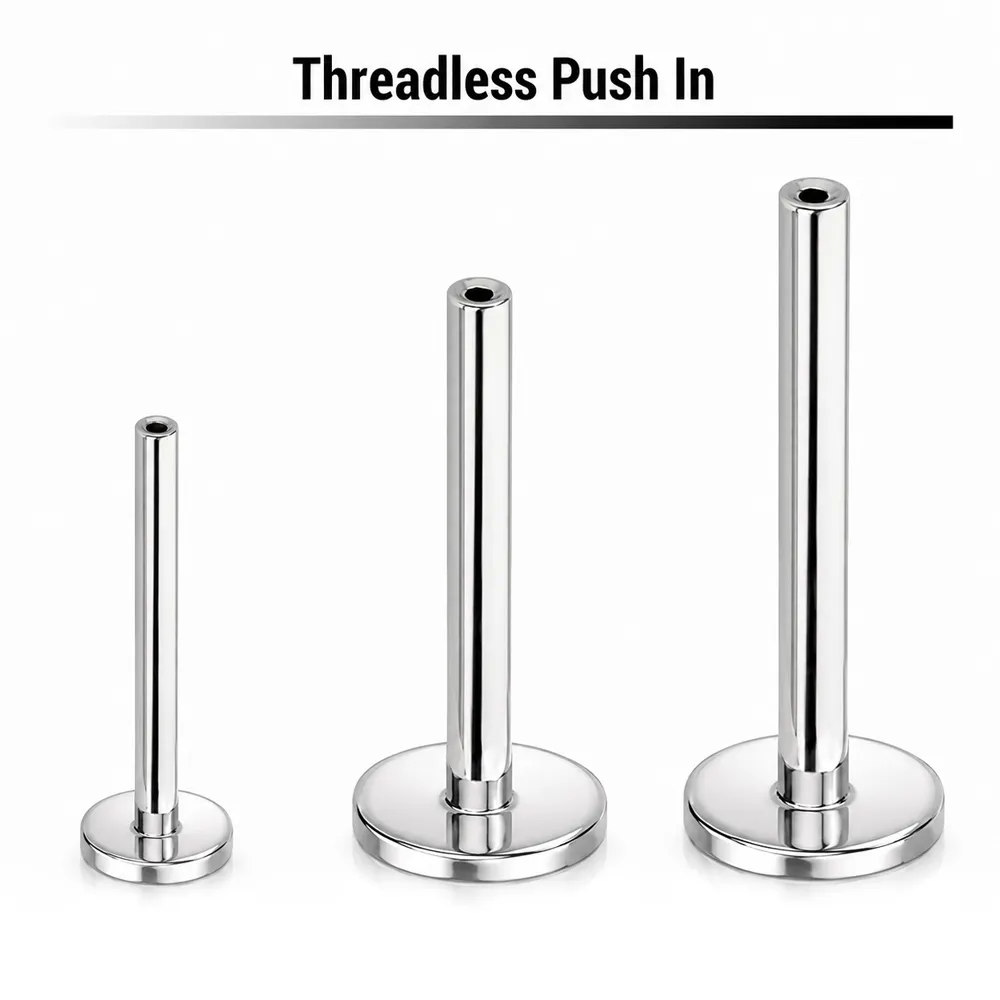
Sterilized Titanium - High Polish Threadless Push In Labret Post
Sterilized post only. Match a compatible threadless decorative top.
 FLAT-BACK COMPONENT / INTERNAL THREAD
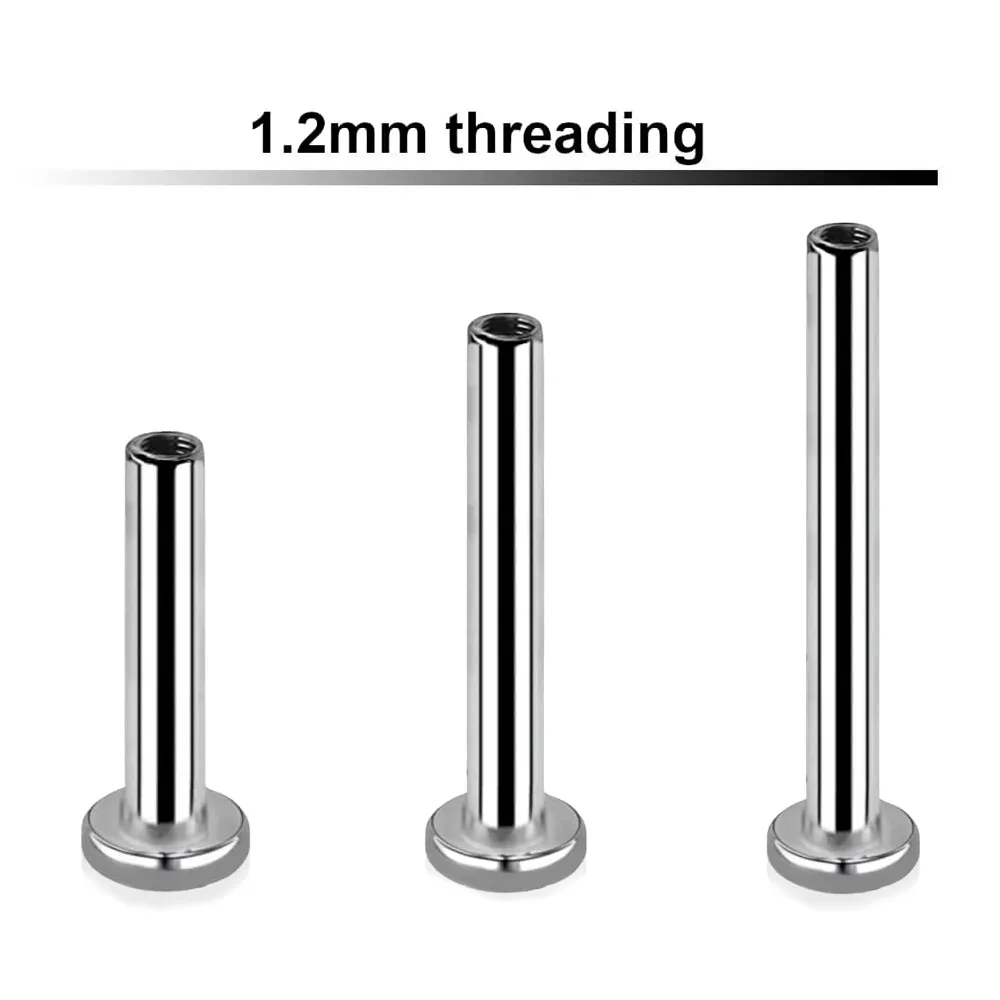
Sterilized Titanium - Internally Threaded Labret Post
16G internally threaded post with 2.5 mm flat base. Decorative top sold separately.
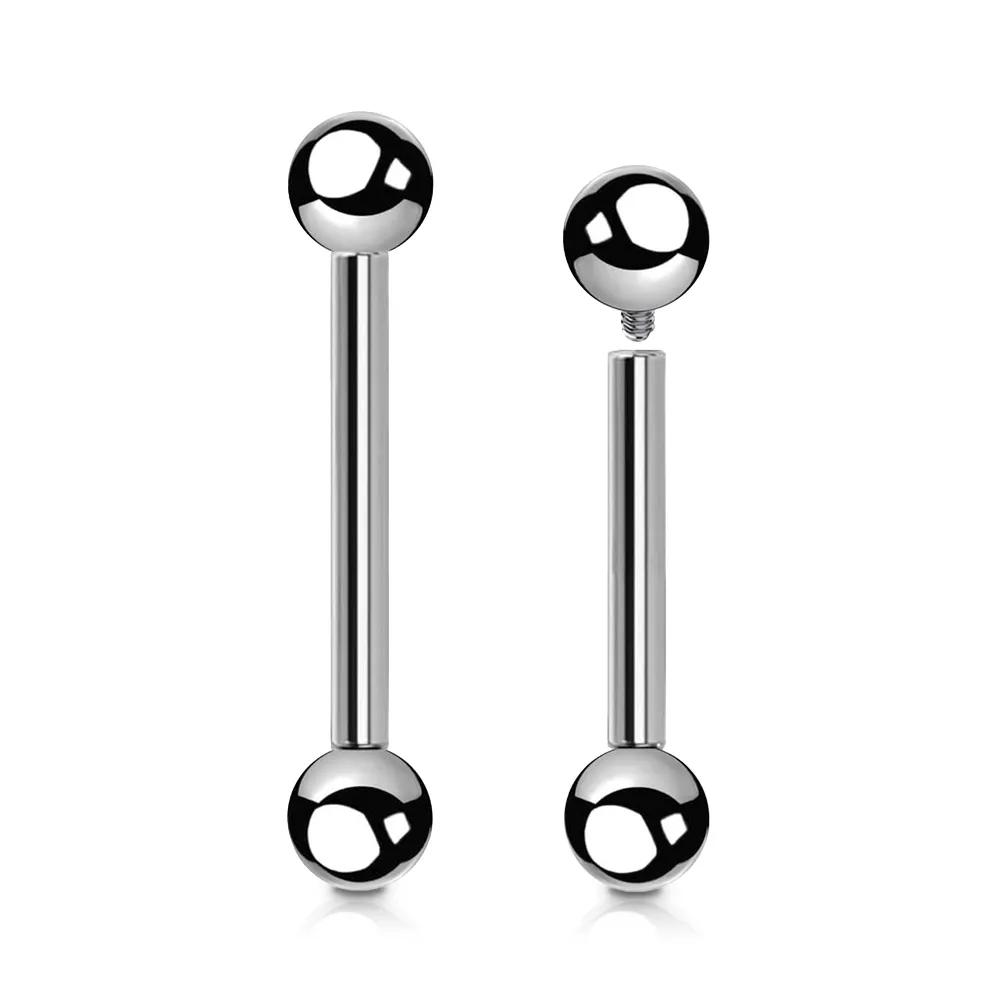 COMPLETE STRAIGHT BARBELL
Sterilized Titanium - Straight Barbell
16G internally threaded straight bar with 3 mm balls and 6–12 mm lengths.
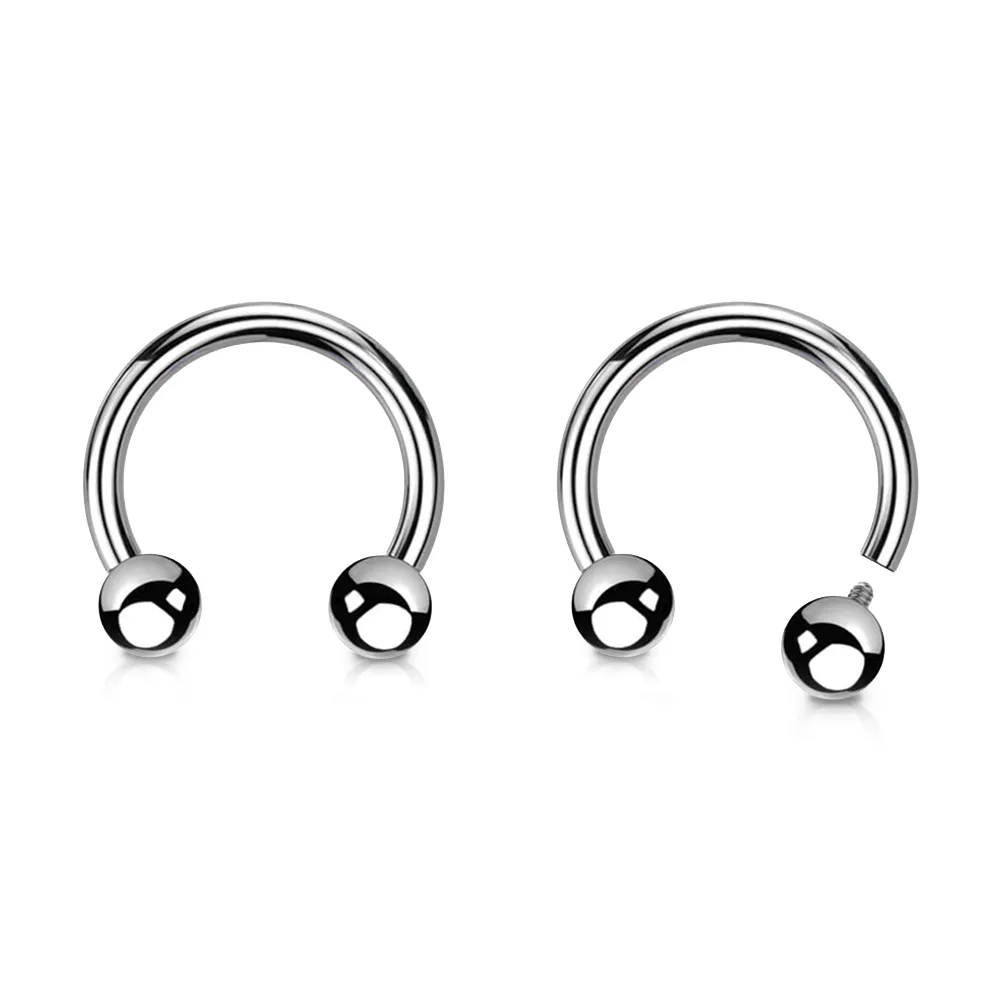 COMPLETE CIRCULAR BARBELL
Sterilized Titanium - Circular Internally Threaded Barbell
16G circular barbell, 3 mm balls and 8, 10 or 12 mm inner diameters.
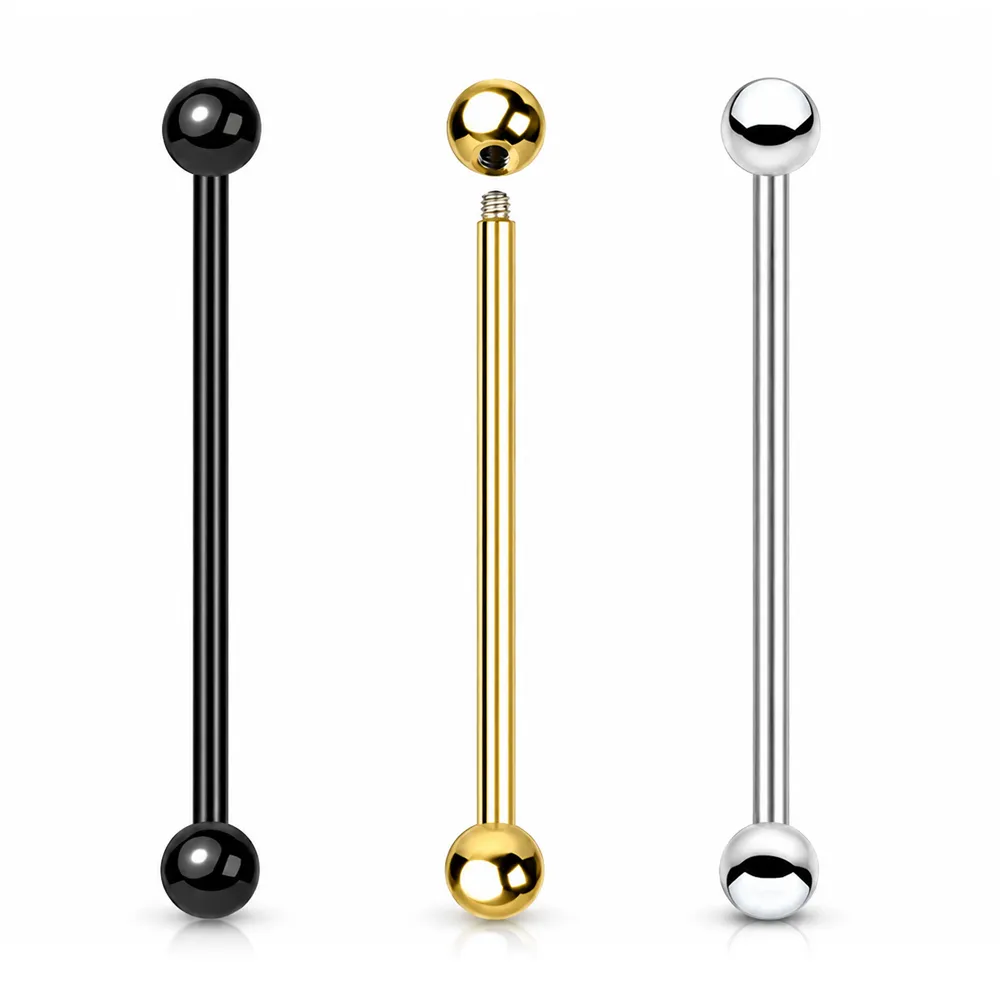 LONG STRAIGHT BARBELL
Sterilized Titanium - Industrial Barbells
Long straight barbell with two end positions; piercer selects the fit.
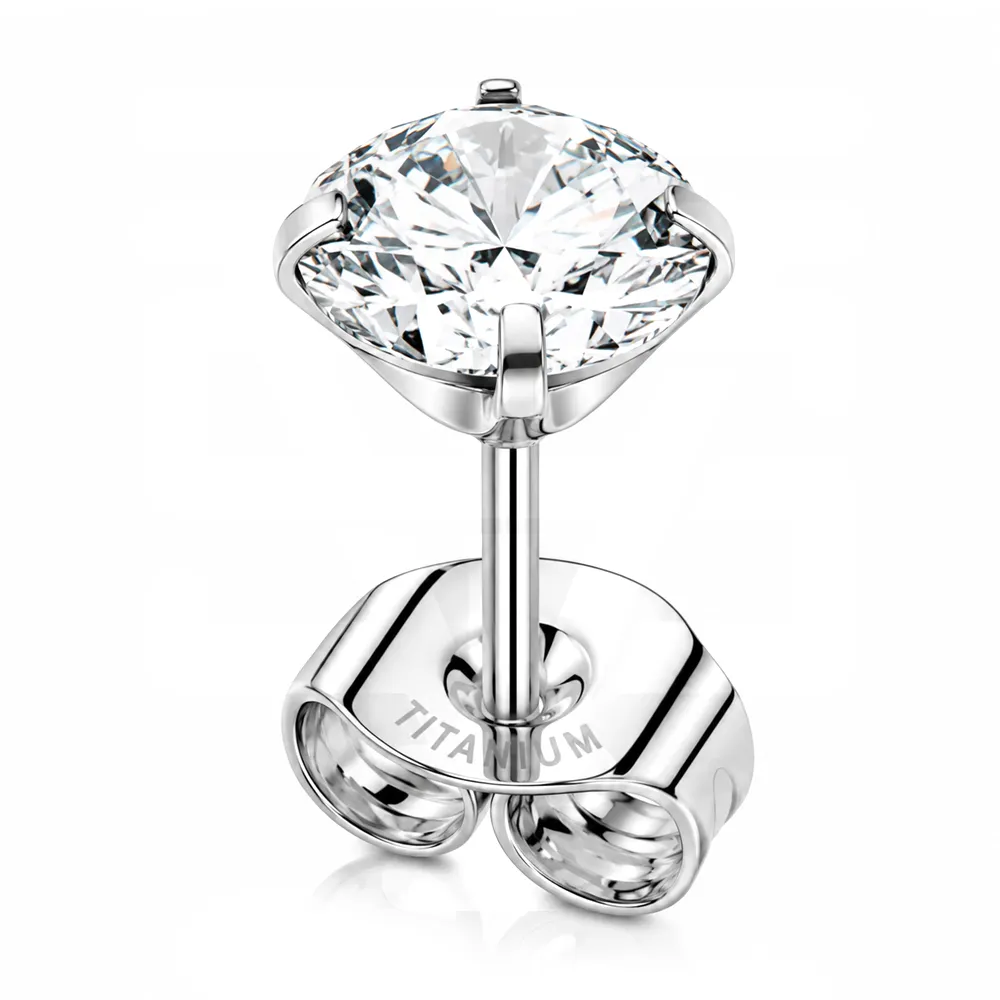 EARRING-STYLE STUD / BUTTERFLY BACK
Sterilized Titanium - CZ Ear Studs Butterfly Back
Prong-set CZ titanium ear studs with butterfly backs, not flat-disc labrets.
Explore Internally Threaded Labrets Explore Push In Labrets Explore Circular Barbells
BUY THE RIGHT CONSTRUCTION
What should a piercer or studio owner verify before ordering labrets, barbells or studs?
Confirm the exact jewelry style first; then check the gauge, wearable dimension, ends, connection and material. Use a full product description rather than a shorthand request for a stud.
- Style: Flat-back labret, straight/circular barbell, industrial bar or stud?
- Complete or post-only: Is a decorative end included?
- Gauge: Confirm 16G / 1.2 mm or 20G / 0.8 mm.
- Dimension: Wearable length or circular inner diameter?
- Backing: Flat disc, butterfly or ends on both sides?
- Ends: Record disc and ball diameters separately.
- Connection: Internal, external or threadless?
- Compatibility: Are the top and post matched?
- Initial use: Piercer evaluates fit, material, polish and sterilization.
- Order: Record full name and variant.
FAQ
Frequently asked questions about labrets, barbells, flat backs and studs
These answers address common product-language and sizing questions in professional piercing jewelry catalogs.
What is the difference between a labret and a barbell?
A labret has a fixed flat disc and one removable front; a barbell has ends on both sides. The piercer chooses the style.
Is a labret stud the same as a flat-back earring?
Usually, labret stud refers to a flat-back disc and removable front; verify it is not a butterfly-back earring.
Can a barbell be used where a labret is used, or vice versa?
The piercer decides by anatomy and size. These shapes are not automatic substitutes.
What is a labret post?
A flat-disc post without a decorative front. We stock internally threaded and threadless versions.
Internally threaded vs threadless: which does APP list for initial jewelry?
APP includes internally threaded jewelry and accepts threadless press-fit for initial piercings.
What is externally threaded jewelry, and why do studios check it?
Threads are on the post; APP says this rough surface can pass through tissue.
What is a push-in labret?
A flat-back labret with a press-fit decorative end rather than screw threads.
What gauge are labret posts?
Our lines include 16G / 1.2 mm and 20G / 0.8 mm; the piercer selects gauge.
What is the difference between an ear stud and a labret?
Our ear stud uses a butterfly backing; our labret has a fixed flat disc.
What does flat back mean in a jewelry listing?
It describes the backing disc; record disc diameter separately from post length and gauge.
Is a circular barbell the same as a closed ring?
No. A circular barbell is open and has two ends; a closed ring uses another closure.
How can I identify an internally threaded or threadless piece before opening its package?
Read the exact package or listing: internal thread is screw-in; threadless is push-in. Confirm compatible tops.
PROFESSIONAL REFERENCES
Sources Consulted
APP supplies the threading, fit and material guidance. Jewelry construction and listed sizes come from SVT Shop.