Powered by Comercia.io
No universal gauge, labret length or hoop diameter fits every helix, tragus, conch or daith: the piercer chooses based on anatomy. A flat-back labret is measured by post length, a hoop by inner diameter, and both by gauge. Compare the professional sizing guidance and exact sterilized titanium options we carry.
Explore Titanium Labrets Explore Hinged Rings
QUICK ANSWER
What size jewelry should a piercer choose for helix, tragus, conch or daith?
The piercer chooses gauge and fit for anatomy. Measure a flat-back by wearable post length and a hoop by inner diameter; initial swelling room and downsizing also matter. SVT Shop sizes are catalog options, not prescriptions.
FLAT-BACK LABRET
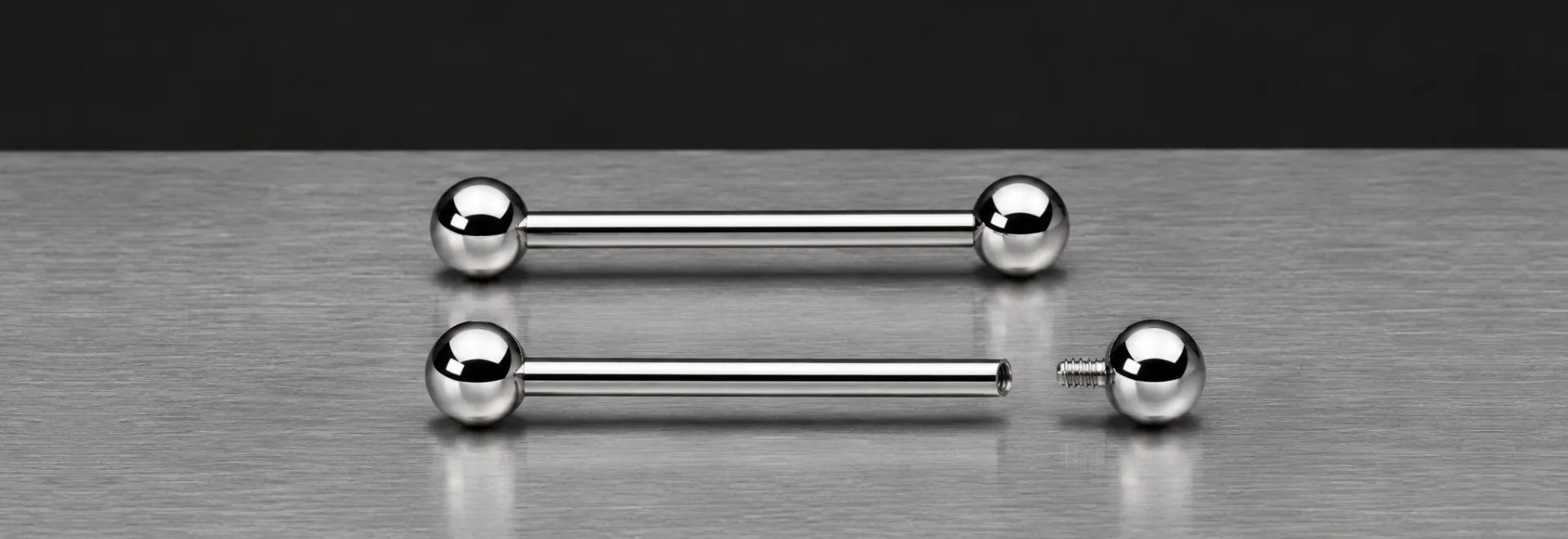
Threaded 16G titanium labrets include 6, 7, 8, 9, 10 and 12 mm posts.
HINGED HOOP
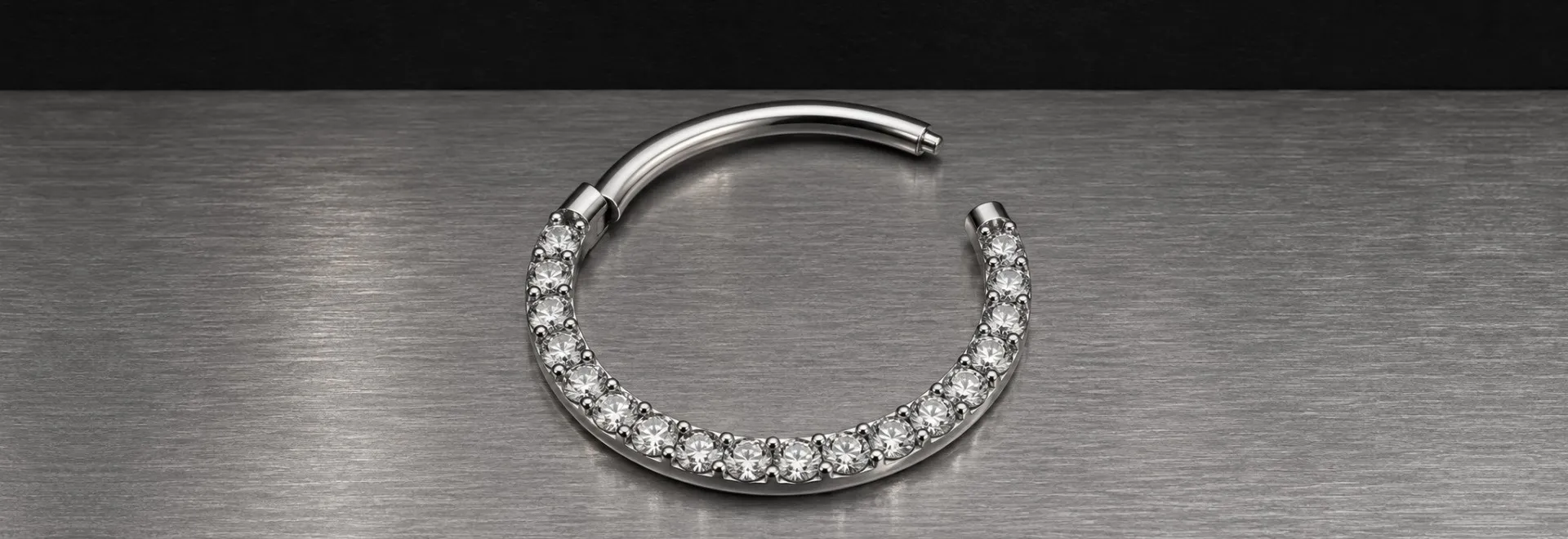
Hinged 16G titanium rings include 6, 7, 8, 9, 10, 12 and 14 mm inner diameters.
PROFESSIONAL FIT
A qualified piercer selects the initial style and handles downsizing during healing.
MEASURE THE RIGHT DIMENSION
How do gauge, labret post length and hoop inner diameter differ?
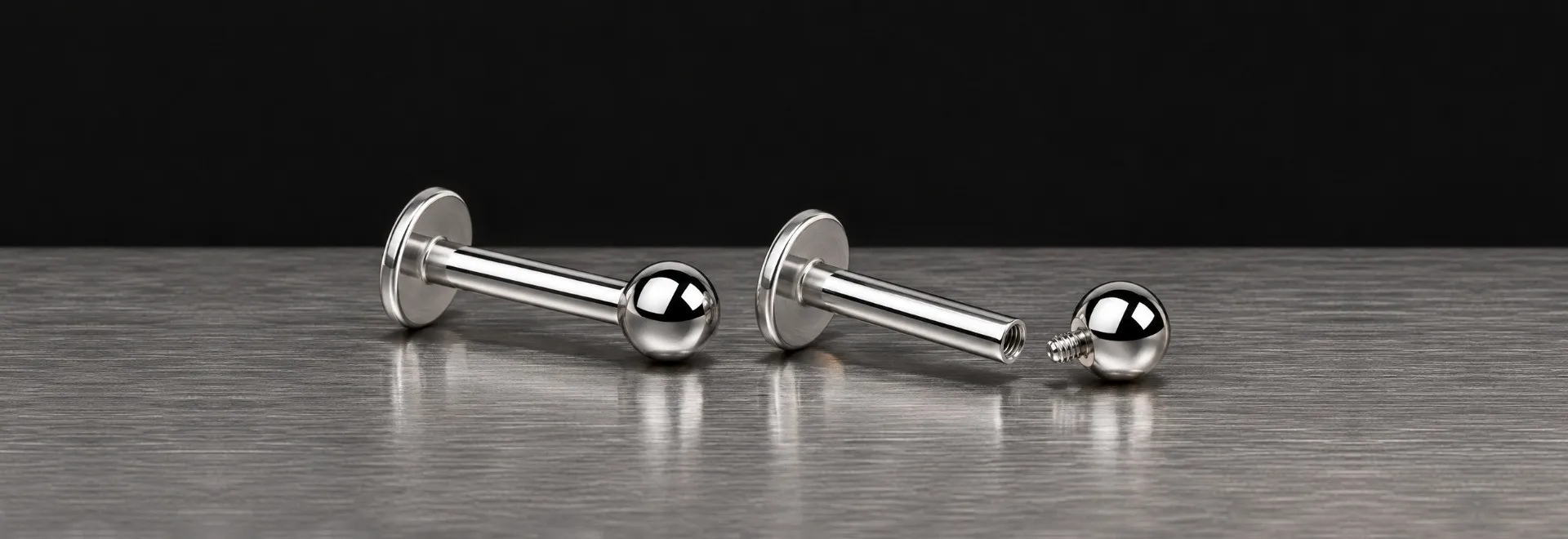
Gauge is thickness; labret length is the straight wearable post; hoop diameter is measured inside the ring. Exclude the flat base and decorative end from a post measurement, and the outer edge from a ring measurement.
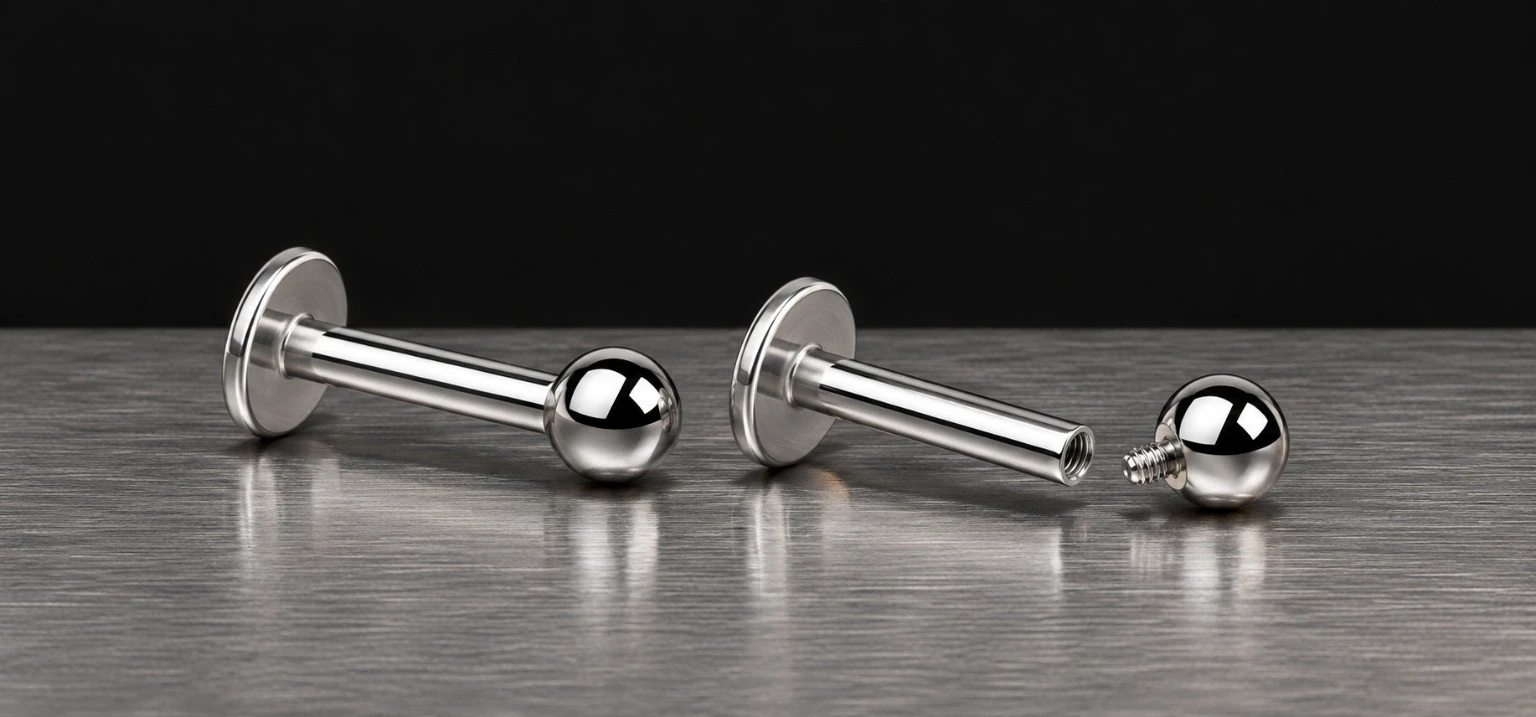
We carry 16G (1.2 mm) and 20G (0.8 mm) labrets, plus 16G (1.2 mm) and 18G (1.0 mm) rings. Those are product sizes, not cartilage standards.
Do not mix post length and ring diameter
An 8 mm post and 8 mm hoop describe different dimensions. Record the jewelry style beside the measurement.
See Body Jewelry Size Guide for general measurement terminology.
COMPARE THE FOUR REQUESTS
How do the jewelry-sizing decisions for helix, tragus, conch and daith compare?
None of these four piercing names determines a universal gauge, length or diameter. The piercer selects the style and verifies its corresponding measurement.
| Piercing | If choosing a flat-back post | If choosing a ring | Professional check |
|---|---|---|---|
| Helix | Post length, gauge, end | Ring inner diameter, gauge | Swelling and timely downsizing |
| Tragus | Post length and base disk | Inner diameter if chosen | Anatomy and clearance |
| Conch | Wearable labret length | Clear inside opening | Style and actual fit |
| Daith | If post selected, check its fit | Inner diameter and hinge | Closure and anatomy |
The APP requires anatomy-based fit. Stock options are choices to evaluate, not assigned sizes for a helix, tragus, conch or daith.
ACTUAL SVT SHOP SIZES
What flat-back labret lengths and hinged-ring diameters does SVT Shop carry?
These are SVT Shop catalog dimensions, not prescribed sizes. Verify each variant when ordering.
| SVT Shop family | Gauge | Post length or inner diameter | Ends or construction |
|---|---|---|---|
| Internally Threaded Labret | 16G / 1.2 mm | Posts: 6, 7, 8, 9, 10, 12 mm | 3 mm ball and flat-back design |
| Threadless Push In Labret | 16G / 1.2 mm | Posts: 6–10 mm | 2.5 or 4 mm base disks; push-in connection |
| Threadless Push In Labret | 20G / 0.8 mm | Posts: 6–10 mm | 2.5 or 4 mm base disks; push-in connection |
| High Polish Threadless Posts Only | 16G or 20G | Posts: 6, 7, 9, 10 mm | Post only; match a compatible end |
| Internally Threaded Posts, 2.5 mm Base | 16G / 1.2 mm | Posts: 6, 7, 8, 9, 10 mm | Post only; internal threads |
| Hinged Segment Ring | 16G / 1.2 mm | Inside: 6, 7, 8, 9, 10, 12, 14 mm | Hinged closure |
| Gold PVD Hinged Segment Ring | 16G / 1.2 mm | Inside: 6, 7, 8, 9, 10, 12 mm | Gold PVD finish and hinge |
| Hinged Segment Ring | 18G / 1.0 mm | Inside: 7, 8, 9, 10 mm | Hinged closure |
| Forward-CZ Hinged Ring | 16G / 1.2 mm | Inside: 8, 10 mm | Forward-facing CZ; listed for daith or septum |
An available 14 mm ring is not a universal conch hoop, and a 6 mm post is not a default healed-helix size.
HELIX LABRETS AND HOOPS
What size labret or hoop should a professional choose for a helix piercing?
The piercer chooses helix gauge, post length or ring diameter for the anatomy. The APP specifically uses helix as an example of why timely downsizing matters.
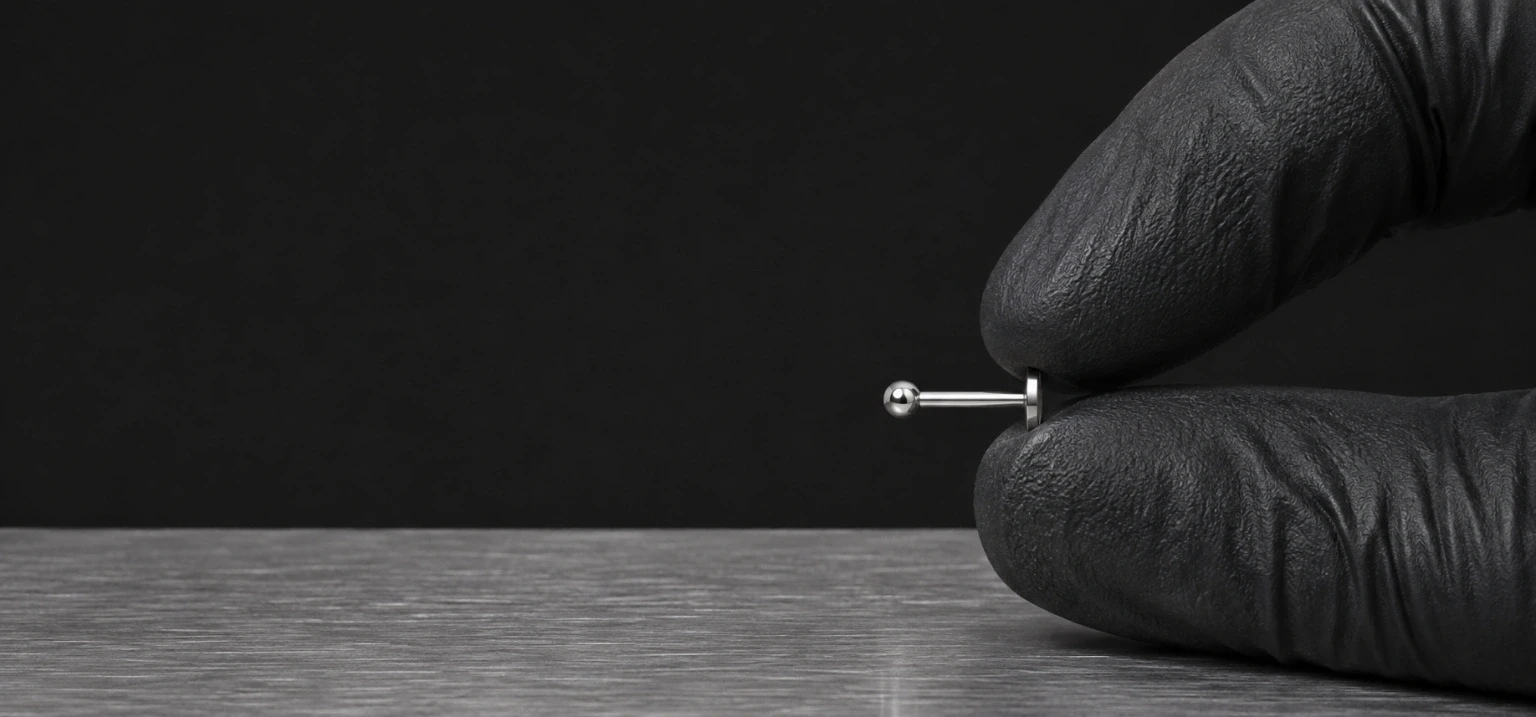
The APP warns that leaving extra post length after swelling can contribute to migration or an angle change, especially with sleeping pressure.
We carry threaded 16G labrets in 6–12 mm, threadless 16G labrets in 6–10 mm and several 16G ring diameters. The piercer selects the fit.
TRAGUS MEASUREMENTS
What gauge and flat-back post length should a piercer choose for a tragus?
The APP gives no universal tragus gauge or post length. A piercer evaluates the tissue and records the actual jewelry style.
Our threaded 16G labret has a 3 mm ball; our 16G and 20G threadless options have 6–10 mm posts and 2.5 or 4 mm base disks. Disk size is not post length.
APP warns that jewelry too thin for the tissue may contribute to migration or rejection. Confirm both gauge and connection.
CONCH STUD VS HOOP
How does a piercer choose a conch hoop diameter or stud length?
For a conch stud, measure post length; for a conch hoop, measure inner diameter. The piercer decides the style and clearance.
We carry 16G hinged rings through 14 mm and 18G rings in 7–10 mm options, plus labrets. Neither range assigns a conch size.
Why a post-to-ring change needs another measurement
An 8 mm post and 8 mm ring are not interchangeable measurements. The piercer must assess the replacement style.
See Captive Bead Ring vs Segment Ring vs Clicker for closures.
DAITH RING FIT
What inside diameter and gauge should a daith ring have?
A qualified piercer selects a daith ring by gauge, inside diameter and fit; there is no universal daith diameter.
Our sterilized forward-CZ 16G hinged ring comes in 8 and 10 mm, with daith listed as an application. Plain 16G hinged rings offer other diameters.
A decorative front or hinge may differ even when the diameter matches. Save the full product variant.
INITIAL VS HEALED CHOICES
Should a helix, tragus, conch or daith start with a stud or hoop?
The piercer selects initial style and size for anatomy and swelling. There is no universal first style for these four piercings.
APP recommends initial room for swelling and may call for a professional downsize before full healing. Switching to a hoop is a separate decision.
Our sterilized titanium posts and rings can be suitable for new piercings because they come sterilized; the trusted piercer decides the actual fit and suitability.
For healed changes, APP considers tenderness, completion of initial healing and ongoing crusting.
THE HELIX DOWNSIZE WINDOW
When should a helix or other cartilage labret be downsized?
After swelling subsides, a qualified piercer assesses a shorter post. The APP warns that missing the helix downsize window can contribute to migration or angle change, especially with sleeping pressure.
APP says some piercings need a downsize before fully healed. No fixed week or replacement length suits every ear.
Do not leave an overlong helix post because the piercing is still healing
The APP links missed helix downsizing with migration or angle change. Ask a qualified piercer to reassess excess length.
See Downsizing Piercing Jewelry for the broader follow-up.
MATERIAL AND CONNECTION
What titanium, flat-back and closure options should a piercer compare?
APP lists ASTM F136 implant titanium among suitable initial-jewelry materials and accepts internally threaded or threadless connections. Smooth finish and anatomy-based fit also matter.
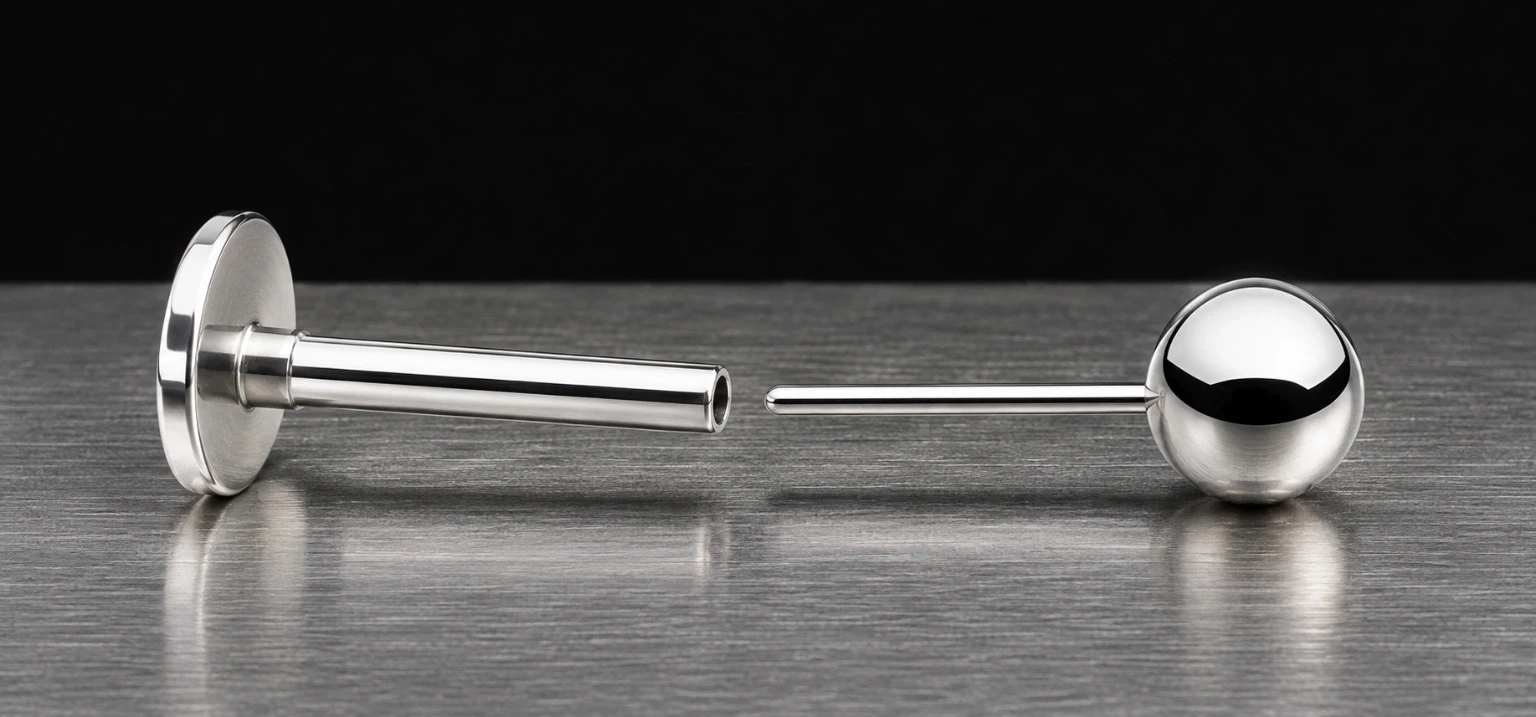
We carry sterilized titanium threaded and threadless labrets, replacement posts and hinged rings. Match each decorative end to its actual connection.
APP cautions against too-tight jewelry and excessively thin gauges. A smaller decorative end does not establish the proper shaft thickness.
Read Threadless vs Internally Threaded Jewelry and Implant-Grade Titanium and Sterilized Piercing Jewelry.
MEASURE AND REORDER
How should a studio measure existing labrets and hoops before reordering?
Record jewelry type, gauge and the correct usable dimension before reordering. Have a qualified piercer assess whether the current size still fits.
Identify the existing jewelry system
Record labret, post only, hinged hoop or forward-CZ clicker, and whether it is for initial fit, downsizing or a later change.
Check the gauge separately
Confirm the product gauge without inferring it from the decorative end.
Measure the correct usable dimension
For labrets measure the post between base and top; for hoops measure the clear inner opening.
Identify the end, disk or hinge
Note the ball or disk diameter, threading or hinge separately.
Have the piercer assess the current fit
The piercer checks swelling, pressure, angle and readiness for the change.
Save the exact reorder code
Save the complete SKU, gauge, size, base or end and finish.
FIT REVIEW AND MEDICAL REFERRAL
When is a cartilage-jewelry problem a piercer issue, and when should someone see a doctor?
APP says changes to jewelry size, style or material often help with fit-related problems. A piercer reviews jewelry; a doctor assesses suspected infection or illness.
APP warns that sleeping pressure can change cartilage angle and that serious cartilage infection can cause disfigurement. Do not diagnose a bump from appearance.
Refer serious symptoms promptly
APP advises a doctor for severe redness, swelling or pain, and for symptoms worsening or lasting a week. Piercers evaluate jewelry fit.
See Piercing Bump and Scar Types and Piercing Rejection vs Migration.
AVOID WRONG-SIZE ORDERS
What are the common mistakes when buying helix, tragus, conch or daith jewelry?
Avoid guessing sizes from piercing names or confusing post length with ring diameter. Each order needs an anatomy-based fit assessment.
Calling one gauge standard for all cartilage
16G and 20G are catalog choices; APP requires appropriate gauge.
Assuming a helix always needs a specific post length
Initial and later lengths depend on anatomy and swelling.
Leaving excess helix post length unchecked
APP warns that excess length can contribute to angle change.
Measuring a hoop across the outside
Use the clear inner opening, not the outside diameter.
Using a ring diameter as a labret length
An 8 mm hoop and an 8 mm post measure different things.
Assuming the 2.5 mm disk is the post length
A 2.5 mm disk is an end measurement, not the post length.
Changing jewelry during healing without a piercer
APP directs changes during healing to qualified piercers.
Ignoring pressure or severe symptoms
Pressure may shift cartilage angle; severe symptoms need medical review.
SVT SHOP CARTILAGE JEWELRY
Which sterilized titanium labrets, posts and hoops can you buy at SVT Shop?
We carry sterilized titanium labrets, posts and rings. They can be suitable for new piercings because they come sterilized; the trusted piercer decides which size, material and style fit.
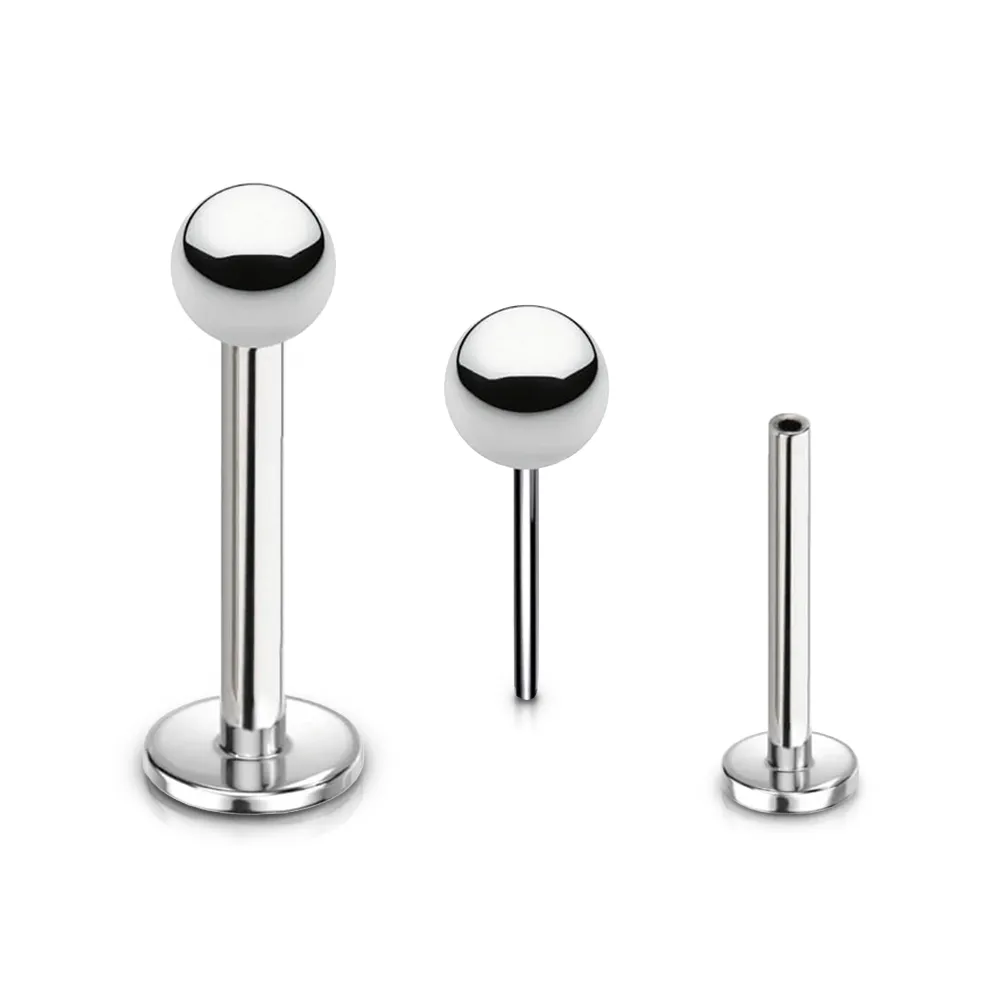
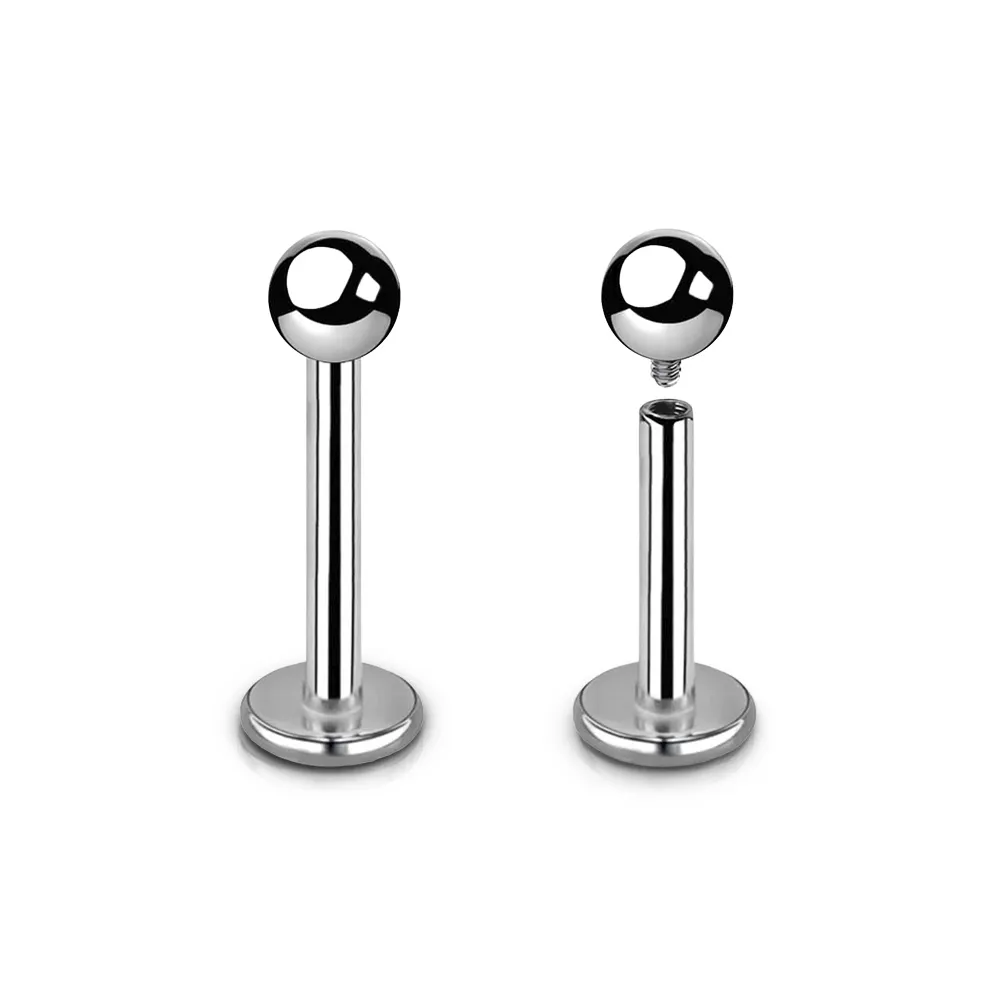 16G / INTERNALLY THREADED LABRET
Sterilized Titanium - Internally Threaded Labret 1.2mm
16G internally threaded flat back, 3 mm ball; 6, 7, 8, 9, 10 or 12 mm posts.
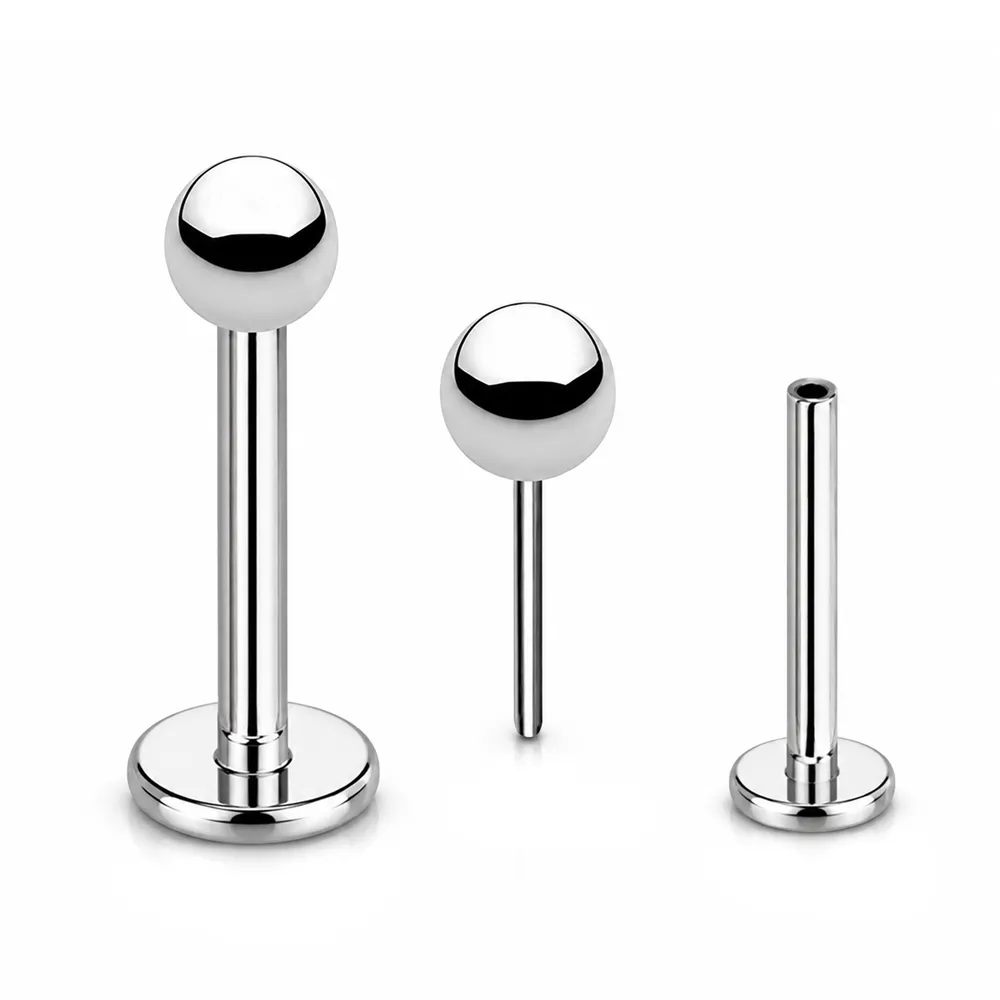 16G / THREADLESS FLAT BACK
Sterilized Titanium - Push In Labret 1.2mm
16G threadless push-in labret, 6–10 mm posts with 2.5 or 4 mm base disks.
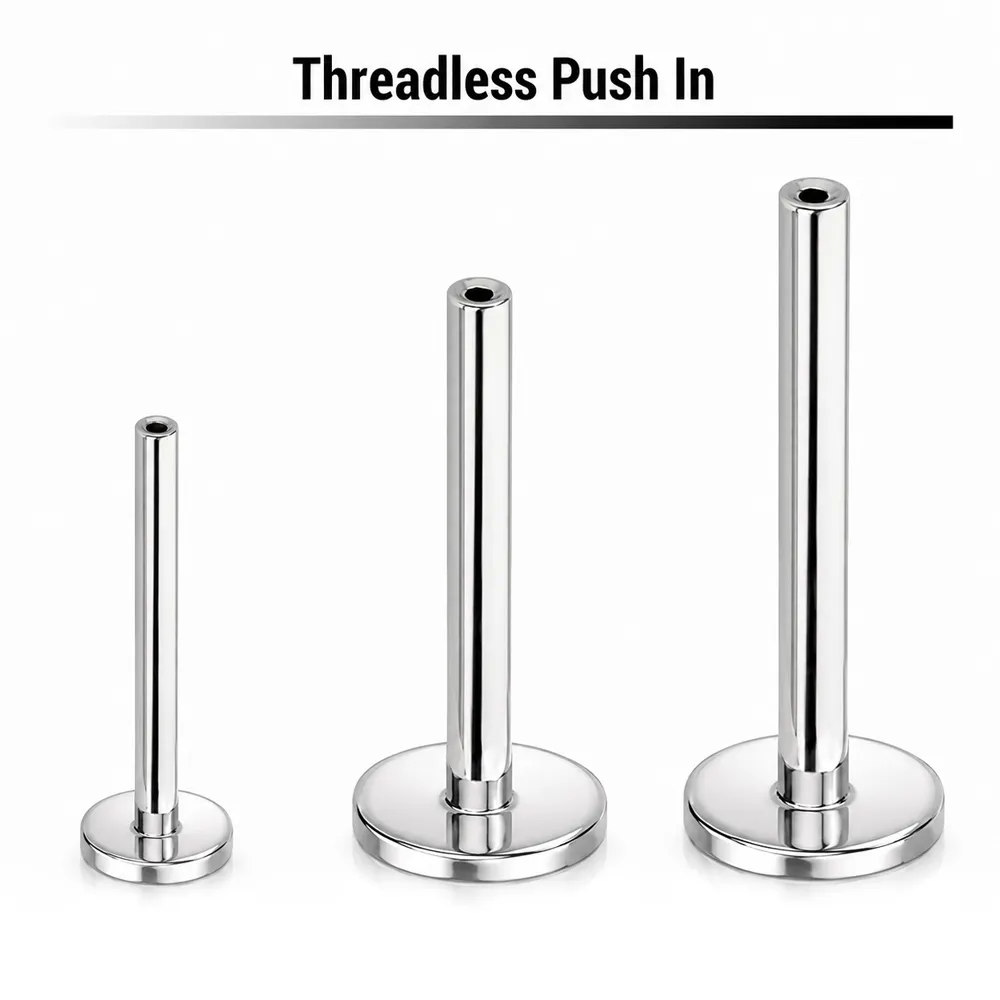
 20G / THREADLESS FLAT BACK
Sterilized Titanium - Push In Labret 0.8mm
20G threadless labret, 6–10 mm posts with 2.5 or 4 mm disks.
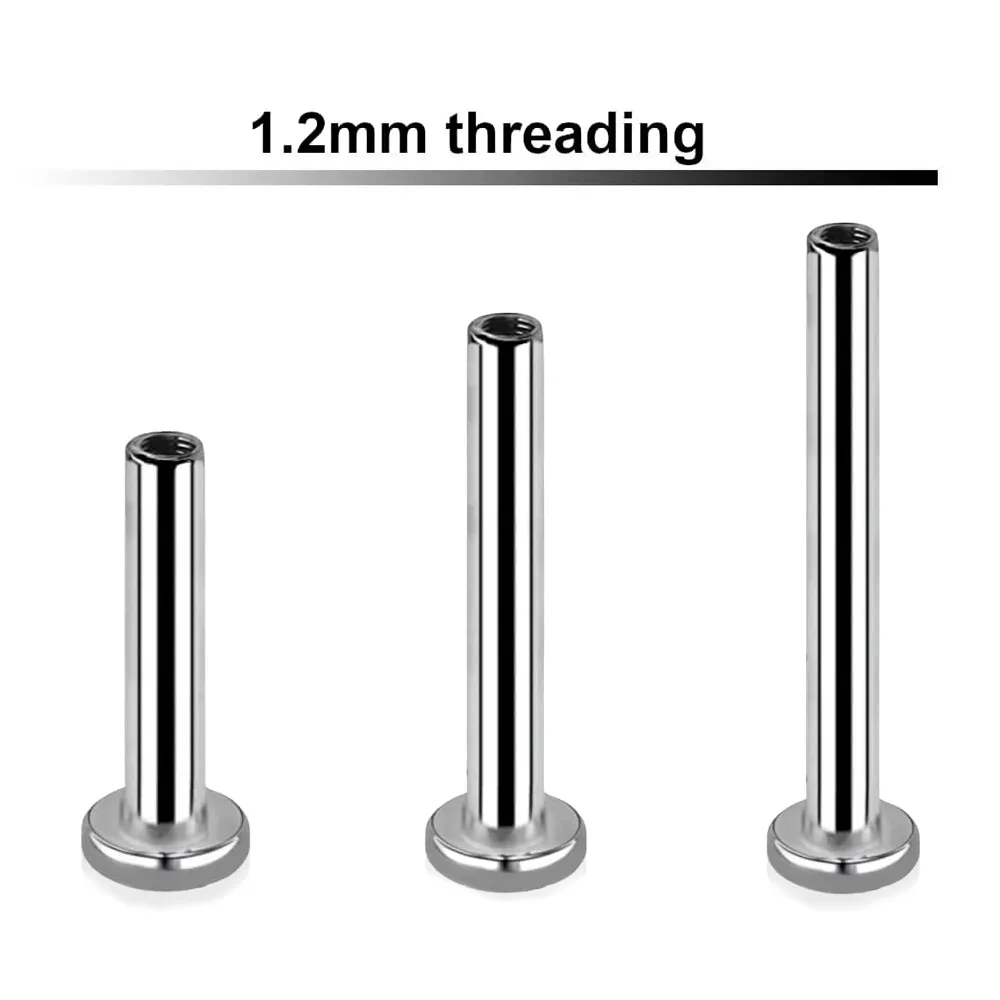
 THREADLESS / REPLACEMENT POST
Sterilized Titanium - High Polish Threadless Push In Labret Post
Post only in 16G or 20G; 6, 7, 9 and 10 mm. Match the end.
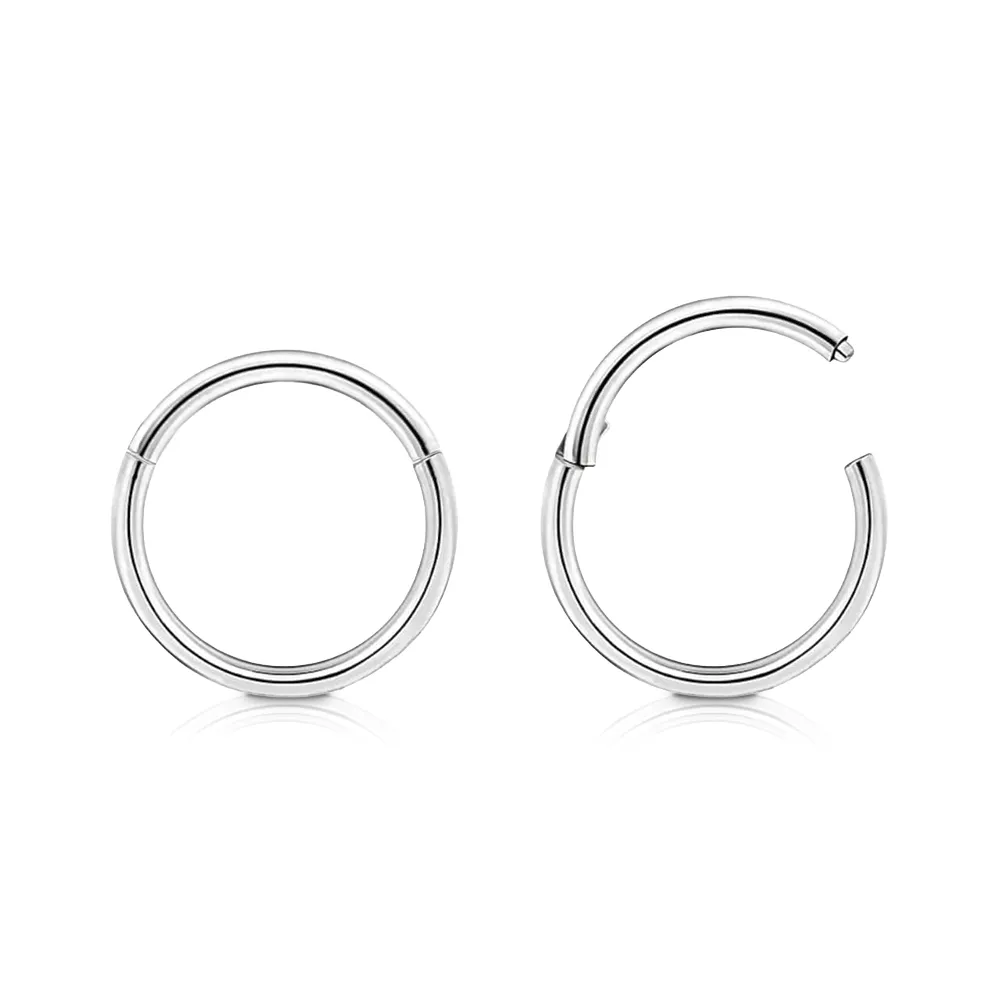
 16G / INTERNALLY THREADED POST ONLY
Sterilized Titanium - Internally Threaded Labret Post, 2.5mm Base
16G threaded post with 2.5 mm base, in 6, 7, 8, 9 or 10 mm lengths.
 16G / HINGED SEGMENT RING
Sterilized Titanium - Segment Ring 1.2mm
16G hinged ring with 6, 7, 8, 9, 10, 12 or 14 mm inner diameter.
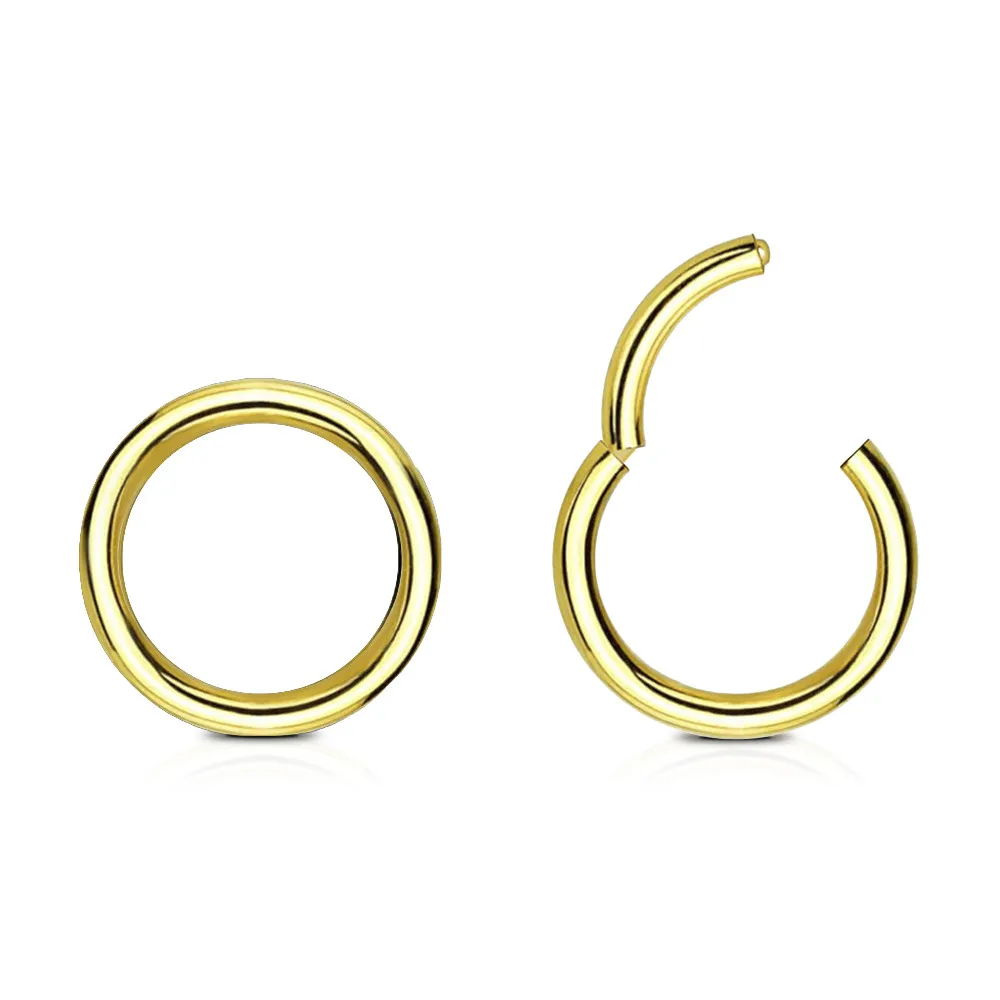 16G / GOLD PVD HINGED RING
Sterilized Titanium - Gold PVD Segment Ring 1.2mm
16G gold PVD hinged ring; inner diameters 6, 7, 8, 9, 10 or 12 mm.
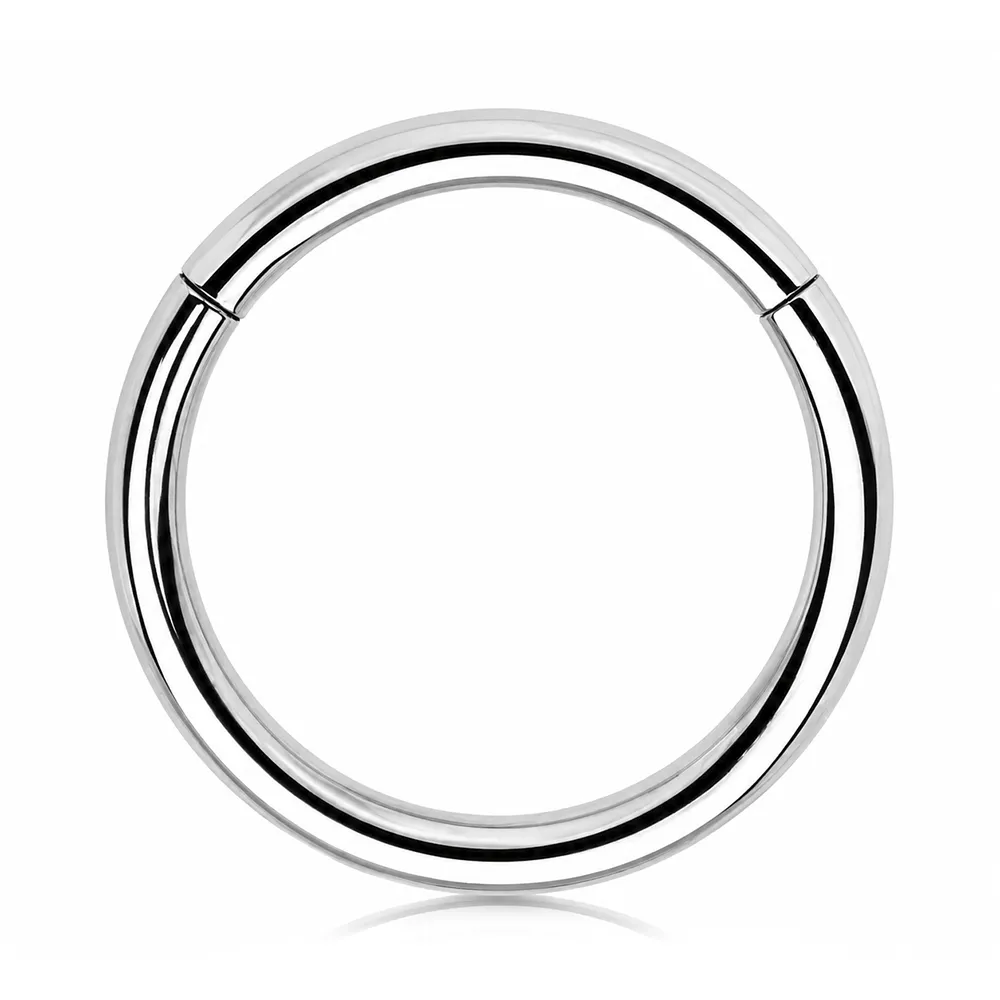 18G / HINGED SEGMENT RING
Sterilized Titanium - Hinged Segment Ring 1mm
18G hinged ring, 7, 8, 9 or 10 mm inner diameter.
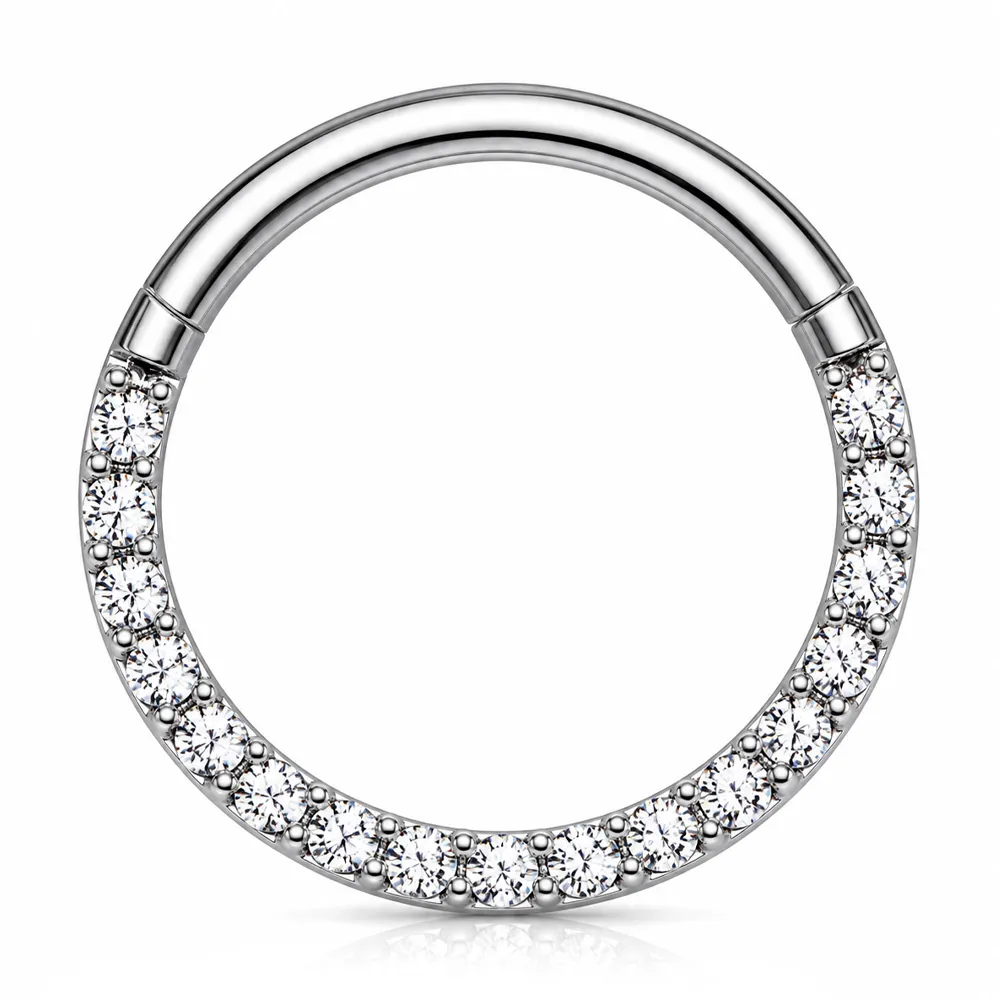 16G / FORWARD CZ CLICKER
Sterilized Titanium - Forward CZ Hinged Septum Ring
16G forward-CZ hinged ring for daith or septum, 8 or 10 mm inside diameter.
For closures, read Captive Bead Ring vs Segment Ring vs Clicker; for measurements, use Body Jewelry Size Guide.
BEFORE THE STUDIO ORDER
What should a professional piercer check before ordering cartilage jewelry?
Verify the jewelry system, gauge, post length or ring inner diameter, connection and stage of healing. Let the qualified piercer select the fit.
- Placement and stage: Which piercing, and initial fit, downsize or healed change?
- Jewelry system: Threaded labret, threadless post, ring or clicker?
- Gauge: Appropriate thickness chosen by the piercer?
- Dimension: Post length or ring inner diameter measured correctly?
- End and closure: Ball, disk, internal thread, push-in or hinge checked?
- Swelling and angle: Initial room and follow-up planned?
- Material: Package and fit reviewed by the trusted piercer?
- Medical referral: Severe or worsening symptoms referred to a doctor?
FAQ
Frequently asked questions about helix, tragus, conch and daith jewelry sizes
These answers distinguish catalog measurements from the professional fit decision.
What size is a helix piercing stud?
No universal size applies. We carry threaded 16G labrets in 6–12 mm; a piercer chooses the fit.
What gauge is a helix, tragus, conch or daith piercing?
APP bases gauge on anatomy. Our labrets offer 16G and 20G, and rings 16G and 18G.
What length labret post should I use for cartilage?
The piercer chooses. Measure straight wearable post length between base and top.
What diameter hoop should I choose for a daith?
The piercer selects diameter; our forward-CZ 16G ring is listed in 8 and 10 mm.
What size hoop should I use for a conch?
No universal conch size. Our 16G hinged ring range reaches 14 mm inner diameter.
When should a helix piercing be downsized?
When swelling subsides and a piercer selects a shorter post. APP warns against missing the window.
Why is my cartilage stud so long?
Initial post length allows swelling; a shorter post may fit later.
Can I sleep on a new cartilage piercing?
APP says sleeping pressure on healing cartilage may irritate it and change its angle.
What metal is best for cartilage piercings?
APP includes ASTM F136 titanium among initial-jewelry materials; the trusted piercer assesses our sterilized options.
Should I start with a stud or a hoop?
The piercer decides based on anatomy, placement and swelling. Neither works for every cartilage piercing.
Can I change cartilage jewelry myself?
APP recommends qualified piercers for healing-stage changes; even momentary removal can close the channel.
How long does ear cartilage take to heal?
APP says ear cartilage may take six months or longer; this does not set a downsize date.
PROFESSIONAL REFERENCES
Sources Consulted
APP supports anatomy-based sizing, downsizing, cartilage pressure and medical referrals. SVT Shop listings supply exact product sizes.
- Association of Professional Piercers: Jewelry for Initial Piercings
- Association of Professional Piercers: Piercing FAQ and Helix Downsizing
- Association of Professional Piercers: Aftercare, Cartilage Pressure and Professional Downsizing
- Association of Professional Piercers: Jewelry for Healed Piercings
- Association of Professional Piercers: Piercing Troubleshooting and Medical Referral