Powered by Comercia.io
Septum and nostril jewelry sizes involve three different measurements: gauge is wire thickness, post length describes a nose stud or screw, and inner diameter measures the opening of a hoop. There is no universal starting gauge, post length or ring diameter; the qualified piercer chooses each one for the anatomy and placement. This guide compares the sterilized titanium nose screws, hinged segment rings, septum clickers and circular barbells we carry at SVT Shop, using exact catalog sizes rather than generic fitting rules.
Explore Nose Screws Explore Septum Rings
QUICK ANSWER
What gauge and diameter should you choose for a septum or nostril piercing?
Choose by the piercing and actual anatomy, not a universal size chart. A nostril screw is ordered by gauge and its usable post length; a septum hoop is ordered by gauge and inside diameter. SVT Shop's 20G and 18G nose screws and 16G septum-ring options are product selections, not prescribed starting sizes. A qualified piercer determines whether the chosen fit, style and sterile status suit a new or existing piercing.
GAUGE / THICKNESS
Our catalog lists 20G at 0.8 mm, 18G at 1.0 mm and 16G at 1.2 mm. None is a mandatory nose gauge.
NOSTRIL POST LENGTH
Our high-polish nose screws list a 6.5 mm post with a 2 mm CZ crystal. The piercer decides if that post fits.
RING INNER DIAMETER
Our segment rings cover various 6–14 mm inner diameters depending on gauge and finish. Measure the inner opening, not the outer edge.
THE THREE SIZE NUMBERS
How do gauge, post length and inner diameter differ?
Gauge is jewelry thickness; post length belongs to a screw or stud, while inner diameter belongs to a ring. Crystal or ball size is a separate measurement. A complete studio order needs the right number for the right component.
| Number | What it describes | Catalog example | What the piercer confirms |
|---|---|---|---|
| Gauge | Wire or shaft thickness | 20G (0.8 mm), 18G (1.0 mm), 16G (1.2 mm) | A thickness appropriate for the tissue and placement |
| Post length | Usable length of a stud or nose screw | 6.5 mm on our high-polish CZ screws | Actual fit and room required for swelling |
| Inner diameter | Clear distance across the inside of a ring | 6, 8, 10, 12 or 14 mm, depending on SKU | Whether the ring sits appropriately around the anatomy |
| Decorative end | Crystal or ball size, not the shaft | 2 mm CZ on screws; 3 mm balls on our circular barbell | End fit, secure attachment and the intended appearance |
See Body Jewelry Size Guide for the broader measurement system; this guide stays with nostril and septum sizes.
TWO LOCATIONS, DIFFERENT MEASUREMENTS
Do nostril and septum piercings use the same jewelry measurements?
Nostril screws are ordered by post length; septum rings by inner diameter. Both also need the correct gauge. The APP bases fit on anatomy and placement, not a standard size for either location.
Separate style choice from the size chart
For the differences among nose screws, studs and rings, use Nose Jewelry Types: Screw, Stud and Ring. Here, identify the style first so the correct measurement can be taken.
ACTUAL SVT SHOP DIMENSIONS
Which septum ring diameters and nostril jewelry sizes does SVT Shop carry?
These are our sterilized titanium catalog sizes, not recommendations. The qualified piercer decides fit, closure and suitability.
| Jewelry family | Gauge / wire | Length or inside diameter | Decorative or closure detail |
|---|---|---|---|
| High Polish CZ Nose Screw | 20G / 0.8 mm | 6.5 mm post | 2 mm bezel-set CZ |
| High Polish CZ Nose Screw | 18G / 1.0 mm | 6.5 mm post | 2 mm bezel-set CZ |
| Gold PVD CZ Nose Screw | 20G / 0.8 mm | Confirm the post length before ordering | 2 mm prong-set CZ |
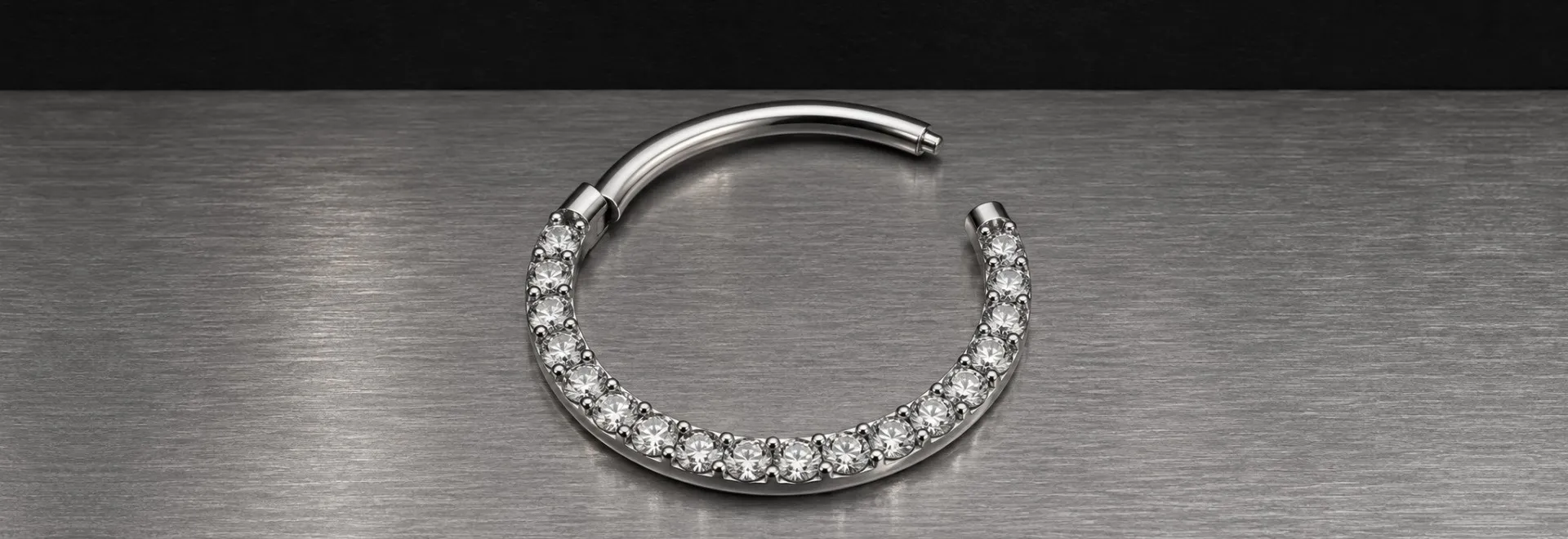
| Hinged Segment Ring | 16G / 1.2 mm | 6, 7, 8, 9, 10, 12, 14 mm inner diameter | Hinged segment closure |
| Gold PVD Hinged Segment Ring | 16G / 1.2 mm | 6, 7, 8, 9, 10, 12 mm inner diameter | Hinged segment closure |
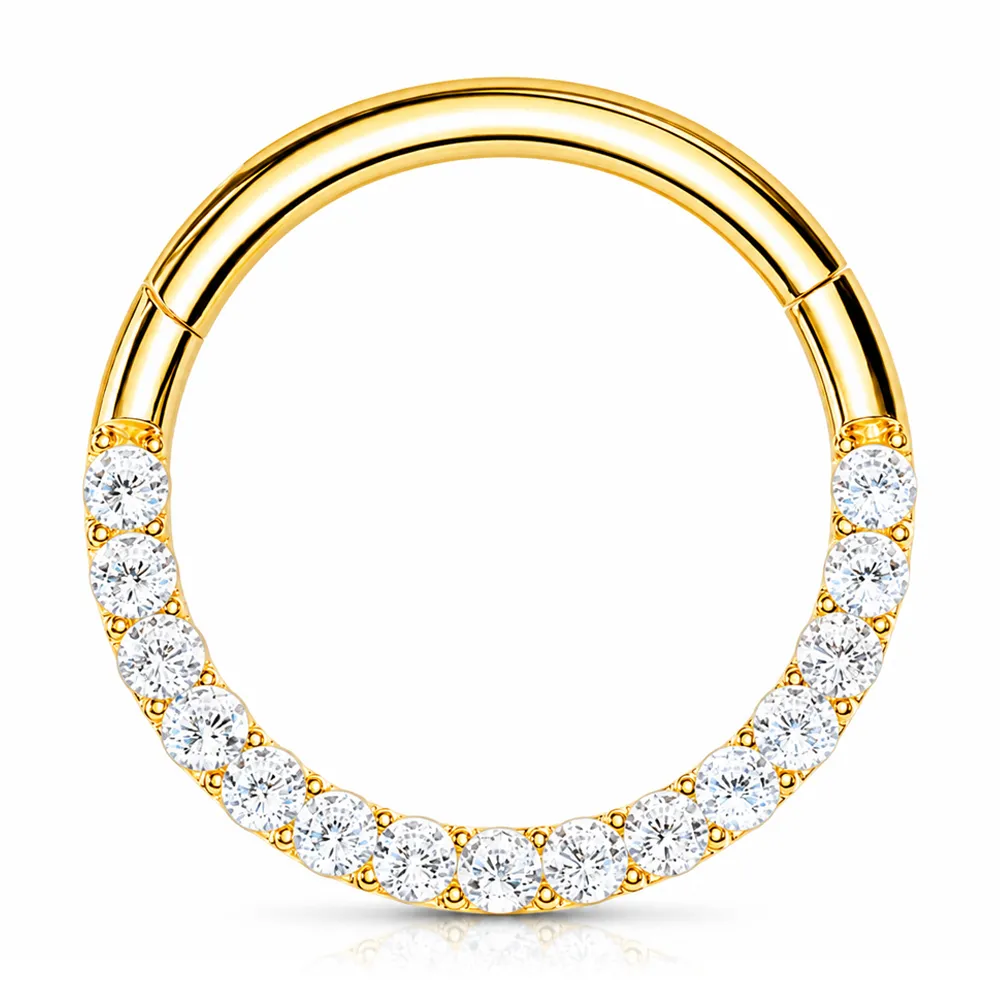
| Forward-CZ Hinged Septum Ring | 16G / 1.2 mm | 8, 10 mm inner diameter | Forward-facing CZ, clicker closure; high polish or gold PVD |
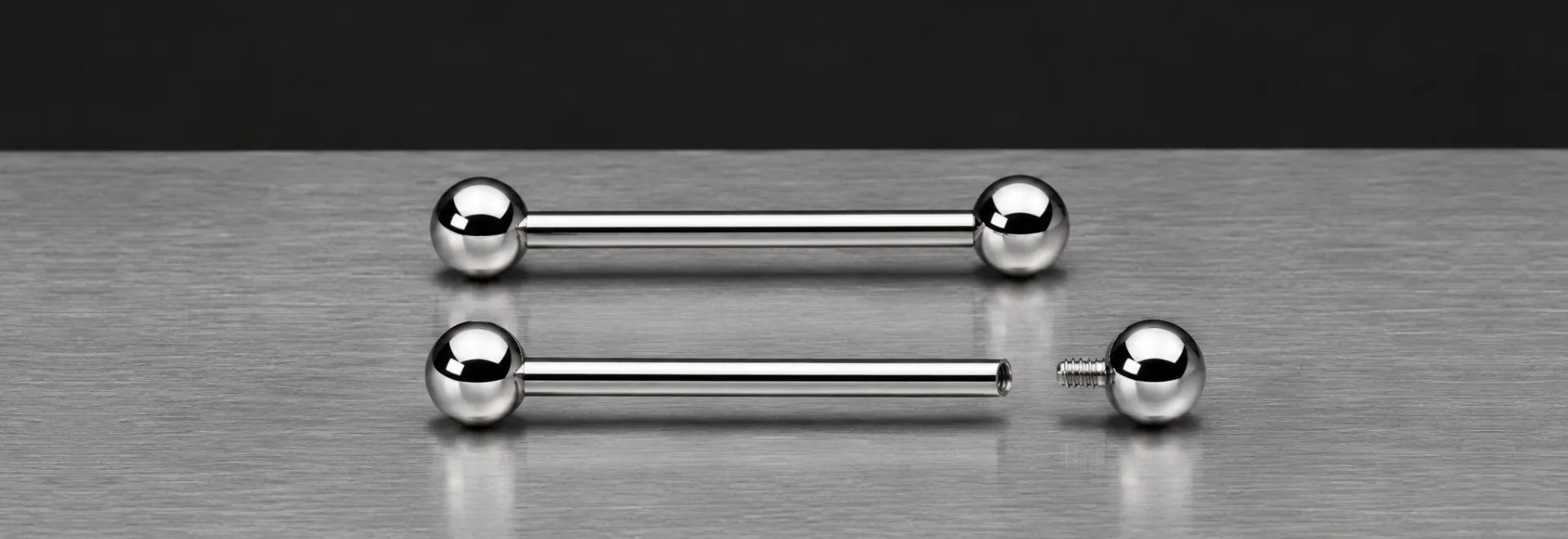
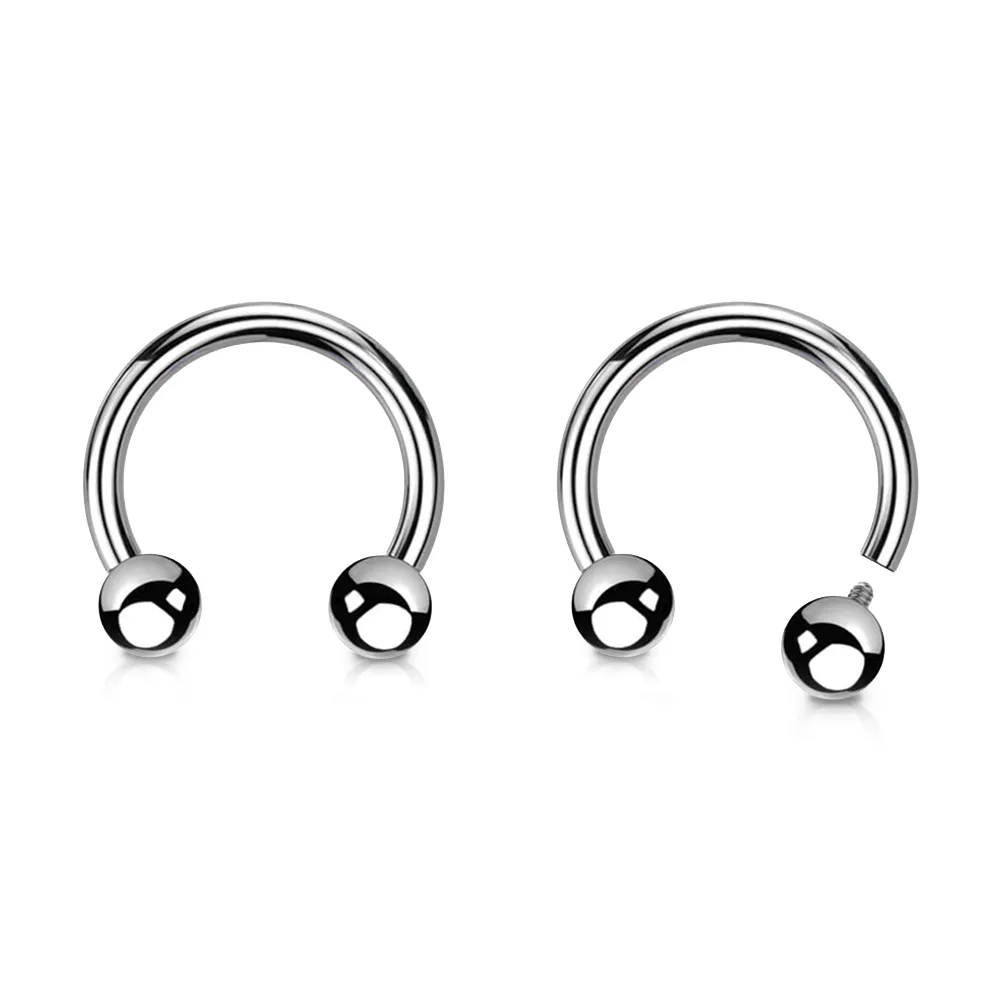
| Circular Barbell | 16G / 1.2 mm | 8, 10, 12 mm inner diameter | Internally threaded, 3 mm balls |
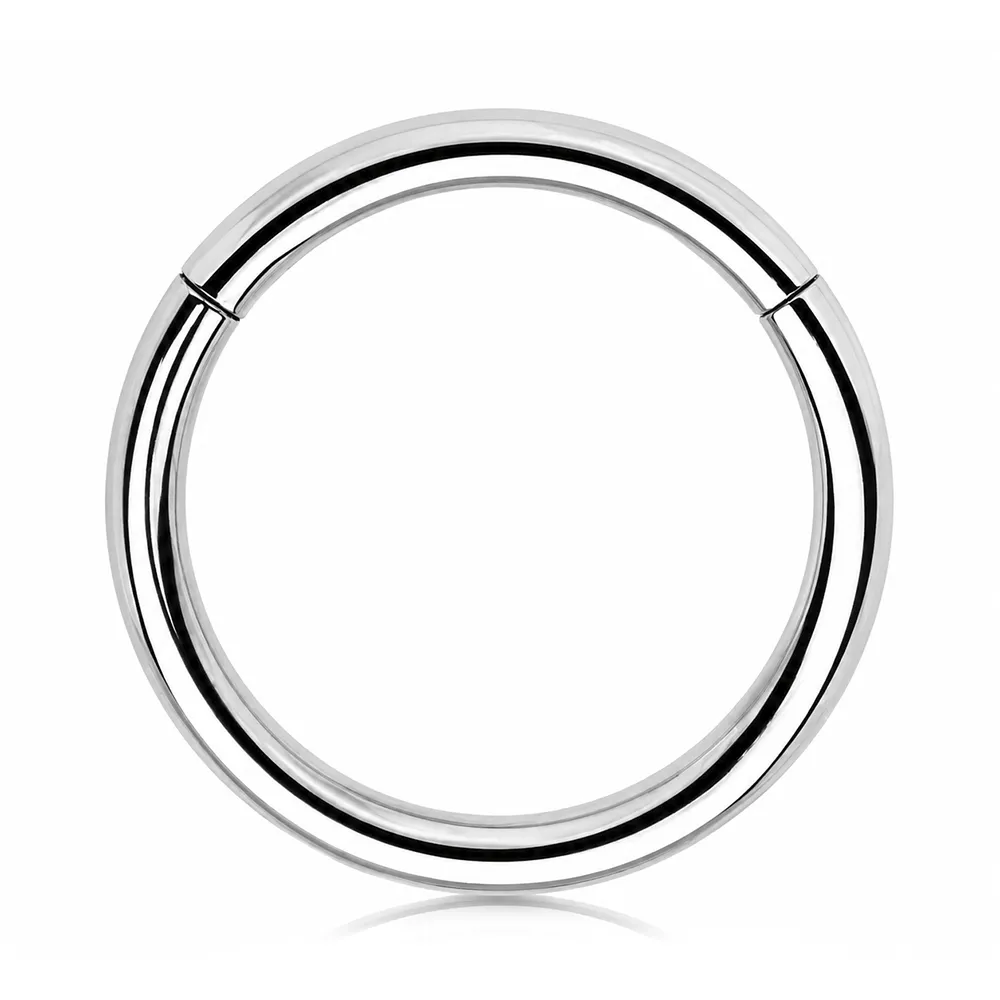
| Hinged Segment Ring | 18G / 1.0 mm | 7, 8, 9, 10 mm inner diameter | High-polish titanium |
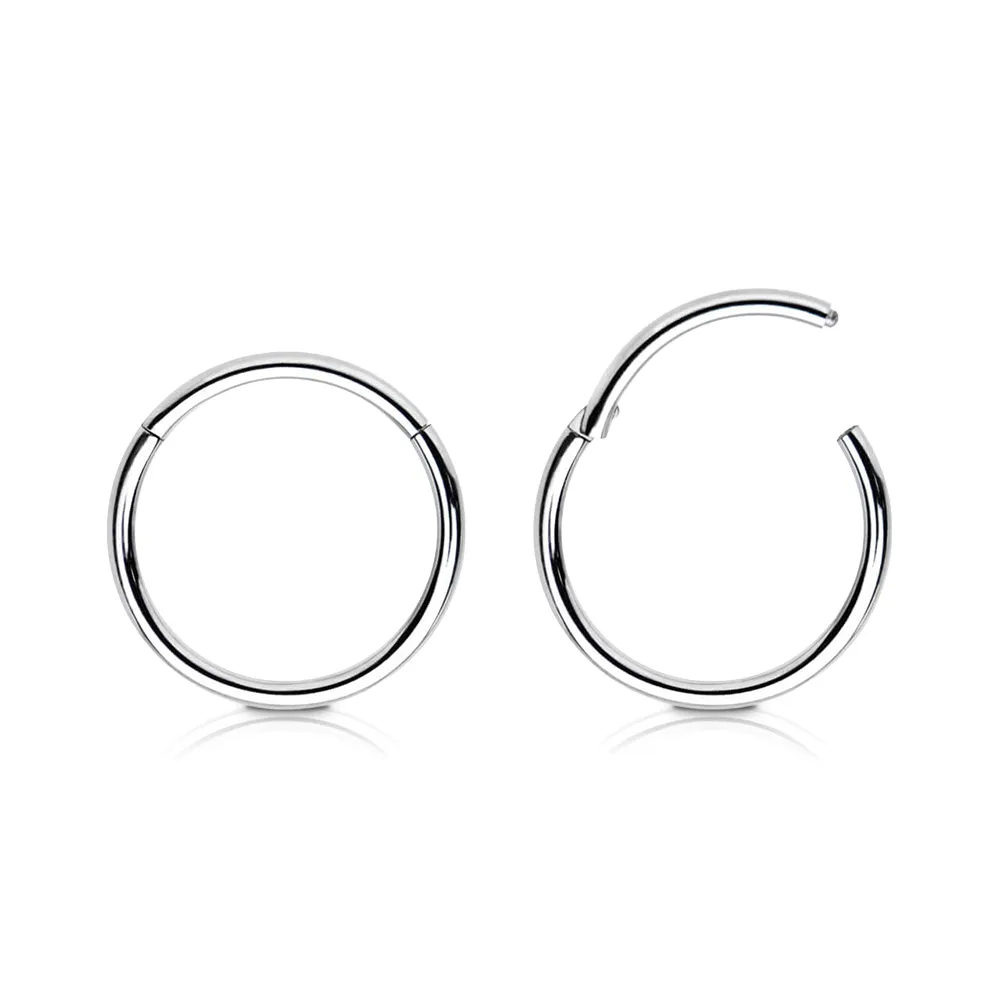
| Hinged Segment Ring | 20G / 0.8 mm | 6, 7, 8, 9, 10 mm inner diameter | High polish or black/gold PVD catalog options |
NOSTRIL STUD SIZING
What gauge and post length should a piercer choose for a nose screw?
Choose gauge and post fit separately. Our high-polish CZ nose screws come in 20G (0.8 mm) and 18G (1.0 mm), with a 6.5 mm post and a 2 mm crystal. The piercer evaluates the actual anatomy.
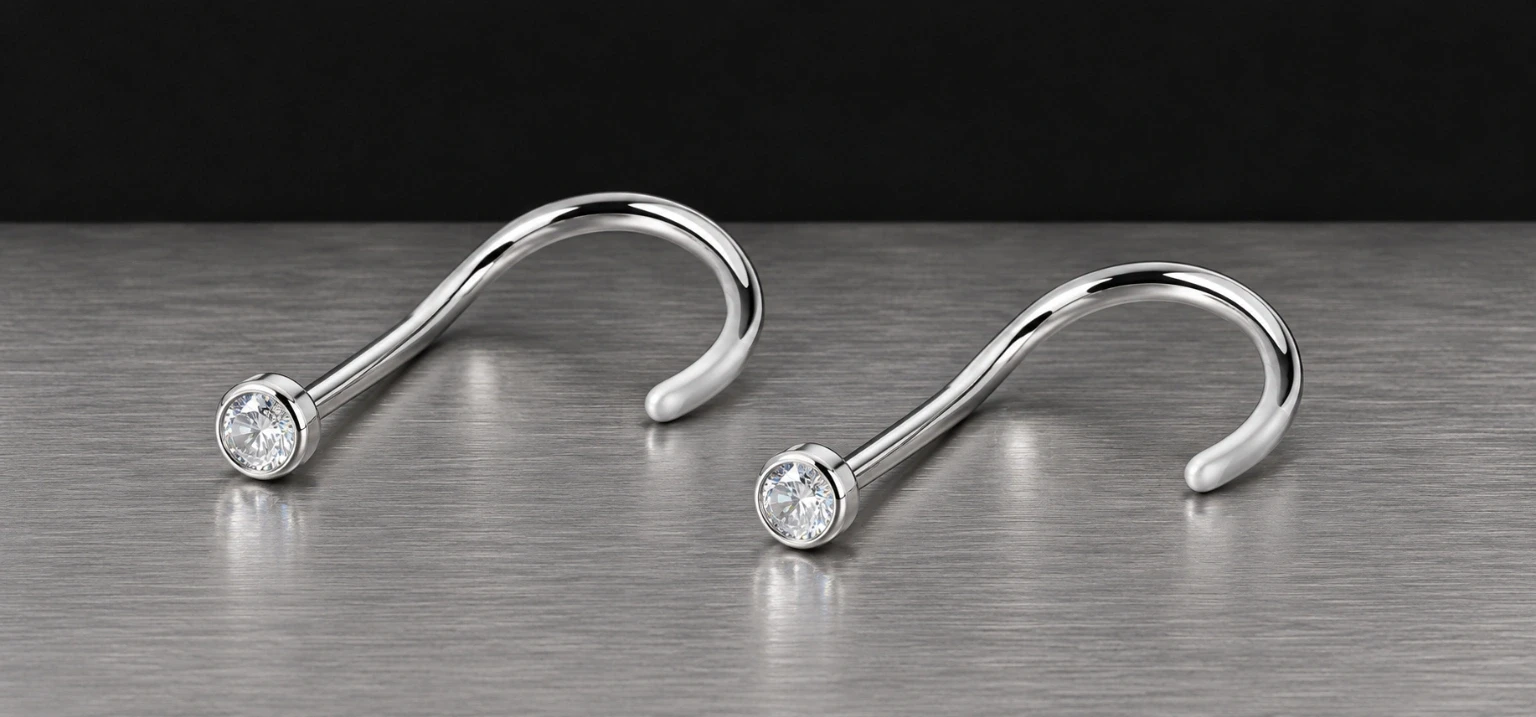
Our gold PVD 20G nose screw has a 2 mm prong-set CZ; confirm its individual post length.
SEPTUM INNER DIAMETER
What size septum ring gives a snug fit without being too tight?
A snug septum fit depends on anatomy, not a standard ring diameter. Inner diameter is the clear distance across the ring opening; smaller diameters leave less clearance. A qualified piercer selects the size.
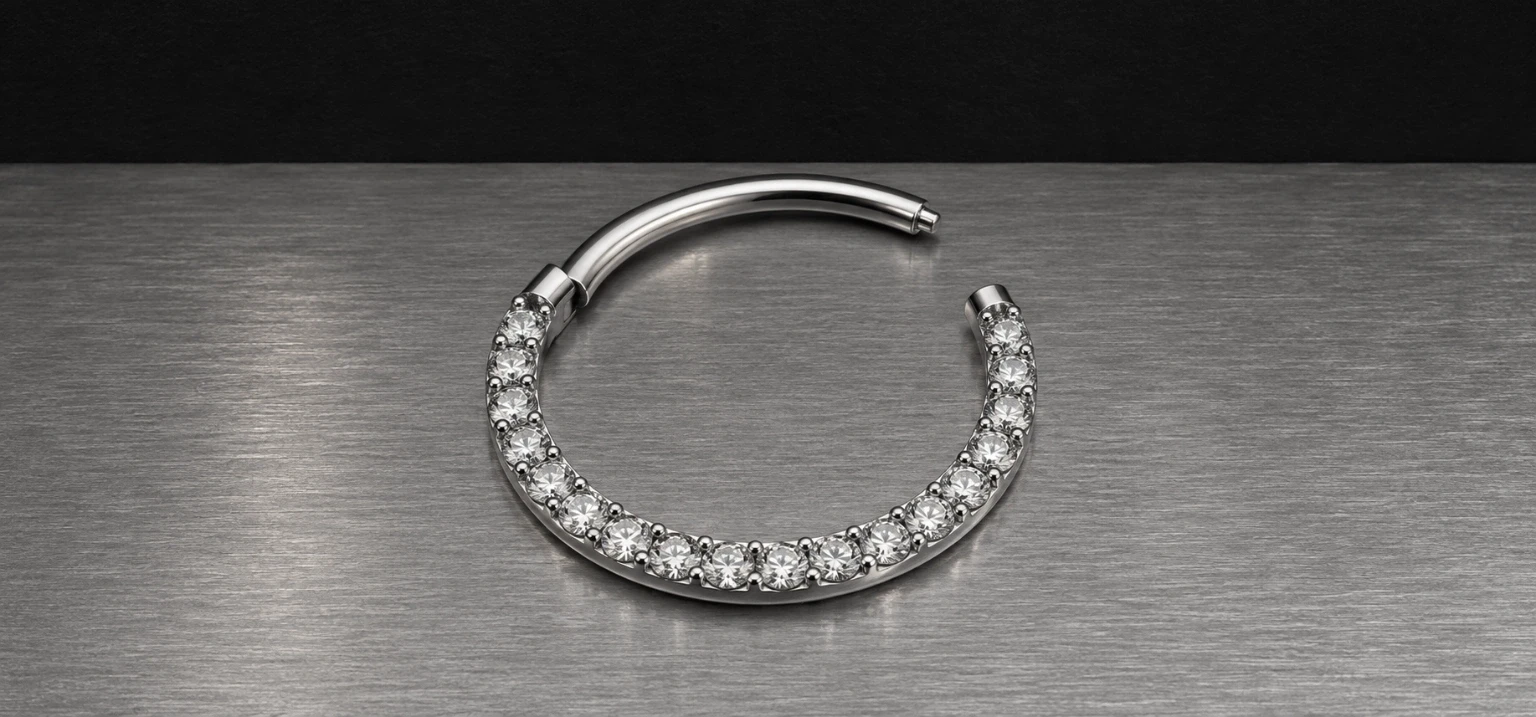
A smaller ring is not automatically the correct downsize
A ring that fits too tightly may create problems. Have a qualified piercer measure and evaluate the jewelry before changing its inner diameter or gauge.
DIAMETER VERSUS CLOSURE
How do segment rings, septum clickers and circular barbells compare by size?
Closure style and inner diameter are distinct. Hinged segment rings, forward-facing CZ clickers and our circular barbell have different openings or ends. The same gauge and diameter do not make them the same jewelry.
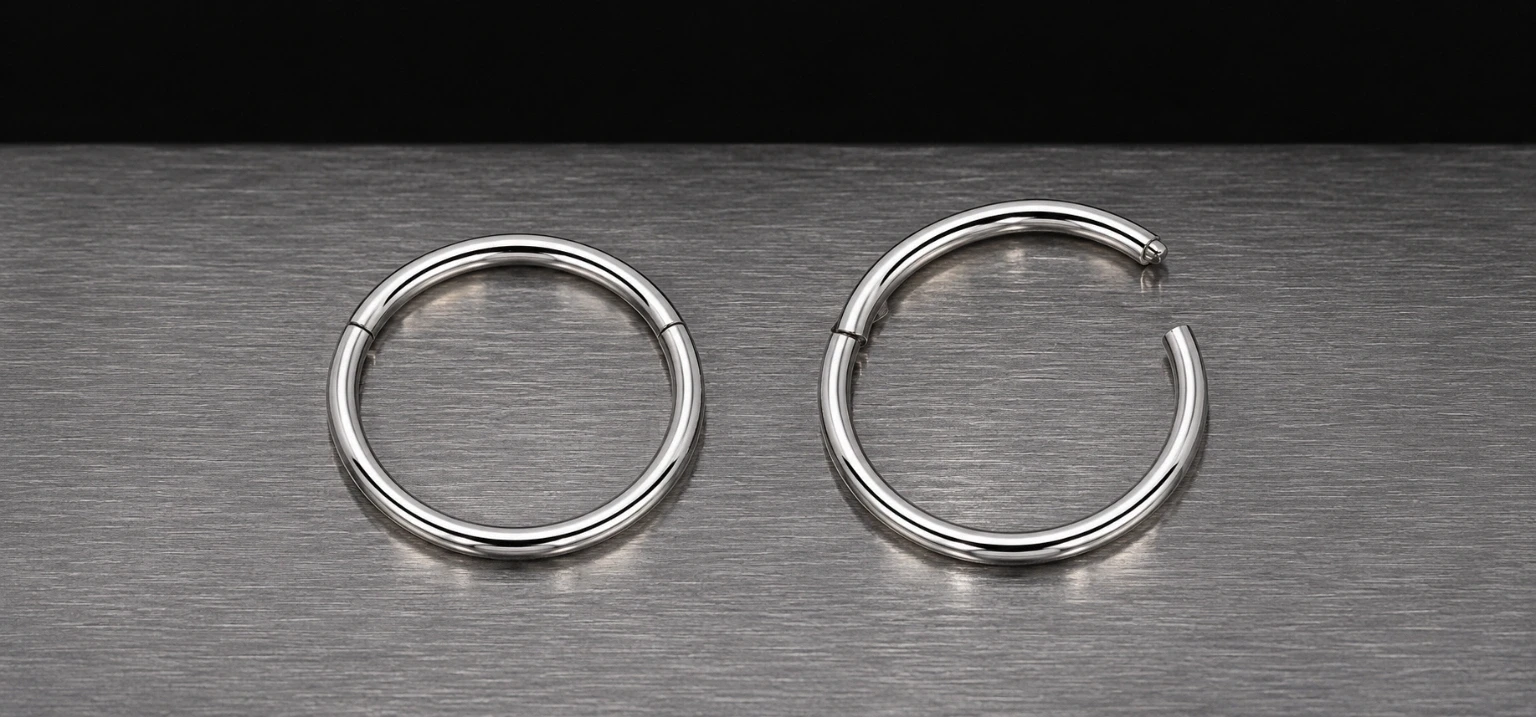
For closure mechanics and the difference among captive-bead rings, segment rings and clickers, read Captive Bead Ring vs Segment Ring vs Clicker.
NEW VERSUS EXISTING PIERCINGS
Should the first nostril or septum jewelry be a stud or ring?
The trusted piercer selects initial style for anatomy and swelling room. APP guidance calls for appropriate gauge and fit, not a single required nostril stud or septum ring.
Our titanium nose screws, hinged rings, forward-CZ clickers and circular barbells come sterilized. They can be suitable for new piercings because they come sterilized; the client's trusted piercer decides. A product's sterile status does not replace evaluating its shape, fit and end security for that placement.
MATERIALS AND CONNECTIONS
Which materials and end connections should piercers check for new nose jewelry?
The APP lists ASTM F136-compliant implant titanium among materials for initial jewelry and calls for smooth finish and correct dimensions. Verify the actual product information rather than assuming a color or generic material label proves compliance.
Our linked pieces are sterilized titanium in high-polish or PVD finishes. The piercer evaluates material, finish and fit.
The APP accepts internal threading and threadless systems for initial jewelry. Our circular barbell is internally threaded; hinged rings and screws use different connections. See Threadless vs Internally Threaded Jewelry.
For titanium specifications and sterile packing, read Implant-Grade Titanium and Sterilized Piercing Jewelry.
FIT CHANGES WITH SWELLING
When should nostril or septum jewelry be downsized or changed?
The APP says initial jewelry often needs extra room for swelling. After swelling subsides, a qualified piercer may select a shorter post; some changes occur before healing is complete. Ring fit also requires professional evaluation.
The APP says nostrils may take six months or longer to heal; that does not set a septum timeline or a downsizing date.
For the decision about changes during healing, read Downsizing Piercing Jewelry.
FIT AND IRRITATION QUESTIONS
What should a piercer check if a nose hoop is too tight or a nostril stud is irritating tissue?
The APP says changing jewelry size, style or material often resolves problems and notes excess granulation tissue around nostrils. A piercer assesses jewelry and tissue; refer medical concerns to a doctor rather than diagnosing a bump from appearance.
APP warns nasal jewelry can be swallowed or inhaled. Refer suspected injury to a doctor and fit concerns to a qualified piercer.
Keep the guide focused on choosing jewelry
For the differences among irritation bumps, keloids and hypertrophic scars, see Piercing Bump, Irritation, Keloid or Hypertrophic Scar. Do not choose new jewelry solely from a photograph of a bump.
A REORDERING PROCESS, NOT A PIERCING PROCEDURE
How do you measure and reorder an existing nose screw or septum ring?
Measure the jewelry and assess its fit with a qualified piercer; this is a selection process, not a method for performing a piercing.
Identify the exact jewelry family
Record nose screw, hinged segment ring, forward-CZ clicker or circular barbell so you use the right dimension.
Confirm gauge
Record wire or shaft thickness, such as 20G, 18G or 16G, as the individual piece is labeled.
Measure post or inside opening
For a screw, check usable post length. For a hoop, measure the clear inner diameter, not the outside width.
Check ends, closure and fit
Record CZ size, ball size, hinge or thread, and have the piercer evaluate placement and readiness for a change.
Save the exact product variant
Reorder from the full size and style description, rather than from the words nose ring alone.
COMMON STUDIO ORDERING ERRORS
What sizing mistakes should a studio avoid?
Most mistakes come from assuming one number describes all jewelry or treating a catalog size as a universal fit.
Calling 18G the required nostril gauge
Our 18G and 20G screws are stocked options; the piercer chooses.
Measuring the outside of a hoop
Order ring diameter from the inner opening, not the outer edge.
Confusing crystal size with post length
A 2 mm CZ does not mean a 2 mm wearable post.
Automatically choosing the smallest septum diameter
Smaller can mean too tight; evaluate the actual anatomy.
Switching gauge to force a preferred style
APP cautions that jewelry too thin can contribute to migration or rejection.
Changing jewelry during healing without a piercer
APP directs healing-stage changes to a qualified piercer.
Ignoring the ring seam or post security
Confirm the closure and end fit; nasal jewelry may be swallowed or inhaled.
Assigning one healing period to both locations
APP mentions six months or longer for nostrils, not a septum deadline.
SVT SHOP NOSE AND SEPTUM JEWELRY
Which sterilized titanium nose and septum pieces do we carry?
We carry nose screws, hinged segments, forward-CZ septum clickers and an internally threaded circular barbell. These are product dimensions; sterilized jewelry can be suitable for new piercings because it comes sterilized, but the client's trusted piercer decides.
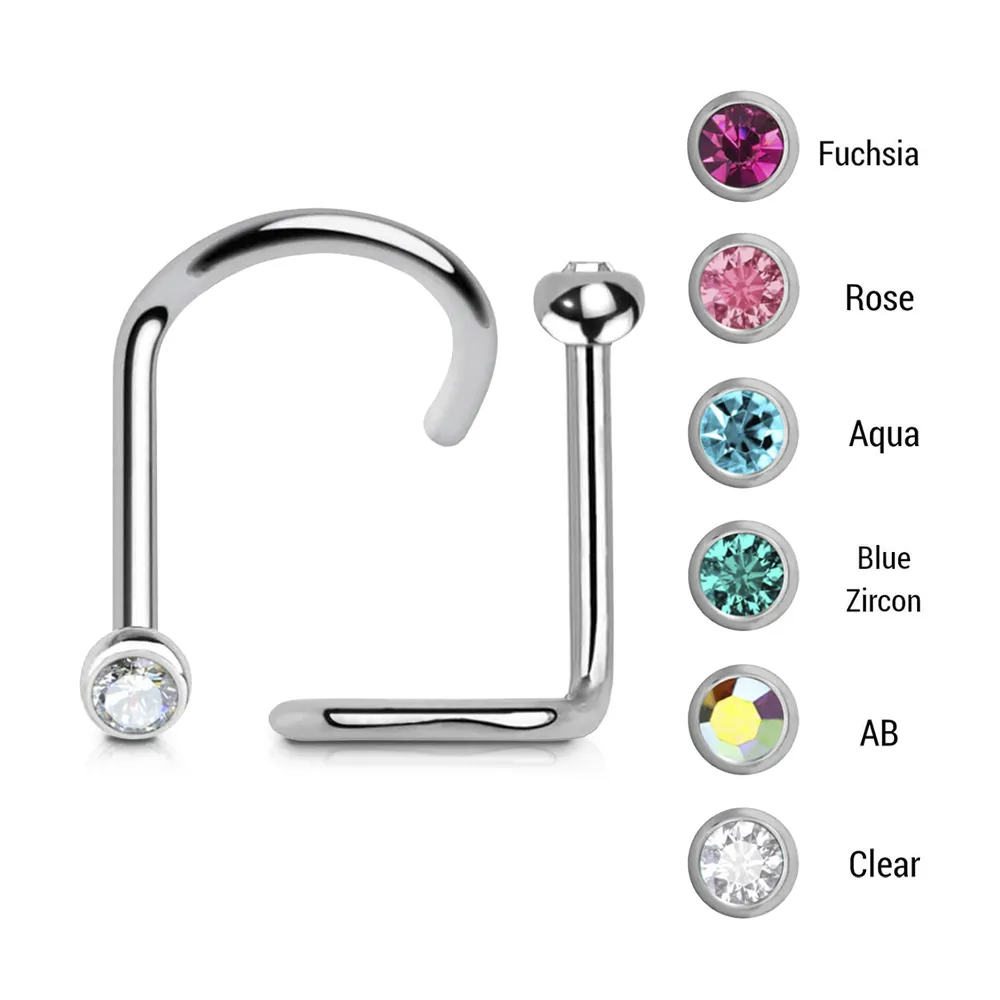 NOSTRIL SCREW / 20G
Sterilized Titanium - CZ Nose Screw 2 mm (20G)
0.8 mm wire, 6.5 mm post and 2 mm bezel-set crystal. Fit is selected by the piercer.
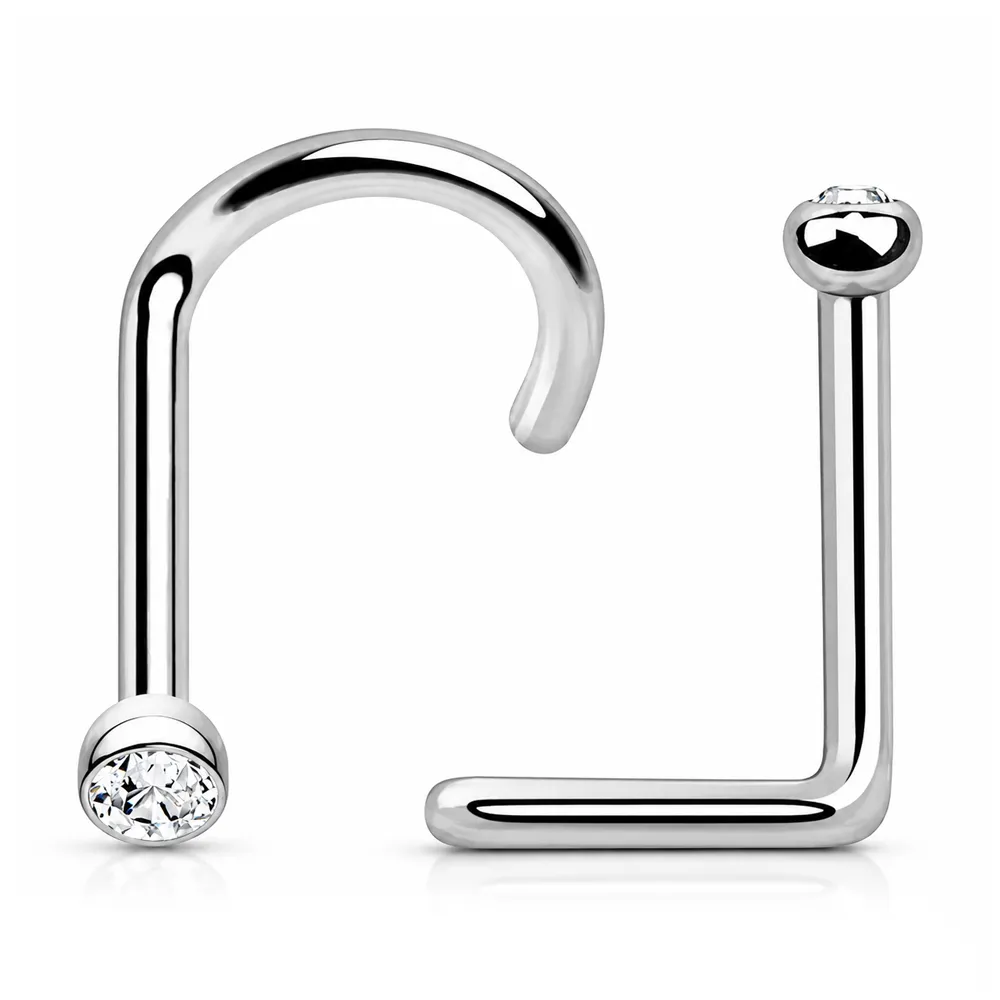 NOSTRIL SCREW / 18G
Sterilized Titanium - CZ Nose Screw 2 mm (18G)
1.0 mm wire, 6.5 mm post and 2 mm bezel-set crystal; a different gauge choice.
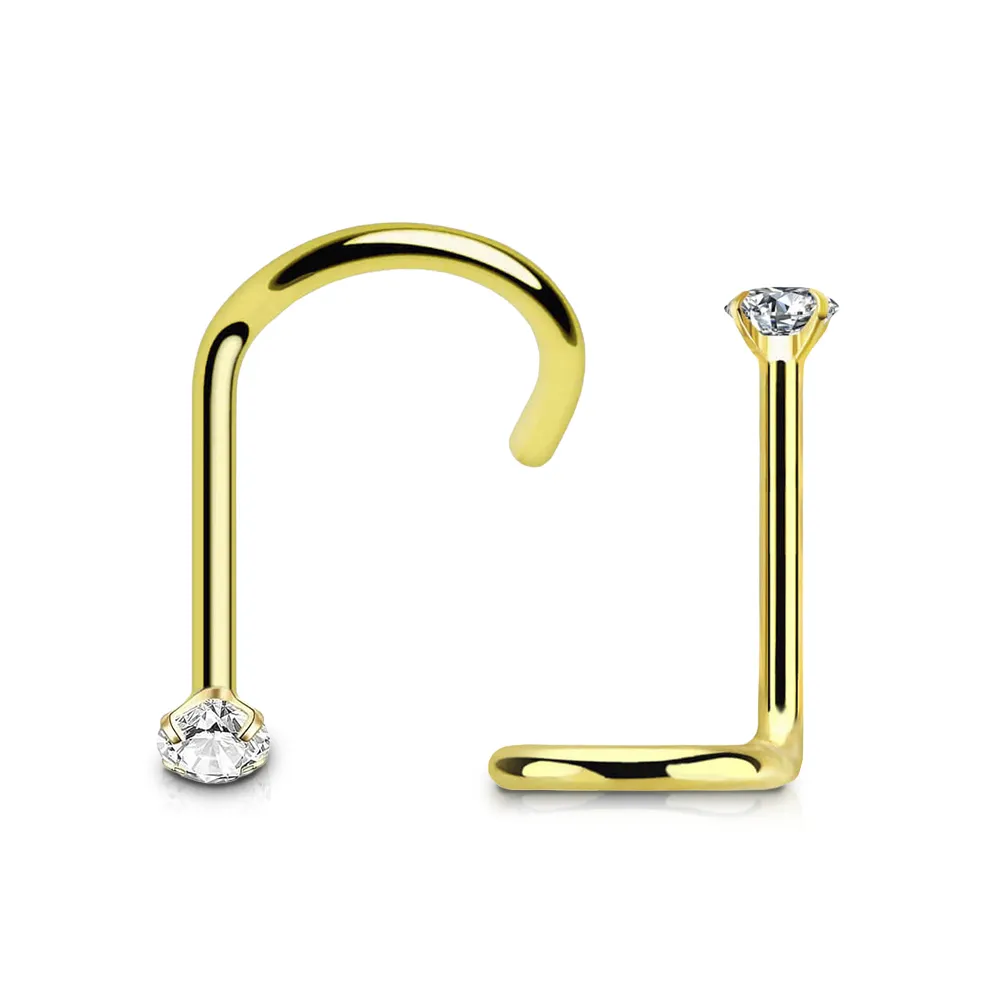 NOSTRIL SCREW / GOLD PVD
Sterilized Titanium - CZ Gold PVD Nose Screws
0.8 mm wire with 2 mm prong-set CZ; verify the individual post length.
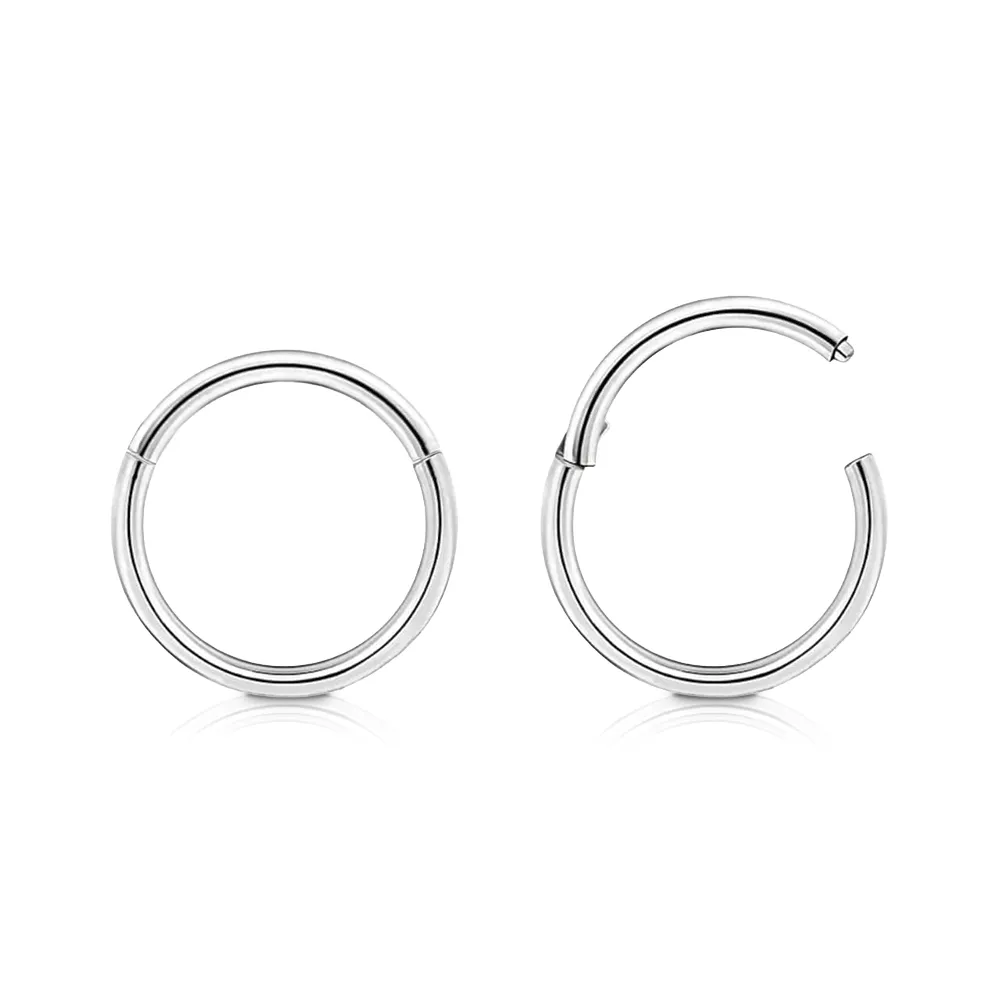 HINGED SEGMENT / 16G
Sterilized Titanium - Segment Ring 1.2 mm
16G with 6, 7, 8, 9, 10, 12 or 14 mm inside diameters.
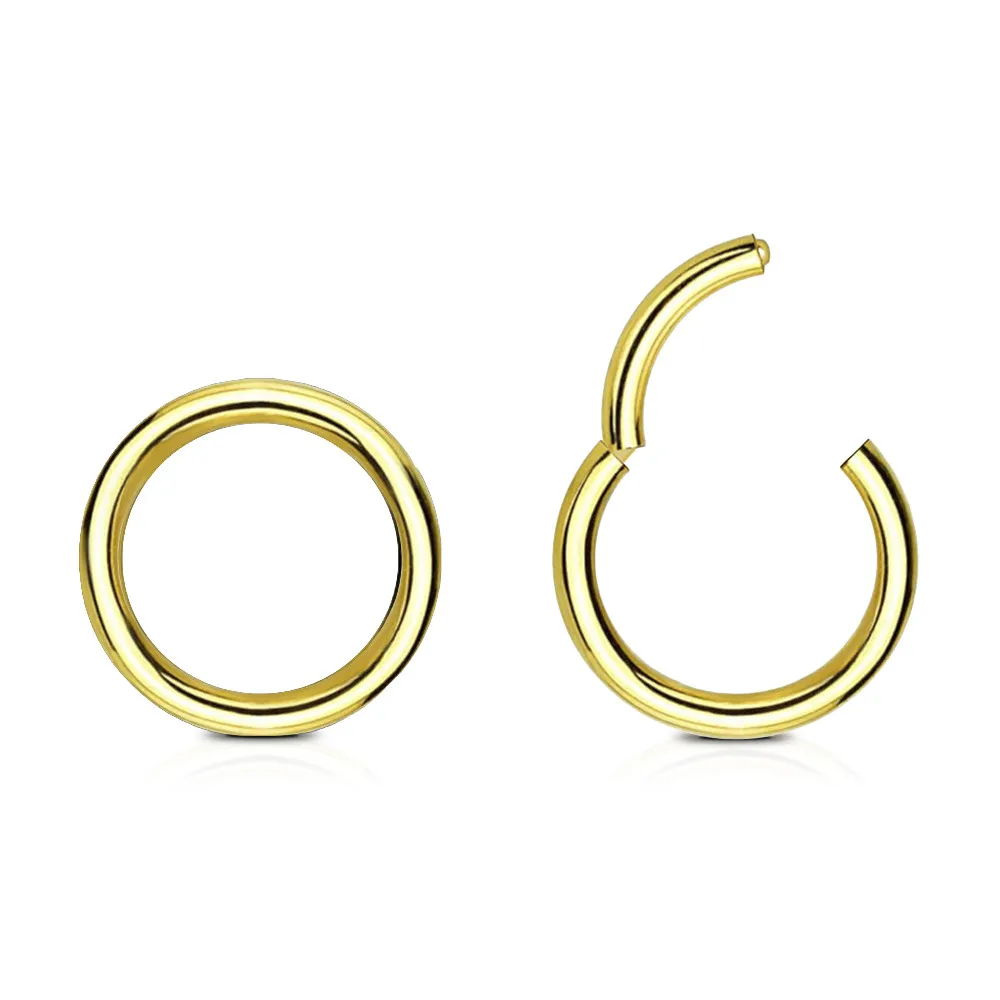 HINGED SEGMENT / GOLD PVD
Sterilized Titanium - Gold PVD Segment Ring 1.2 mm
16G gold PVD, with 6, 7, 8, 9, 10 or 12 mm inner diameter choices.
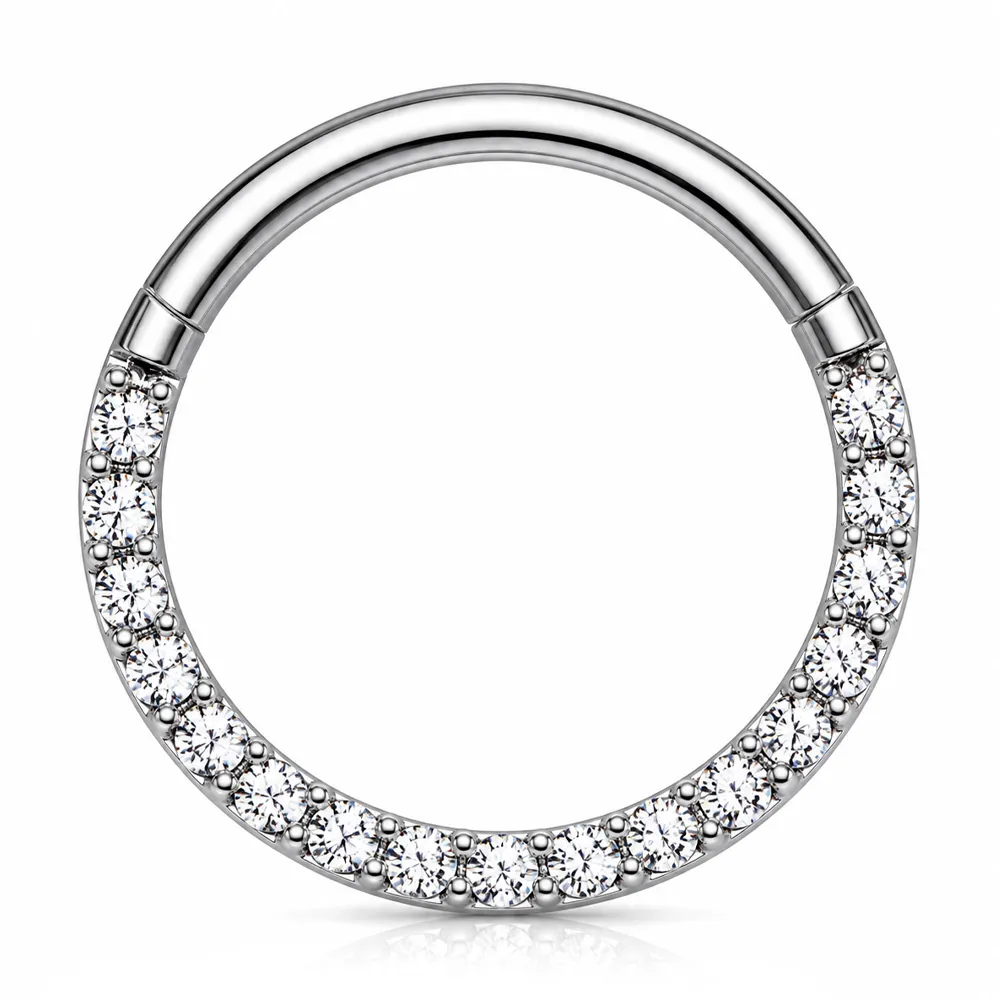 FORWARD CZ SEPTUM CLICKER
Sterilized Titanium - Forward CZ Hinged Septum Ring
16G / 1.2 mm with 8 or 10 mm inside diameter and forward-facing CZ.
 FORWARD CZ / GOLD PVD
Sterilized Titanium - Gold PVD Forward CZ Hinged Septum Ring
Gold PVD, 16G, 8 or 10 mm inside diameter; check hinge and fit.
 CIRCULAR BARBELL / 16G
Sterilized Titanium - Circular Internally Threaded Barbell
1.2 mm wire, 8, 10 or 12 mm inner diameter, with 3 mm ball ends.
 HINGED SEGMENT / 18G
Sterilized Titanium - Hinged Segment Ring 1 mm
1.0 mm wire with 7, 8, 9 or 10 mm inside diameter options.
 HINGED SEGMENT / 20G
Sterilized Titanium - Segment Ring 0.8 mm
20G high-polish segment ring with inner diameters from 6 to 10 mm.
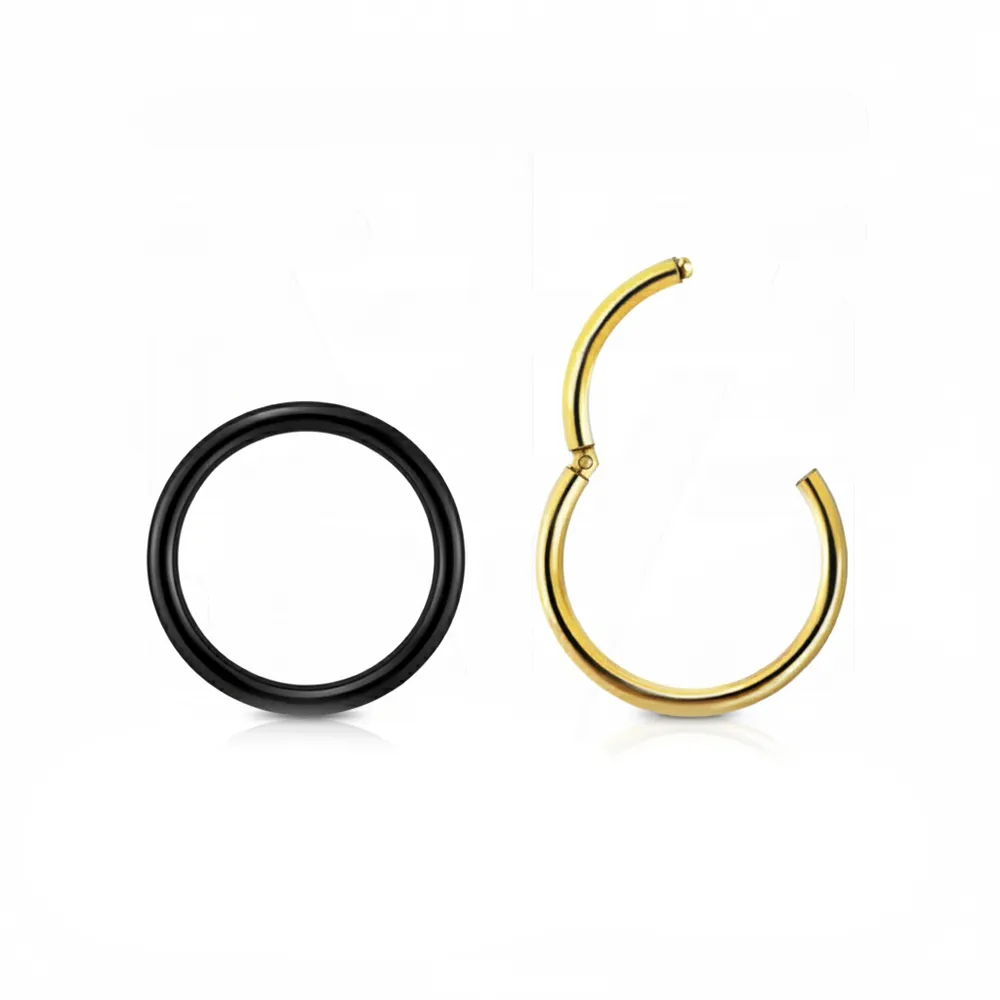 HINGED SEGMENT / 20G PVD
Sterilized Titanium - Hinged Segment Ring 0.8 mm PVD
0.8 mm wire in black or gold PVD catalog variants, 6–10 mm inner diameters.
Explore Nose Screws Compare Segment Rings View Circular Barbells
STUDIO BUYING CHECKLIST
What should a professional check before ordering?
Save the exact configuration chosen for the anatomy and the stage of the piercing.
- Location: Nostril or septum, and what style is being worn?
- Gauge: Correct 20G, 18G or 16G thickness for this placement?
- Usable dimension: Screw post length or hoop inner diameter, never confused?
- End and closure: Crystal or ball dimensions, thread or hinge verified?
- Current stage: Initial room, healing-stage adjustment or healed decorative change?
- Materials: Product documentation and sterilized package reviewed?
- Fit review: Qualified piercer agrees with the choice, without forcing a tight ring?
- Record: Full SKU, gauge, size and finish saved for repeat orders?
FAQ
Frequently asked questions about septum and nostril jewelry sizes
These are size questions studios and apprentices encounter when choosing replacements or discussing initial fit.
What gauge is a nose piercing?
There is no universal gauge. We carry 20G (0.8 mm) and 18G (1.0 mm) nose screws; the piercer chooses.
What size nose stud do I need?
The piercer selects the shaft and post based on anatomy. Our high-polish screws have 2 mm crystals and 6.5 mm posts.
How long is a nose screw post?
Our 18G and 20G high-polish CZ nose screws list 6.5 mm posts. That is a product size, not a universal fit.
What size septum ring should I wear?
Have the piercer assess gauge and inner diameter. We carry several 16G rings in different inner diameters.
What gauge is a septum piercing?
The piercer decides; our septum ring and circular-barbell choices include 16G (1.2 mm).
What diameter is a normal septum clicker?
No universal diameter applies. Our forward-CZ 16G clickers have 8 and 10 mm inner diameter options.
Why does my septum ring look too tight or too loose?
Inner diameter and placement determine fit. Have a piercer check size and closure before changing it.
Should the first nose jewelry be a ring or a stud?
The trusted piercer chooses a suitable sterile item for anatomy, placement and swelling; do not use a universal rule.
What material is best for a new nose piercing?
The APP includes ASTM F136 implant titanium among initial-jewelry materials. Our pieces come sterilized; the piercer decides.
Can I change a nose stud myself?
APP advises a qualified piercer for changes during healing. A momentary removal can cause rapid channel closure.
How long does a nostril piercing take to heal?
The APP says nostrils may take six months or longer. That does not establish a change date for every piercing.
How do I measure my septum ring?
Record gauge and the distance across the inner opening. Do not substitute the outside diameter.
RESEARCH
Sources Consulted
APP guidance supports the anatomy-based sizing, material, downsizing and nostril-fit statements. SVT Shop's product descriptions supply the exact gauges, lengths, inner diameters and finishes.
- Association of Professional Piercers: Jewelry for Initial Piercings
- Association of Professional Piercers: Piercing FAQ
- Association of Professional Piercers: Aftercare and Professional Downsizing
- Association of Professional Piercers: Jewelry for Healed Piercings
- Association of Professional Piercers: Troubleshooting