Powered by Comercia.io
What is the right green soap dilution ratio for tattooing? Read the directions on your exact bottle: BioTat's verified concentrate instruction is 1 part soap to 4 parts water, while that formula should not be copied onto Cosco or other products. This guide explains how to mix tattoo green soap, use it before stencils and during wiping, handle squeeze bottles, and keep cleansing separate from skin antisepsis and equipment sterilization.
Shop Tattoo Soaps & Cleaners Shop Sanitation Supplies
QUICK ANSWER
What is the green soap-to-water ratio for tattoos?
Use the dilution printed by your product's manufacturer. BioTat instructs artists to mix 1 part Numbing Green Soap Concentrated with 4 parts water. That makes five parts of prepared mixture: 50 mL concentrate plus 200 mL water yields 250 mL. Cosco's SVT Shop product description gives no mixing ratio, so check the Cosco bottle rather than borrowing BioTat's formula. Green soap removes ink and residue; it is not your disinfectant or sterilizer.
DILUTION
BioTat concentrate: 1 part soap + 4 parts water. For other labels, follow their own directions.
ARTIST USE
Clean the skin as directed, prepare for stencil work, and wipe excess ink or fluid during tattooing.
SANITATION
Use approved skin-prep agents and separate equipment-disinfection and sterilization protocols.
BASIC PRODUCT KNOWLEDGE
What is tattoo green soap, and why is it called green soap?
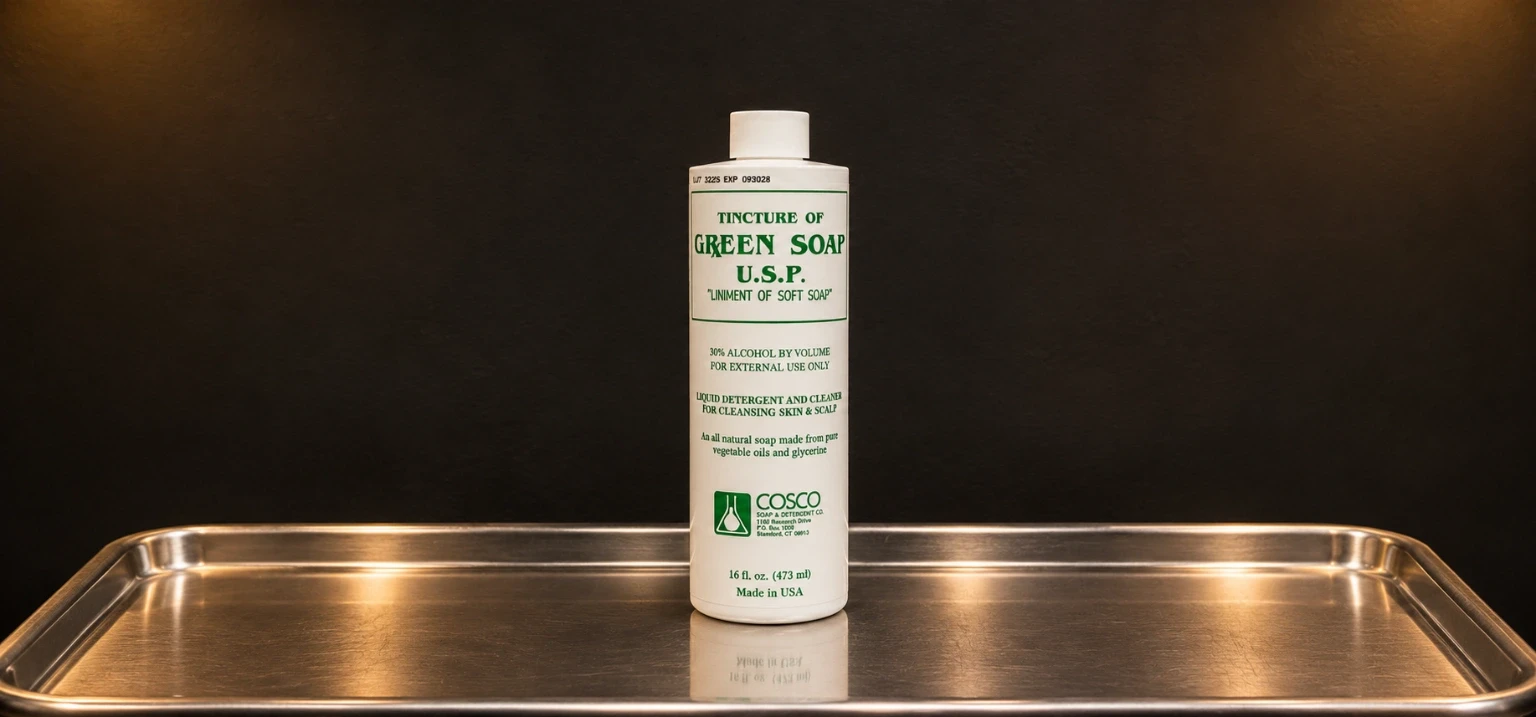
Tattoo green soap is a cleansing product artists use to lift excess ink and other visible residue from skin as they prepare and work. SVT Shop's description of Cosco Green Soap identifies vegetable oils and glycerin and describes it as a cleanser for residue, blood and ink. A green soap bottle is a work-area cleaning tool for the tattooing process, not a substitute for the other infection-control products a studio needs.
The name can confuse beginners. SVT Shop's Cosco description notes that the name does not require the liquid itself to look green; it associates the term with the product's vegetable-based positioning. A soap's name, color or marketing description does not tell you its germicidal classification or how much water to add. The actual ingredients and use directions on your bottle matter more.
Tattoo soap used as a cleanser
Cosco's SVT Shop listing describes cleaning skin and removing visible ink, blood and residue. Use it within the tattoo artist's established cleansing workflow and follow the specific bottle instructions.
Concentrated product
BioTat Numbing Green Soap Concentrated is made to be diluted before use. The manufacturer's instruction is one part concentrate to four parts water; it also lists the product for use during and after tattooing.
USP green soap tincture
The USP tincture monograph describes a formulation containing green soap, alcohol and purified water. That standard formula is a reference to the tincture, not an ingredient guarantee for every commercial brand.
USE THE PRODUCT LABEL
What is the correct green soap dilution ratio for tattooing?
There is no universal green soap mixing ratio. BioTat directs 1 part Numbing Green Soap Concentrated to 4 parts water, and SVT Shop's 16 oz BioTat listing repeats that formula. SVT Shop's Cosco description identifies cleansing uses but gives no ratio, so follow the directions on the Cosco bottle. Panthera concentrate and other formulas have their own instructions.
| Product | Directions to follow | What to remember |
|---|---|---|
| BioTat Numbing Green Soap Concentrated | BioTat: 1 part soap + 4 parts water. | Verified manufacturer's formula. |
| Cosco Green Soap | The exact bottle's directions. | Do not apply the BioTat formula automatically. |
| Panthera Concentrate Babool Soap Plus | The concentrate's own directions. | A concentrate name alone is not a ratio. |
| Hustle Butter Foaming Tattoo Soap | Its own application instructions. | Foaming wash and measured concentrate are different formats. |
Different ratios circulate for tattoo soaps, but a mix suggested for another brand is not an instruction for yours. Read the label before the session so every person using the station knows exactly what is inside the prepared bottle.
1:4 MEANS FIVE TOTAL PARTS
How much soap and water do you mix for BioTat green soap?
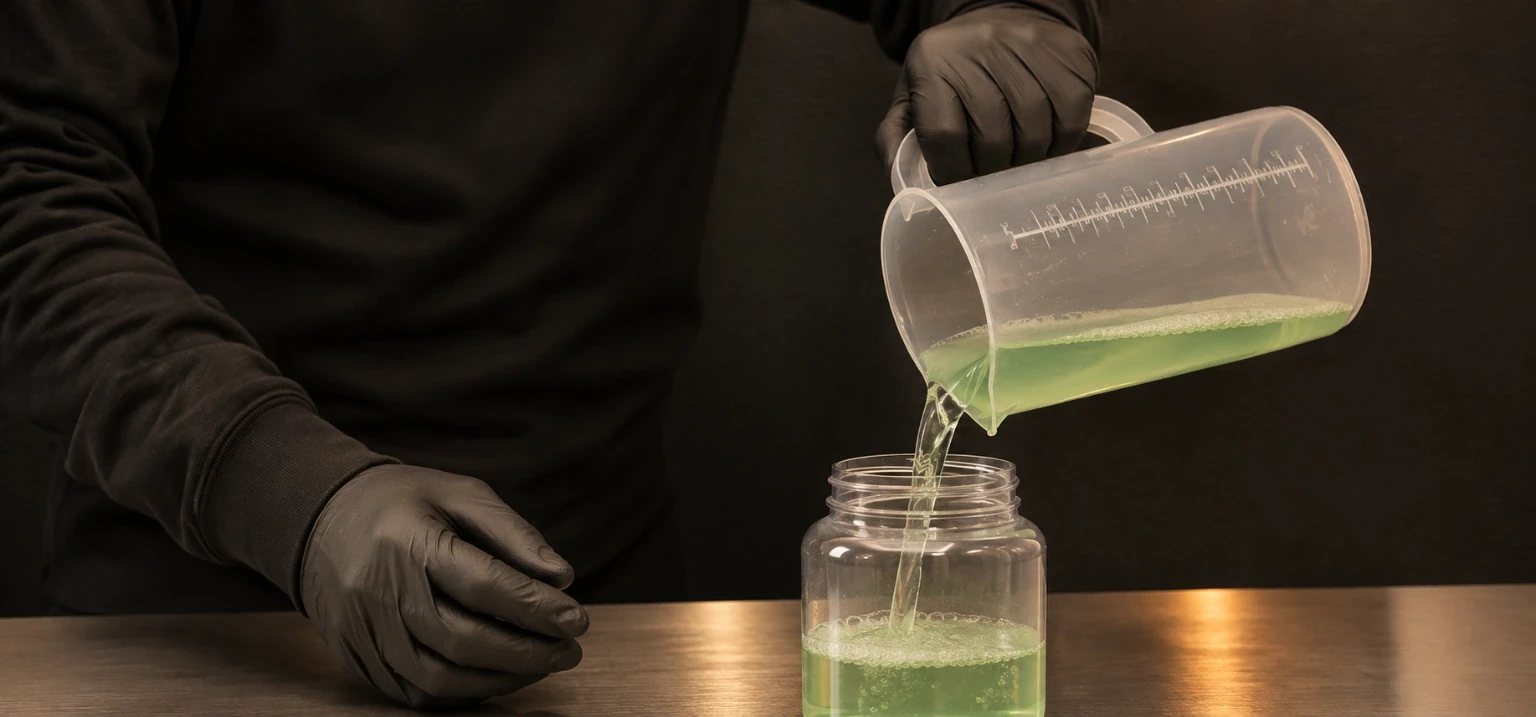
BioTat's 1:4 soap-to-water ratio means one measure of concentrate plus four equal measures of water. That creates five total parts, with concentrate making up 20% of the finished mixture. These are examples calculated from BioTat's own ratio, not recommended amounts for Cosco or another brand.
| BioTat concentrate | Water | Finished volume |
|---|---|---|
| 20 mL | 80 mL | 100 mL |
| 50 mL | 200 mL | 250 mL |
| 100 mL | 400 mL | 500 mL |
Confirm the label
Use the 1:4 example only for the BioTat concentrate, following the exact package directions.
Measure, do not guess
For 250 mL total, combine 50 mL BioTat concentrate with 200 mL water.
Use a clean, identified bottle
Label the product, ratio and preparation date; protect the unused contents during the procedure.
CLEANSING BEFORE, DURING AND AFTER
What is tattoo green soap used for, and how do artists wipe with it?
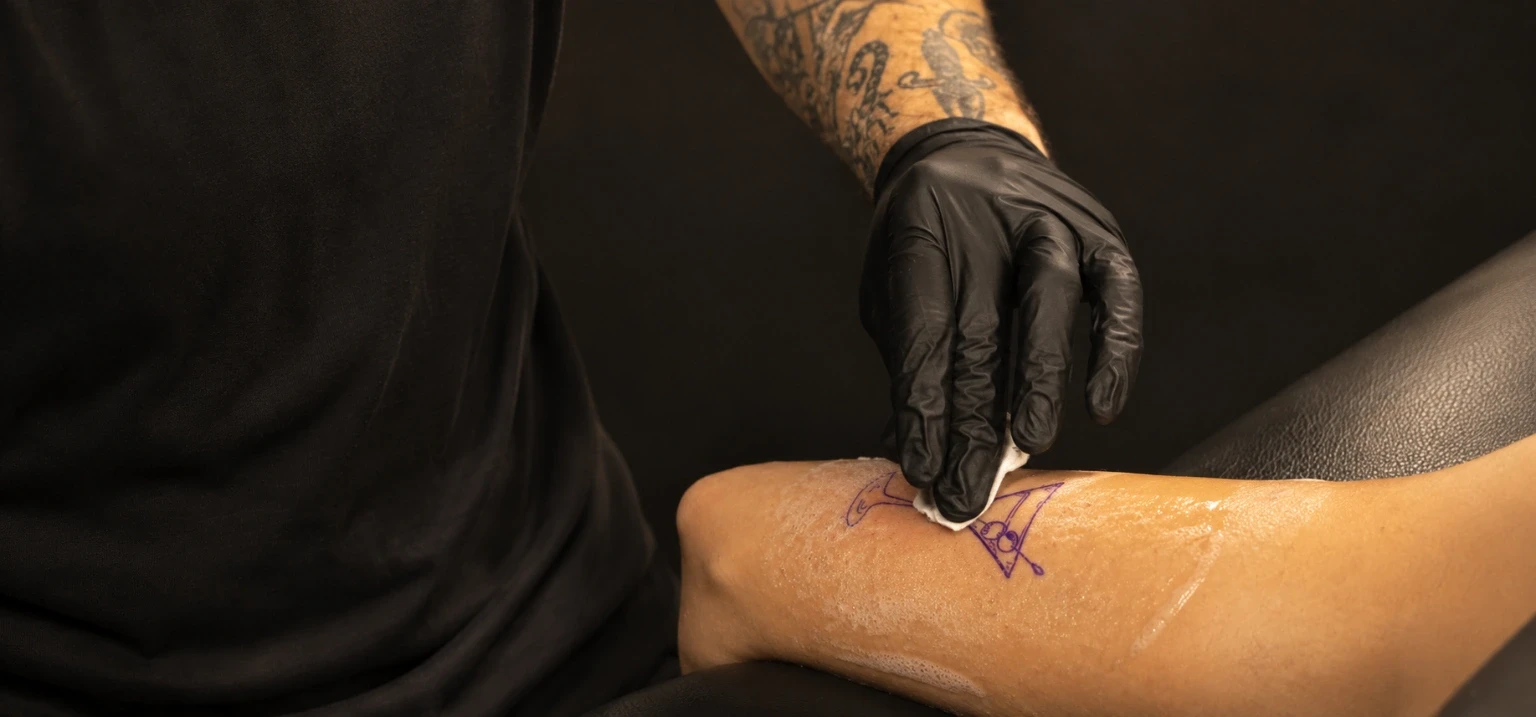
Artists use labeled green soap as a cleanser before stencil work, to remove excess ink and fluid during tattooing, and to clear visible residue around the end of the procedure. SVT Shop's Cosco description mentions removing ink, blood and other residue; BioTat describes use during and after tattooing. These jobs involve cleaning, not disinfection or sterilization.
| Moment | Green soap role | Separate requirement |
|---|---|---|
| Before the stencil | Clean visible surface residue as directed on the bottle. | Approved germicidal skin preparation and aseptic stencil application. |
| While tattooing | Dispense appropriately and wipe away excess ink or fluid to view the work. | Protect supply containers and use suitable single-use applicators. |
| Session finish | Support the artist's final removal of visible residue when labeled for that use. | Artist-directed dressing and aftercare steps. |
Keep the wash bottle and unused soap uncontaminated. Vermont advises dispensing products to protect the unused portion; Texas requires covers for reusable accessories handled by the artist. A wash cannot correct needle technique or replace the separate skin-prep requirements.
SKIN PREPARATION
How do you use green soap before applying a tattoo stencil?
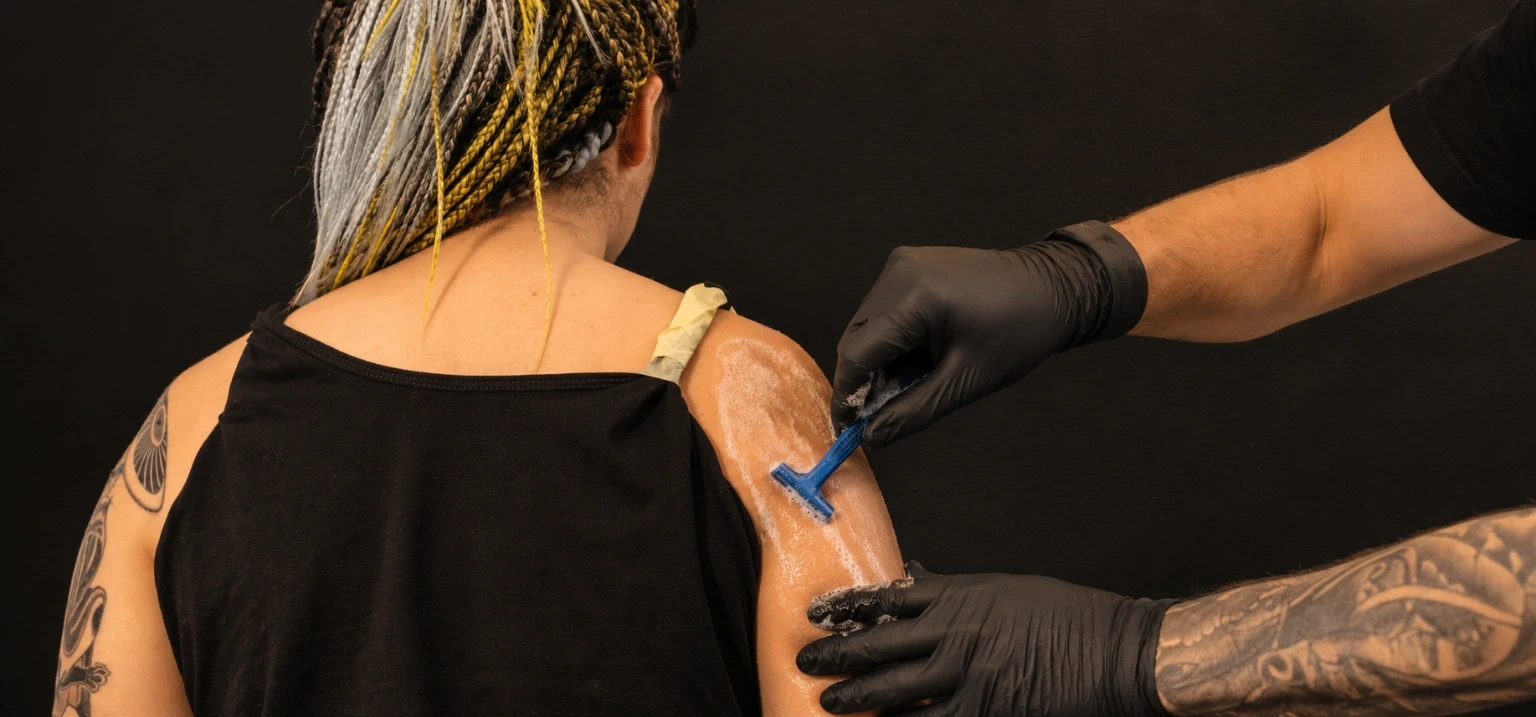
Green soap may help clean visible residue before a stencil, but that cleansing task is distinct from approved germicidal skin preparation. Texas Section 229.405 requires approved germicidal soap used according to its label on the tattoo area. Vermont describes soap-and-water skin cleaning and a separate antiseptic step that must dry before the skin is penetrated.
Identify the cleanser
Follow the label, including the correct dilution when using a concentrate.
Remove visible residue
Use the cleanser for its intended skin-cleaning role. Vermont also describes soap-and-water spray for shaving lubrication.
Complete approved skin prep
Follow Texas germicidal skin-cleaning requirements. Vermont gives 70% isopropyl alcohol as one antiseptic example and requires it to dry before tattooing.
Transfer the stencil aseptically
Texas requires single-use stencils and applicators, and dispensing that protects the original product container.
For a complete stencil-transfer workflow, read our tattoo stencils that last guide. Cleaning and stencil adherence are separate jobs.
MIXING AND DISPENSING
Can you mix tattoo green soap in a spray bottle or a squeeze bottle?
Yes, a suitable spray or squeeze bottle can be used for a labeled soap-and-water workflow. Vermont's tattoo infection-control guidance explicitly describes spray bottles with soap and water for skin cleaning and shaving lubrication. Texas requires single-use plastic covers over spray bottles and other reusable accessories handled during tattooing.
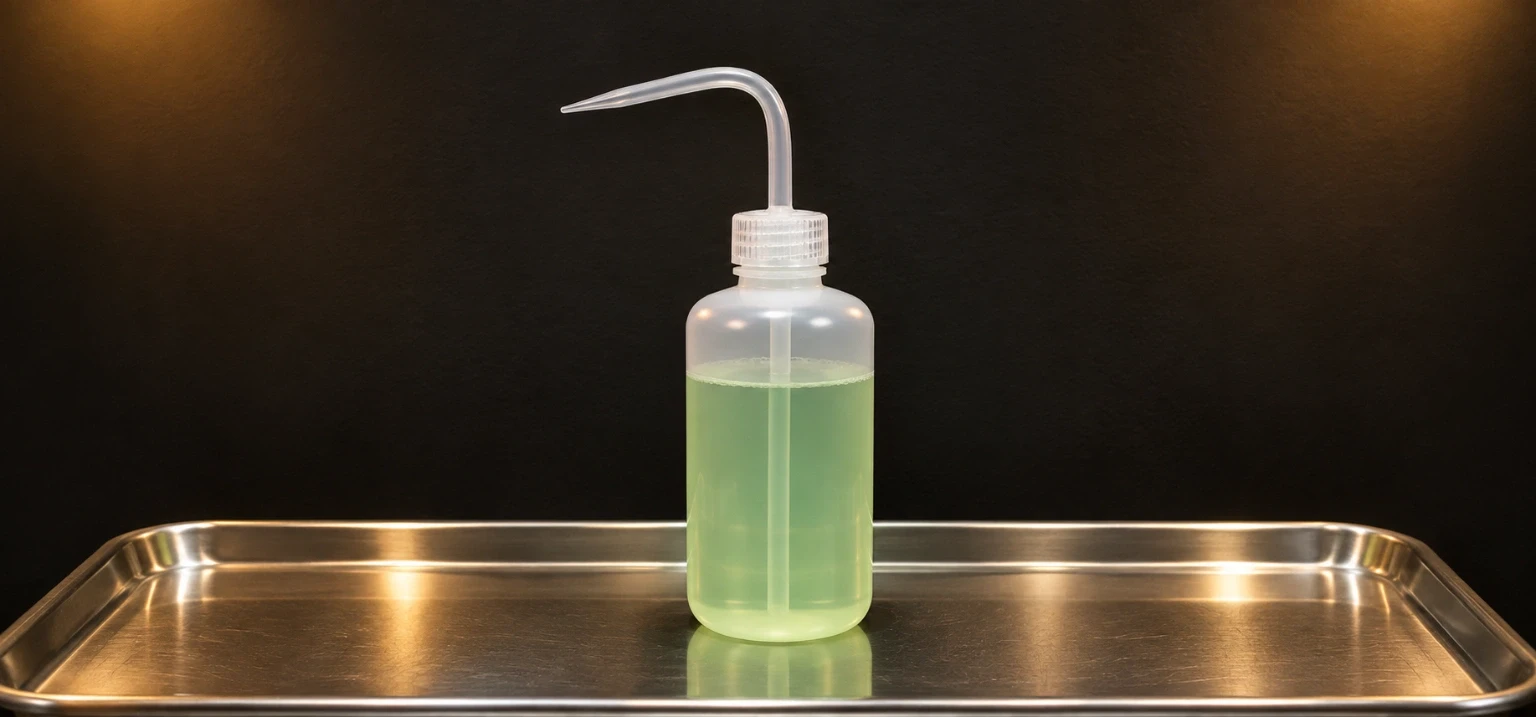
Start with a clean bottle
Vermont directs studios to clean spray bottles daily. Select a container suitable for controlled dispensing and your studio's cleaning procedure.
Measure the product-specific formula
Read the soap container. For BioTat concentrate, one part concentrate plus four parts water is the manufacturer's stated ratio. Follow other labels independently.
Label the contents and preparation date
Identify the soap, mix and date on the container as a practical studio control. Do not use an unidentified mixture with an unknown dilution.
Cover reusable accessories for the client
Texas requires single-use plastic covers on reusable accessories handled by the artist. Keep the nozzle and original soap supply from contamination.
Do not top off yesterday's contents
Vermont explicitly says soap-and-water spray bottles should not be topped off and should be cleaned daily. Prepare a controlled batch under your studio's procedure.
SVT Shop lists a standard Tattoo Wash Squeeze Bottle 250 mL and a Pink Tattoo Wash Squeeze Bottle 250 mL. These are bottle options, not evidence that every green soap concentrate belongs at one particular dilution.
DO NOT CONFUSE THE JOBS
Does green soap disinfect skin, kill bacteria or sterilize equipment?
Green soap should be treated as a cleanser, not a general disinfectant or sterilant. CDC distinguishes cleaning, which removes soil, from disinfection and sterilization, which are different microbial-control processes. Texas also defines a disinfectant for inanimate objects separately from a germicidal soap designed for skin. A marketing claim about a soap does not replace following the actual product label and the studio's required infection-control procedures.
| Task | What performs that task | Where green soap fits |
|---|---|---|
| Remove visible ink and residue | A skin cleanser used as its label directs. | Common tattoo green soap cleansing role. |
| Prepare skin with an approved germicidal wash | Texas requires an approved germicidal soap according to label directions. | Check the exact skin product and its approved use rather than relying on the name green soap. |
| Apply a separate antiseptic step | Vermont describes an antiseptic such as 70% isopropyl alcohol, allowed to dry before penetration. | Soap-and-water cleansing and antiseptic application are not interchangeable steps. |
| Disinfect hard work surfaces | A suitable surface disinfectant and its use directions. | Tattoo green soap is not a substitute for the surface-disinfection process. |
| Sterilize reusable instruments | Approved cleaning and sterilization procedures under Texas rules. | Removing soil is only a preliminary part of instrument reprocessing. |
Texas Administrative Code Section 229.405(f) specifies approved germicidal soap for the tattoo area. The state's definitions in Section 229.402 distinguish germicidal skin products from surface disinfectants. For a broader session-flow check, see SVT Shop's cross-contamination checklist.
FORMULAS ARE NOT IDENTICAL
What ingredients are in green soap, and what should artists check?
Green soap formulas differ. SVT Shop describes Cosco as made from vegetable oils and glycerin. A USP tincture of green soap formula includes soap, alcohol and purified water, with the USP monograph listing approximately 28% to 32% ethanol for that tincture. That monograph describes a specific preparation, not the exact contents of every tattoo soap bottle.
BioTat lists a mild clove fragrance and no lidocaine. Its manufacturer warns against use for anyone sensitive to eugenol, advises avoiding the eye area and instructs users to discontinue if a skin reaction develops. These are label-specific cautions, not a statement that other green soaps have the same ingredients.
BioTat ingredient warning
BioTat says not to use its Numbing Green Soap Concentrated if sensitive to eugenol. Avoid eye contact, rinse with water if contact occurs, and stop use if the skin reacts.
AVOID MIXING ERRORS
What mistakes cause problems when using tattoo green soap?
Most confusion comes from applying one product's ratio or claims to another. These mistakes also make a studio's bottle workflow less consistent.
Using BioTat's 1:4 mix for Cosco
The 1:4 instruction belongs to BioTat Numbing Green Soap Concentrated. Check the Cosco label separately.
Confusing one part with one quarter of total
A 1:4 soap-to-water mix creates five total parts. BioTat concentrate is one fifth of the prepared mixture.
Topping off a partly used bottle
Vermont says soap-and-water spray bottles should not be topped off and should be cleaned daily.
Calling cleansing sterilization
CDC distinguishes soil removal from disinfection and sterilization. Texas requires separate approved processes.
Skipping the skin-prep requirement
Texas requires an approved germicidal soap used according to its label for the tattoo area.
Ignoring a formula's warnings
BioTat warns against its product for people sensitive to eugenol and advises stopping use for skin reactions.
SVT SHOP SOAP AND BOTTLE OPTIONS
Which green soaps and tattoo wash bottles can you compare at SVT Shop?
Choose based on the actual product directions and your studio workflow. SVT Shop lists Cosco Green Soap, BioTat and Panthera concentrates, a Hustle Butter foaming wash, and two 250 mL squeeze bottles. A wash bottle is for controlled dispensing; it does not determine the dilution.
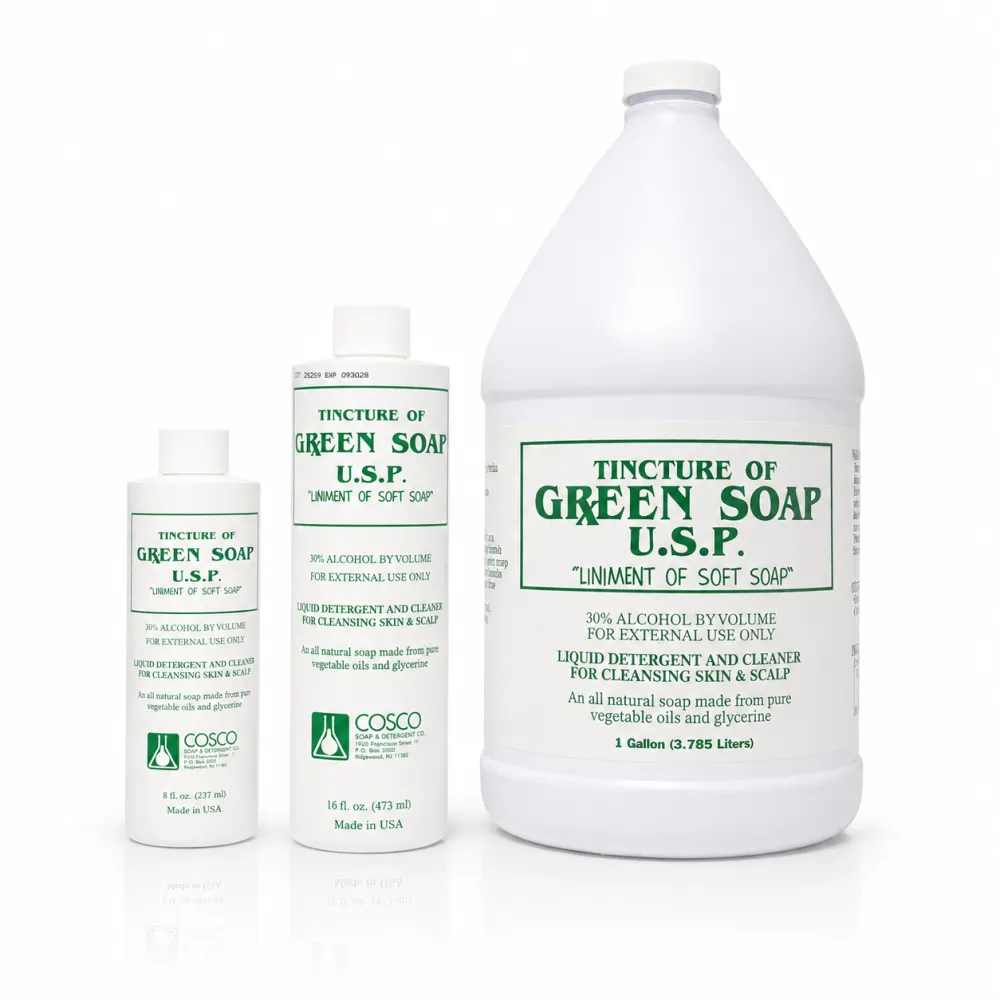 Classic tattoo skin cleanserCosco Green SoapSVT Shop describes a vegetable-oil and glycerin based cleanser for tattoo ink and residue. Use the exact bottle directions for dilution and skin application.
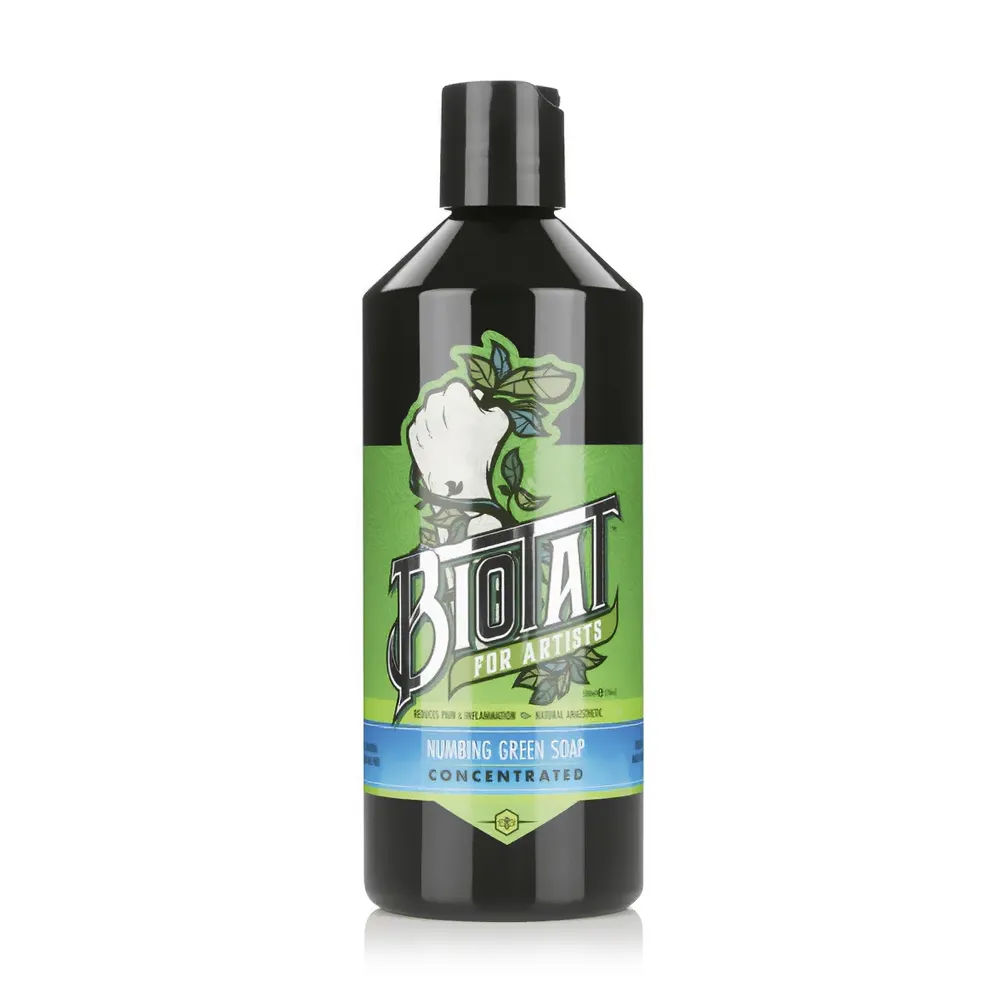 Manufacturer dilution exampleBioTat Numbing Green Soap Concentrated 16 ozConcentrated soap with BioTat's 1 part soap to 4 parts water instruction. Mild clove fragrance, no lidocaine; check the eugenol warning.
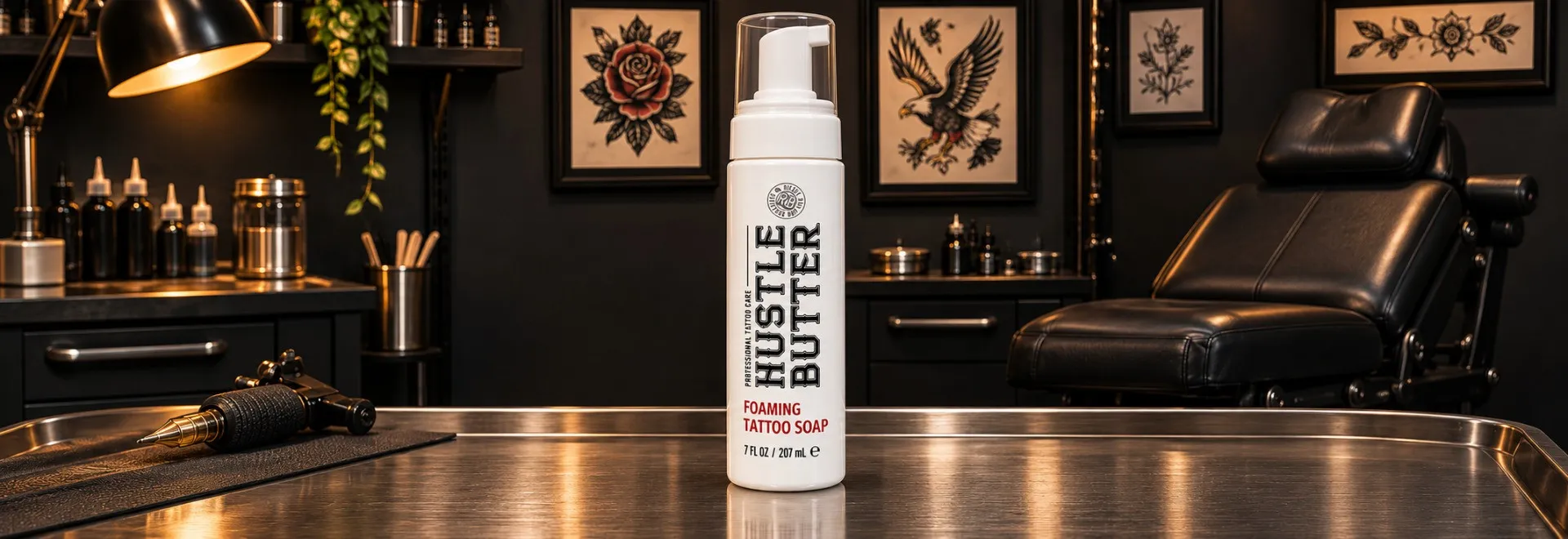
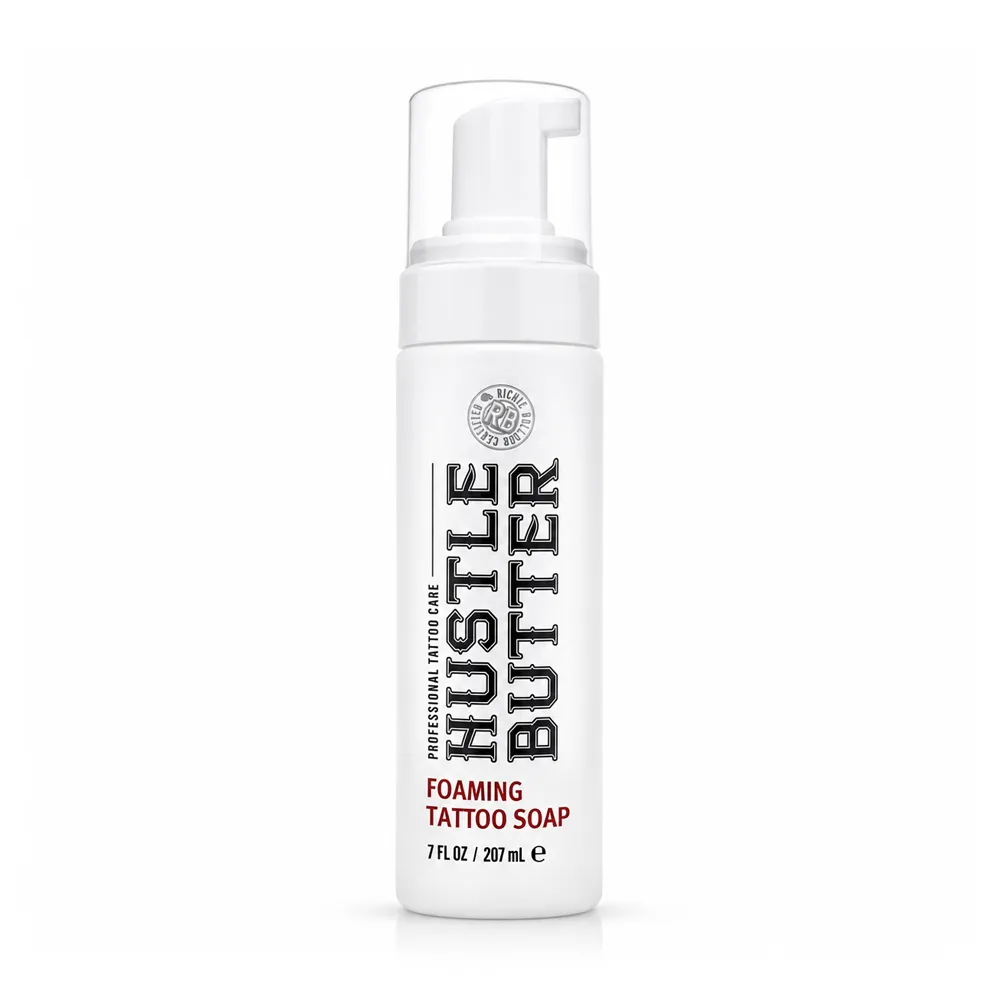 Foaming wash alternativeHustle Butter Foaming Tattoo Soap 7 ozA foaming tattoo-wash option to compare with concentrated green soaps. Follow this product's own instructions rather than a concentrate ratio.
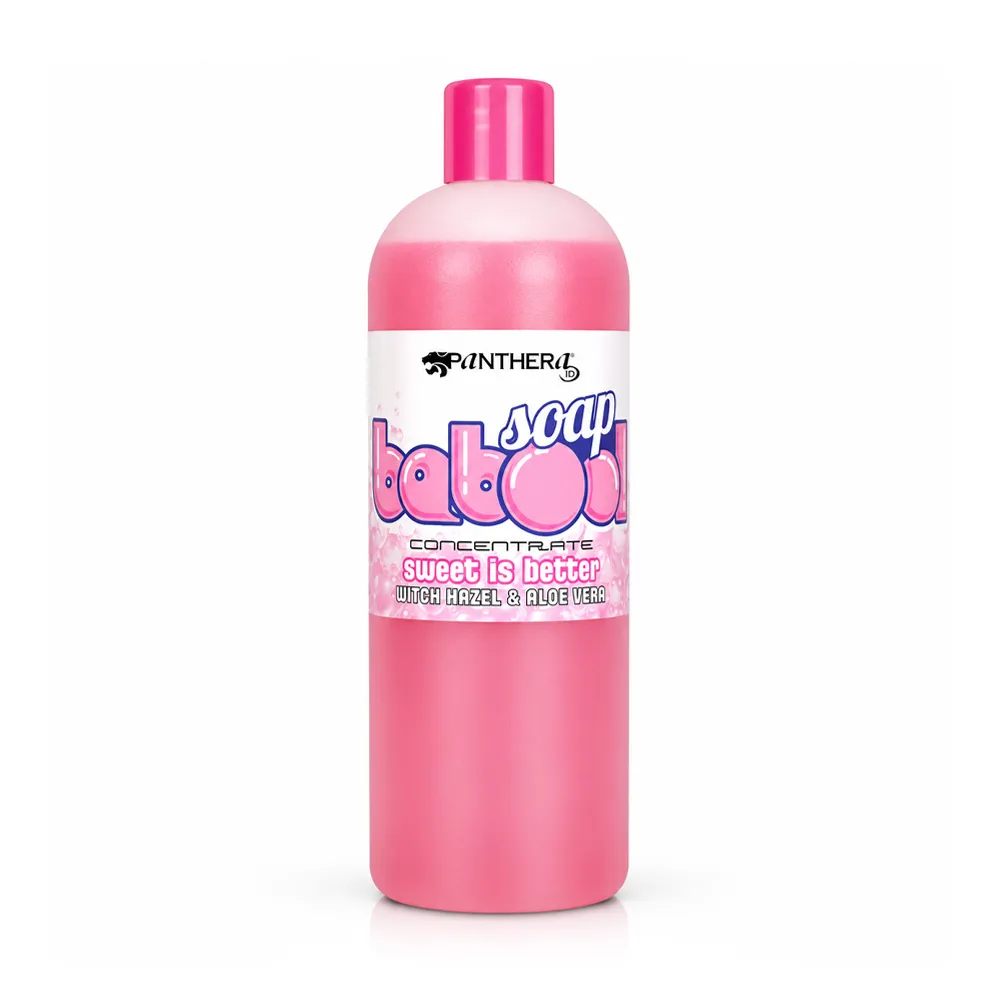 Another concentrate optionPanthera Concentrate Babool Soap Plus 1000 mLA concentrated tattoo-soap option. Read its own mixing and use directions; BioTat's 1:4 formula is specific to BioTat.
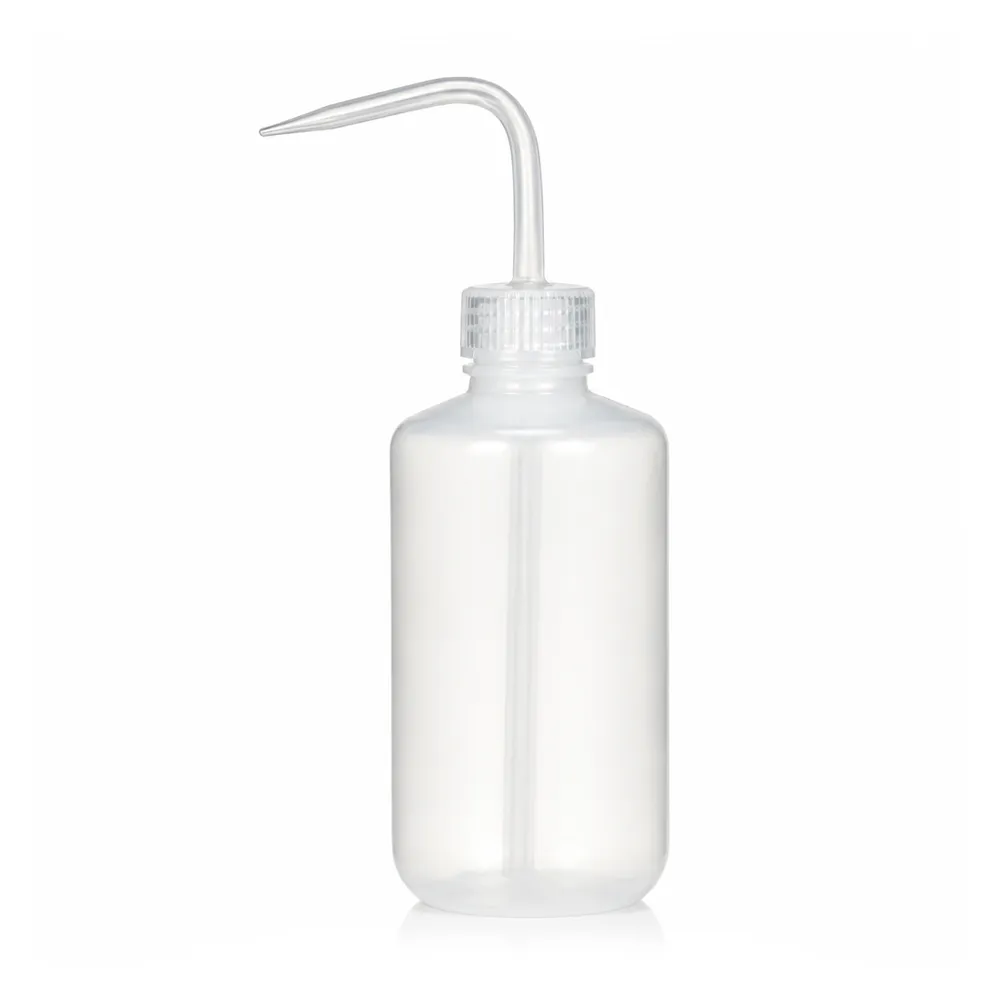 For controlled dispensingTattoo Wash Squeeze Bottle 250 mLA squeeze-bottle format for a studio-prepared, labeled tattoo wash. Maintain it under the studio's cleaning and accessory-cover procedures.
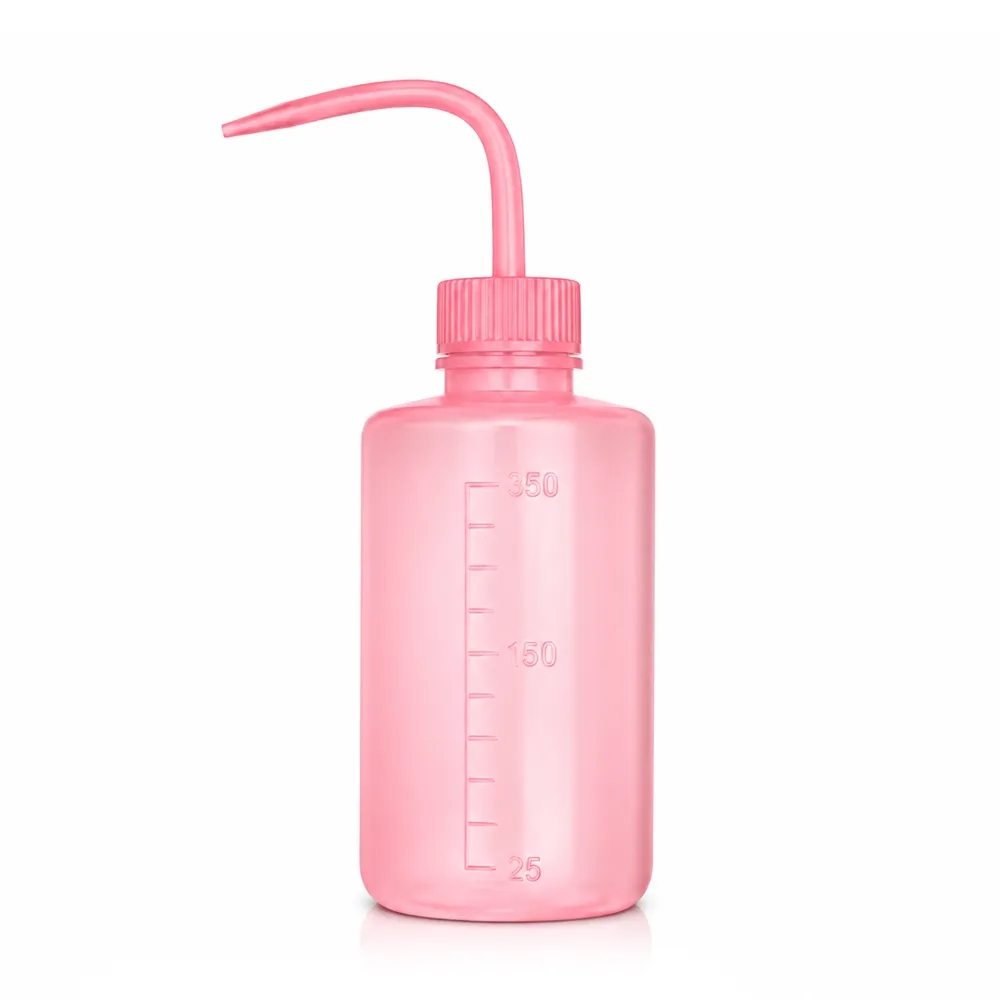 For a distinct bottle optionPink Tattoo Wash Squeeze Bottle 250 mLAn alternate 250 mL wash bottle. Label the contents and mix so color alone never identifies what is inside.
Shop Soaps & CleanersShop Sanitation Essentials
For the supplies that complete a first station, see SVT Shop's first professional tattoo setup guide. Soap selection is one part of a larger clean, labeled and protected station.
BEFORE YOUR NEXT MIX
What should be on a tattoo green soap buying and mixing checklist?
Use the exact product label to make soap selection and bottle preparation repeatable across the studio.
- Product identity: Cosco, BioTat, Panthera or a foaming alternative; never assume formulas match.
- Ratio: BioTat's concentrate specifies 1 part soap to 4 parts water. Use each other label's instructions.
- Ingredients: Read the manufacturer warnings, especially BioTat's eugenol sensitivity warning.
- Bottle: Use a clean, marked container; Vermont says not to top off and to clean spray bottles daily.
- Client setup: Cover reusable accessories as required by Texas and dispense without contaminating unused contents.
- Separate steps: Keep skin cleansing, approved germicidal preparation, surface disinfection and instrument sterilization distinct.
SVT Shop supports tattoo artists and studios in El Paso, TX, with Next Day Delivery available in El Paso.
FAQ
12 questions about tattoo green soap ratios and use
These answers draw on BioTat's manufacturer directions, SVT Shop's product descriptions, the Vermont tattoo infection-control guide, Texas rules and CDC's process definitions.
1. What is green soap used for in tattooing?
Artists use labeled green soap as a cleanser for visible ink and residue before and during tattooing. SVT Shop describes Cosco for removing ink and blood residue, while BioTat lists use during and after the session.
2. What is the correct green soap dilution ratio?
Follow your brand's label. BioTat says 1 part Numbing Green Soap Concentrated to 4 parts water. Cosco, Panthera and other formulas have their own directions; the BioTat ratio does not transfer to them.
3. How much green soap should I mix with water?
For BioTat's 1:4 ratio, 50 mL concentrate and 200 mL water make 250 mL of prepared wash. That is one part soap plus four parts water, or five total parts. Read another brand's label before mixing.
4. Why do tattoo artists use distilled water with green soap?
Some mixing practices mention distilled water, while BioTat's official instructions simply say water. Use the water type specified by the actual product and your studio procedure rather than importing another formula.
5. Can you use tattoo green soap straight without diluting it?
That depends on the specific product. BioTat explicitly instructs artists to dilute its concentrate before use. For Cosco or Panthera, follow the directions on the container rather than treating all green soaps as identical.
6. How do you use green soap before applying a tattoo stencil?
Clean visible residue with an appropriately labeled product. Texas separately requires approved germicidal soap for the tattoo area; Vermont describes a separate antiseptic step. Apply a single-use stencil using aseptic technique.
7. Does tattoo green soap disinfect or kill bacteria?
Treat green soap as a cleanser, not a substitute for approved skin germicides, surface disinfectants or sterilization. CDC separates cleaning from disinfection and sterilization; Texas has distinct requirements for each.
8. Can I use green soap to clean my new tattoo at home?
Follow your artist's aftercare directions for the specific product and tattoo. BioTat lists use after tattooing, but an artist's session mixture is not automatically a home routine. See SVT Shop's tattoo aftercare guide.
9. How long does diluted green soap last?
Follow the product's storage directions, label the preparation date and maintain the bottle. Vermont instructs tattoo studios not to top off soap-and-water spray bottles and to clean them daily.
10. Can I use a spray bottle or squeeze bottle for green soap?
Yes, when it fits the labeled use and studio procedure. Vermont describes soap-and-water spray bottles; Texas requires single-use covers for spray bottles and other reusable accessories handled by the artist.
11. Is BioTat Numbing Green Soap different from Cosco Green Soap?
Yes. BioTat publishes a 1:4 mixing direction, describes clove fragrance and no lidocaine, and warns about eugenol sensitivity. SVT Shop describes Cosco as a vegetable-oil and glycerin based cleanser; follow its own bottle directions.
12. Is tattoo green soap the same as castile soap?
Names and formulas are not interchangeable. The USP green soap tincture includes soap, alcohol and purified water; SVT Shop describes Cosco using vegetable oils and glycerin. Choose products by their actual formulation and label.
RESEARCH
Sources Consulted
Product-specific mixing guidance comes from BioTat; cleaning and sanitation requirements come from Vermont, Texas and CDC. SVT Shop product descriptions support the listed store options.
- BioTat: Numbing Green Soap Concentrated Instructions and Warnings
- SVT Shop: Cosco Green Soap Product Description
- SVT Shop: BioTat Numbing Green Soap Concentrated 16 oz
- USP 32 Monograph Mirror: Tincture of Green Soap
- Vermont Office of Professional Regulation: Tattoo Infection Control Practices
- Texas Administrative Code 229.402: Germicidal Soap and Disinfectant Definitions
- Texas Administrative Code 229.405: Skin Cleaning Before Tattooing
- Texas Administrative Code 229.407: Reusable Instrument Sterilization
- Texas Administrative Code 229.409: Stencils, Bottles and Instruments
- CDC: Cleaning, Disinfection and Sterilization Definitions
- CDC: Cleaning Before Disinfection and Sterilization