


 Powered by Comercia.io
The best gloves for tattooing are single-use medical examination or surgical gloves that fit the artist, suit the procedure, and follow the studio's glove-change routine. When comparing nitrile vs latex vs vinyl gloves, start with the material and examination labeling rather than color: nitrile is synthetic, latex is natural rubber, and vinyl is PVC. For Texas tattoo and piercing studios, the rules require gloves labeled for surgical or examination purposes while assembling instruments and performing procedures.
Shop Nitrile Exam Gloves Shop Latex Exam Gloves
QUICK ANSWER
What are the best gloves for tattooing: nitrile, latex, or vinyl?
Start with powder-free medical examination or surgical gloves. Nitrile is a non-latex option, latex is natural rubber, and vinyl is PVC. The Texas rules define gloves by single-use and surgical or examination labeling, not by material or color; choose by the box's medical designation, the wearer's allergy needs, and size.
Nitrile
Synthetic, non-latex option to consider when building a latex-free supply choice for tattoo, piercing, or PMU work.
Latex
Natural rubber material. Check allergy considerations and select powder-free medical gloves with the required labeling.
Vinyl
PVC material included in FDA medical-glove guidance. For Texas studio use, choose gloves labeled for examination or surgical purposes.
MATERIAL COMPARISON
What is the difference between nitrile, latex, and vinyl gloves for tattooing?
The main difference is the material. FDA medical-glove guidance identifies natural rubber latex, vinyl made from polyvinyl chloride (PVC), and a category of other polymers that includes nitrile. The FDA evaluates medical gloves for factors such as leak resistance, physical properties, and biocompatibility. Material names alone do not tell you which particular box to buy for a Texas tattoo station.
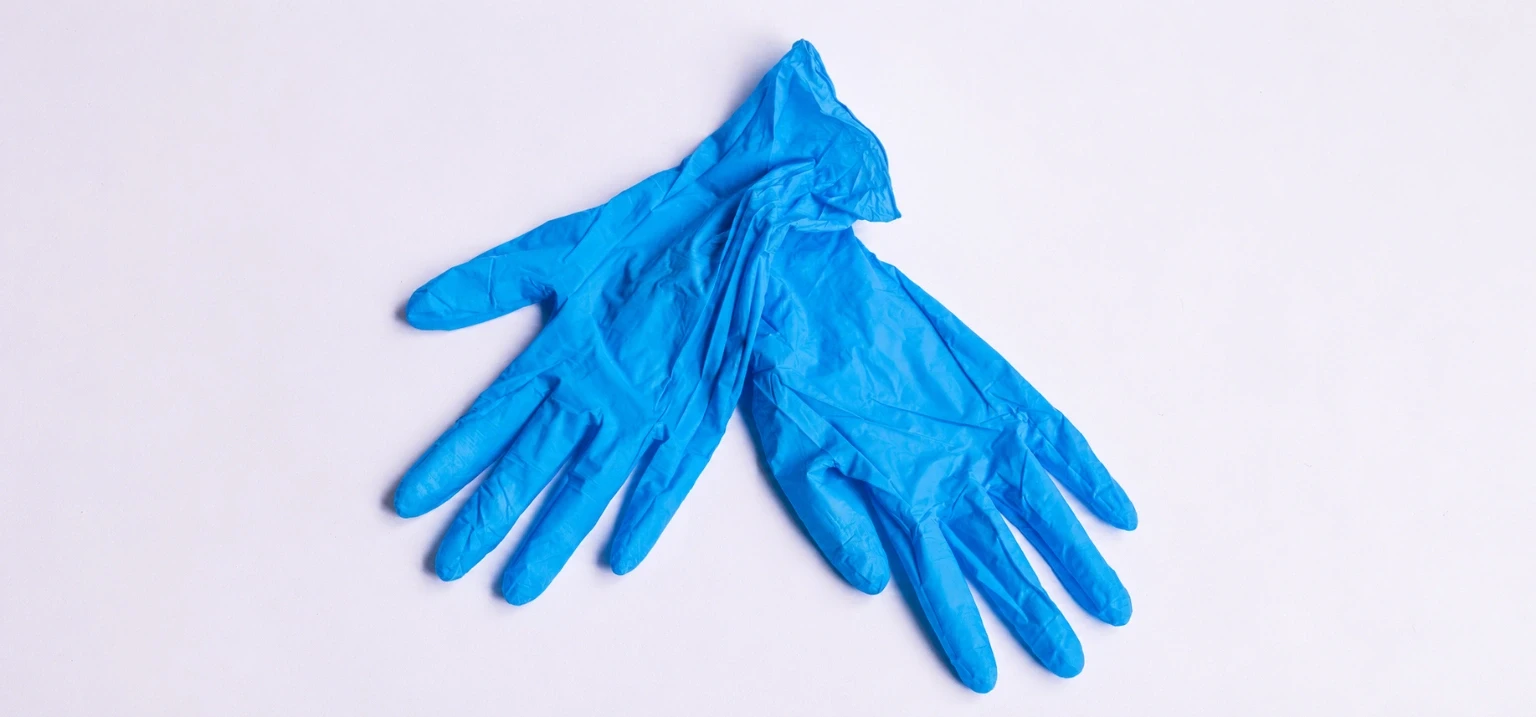
| Buying criterion | Nitrile | Latex | Vinyl |
|---|---|---|---|
| Material family | Synthetic polymer, other than vinyl | Natural rubber latex | Polyvinyl chloride (PVC) |
| Latex allergy planning | A non-latex material alternative identified by FDA | Natural rubber latex can be an allergen | A non-latex material alternative identified by FDA |
| Texas tattoo or piercing use | Choose a single-use exam- or surgical-labeled glove | Choose a single-use exam- or surgical-labeled glove | Choose a single-use exam- or surgical-labeled glove |
| What to check on the box | Medical designation, material, powder status, size | Medical designation, natural rubber latex, powder status, size | Medical designation, PVC material, powder status, size |
| Practical buyer question | Does this labeled glove fit staff who need a non-latex option? | Does our allergy plan permit natural rubber latex gloves? | Is this particular PVC product labeled for examination use? |
TEXAS RULES
What kind of gloves are required for tattoo artists and piercers in Texas?
Texas 25 TAC §229.402(a)(19) defines gloves as disposable, single-use gloves labeled for surgical or examination purposes. Section 229.405(c) says artists must wear single-use gloves while assembling tattooing and body piercing instruments and while tattooing or body piercing. For a professional purchasing supplies, the actionable words are single-use and labeled for surgical or examination purposes.
Texas licensing question?
For how the state applies its rules to your particular tattoo, piercing, or studio setup, contact Texas DSHS licensing assistance at 512-834-6600. The related SVT Shop guide How to Become a Tattoo Artist in Texas covers the broader licensing context.
MEDICAL LABELING
How can you tell if tattoo gloves are medical or exam grade?
Start by reading the carton. The FDA describes patient examination gloves as disposable medical devices intended to prevent contamination between the examiner and patient. Its medical-glove page explains that these devices require 510(k) premarket notification, and that the agency reviews characteristics including leak resistance, physical properties, and biocompatibility. FDA also requires manufacturers to identify the glove material on package labeling.
Find the intended use
Read the box for examination or surgical labeling rather than relying on the word disposable or the look of the product.
Read the material description
Identify nitrile, natural rubber latex, or vinyl/PVC. This matters to your studio's latex-allergy plan.
Check powder status and size
Select an appropriately labeled powder-free medical glove and the correct size for the person wearing it.
Review product documentation
For a specific product's FDA status, consult its manufacturer or relevant 510(k) listing. The material family or a product title alone is not a regulatory listing.
LATEX ALLERGY
Should tattoo studios choose nitrile gloves when an artist or client has a latex allergy?
Natural rubber latex can cause allergic reactions in some people, according to FDA. The FDA identifies medical gloves made from synthetic materials such as nitrile, vinyl/PVC, and polyurethane as alternatives. For a studio that needs to accommodate a reported latex allergy, choosing appropriately labeled non-latex medical gloves is a practical purchasing decision, not a claim that every nitrile glove outperforms every latex glove.
OSHA's bloodborne-pathogens standard says hypoallergenic gloves, glove liners, powderless gloves, or similar alternatives must be readily accessible for employees who are allergic to the gloves normally supplied. Think beyond the lead artist: a piercer, PMU artist, apprentice, or staff member assembling instruments may need an alternative during a shift. For the rest of OSHA’s training and exposure rules, see Bloodborne Pathogens Certification for Tattoo Artists.
NIOSH guidance advises workers who develop symptoms suggesting latex allergy to consult a doctor experienced in the condition. An artist should not diagnose their own reaction or a client's reaction from appearance alone. If someone reports a latex allergy, review materials and choose an appropriate glove alternative; questions about symptoms belong with a healthcare professional.
Do not confuse two different allergy conversations
A reported reaction to natural rubber latex gloves concerns glove material. A client's concern about tattoo ink or a healing tattoo is a separate issue to discuss with the tattoo professional and a doctor as appropriate. For that different topic, see Tattoo Ink Allergy and Red Ink and Why Is My Tattoo Raised and Itchy?.
FDA POWDER RULE
Are powdered latex or nitrile examination gloves allowed for tattooing?
The FDA banned powdered patient examination gloves and powdered surgeon's gloves. Its final rule was published December 19, 2016, and became effective January 18, 2017. For a tattoo or piercing supply order, look for powder-free medical gloves and read the actual packaging rather than treating powder as a comfort feature to shop for.
Box-reading shortcut
On every candidate carton, identify three separate pieces of information: medical intended use, material, and powder status. Add size before approving it for your regular station order.
GLOVE CHANGES
When should a tattoo artist change gloves during a tattoo or piercing?
Texas §229.405(d) gives a direct rule: when a session is interrupted or immediately after a glove is torn or perforated, discard the gloves, wash hands, and use a fresh pair. OSHA also directs replacement as soon as practical when contaminated and as soon as feasible if torn or punctured. The CDC's healthcare guidance calls for changing gloves when moving from a contaminated body site to another site, and for hand hygiene after removing gloves.
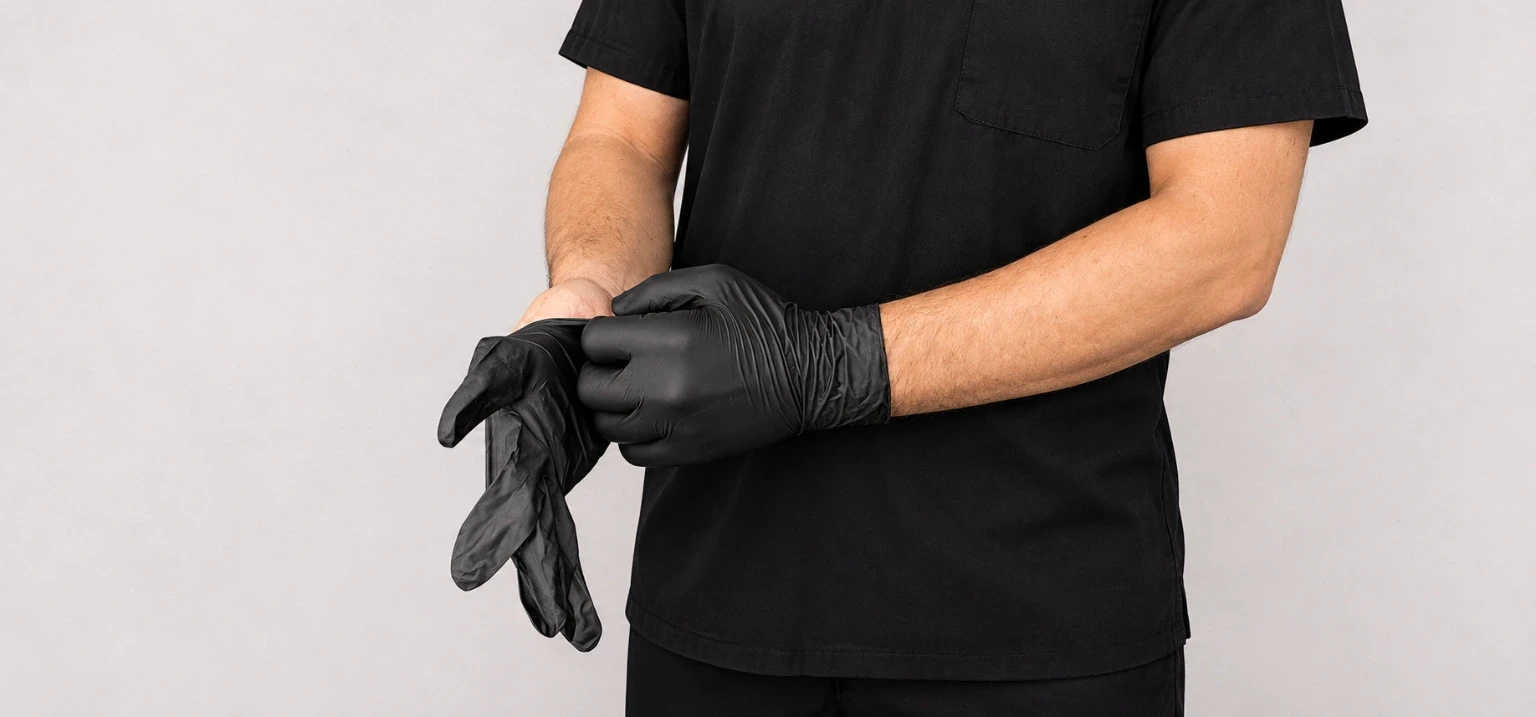
Identify the interruption or glove problem
A session pause, a tear, or a perforation triggers Texas's discard-and-replace process. Contamination also calls for replacement under OSHA.
Remove and discard the used pair
Do not put the same pair back on after a break. CDC healthcare guidance also says not to wash gloves for reuse.
Wash hands as required
Texas specifies handwashing following the interruptions or damage described in §229.405(d); CDC healthcare guidance identifies hand hygiene after glove removal.
Put on a fresh pair before returning
Return to instrument assembly or the procedure only with a fresh, appropriately labeled pair that fits the artist.
FIT & FEEL
How do you choose the right glove size and box for tattooing, piercing, or PMU?
Choose a glove the individual artist can wear and use for their normal instrument handling, then confirm its medical labeling. A studio owner stocking several people should not assume one box size works for every hand. Use the sizing information supplied with the candidate product, let artists check how it fits, and keep accessible replacement sizes for the people who actually work each shift.
Check the carton before standardizing an order. An artist may prefer the feel of one glove while another needs a non-latex alternative. Record which size and material each worker uses so supplies can be reordered correctly. If staff use a skin product or gloving cream, check its compatibility with the glove material; FDA medical-glove guidance says these creams should not degrade the glove.
What to check before approving a carton
- Examination or surgical designation printed on the packaging
- Material identified as nitrile, natural rubber latex, or PVC
- Powder-free status
- Size that suits the artist's hands and tasks
- Latex alternative available when an employee needs one
- Manufacturer or supplier documentation for the particular glove
BLACK VS BLUE
Are black nitrile gloves better than blue gloves for tattooing?
Color is a studio preference. A black glove is not automatically the best glove for an artist, and blue is not a different regulatory category. For a Texas studio, the consequential checks are whether the gloves are single-use and labeled for examination or surgical use, whether the material suits the wearer, and whether the size works for the job.
Best black gloves for tattooing?
Start with correctly labeled exam gloves in the preferred color, then compare material, size, and personal handling preference. Color itself is not the criterion that establishes medical-glove suitability.
STATION ROUTINE
How should tattoo studios organize glove use from setup to cleanup?
Build the process around clean replacement pairs and defined change points. Texas requires gloves during instrument assembly and during tattooing and body piercing, while its interruption rule requires a new pair after removing and discarding the old one and washing hands. The CDC's healthcare recommendations reinforce hand hygiene after glove removal and prohibit washing gloves for reuse.
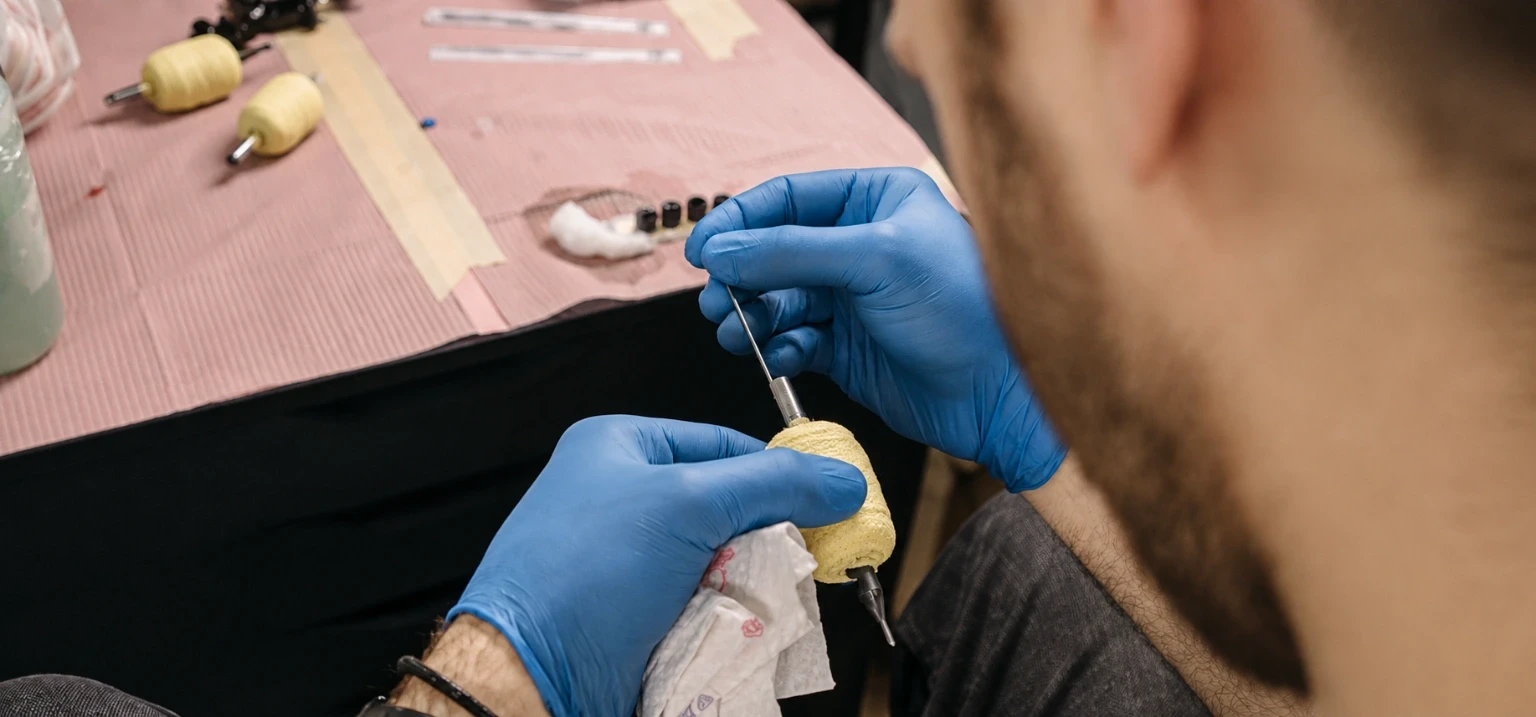
Set out correctly labeled gloves
Match the material and size to the worker, with an appropriate non-latex choice accessible for allergy needs.
Prepare the clean work area
Organize barriers and supplies so a worker can distinguish procedure items from frequently touched room surfaces.
Glove for instrument assembly and service
Follow Texas §229.405(c) when assembling instruments and during tattooing or body piercing.
Respond to interruption, contamination, or damage
Discard used gloves, perform the required handwashing, and put on fresh gloves before resuming the procedure.
Finish without reusing the pair
Discard used gloves and perform hand hygiene. CDC healthcare guidance says not to carry the same pair between patients or wash gloves for reuse.
COMMON MISTAKES
What glove-buying and glove-changing mistakes should tattoo artists avoid?
Train staff to check glove labeling and to replace used pairs when the procedure requires it.
Buying disposable gloves without checking exam labeling
Texas calls for single-use gloves labeled for surgical or examination purposes. Confirm that designation on the actual box.
Assuming all black gloves are the same
Black gloves can be nitrile or natural rubber latex. Material, intended use, and size matter more than a matching color.
Ordering only one size for a whole studio
Check sizing with the people who wear the gloves, including apprentices, piercers, and PMU staff. Plan replacement stock by wearer.
Continuing with torn or contaminated gloves
Texas and OSHA address replacement when gloves are damaged or contaminated. Stop, remove and discard, clean hands, and put on a fresh pair.
Washing gloves to use them again
CDC healthcare guidance advises against washing gloves for reuse. Use a new pair rather than trying to reset the old one.
Forgetting about latex allergy alternatives
FDA identifies non-latex medical-glove materials, and OSHA requires appropriate alternatives to be accessible to employees allergic to their regular gloves.
SVT SHOP GLOVE OPTIONS
Which nitrile and latex gloves can you shop for a tattoo or piercing studio?
SVT Shop has nitrile and latex glove options to compare by material, product labeling, and wearer preference. These cards identify products from the studio-supply list; check the exact carton for its medical intended use, size, material, and relevant manufacturer information before choosing it for a Texas procedure station.
 Black Nitrile Exam Option
Adenna Night Angel Black Nitrile Exam Gloves
Listed as powder-free, latex-free nitrile exam gloves. Compare size and carton labeling for tattoo, piercing, or PMU work.
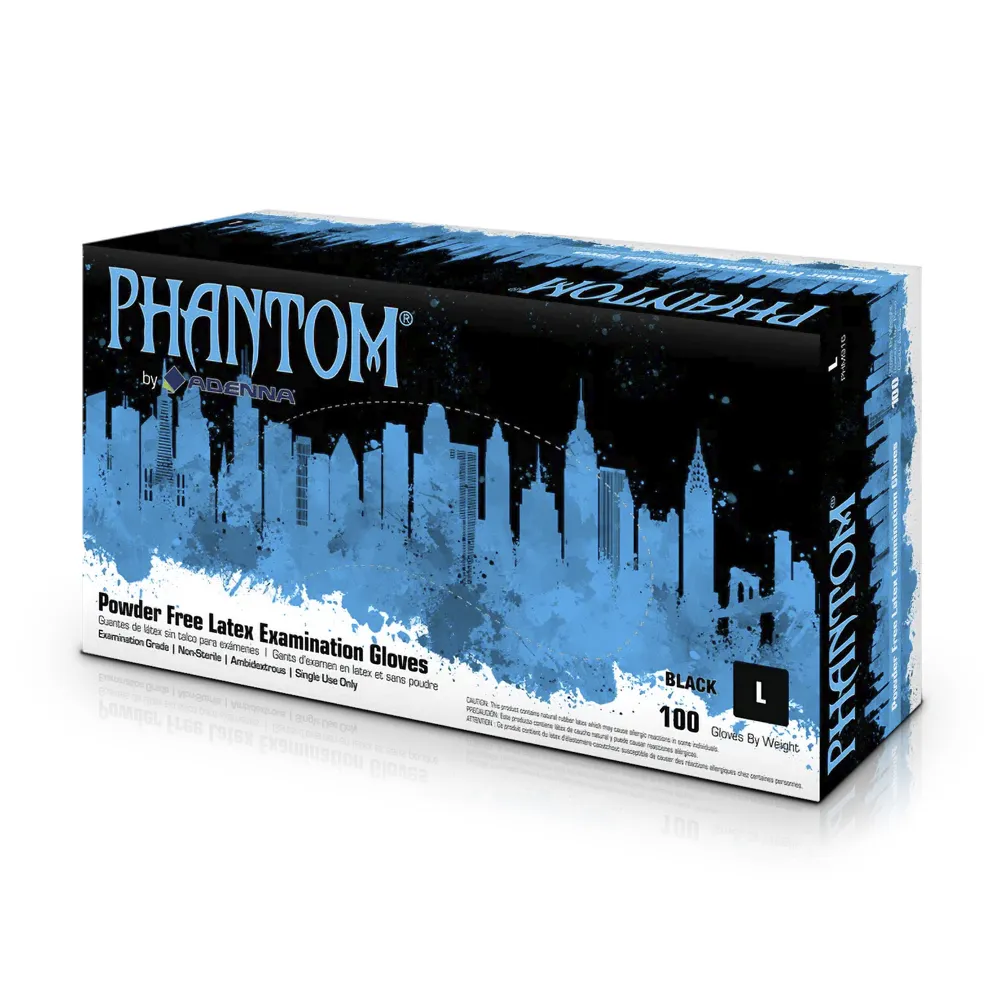 Black Latex Exam Option
Adenna Phantom Black Latex Exam Gloves
Listed as powder-free natural rubber latex exam gloves. Include latex-allergy considerations before selecting this material.
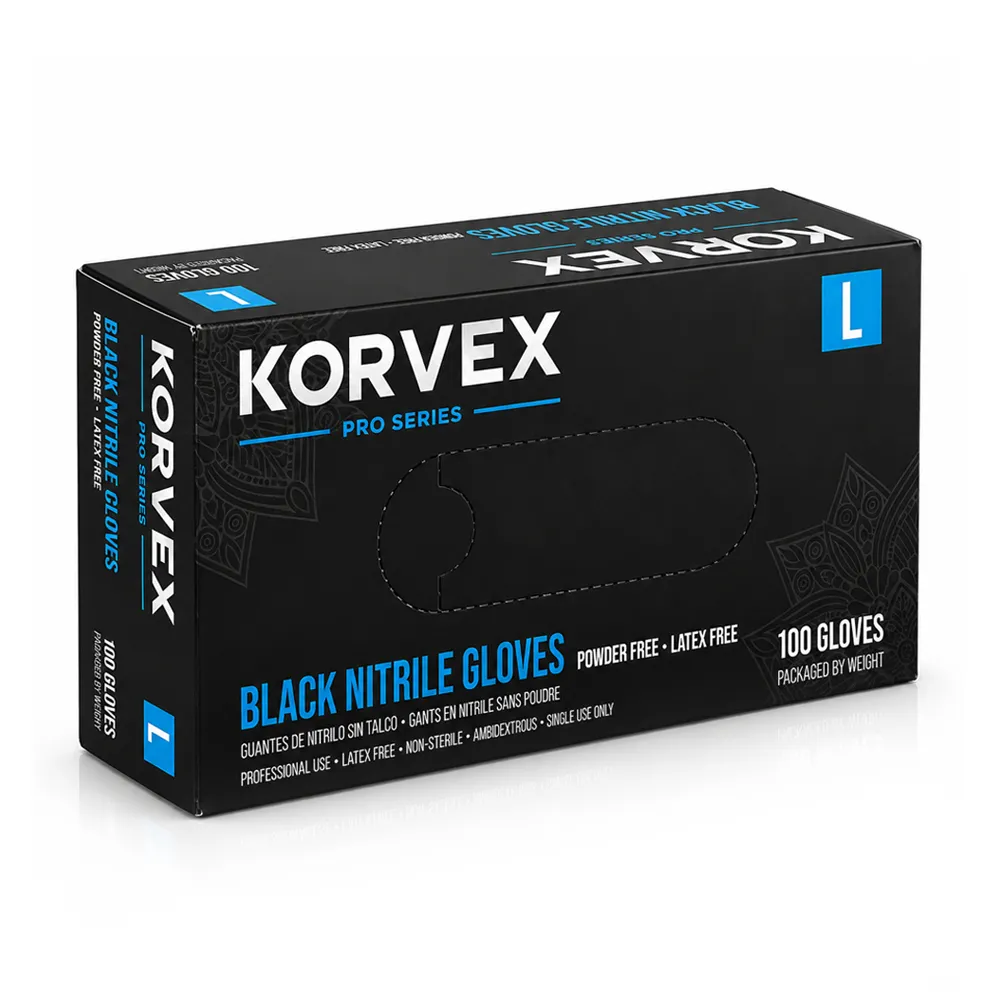 Black Nitrile Option
KORVEX Black Nitrile Gloves
Listed as powder-free and latex-free. Review the carton for surgical or examination labeling and the size you need.
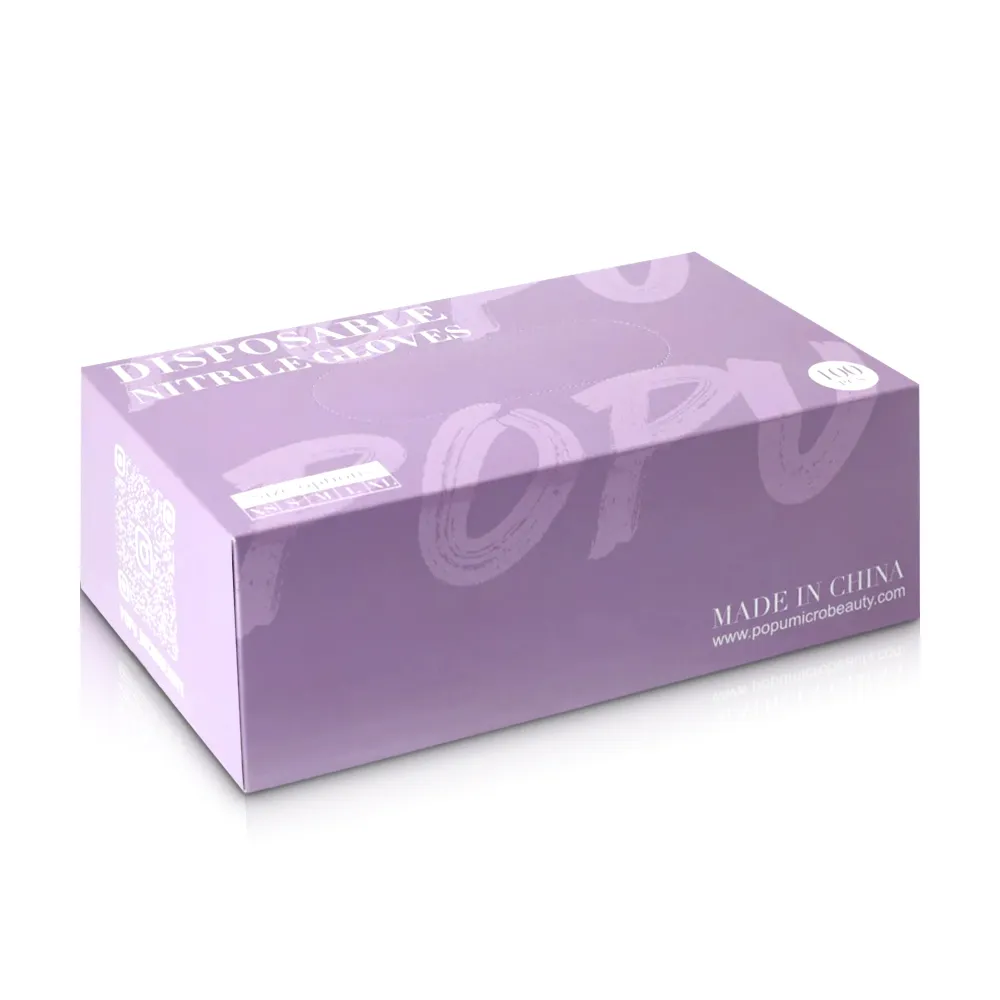 Pink Nitrile Option
POPU Disposable Nitrile Gloves
Pink disposable nitrile glove listing. Check the box's intended-use designation and size.
 Station Barrier
Dynarex Barrier Film Clear
Disposable film for touch points such as machine cords and lamp handles, replaced between clients along with the gloves.
Shop Nitrile Exam Gloves Shop Latex Exam Gloves Compare Black Nitrile Gloves
BUYING CHECKLIST
How should a studio owner choose and restock gloves for tattoo artists, piercers, and PMU artists?
Reorder by examination labeling, material, size, allergy needs, and the change process. These criteria reflect FDA labeling, Texas rules, and OSHA's allergy provisions.
- Confirm intended use: The glove carton is labeled for examination or surgical purposes.
- Read the material: Record nitrile, natural rubber latex, or PVC/vinyl rather than assuming from the color.
- Check powder status: Purchase powder-free medical gloves in line with the FDA powdered-glove ban.
- Account for allergies: Keep an accessible alternative for workers allergic to the gloves ordinarily supplied.
- Verify fit: Make sure the wearer has the size needed for normal tool handling and fresh-pair changes.
- Plan glove changes: Supply replacements for interruptions, torn or perforated gloves, and contamination.
- Read manufacturer information: Review the exact product labeling and documentation when deciding whether it fits the studio's requirements.
- Train the change process: Discard the used pair, wash hands as Texas directs after interruptions or damage, then use a fresh pair.
- Keep categories clear: Separate nitrile and latex choices in ordering so a reported latex allergy is not overlooked.
FAQ
Frequently asked questions about gloves for tattooing and piercing
These answers focus on material selection, Texas purchasing requirements, allergy planning, and actual glove use at a professional station.
Nitrile or latex gloves for tattooing?
Choose single-use medical examination or surgical gloves that fit. FDA identifies nitrile as a synthetic, non-latex material and latex as natural rubber. If an artist or client has a reported latex allergy, consider appropriately labeled non-latex medical gloves. Texas requires the exam or surgical designation, not one of these two materials.
Are nitrile gloves better than latex for tattoo artists?
Nitrile provides a non-latex material option. FDA reviews medical gloves for properties including leak resistance and biocompatibility, but that does not establish that every nitrile glove is superior to every latex glove. Compare the particular carton, fit, and allergy considerations.
Can tattoo artists use vinyl gloves?
FDA medical-glove guidance includes vinyl, or PVC, as a medical-glove material. Texas defines suitable gloves by single-use surgical or examination labeling. Choose a specific vinyl product with that designation if considering it for a studio.
What gloves are required in Texas to tattoo?
Texas 25 TAC §229.402(a)(19) defines gloves as disposable, single-use, and labeled for surgical or examination purposes. Section 229.405(c) requires artists to wear them while assembling instruments and during tattooing or body piercing.
Are powdered gloves allowed for tattoo artists?
FDA's ban on powdered patient examination gloves and powdered surgeon's gloves became effective January 18, 2017. Select powder-free medical gloves and confirm the carton labeling.
How do I know my tattoo gloves are exam grade?
Read the box for its medical examination designation, material, and powder status. FDA regulates medical examination gloves and reviews characteristics including leak resistance, physical properties, and biocompatibility. For a particular model, consult manufacturer documentation and the applicable 510(k) information.
What if my client or I am allergic to latex?
FDA identifies nitrile, PVC/vinyl, and polyurethane medical gloves as synthetic alternatives to natural rubber latex. OSHA requires accessible alternatives for employees allergic to their usual gloves. If you have symptoms, NIOSH advises seeing a doctor experienced in latex allergy; do not self-diagnose.
When should I change gloves during a tattoo?
Under Texas §229.405(d), discard gloves, wash hands, and put on a fresh pair when a session is interrupted or gloves tear or become perforated. OSHA also addresses contaminated gloves; CDC's healthcare guidance calls for changes between contaminated and other body sites.
Are black gloves better than blue gloves for tattooing?
Black versus blue is a studio color preference. It does not replace checking whether the product is labeled for examination or surgical use, what material it contains, and whether it fits the artist.
Can I double glove or wash and reuse tattoo gloves?
Washing and reusing disposable gloves conflicts with CDC healthcare guidance. Wearing two pairs does not replace the Texas requirement to discard damaged gloves and use fresh gloves after an interruption. Choose a workable routine based on the appropriate gloves and your procedure requirements.
What does latex allergy look like in tattoo artists?
NIOSH warns that workers can experience symptoms associated with latex allergy and recommends consulting a doctor experienced in diagnosing and managing it. Do not identify a glove allergy by guessing from a hand reaction; arrange professional medical evaluation.
What gloves should I use for a hand tattoo or detailed PMU work?
Begin with the same material, examination-labeling, and allergy criteria as any professional procedure. Choose a size that lets the artist carry out their normal handling tasks, and replace gloves as required when interrupted, contaminated, or damaged. A special color is not necessary to meet the Texas glove definition.
RESEARCH
Sources Consulted
FDA, Texas DSHS, OSHA, NIOSH, and CDC documents support the material, labeling, allergy, and glove-change guidance above.
- FDA: Medical Gloves
- FDA: Medical Glove Guidance Manual
- Federal Register: Ban on Powdered Medical Gloves
- NIOSH: Preventing Allergic Reactions to Natural Rubber Latex in the Workplace
- OSHA: Bloodborne Pathogens Standard, 29 CFR 1910.1030
- CDC: Isolation Precautions, Summary of Recommendations
- Texas DSHS: Tattoo and Body Piercing Rules, 25 TAC Chapter 229
- Texas DSHS: Tattoo and Body Piercing Studio Program