Powered by Comercia.io
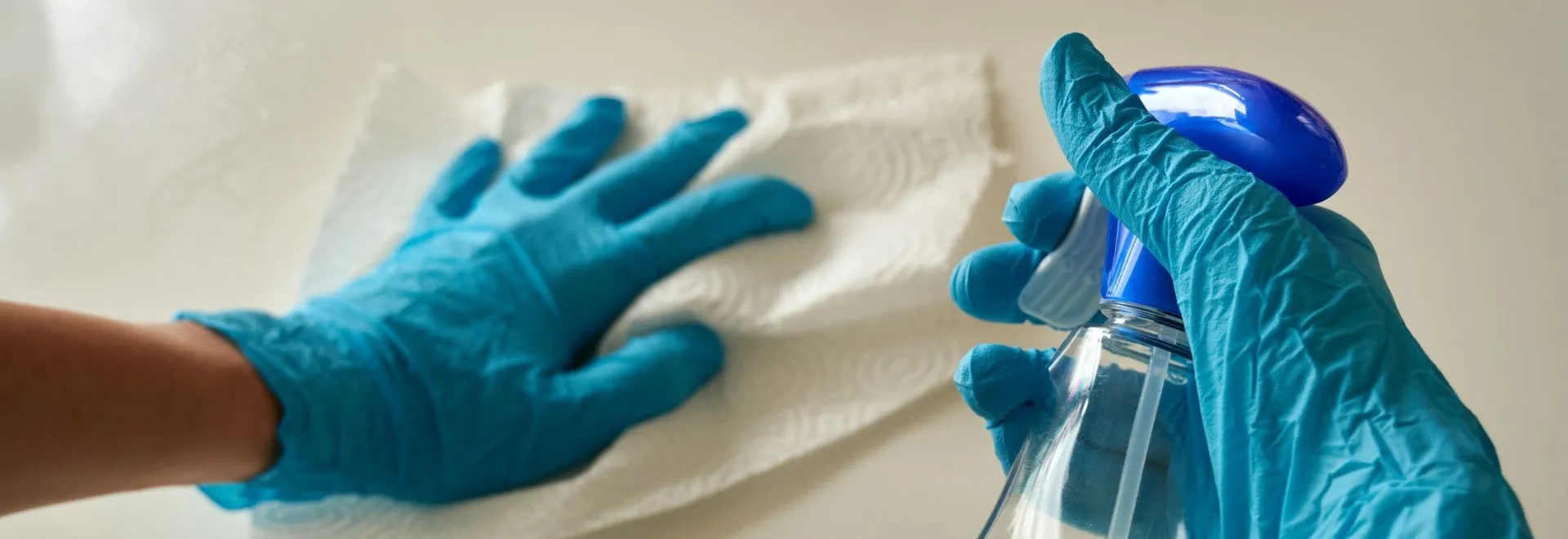
To clean blood spills in a tattoo studio, wear appropriate PPE, absorb visible blood, clean the surface, then disinfect with an EPA-registered product according to its label. OSHA requires prompt decontamination and mechanical pickup of contaminated broken glass. In Texas, DSHS regulates surface germicides and waste; use the exact product's label for contact time.
Explore MadaCide-1 Quart Check EPA List S
QUICK ANSWER
What should a tattoo studio use to clean up a blood spill?
Wear gloves and appropriate PPE, absorb visible blood, clean the surface, then apply a suitable disinfectant according to its EPA registration and label. Respect the stated contact time and dispose of sharps and contaminated waste under OSHA and Texas rules.
FIRST
PPE and disposable absorbent material.
NEXT
Clean; disinfect with the product's labeled contact time.
FINISH
Handle glass with tools, sharps in containers, waste by rule.
UNIVERSAL PRECAUTIONS
Why should tattoo artists treat spilled blood as potentially infectious?
Treat blood as potentially infectious. Texas uses universal precautions; OSHA applies its bloodborne-pathogens standard to covered workers. Judge exposure by the task, not by how blood looks.
OSHA requires prompt decontamination of visibly contaminated work surfaces and a written cleaning schedule appropriate to the site. A spill is not routine end-of-shift cleaning.
Keep contamination away from clean supplies and devices. See Tattoo Cross-Contamination Checklist for everyday barriers.
Regulation versus clinical guidance
CDC is healthcare guidance; Texas DSHS and OSHA govern the applicable studio and workplace duties.
THE CLEANUP SEQUENCE AND ITS SOURCES
How should a tattoo studio remove visible blood and disinfect the area?
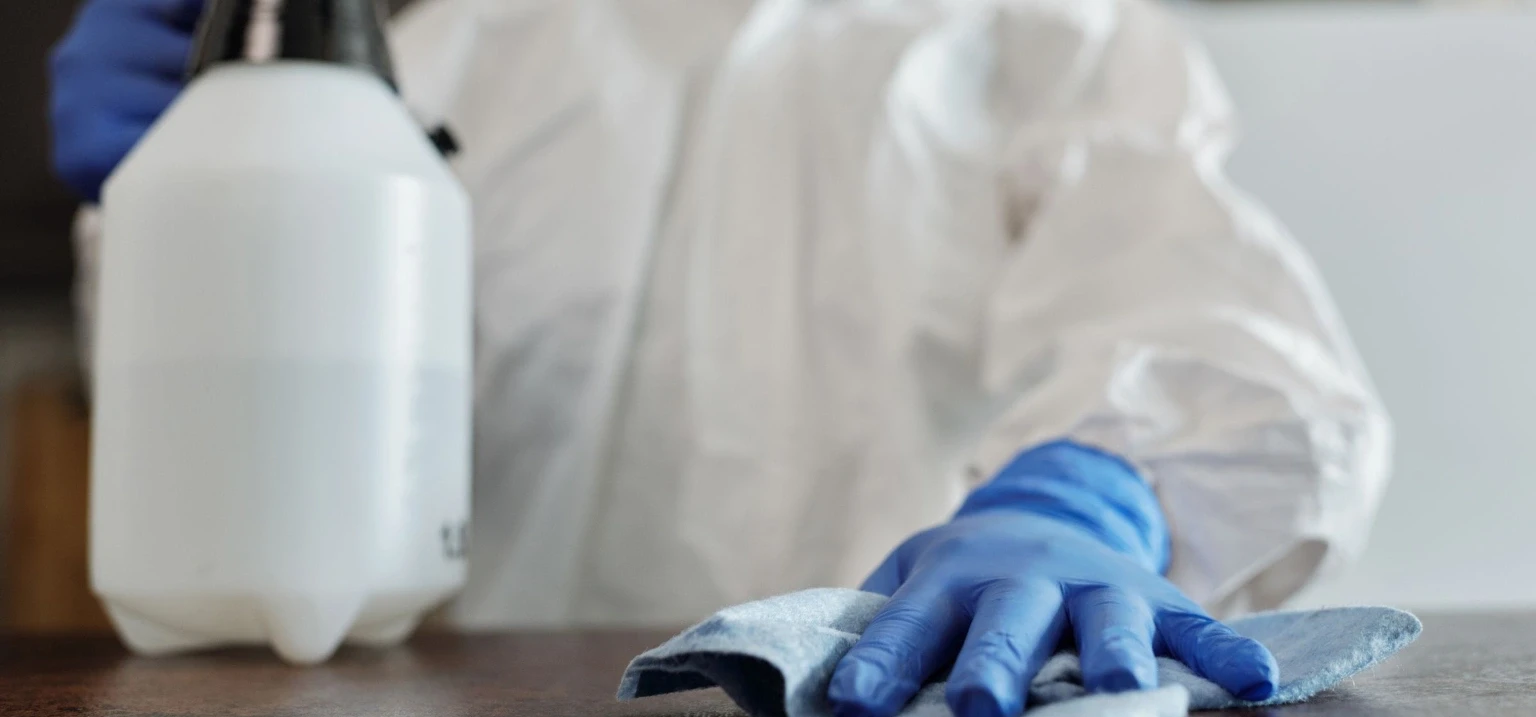
Protect the worker, absorb visible blood, clean and disinfect to the label. OSHA mandates prompt decontamination; CDC describes the sequence for healthcare settings, and NYC tattoo guidance also says to blot first.
| Step | What the source says | Source and scope |
|---|---|---|
| Address the spill | Decontaminate overtly contaminated work surfaces promptly. | OSHA, covered workplaces |
| Use PPE | Wear gloves; add other protection for splash risk. | CDC healthcare; OSHA |
| Blot first | Remove visible blood with disposable absorbents. | CDC healthcare; NYC tattoo handout |
| Clean and disinfect | Clean visible soil, then apply a suitable disinfectant. | CDC healthcare; OSHA |
| Follow the label | Respect surface, dilution and contact directions. | EPA List S; CDC healthcare |
| Replace barriers | Discard visibly contaminated covers. | OSHA |
| Dispose correctly | Separate sharps and regulated waste appropriately. | OSHA; Texas DSHS |
Instrument care is separate; see Tattoo Machine Cleaning.
GLOVES AND SPLASH PROTECTION
What PPE should tattoo studio employees use when cleaning up blood?
Use protective gloves and additional PPE when splashing is possible. OSHA requires suitable protection for covered workers; CDC healthcare guidance says gloves should be worn during cleaning and decontamination.
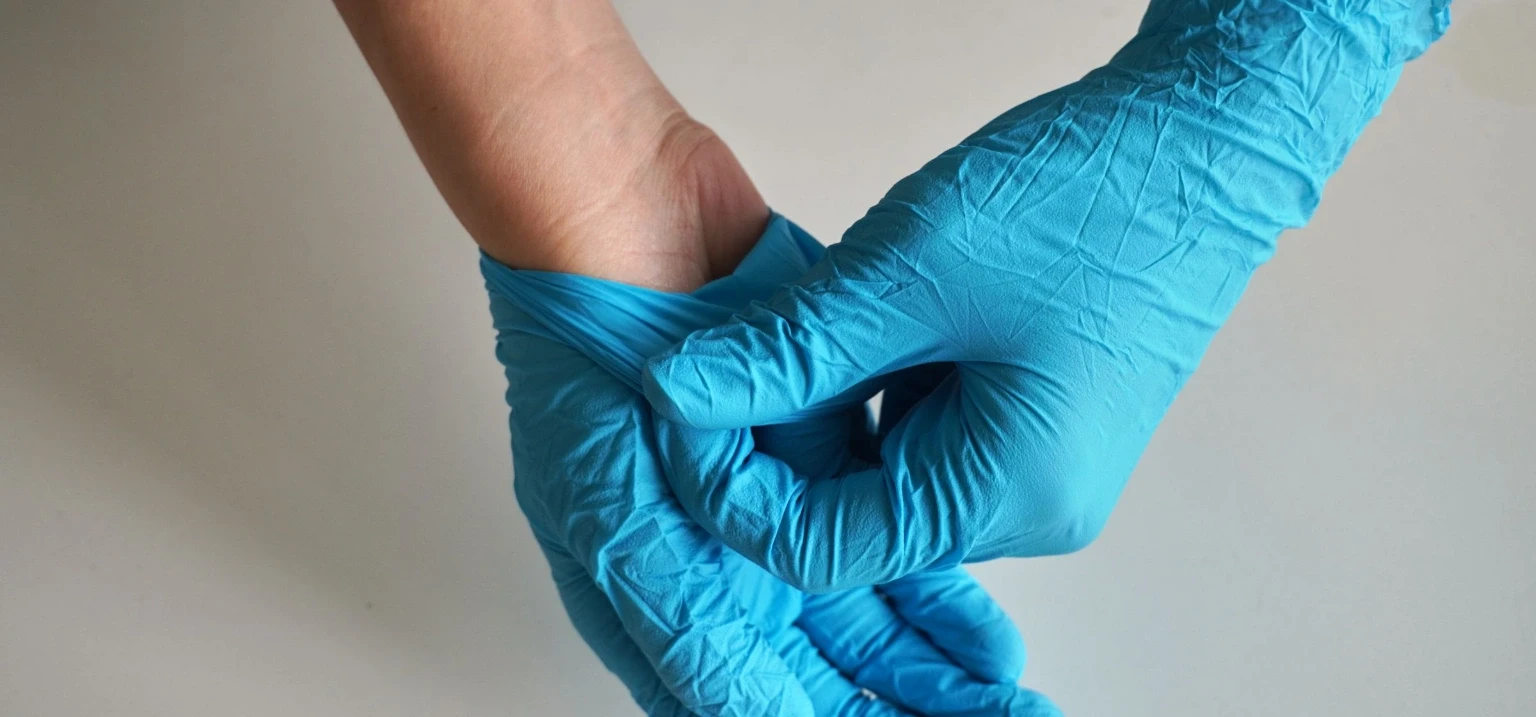
Check glove labeling and the employer exposure plan. Wash hands after removing contaminated PPE; do not continue the tattoo procedure in cleanup gloves.
We carry Adenna exam gloves. Gloves alone do not replace absorbents, a disinfectant or safe waste handling.
EPA LIST S AND THE REAL PRODUCT LABEL
What is EPA List S, and how do studios verify a bloodborne-pathogen disinfectant?
EPA List S is the agency list of products effective against HIV, hepatitis B and hepatitis C. The EPA combined former lists C, D, E and F. Check the label for the viruses claimed.
Match the container's EPA registration number to List S. Confirm approved surfaces, relevant pathogens and labeled contact times.
Read these parts of the actual label
- Check EPA registration on the container.
- Check claims for the relevant pathogen.
- Confirm eligible surfaces.
- Follow dilution or ready-to-use directions.
- Use the labeled contact time.
- Follow PPE and handling directions.
WHY BLEACH FIGURES DO NOT MAKE A UNIVERSAL RECIPE
Can a tattoo studio use bleach for a blood spill, and how long must it remain on the surface?
There is no universal bleach recipe or contact time for every tattoo studio spill. CDC healthcare examples vary by setting; even the NYC tattoo handout gives two different durations.
| Source | What it discusses | What it means for the tattoo studio |
|---|---|---|
| CDC, healthcare | Discusses 1:100 in some circumstances and 1:10 for laboratory spills. | Different settings; not a universal tattoo formula. |
| NYC tattoo handout, p.16 | Mentions 10 minutes for one bleach procedure. | Historical local guidance. |
| NYC tattoo handout, p.40 | Mentions 15 minutes for a bleach procedure. | Different duration in the same document. |
| Texas DSHS | Work surfaces require germicide; other surfaces a detergent disinfectant. | Confirm current rule and label. |
| EPA List S | Each product label gives its own contact time. | Follow the applicable current label. |
Use current product directions and confirm Texas requirements with DSHS; the cited ratios are comparisons, not mixing instructions.
Check each disinfectant’s own label
Read the EPA registration, claims and contact time printed on the bottle you use.
NEEDLES AND BROKEN GLASS
What should you do if a blood spill contains broken glass or a used tattoo needle?
Never handle potentially contaminated broken glass directly, even with gloves. OSHA §1910.1030(d)(4)(ii)(D) requires tools such as tongs or a dustpan.
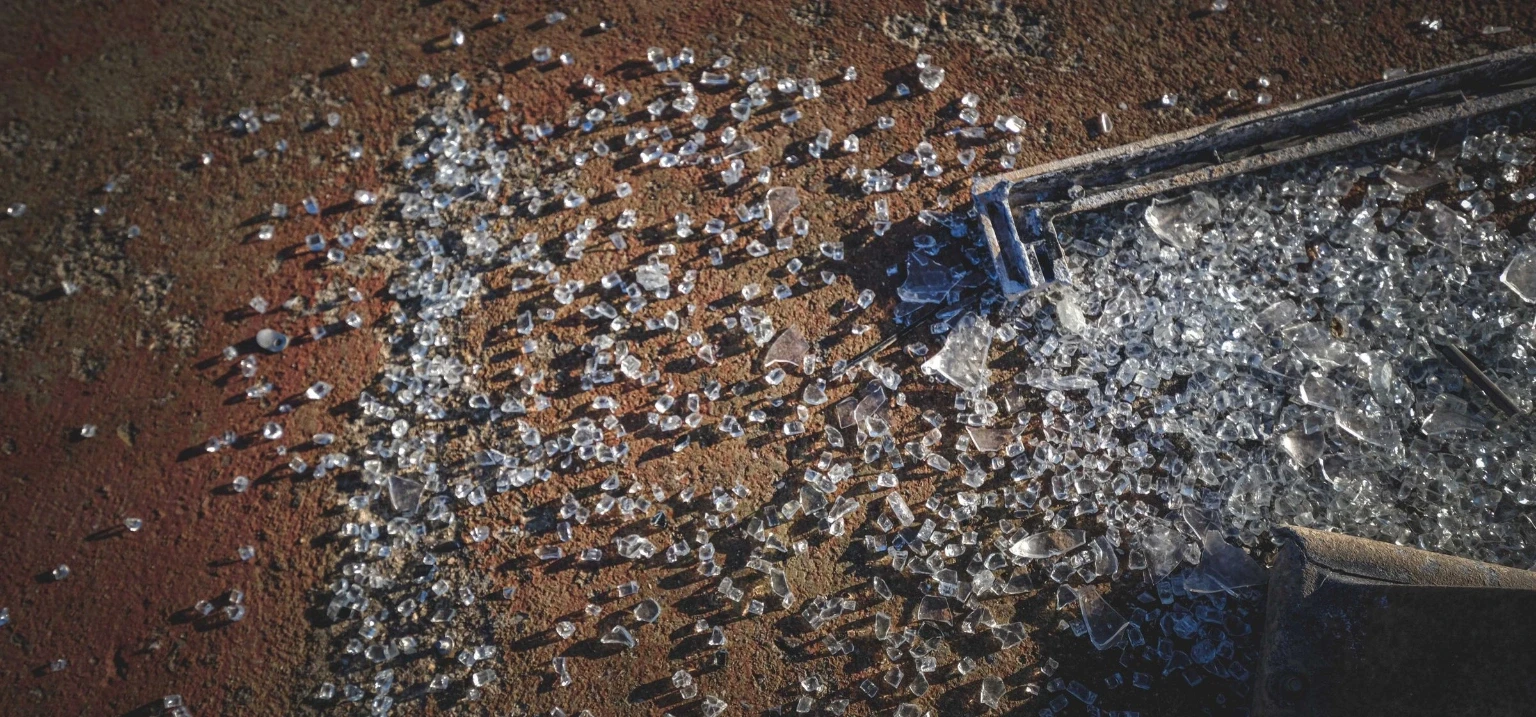
Used needles and contaminated sharps go promptly into closable, puncture-resistant, leakproof, labeled containers under OSHA; Texas also specifies sharps disposal.
We carry Dynarex 2 Qt. and 5.4 Qt. options. See Needle Disposal.
CONTAMINATED TOWELS ARE NOT ALL CLASSIFIED IDENTICALLY
How should a tattoo studio dispose of blood-soaked paper towels and cleanup waste?
Apply OSHA's regulated-waste definition and Texas disposal rules. Regulated waste includes releasable blood, blood-caked materials and contaminated sharps.
Texas §229.411 refers waste to state rules; NYC's 2016 handout specifies infectious-waste bins in its setting. Confirm the Texas route with DSHS. We carry sharps containers, not waste bags.
Disposable cleanup supplies are not reusable towels
Classify used absorbents under the studio waste procedure; OSHA requires decontamination of visibly soiled reusable bins.
TEXAS DSHS WORK SURFACE REQUIREMENTS
What does Texas require for cleaning tattoo studio work surfaces after blood contamination?
Texas §229.404(b) requires work surfaces treated with a germicide solution and other environmental surfaces cleaned with an all-purpose detergent disinfectant. Section 229.402 addresses EPA-registered germicides.
The DSHS PDF reflects 2005 amendments. Verify the current rule, product label and surface type with DSHS before setting a studio procedure.
OSHA also requires prompt decontamination and replacement of visibly contaminated barriers. See Bloodborne Pathogens Training.
IF CLEANUP CAUSES AN EXPOSURE
What should an artist do if blood contacts skin, eyes or a puncture wound during cleanup?
Follow the studio's exposure plan and seek appropriate medical evaluation for a suspected exposure. OSHA calls for promptly washing exposed skin with soap and water or flushing mucous membranes with water.
A needlestick or eye splash is a separate exposure incident. Notify the responsible supervisor and follow post-exposure procedures.
COMMON BLOOD-SPILL ERRORS
What cleanup mistakes should tattoo studio employees and owners avoid?
Visible cleaning, disinfection, sharps handling and waste disposal are different duties. Do not rely on guesses about disinfectant labels.
Spraying over visible blood
Remove visible material before disinfecting (CDC healthcare; NYC).
Using a household cleaner as a disinfectant
Verify EPA registration and label directions for surface germicides.
Treating a list entry as a substitute for the label
Read the viruses claimed and the contact time on the label.
Copying a fixed bleach recipe from another setting
CDC and NYC contexts differ; follow the chosen product label.
Picking up broken glass with gloved hands
OSHA requires mechanical pickup for contaminated glass.
Putting sharps in ordinary refuse
Use a designated sharps container under OSHA and Texas.
Leaving a soiled barrier on equipment
OSHA requires replacing overtly contaminated coverings.
Guessing what a disinfectant kills
Read the label before relying on its claims or timing.
SURFACE PRODUCTS, ABSORBENTS, PPE AND SHARPS
Which blood-spill cleanup and protection supplies does SVT Shop carry?
We carry MADA surface products, Adenna gloves, Dynarex sharps containers, disposable absorbents and barriers. Choose by the actual EPA registration, pathogen claim and label contact time.
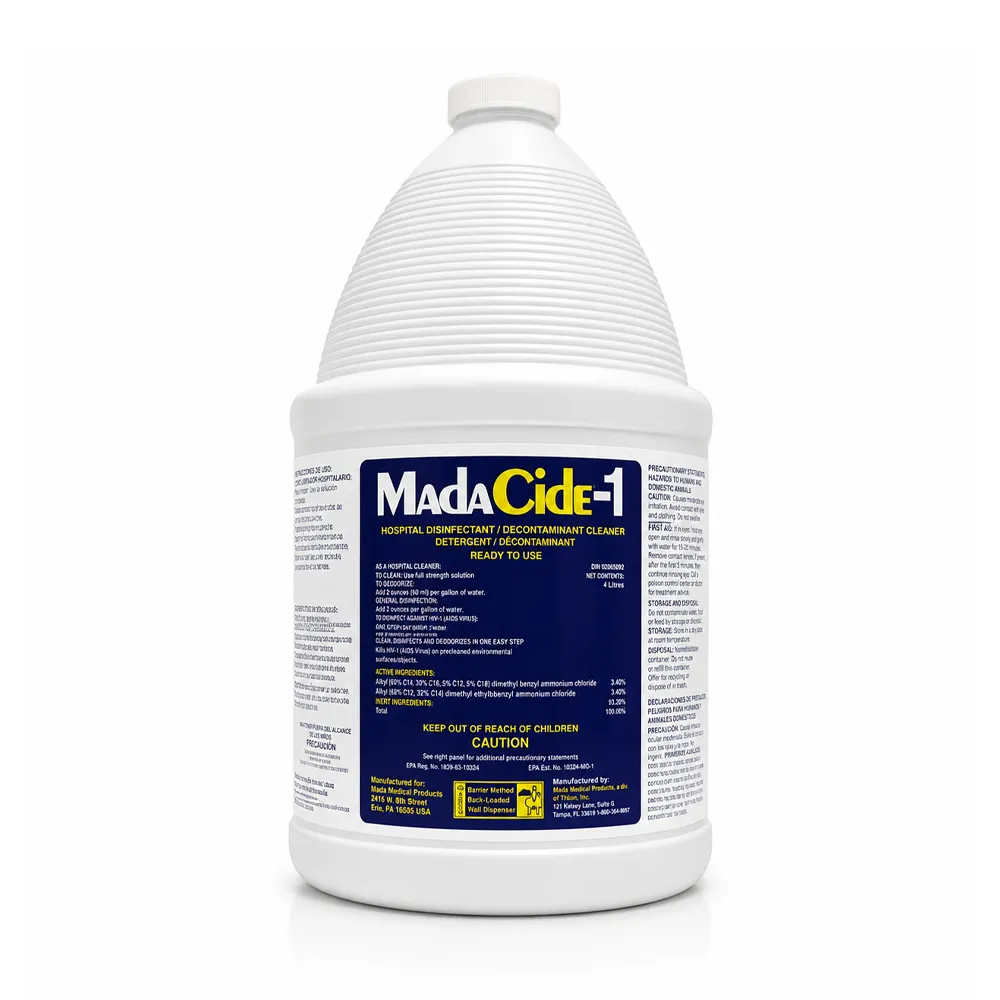 MADA / GALLON SURFACE PRODUCT
MADA - MadaCide-1 - Gallon
Surface product per our catalog; verify the exact label.
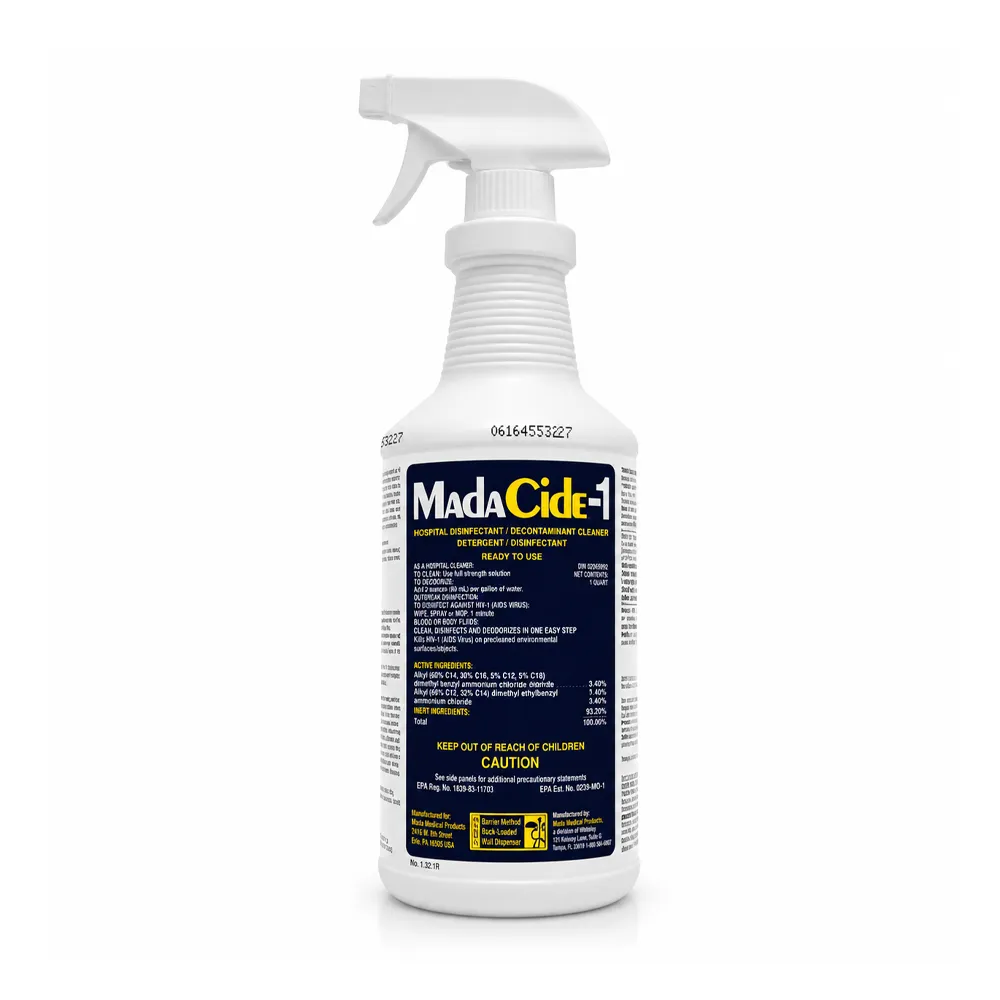 MADA / QUART SURFACE PRODUCT
MADA - MadaCide-1 - Quart
Quart surface option; inspect its EPA and use directions.
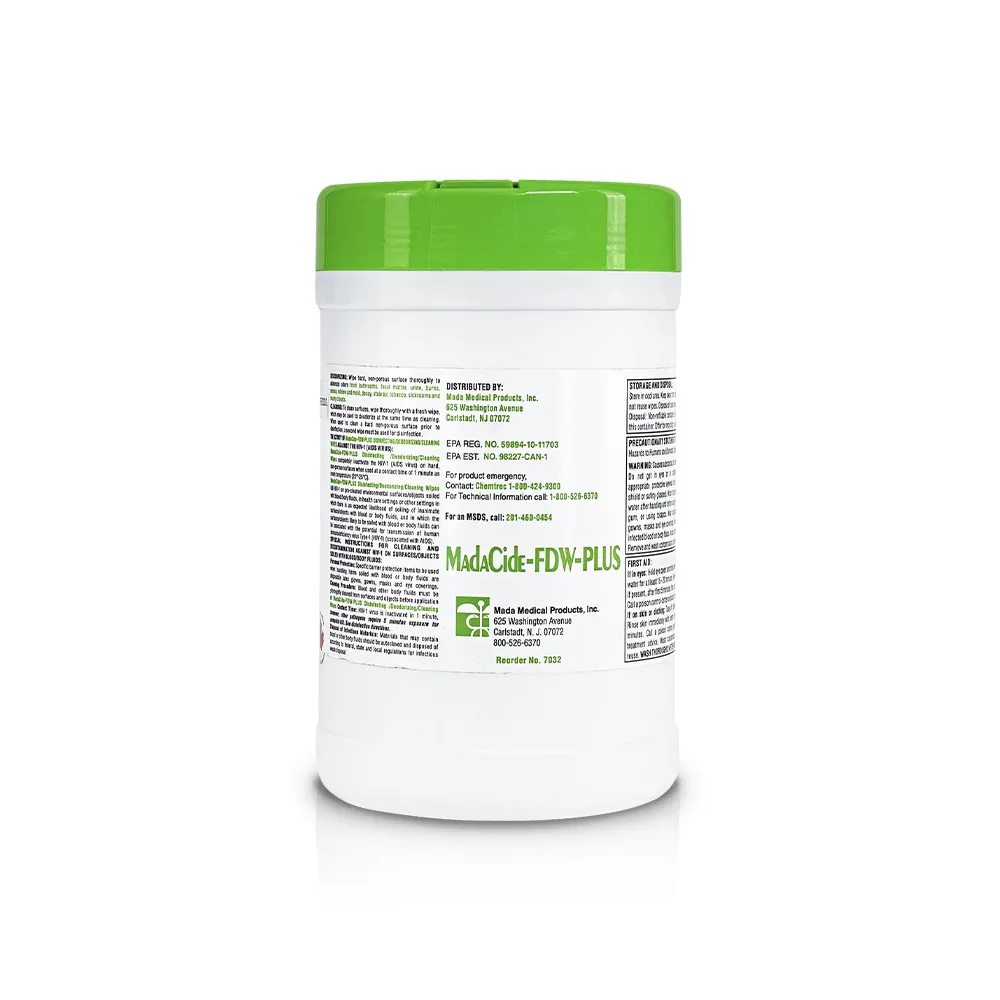 MADA / SURFACE WIPES
MADA - MadaCide-FDW-PLUS Wipes
Wipes for compatible hard surfaces; check label contact time.
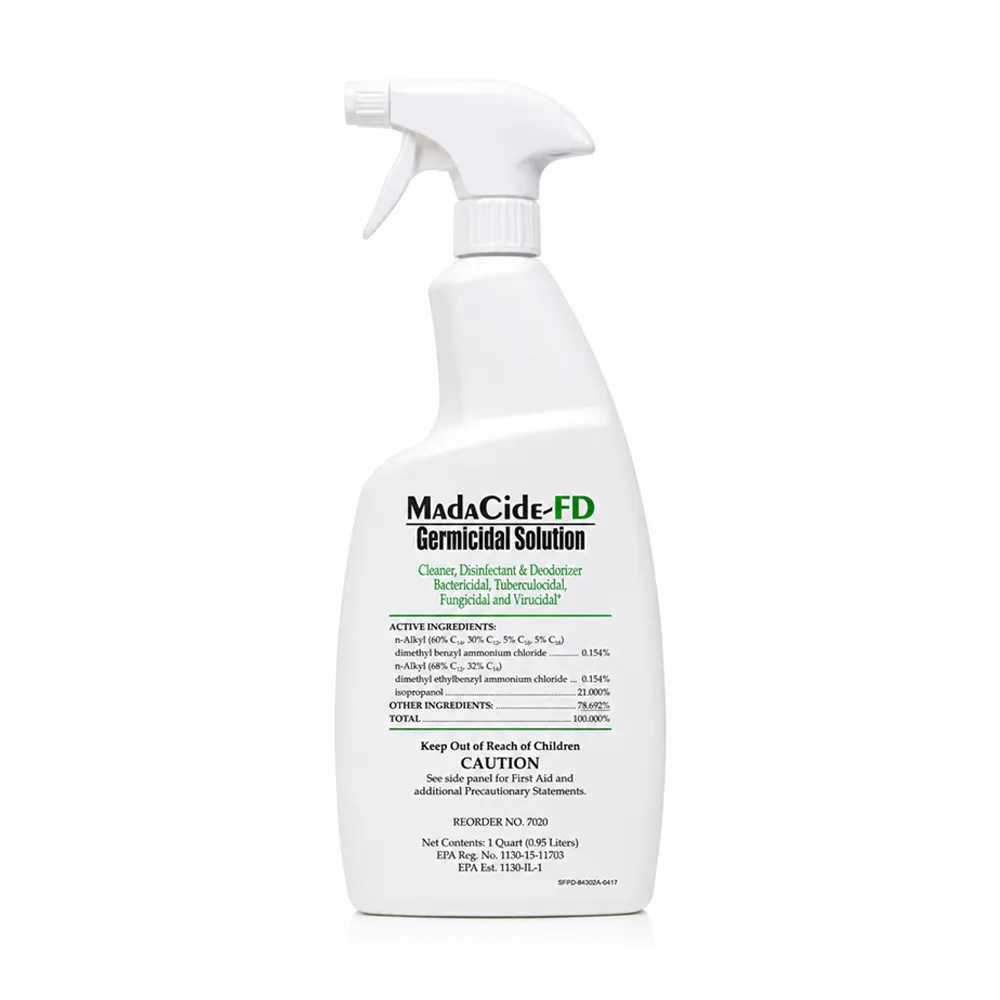 MADA / FD QUART
MADA - MadaCide-FD - Quart
FD quart option; follow this formula's own label.
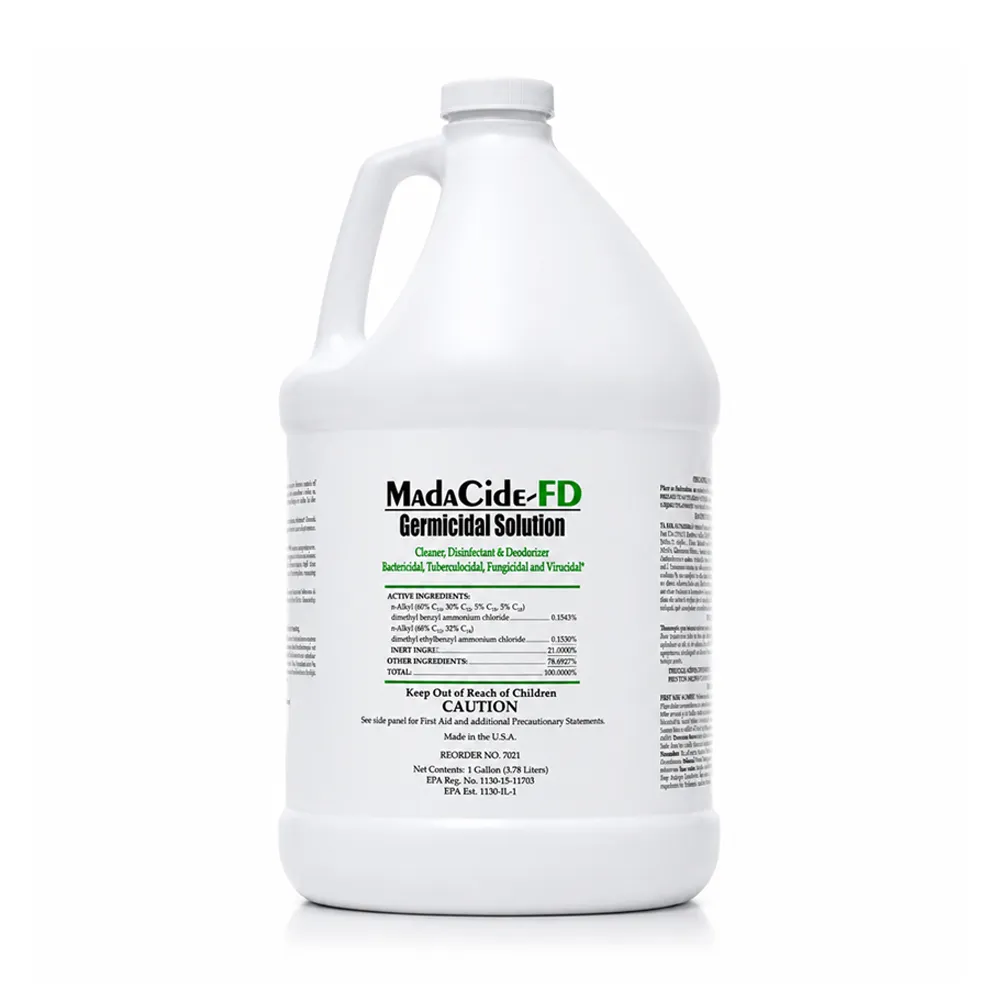 MADA / FD GALLON
MADA - MadaCide-FD - Gallon
FD gallon option; confirm product identity and surface use.
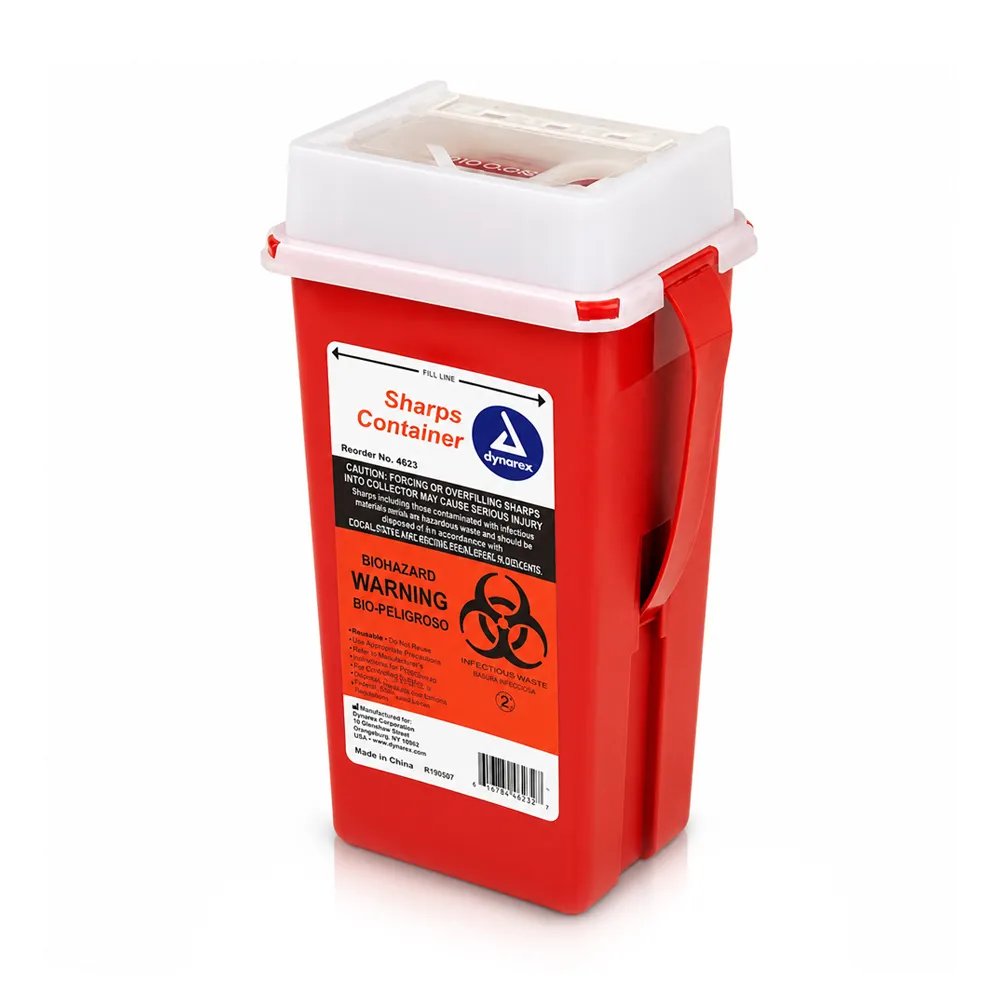 DYNAREX / SMALL SHARPS CONTAINER
Dynarex - Sharps Container 2 Qt.
2 Qt. container for sharps; verify markings and closure.
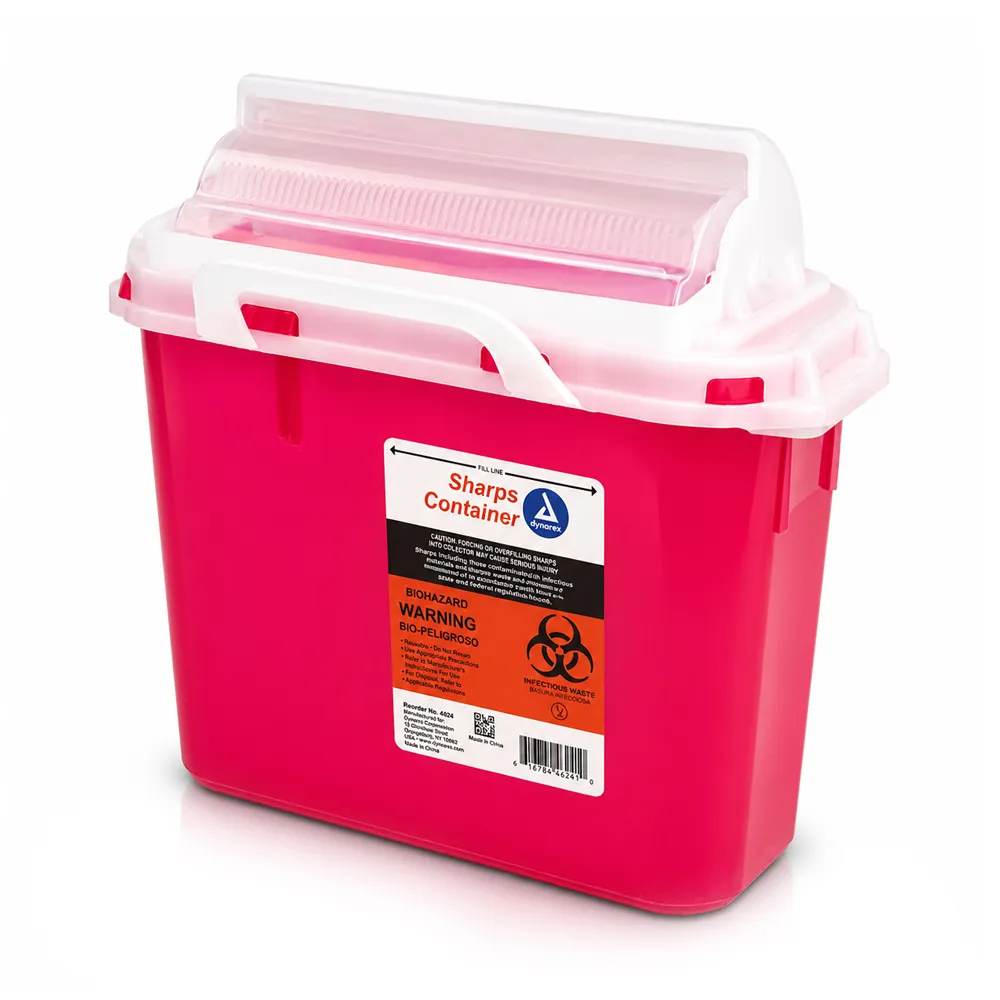 DYNAREX / LARGER SHARPS CONTAINER
Dynarex - Sharps Container 5.4 Qt.
5.4 Qt. container for sharps; check its specifications.
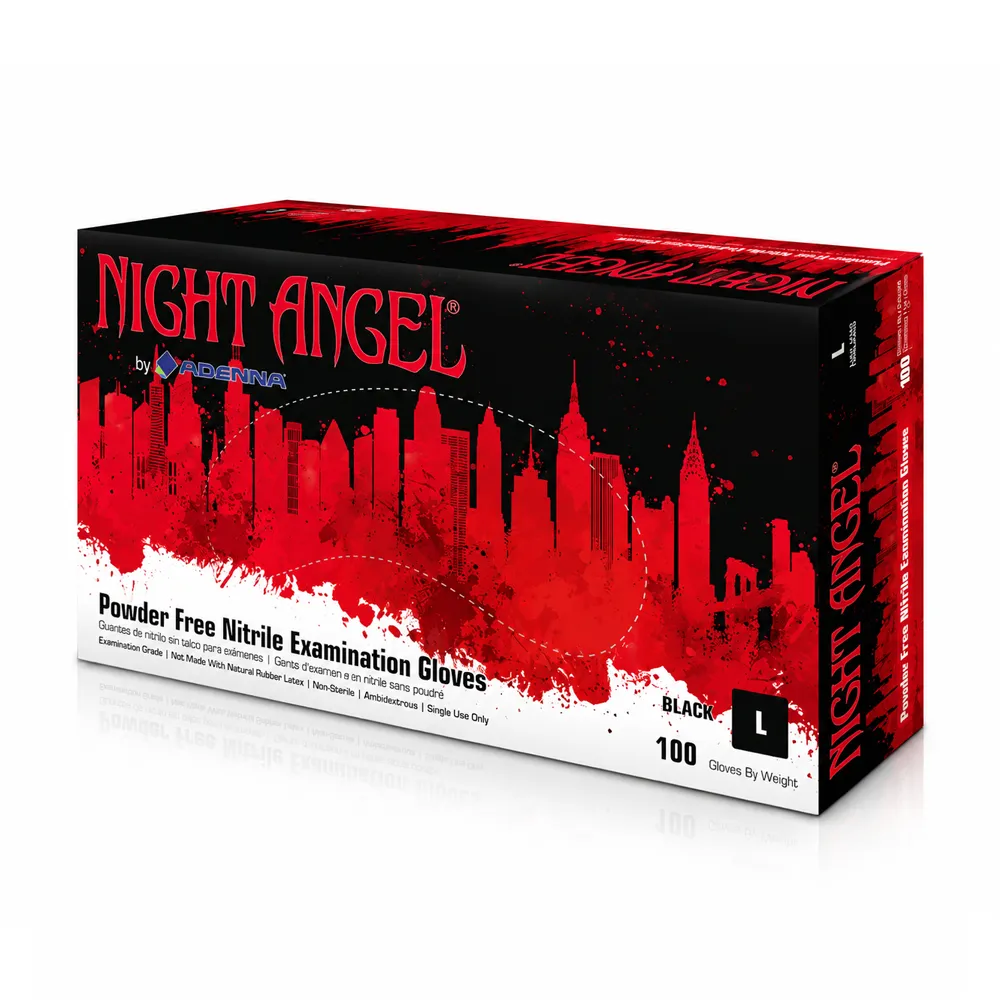 ADENNA / EXAM GLOVES
Adenna - Night Angel Black Nitrile Exam Gloves
Disposable exam gloves; match PPE to the cleanup task.
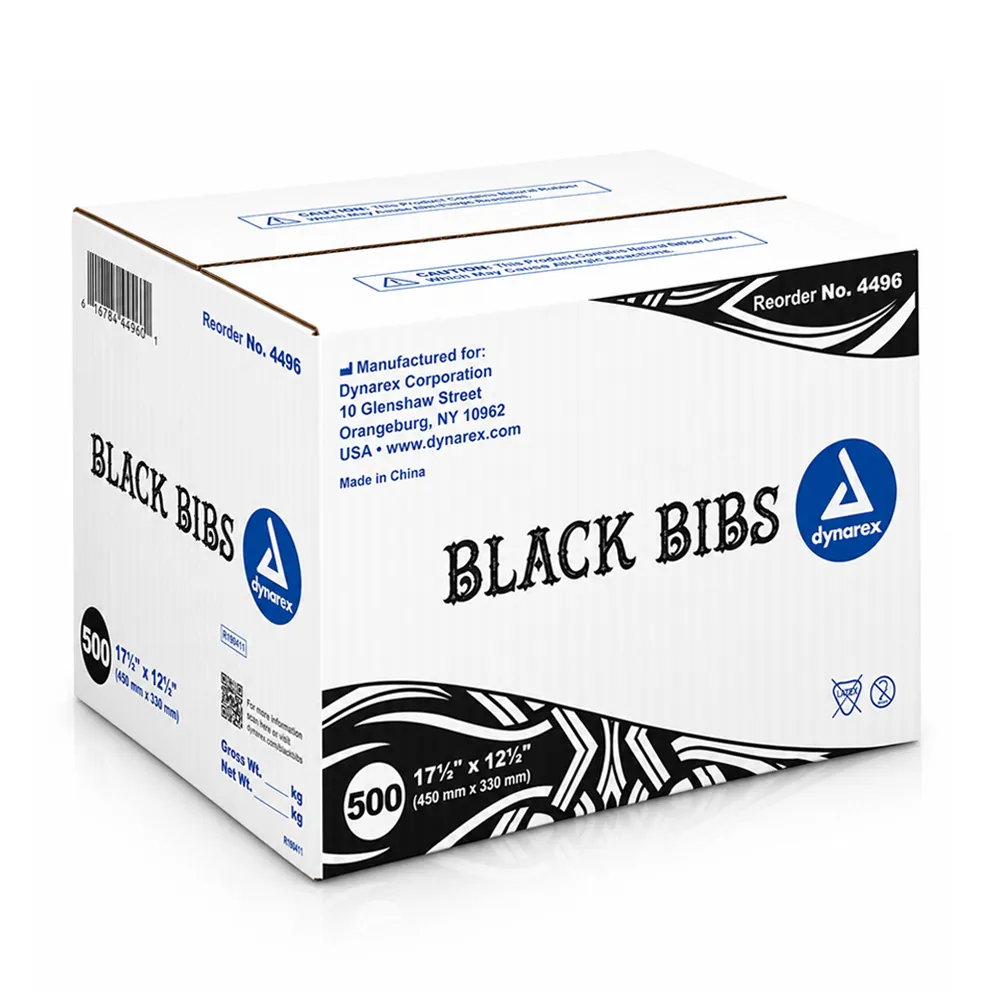 DYNAREX / ABSORBENT STATION BIBS
Dynarex - Black Bibs 13x18
Absorbent backed bib for suitable station coverage.
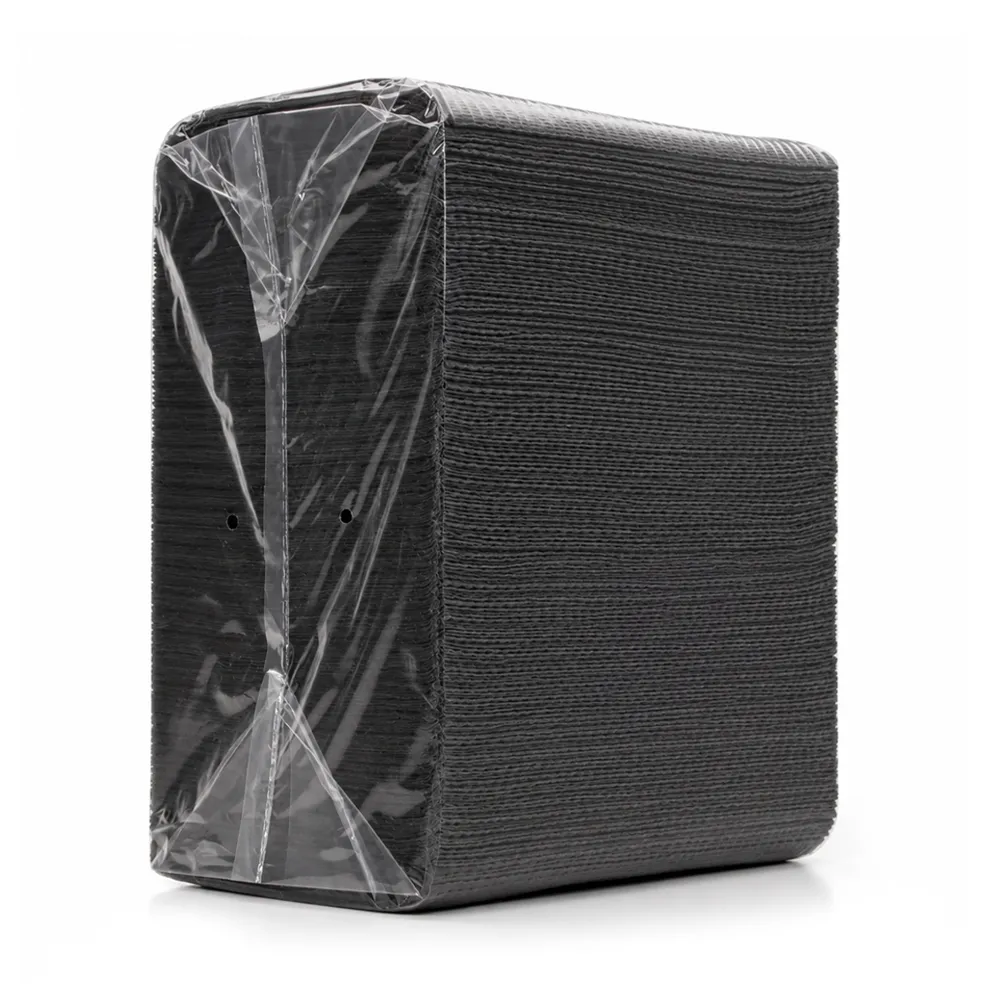 SAFERLY / ABSORBENT STATION BIBS
Saferly - Black Dental Bibs
Multilayer bib for appropriate protective surface use.
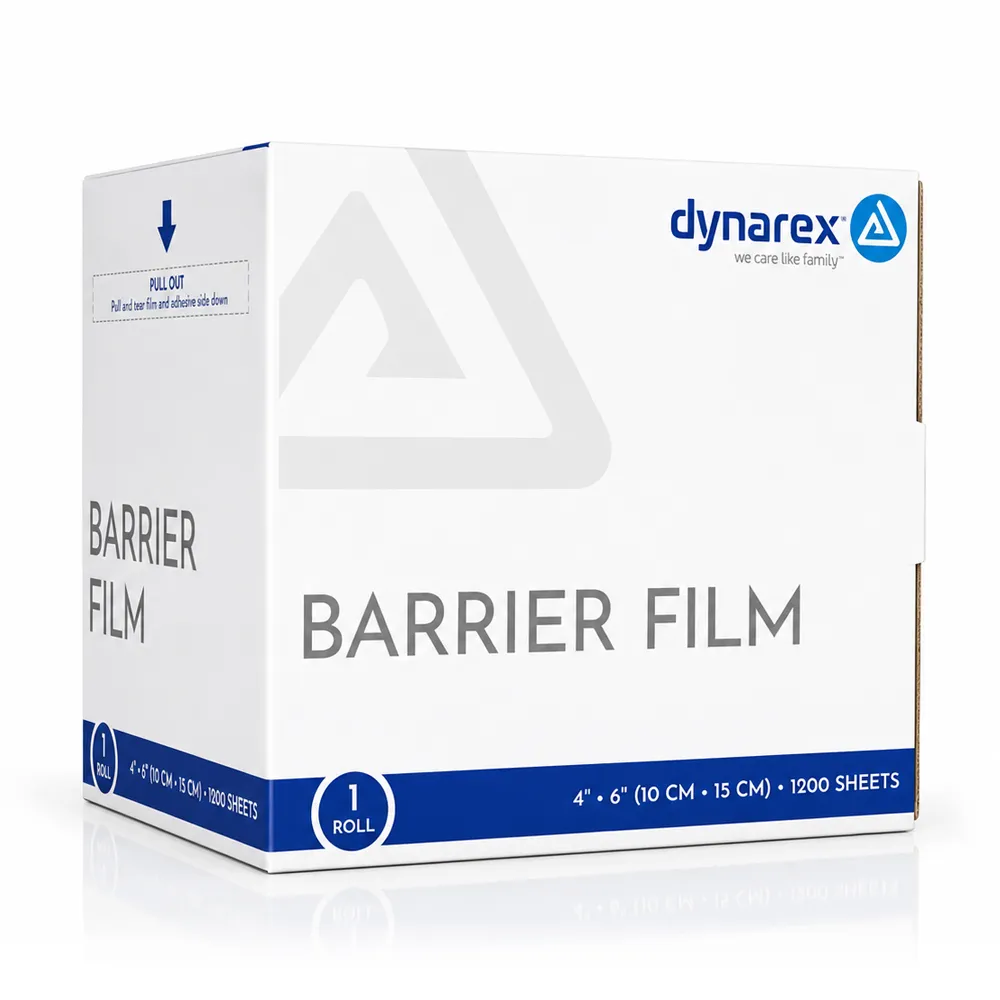 DYNAREX / PROTECTIVE BARRIER FILM
Dynarex - Barrier Film Clear
Protective film; replace if visibly contaminated.
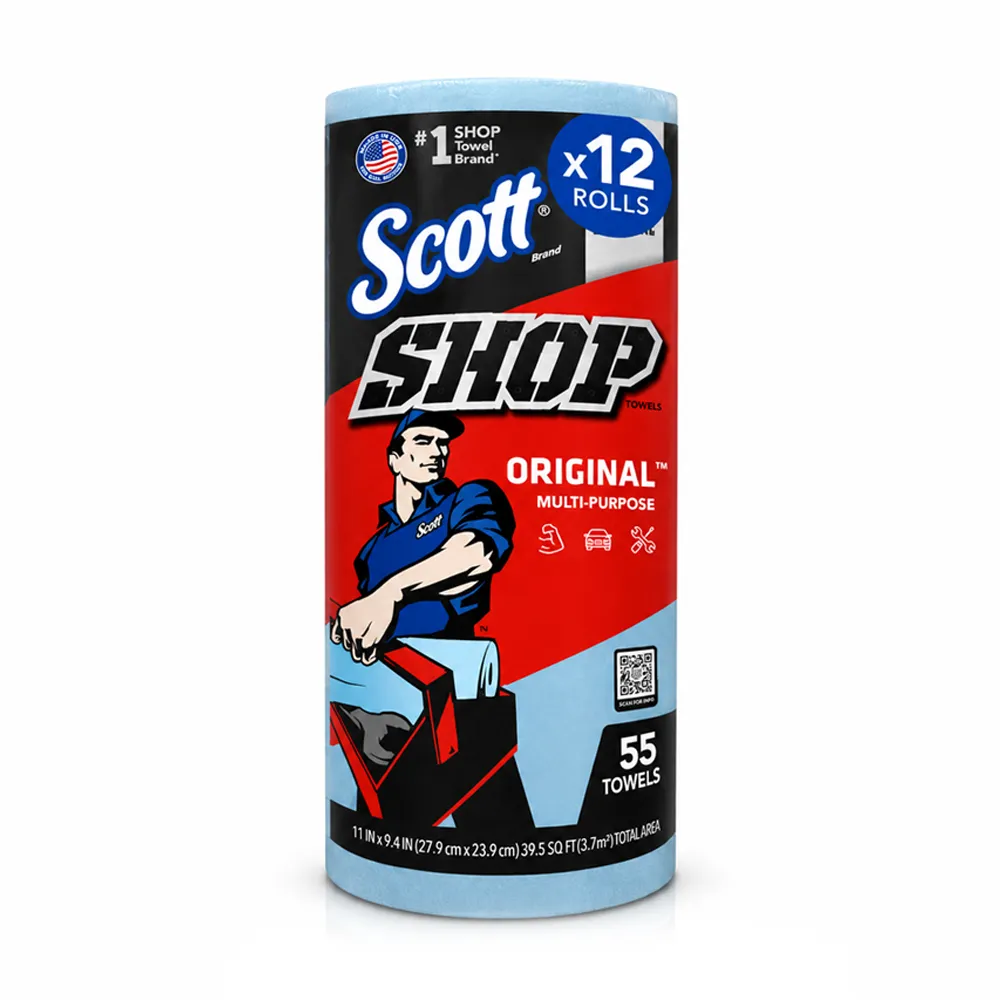 SCOTT / DISPOSABLE TOWELS
Scott Shop Towels Original
Disposable towels for visible-soil removal; classify waste.
Explore MadaCide-1 Quart Explore Adenna Gloves Explore Sharps Containers
COPYABLE STUDIO BLOOD-SPILL CHECKLIST
What should a tattoo studio include in its blood-spill cleanup and response plan?
Train staff to follow the studio plan, applicable OSHA and Texas rules, and the actual product label. Use this as a purchasing and response checklist, not legal or medical advice.
- Exposure plan: Have workers been trained to respond?
- Prompt action: Can overtly contaminated surfaces be treated promptly?
- PPE: Are gloves and splash protection available?
- Absorbents: Are disposable towels ready?
- Surface: Does the method fit the material?
- Disinfectant: Is it suitable under the applicable rule and label?
- EPA number: Is the registration on the actual container verified?
- List S: Are pathogen-specific claims checked?
- Contact time: Does staff follow the exact label?
- Glass: Are tools for mechanical pickup available?
- Sharps: Are suitable labeled containers at hand?
- Waste: Is the classification and disposal route established?
- Barriers: Are visibly contaminated covers replaced?
- Exposure: Are eye, skin and needlestick procedures known?
- Rules: Have current DSHS requirements been reviewed?
FAQ
Frequently asked questions about cleaning blood spills in tattoo studios
Answers for tattoo artists, apprentices and managers reviewing bloodborne-pathogen housekeeping.
What should you use to clean a blood spill in a tattoo studio?
Wear PPE, absorb visible blood, clean and disinfect according to the chosen product's label.
What is the difference between cleaning and disinfecting a blood spill?
Cleaning removes visible soil; disinfection treats the cleaned surface. CDC describes this for healthcare facilities.
Can you use bleach to clean blood in a tattoo shop?
Guidelines vary. Use the actual disinfectant label and check current requirements with DSHS; avoid generic recipes.
How long must a blood-spill disinfectant stay wet?
Follow the contact time on the label of the product you use.
What does EPA List S mean for tattoo studio cleaners?
It lists products effective against HIV, hepatitis B and hepatitis C; check the registration number and label.
Do tattoo artists need gloves when cleaning blood?
Use gloves and task-appropriate protection. OSHA governs covered employees.
How do you dispose of blood-soaked paper towels?
Follow OSHA's regulated-waste definition and Texas disposal rules; confirm the proper container.
What if a blood spill contains broken glass or a needle?
Collect potentially contaminated glass with tools, never by hand; discard used needles in a sharps container.
What does OSHA say about cleaning blood-contaminated surfaces?
OSHA requires decontamination immediately or as soon as feasible after spills on work surfaces.
Is a regular household cleaner enough for a blood spill?
Use an appropriate surface disinfectant; an ordinary cleaner is not automatically suitable.
Does Texas require one named brand of blood-spill disinfectant?
Texas requires a germicide solution for work surfaces; verify product directions and current DSHS rules.
What if blood splashes into an employee's eye during cleanup?
Flush affected eyes with water promptly, follow the exposure plan and seek medical assessment.
OSHA, TEXAS DSHS, CDC, EPA AND NYC
Sources Consulted
OSHA governs covered workplaces; Texas DSHS regulates studios. CDC material is for healthcare facilities, NYC provides local tattoo training, and EPA List S addresses disinfectant claims. Verify current DSHS rules; the linked PDF reflects 2005 amendments.
- OSHA: 29 CFR 1910.1030, Bloodborne Pathogens and Housekeeping
- Texas DSHS: 25 TAC Chapter 229, Surfaces, Single-Use Items and Waste
- Texas Administrative Code via Cornell LII: §229.409, Tattooing Instruments
- CDC: Environmental Infection Control in Healthcare Facilities, Blood Spill Cleaning
- U.S. EPA: Launch of List S for Bloodborne-Pathogen Disinfectants
- U.S. EPA: Registered Antimicrobial Products Effective Against Bloodborne Pathogens, List S
- NYC DOHMH: Health Standards and Recommendations for Tattooing, 2016