Powered by Comercia.io
Piercing gun vs needle: which is better for an earlobe, helix or a child's first piercing? The Association of Professional Piercers (APP) favors a sterile, single-use hollow piercing needle because it cuts through tissue more precisely than a gun that drives a relatively blunt stud under pressure. This guide explains piercing gun damage, cartilage risks, sterilization, jewelry fit and what to ask a professional piercer before booking.
Shop Professional Piercing Needles Explore Piercing Supplies
QUICK ANSWER
Is a piercing gun or needle better for ear and nose piercings?
A qualified piercer using a sterile, single-use piercing needle is the APP-recommended choice, even for earlobes. Guns push a comparatively blunt earring stud through skin using pressure; needles have a sharp hollow cutting edge intended to minimize tissue damage. The APP also objects to reusable gun sterilization limits and poorly fitted studs. Choose jewelry appropriate to the placement, then follow professional aftercare rather than picking a method based only on convenience.
THE NEEDLE
Sharp, hollow, sterile and used once. A piercer selects its size and transfers suitable jewelry after making the opening.
THE GUN
Uses a force-driven stud. APP identifies blunt trauma, reusable-device contamination and restrictive stud backs as concerns.
YOUR NEXT STEP
Book a qualified piercer who explains placement, sterile equipment, jewelry fit and aftercare before the procedure.
ONE PROCEDURE, TWO VERY DIFFERENT TOOLS
Piercing gun vs needle: what is the difference in tissue damage, sterility and jewelry?
The APP describes the differences in piercing mechanism, reusable equipment and initial jewelry design. Its position favors single-use hollow needles in professional hands; the Canadian Family Physician review adds clinical context about the effects of spring-loaded high-pressure piercing instruments.
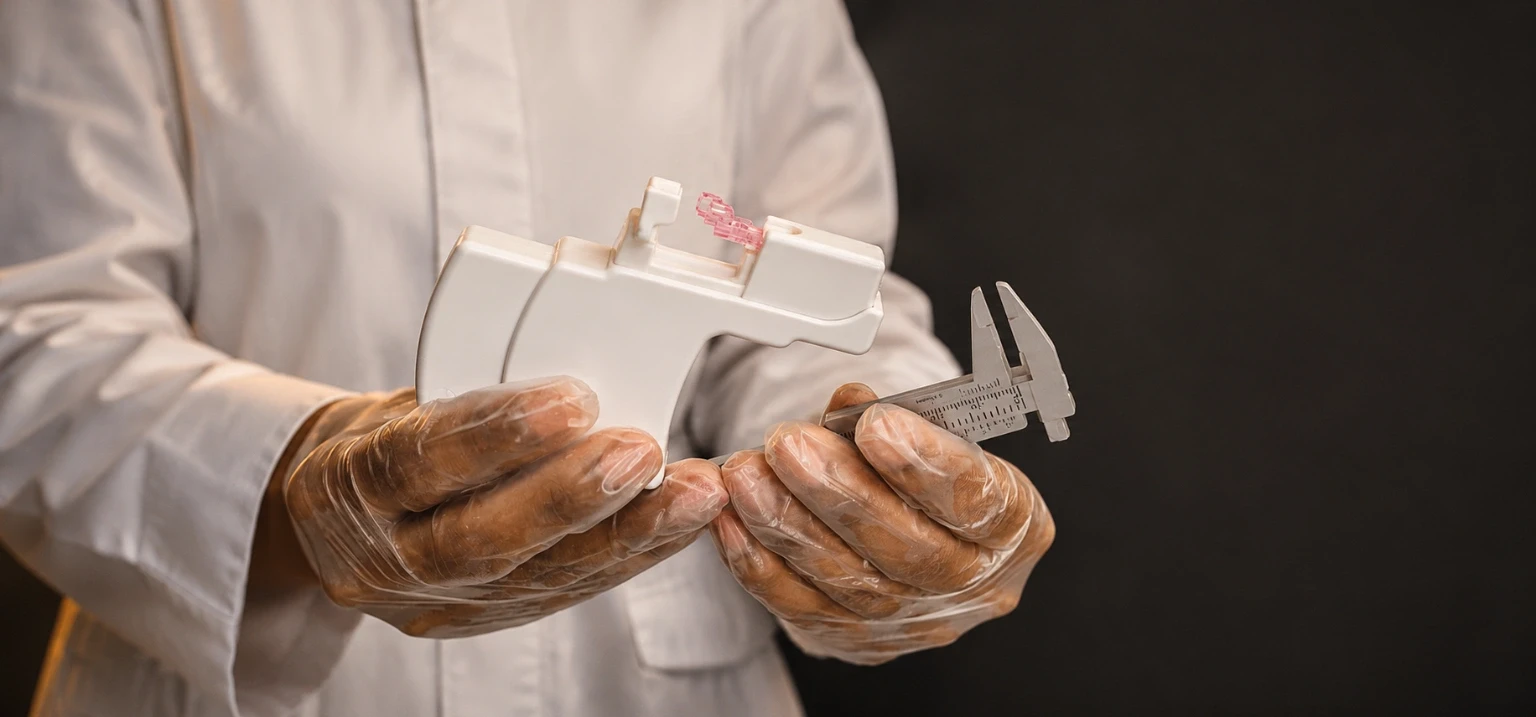
| Question | Piercing gun | Professional piercing needle |
|---|---|---|
| What goes through tissue? | A comparatively blunt earring stud is driven through under pressure. | An extremely sharp, hollow cutting needle creates the opening. |
| What does APP say about tissue impact? | More like a crush injury; it may cause swelling, scarring and excess trauma. | Sharp surgical needles pass more smoothly and reduce tissue separation. |
| What about sterilization? | Plastic reusable guns cannot be steam-autoclaved; exterior wipes do not reach internal parts. | New sterile single-use needles are discarded after the procedure. |
| What jewelry is inserted? | Often a relatively short stud with a butterfly-style clasp. | Jewelry is selected separately for anatomy, gauge, fit, material and closure. |
| What about cartilage? | APP warns of serious trauma and cartilage complications. | The APP recommends the sharp-needle method to minimize tissue damage. |
WHAT A PROFESSIONAL NEEDLE DOES
What is a hollow piercing needle, and how does needle piercing work?
The APP procedure manual describes acceptable piercing needles as hollow, extremely sharp and precision-ground. The cutting edge makes an opening with less tissue disruption than driving a blunt earring shaft through the skin. A qualified piercer chooses the instrument and suitable sterile jewelry for the particular anatomy.

The piercer assesses the placement
Professional selection begins with the location, anatomy, appropriate jewelry size and material. It is not a one-size-fits-all earring or a preset needle number from a chart.
Sterile single-use equipment is prepared
APP requires sterile disposable piercing equipment. Needles should be packaged and identified appropriately or sterilized at the point of use under the piercer's process.
Appropriately fitted jewelry is installed
The piercer selects the correct jewelry, using suitable size, finish and material. The opening and initial jewelry are planned as one procedure.
The used needle is discarded
APP says a used piercing needle is immediately placed in an approved medical sharps container. It is not reused for another client.
THE MAIN MECHANICAL CONCERN
Why can a piercing gun cause more tissue damage than a needle?
APP explains that a gun stud can look pointed but remains relatively dull compared with a quality piercing needle. The mechanism must force that stud through tissue with substantial pressure. APP describes the result as blunt-force or crush-type trauma, which can mean significant pain and swelling and, in worse cases, scarring.
Blunt stud instead of sharp cutting edge
The gun uses the earring shaft as its piercing implement. APP says the pressure needed to push the duller point through tissue can separate or crush more tissue than a sharp needle.
High pressure can increase complications
A 2022 Canadian Family Physician review says soft-tissue trauma during high-pressure piercing, such as with spring-loaded ear-piercing instruments, can increase susceptibility to infections, bleeding and microfractures.
REUSABLE GUNS AND CONTAMINATION
Are piercing guns sterile if the operator wipes them between clients?
The APP warns that plastic reusable piercing guns cannot be autoclave-sterilized and that wiping their exterior does not reach contamination inside the working parts. It specifically identifies potential contact with blood and body fluids from previous clients as a reason to reject reusable guns.
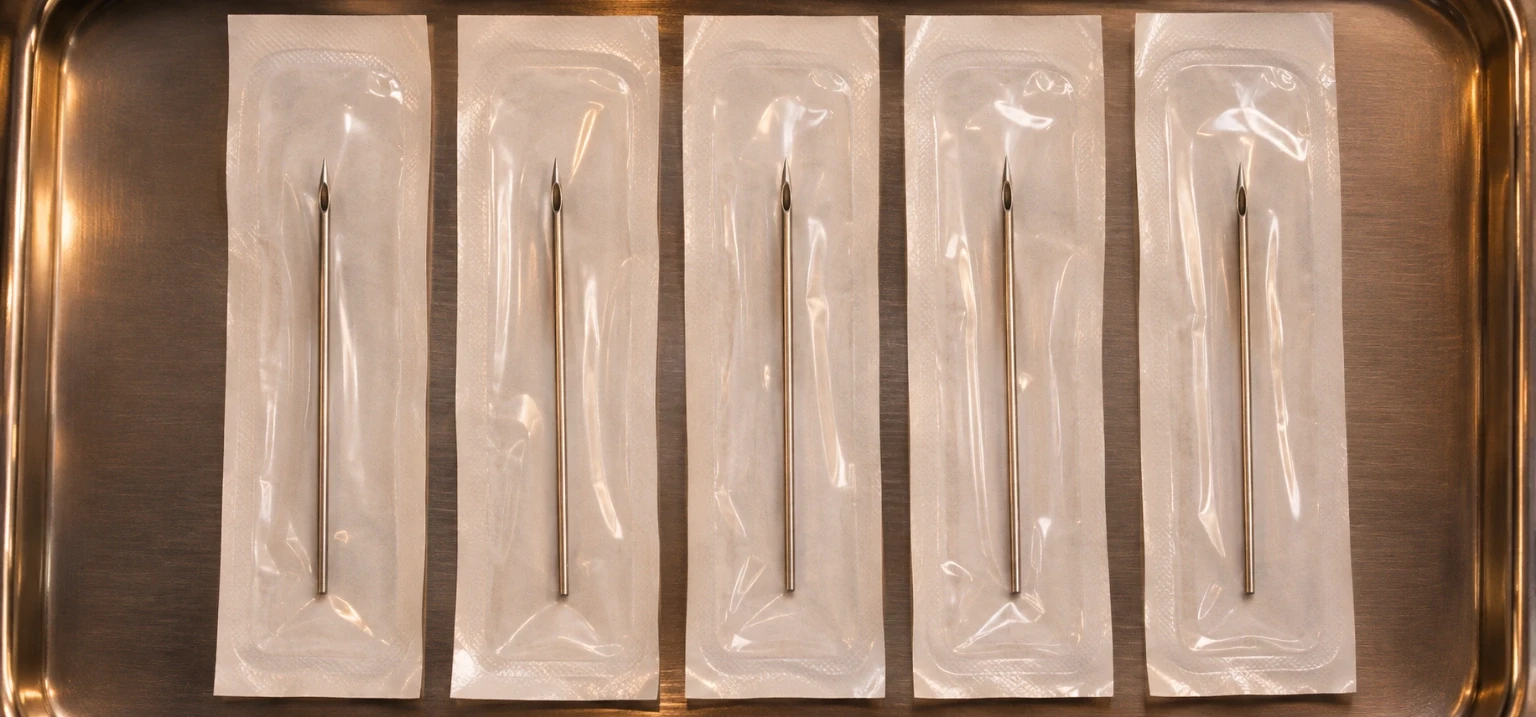
| Equipment or process | What APP identifies | What to ask before piercing |
|---|---|---|
| Reusable plastic gun | Cannot be steam-autoclaved; internal surfaces may remain contaminated. | Does the piercer use a new sterile single-use needle instead? |
| Exterior antiseptic wipe | Wiping the outside does not disinfect the gun's internal operating surfaces. | How are all implements that contact the client sterilized or discarded? |
| Disposable gun components | APP acknowledges improvements in device designs but continues to reject gun piercing within its practice standards. | Does the entire method meet the professional's sterile, low-trauma equipment standards? |
PLACEMENT MATTERS
Is a gun okay for earlobes, and why is it especially concerning for cartilage or a nose piercing?
The APP prefers professional needle piercing even for ordinary earlobes. Its concern grows with structural tissue such as cartilage because the ear's cartilage has less blood supply and heals more slowly than earlobe tissue. The 2022 Canadian Family Physician review also associates cartilage piercing with more severe infections.
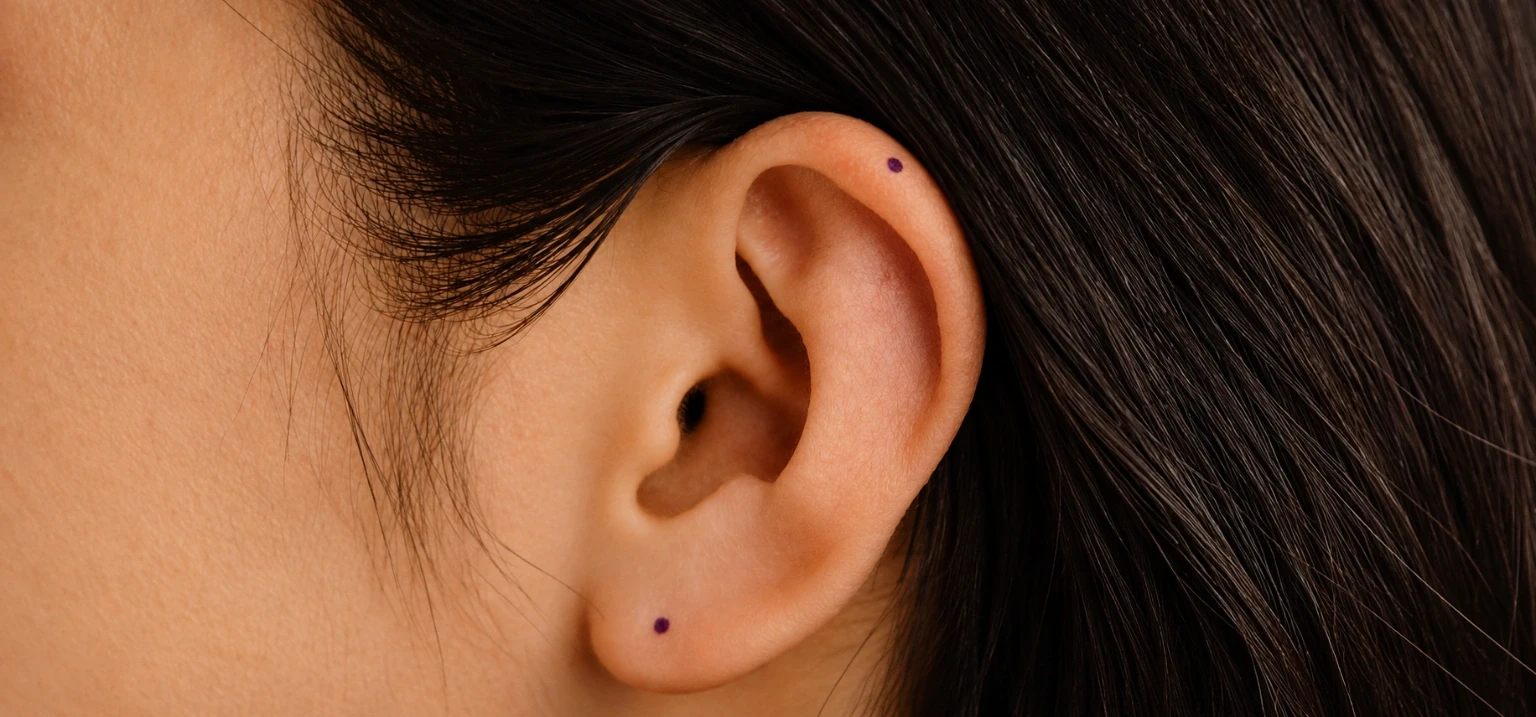
| Placement | Relevant concern | APP-oriented choice |
|---|---|---|
| Earlobe | Short gun studs may compress some lobes; reusable gun hygiene and blunt-force injury still matter. | Use a professional sterile needle and a stud fitted to the lobe's anatomy and swelling needs. |
| Helix and other ear cartilage | Cartilage has less blood supply; APP describes potential chondritis, structural damage and excessive scarring with gun use. | Use a qualified needle piercer who assesses placement, jewelry and care. |
| Nostril / nose | APP identifies use of ear-stud guns outside the earlobe, including the nostril, as misuse. | Ask a trained piercer for needle-based placement and a suitable nostril jewelry style. |
Cartilage infections can affect ear structure and require medical care, APP says. Compare nostril jewelry in SVT Shop's nose jewelry guide.
THE JEWELRY MATTERS AS MUCH AS THE OPENING
What is wrong with some piercing gun studs and butterfly backs?
APP says many gun studs are too short for some earlobes and most cartilage. A butterfly-style clasp can trap normal discharge and press against swelling tissue. A professional needle piercing lets the piercer choose jewelry for the individual anatomy, with adequate room and an appropriate surface and closure.
Length must accommodate swelling
APP warns that a tight stud can restrict tissue, increase swelling and embed. Proper initial jewelry is chosen for the anatomy and early healing.
Butterfly backs can complicate cleaning
APP describes their design as capable of trapping normal secretions around a tight piercing. The clasp may add pressure where the tissue needs space.
Certified implant materials matter
APP discusses implant-appropriate steel such as ASTM F138 and titanium such as ASTM F67 or F136. A label suggesting surgical use is not a substitute for material suitability.
A needle alone cannot make poorly fitting jewelry appropriate. Ask your piercer about material, wearable length, closure and future fit changes. Read the body jewelry size guide and our sterilized titanium jewelry guide for the purchasing criteria.
FOR PARENTS CONSIDERING EAR PIERCING
Should children and babies get ear piercings with a gun or needle?
For a child, the same questions about tissue trauma, sterile equipment and initial jewelry remain important. APP also warns that babies and young children with immature immune systems, and people with compromised immune systems, may be more vulnerable to infection when equipment is contaminated. The 2022 Canadian Family Physician review discusses ear-piercing complications in children and adolescents, including risks associated with high-pressure devices.
Questions parents can ask the piercer
- Will you use a brand-new sterile, single-use hollow piercing needle?
- How is the equipment handled and where is the used needle discarded?
- What aftercare instructions and professional follow-up will you provide?
BEYOND THE PAIN QUESTION
Does a needle piercing hurt more than a gun, and do gun piercings heal slower?
Choose by the method's tissue impact and the quality of the piercer's work rather than assuming a device predicts personal pain. APP identifies significant pain and swelling as possible effects of the pressure needed to drive a dull stud through tissue; it describes sharp needles as causing less tissue separation. This supports the professional preference for needles, not a universal pain ranking for every client.
Healing also depends on location and tissue. APP says cartilage has less blood flow and a longer healing process than earlobes, and it links the pressure of tight gun studs on compressed tissue to prolonged healing, minor complications and scarring. These concerns do not translate into one precise healing schedule for every gun or needle piercing.
CHOOSING A QUALIFIED PIERCER
What should you expect at a professional needle piercing appointment?
The APP procedure manual frames professional piercing around sterile equipment, knowledgeable technique and appropriate jewelry. A client should understand the intended placement and aftercare before the procedure, not simply select a stud from a display.
Discuss your anatomy and the location
Ask which placement suits you and how the jewelry will be selected. The piercer should explain the reasoning rather than promise that one stud works for everyone.
Expect sterile single-use piercing equipment
Ask about the sterile needle and the process for clean tools and jewelry. A used needle is disposed of in a medical sharps container.
Leave with aftercare and follow-up guidance
Ask how to clean the piercing, what should prompt a fit review and where to seek help if complications are suspected.
IF THE PIERCING WAS ALREADY DONE WITH A GUN
What should you do if your earlobe or cartilage was pierced with a gun?
Begin with the condition of the piercing and the fit of the jewelry rather than assuming that every gun piercing has the same outcome. The APP describes stud compression, embedding and cartilage complications as risks worth assessing. A qualified piercer can review the jewelry and whether its length, back and material suit the healing tissue.
Have the initial stud fit reviewed
Ask whether the post allows room for swelling and whether the butterfly-style back is pressing into or trapping secretions against the skin.
Seek medical evaluation if infection is suspected
APP warns that cartilage infections can have serious consequences. Do not treat increasing concerns as only a jewelry-style problem.
FOR PIERCERS AND APPRENTICES
What should professional piercers look for in needles, jewelry and insertion tools?
APP says acceptable piercing needles are hollow and extremely sharp, should be inspected for flaws and must be used with appropriate sterile handling. Needle dimensions are chosen by the professional in relation to the jewelry and the anatomy; the APP warns that an unnecessarily larger needle than the jewelry may increase bleeding.
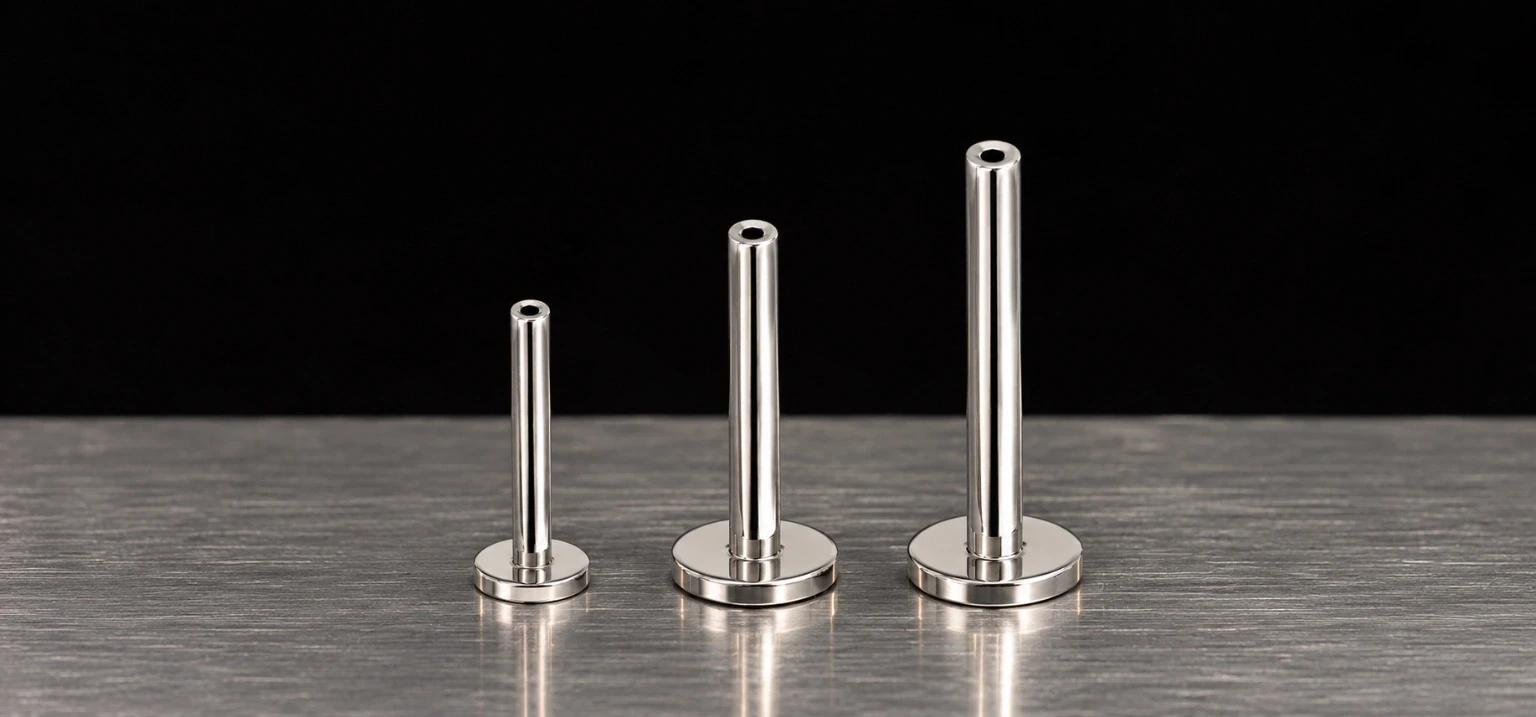
| Supply type | Role in professional piercing | What to verify |
|---|---|---|
| Tri-beveled piercing needle | A sharp single-use piercing instrument. | Intact sterile packaging, tip condition, appropriate dimensions and single-use disposal. |
| Jewelry insertion pin | A tool that helps a piercer transfer compatible jewelry. | Whether it matches threadless or internally threaded jewelry; it is not a piercing needle. |
| Initial body jewelry | The piece left in the piercing to accommodate anatomy and healing. | Implant-appropriate material, smooth finish, suitable gauge, length and closure. |
AVOID THESE DECISION ERRORS
What common mistakes should clients and new piercers avoid when comparing guns and needles?
The APP's concerns extend beyond the device itself. Sterility, tissue impact, jewelry fit and training all need to work together for a piercing procedure.
Assuming a pointed stud is a sharp piercing needle
APP says the stud used by a gun is relatively dull, so the device forces it through with pressure rather than a precise hollow cutting edge.
Believing an exterior wipe sterilizes a reusable gun
APP explains that internal working parts may remain contaminated even when the outside has been wiped.
Overlooking tight butterfly backs
APP links short studs and restrictive backs with swelling, embedding and difficulty clearing normal discharge.
Trying to pierce yourself with a professional needle
A sterile instrument is only one part of the procedure. Qualified technique, fitting, equipment handling and aftercare matter as well.
SVT SHOP PROFESSIONAL PIERCING SUPPLIES
Which sterile needles, jewelry and aftercare supplies should professional piercers compare?
SVT Shop lists sterile single-use piercing needles, professional insertion tools, sterilized titanium jewelry and Recovery aftercare. Needles and insertion tools belong with trained piercers; the piercer selects suitable equipment and jewelry for each client.
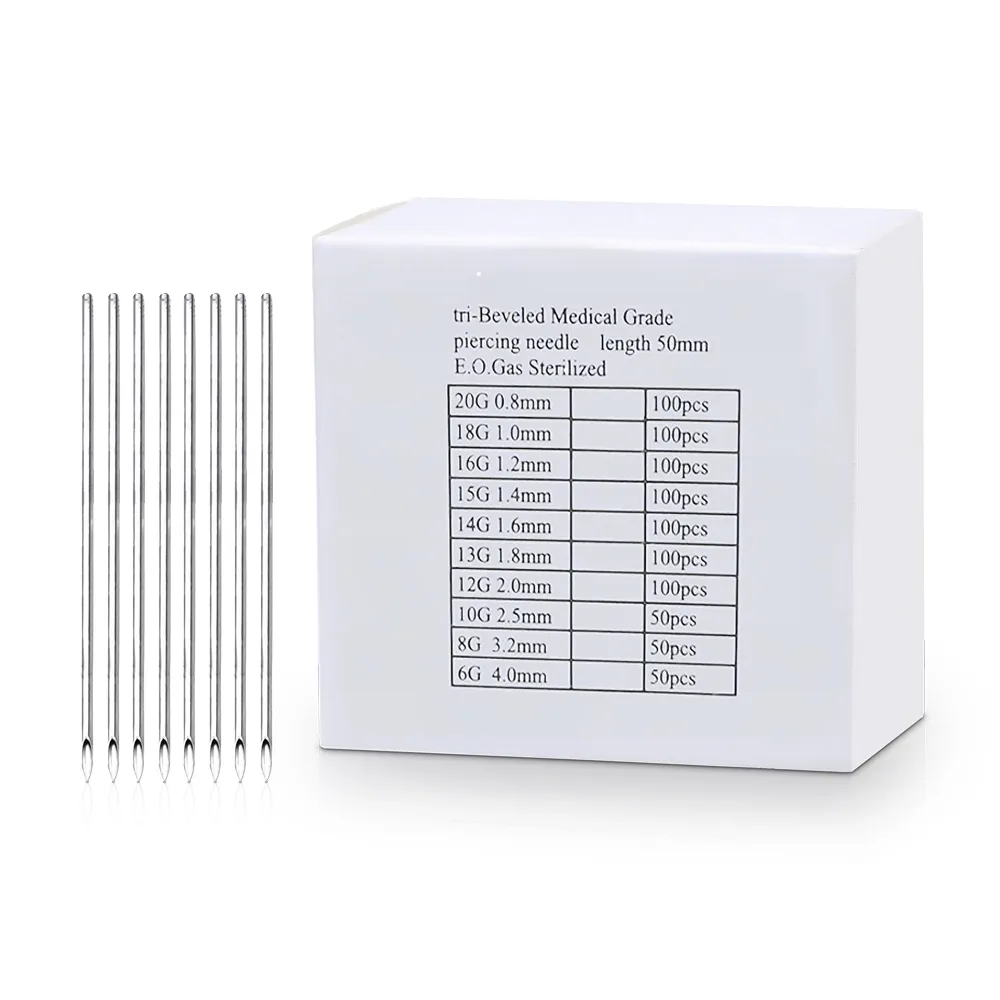 Sharp single-use piercing instrument
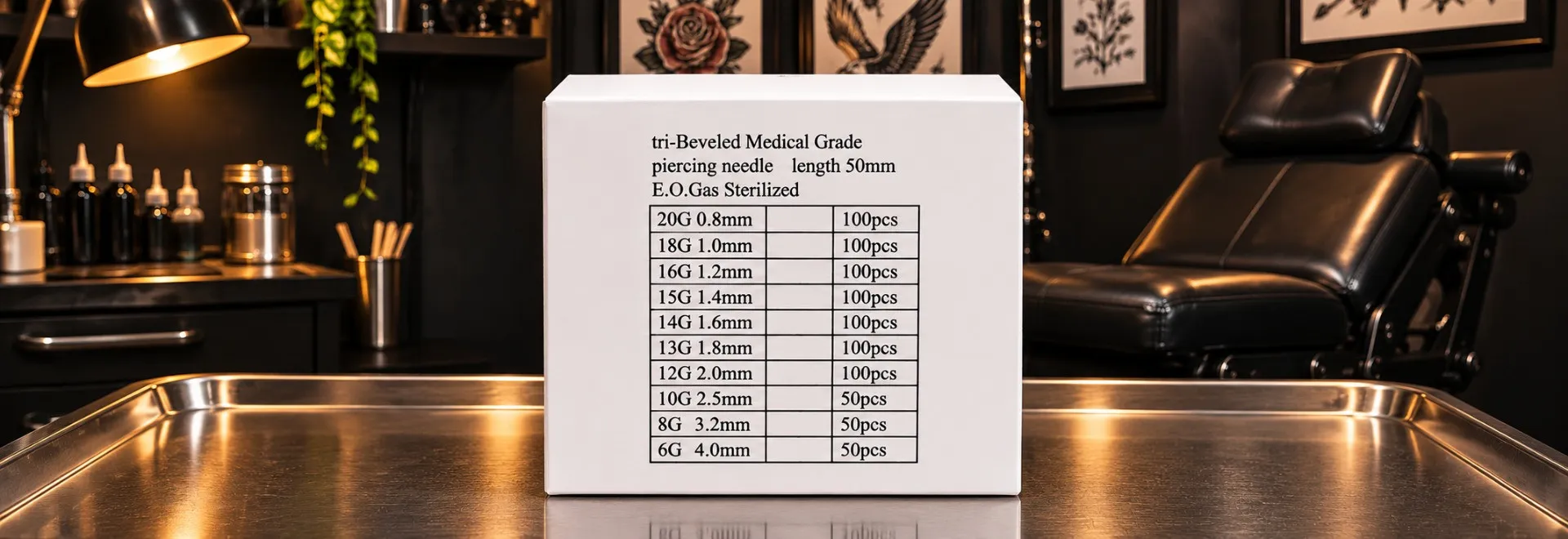
Tri-Beveled Piercing Needles
Stainless steel needles listed with a tri-beveled tip, 50 mm length and E.O. gas sterilization. Designed for professional single use; the piercer chooses the dimensions.
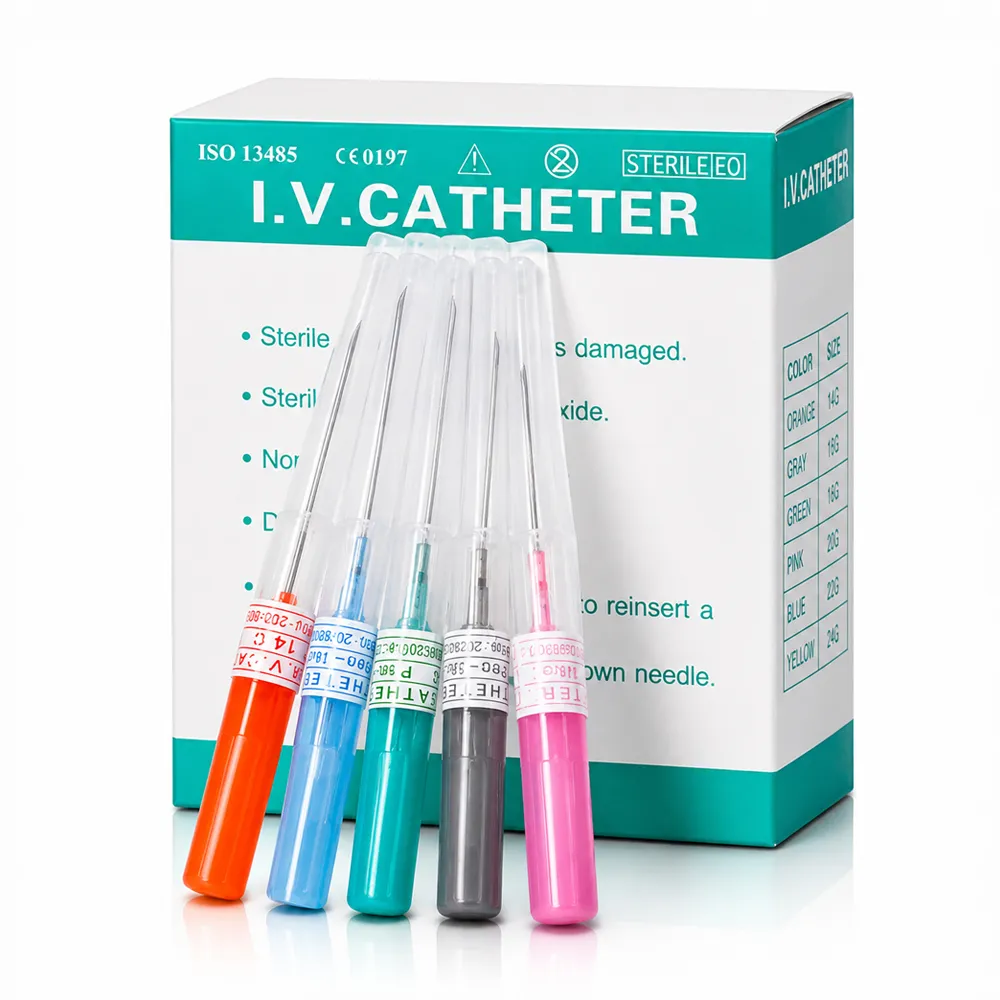 Alternative sterile needle format
I.V. Catheter Piercing Needles 50 pcs
Sterile single-use needles in a 50-piece listing. A qualified piercer decides whether the format fits the procedure and handles disposal.
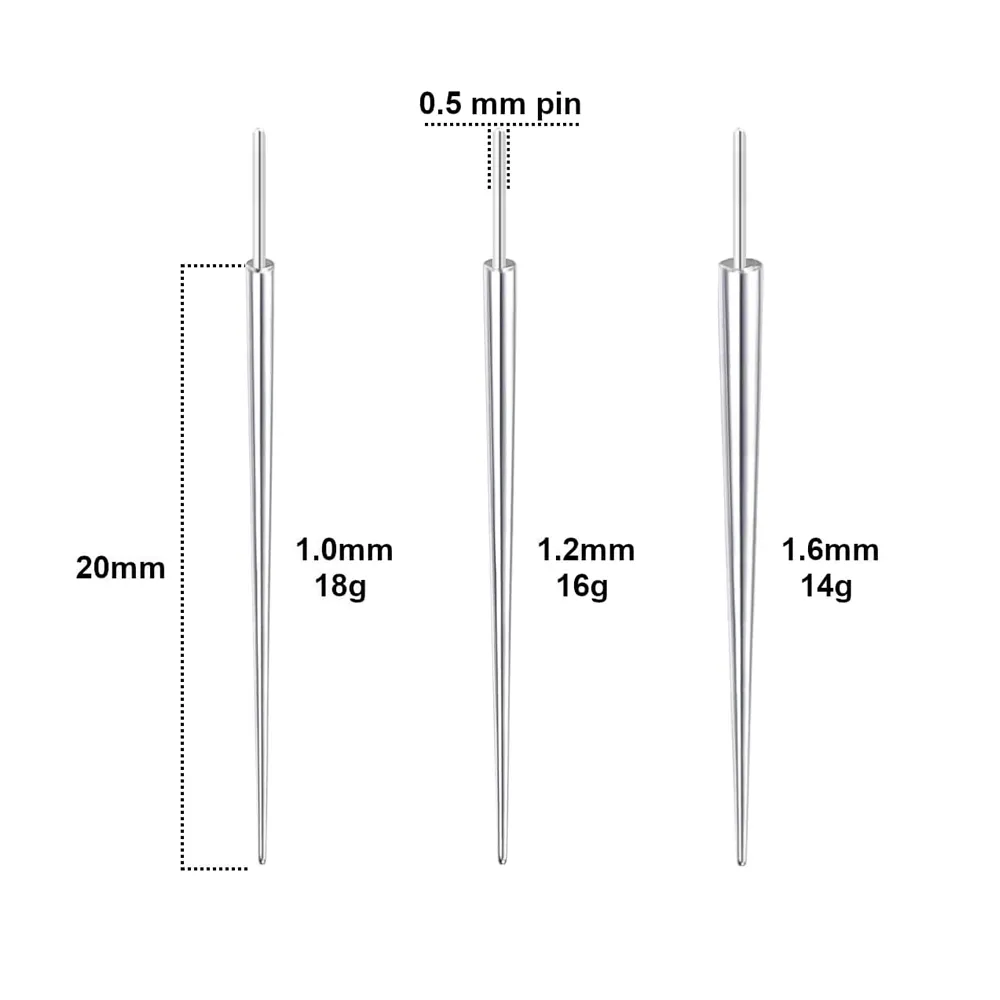 Professional threadless transfer tool
Sterilized Insertion Pin for Threadless Body Jewelry
A sterilized insertion accessory used by a trained piercer for compatible threadless jewelry. It assists placement; it is not the needle that makes the piercing.
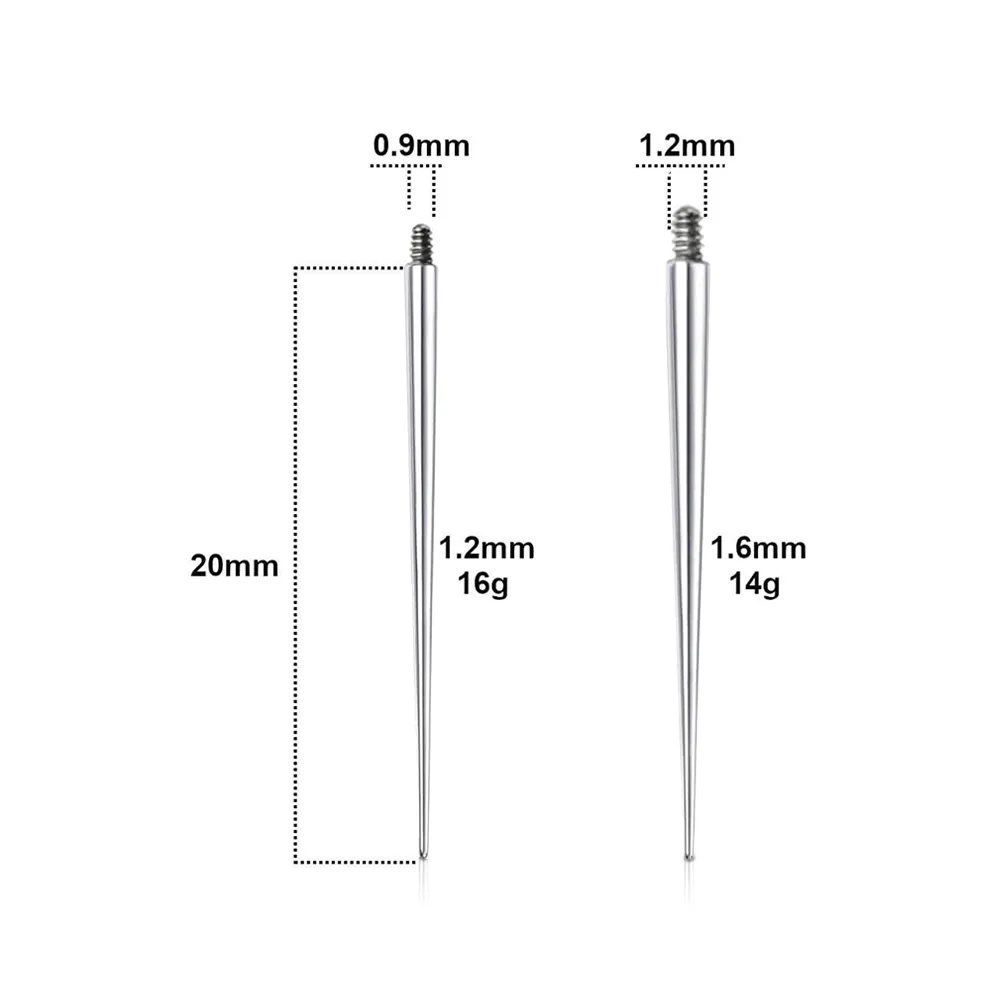 Professional threaded-jewelry transfer
Sterilized Insertion Pin for Internally Threaded Body Jewelry
A sterilized steel insertion tool for matching internally threaded jewelry. The piercer chooses the compatible size and connection.
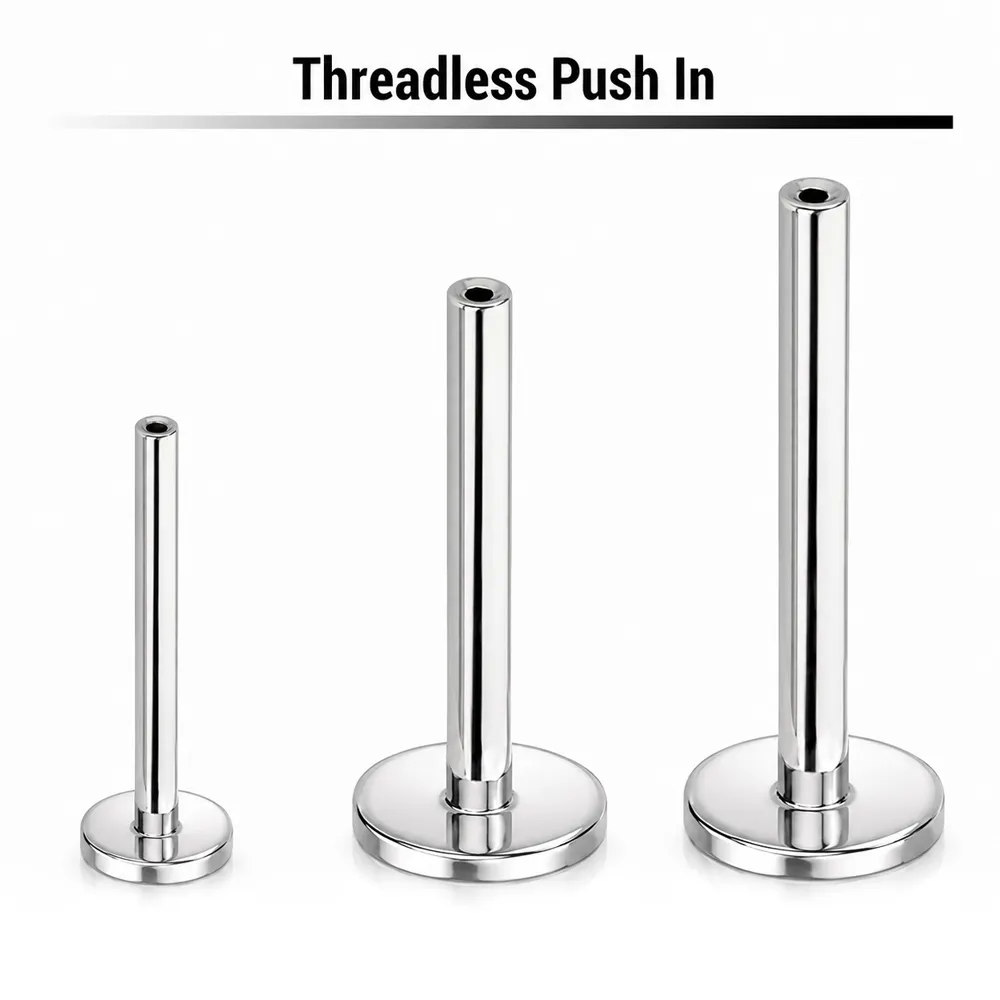 Smooth initial jewelry option
Sterilized Titanium High Polish Threadless Push In Labret Post
A sterilized titanium flat-back post without a decorative top. Suitable for new piercings because it comes sterilized, but your trusted piercer decides the fit, length and end compatibility.
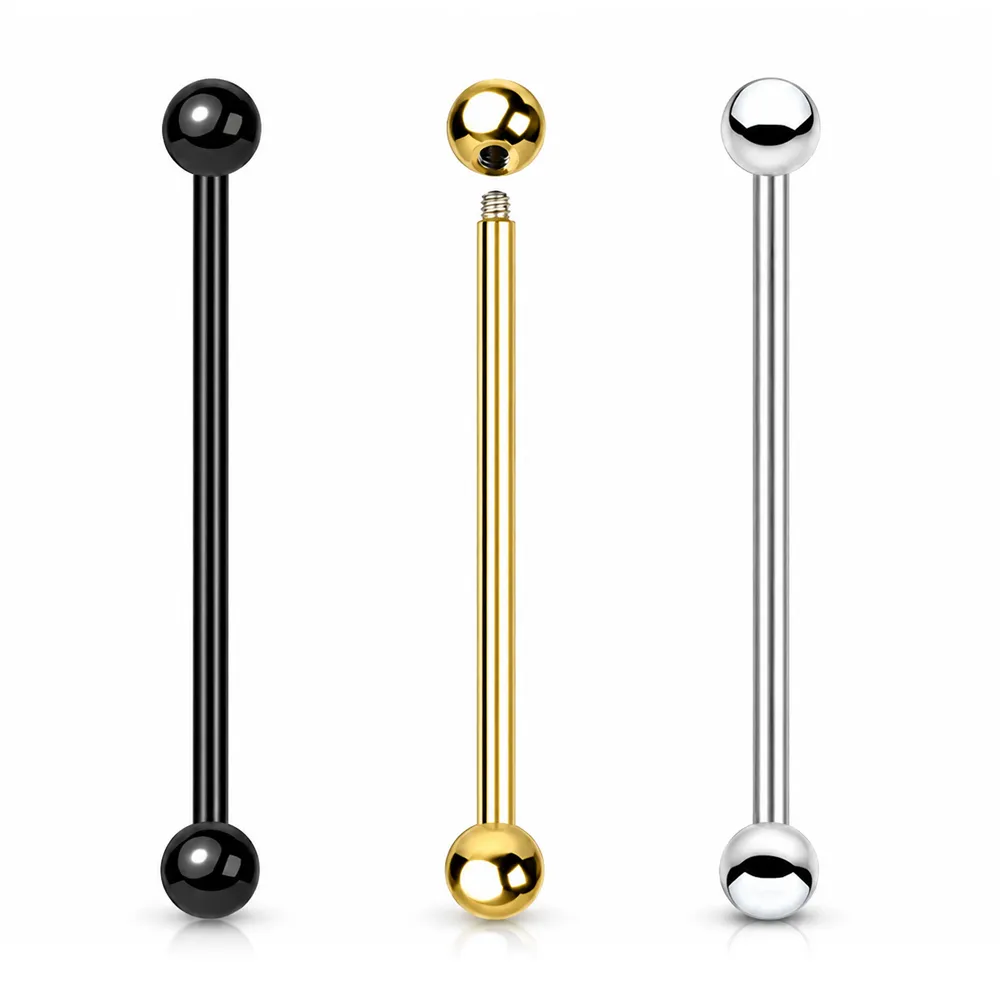 Placement-specific jewelry option
Sterilized Titanium Industrial Barbells
Sterilized titanium barbell options for professional anatomy and fit assessment. The piercer selects appropriate placement, length and dimensions.
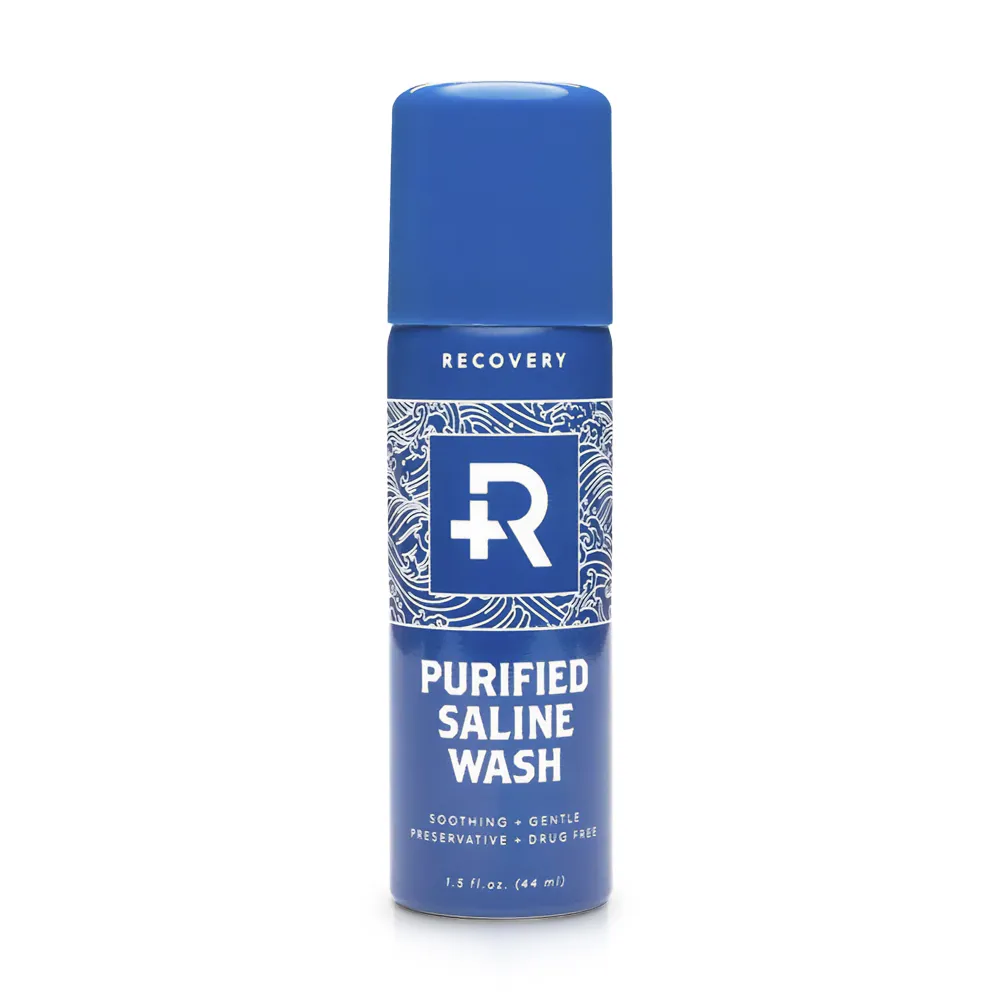 Piercing aftercare option
Recovery Purified Saline Wash Solution 1.5 oz
Piercing aftercare wash to review with the piercer as part of a simple post-procedure care routine. Follow its label and the professional's instructions.
Shop Piercing Needles Explore All Piercing Supplies
For everyday jewelry sizing and aftercare questions, see the body jewelry size guide and our piercing aftercare guide. The right professional should guide both the piercing method and the jewelry left in place.
BEFORE YOU BOOK OR PREPARE
What should clients, parents and piercers check before a piercing appointment?
APP emphasizes sterile single-use equipment, qualified technique, anatomy-appropriate jewelry and aftercare. Ask about all four before booking.
Client and parent checklist
- Method: The piercer uses a new sterile hollow needle rather than a reusable gun.
- Jewelry: The chosen size, finish and material fit the anatomy and allow for swelling.
- Hygiene: Sterile implements and safe sharps disposal are part of the procedure.
- Placement: Cartilage or nostril work is assessed by an experienced professional, not performed with an ear-stud device.
- Support: The piercer explains aftercare and remains available for fit or healing questions.
SVT Shop supports piercing professionals and clients in El Paso, TX, with Next Day Delivery available in El Paso.
FAQ
12 common questions about piercing guns, needles, pain and cartilage
These answers are based on APP's piercing-gun position and procedure guidance, plus the 2022 Canadian Family Physician review of ear-piercing complications in children and adolescents.
1. Is a piercing gun or needle better?
APP recommends a qualified piercer using a sterile single-use hollow needle. It identifies blunt-force trauma, reusable-gun hygiene and tight studs as reasons to avoid guns.
2. Why do professional piercers refuse to use piercing guns?
APP members may not use reusable piercing guns. The association cites tissue damage, limits on sterilizing reusable devices and unsuitable initial jewelry.
3. Are piercing guns sterile if they are wiped down?
APP says a plastic reusable gun cannot be autoclaved and wiping the exterior may leave internal parts contaminated.
4. Does a piercing needle hurt more than a gun?
Choose by tissue handling and professional practice, not a predicted pain ranking. APP says forcing a blunt stud through skin can cause pain and swelling.
5. Is a piercing gun okay for earlobes?
APP recommends a sterile needle even for lobes. Some gun studs are too short, and reusable devices present hygiene concerns.
6. Why should piercing guns not be used on cartilage?
APP warns of cartilage injury and chondritis from gun use. Canadian Family Physician reports that cartilage infections can be more severe.
7. Do piercing gun piercings heal slower than needle piercings?
APP links blunt pressure and tight studs with irritation and prolonged healing. Cartilage also takes longer to heal than lobe tissue.
8. Are gun studs and butterfly backs safe to leave in during healing?
APP warns that some gun studs and butterfly backs compress swelling tissue or trap discharge. Have a qualified piercer review the fit.
9. Are piercing guns a good choice for babies or young children?
APP warns that contaminated reusable guns may be particularly concerning for children with immature immune systems. Choose a qualified needle piercer.
10. What is a professional piercing needle?
APP describes a hollow, extremely sharp cutting needle, inspected for flaws, used sterile and discarded after one procedure.
11. What gauge piercing needle is used for a lobe, helix or nose?
A qualified piercer chooses needle size to suit the jewelry and anatomy. APP cautions that an unnecessarily larger needle may increase bleeding.
12. Can piercing needles be cleaned or reused?
No. APP requires single-use sterile piercing needles and immediate disposal of the used sharp in an approved container.
RESEARCH
Sources Consulted
The Association of Professional Piercers provides the professional position on gun devices, hollow needles and appropriate initial jewelry. The peer-reviewed pediatric review provides clinical context on high-pressure piercing injury and cartilage complications.