Powered by Comercia.io
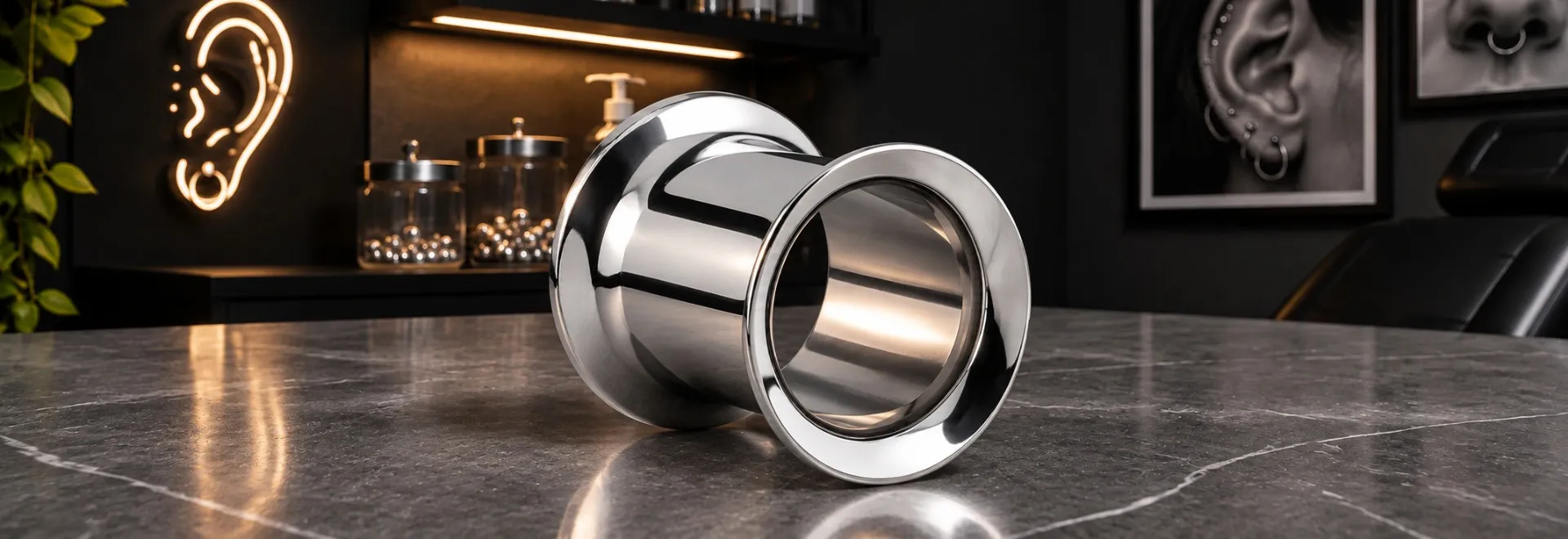
How long does ear stretching take, and what size follows your current gauge? The Association of Professional Piercers (APP) advises stretching only fully healed, mature earlobes, using small increments and allowing recovery between increases. Compare gauge-to-mm sizes, timelines, blowouts, tapers, and jewelry for fresh vs healed stretched ears in this guide.
Shop Plugs & Tunnels for Healed Ears Read the Body Jewelry Size Guide
QUICK ANSWER
How do you stretch your ears safely, and how long should you wait between sizes?
Start with a fully healed, pliable lobe, use small increases, and wait until recovery is complete. APP discourages jumps over one gauge and recommends half sizes when available. There is no set timetable. Fresh stretches call for appropriate single-flared or non-flared jewelry, never forced double flares or decorative tapers.
SIZE
Check the gauge and millimeter diameter before considering another size.
TIMING
APP says healing may take weeks, months or longer. Let the piercer assess readiness.
JEWELRY
Choose suitable smooth fresh-stretch jewelry; SVT Shop plugs below are for healed lobes only.
UNDERSTAND THE PROCESS
What is ear stretching, and when is an earlobe ready to start?
APP defines stretching as the gradual enlargement of an existing piercing. Begin only when the lobe is fully healed, mature and pliable. The channel must accommodate a larger diameter without tearing.
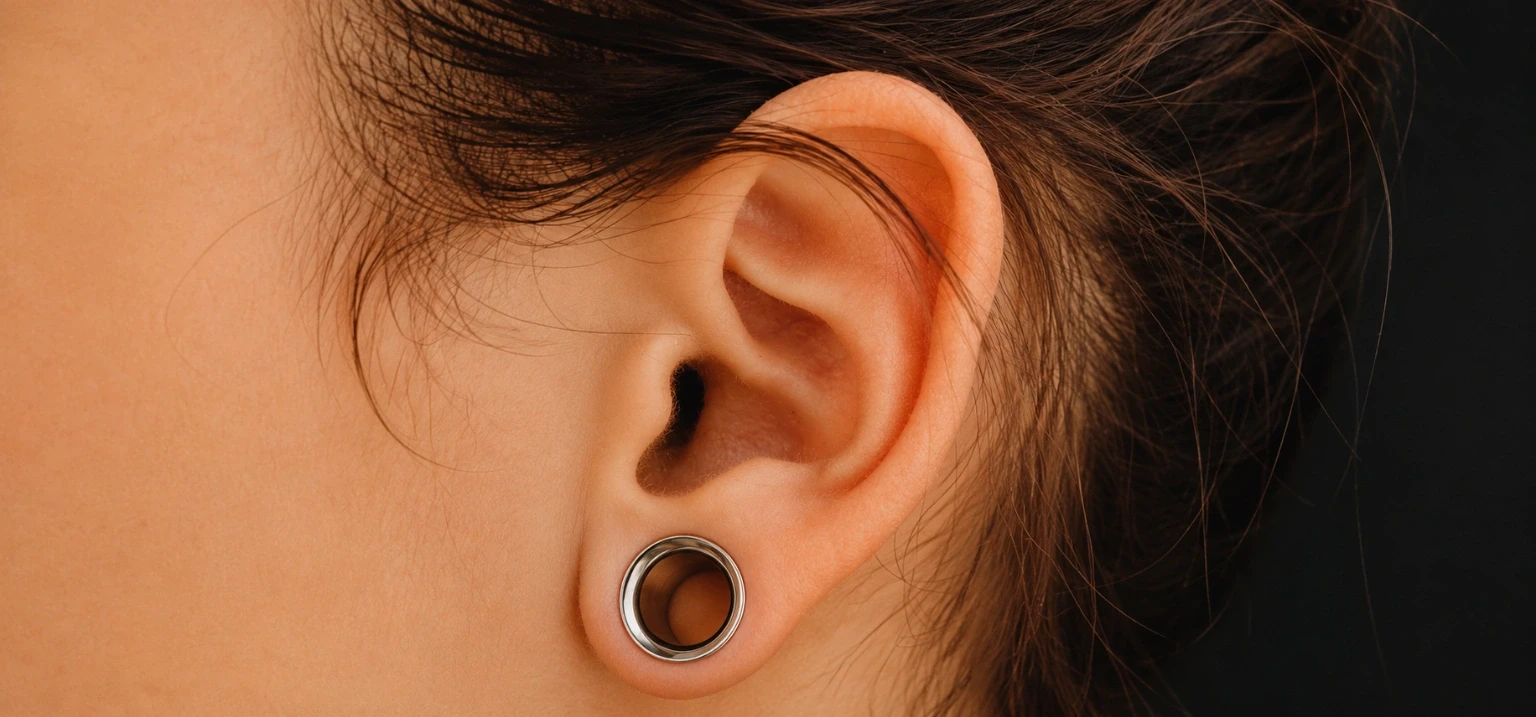
Ask a piercer to assess tissue and a realistic goal. APP warns that rushing can create scar tissue, reduce blood flow and make later stretching harder.
What does a larger gauge number mean?
In U.S. gauge sizing, a lower number means a thicker piece: 14G is larger than 16G. Above 00G, fractions of an inch and millimeter labels become common. Compare actual diameters rather than assuming every labeled jump is equal.
For general piercing measurements, read SVT Shop's body jewelry size guide.
APP GAUGE REFERENCE
What is the ear stretching gauge-to-millimeter size chart?
These APP 2017 Stretching Your Piercing chart values are nominal diameter equivalents. Compare the millimeter measurement before buying the next size.
| Gauge or listed size | Inches | APP chart diameter |
|---|---|---|
| 20G | 1/64 | 0.8 mm |
| 18G | 1/32 | 1 mm |
| 16G | 3/64 | 1.2 mm |
| 14G | 1/16 | 1.6 mm |
| 12G | 5/64 | 2 mm |
| 10G | 3/32 | 2.5 mm |
| 8G | 1/8 | 3.2 mm |
| 6G | 5/32 | 4 mm |
| 4G | 3/16 | 5 mm |
| 2G | 1/4 | 6 mm |
| 0G | 5/16 | 8 mm |
| 00G | 3/8 | 10 mm |
| 7/16 in | 7/16 | 11 mm |
| 1/2 in | 1/2 | 12 mm |
| 9/16 in | 9/16 | 14 mm |
| 5/8 in | 5/8 | 16 mm |
| 11/16 in | 11/16 | 18 mm |
| 3/4 in | 3/4 | 19 mm |
| 13/16 in | 13/16 | 20 mm |
| 7/8 in | 7/8 | 22 mm |
| 15/16 in | 15/16 | 24 mm |
| 1 in | 1 | 25 mm |
The chart identifies sizes, not required steps or a schedule. APP notes that intermediate millimeter increments can allow more gradual stretching. Ask your piercer to verify actual jewelry dimensions.
THE NEXT SIZE IS NOT ALWAYS A SMALL STEP
What size comes after 16G, 14G, 2G, 0G or 00G when stretching ears?
The labeled next gauges are 14G after 16G, 12G after 14G, 0G after 2G and 00G after 0G. Gauge jumps grow larger as the diameter increases, so APP recommends half sizes when available.
| Example comparison | Chart diameters | What the change illustrates |
|---|---|---|
| 16G to 14G | 1.2 to 1.6 mm | A relatively small early change; the piercing must still be ready. |
| 14G to 12G | 1.6 to 2 mm | APP describes this as a comparatively modest gauge jump. |
| 4G to 2G | 5 to 6 mm on the rounded chart | APP warns that the exact gauge difference is more substantial than earlier jumps. |
| 2G to 0G | 6 to 8 mm | A larger nominal change; consider a suitable intermediate size with your piercer. |
| 0G to 00G | 8 to 10 mm | Another substantial change; 00G is not an automatic next appointment. |
| 00G and beyond | 10 mm, then fractional-inch labels | Measure in millimeters and look for smaller increments. |
FOLLOW THE TISSUE, NOT A COUNTDOWN
How long does ear stretching take, and how long should you wait between sizes?
APP gives no universal ear stretching timetable. Tissue recovery may take weeks, months or longer, and larger sizes generally require longer waits.
Before the first stretch
The original piercing must already be healed, mature and pliable.
After each successful increase
Keep appropriately fitted jewelry in while the tissue recovers and stabilizes.
At larger sizes
APP says larger diameter changes usually mean longer waiting and smaller increments.
Even a pair of matching lobes may progress differently. If one resists, do not force it to keep pace with the other.
A CAREFUL STRETCHING PLAN
How do beginners stretch their ears without forcing the jewelry?
APP says correctly fitted jewelry should enter relaxed, healed tissue with little or no effort. A professional piercer can assess readiness and help prevent injury, particularly at larger sizes.
Have the current lobe assessed
Confirm the lobe is healed, mature, pliable and not irritated.
Choose a small next increment
APP advises against jumping more than one gauge; consider half sizes.
Select jewelry suited to a fresh stretch
Choose suitable single-flared or non-flared jewelry in APP-approved material.
Allow gentle insertion without force
Let a piercer assist; insertion should not require pressure.
Stop at pain, resistance or bleeding
Stop immediately at significant discomfort, blood or tearing.
Leave time for recovery
Follow the piercer's aftercare and leave time for stabilization.
Use our piercing aftercare and saline guide for general healing care. Stretching a healed channel is still an event that calls for aftercare attention.
FRESH STRETCHES NEED APPROPRIATE JEWELRY
What is the best jewelry material for freshly stretched ears?
For a freshly stretched piercing, APP recommends initial-piercing-appropriate jewelry: suitable implant-certified metals or inert glass, with a smooth finish and correct sizing.
| Material or style | For a fresh stretch? | APP-based reason |
|---|---|---|
| Implant-certified titanium or steel | Potentially suitable when the specific jewelry meets APP criteria. | APP lists titanium ASTM F-136/F-67 and appropriate steel ASTM F-138 among initial-piercing materials. |
| Suitable inert glass | Potentially suitable when fit, finish and preparation are appropriate. | APP lists fused quartz and lead-free borosilicate or soda-lime glass for initial piercings. |
| Single-flared or non-flared style | APP's preferred form for an initial stretch. | It avoids the additional diameter of a second flare being forced through fresh tissue. |
| Double-flared jewelry | Not for a fresh stretch. | APP warns that insertion can damage newly enlarged tissue. |
| Acrylic, silicone, wood, horn, bone or stone | Not for a fresh stretch. | APP reserves these alternative materials for fully healed stretched piercings. |
| Externally threaded or sharp-edged jewelry | Do not use for stretching. | APP warns the threads or edges can scratch or tear the channel. |
Important distinction about SVT Shop's plugs and tunnels
All SVT Shop plugs and tunnels below are non-sterilized and for fully healed, stabilized lobes only. None should create a stretch. Ask your piercer for APP-approved single-flared or non-flared jewelry for a new size.
Read our guide to implant-grade titanium and sterilized piercing jewelry for more material context.
PLUG SHAPES EXPLAINED
Are single-flared or double-flared plugs better for ear stretching?
APP recommends single-flared or non-flared jewelry for fresh stretches. A double flare has an oversized end that can force an additional stretch during insertion or removal.
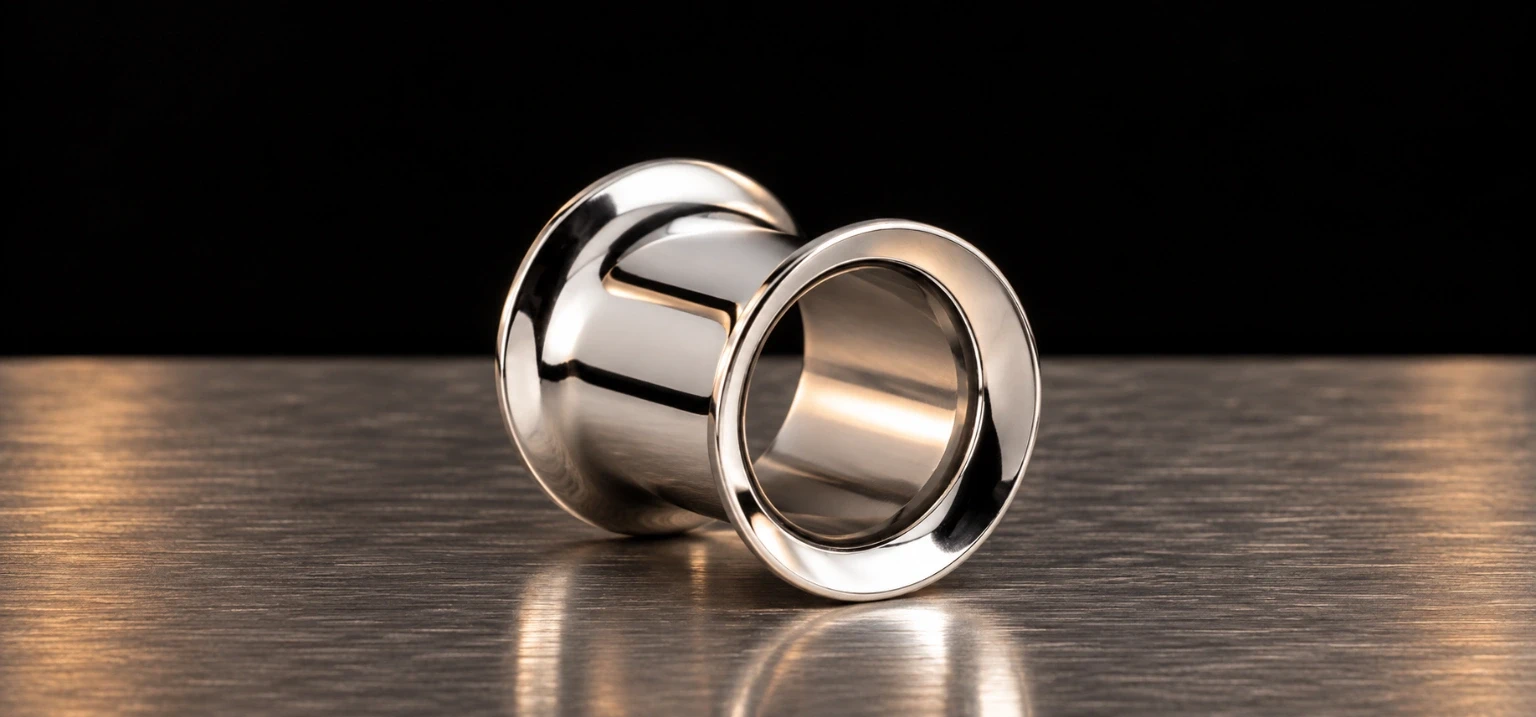
Single-flared
One wider retaining end; APP includes it for fresh stretches when material and fit are suitable.
Non-flared
No enlarged ends; another APP-recommended shape for initial stretches.
Double-flared
Two enlarged ends. APP warns they can damage newly stretched tissue.
APP prefers avoiding O-ring grooves in fresh-stretch jewelry where possible. Double flares belong only in stable, fully healed channels.
WHY FORCING IS NOT STRETCHING
Can you use tapers, spirals or talons to stretch your ears?
APP treats insertion tapers as professional tools, not instruments to force an unready piercing larger. It warns against wearing spirals, talons or taper pins to stretch, since the gradual shape can expand tissue too quickly.
| Item | Appropriate role | Why it matters |
|---|---|---|
| Professional insertion taper | May assist a piercer with placement of properly sized jewelry. | APP says it is a professional tool, not a lever to force a larger size. |
| Spiral or talon jewelry | A decorative shape discussed separately from the stretching process. | APP warns against using its tapering shape to drive enlargement. |
| Externally threaded piece | Not suitable for use as stretching jewelry. | APP says exposed threads can scratch or tear the channel. |
| Smooth next-size jewelry | Inserted only when the tissue is ready and the piece is appropriate. | APP says insertion should require little or no effort. |
Being able to push in a taper does not mean the tissue is ready for its widest section. Ask a qualified piercer for help if insertion resists.
RECOGNIZE OVERSTRETCHING
What is an ear stretching blowout, and what should you do about it?
APP defines a blowout as inner piercing-channel tissue pushed outward into a visible lip, commonly on the lobe. It can happen after stretching too far or too quickly, and some distortion can persist.
Stop trying to go larger
Do not attempt a larger size; stop at bleeding, tearing or significant pain.
Contact a qualified piercer
Have a piercer examine the tissue and jewelry fit.
Discuss downsizing
APP says returning to the previous smaller size and resuming aftercare may help.
Let tissue recover before further changes
Allow recovery and follow the piercer's next-size advice.
Downsize means a smaller diameter here
When stretching, downsize means return to a smaller diameter, not shorten a post.
When to seek medical care
APP says suspected infection warrants medical attention; a piercer can assess fit and technique.
ONCE THE LOBE IS FULLY HEALED
Can you wear acrylic, silicone, wood, horn or steel plugs in healed stretched ears?
APP permits broader material choices after a stretched piercing has fully healed, including certain plastics, silicone, wood, horn, bone and stone. The product must still suit the channel and be in good condition.
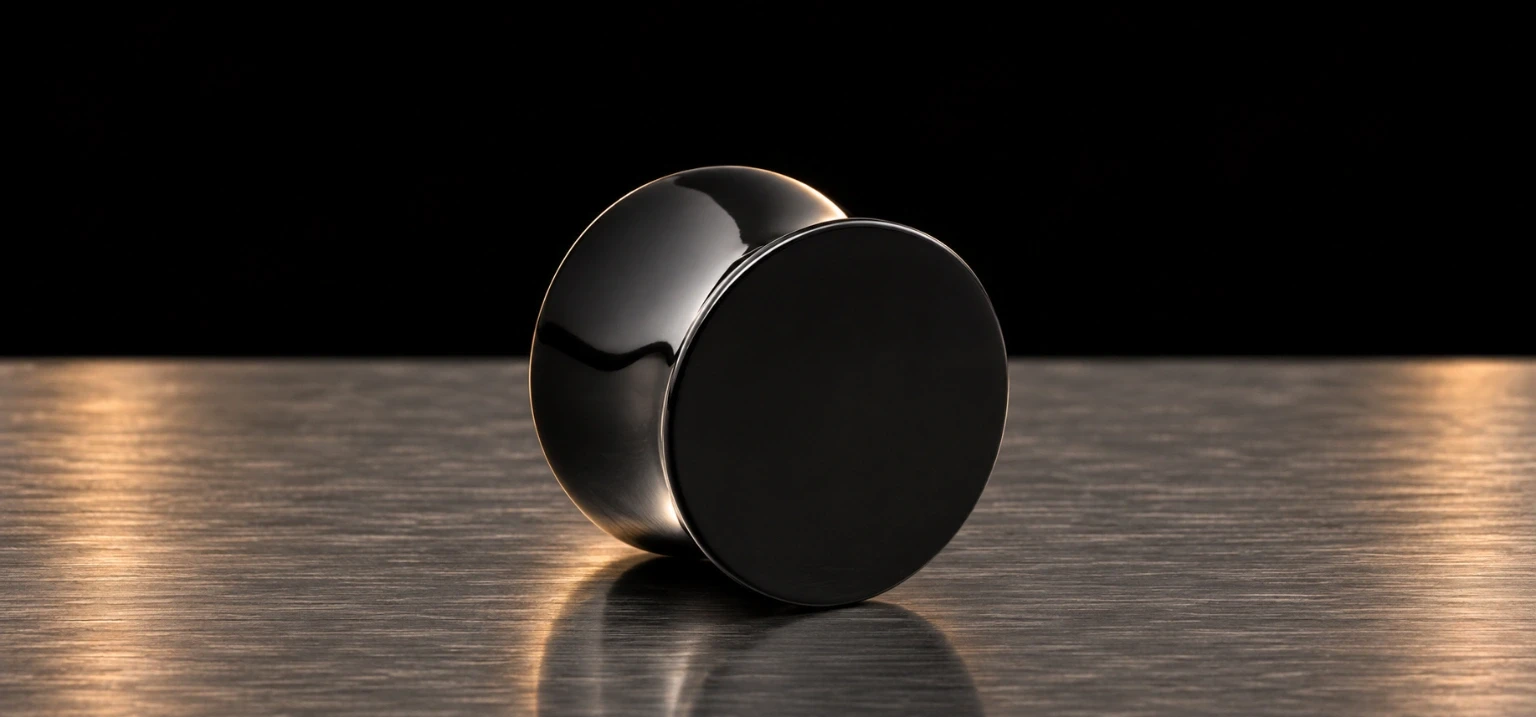
| Healed-ear jewelry material | What to consider | Fresh-stretch rule |
|---|---|---|
| Stainless or surgical steel tunnels | Inspect finish, fit and the shape of the flare; a double flare needs an already stable channel. | APP requires jewelry suitable for a fresh piercing, not merely a steel label. |
| Natural horn or wood plugs | APP cautions that natural materials can have cracks, pits or uneven areas; maintain them appropriately. | APP says no organic materials in fresh stretches. |
| Acrylic and certain other plastics | APP discusses plastics among healed-piercing alternatives, subject to material quality and fit. | APP says avoid acrylic for fresh stretches. |
| Silicone | Consider only with fully healed tissue and appropriate quality and fit. | APP says avoid silicone during a fresh stretch. |
| Glass | APP discusses suitable inert glass for initial piercings and alternative glass jewelry for healed piercings. | Use only glass that meets the relevant initial-jewelry criteria and proper fit. |
APP cautions that natural materials may have pits or cracks and some alternative pieces require removal for bathing or swimming. Heavy hanging jewelry may put excessive pressure on the lower lobe.
KEEP THE CHANNEL COMFORTABLE
How do you care for a fresh stretch and maintain healed stretched ears?
APP advises keeping fresh-stretch jewelry in during recovery because the channel may shrink quickly if left empty. Healed stretched lobes can follow a separate routine of washing, occasional resting and moisturizing.
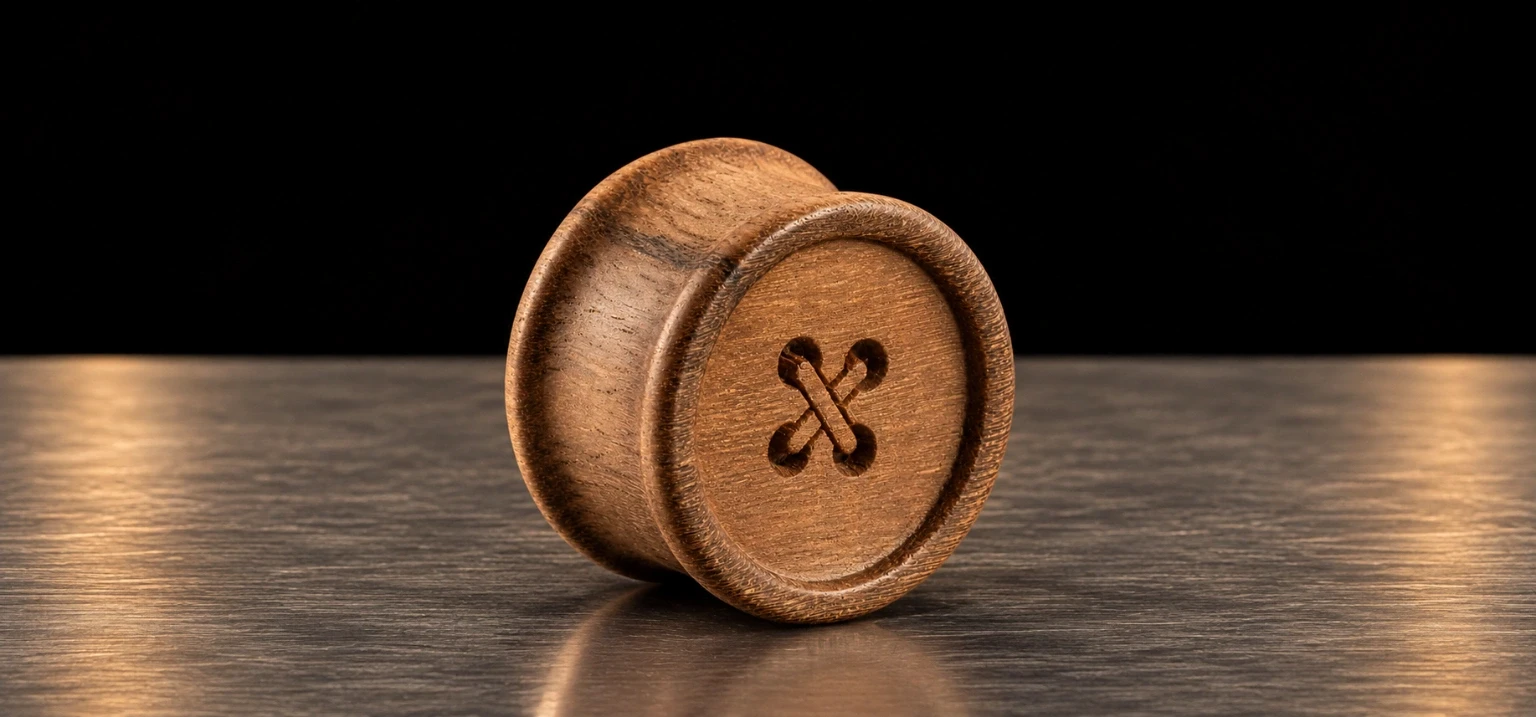
Care for a recent stretch like healing tissue
Follow the piercer's care plan and leave recently stretched jewelry in place.
Keep healed tissue and jewelry clean
APP recommends rinsing healed stretched tissue in a warm shower.
Discuss resting when appropriate
For large healed piercings, discuss short comfortable jewelry-free intervals with a piercer.
Consider approved moisturizing care
APP mentions jojoba or coconut oil for moisturizing healthy stretched tissue.
Pay attention to load and fit
Heavy pieces can strain the lower lobe; check weight and fit.
APP discusses resting for healed piercings around 2G (6 mm) and larger. It is not a reason to remove jewelry from a new stretch.
THINK ABOUT THE LONG TERM
Will stretched earlobes close if you stop wearing plugs?
APP warns that stretching can permanently change an earlobe. Closure varies with the individual, jewelry history and scarring; no particular gauge promises a return to the original appearance.
No guaranteed closing size
APP describes varied outcomes, not a guaranteed closing size.
Scar tissue changes the options
Scar tissue may reduce flexibility and limit future stretching or shrinkage.
Larger changes may be permanent
APP says restoring some large openings can require plastic surgery.
Discuss long-term goals and possible permanent change with an experienced piercer before enlarging further.
AVOID THE SHORTCUTS
What ear stretching mistakes can lead to a blowout or damaged lobe?
APP identifies rushed increases, force and inappropriate jewelry as key causes of injury. Decorative plugs are not stretching tools.
Stretching before the original piercing is mature
APP requires mature, pliable tissue first.
Skipping intermediate sizes
Use small changes, preferably intermediate sizes.
Forcing a taper or spiral
APP forbids using decorative tapers to force enlargement.
Putting double-flared plugs into a fresh stretch
The wide flare can damage newly stretched tissue.
Using decorative organic or acrylic plugs too soon
APP reserves acrylic and organic pieces for fully healed lobes.
Ignoring pain, bleeding or a raised tissue lip
Stop at pain or bleeding; consult a piercer for a blowout.
SVT SHOP HEALED-EAR JEWELRY
Which plugs and tunnels can you buy for fully healed, stabilized stretched lobes?
These SVT Shop plugs and tunnels are non-sterilized and only for fully healed, stabilized stretched lobes. Do not use them to enlarge a piercing or wear them in a fresh stretch. Ask your piercer to confirm the size and fit.
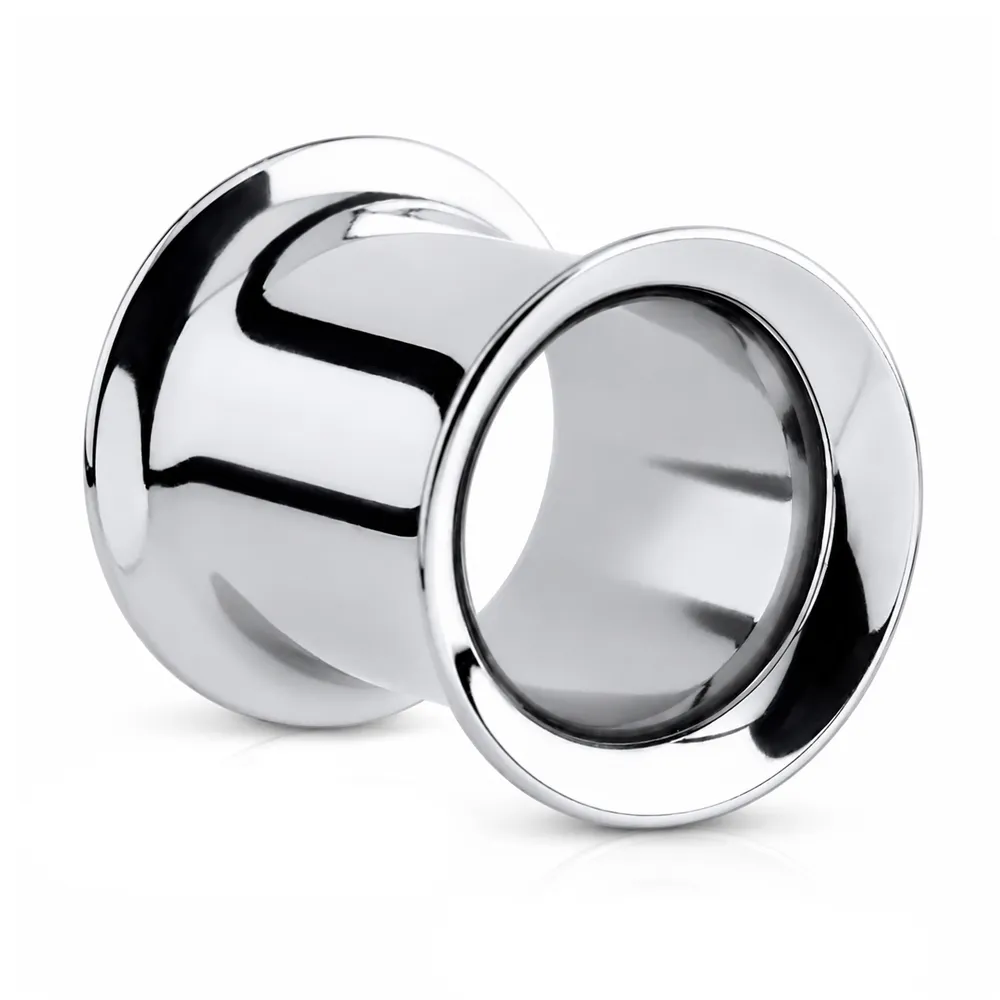 For fully healed stretched lobes only
Stainless Steel Double Flared Tunnel DFLTU
Hollow steel double-flared design. The healed lobe must comfortably accommodate the flare; this item is not sterilized and is not for stretching.
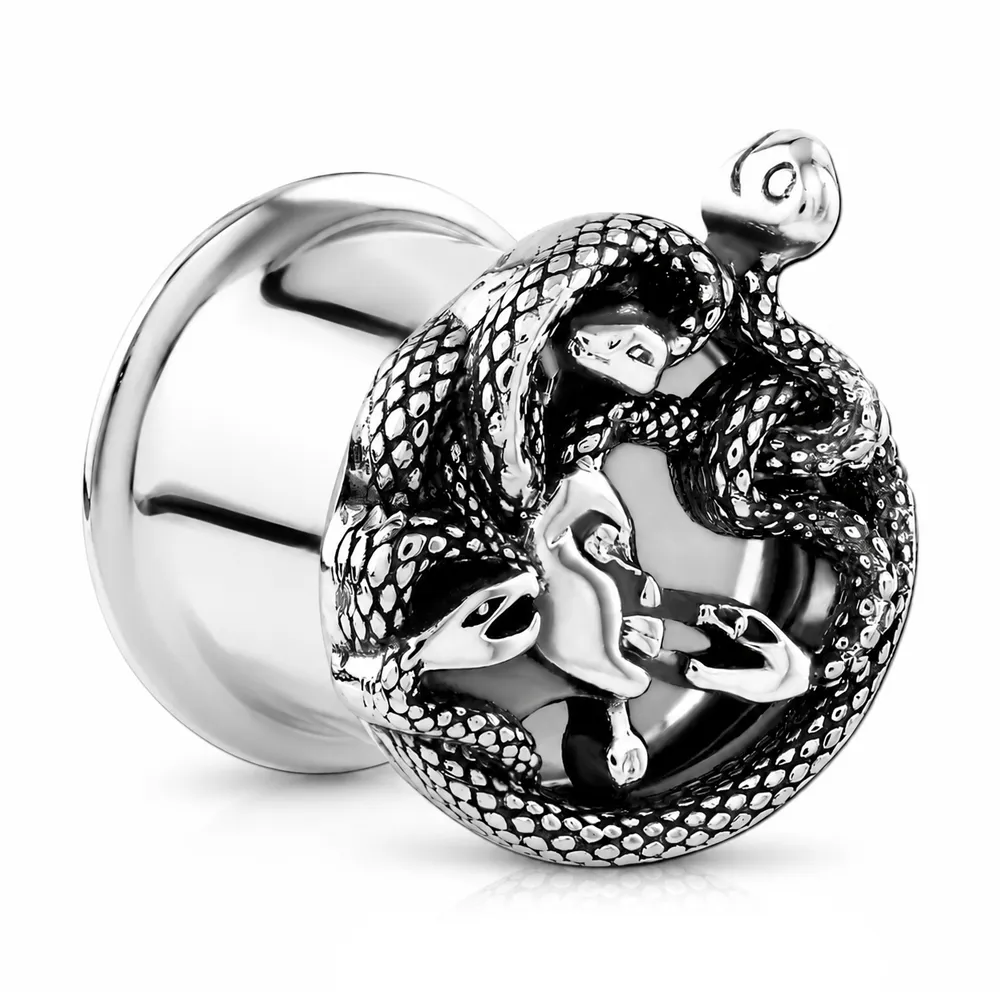 For healed, stable ear tunnels
Stainless Steel Double Flared Tunnel TU41
316L steel double-flared tunnel listed for healed lobes. Compare its fit and flare with your piercer before purchase.
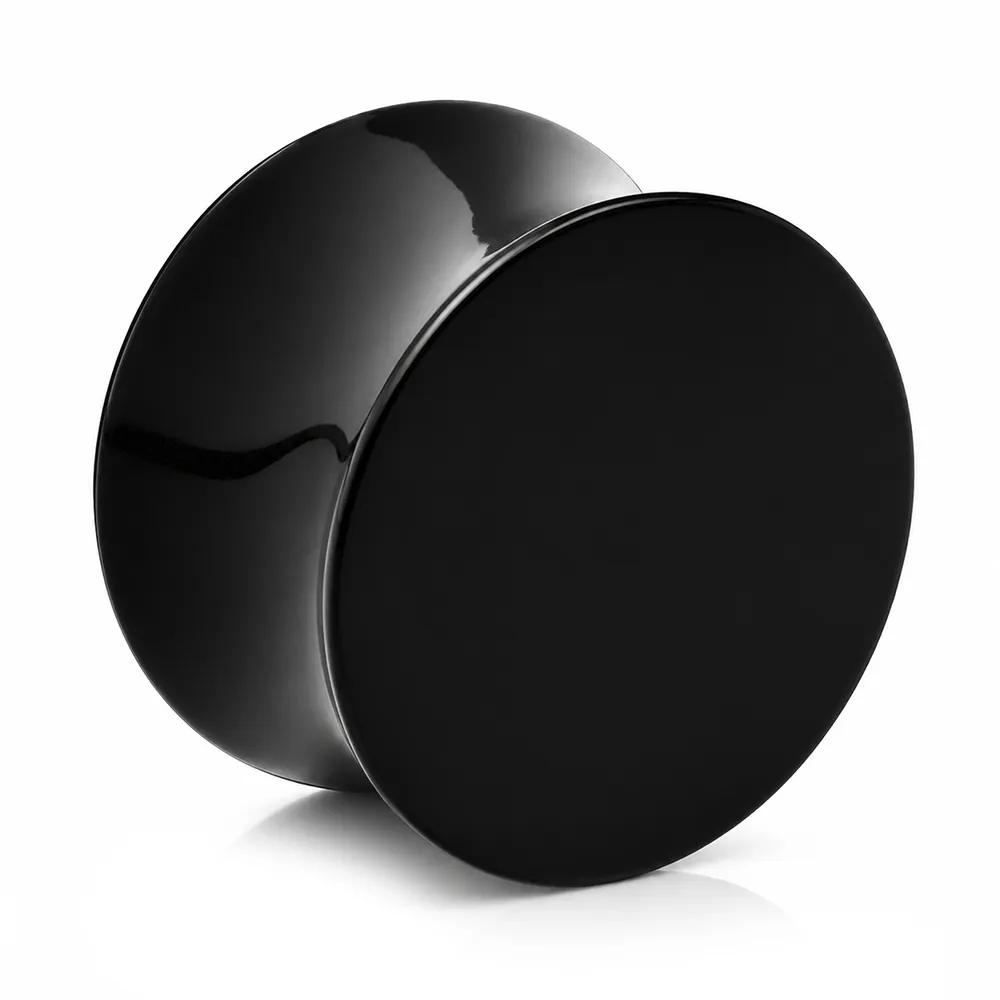 Natural material for healed ears
Organic Horn Plug Double Flared
Natural horn, listed at 8 mm (0G), for fully healed stretched lobes only. APP cautions that natural materials need attention to surface condition and care.
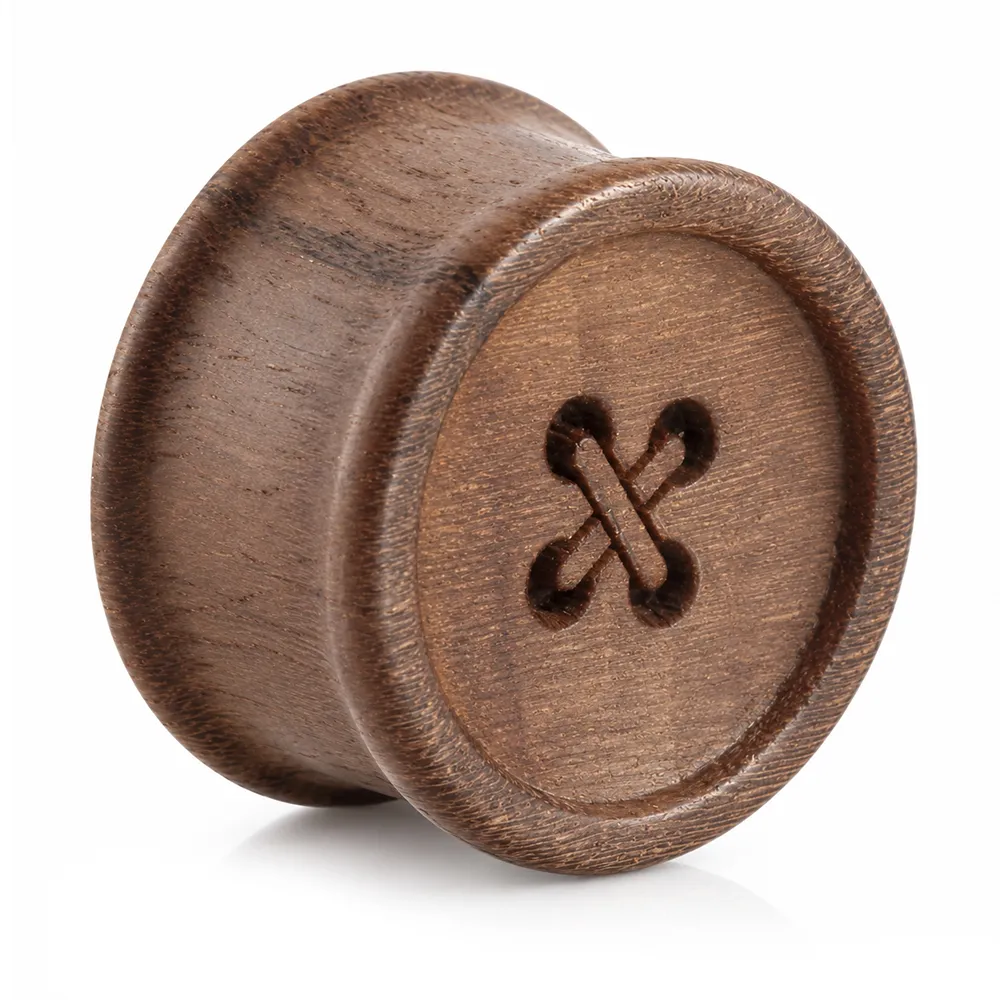 Wooden plug for a healed channel
Organic Wooden Plug Teak Ridged
Teak wood plug for established, healed stretched ears. Inspect the smoothness and follow material-specific maintenance.
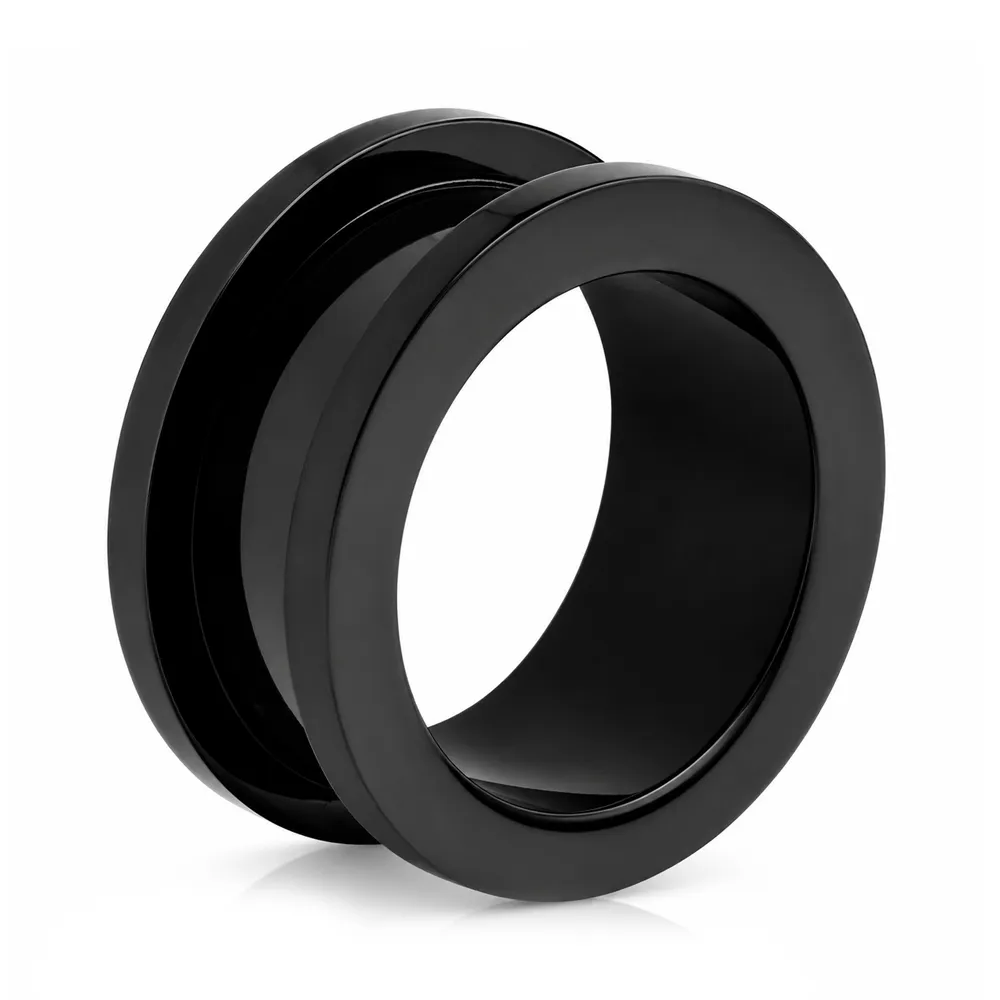 Decorative acrylic for healed ears
UV Acrylic Threaded Tunnel
An acrylic tunnel for fully healed stretched lobes, not a device for enlarging them. APP advises against acrylic in a fresh stretch.
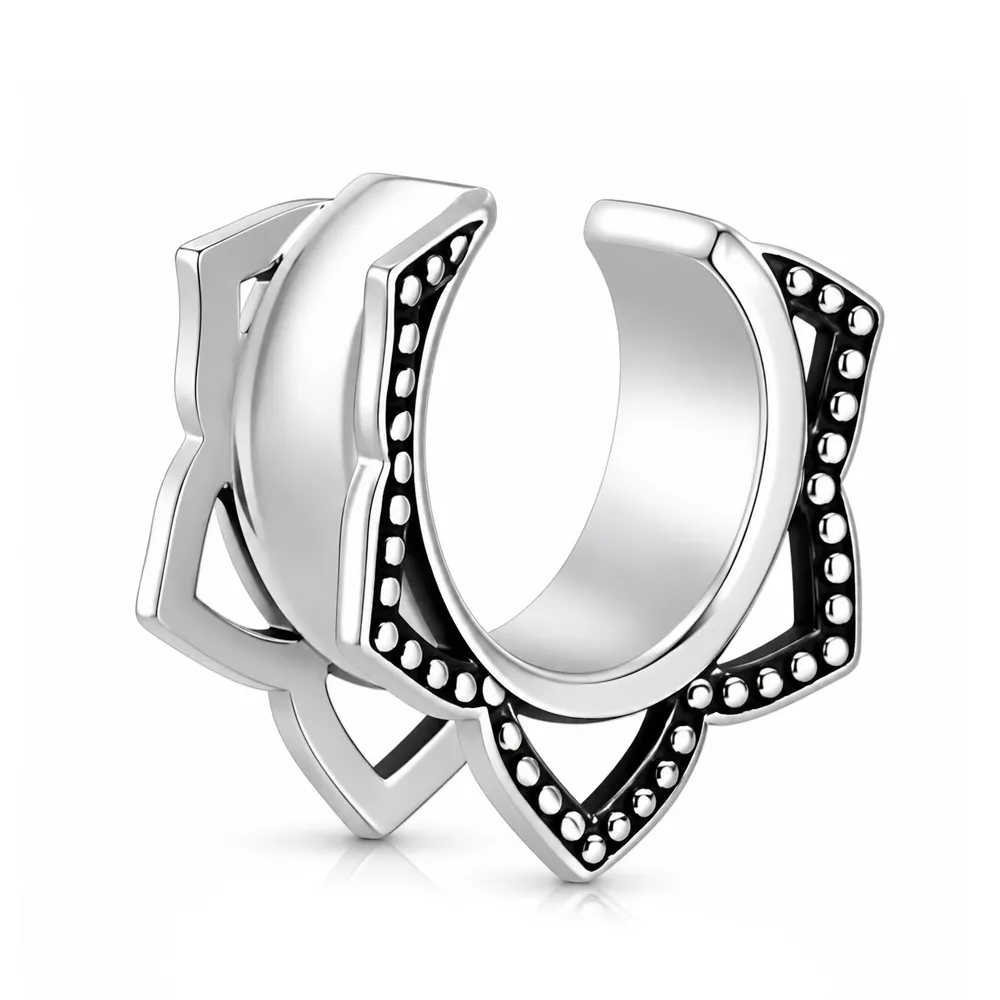 Steel half-tunnel style for healed ears
Surgical Steel Half Tunnel 001
Decorative steel half-tunnel with a snugger listed fit than a standard tunnel. Confirm sizing and wear only in fully healed, stabilized tissue.
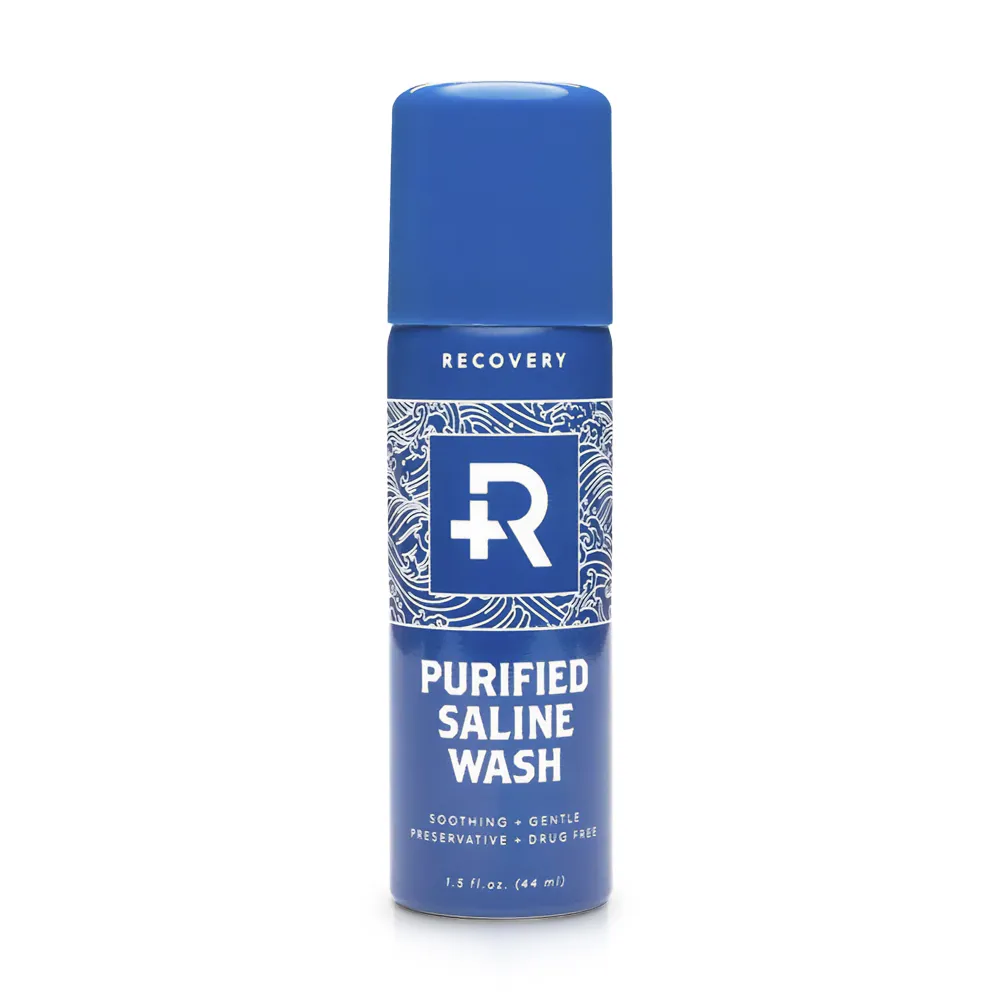 For piercer-directed aftercare
Recovery Purified Saline Wash Solution 1.5 oz
Saline wash option for an aftercare routine recommended by your piercer. It does not replace proper stretching technique or correct an injured channel.
Shop Plugs & Tunnels for Healed Ears Compare Jewelry Sizes
For a new stretch, ask your piercer to provide APP-approved, appropriately prepared, single-flared or non-flared jewelry.
BEFORE YOU MOVE UP A SIZE
What should be on an ear stretching size and jewelry checklist?
Use the APP chart, tissue readiness and appropriate jewelry instead of a preset calendar. Seek help when the size goal is large or insertion resists.
- Healing: Current lobe fully healed, mature, pliable and comfortable.
- Measurement: Current and proposed size checked in both gauge and millimeters.
- Increment: No forced jump; smaller intermediate sizes considered.
- Jewelry for a new stretch: APP-appropriate material with single or no flare, correctly prepared.
- Technique: No forcing, no decorative tapers or externally threaded stretching pieces.
- Stop signs: Significant pain, bleeding, tearing, inflammation or a blowout warrants a pause and professional assessment.
- For healed-ear shopping: Check material, exact size, surface, flare and whether the lobe has stabilized.
- Long-term goal: Understand the possibility of permanent enlargement and the need for ongoing care.
SVT Shop serves piercing enthusiasts and professional piercers in El Paso, TX, with Next Day Delivery available in El Paso.
FAQ
12 questions about ear stretching sizes, timelines, blowouts and plugs
Answers based on the APP stretching brochure, jewelry recommendations and gauge chart.
1. How long does ear stretching take from a regular piercing to larger gauges?
APP gives no universal total. Each increase needs weeks, months or longer to recover; larger sizes usually mean longer waits.
2. How long should I wait between ear gauge sizes?
Wait until the tissue is comfortable and stable. APP says readiness varies; let your piercer assess it.
3. What size can I safely stretch my ears to?
An experienced piercer can assess your anatomy and goals. APP warns there is no guaranteed size that will close again.
4. What is the ear stretching gauge-to-mm chart?
APP lists 16G = 1.2 mm, 14G = 1.6 mm, 8G = 3.2 mm, 2G = 6 mm, 0G = 8 mm and 00G = 10 mm. See the chart above.
5. What is an ear stretching blowout, and how do I fix it?
APP describes an outward lip of inner channel tissue. Stop stretching, see a piercer about downsizing and aftercare, and seek medical care for suspected infection.
6. Can I use tapers or spirals to stretch my ears?
APP says not to force size increases with spirals or tapers. Insertion tapers are professional tools, not stretching shortcuts.
7. What material is best for a fresh ear stretch?
APP favors appropriate implant-certified metals or inert glass, smoothly finished and single-flared or non-flared.
8. Are acrylic or silicone plugs safe for stretched ears?
Not for fresh stretches. APP discusses certain plastics and silicone for fully healed channels, with proper quality and fit.
9. Can I use double-flared plugs to stretch my ears?
No. APP warns that double flares can injure a fresh stretch. Wear them only in a fully healed, stable lobe that accommodates the flare.
10. Will stretched ears close back up if I stop wearing jewelry?
Some shrink, but APP warns change can be permanent. Larger openings may need surgery to restore their appearance.
11. Should I remove my plugs to rest my ears?
APP discusses resting large, fully healed piercings with a piercer. Do not remove a fresh stretch prematurely.
12. Is ear stretching supposed to hurt or bleed?
APP says an earlobe stretch should involve little or no discomfort. Stop at significant pain, bleeding or tearing.
RESEARCH
Sources Consulted
The Association of Professional Piercers (APP) provides the sizing, technique, jewelry and care guidance used here.
- Association of Professional Piercers (APP): Stretching Your Piercing
- APP: 2017 Stretching Brochure and Gauge-to-Millimeter Chart
- APP: Piercing FAQ — Blowouts and Long-Term Changes
- APP: Jewelry for Initial Piercings and Approved Materials
- APP: Jewelry for Healed Piercings and Alternative Materials
- APP: Procedure Manual — Plugs, Eyelets, Tunnels and Gauge Terminology